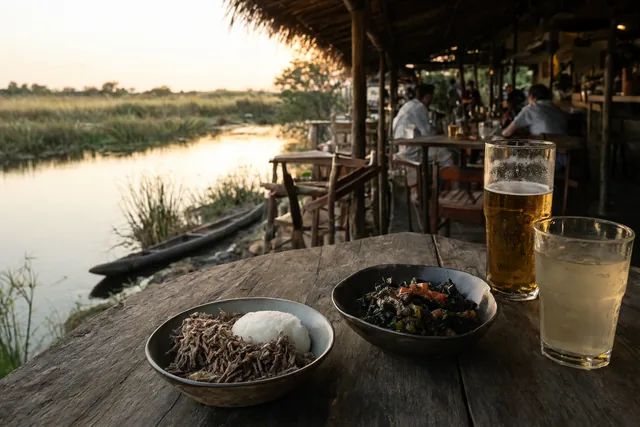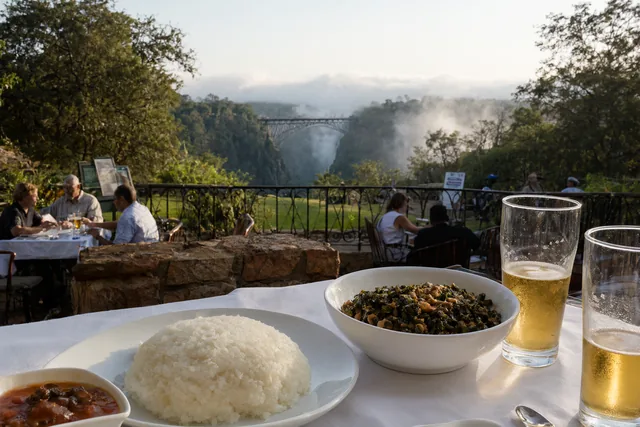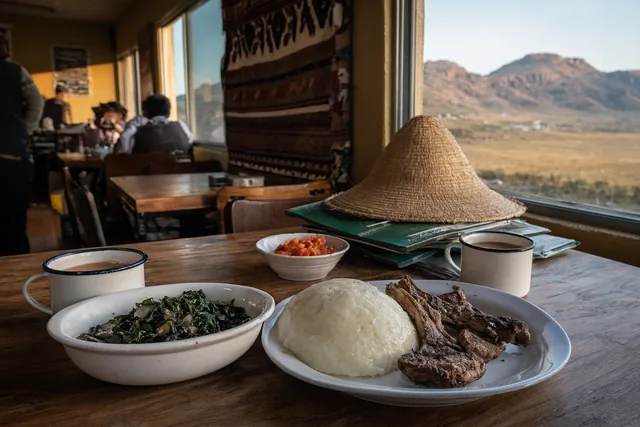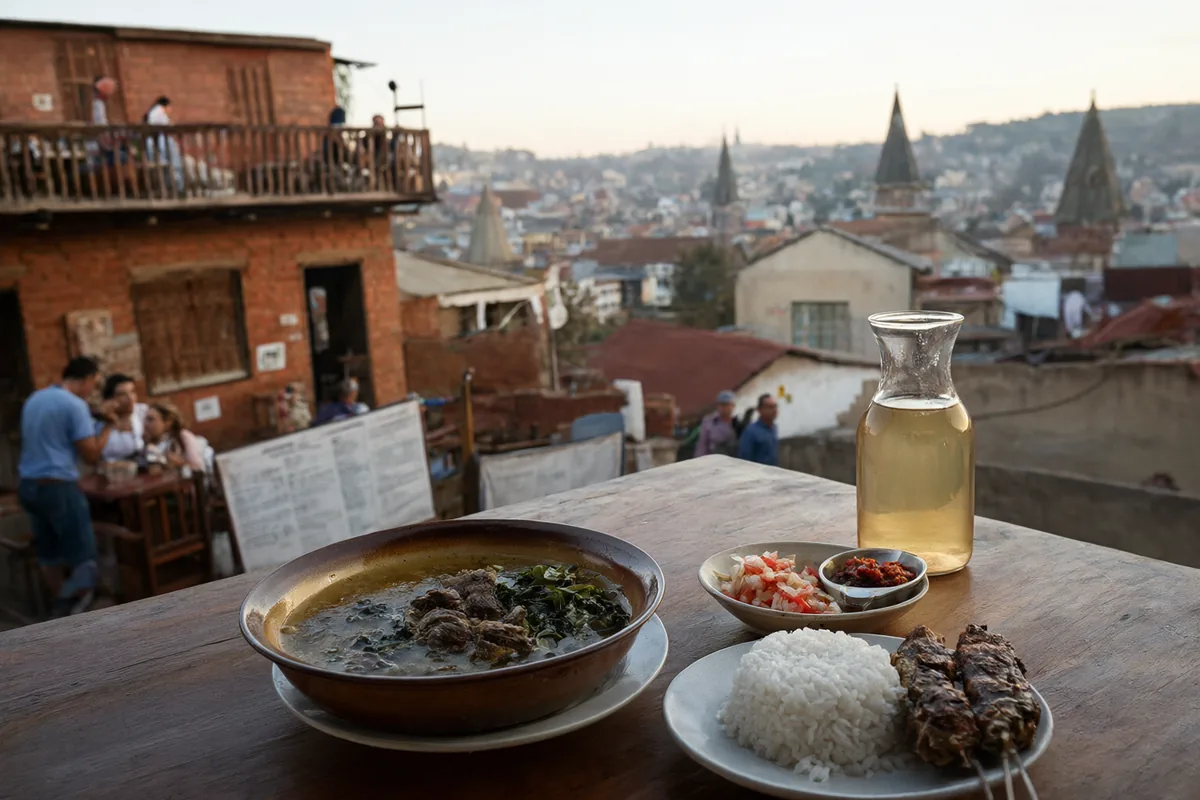
In Madagascar, rice is not a side dish: it is the meal. Malagasy people eat more rice per person than almost anyone on earth, often three times a day, and everything else on the plate is laoka, the accompaniment. That accompaniment can be a gingery broth of zebu and greens, pork with pounded cassava leaves, chicken in coconut, or fish grilled on a beach in the southwest. This Madagascar food guide covers the dishes to know, how to read a menu in Malagasy and French, tipping and paying in ariary, and where to eat in Antananarivo, Antsirabe, Fianarantsoa and Ambalavao, Toliara and the southwest, Nosy Be, Toamasina and Antsiranana.
What to eat in Madagascar: 12 dishes to know
Malagasy food is mild, clean-tasting and built on rice, with flavour coming from ginger, garlic, tomato and the chilli paste served on the side. French, Chinese, Indian and Comorian influences show up everywhere. These are the dishes to look out for.
- Vary (everywhere): rice, served in a mound at every meal. For breakfast, many people eat vary sosoa, a soft, soupy rice porridge, often with dried meat.
- Romazava (everywhere, especially the highlands): often called the national dish, a light broth of zebu beef and several kinds of greens (anana), including the tingling leaves of paracress, with ginger, tomato and garlic.
- Ravitoto sy henakisoa (everywhere): young cassava leaves pounded and simmered for hours with fatty pork, sometimes with coconut milk. Rich, dark green and much loved.
- Akoho sy voanio (the coasts): chicken cooked in coconut milk with tomato, ginger and garlic, a classic of the east and north.
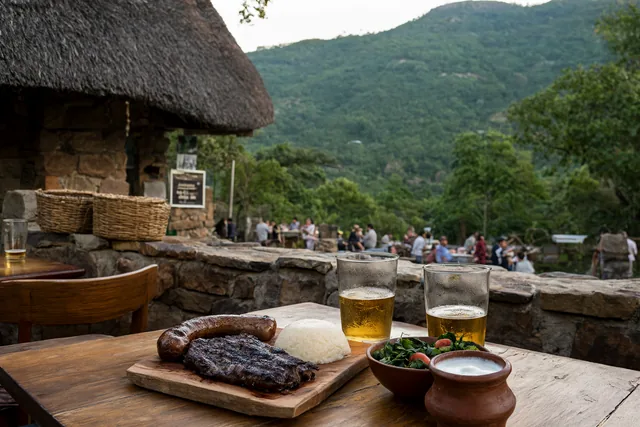
- Zebu (everywhere): the humped cattle of Madagascar, on menus as steaks, brochettes (skewers) and stews. Zebu steak with a green peppercorn sauce is a standard dish in tourist restaurants.
- Kitoza (the highlands): strips of zebu or pork, dried or smoked, then grilled or fried, eaten with vary sosoa for breakfast.
- Lasary and sakay (everywhere): lasary is a relish of vegetables, either fresh tomato and onion or pickled like Indian achar, and sakay is the fiery chilli paste set on every table. Use it carefully.
- Mofo gasy and street snacks (everywhere): mofo gasy are slightly sweet rice-flour cakes cooked in a dimpled pan over charcoal, sold at dawn with coffee. Also look for mofo akondro (banana fritters), mofo sakay (chilli fritters) and sambos (samosas).
- Koba (the highlands): a dense sweet log of ground peanuts, banana and rice flour wrapped in banana leaves and boiled for hours, sold in slices at roadsides.
- Mi sao and soupe chinoise (everywhere): fried noodles and noodle soup, brought by the Chinese community and now eaten all over the island, along with nems (spring rolls).
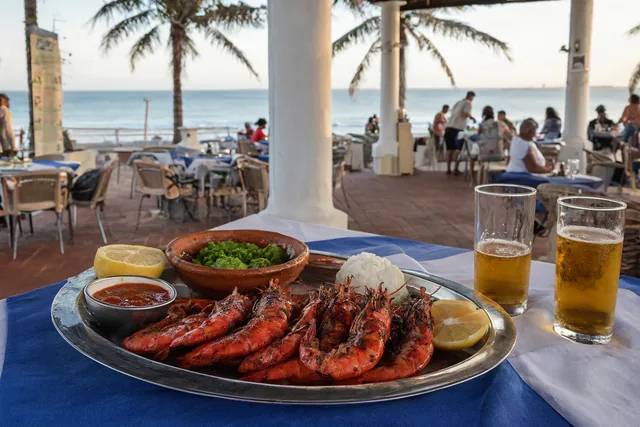
- Seafood (the coasts): prawns (crevettes), lobster (langouste), crab, octopus and fish, often cooked in coconut milk or grilled, cheap and excellent in Toliara, Nosy Be and Antsiranana.
- Ranovola and rhum arrangé (everywhere): ranovola is water boiled in the rice pot with the toasted crust at the bottom, a smoky drink served with meals. Rhum arrangé is local rum infused with vanilla, ginger, lychee or other fruits.
How to read a Malagasy menu
Madagascar has two official languages, Malagasy and French, and menus use both. Tourist restaurants and hotels write their menus in French, sometimes with English. Small local eateries, called hotely, often chalk up the day's dishes in Malagasy, and each dish comes with a plate of rice included. These are the words that matter.
| Malagasy | French | Meaning |
|---|---|---|
| Vary | Riz | Rice, the base of every meal |
| Laoka | Accompagnement | The dish served with the rice |
| Hen'omby | Viande de zébu | Zebu beef |
| Akoho | Poulet | Chicken |
| Henakisoa | Porc | Pork |
| Trondro | Poisson | Fish |
| Anana | Brèdes | Leafy greens |
| Ravitoto | Feuilles de manioc pilées | Pounded cassava leaves |
| Tsaramaso | Haricots | Beans |
| Voanio | Coco | Coconut |
| Sakay | Piment | Chilli, or chilli paste |
| Patsa | Crevettes séchées | Tiny dried shrimp, used for flavour |
| Mofo | Pain | Bread, and part of many snack names |
| Ranovola | Eau de riz | Toasted-rice water, the table drink |
On French menus, look for plat du jour (dish of the day), menu (a set meal of two or three courses), au coco (in coconut sauce), sauce au poivre vert (green peppercorn sauce) and sur commande (must be ordered in advance).
Older Malagasy, market sellers and taxi drivers sometimes still quote prices in the old franc malgache, which is five times the ariary figure. If a number sounds far too high, ask "ariary?" to check. swap.menu reads prices on Malagasy and French menus and converts every ariary to your home currency.
Tipping, tax and paying the bill in Madagascar
Tipping (pourboire) is not expected in local hotely, but it is common in tourist restaurants and hotels, where around 5 to 10 percent for good service is appreciated. Guides, drivers and porters are usually tipped at the end of a trip, and those tips matter a great deal to them. Prices in restaurants generally include VAT (TVA), and a service charge is rarely added. Our guide to tax and service charges on menus explains how service and tax lines work around the world.
The currency is the ariary (MGA), written Ar on menus. Madagascar is a cash economy: cards are accepted at larger hotels, some restaurants in Antananarivo and Nosy Be and a few tour operators, often with a surcharge, but almost everywhere else is cash only. ATMs in the main towns accept foreign cards, mainly Visa, and euros are easy to exchange. Carry small notes, because change for large ones can be hard to find in rural areas. When a card machine offers to charge you in your home currency, decline and pay in ariary: our guide to paying in local currency explains why.
Malagasy days start early. Breakfast is at dawn, lunch is from about 12pm to 2pm, and dinner from around 7pm, with many restaurants outside the big towns closing by 9pm. In rural areas, roadside hotely serve rice and laoka all day until they run out.
Where to eat in Madagascar, town by town
Madagascar is huge and its roads are slow, so most visitors follow one route, often the RN7 south from Antananarivo to Toliara, or fly to Nosy Be or the north. Jump to a destination:
- Antananarivo
- Antsirabe
- Fianarantsoa and Ambalavao
- Toliara and the southwest
- Nosy Be
- Toamasina
- Antsiranana
Where to eat in Antananarivo
Antananarivo, the capital, known to everyone as Tana, spreads across hills and rice paddies in the central highlands, and it has the best choice of restaurants in Madagascar. The downtown district around Analakely and the Avenue de l'Indépendance has hotely serving romazava, ravitoto and zebu stews with rice for very little, plus stalls selling mofo gasy, sambos and koba. The Analakely market, spilling up stairways and side streets, and the larger Andravoahangy market are the places to see Tana's produce, spices, vanilla and street food.
For sit-down meals, the old quarter of Isoraka and the Haute-Ville (upper town), on the ridge below the royal palace, have French, Malagasy and fusion restaurants in old brick houses, many with views over the city. Antananarivo is the place to try Malagasy dishes cooked with care, such as zebu with local wild pepper, duck, and foie gras, which is produced in the highlands. Tana's traffic is notoriously slow, so allow plenty of time to reach a dinner booking, and take a taxi at night.
Where to eat in Antsirabe
Antsirabe, a few hours south of Tana on the RN7, is a highland spa town founded by Norwegian missionaries, with wide avenues, colonial buildings and brightly painted pousse-pousse rickshaws. It is cooler than the coast, and the surrounding farmland supplies much of the country's dairy, fruit and vegetables. The town is also home to Madagascar's main brewery, so a cold local lager tastes particularly fresh here.
Eating in Antsirabe is simple and good value: hotely around the centre and the market serve rice with zebu, pork and greens, and roadside stalls sell mofo gasy, grilled corn and fresh yoghurt. The big Saturday market is the busiest food day in Antsirabe, with produce from the whole region. Hotels on the main avenue serve French and Malagasy set menus, and many travellers on the RN7 stop overnight here.
Where to eat in Fianarantsoa and Ambalavao
Fianarantsoa, in the southern highlands, is the heartland of the Betsileo people and their spectacular terraced rice paddies. The restored old upper town has narrow cobbled streets and churches above the modern city. The region around Fianarantsoa and Ambalavao is Madagascar's small wine country, with vineyards producing red, white and grey wines, and the tea estates at Sahambavy, east of the city, can be visited. Hotels and restaurants in Fianarantsoa serve French and Malagasy menus, and the local hotely serve rice with laoka at every corner.
An hour south, Ambalavao holds the largest zebu market in Madagascar, where herders walk cattle in from across the south on market days, usually Wednesday and Thursday. It is a working market, not a show, and the surrounding stalls sell grilled zebu brochettes, rice and coffee to traders. Ambalavao is a common lunch stop on the RN7, and its small restaurants serve simple, good zebu dishes.
Where to eat in Toliara and the southwest
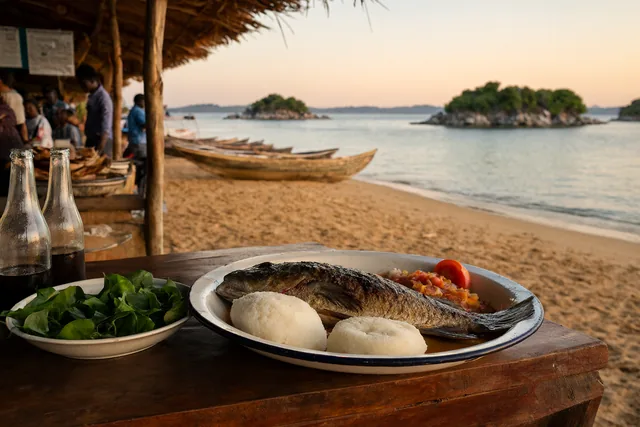
Toliara (Tuléar in French) is the hot, dry end of the RN7, and its food turns to the sea. The Vezo people of the southwest coast are fishermen, sailing outrigger pirogues over the reef, and the catch of octopus, crab, lobster, prawns and fish is sold in Toliara's markets and cooked in its restaurants, grilled or in coconut sauce. Inland the land is semi-desert, and cassava, maize and sweet potato replace rice in many meals, which is unusual for Madagascar.
North of Toliara, the beach resort of Ifaty has hotels and simple restaurants serving grilled fish and seafood, and to the south, Anakao is reached by boat and has guesthouses serving the day's catch. Many meals in the southwest are part of a full-board stay, so ask about the menu when you book. Toliara's market is the place to buy fruit, peanuts and street snacks before a long drive.
Where to eat on Nosy Be
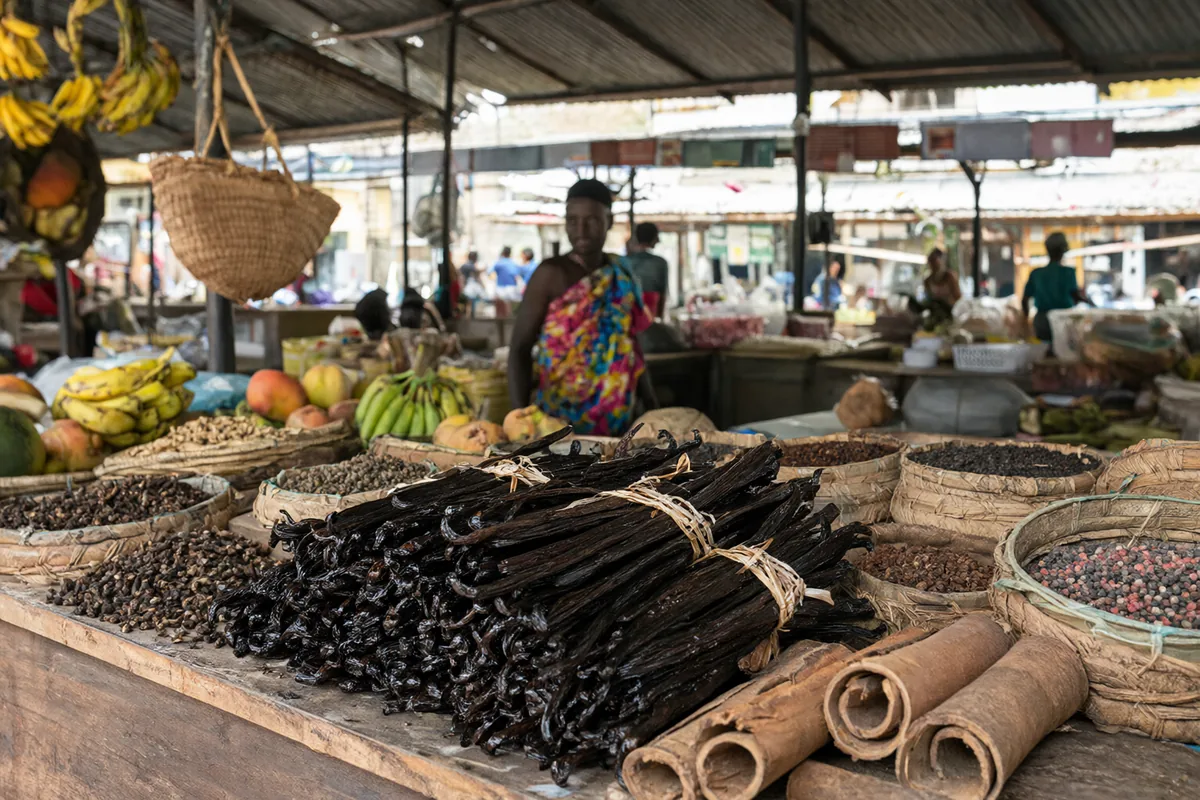
Nosy Be, the island off the northwest coast, is Madagascar's main beach destination, and its food scene is the most international in the country. The island is known as the "perfume island" for its ylang-ylang plantations, and the mainland opposite, the Sambirano valley, grows cocoa, coffee and spices. The market in Hell-Ville (Andoany), the main town, sells vanilla, pepper, cloves, cinnamon, fruit and fish, and simple restaurants nearby serve rice with chicken in coconut, fish curry and zebu.
The beach area of Ambatoloaka has the island's busiest strip of restaurants and bars, serving seafood, pizza and pasta (many visitors to Nosy Be are Italian), grilled lobster and fish in coconut sauce. Resorts on the quieter beaches are often full board. Boat trips to the islands of Nosy Komba and Nosy Tanikely usually include a grilled fish lunch on the beach. Prices on Nosy Be are higher than on the mainland, but seafood is still good value.
Where to eat in Toamasina
Toamasina (Tamatave in French) is Madagascar's main port on the east coast, a hot, humid city with a large Chinese and Comorian community and a long seafront. The east coast is the land of cloves, coconuts and lychees: from around November to January, Toamasina is piled high with lychees, and the region exports them by the shipload. Coconut milk flavours many local dishes, from chicken and fish to rice and beans.
The Bazary Be, the big market in the centre, is the place to see the produce of the east coast, from lychees and bananas to spices, dried fish and street food. Toamasina has Chinese restaurants, seafood places along the seafront boulevard and hotely all over the centre. It is the starting point for the canal journey south and for trips to the island of Sainte-Marie, where meals are mostly at beach lodges.
Where to eat in Antsiranana
Antsiranana, still widely called Diego Suarez, sits on one of the world's largest natural bays at the northern tip of the island. It was a French naval base for decades, and its colonial centre has wide streets, faded buildings and a laid-back café culture. Seafood is the reason to eat here: lobster, crab, prawns, octopus and fish, cooked in coconut, grilled or in French-style sauces at restaurants along the main street and around the old town.
Half an hour away, the beach village of Ramena has simple restaurants serving grilled fish and lobster on the sand, and the green slopes of the Montagne d'Ambre national park, inland, have lodges serving Malagasy and French menus. The north is also one of the main areas for cocoa, vanilla and spices, and markets in Antsiranana sell them at fair prices.
Vegetarian, vegan and allergy tips
Madagascar is manageable for vegetarians who are careful. Rice with beans (tsaramaso), greens, vegetable lasary and fritters is easy to find, and tourist restaurants usually have a vegetarian dish. The problem is hidden meat and fish: greens are often cooked with pork or tiny dried shrimp (patsa), broths are made with zebu, and ravitoto is traditionally made with pork. Say végétarien in French, or tsy mihinana hena aho ("I do not eat meat") in Malagasy, and ask about fish and shrimp separately.
Peanuts are common in koba, sauces and snacks, and coconut milk is in many coastal dishes. Seafood allergies need care in the coastal towns, where shellfish appear in sauces and soups. Our guide to eating abroad with food allergies explains how to make an allergy clear when you do not speak the language, and having it written in French is useful anywhere in Madagascar.
Useful Malagasy and French phrases for ordering
Manao ahoana "Hello" in Malagasy, the standard greeting
Azafady "Please" or "excuse me", useful for getting attention politely
Une table pour deux, s'il vous plaît "A table for two, please" in French
Ohatrinona? "How much is it?" in Malagasy
Sans piment, s'il vous plaît "Without chilli, please" in French
Tsy mihinana hena aho "I do not eat meat" in Malagasy
Matsiro be! "Very tasty!" in Malagasy
Misaotra / L'addition, s'il vous plaît "Thank you" in Malagasy / "The bill, please" in French
How swap.menu helps you eat in Madagascar
A hotely board in Antananarivo or a French menu in Antsiranana can be equally baffling: is ravitoto meat or vegetable, what is laoka, and what comes in a romazava? Photograph the menu with swap.menu and every dish appears in your language with the Malagasy or French name beside it and a short explanation, so you know before you order that henakisoa is pork and sakay is the chilli paste. Every price is converted from ariary to your home currency.
Tap the dishes you want, add a note such as "no pork" or "no dried shrimp", typed or spoken, and swap.menu translates your order into French or Malagasy. Show the server your phone, or let them scan the QR code and read your order on their own screen. Try it on a sample menu with the free demo, or see travel pass prices.
Off to Madagascar? Your first 3 menu scans are free, and a travel pass starts from $4.99 with nothing that renews.
Start free with 3 scansMadagascar food FAQ
Do you tip in restaurants in Madagascar?
Tipping is not expected in local eateries, but 5 to 10 percent is appreciated in tourist restaurants and hotels. Guides, drivers and porters are usually tipped at the end of a trip.
What is the national dish of Madagascar?
Romazava, a light broth of zebu beef and mixed greens with ginger and tomato, is usually called the national dish. It is always served with rice, which is the centre of every Malagasy meal.
Is it expensive to eat out in Madagascar?
Local food in hotely is very cheap, and even tourist restaurants are inexpensive by international standards. Nosy Be and upmarket hotels cost more, and imported wine and food are expensive everywhere.
Is tap water safe to drink in Madagascar?
No, visitors should not drink tap water in Madagascar. Drink bottled or treated water, avoid ice in small eateries and be careful with raw salads and unpeeled fruit.
What time do people eat dinner in Madagascar?
Dinner usually starts around 7pm, and many restaurants outside Antananarivo and Nosy Be close by 9pm. Lunch is from about midday, and breakfast is eaten early, often with rice porridge.
How can I read a menu in Madagascar if I do not speak French or Malagasy?
Learn a few words such as vary (rice), hen'omby (zebu), akoho (chicken) and trondro (fish), or photograph the menu with swap.menu. It translates every dish, converts ariary to your currency and translates your order into French or Malagasy for the server.
Travelling further in the Indian Ocean? Read our food guides for nearby destinations:
- Reunion food guide
- Mauritius food guide
- Comoros food guide
- Seychelles food guide
- Mozambique food guide
- France food guide
Or browse every travel food guide.