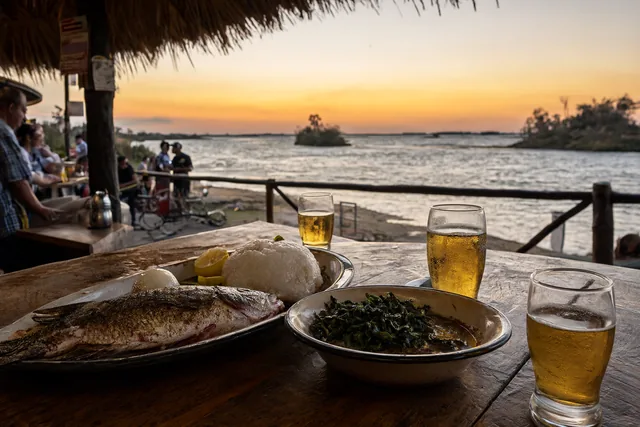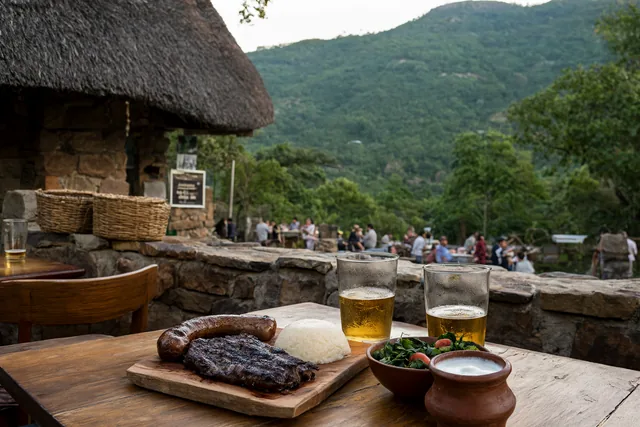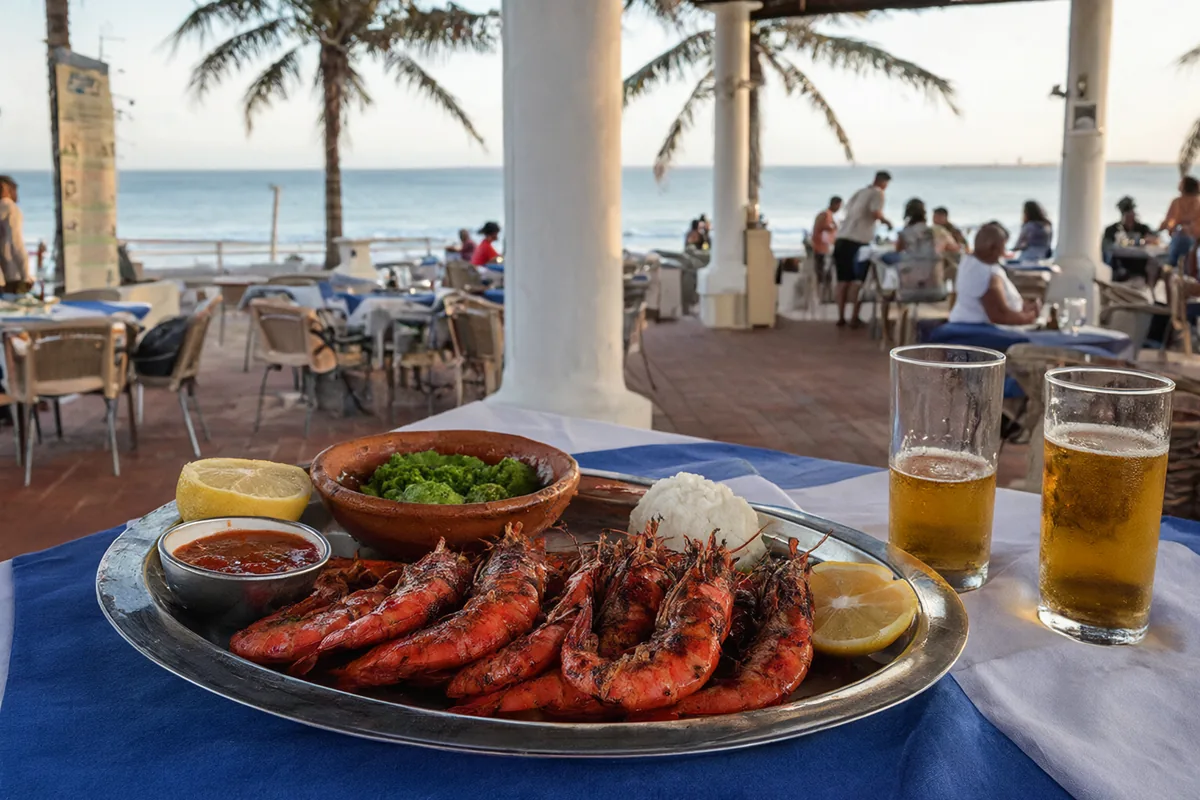
Mozambique has some of the best seafood in Africa: big prawns grilled over coals with piri-piri, crab curry, lobster, squid and fish caught that morning, all with a strong Portuguese accent and a long Indian Ocean coastline to eat it on. Inland and at home, Mozambicans eat xima, maize porridge, with stews of cassava leaves, peanuts and coconut. This Mozambique food guide covers the dishes to know, how to read a Portuguese menu, tipping and paying in meticais, and where to eat in Maputo, Inhambane and Tofo, Vilanculos and the Bazaruto Archipelago, Ilha de Moçambique, Beira and Ponta do Ouro.
What to eat in Mozambique: 12 dishes to know
Mozambican cooking mixes African staples, Portuguese technique, Indian spices from centuries of Indian Ocean trade, and a lot of coconut and peanut. These are the dishes to look out for.
- Camarão grelhado (the coast, especially Maputo and Beira): prawns grilled over charcoal, brushed with piri-piri, garlic or lemon butter. Mozambican prawns are famous across southern Africa, and you will see them priced by the kilo.
- Frango piri-piri (everywhere): chicken marinated in chilli, garlic and lemon and grilled over coals. Mozambique is one of the homes of piri-piri, and its version is fiery and smoky.
- Frango à zambeziana (Zambézia, especially Quelimane): chicken marinated in coconut milk, lime, garlic and chilli, then grilled and served with the coconut sauce.
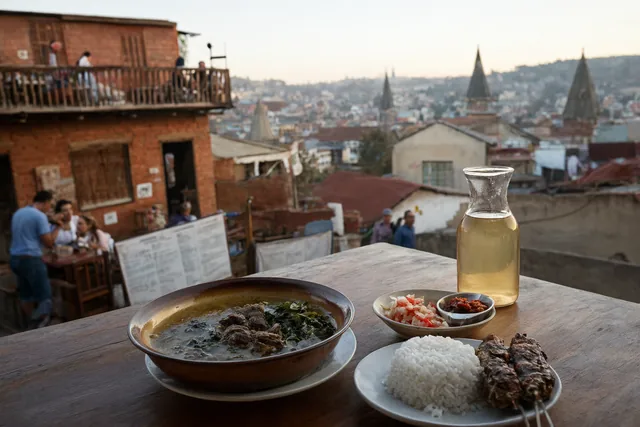
- Matapa (everywhere, especially the south): young cassava leaves pounded and slow-cooked with ground peanuts, garlic and coconut milk, often with crab or prawns. Served with rice or xima.
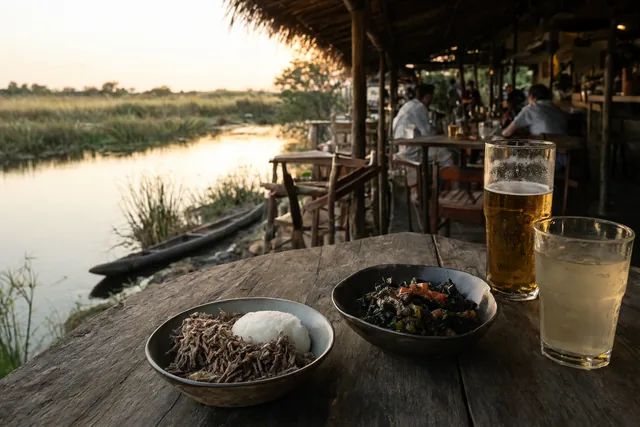
- Xima (everywhere): a stiff porridge of maize or cassava flour, the everyday staple, eaten with stews and grilled fish.
- Caril de caranguejo (the coast): crab curry, a rich coconut and tomato sauce with Indian spices, usually with rice.
- Caril de amendoim (everywhere): peanut curry with chicken, fish or vegetables, thickened with ground peanuts.
- Mucapata (Zambézia): rice cooked in coconut milk with beans, a simple, creamy side dish from the centre of the country.
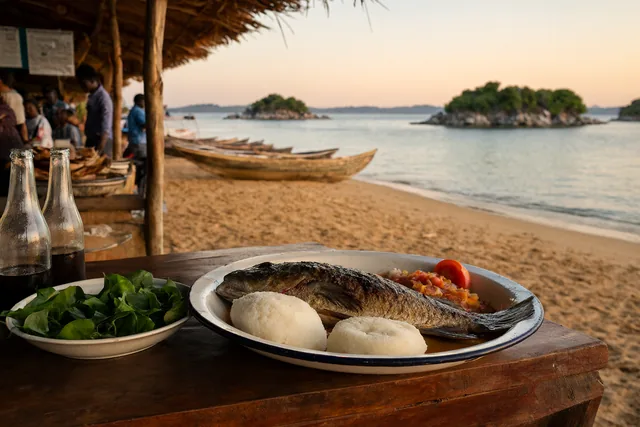
- Peixe grelhado and lulas (the coast): grilled whole fish, such as garoupa (grouper) or pargo (snapper), and grilled squid with garlic, served with chips or rice.
- Prego (everywhere): a Portuguese steak roll, thin beef with garlic in a bread roll, often with piri-piri. A standard snack bar order.
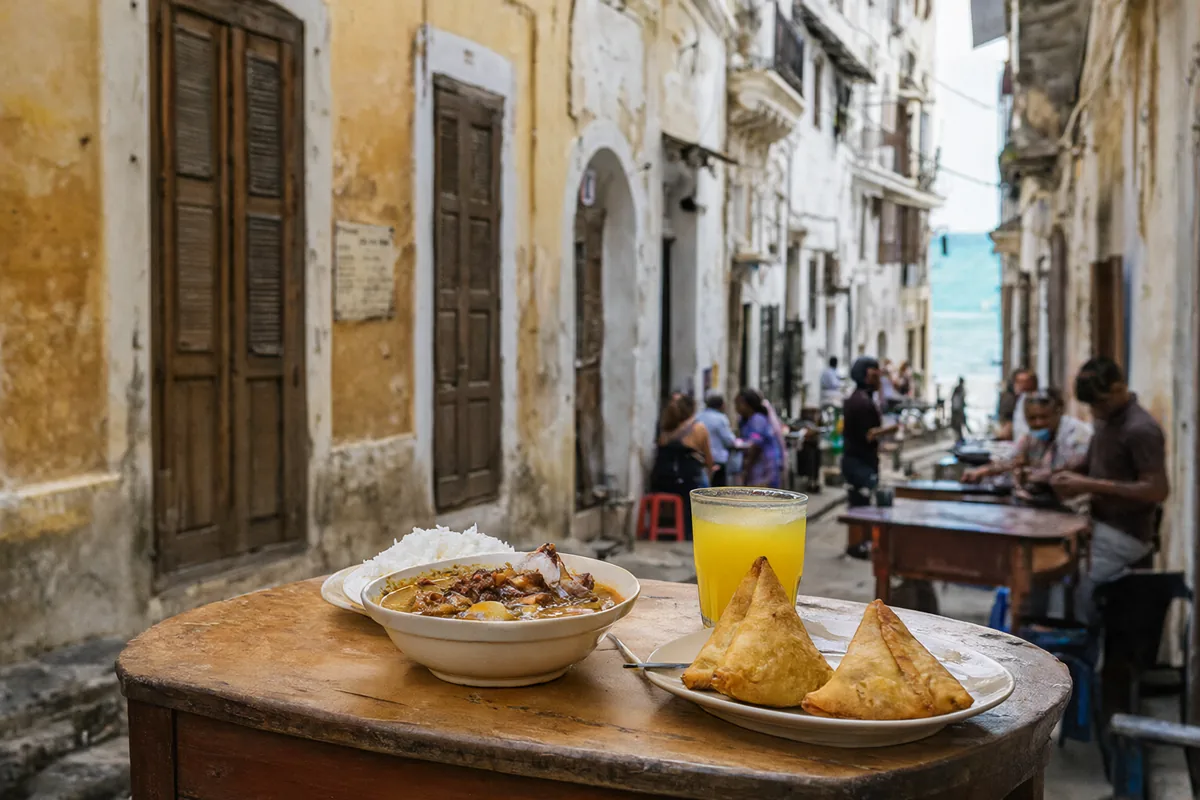
- Chamuças and rissóis (everywhere): samosas, filled with meat, fish or vegetables, and half-moon pastries filled with creamy prawn, sold at cafés, bakeries and street stalls.
- Pão and castanha de caju (everywhere): crusty Portuguese-style bread rolls baked daily in wood ovens, and cashew nuts, grown mainly in the north, sold roasted by the bag and used in desserts such as bolo polana, a cashew and potato cake.
How to read a Portuguese menu in Mozambique
Portuguese is Mozambique's official language and the language of almost every menu. English is spoken at tourist lodges and in some restaurants in Maputo, Tofo and Vilanculos, but in local restaurants and markets you will need Portuguese or a phone. Menus follow a Portuguese layout, and seafood is often priced by weight. These are the words that matter.
| Portuguese | Meaning |
|---|---|
| Entradas | Starters |
| Pratos principais | Main courses |
| Mariscos | Seafood, usually shellfish |
| Camarão / gamba / lagosta | Prawns / large prawns / lobster |
| Caranguejo / lulas / polvo | Crab / squid / octopus |
| Peixe do dia | Fish of the day |
| Frango / carne de vaca / cabrito | Chicken / beef / goat |
| Grelhado / frito / guisado | Grilled / fried / stewed |
| Caril | Curry |
| Acompanhamentos | Sides: arroz (rice), batata frita (chips), xima, salada |
| Piri-piri | Chilli, or the hot chilli sauce served on the side |
| Sobremesas | Desserts |
| Prato do dia | Dish of the day |
| Preço por kg / S.P. | Price per kilo / seasonal price, ask before ordering |
Prawns, lobster and crab are often listed "por kg" or with no price at all, which means the cost depends on what is in the kitchen that day. Ask for the price and the weight before the seafood goes on the grill. swap.menu flags priced-by-weight items when it reads a Portuguese menu and converts the meticais to your home currency.
Tipping, tax and paying the bill in Mozambique
Check your government's current travel advice before planning a trip. Tipping (gorjeta) is appreciated but not compulsory in Mozambique. In restaurants, about 10 percent is a good tip for good service if no service charge appears on the bill; at beach bars and street stalls, rounding up is enough. IVA (VAT) is normally included in menu prices, and some upmarket restaurants and hotels add a service charge (taxa de serviço). Our guide to tax and service charges on menus explains how these lines work around the world.
The currency is the metical (plural meticais, code MZN), written MT on menus. Cards, especially Visa, are accepted at many hotels, restaurants and supermarkets in Maputo and the main resorts, but card machines can be unreliable, so carry cash for markets, small restaurants, dhow trips and anywhere outside the towns. South African rand are often accepted around Ponta do Ouro and some southern resorts, but meticais are always simpler. When a card machine offers to charge you in your home currency, decline: our guide to paying in local currency explains why.
Meal times follow a Portuguese rhythm. Lunch is from about 12pm to 2:30pm and is a substantial meal, and dinner usually starts around 7pm. Pastelarias (pastry cafés) open early for coffee and bread rolls, and beach restaurants often close soon after dark outside the busy season.
Where to eat in Mozambique, town by town
Mozambique is long and thin, and most visitors focus on Maputo and one or two stretches of coast. Jump to a destination:
Where to eat in Maputo
Maputo, the capital, is one of the most enjoyable cities in Africa to eat in: wide avenues lined with jacaranda and flame trees, Portuguese-style pastelarias on every corner, and seafood everywhere. The essential Maputo experience is the Mercado do Peixe, the fish market on the Avenida Marginal, where you buy prawns, crab, squid and fish from the stalls and take them to one of the small restaurants around the market to be grilled for a fee, with rice, chips and piri-piri. Ask the price per kilo first and agree it before anything is weighed.
In the old downtown Baixa, the Mercado Central on Avenida 25 de Setembro sells spices, cashews, piri-piri sauces, fruit and vegetables under a historic roof. The neighbourhoods of Polana and Sommerschield have the city's cafés, Portuguese and Mozambican restaurants and bars, while the seafront heading north to Costa do Sol is lined with seafood restaurants for long weekend lunches. Across the bay, Catembe has more seafood places with views back to the Maputo skyline. Start the day like a local, with a galão (milky coffee) and a pastry at a pastelaria.
Where to eat in Inhambane and Tofo
Inhambane is one of Mozambique's oldest towns, a quiet place of colonial buildings, dhows and coconut palms on a sheltered bay. Its central market is a good place to buy cashews, coconuts, fruit and fresh bread, and simple restaurants serve matapa, caril de amendoim and grilled fish. Inhambane province grows more coconuts than almost anywhere in the country, and coconut milk turns up in many local dishes.
Half an hour away, Tofo is a beach village famous for diving with whale sharks and manta rays, and its food is casual and seafood-heavy: beach bars and restaurants serving grilled prawns, fish, calamari and crab curry, plus pizza and burgers for the dive crowd. The Tofo market near the beach sells fresh fish, bread rolls, fruit and vegetables, and is where self-caterers shop each morning. Nearby Barra is quieter, with lodges serving similar menus.
Where to eat in Vilanculos and the Bazaruto Archipelago
Vilanculos is the jumping-off point for the Bazaruto Archipelago, a chain of islands of white dunes, turquoise water and coral reefs protected as a national park. The classic way to eat here is on a dhow trip: a day sailing to Bazaruto, Benguerra or Magaruque islands, snorkelling, then a lunch of grilled fish, rice and salad cooked on the beach by the crew. Ask what is included in the price before you book.
In town, Vilanculos has beach restaurants and lodges serving seafood, piri-piri chicken and international dishes, and a local market where you can buy fresh fish, coconuts and vegetables. The island resorts of the archipelago are expensive and usually full board, with seafood at their centre. The sea here supports one of the last populations of dugongs in the western Indian Ocean, which is a reason to keep plastic out of the water on your dhow trip.
Where to eat on Ilha de Moçambique
Ilha de Moçambique, a small island off the northern coast linked to the mainland by a long bridge, was the capital of Portuguese East Africa for centuries and is a UNESCO World Heritage Site. Its food reflects that history: Swahili, Arab, Indian and Portuguese cooking all meet here. Look for polvo (octopus) in coconut curry, grilled fish caught by the island's fishermen, matapa with coconut and crab, and chamuças and bhajias from street sellers in the afternoon.
The northern half of the island, the Stone Town, has restaurants and cafés in old merchants' houses and on terraces near the fortress of São Sebastião, while Macuti Town, the southern half with its palm-thatched houses, is where most islanders live and eat. Restaurants on Ilha de Moçambique are small and relaxed, and fish depends on what came in that day, so ask what is fresh. The island is reached from Nampula, the main city of the north, where the market sells cashews from the surrounding province.
Where to eat in Beira
Beira, Mozambique's second port and the main city of the centre, is a working city rather than a resort, but it has a strong claim to the best prawns in the country. The waters off Sofala province produce large prawns, and Beira's restaurants grill them with garlic or piri-piri, alongside crab, fish and frango à zambeziana. The beachfront district of Macuti, with its lighthouse and old shipwreck, has seafood restaurants and bars.
Beira was badly damaged by Cyclone Idai in 2019 and has been rebuilding since. The city centre has markets selling fish, fruit and vegetables, Portuguese-style bakeries and cafés, and a lively nightlife. Beira is also the gateway to Gorongosa National Park, a few hours inland, where lodges and the park's own camp serve meals to safari visitors. If you are passing through Beira, plan at least one long seafood lunch.
Where to eat in Ponta do Ouro
Ponta do Ouro, just north of the South African border, is a beach town popular with South African weekenders, divers and dolphin swimmers. Its food scene is small but fun: beach bars and restaurants serving grilled prawns, calamari, fish, piri-piri chicken and cold beer, and a market in the village centre with fruit, bread, crafts and fresh seafood. Many visitors buy prawns at the market and braai them at their accommodation.
Weekends and South African school holidays are busy, and Ponta do Ouro feels quiet midweek. The nearby beach of Ponta Malongane is calmer, with a few lodges and restaurants, and Maputo National Park, between Ponta do Ouro and the capital, has lodges and campsites for wildlife and turtle viewing. Rand are widely accepted here, but you will usually get better prices paying in meticais.
Vegetarian, vegan and allergy tips
Mozambique is seafood country, and vegetarians will need to ask questions. Good meat-free choices include matapa, caril de amendoim with vegetables, mucapata, xima with beans, and vegetable chamuças, but matapa is often cooked with crab or prawns and stews may use fish or meat stock. The Portuguese word for vegetarian is vegetariano (or vegetariana for a woman), and it helps to add "sem carne, sem peixe, sem marisco" (no meat, no fish, no seafood). Vegans should also check for butter and eggs in Portuguese-style dishes and pastries.
The two big allergy risks are shellfish, which appears in many sauces, rissóis and matapa, and peanuts, which are ground into matapa, caril de amendoim and other stews. Cashews appear in desserts and snacks. Coconut milk is in many coastal dishes. Our guide to eating abroad with food allergies explains how to make an allergy clear when you do not speak Portuguese.
Useful Portuguese phrases for ordering
Bom dia / Boa tarde / Boa noite "Good morning / Good afternoon / Good evening", the polite greeting as you sit down
Uma mesa para dois, por favor "A table for two, please"
O que recomenda? "What do you recommend?"
Quanto custa o quilo de camarão? "How much is a kilo of prawns?"
Pouco piri-piri, por favor "Not much chilli, please"
Sou alérgico / alérgica a... "I am allergic to..." (alérgico for a man, alérgica for a woman)
A conta, por favor "The bill, please"
Obrigado / Obrigada, Khanimambo "Thank you" in Portuguese (obrigado for a man, obrigada for a woman), and in Changana, spoken in the south
How swap.menu helps you eat in Mozambique
Outside the tourist lodges, Mozambican menus are in Portuguese only, often handwritten on a board, and they are full of words that do not appear in a phrasebook. Photograph the menu with swap.menu and every dish appears in your language with the Portuguese name beside it and a short explanation, so you know that matapa is cassava leaves in peanut and coconut, and that frango à zambeziana comes in a coconut sauce. Every price is converted from meticais to your home currency, and dishes priced per kilo are flagged before you order.
Tap the dishes you want, add a note such as "no shellfish" or "not too spicy", typed or spoken, and swap.menu translates your order into Portuguese. Show the waiter your phone, or let them scan the QR code and read the order on their own screen. Try it on a sample menu with the free demo, or see travel pass prices.
Off to Mozambique? Your first 3 menu scans are free, and a travel pass starts from $4.99 with nothing that renews.
Start free with 3 scansMozambique food FAQ
Do you tip in restaurants in Mozambique?
Tipping is appreciated but not required. Around 10 percent is a good tip in sit-down restaurants when no service charge has been added, and rounding up is fine at beach bars and street stalls.
What food is Mozambique famous for?
Mozambique is famous for grilled prawns, piri-piri chicken, matapa (cassava leaves with peanut and coconut), crab curry and frango à zambeziana. Xima, the maize porridge, is the everyday staple, and Portuguese bread rolls and pastries are everywhere.
Is seafood expensive in Mozambique?
Seafood is good value by international standards, especially at the Maputo fish market and in beach towns, but prawns and lobster are often priced by the kilo. Always ask the price and weight before ordering to avoid a surprise on the bill.
Is tap water safe to drink in Mozambique?
No, visitors should not drink tap water in Mozambique. Drink bottled or filtered water and be careful with ice and raw salads at small eateries.
What time do people eat dinner in Mozambique?
Dinner usually starts around 7pm, and lunch is a substantial meal from about midday. Beach restaurants in smaller towns may close early outside the holiday season.
How can I read a menu in Mozambique if I do not speak Portuguese?
Learn a few key words such as camarão (prawns), frango (chicken), peixe (fish) and grelhado (grilled), or photograph the menu with swap.menu. It translates every dish, converts meticais to your currency, flags prices per kilo and translates your order into Portuguese for the waiter.
Travelling further in southern Africa? Read our food guides for nearby countries:
- South Africa food guide
- Eswatini food guide
- Malawi food guide
- Tanzania food guide
- Zimbabwe food guide
- Portugal food guide
Or browse every travel food guide.