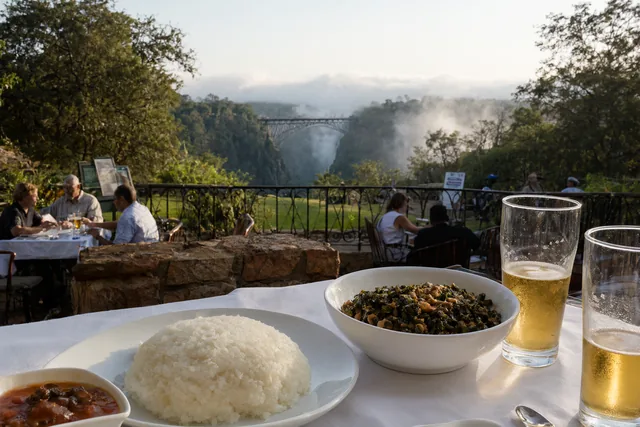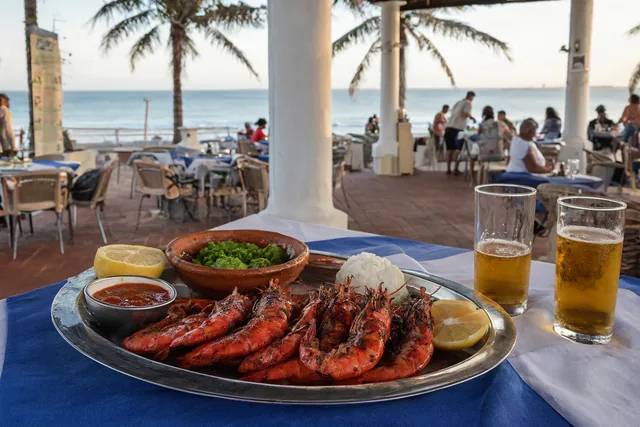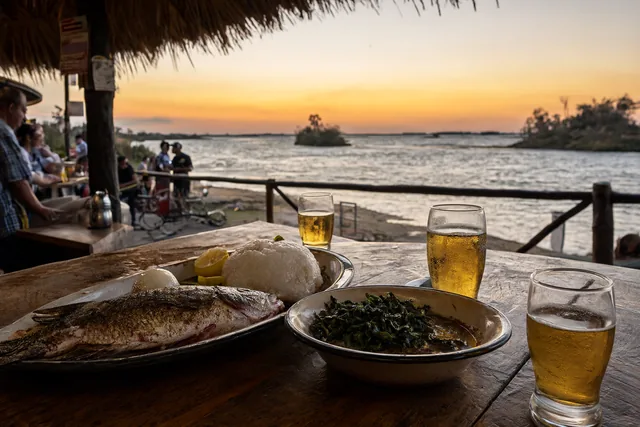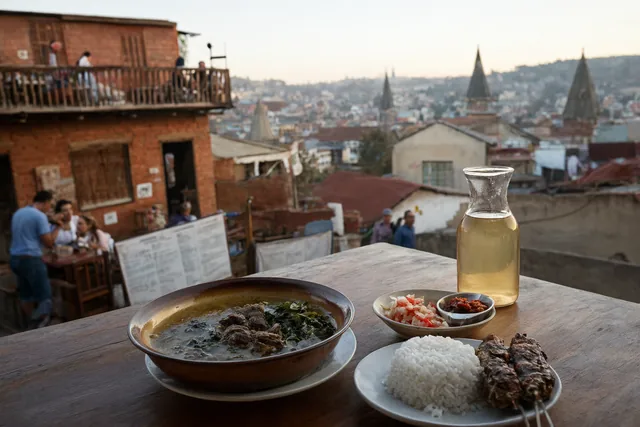
Botswana is cattle country, and its food starts with beef: the national dish, seswaa, is salted beef boiled for hours and pounded into soft shreds, served with maize or sorghum porridge at every wedding, funeral and celebration. For most visitors, though, eating in Botswana means dinners at safari camps in the Okavango Delta and along the Chobe River. This Botswana food guide covers the dishes to know, the Setswana words you will meet on menus, tipping and paying in pula, how meals work at safari lodges and mobile camps, and where to eat in Gaborone, Maun, the Okavango Delta, Kasane and Chobe, Makgadikgadi and the Kalahari, and Francistown.
What to eat in Botswana: 12 dishes to know
Batswana food is simple, hearty and built on meat, grain and wild foods from the bush. These are the dishes to look out for.
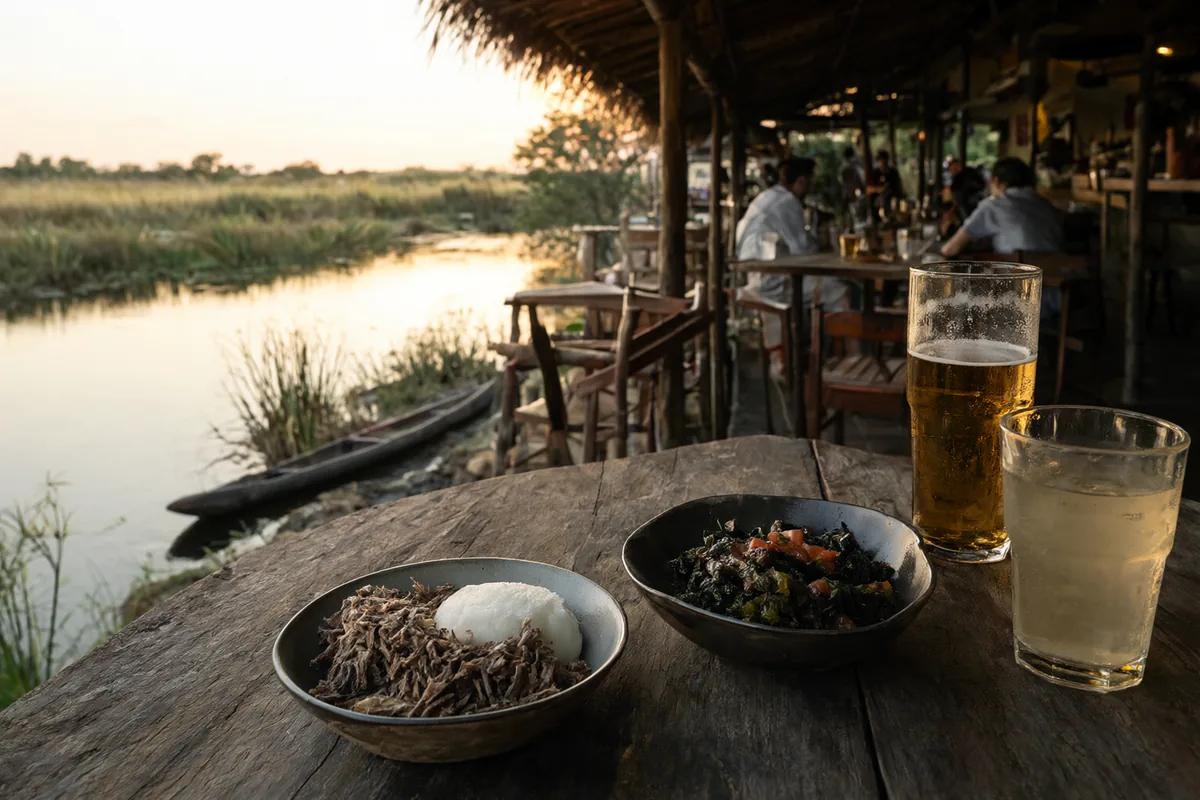
- Seswaa (everywhere): beef, sometimes goat, boiled with salt in a three-legged pot until it falls apart, then pounded into shreds. Traditionally cooked by men at celebrations, and served with pap or bogobe.
- Bogobe (everywhere): porridge, usually made from sorghum (mabele), with a slightly sour, earthy taste. Bogobe jwa lerotse is sorghum porridge cooked with lerotse, a local melon.
- Phaletshe (everywhere): stiff maize porridge, the same as South African pap, and on menus usually just called pap.
- Ting (everywhere): fermented sorghum porridge, sour and soft, eaten at breakfast or with meat.
- Morogo (everywhere): wild or cultivated greens, such as wild spinach or bean leaves, cooked with onion and tomato. The standard vegetable side.
- Phane (the north and east): mopane worms, the caterpillars of the emperor moth, harvested from mopane trees, dried and fried crisp or stewed with tomato. A seasonal delicacy and a big rural industry.
- Dikgobe (everywhere): samp (cracked maize) cooked with beans, or a mix of beans and maize, rich and filling.
- Serobe (everywhere): a dish of tripe and intestines, cooked at celebrations and loved by many Batswana.
- Magwinya (everywhere): fat cakes, deep-fried balls of dough sold by street vendors for breakfast, often eaten with polony, jam or atchar (spicy pickle).
- Diphaphatha (everywhere): flat breads cooked on a dry pan or grill, a cross between a scone and an English muffin, often filled with mince or eaten with tea.
- Botswana beef (everywhere): grass-fed, free-range beef, which Botswana exports around the world. Order a steak in Gaborone or Maun, or grilled meat at a braai.
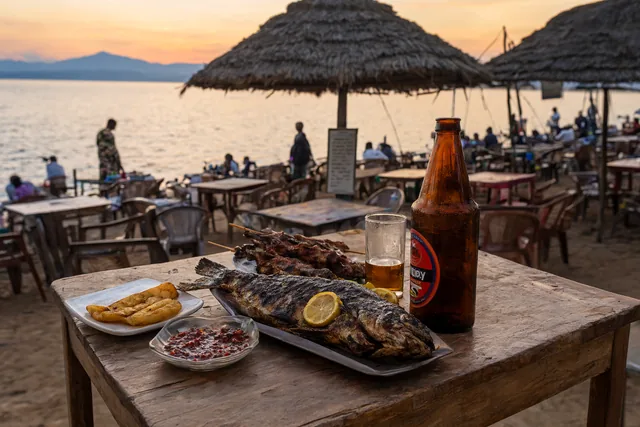
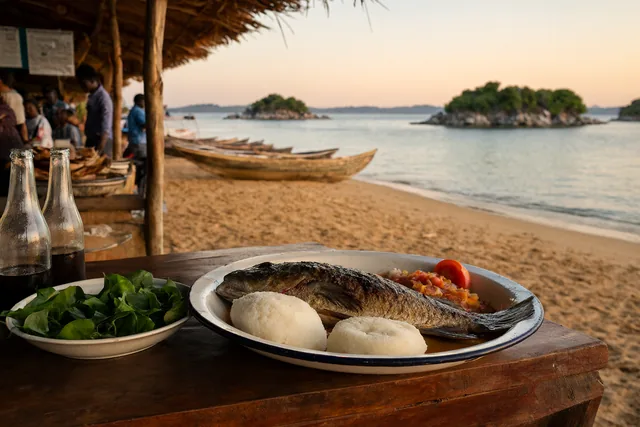
- Bream (Okavango and Chobe): tilapia from the delta and the rivers, grilled or fried whole and often caught by lodge staff and fishing guides.
How to read a menu in Botswana
English is Botswana's official language and menus are in English, but most people speak Setswana at home, and local eateries, takeaway stalls and wedding menus use Setswana words for traditional dishes. Many "traditional food" restaurants and lunch counters have no printed menu, just a board or a server who tells you what is in the pots today. These are the words you are likely to meet.
| Setswana | Meaning |
|---|---|
| Seswaa | Pounded, boiled salted beef |
| Bogobe | Porridge, usually sorghum |
| Phaletshe, pap | Stiff maize porridge |
| Mabele | Sorghum |
| Ting | Fermented sorghum porridge |
| Morogo | Leafy greens |
| Phane | Mopane worms |
| Dikgobe | Samp or maize with beans |
| Serobe | Tripe and offal dish |
| Magwinya | Fat cakes, fried dough |
| Nama / nama ya kgomo | Meat / beef |
| Koko | Chicken |
| Tlhapi | Fish |
| Metsi | Water |
Lunch counters in Gaborone often sell a plate as a combination: a starch (pap, bogobe or rice), a meat (seswaa, chicken or stew) and a side (morogo, beetroot, coleslaw), with the price set by the meat. If the board is in Setswana, swap.menu explains each dish and converts the pula price to your home currency.
Tipping, tax and paying the bill in Botswana
Tipping is customary in Botswana restaurants. About 10 percent is normal for good table service when no service charge is shown, and at takeaway counters and lunch stalls tipping is not expected. Some restaurants and hotels add a service charge, so check the bill first. VAT is included in menu prices. At safari camps, tips are given at the end of a stay. Our guide to tax and service charges on menus explains how service and tax lines work around the world.
The currency is the pula (BWP), written P on menus and divided into 100 thebe. Pula also means "rain" in Setswana, a precious thing in a dry country, and you will hear it shouted as a blessing at public events. Cards are widely accepted in Gaborone, Maun, Kasane and Francistown, in malls, supermarkets, restaurants and hotels. High-end safari lodges usually price in US dollars, and many accept dollars for tips. Carry cash in pula for street food, small shops and villages. When a card machine offers to charge you in your home currency, decline and pay in pula: our guide to paying in local currency explains why.
Meal times are early. Lunch is from about midday to 2pm and dinner from around 6:30pm. Restaurants in smaller towns can close by 9pm, and shops in villages close early on Sundays.
Where to eat in Botswana, place by place
Most visitors fly into Maun or Kasane, spend time at safari camps, and pass through Gaborone only briefly, but every stop has something worth eating. Jump to a destination:
Where to eat in Gaborone
Gaborone, the capital, is a young, spread-out city, and it is the best place in Botswana to eat traditional food in an ordinary setting. At lunchtime, office workers queue at food stalls and small eateries around the Main Mall, the pedestrian heart of the old centre, and around the bus rank, for plates of seswaa, pap or bogobe, morogo and stew. Street vendors sell magwinya and diphaphatha in the mornings. Restaurants serving "traditional Botswana food" are the place to try seswaa, phane, dikgobe and serobe at a table, and they often have Sunday family crowds.
The rest of Gaborone's eating happens in its shopping centres and newer districts. Riverwalk, Game City, Airport Junction and the newer Central Business District have steakhouses, grills, Indian, Chinese and Portuguese restaurants, coffee shops and supermarkets. Gaborone's steakhouses are a good place for Botswana beef. Weekend braais and car-boot-style gatherings with grilled meat and music are part of local life, and nature reserves just outside the city have restaurants with views of the bush.
Where to eat in Maun
Maun is the gateway to the Okavango Delta, a sprawling town of cattle, donkeys, light aircraft and safari trucks, and for most visitors it is a night or two between the airport and the bush. Maun's restaurants are mostly casual: cafés near the airport serve breakfasts, burgers, wraps and coffee to travellers waiting for flights, and lodges along the Thamalakane River serve dinners on decks above the water, with grilled meat, bream and pizza.
For local food in Maun, look for small eateries around the town centre and the main road serving seswaa, pap, chicken stew and morogo at lunchtime. Maun is also where self-drivers and mobile safari operators stock up, so its supermarkets and butchers are well supplied with braai meat, boerewors and biltong. If you are heading into Moremi or the delta on your own, buy everything in Maun, including water and firewood, because there are no shops beyond the town.
Where to eat in the Okavango Delta
The Okavango Delta is one of Africa's great wildlife areas and, for food, a world of its own. There are no towns or restaurants: you eat at your camp. Most delta camps are reached by light aircraft and are full board, often with drinks included, and the cooking is far more ambitious than the remote setting suggests: freshly baked bread, salads, roasts, curries, grilled Botswana beef and bream, and desserts, with dinner by lantern light on a deck or around a fire. Many camps serve a traditional night with seswaa, pap and morogo, which is worth asking about.
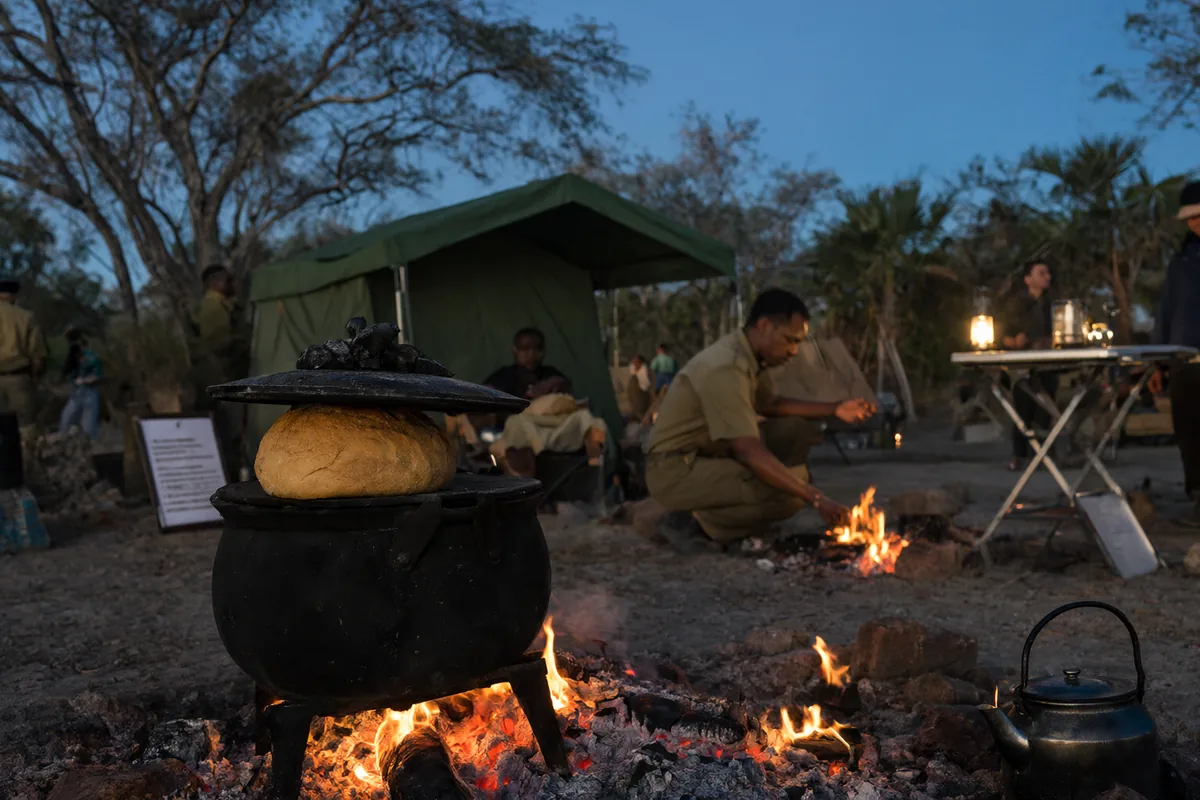
On a mobile safari in the Okavango Delta and Moremi, the cook travels with the group and prepares everything over a fire, including bread baked in a cast iron pot buried in coals, which is one of the best things you will eat in Botswana. Mokoro (dugout canoe) excursions often include a picnic lunch or tea on an island. Because everything comes in by plane or truck, tell the camp about dietary needs well before you arrive in the delta.
Where to eat in Kasane and Chobe
Kasane is a small town on the Chobe River, at the corner where Botswana, Namibia, Zambia and Zimbabwe almost meet, and the base for Chobe National Park and its huge elephant herds. Lodges along the river serve buffets and set dinners on terraces overlooking the water, and many run sunset cruises on the Chobe with drinks and snacks as elephants swim across. Chobe bream, grilled or fried, is the local dish to try.
Kasane town has supermarkets, a few cafés and casual restaurants serving grills, pizza and local plates of pap and stew, plus takeaway stalls along the main road. It is also an easy base for day trips to Victoria Falls, an hour or so away by road. The park's own campsites in the Chobe riverfront and Savuti areas are self-catering, so buy supplies in Kasane before you set off.
Where to eat in Makgadikgadi and the Kalahari
The Makgadikgadi Pans, vast salt flats in the middle of the country, and the Central Kalahari beyond them are among the emptiest places in Africa. Food here is lodge food: set dinners under huge skies, with braais, stews and bread, and in some camps an evening with San guides who show how they gather wild food such as tubers, melons and berries from the desert. The villages of Nata and Gweta, on the main road across the north, have fuel stations, small shops and simple eateries selling pap, chicken and stew.
Further west, Ghanzi is a ranching town in the Kalahari with butchers, a supermarket and a few places to eat, and is the main supply stop for the Central Kalahari Game Reserve, where campsites have no shops or water. In good rainy seasons, Kalahari truffles appear in the sand and are dug up and sold locally, a rare treat if you happen to be there at the right time.
Where to eat in Francistown
Francistown, Botswana's second city, grew up in a nineteenth-century gold rush and is now a trading hub near the Zimbabwe border. Few tourists stop for long, but it is a good place to eat everyday Batswana food: lunch counters and local restaurants serve seswaa, pap, morogo and stews, and markets sell phane, dried beans and seasonal produce from the surrounding countryside, including wild fruits after the rains.
Francistown also has shopping centres with supermarkets, steakhouses, fast food and coffee shops, and hotels that serve business travellers and people heading north to Nata, Kasane or Zimbabwe. It is a sensible place to break the long drive from Gaborone, eat a plate of seswaa and stock up before the empty roads to the north.
Eating at safari lodges and camps in Botswana
Botswana's safari camps follow a set daily rhythm. A wake-up call comes before dawn, followed by coffee, tea, rusks, porridge or muffins by the fire before the morning drive, walk or mokoro trip. Back at camp in the late morning, brunch is a full cooked meal. After a midday rest, afternoon tea with cakes and savouries is served around 3:30pm before the evening activity, which stops for sundowners, drinks and snacks in the bush at sunset, often a gin and tonic or a cold beer. Dinner comes after dark, often at a shared table with guides and other guests.
Most Botswana camps are fully inclusive, with meals, local drinks and activities in the rate. Because supplies are flown or trucked in, dietary requirements must be given when you book. Water at camps is filtered or bottled. Tipping is usually done at the end of your stay, with a communal box for camp staff and a separate tip for your guide and, on mobile safaris, the cook and camp crew; the information in your tent usually suggests a daily amount per guest, often in US dollars or pula.
Vegetarian, vegan and allergy tips
Botswana is one of the meatiest countries in Africa, and vegetarians will find local restaurants a challenge: seswaa, stew and chicken are the main event, and greens and beans may be cooked with meat or stock. Ask for morogo, dikgobe, bogobe or pap with vegetables, and check how they were cooked. In Gaborone, Maun and Kasane, Indian and international restaurants have more choice. Safari camps cater well for vegetarians and vegans if told when you book.
The word "vegetarian" is understood everywhere, and in Setswana you can say ga ke je nama ("I do not eat meat"). Peanuts appear in some sauces and snacks, maize and sorghum are in almost every meal, and wheat is in bread, fat cakes and diphaphatha. Our guide to eating abroad with food allergies has tips for explaining a serious allergy clearly.
Useful Setswana phrases and ordering terms
English is understood everywhere, but greeting in Setswana before you order is polite and always appreciated. Batswana greet before getting down to business, so start with a hello.
Dumela rra / Dumela mma "Hello, sir / Hello, madam", the standard polite greeting
O tsogile jang? "How did you wake up?", the usual morning greeting
Ke kopa seswaa le pap "Please may I have seswaa and pap"
Ke bokae? "How much is it?"
Ga ke je nama "I do not eat meat"
Go monate "It is nice" or "it is delicious"
Ke a leboga "Thank you"
Sundowners The drinks and snacks stop at sunset on a safari drive
How swap.menu helps you eat in Botswana
Botswana's menus are in English, but the traditional section is where visitors stop and stare: what is serobe, is bogobe the same as pap, and are phane really caterpillars? Photograph the menu with swap.menu and every dish gets a short explanation, so you know what arrives before you order it. Every pula price is converted to your home currency, which helps when a lodge quotes in US dollars and the town restaurants in pula, and any service charge is pointed out.
Visitors from non-English-speaking countries can read the whole menu in their own language, in any of 29 languages, and add notes such as "no meat stock" or "no peanuts, please", typed or spoken, that show on the waiter's screen in English. Save the menus of the places you liked in Gaborone or Maun. Try it on a sample menu with the free demo, or see travel pass prices.
Off to Botswana? Your first 3 menu scans are free, and a travel pass starts from $4.99 with nothing that renews.
Start free with 3 scansBotswana food FAQ
Do you tip in restaurants in Botswana?
Yes, about 10 percent is customary for good service in sit-down restaurants when no service charge has been added. At safari camps, tips are given at the end of a stay, with a shared box for staff and a separate tip for your guide.
What is the national dish of Botswana?
Seswaa is the national dish: beef or goat boiled with salt until tender, then pounded into shreds. It is served with pap or sorghum porridge and greens, and is cooked for weddings, funerals and national celebrations.
Is it expensive to eat out in Botswana?
Local food at lunch counters is inexpensive, and restaurants in Gaborone and Maun are moderately priced. Safari camps in the Okavango Delta are among the most expensive in Africa, but meals and usually drinks are included in the rate.
Is tap water safe to drink in Botswana?
Tap water in Gaborone and the main towns is treated, and many residents drink it, but most visitors stick to bottled or filtered water. Safari camps provide filtered drinking water.
What time do people eat dinner in Botswana?
Dinner is usually from about 6:30pm in towns, and many restaurants close by 9pm outside Gaborone. At safari camps, dinner is served after the evening drive, typically around 8pm.
Can swap.menu help with Botswana menus if they are in English?
Yes. It explains Setswana dish names such as seswaa, bogobe, morogo and phane, converts pula prices to your home currency and saves the menus you scan. Visitors who do not read English can see the menu in their own language.
Travelling further in southern Africa? Read our food guides for nearby countries:
- Namibia food guide
- South Africa food guide
- Zimbabwe food guide
- Zambia food guide
- Lesotho food guide
- Eswatini food guide
Or browse every travel food guide.