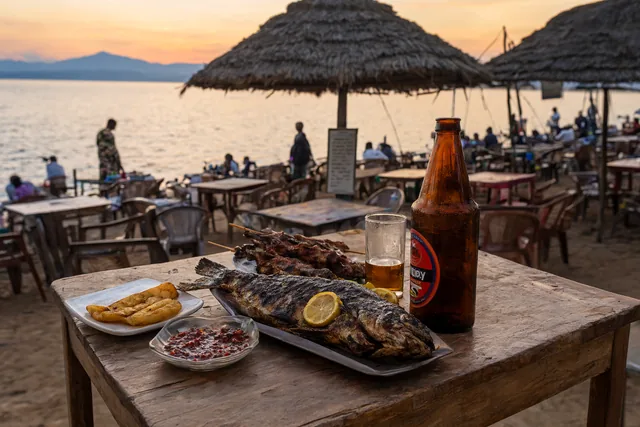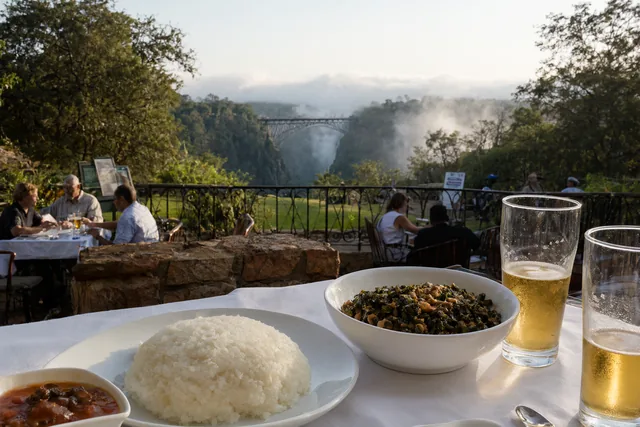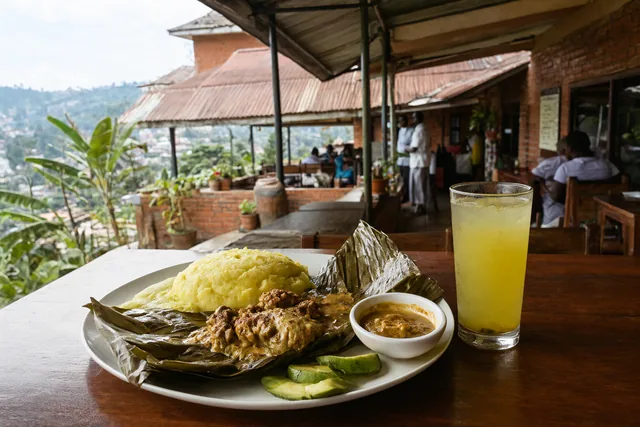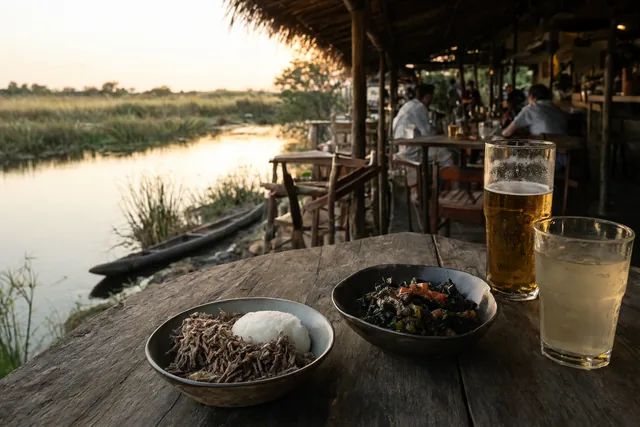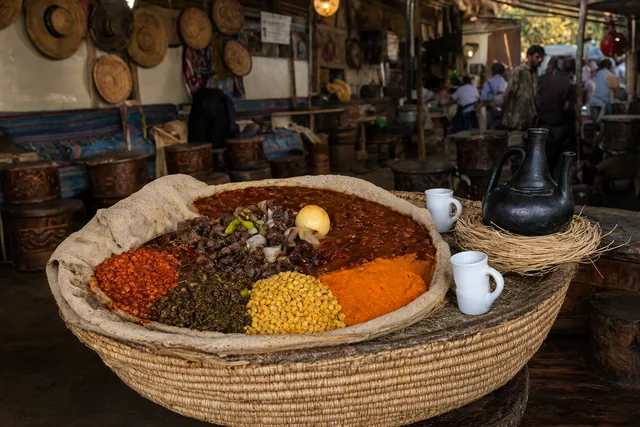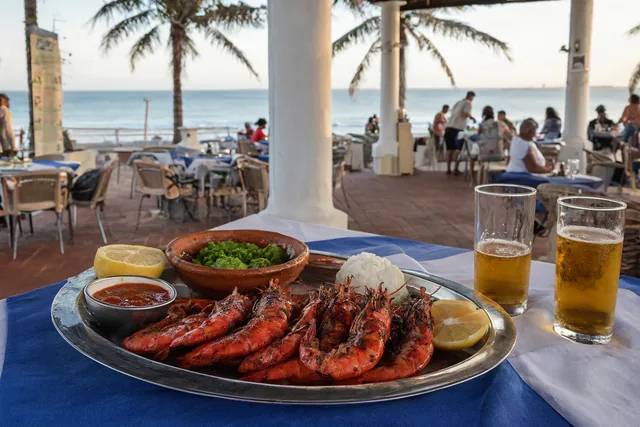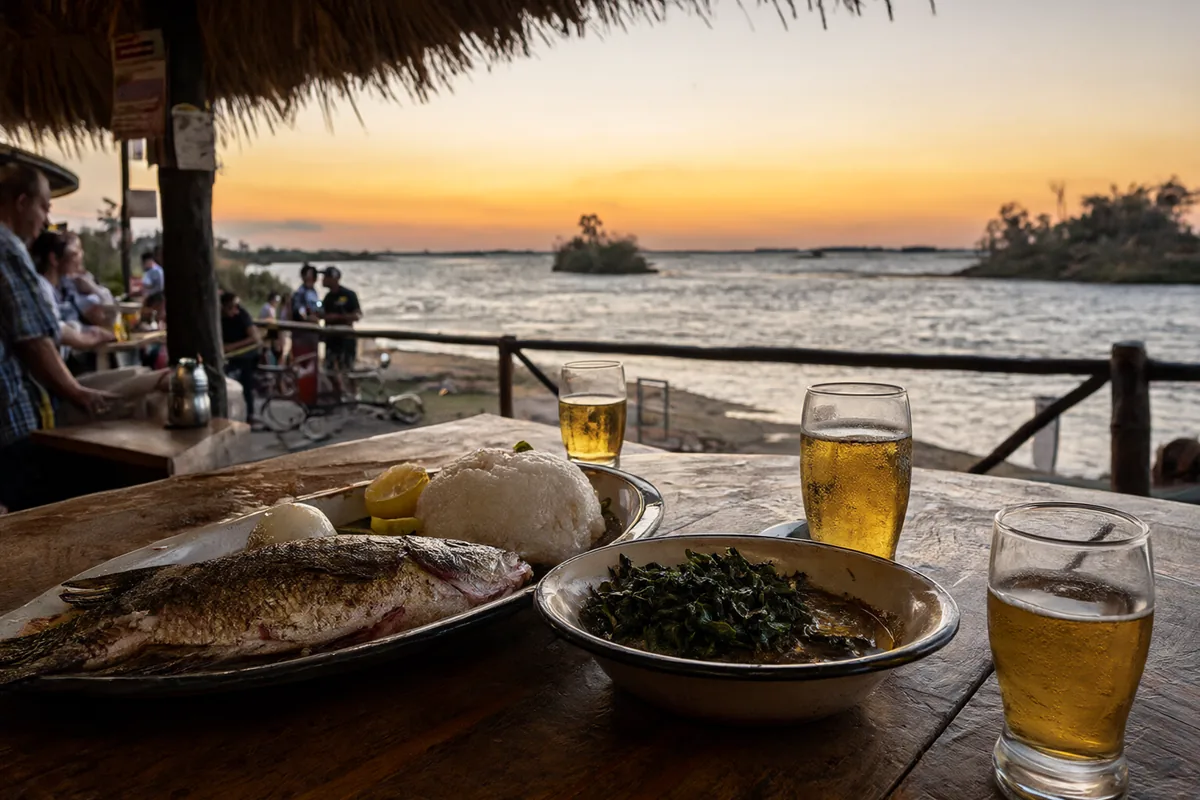
Zambia is best known for Victoria Falls and walking safaris, but the food is worth paying attention to as well: a white mound of nshima with a stew of greens and groundnuts, whole fish from the Zambezi and Lake Kariba, tiny dried kapenta fried with tomato, and long dinners by the fire at safari camps. This Zambia food guide covers the dishes to know, the local words you will meet on menus and at market canteens, how tipping and paying in kwacha works, what to expect at safari lodges, and where to eat in Lusaka, Livingstone, South Luangwa, the Lower Zambezi, Siavonga and Lake Kariba, and the Copperbelt.
What to eat in Zambia: 12 dishes to know
Zambian home cooking is built around one staple and a changing cast of side dishes. Nshima is the meal; everything else is the "relish" that goes with it. These are the dishes and foods to look out for.
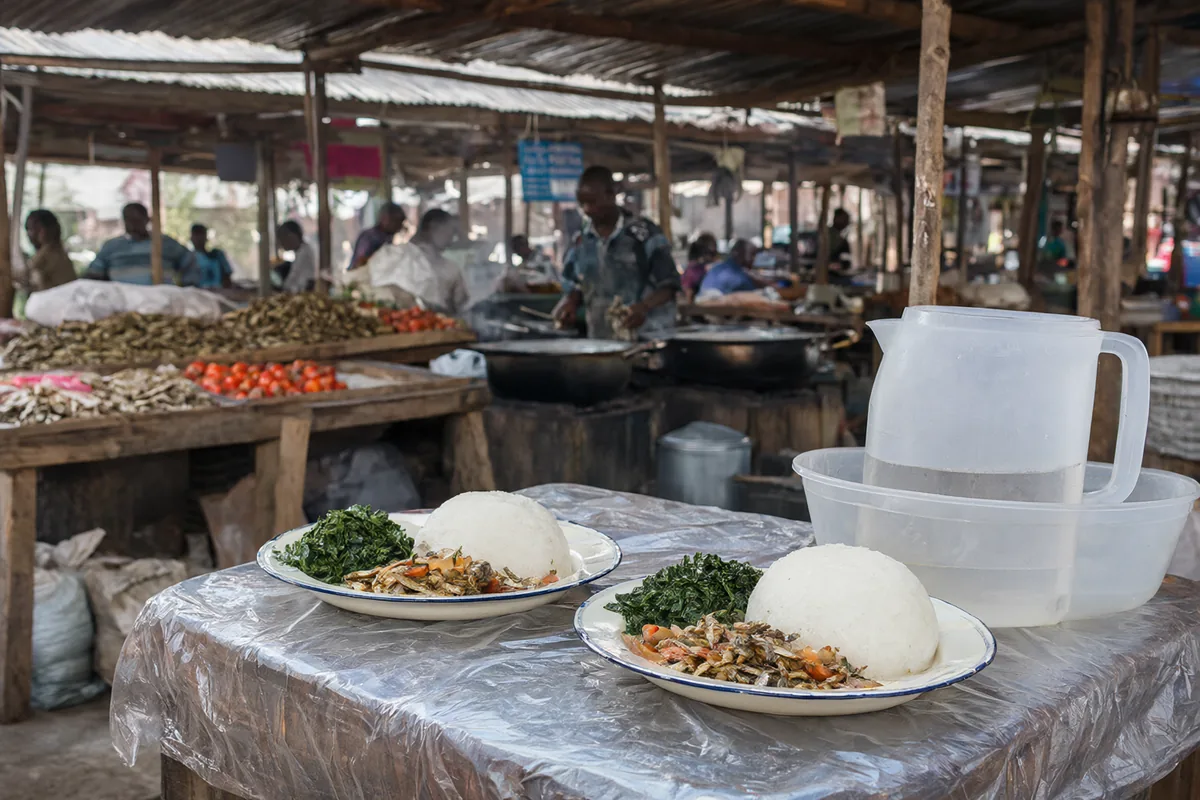
- Nshima (everywhere): a stiff porridge of finely ground white maize meal, shaped into smooth lumps and eaten with the right hand. It is the centre of almost every Zambian lunch and dinner, and many Zambians say a meal without nshima is only a snack.
- Ifisashi (everywhere, originally Bemba): greens such as pumpkin leaves, sweet potato leaves or rape cooked in a sauce of pounded groundnuts (peanuts), with onion and tomato. Often vegetarian and very good.
- Kapenta (Lake Kariba and Lake Tanganyika): small sardine-like fish, sold dried in markets and fried with tomato and onion, or fresh near the lakes. Eaten whole, heads and all.
- Bream (the Zambezi, Kafue and the lakes): the local name for tilapia, grilled or fried whole and served with nshima or chips. The fish most visitors remember from Zambia.
- Village chicken (everywhere): free-range chicken, tougher and far more flavourful than farmed birds, usually stewed slowly with tomato. Menus often list it separately and charge more for it.
- Chikanda (the north and east, now everywhere): sometimes called "African polony", a firm savoury loaf made from the tubers of wild orchids, ground groundnuts and chilli, sliced cold. Harvesting of the wild orchids has become a conservation concern.
- Vinkubala (Central and Northern provinces): mopane caterpillars, dried, then fried crisp with onion and tomato. A seasonal delicacy and a good source of protein.
- Impwa and delele (everywhere): impwa are small bitter garden aubergines, and delele is okra cooked until it turns slippery. Both are classic relishes for nshima.
- Beef and goat stew (everywhere): tomato-based stews cooked long and slow, plus T-bone steaks and grilled meat at braai spots, served with nshima or chips.
- Sweet potatoes and cassava (everywhere): boiled or roasted, eaten for breakfast or as a snack, and sold by roadside vendors along with roasted maize cobs.
- Munkoyo (everywhere): a lightly fermented, sweet and sour drink made from maize meal and the roots of the munkoyo plant. Often non-alcoholic when fresh, it strengthens as it ferments.
- Maheu and chibwantu (everywhere): thick, slightly sour drinks made from maize. Maheu is sold commercially in shops, chibwantu is more often homemade.
How to read a menu in Zambia
English is Zambia's official language, and restaurant and lodge menus are written in English. The words that catch visitors out come from Bemba, Nyanja, Tonga and the other 70 or so local languages, and they appear most on the menus of local restaurants, market canteens and roadside eateries that serve "traditional" or "local" food. Many of these places have no printed menu at all: you are told what relishes are cooking today. These are the terms worth knowing.
| Term | Origin | Meaning |
|---|---|---|
| Nshima | Local, used nationwide | Stiff white maize porridge, the staple food |
| Relish | Zambian English | Any dish served with nshima: meat, fish, beans or greens |
| Ifisashi | Bemba | Greens cooked in a groundnut sauce |
| Kapenta | Local | Small dried or fresh lake fish |
| Bream | Zambian English | Tilapia, usually served whole |
| Village chicken | Zambian English | Free-range chicken, slow-stewed |
| Chibwabwa | Local | Pumpkin leaves |
| Kalembula | Bemba | Sweet potato leaves |
| Rape | Zambian English | A leafy green similar to kale, very common |
| Impwa | Local | Small bitter aubergines |
| Delele | Local | Okra, cooked into a slippery relish |
| Vinkubala | Local | Dried mopane caterpillars |
| Chikanda | Bemba | Cold loaf of orchid tuber and groundnut |
| Munkoyo, maheu | Local | Fermented maize drinks |
Zambian local restaurants often price a plate as "nshima with" a relish, and the relish you choose decides the price: beans or greens cost least, village chicken, bream and goat cost more. If a menu lists relishes in Bemba or Nyanja, swap.menu explains each one and converts the kwacha price to your home currency before you order.
Tipping, tax and paying the bill in Zambia
Tipping is appreciated in Zambia but not as automatic as in North America. In restaurants in Lusaka and Livingstone, about 10 percent is normal for good service when no service charge appears on the bill. Some hotels and restaurants add a service charge, so read the bill before adding more. At local canteens and markets, tipping is not expected, though rounding up is always welcome. VAT is charged at 16 percent and is normally included in menu prices. Our guide to tax and service charges on menus explains how these lines work around the world.
The currency is the Zambian kwacha (ZMW), written K on menus and price tags. Safari lodges and some activities quote rates in US dollars, but day-to-day spending in shops, restaurants and markets is in kwacha. Cards are accepted in shopping malls, larger restaurants, hotels and lodges, but carry cash for markets, roadside stalls, small eateries and rural areas. Mobile money is used everywhere by Zambians. When a card machine offers to charge you in your home currency, decline and pay in kwacha: our guide to paying in local currency explains why that costs less.
Zambia eats early. Breakfast is often maize porridge or tea and bread, lunch is the main meal for many people and runs from about midday to 2pm, and dinner is from around 6:30pm. Outside Lusaka and Livingstone, many restaurants stop serving by 9pm, and roadside eateries close at dusk.
Where to eat in Zambia, place by place
Zambia is a big country with a small number of towns, and many visitors split their time between Lusaka, Livingstone and one or two national parks. Jump to a destination:
Where to eat in Lusaka
Lusaka, the capital, is where you can eat the widest range of Zambian food in one place. The best introduction is a plate of nshima at a local restaurant or market canteen, where a simple counter offers three or four relishes of the day: kapenta, beans, ifisashi, beef stew, village chicken or bream. These places fill up with office workers at lunchtime, which is when the food is freshest. Soweto Market, west of the city centre, is the city's largest and most chaotic market, with piles of dried kapenta and caterpillars, fresh produce and small eateries cooking nshima all day; go with a local if you can, and keep valuables out of sight.
For sit-down restaurants, Lusaka's suburbs are more useful than the old centre around Cairo Road. Kabulonga, Woodlands, Rhodes Park and Longacres have grills, Indian, Chinese, Ethiopian, Lebanese and Italian restaurants, and plenty of garden cafés. The shopping malls have international chains and supermarkets for safari supplies. On Sundays, the craft and food market at the Arcades shopping centre is a relaxed place to try snacks and buy souvenirs. Lusaka traffic is heavy at rush hour, so plan dinner reservations around it.
Where to eat in Livingstone
Livingstone is Zambia's tourism capital, a short drive from Victoria Falls (Mosi-oa-Tunya, "the smoke that thunders"), and it has the country's best choice of restaurants for visitors. Most cafés, bars and restaurants are along or just off Mosi-oa-Tunya Road, the main street, serving burgers, pizza, grilled bream, T-bone steaks and local plates of nshima with village chicken. The Maramba Market, near the centre, is a working local market with dried fish, vegetables and small eateries, and is a good look at everyday food in Livingstone.
The classic Livingstone food experiences are on the water. Sunset cruises on the upper Zambezi serve drinks and snacks or a full dinner while hippos surface around the boat, and the lodges along the riverbank upstream of the falls serve dinner on decks above the water. When water levels allow, tours to Livingstone Island, on the lip of the falls, include breakfast, lunch or high tea. Afternoon tea at the grand old hotels near the falls is a Livingstone tradition in itself. Book cruises and island tours ahead in the busy July to October season.
Where to eat in South Luangwa
South Luangwa National Park, in the east of Zambia, is famous for leopards and as the birthplace of the walking safari, and nearly every meal here is eaten at a safari lodge or bush camp. The gateway village of Mfuwe, near the main park gate, has a few small shops, local eateries serving nshima and stew, and a market, but most visitors are on full board, with meals included. Camp kitchens bake their own bread, cook three meals a day for guests and staff, and often serve dinner outdoors under the stars or by a fire facing the Luangwa River.
Many South Luangwa camps arrange a bush breakfast or a sundowner stop during drives and walks, with a table set up in the open, and some offer a traditional Zambian dinner with nshima and relishes cooked by the staff, which is well worth asking for. If you are on a self-drive or budget trip, the campsites near the Mfuwe gate have restaurants and bars, and supplies are best bought in Chipata, the nearest town, on the way in.
Where to eat in the Lower Zambezi
The Lower Zambezi National Park runs along the Zambezi River opposite Mana Pools in Zimbabwe, and is known for canoe safaris, elephants on the floodplain and fishing for tigerfish, which is catch and release. There are no towns inside or near the park, so eating means your lodge or camp. Meals are usually served on decks above the river or on sandbanks, and sundowners on a boat with the sun setting over the escarpment are part of nearly every stay.
Bream from the river often appears on the dinner menu, alongside dishes made from supplies driven or flown in from Lusaka. The small border town of Chirundu, where the main road from Lusaka crosses into Zimbabwe, has basic eateries serving nshima, grilled chicken and fish for travellers and truck drivers.
Where to eat in Siavonga and Lake Kariba
Siavonga is Zambia's lakeside resort town on Lake Kariba, the huge reservoir formed by the Kariba Dam, and a favourite weekend escape from Lusaka. This is the heart of the kapenta industry: at night, the lights of kapenta fishing rigs dot the lake, and in the morning the catch is laid out on racks to dry in the sun. Fresh kapenta, fried or stewed, is a different and better thing than the dried version sold in Lusaka. Grilled bream from the lake, with nshima or chips, is the other dish to order in Siavonga.
The lodges and hotels along the shore serve buffets, braais and fish dishes, and many run boat trips and sunset cruises. Siavonga town has a market with fish and fresh produce and simple local restaurants. Weekends and public holidays fill up with Lusaka families, so book a room in advance, and come midweek for a quieter stay in Siavonga. Further west along the lake, houseboats from Siavonga and Sinazongwe include all meals, usually cooked by a crew on board.
Where to eat in the Copperbelt
The Copperbelt, in the north of the country, is Zambia's mining heartland, and its two big cities, Kitwe and Ndola, see few tourists. That is a reason to eat here, not to skip it: this is Bemba country, and the local restaurants serve classic Bemba food, such as ifisashi, kalembula and chikanda, alongside nshima, kapenta, beef stew and village chicken. Kitwe's Chisokone Market is one of the largest markets in the country, with stall after stall of dried fish, caterpillars, beans and produce.
Both Kitwe and Ndola have shopping malls with supermarkets, grills and fast-food chains, and hotels with restaurants that cater to business travellers in the mining industry. Grilled meat and cold beer at weekend braai spots are a big part of social life in the Copperbelt.
Eating at safari lodges and camps in Zambia
For many visitors, most meals in Zambia are eaten at safari lodges, and the day has a rhythm of its own. Expect a wake-up call around dawn, with tea, coffee and something baked by the fire before a morning walk or drive. Brunch, a full cooked meal, comes back at camp in the late morning. After the midday rest, afternoon tea with cakes and savouries is served around 3:30pm before the evening drive, which usually stops for sundowners: drinks and snacks in the bush at sunset. Dinner is served after dark, often at a shared table with your guide, and in many camps outdoors around a fire.
Most camps are full board, and many include local drinks. Because supplies come by road from Lusaka or by light aircraft, tell the lodge about dietary needs when you book rather than on arrival, so the kitchen can plan. Tipping at safari camps is usually done at the end of your stay, with a shared tip box for camp staff and a separate tip for your guide; the welcome information in your room normally suggests a daily amount per guest. Drinking water at lodges is filtered or bottled, and it is fine to ask for nshima and a Zambian relish if it is not on the set menu.
Vegetarian, vegan and allergy tips
Zambia is easier for vegetarians than its reputation suggests. Nshima with beans, ifisashi, chibwabwa, impwa, delele and rape is a complete vegetarian meal, and these relishes are often vegan too. The catch is that greens and beans are sometimes cooked with meat stock, dried fish or a little kapenta for flavour, so ask. The word "vegetarian" is understood in restaurants and lodges, and in local eateries saying "no meat, no fish" is clearer. Lodges cater well for vegetarians and vegans if told in advance.
Groundnuts (peanuts) are the hidden ingredient to watch: they are pounded into ifisashi and other relishes, used in chikanda and roasted as a snack, which matters if you have a peanut allergy. Maize is in almost everything, wheat is in bread and baking, and cooking oil is often of unknown origin at market stalls. Our guide to eating abroad with food allergies has tips for explaining a serious allergy clearly when the cook does not share your language.
Zambian food terms and ordering phrases
English works for ordering everywhere in Zambia, but a few local words go a long way. Nyanja is widely spoken in Lusaka and the east, Bemba in the Copperbelt and the north, and Tonga in the south around Livingstone and Lake Kariba.
Nshima with kapenta, please How a lunch order sounds at a local restaurant: the staple, then the relish
What relishes do you have today? The best question at a canteen with no printed menu
Can I wash my hands? Before eating nshima, staff often bring a bowl and jug of water to the table
Muli bwanji? "How are you?" in Nyanja, the usual friendly greeting in Lusaka
Mwapoleni A greeting in Bemba, used in the Copperbelt and the north
Zikomo / Natotela "Thank you" in Nyanja / in Bemba
No meat, no fish, please Clearer than "vegetarian" at small local eateries
Can I pay by card? Worth asking before you order outside the malls and hotels
How swap.menu helps you eat in Zambia
Zambian menus are in English, but the local food section is where visitors get stuck. Is kalembula a meat or a vegetable, what is chikanda, and why does village chicken cost twice as much as the stew? Photograph the menu with swap.menu and every dish gets a short explanation, so you know that vinkubala are fried caterpillars before they arrive. Every kwacha price is converted to your home currency, which helps when lodges quote in US dollars and town restaurants in kwacha.
Visitors from non-English-speaking countries can read the whole menu in their own language, in any of 29 languages, and add notes such as "no peanuts" or "no fish in the greens, please", typed or spoken, that show on the waiter's screen in English. You can save the menus of the places you liked in Lusaka or Livingstone. Try it on a sample menu with the free demo, or see travel pass prices.
Off to Zambia? Your first 3 menu scans are free, and a travel pass starts from $4.99 with nothing that renews.
Start free with 3 scansZambia food FAQ
Do you tip in restaurants in Zambia?
Tipping around 10 percent is normal in restaurants in Lusaka and Livingstone when no service charge has been added. At safari lodges, tips are usually given at the end of the stay through a staff tip box, with a separate tip for your guide. Tipping is not expected at local canteens.
What food is Zambia famous for?
Zambia is famous for nshima, the stiff maize porridge eaten at almost every meal, served with relishes such as ifisashi (greens in groundnut sauce), kapenta, beans and village chicken. Grilled bream from the Zambezi and Lake Kariba and dried mopane caterpillars are also well known.
Is it expensive to eat out in Zambia?
Local food is cheap: a plate of nshima with a relish at a canteen costs very little. International restaurants in Lusaka and Livingstone are moderately priced, while safari lodges are expensive but usually include all meals in the rate.
Is tap water safe to drink in Zambia?
Visitors should not drink tap water in Zambia. Use bottled or filtered water, which lodges and hotels provide, and be careful with ice and raw salads at small eateries.
How do you eat nshima?
Wash your hands, then take a small piece of nshima with your right hand, roll it into a ball, press a dent into it with your thumb and use it to scoop up the relish. Cutlery is always available in restaurants if you prefer.
Can swap.menu help with Zambian menus if they are in English?
Yes. It explains local dishes and words such as nshima, ifisashi, chibwabwa and chikanda, converts kwacha prices to your home currency and saves the menus you scan. Visitors who do not read English can see the menu in their own language.
Travelling further in southern Africa? Read our food guides for nearby countries:
- Zimbabwe food guide
- Botswana food guide
- Malawi food guide
- Namibia food guide
- Tanzania food guide
- South Africa food guide
Or browse every travel food guide.