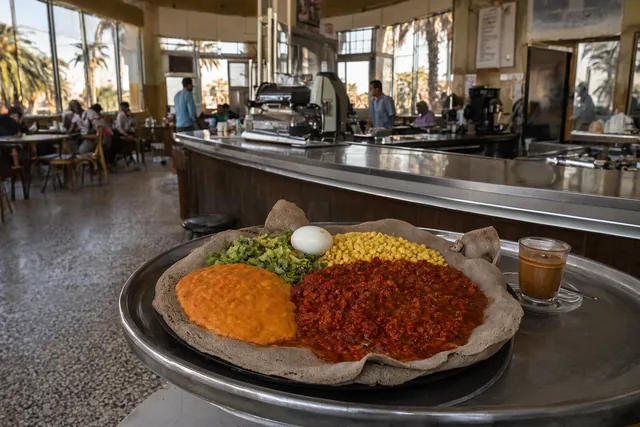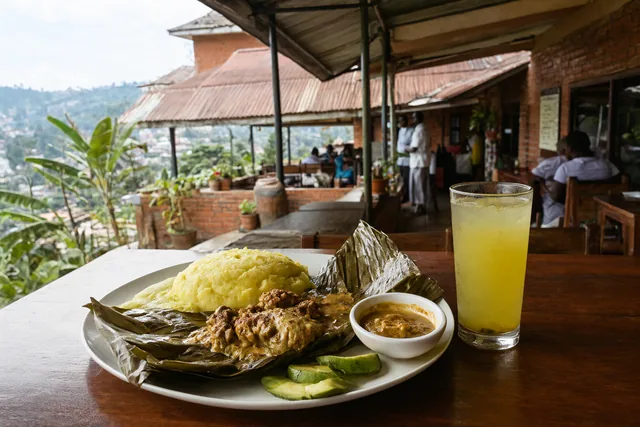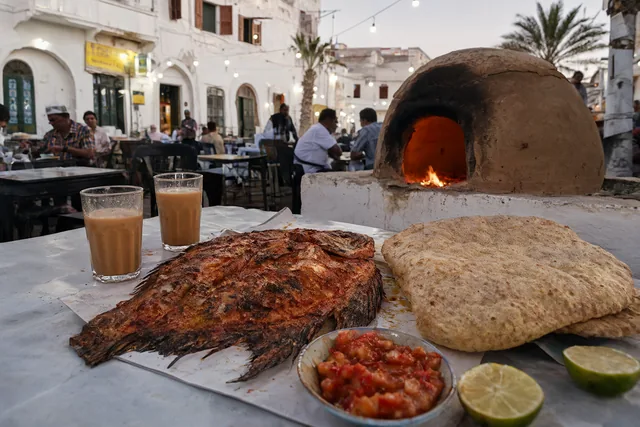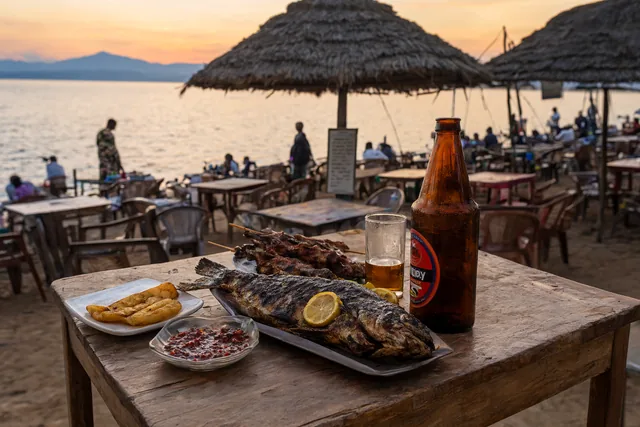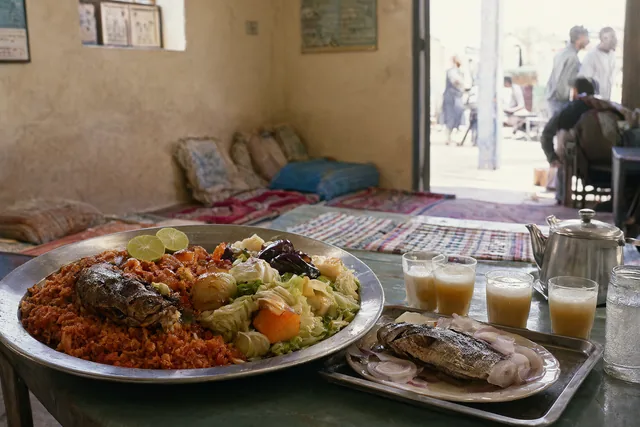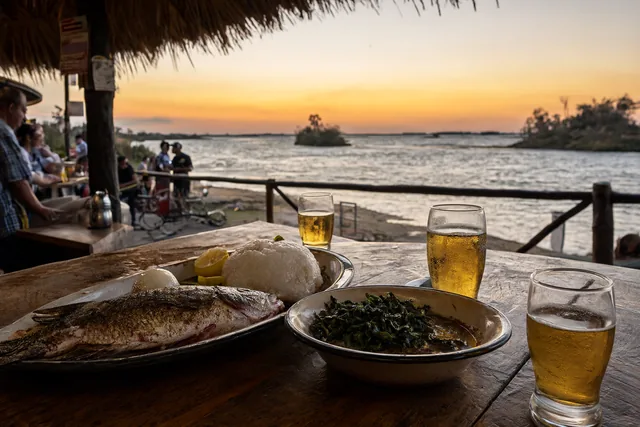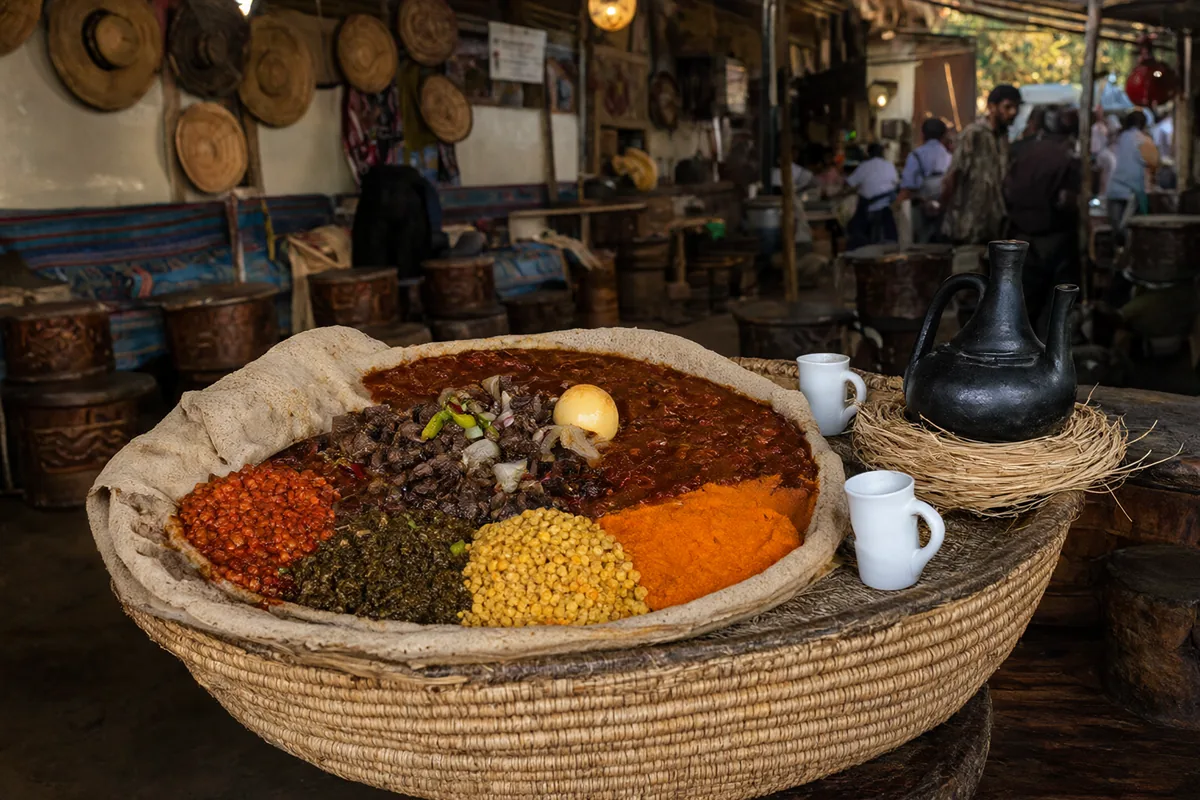
Ethiopia has one of the most distinctive cuisines in the world and the oldest coffee culture of all. Meals are served on a single large round of injera, the spongy, sour flatbread made from teff, topped with stews called wat that are deep red with berbere spice or mild and golden with turmeric. Because Orthodox Christians fast from animal products for much of the year, Ethiopia is also one of the best countries anywhere for vegans. This Ethiopia food guide covers the dishes to know, how to read an Amharic menu, tipping, tax and Ethiopian time, fasting food, and then goes city by city through where to eat in Addis Ababa, Bahir Dar, Gondar, Lalibela, Axum, Mekele, Harar and Hawassa.
What to eat in Ethiopia: 12 dishes to know
Ethiopian food is eaten with the right hand, tearing off pieces of injera to scoop up the stews, and shared from one platter. Hands are washed at the table before and after the meal, and friends feed each other a gursha, a mouthful placed directly into someone's mouth as a sign of affection.
- Injera: the national bread, a large, thin, spongy flatbread made from fermented teff batter, with a gentle sour taste. It is the plate, the cutlery and the staple.
- Doro wat: the national dish, chicken slow-cooked for hours in a deep red sauce of onions, berbere and spiced butter (niter kibbeh), served with hard-boiled eggs. Made for holidays and guests.
- Tibs: pieces of beef or lamb sautéed with onion, chilli, rosemary and butter. Shekla tibs arrive sizzling in a clay pot over hot coals.
- Kitfo: finely minced raw beef warmed in spiced butter with mitmita, a fiery chilli powder, from the Gurage region. Order it leb leb (lightly cooked) or yebesele (cooked through) if you prefer.
- Shiro: a smooth stew of ground chickpeas or broad beans with garlic and spices, often bubbling in a small clay pot. Vegan, cheap and on every menu.
- Misir wat: red lentils cooked in a spicy berbere sauce, one of the most popular fasting dishes.
- Beyaynetu: a fasting platter of many small vegan dishes on injera: lentils, split peas, shiro, cabbage, collard greens (gomen), beetroot and potatoes. The best way to try everything at once.
- Firfir: torn injera tossed in a spicy sauce, with or without meat, a common breakfast.
- Chechebsa: also called kita firfir, shredded flatbread fried with spiced butter and berbere, often served with honey and yoghurt for breakfast.
- Ful: mashed fava beans with oil, onion, tomato, chilli and sometimes egg, eaten with bread rolls for breakfast.
- Tej: honey wine, golden and sweet, served in a round-bottomed glass flask called a berele at tej bet (tej houses).
- Buna: the coffee ceremony. Green beans are roasted over charcoal, ground and brewed in a clay pot called a jebena, then served in three rounds with popcorn or roasted barley (kolo) and incense burning.
Other names to know: ayib (a mild fresh cheese that cools spicy food), genfo (a thick porridge with spiced butter), kocho (dense bread made from the false banana plant, eaten with kitfo in the south), gored gored (raw beef cubes), awaze (a chilli paste for dipping) and tella (home-brewed grain beer).
How to read an Amharic menu
Amharic, the national working language, is written in the Ge'ez script, in which each character is a syllable. In Tigray, around Axum and Mekele, Tigrinya is spoken, using the same script, and Afaan Oromo, written in Latin letters, is widely spoken in Oromia. Many restaurants in Addis Ababa and tourist towns have English menus, but local eateries, butcher houses and cafés often write dishes in Amharic only.
| Amharic | Romanised | Meaning |
|---|---|---|
| እንጀራ | injera | Sour teff flatbread |
| ወጥ | wat | Stew, usually spicy |
| አልጫ | alicha | Mild stew, without berbere |
| ጥብስ | tibs | Sautéed meat |
| ክትፎ | kitfo | Minced raw beef |
| ሥጋ | siga | Meat |
| ዶሮ | doro | Chicken |
| አሳ | asa | Fish |
| ሽሮ | shiro | Chickpea stew |
| የጾም ምግብ | ye-tsom migib | Fasting food, vegan |
| በያይነቱ | beyaynetu | Mixed platter, "of every kind" |
| ቡና | buna | Coffee |
| ጠጅ | tej | Honey wine |
| ውሃ | wuha | Water |
Menus are often divided into fasting (ye-tsom) and non-fasting (ye-filsik) sections. Wat is spicy unless marked alicha, which is mild and yellow with turmeric.
Many Ethiopian menus list prices before VAT and service, and some are written only in Amharic. swap.menu reads the Ge'ez script, explains each dish, tells you which are fasting food or raw meat, flags tax and service lines and converts birr prices to your home currency.
Tipping, tax, Ethiopian time and paying
Check your government's current travel advice before planning a trip. Hotels and upmarket restaurants often show prices before VAT (15 percent) and a service charge (usually 10 percent), with a note at the bottom of the menu, so the bill can be a quarter higher than the menu prices. Local restaurants and cafés usually charge the price shown. Our guide to tax and service charges on menus explains how these lines work around the world.
Tipping is customary. Where no service charge has been added, around 10 percent is normal in restaurants, and small tips are welcome at cafés, for coffee ceremonies and for guides, drivers and the musicians at cultural restaurants. The currency is the Ethiopian birr (ETB, written Br). Cards are accepted at large hotels and some upmarket restaurants in Addis Ababa, and ATMs in the cities often take foreign cards, but most restaurants, cafés and markets outside the capital want cash. If a card machine offers to charge you in your home currency, decline: our guide to paying in local currency explains why.
Ethiopia keeps its own time and calendar. The day is counted in two 12-hour cycles starting at dawn, so 7am is "one o'clock" in Ethiopian time, and the calendar has thirteen months and runs about seven to eight years behind the Western one. When someone gives you an opening time or a booking, check whether they mean Ethiopian or international time.
Breakfast is often ful, firfir or chechebsa. Lunch is from about 12pm to 2pm, and dinner from about 7pm to 9pm. Fasting shapes the menu: Orthodox Christians eat no animal products on Wednesdays and Fridays and during long fasts, the biggest being the 55 days before Easter, so restaurants always have vegan dishes, and in fasting periods the meat sections can be thin. Alcohol is legal and widely available: local lagers, tej, tella and areki, a strong grain spirit. About a third of Ethiopians are Muslim, and during Ramadan restaurants stay open, but in mainly Muslim towns such as Harar be discreet about eating in public by day.
Where to eat in Ethiopia, city by city
These cities cover the capital, the historic northern route and the east and south. Distances are large, so many visitors fly between them. Jump to a city:
Where to eat in Addis Ababa
Addis Ababa, the capital, has the best and widest range of Ethiopian food in the country, from butcher houses to cultural restaurants. Bole, near the airport, is the modern district with hotels, international restaurants, cafés and bars, and a good place to start. Piassa, the old centre, has Italian-era pastry shops and cafés serving macchiato and cakes, and older traditional restaurants. Kazanchis has hotels, restaurants and nightlife. Addis Ababa also has a huge coffee culture, with cafés on every corner serving espresso drinks alongside traditional buna.
For a first night, many visitors go to a cultural restaurant, where a beyaynetu or a mixed meat platter is served on a woven basket table (mesob) with live music and dancing from different regions of Ethiopia. For something more local, look for a kitfo bet (kitfo house), a tej bet for honey wine, or an azmari bet, a music bar where singers improvise witty verses about the audience. Merkato, one of the largest open-air markets in Africa, is the place to see spices, berbere, coffee and grain in bulk, but it is crowded, so go with a local guide. Addis Ababa tip: Wednesdays and Fridays are fasting days, when the vegan platters are freshest and most varied.
Where to eat in Bahir Dar
Bahir Dar, on the southern shore of Lake Tana, is a relaxed city with palm-lined avenues and the base for visiting the lake's island monasteries and the Blue Nile Falls. Lake Tana means fish: Bahir Dar's restaurants serve fish tibs (fish sautéed with onion and chilli), whole fried tilapia, fish cutlets and fish goulash, alongside the usual injera and wat.
The lakeshore in Bahir Dar has hotels and restaurants with terraces facing the water, best at sunset, and the city's cafés and juice bars are good for an afternoon break. Try the fresh fruit juices, often layered avocado, mango and papaya, a speciality across Ethiopia. Bahir Dar has a lively evening scene, with bars and azmari bet where you can hear traditional Amhara music.
Where to eat in Gondar
Gondar, north of Lake Tana, was the royal capital of Ethiopia in the 17th and 18th centuries, and its castle compound, Fasil Ghebbi, is a UNESCO World Heritage Site. The city's food scene is simple and traditional: restaurants and hotels serve tibs, shiro, doro wat and fasting platters, and cafés serve macchiato and pastries. Gondar is also known for its tej bet, where locals drink honey wine from glass flasks.
Gondar is the place to be for Timkat, Ethiopian Epiphany, in January, when crowds gather at the bath of Fasilides, and the city fills with pilgrims and feasting. Gondar is the gateway to the Simien Mountains, so it is a good place to stock up on snacks before trekking. In Gondar, as across the north, local restaurants serve excellent value fasting food on Wednesdays and Fridays.
Where to eat in Lalibela
Lalibela, high in the mountains, is famous for its rock-hewn churches, carved out of solid rock in the 12th and 13th centuries and still in use. It is a small town, and its restaurants are mostly in hotels and simple local places on the main road, many with terraces looking over the valley. Lalibela is a good place to try tej, made with local honey, at one of the town's tej houses, and the honey of the surrounding highlands is highly prized.
Lalibela is a pilgrimage town, and during Genna (Ethiopian Christmas, on 7 January) and other religious festivals tens of thousands of pilgrims arrive, many fasting. Outside festival times, Lalibela is quiet in the evenings, so eat early. Restaurants in Lalibela serve both fasting and meat dishes, and the terraces with mountain views are worth the climb, especially at sunset.
Where to eat in Axum
Axum, in Tigray in the far north, was the capital of the ancient Aksumite kingdom, and its giant carved stelae are among Africa's great monuments. The local food is Tigrayan, closely related to Eritrean cooking: tihlo, balls of roasted barley dough dipped into a spicy meat sauce, ga'at (barley porridge with spiced butter), tsebhi (stews), shiro and injera. Tigrinya is the local language, so menus and greetings differ from those in Amhara.
The town has a modest food scene of hotel restaurants, local eateries and cafés around the main roads and the market. Axum is an important religious centre, home to the Church of St Mary of Zion, and religious festivals draw large crowds. If you get the chance to try tihlo at a local restaurant in Axum, take it: it is rarely found elsewhere.
Where to eat in Mekele
Mekele, the capital of Tigray, is a university city and the gateway to the rock-hewn churches of Gheralta and the Danakil Depression. It has a lively café culture, with coffee houses, pastry shops and juice bars, and restaurants serving Tigrayan dishes such as tihlo, tsebhi, ga'at and shiro, as well as tibs and grills.
Mekele has long been a trading town on the old salt caravan routes from the Danakil, and its markets sell grain, spices, honey and coffee. The city's restaurants are generally simple and good value. Tigrinya is the main language in Mekele, so learn a Tigrinya greeting such as selam and "thank you", yekenyeley.
Where to eat in Harar
Harar, in the east, is one of the holiest cities in Islam in Africa, and its old walled town, the Jugol, is a UNESCO World Heritage Site of narrow alleys, painted houses and mosques. Harar has its own Harari culture and cooking, more influenced by the Arab world and with more spice: look for dishes such as hulbat marak, a meat broth topped with whipped fenugreek, and for Somali and Oromo dishes in the markets. The region is famous for Harar coffee, one of the most prized Ethiopian varieties.
The markets around the old gates of Harar sell spices, coffee, grain, baskets and the khat leaf, which is widely chewed in the region. Harar is also famous for its evening hyena feeding outside the walls. Restaurants in Harar are simple, with Ethiopian, Harari and some Italian-influenced dishes, and the city is predominantly Muslim, so dress modestly and be discreet during Ramadan. Dire Dawa, an hour away, is the nearest large city and has more restaurants.
Where to eat in Hawassa
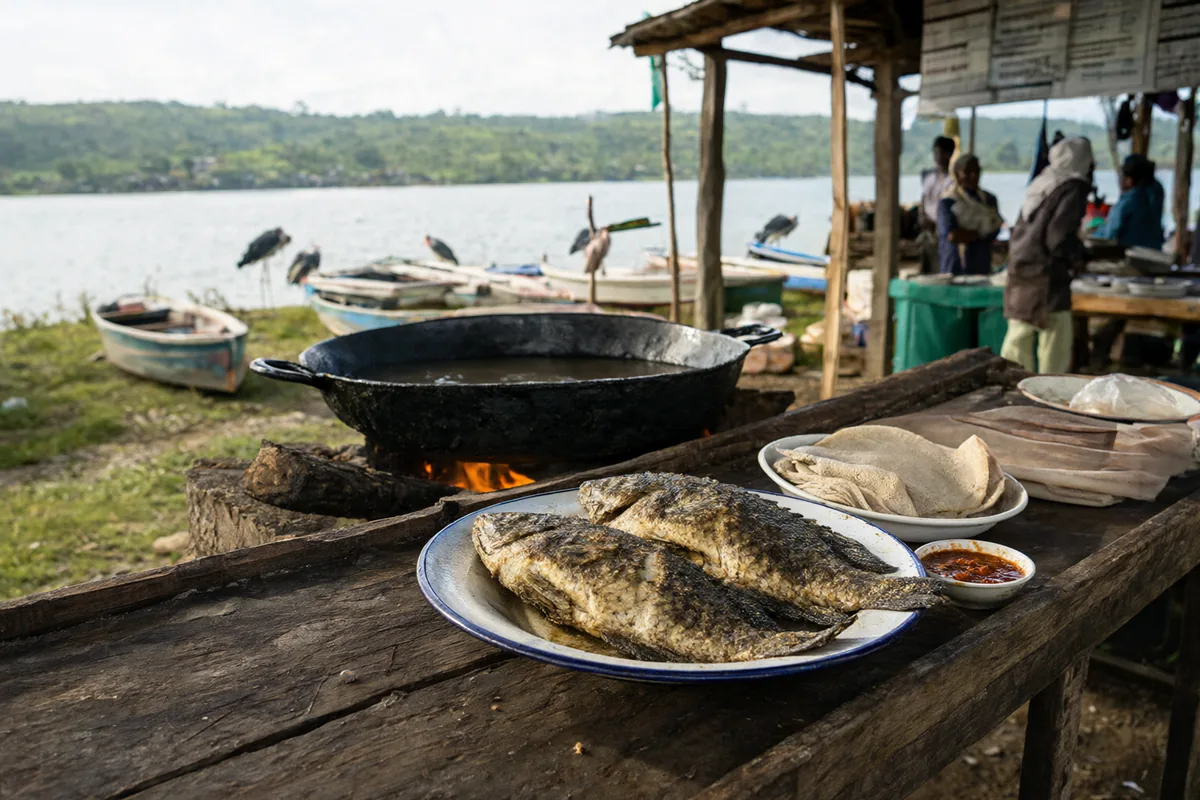
Hawassa, about 270 kilometres south of Addis Ababa on Lake Hawassa, is a popular weekend escape for Addis residents and the capital of the Sidama region, one of the world's great coffee-growing areas. Its highlight is the fish market on the lakeshore, where in the morning fishermen bring in tilapia and catfish from small wooden boats and simple stalls fry the fish and serve it with injera and chilli, or as raw fish with awaze for the adventurous. Marabou storks and pelicans wait for scraps.
Hawassa's lakeside promenade has hotels and restaurants with water views, and the town is full of cafés serving local Sidama coffee. The southern regions around Hawassa are also where to try kocho, the dense false banana bread, and southern-style kitfo. Hawassa is a relaxed city, and an easy stop on a trip to the Rift Valley lakes and the Bale Mountains.
Vegetarian, vegan and allergy tips
Ethiopia is one of the easiest countries in the world for vegans. Thanks to the Orthodox fasting tradition, almost every restaurant serves ye-tsom migib (fasting food), made without meat, dairy or eggs: shiro, misir wat, split pea kik alicha, gomen, cabbage and potato, beetroot salad and the mixed beyaynetu. Ask for "ye-tsom" and you will be understood everywhere, and Wednesdays and Fridays are the best days to eat it.
On non-fasting days, watch for niter kibbeh, spiced clarified butter, in many stews, and ayib cheese and yoghurt on the side. Injera made from pure teff is gluten-free, but many restaurants mix teff with wheat or barley, so coeliacs should ask. Chilli is in almost everything, especially mitmita and berbere. Raw meat dishes like kitfo and gored gored carry a food safety risk, so order them cooked if in doubt. Our guide to eating abroad with food allergies explains how to communicate an allergy clearly.
Useful Amharic phrases for ordering
English is spoken in hotels and tourist restaurants, but a few words of Amharic go a long way. Forms change slightly when you speak to a man or a woman.
ሰላም Selam: "Hello"
እንዴት ነህ? Indet neh?: "How are you?" (indet nesh to a woman)
ይሄን እፈልጋለሁ Yihen ifeligalehu: "I would like this" (pointing)
የጾም ምግብ አለ? Ye-tsom migib alle?: "Is there fasting (vegan) food?"
... አለርጂ አለብኝ ... alerji alebign: "I am allergic to..."
ሂሳብ እባክህ Hisab ibakih: "The bill, please" (ibakish to a woman)
አመሰግናለሁ Ameseginalehu: "Thank you"
በጣም ጣፋጭ ነው Betam tafach new: "It is very tasty"
How swap.menu helps you eat in Ethiopia
An Ethiopian menu can be a list of a dozen kinds of wat, tibs and firfir in Amharic script, with fasting and non-fasting sections and prices before tax. Photograph it with swap.menu and every dish appears in your language with the Amharic name beside it and a short explanation, so you know that kitfo is raw beef, that alicha means mild, and that gored gored is not cooked at all. Prices in birr are converted to your home currency, and we flag VAT and service lines so the bill matches what you expected.
Tap the dishes you want, add a note such as "not spicy" or "fasting food only, please", typed or spoken, and swap.menu translates your order into Amharic. Show the waiter your phone, or let them scan the QR code and read your order on their own screen. Try it now on a sample menu with the free demo, or see travel pass prices.
Off to Ethiopia? Your first 3 menu scans are free, and a travel pass starts from $4.99 with nothing that renews.
Start free with 3 scansEthiopia food FAQ
Do you tip in restaurants in Ethiopia?
Yes, around 10 percent is normal where no service charge is on the bill. Many hotels and upmarket restaurants add 15 percent VAT and a 10 percent service charge, so check the menu notes and the bill first.
What is the national dish of Ethiopia?
Doro wat, chicken stewed in a spicy berbere and butter sauce with hard-boiled eggs, served on injera, is usually called the national dish. Tibs, kitfo, shiro and the vegan beyaynetu platter are the other dishes most visitors try.
Is Ethiopia good for vegans?
Ethiopia is excellent for vegans. Orthodox Christians fast from animal products on Wednesdays, Fridays and during long fasting periods, so almost every restaurant serves fasting food such as shiro, lentils, split peas and vegetables on injera.
Is injera gluten-free?
Injera made only from teff is naturally gluten-free, but many restaurants blend teff with wheat or barley flour. If you are coeliac, ask whether the injera is pure teff.
Is tap water safe to drink in Ethiopia?
No, drink bottled water, which is sold everywhere. Be careful with salads and raw dishes washed in tap water if you have a sensitive stomach.
How can I read an Amharic menu?
Learn a few words such as wat, tibs, alicha and ye-tsom, or photograph the menu with swap.menu. It reads the Ge'ez script, explains every dish, converts birr prices to your currency and translates your order into Amharic for the waiter.
Travelling further in East Africa? Read our food guides for neighbouring countries:
- Eritrea food guide
- Djibouti food guide
- Kenya food guide
- Uganda food guide
- Tanzania food guide
- Rwanda food guide
Or browse every travel food guide.