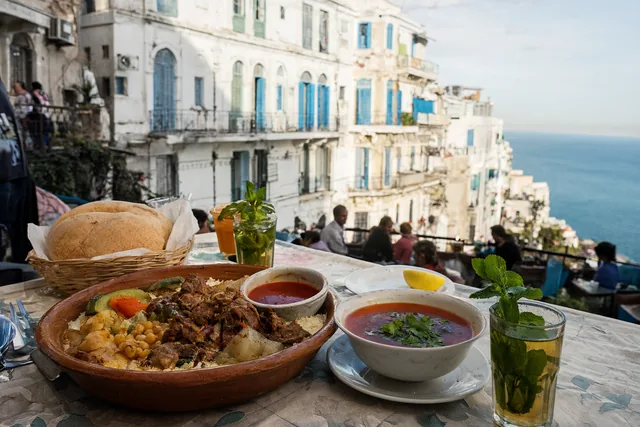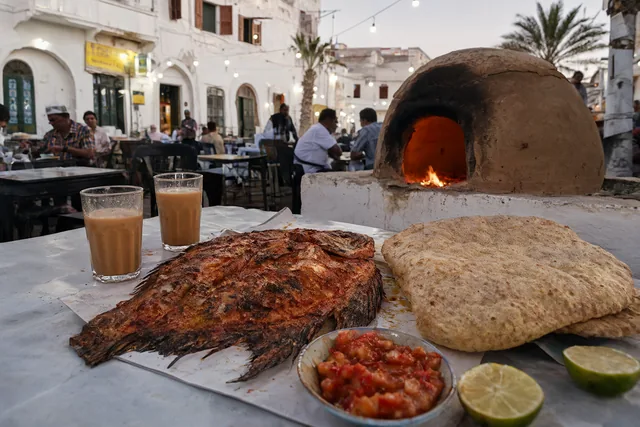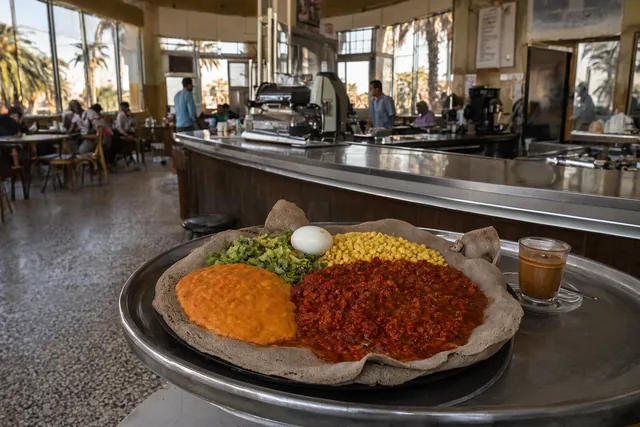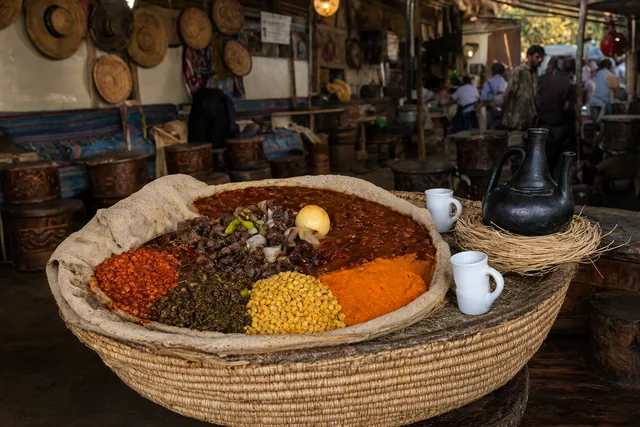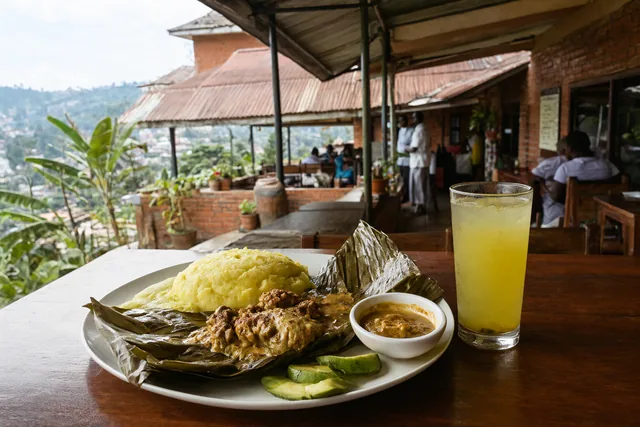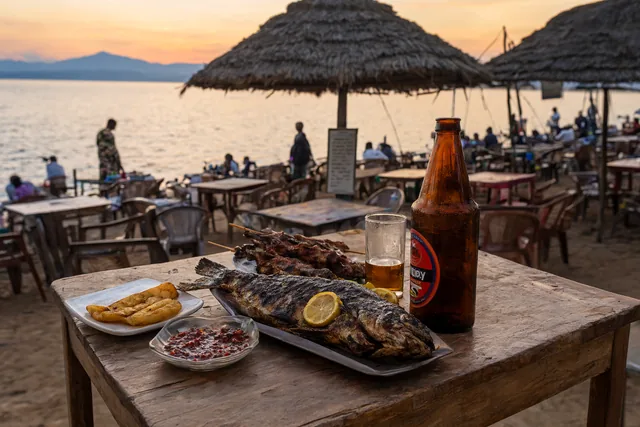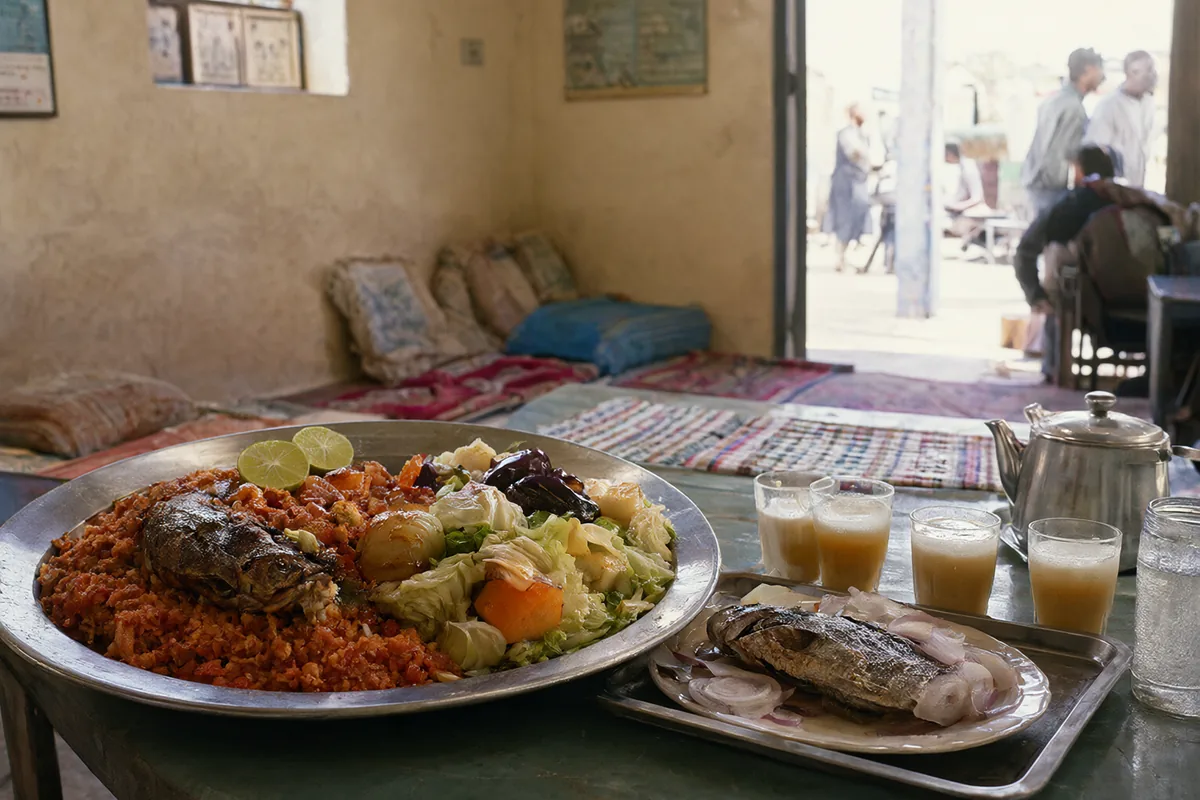
Mauritania sits where the Sahara meets the Atlantic and where the Arab Maghreb meets West Africa, and its food reflects both. In the desert north, meals are built on camel and goat, dates, milk and endless rounds of sweet mint tea. On the coast and in the south, rice and fish dishes shared with Senegal take over, and the capital adds Lebanese grills and French bread. This Mauritania food guide covers the dishes to know, how to read menus in Arabic and French, the tea ritual, cash and tipping, the rules on alcohol and Ramadan, and then where to eat in Nouakchott, Nouadhibou, the Banc d'Arguin, Atar and Chinguetti. It is a country of few restaurants and great hospitality, and some of your best meals may be in a guesthouse or a tent.
What to eat in Mauritania: 12 dishes to know
Mauritanian food is simple, generous and eaten from a shared platter, traditionally with the right hand. Restaurants are mostly in Nouakchott and Nouadhibou, and elsewhere you will eat what the guesthouse or roadside eatery is cooking that day.
- Thieboudienne: the great shared dish of the Senegal river region, rice cooked in a rich tomato and fish stock, topped with a whole fish stuffed with herbs and chilli, cassava, carrot, cabbage and aubergine. Popular in Nouakchott and the south.
- Méchoui: a whole lamb or goat roasted slowly over coals and pulled apart by hand, the dish for weddings, feasts and honoured guests.
- Couscous: steamed grains served with mutton, goat or camel meat and a light sauce, the standard meal in desert guesthouses.
- Camel meat: grilled in chunks, cooked in stews or served with rice. It is leaner than beef and widely eaten across the country.
- Tichtar: strips of sun-dried meat, a desert way of preserving it, often cooked into a sauce with rice or couscous.
- Grilled fish: the Atlantic coast is one of the richest fishing grounds in the world, and grilled whole fish with rice, fries or bread is the everyday restaurant meal on the coast.
- Poutargue (Banc d'Arguin): salted and dried mullet roe, a speciality of the Imraguen fishing communities, sliced thin and eaten as a delicacy.
- Mafé: meat or chicken in a peanut and tomato sauce with rice, a West African dish common in Nouakchott.
- Dates (Adrar): the oases of the Adrar produce dates eaten fresh in summer and dried all year, offered to every guest with milk.
- Zrig: sour milk, camel or goat, diluted with water and sweetened with sugar, served cold. The drink of the desert.
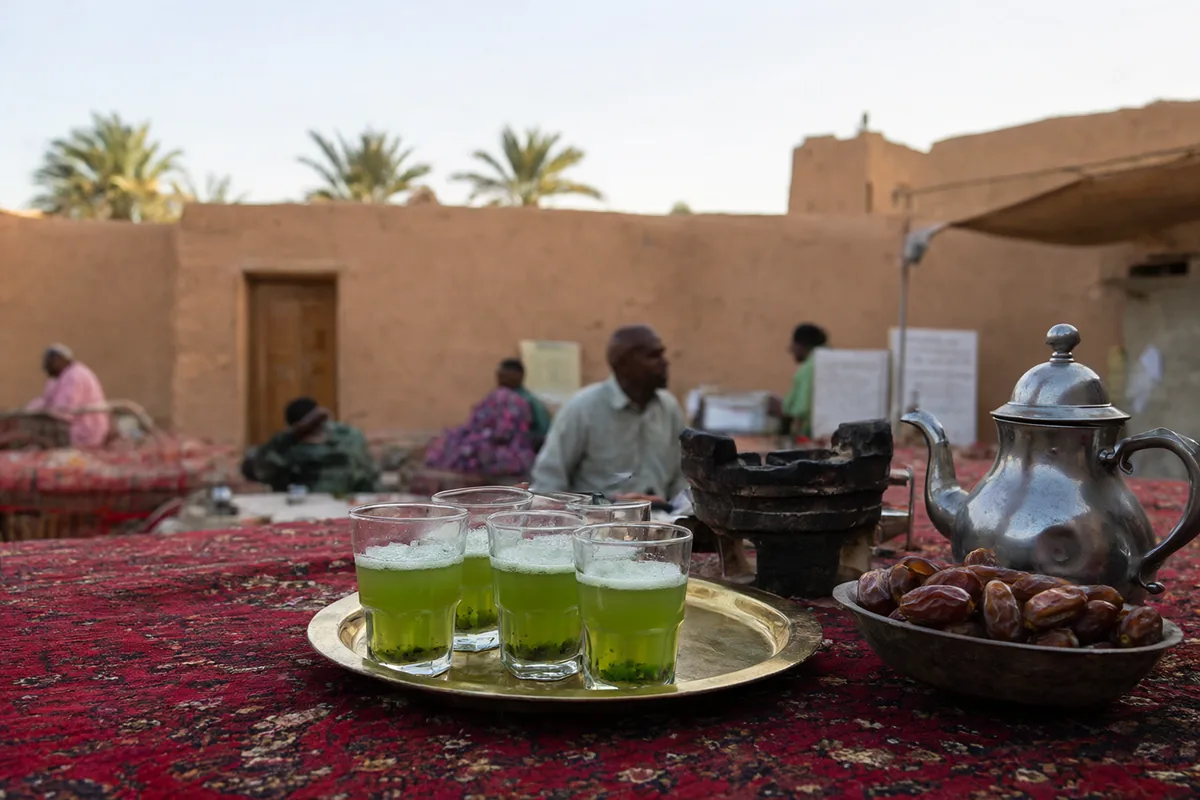
- Atay: green tea brewed with fresh mint and a lot of sugar, poured from a height to raise a froth, served in three rounds. Refusing is impolite.
- Bissap and bouye: chilled drinks of hibiscus flowers and of baobab fruit, sold in bags and bottles in markets and small shops.
Bread is the French baguette, sold in every neighbourhood, and you will find shawarma, grilled chicken and sandwiches in Nouakchott thanks to its Lebanese and Moroccan communities. Camel milk is also widely available, fresh or as a dairy product in supermarkets.
How to read a menu in Mauritania (Arabic and French)
Mauritania's official language is Arabic, and the everyday spoken form is Hassaniya, the Arabic dialect of the western Sahara. French is widely used in business, signs and restaurant menus, and Pulaar, Soninke and Wolof are spoken in the south. Restaurant menus in Nouakchott and Nouadhibou are usually in French, sometimes with Arabic. Arabic is written from right to left.
| Arabic | Romanised | French | Meaning |
|---|---|---|---|
| لحم | lham | viande | Meat |
| جمل | jmel | chameau | Camel |
| خروف | kharouf | mouton, agneau | Mutton, lamb |
| دجاج | djaj | poulet | Chicken |
| حوت | hout | poisson | Fish |
| رز | rouz | riz | Rice |
| كسكس | kuskus | couscous | Couscous |
| خبز | khobz | pain | Bread |
| لبن | lben | lait caillé | Soured milk |
| تمر | tmar | dattes | Dates |
| أتاي | atay | thé à la menthe | Mint tea |
| ماء | ma | eau | Water |
| نباتي | nabati | végétarien | Vegetarian |
| الحساب | el-hsab | l'addition | The bill |
Many small eateries have no written menu at all: the dish of the day is rice with fish, meat or chicken, and you simply ask what there is. On the coast, fish is often priced by the kilo. Prices can be confusing, because the ouguiya was redenominated in 2018 and many people still quote prices in old ouguiya, which are ten times larger.
A French menu in Nouakchott may say "thiéboudienne", "tchep" or "riz au poisson" for the same dish, and a price quoted aloud may be in old or new ouguiya. swap.menu reads Arabic and French, explains each dish, converts prices to your home currency and flags priced-by-weight fish, so you know what you are paying.
Cash, tea, tipping and paying
Check your government's current travel advice before planning a trip. Mauritania is a cash economy. Cards are accepted at a few hotels and upmarket restaurants in Nouakchott, but almost everywhere else, including guesthouses in the desert, you pay in cash, and ATMs that accept foreign cards are few and not always reliable. Bring euros, which are easy to change at banks and exchange offices in Nouakchott and Nouadhibou, and carry enough ouguiya for travel in the interior.
The currency is the ouguiya (MRU, written UM). Prices on menus are usually in new ouguiya, but people often quote prices aloud in old ouguiya, ten times larger, so check which is meant. Service charges are unusual. Our guide to tax and service charges on menus explains how such lines work around the world. If a card machine in a hotel offers to charge you in your home currency, decline: our guide to paying in local currency explains why.
Tipping is not traditionally expected in Mauritania, but it is appreciated. Rounding up in restaurants and leaving a little for good service is normal in Nouakchott, and drivers, guides and guesthouse staff on desert trips are usually tipped at the end. Hospitality is a point of honour, and if you are invited to a family meal or tea, do not offer money; a small gift such as sugar, tea or sweets is more appropriate.
The tea ceremony is central to Mauritanian life. Tea is brewed on a small charcoal stove, poured back and forth between glasses to build a froth, and served in three rounds that get progressively sweeter and lighter. A common saying describes the first glass as bitter like life, the second sweet like love and the third gentle like death. It takes time, and leaving before the third glass is impolite.
Lunch is the main meal, from about 1:30pm to 3pm, and dinner is late, often after 9pm. The weekend is Saturday and Sunday, and Friday midday prayers are the most important of the week. Alcohol is illegal in Mauritania and is not served in restaurants or sold in shops. During Ramadan, eating, drinking and smoking in public during daylight is not acceptable, most restaurants are closed in the day, and the evening iftar usually begins with dates, zrig or soup.
Where to eat in Mauritania, town by town
Mauritania's food is concentrated on the coast. Inland, in the Adrar, you eat in guesthouses, camps and simple eateries. Jump to a place:
Where to eat in Nouakchott
Nouakchott, the capital, is a young city spread out on the edge of the dunes, and it has the widest choice of food in the country. The essential sight is the fish market on the beach, often called the Port de Pêche or Plage des Pêcheurs, where hundreds of brightly painted wooden pirogues land their catch in the late afternoon and teams of men carry crates of fish up the sand. It is one of the great market scenes of West Africa, and the stalls and simple restaurants nearby grill fish fresh from the boats.
In the city centre, the Marché Capitale area is lined with small restaurants serving thieboudienne, mafé and rice with meat at lunch, often from a single pot, and Lebanese and Moroccan restaurants serve shawarma, grills and mezze. The neighbourhood of Tevragh Zeina, where many embassies and hotels are, has Nouakchott's more upmarket restaurants, cafés and pastry shops. Nouakchott tip: thieboudienne is a lunch dish, cooked once and served until it runs out, so go between 1pm and 2:30pm if you want to try it.
Where to eat in Nouadhibou
Nouadhibou, near the border with Western Sahara on the Cap Blanc peninsula, is Mauritania's second city and its fishing capital. The town lives from the sea: octopus, sea bream, grouper, sole and prawns land here, and Nouadhibou's restaurants serve them grilled, fried or in rice. Some restaurants show Spanish and Canarian influence, a legacy of the town's long links with the Canary Islands, alongside Mauritanian and West African cooking.
Nouadhibou is also the terminus of the famous iron ore train that crosses the desert to Zouérat, and many travellers pass through on overland routes. The town centre has simple eateries, cafés and bakeries, and the area around the artisanal fishing port is the place to see the catch come in. Food in Nouadhibou is good value, and the seafood is some of the freshest you will eat anywhere. Ask what came in that day rather than relying on the printed menu.
Where to eat in the Banc d'Arguin
The Banc d'Arguin National Park, on the coast between Nouakchott and Nouadhibou, is a UNESCO World Heritage Site and one of the most important places in the world for migrating birds. It is also home to the Imraguen, a fishing community who have fished these shallow waters for centuries, traditionally for mullet, which they dry and salt. The roe is made into poutargue, dried mullet roe, the area's prized delicacy.
There are no restaurants in the usual sense. Visitors stay at simple camps or in villages such as Iwik, and meals are fish, rice, bread and tea cooked by the camp or by local families. The fish is as fresh as it gets, often caught that morning. Bring snacks and water for the drive, which crosses sand and tidal flats and needs a four-wheel drive and a local guide.
Where to eat in Atar
Atar is the capital of the Adrar region and the gateway to the desert towns of Chinguetti and Ouadane. It is a small town with a busy market where you can buy dates, spices, tea, sugar cones, dried meat and fresh produce, and a handful of simple restaurants serving grilled meat, rice, couscous and camel. Atar's guesthouses and auberges serve home-style Mauritanian food and are often the best place to eat.
The palm groves around Atar are the heart of Mauritanian date growing. In summer, around July and August, families gather in the oases for the guetna, the date harvest season, when fresh dates are eaten in huge quantities and people relax in the shade of the palms. The oasis of Terjit, south of Atar, with its spring-fed pools in a narrow gorge, is a popular stop for tea and a picnic. In Atar, eat what is fresh and local: dates, camel or goat with rice, and as much tea as you are offered.
Where to eat in Chinguetti
Chinguetti, a UNESCO-listed caravan town on the edge of a sea of dunes, is famous for its old libraries of Islamic manuscripts and its stone mosque. It is small and quiet, and its food scene consists of guesthouses, a few simple eateries and a small market. Guesthouses serve couscous with camel or mutton, rice with meat and vegetables, fresh bread, dates and, of course, endless glasses of mint tea, usually eaten on carpets in a courtyard.
Chinguetti is the starting point for camel treks and desert camping, and the meals on a trek are cooked over a fire: bread baked in the sand under the embers, couscous, tea and dates. Many travellers say these are the most memorable meals in Mauritania. Supplies in Chinguetti are limited, so if you need anything special, such as snacks or vegetarian staples, buy them in Atar or Nouakchott.
Vegetarian, vegan and allergy tips
Mauritania is difficult for vegetarians. Meat or fish is the centre of almost every meal, rice is cooked in fish or meat stock, and the idea of a meal without meat can puzzle hosts. Good fallbacks are bread, dates, salads, omelettes, couscous with vegetables (ask for no meat sauce), fruit from the markets and peanuts. Say nabati in Arabic, végétarien in French, or simply "sans viande et sans poisson" (without meat and without fish), and confirm that the rice is not cooked in stock. All meat is halal, and pork is not available.
Milk is everywhere, in zrig, in tea in some homes and in dairy products, so lactose intolerance needs careful explaining. Peanuts are used in mafé and sauces from the south, and sugar is used generously in drinks. Our guide to eating abroad with food allergies explains how to communicate an allergy clearly when you do not speak the language.
Useful Arabic and French phrases for ordering
Hassaniya Arabic is the everyday language, but French is understood by most restaurant staff, so these phrases mix the two.
السلام عليكم Salam alaykum: "Peace be upon you", the standard greeting
شكراً Shukran: "Thank you"
بكم؟ Bikam?: "How much?"
بلا لحم Bla lham: "Without meat"
Qu'est-ce qu'il y a aujourd'hui ? "What is there today?"
Je voudrais ça, s'il vous plaît "I would like this, please" (pointing)
Je suis allergique à... "I am allergic to..."
L'addition, s'il vous plaît "The bill, please"
How swap.menu helps you eat in Mauritania
Mauritanian menus are rare, short and usually in French or Arabic, and the names of West African and Saharan dishes can mean nothing to a visitor. Photograph a menu or a board with swap.menu and every dish appears in your language with the original name beside it and a short explanation, so you know that tichtar is dried meat, that zrig is sweetened sour milk, and that "tchep" and "thiéboudienne" are the same rice and fish dish. Prices in ouguiya are converted to your home currency, which is useful when you are budgeting cash.
Tap the dishes you want, add a note such as "no fish stock" or "no peanuts, please", typed or spoken, and swap.menu translates your order into Arabic or French. Show the waiter your phone, or let them scan the QR code and read your order on their own screen. Try it now on a sample menu with the free demo, or see travel pass prices.
Off to Mauritania? Your first 3 menu scans are free, and a travel pass starts from $4.99 with nothing that renews.
Start free with 3 scansMauritania food FAQ
What food is Mauritania famous for?
Mauritania is known for thieboudienne (rice and fish), méchoui (whole roast lamb), couscous with camel or mutton, fresh Atlantic fish, dates from the Adrar oases, zrig (sweetened sour milk) and above all its mint tea, served in three rounds.
Do you tip in Mauritania?
Tipping is not traditionally expected, but rounding up in restaurants and leaving a little for good service is appreciated. Drivers, guides and guesthouse staff on desert trips are usually tipped at the end of the trip.
Can I use a credit card in Mauritania?
Rarely. Cards work at a few hotels and upmarket restaurants in Nouakchott, but Mauritania is a cash economy. Bring euros to change and carry enough ouguiya for the desert, where there are few or no ATMs.
Is alcohol available in Mauritania?
No. Alcohol is illegal in Mauritania and is not served in restaurants or sold in shops. Mint tea, zrig, fresh juices, bissap and soft drinks are what people drink.
Is tap water safe to drink in Mauritania?
No, drink bottled water, which is sold in towns. On desert trips, carry plenty of bottled water with you, as supplies can be limited outside Nouakchott, Nouadhibou and Atar.
How can I read a menu in Mauritania?
Most menus are in French, sometimes with Arabic, and many places have no menu at all. Learn a few words such as lham, hout, rouz and atay, or photograph the menu with swap.menu, which translates every dish, explains it, converts prices to your currency and translates your order.
Travelling further in West and North Africa? Read our food guides for neighbouring countries:
Or browse every travel food guide.