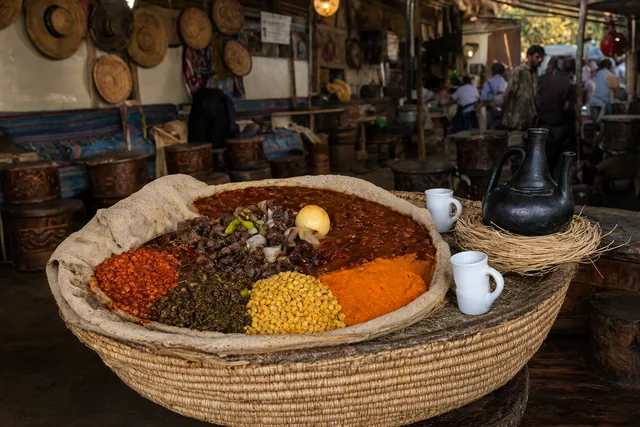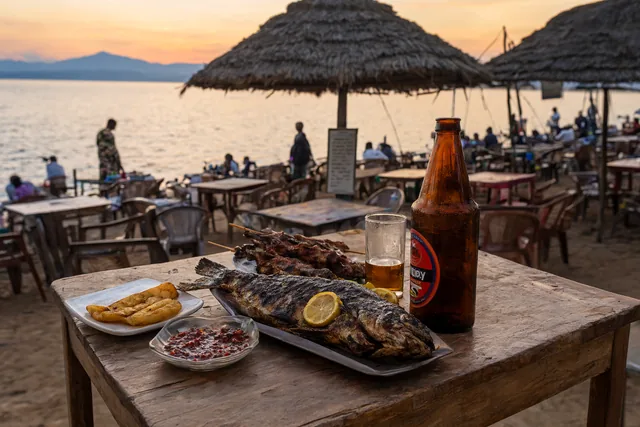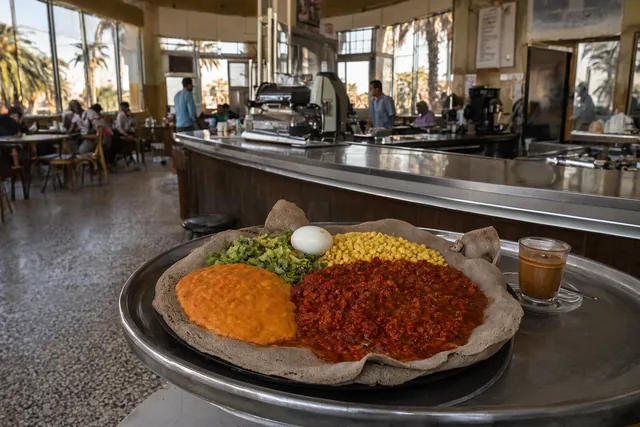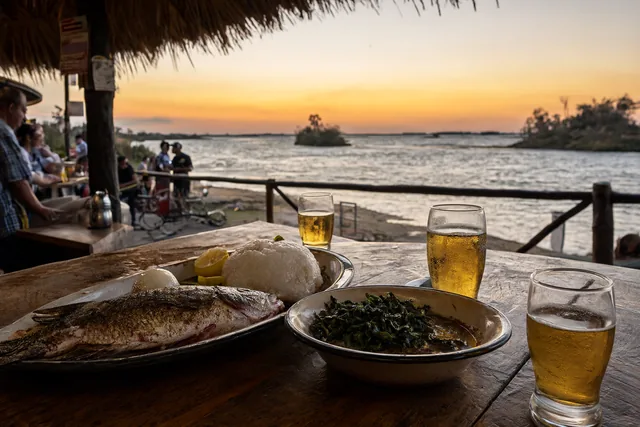
Uganda is one of the most fertile countries in Africa, and its food is built on what grows: green cooking bananas, groundnuts, beans, sweet potatoes, cassava, maize, millet and some of the freshest fruit you will ever eat. Ugandan cooking is comforting and filling rather than fiery, and it comes with a famous street snack, the rolex. This Uganda food guide covers the dishes to know, the local terms on an English-language menu, tipping and paying, and then goes city by city through where to eat in Kampala, Entebbe, Jinja, Fort Portal, Mbarara, Kabale and Gulu. Uganda has more than fifty ethnic groups, and each region has its own staples, so the food changes as you travel.
What to eat in Uganda: 12 dishes to know
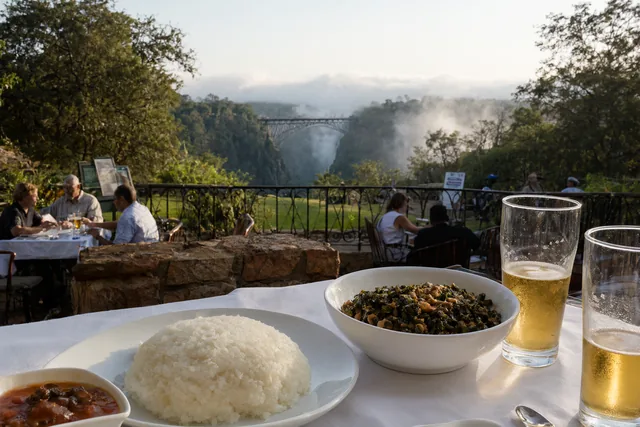
A Ugandan meal is usually a starch, called simply "food", with a sauce or stew. Local restaurants often serve a lunch buffet where you choose several starches and one or two stews on the same plate.
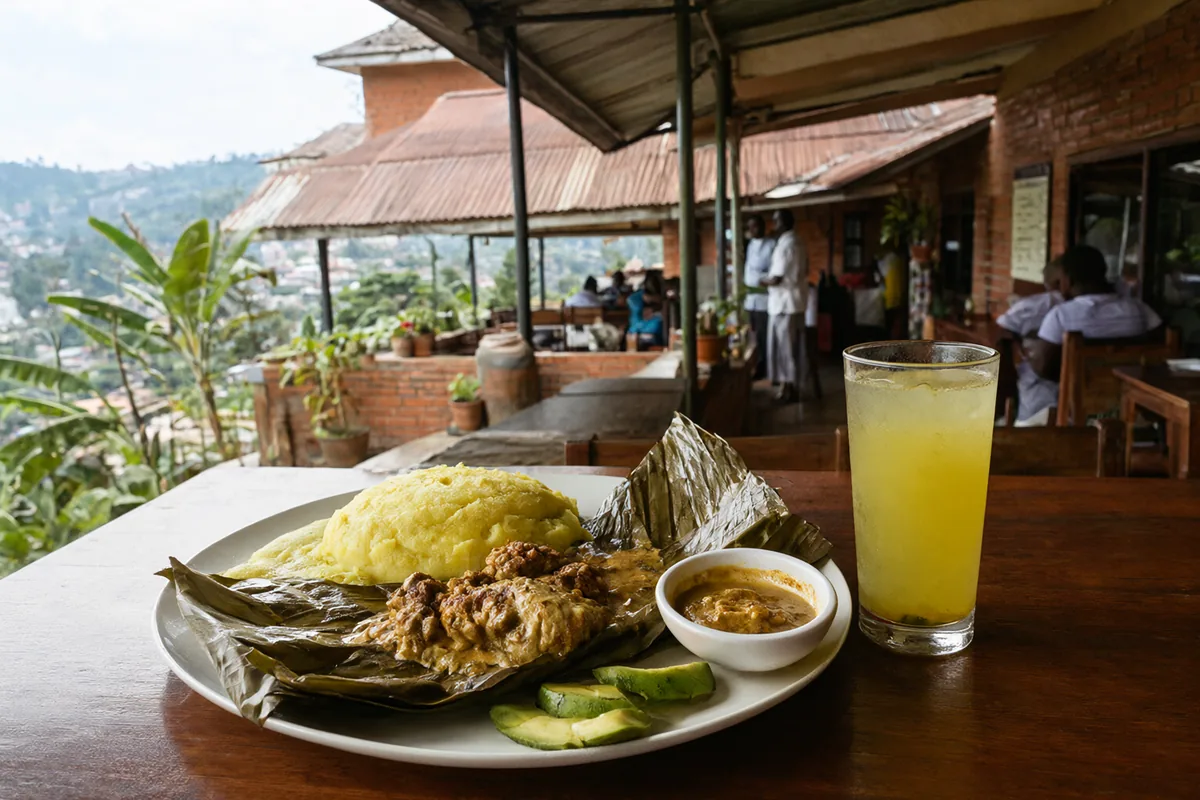
- Matooke: green cooking bananas, peeled, wrapped in banana leaves, steamed for hours and mashed into a soft yellow mound. The staple of central and western Uganda and the heart of Baganda cooking.
- Luwombo (Buganda): chicken, beef, fish or mushrooms cooked with groundnut sauce or tomatoes in a parcel of banana leaves and steamed. Originally a royal dish, now served at celebrations and good local restaurants.
- Groundnut sauce: called binyebwa in Luganda, a smooth, rich sauce of ground peanuts, sometimes with smoked fish or meat, poured over matooke, rice or sweet potatoes.
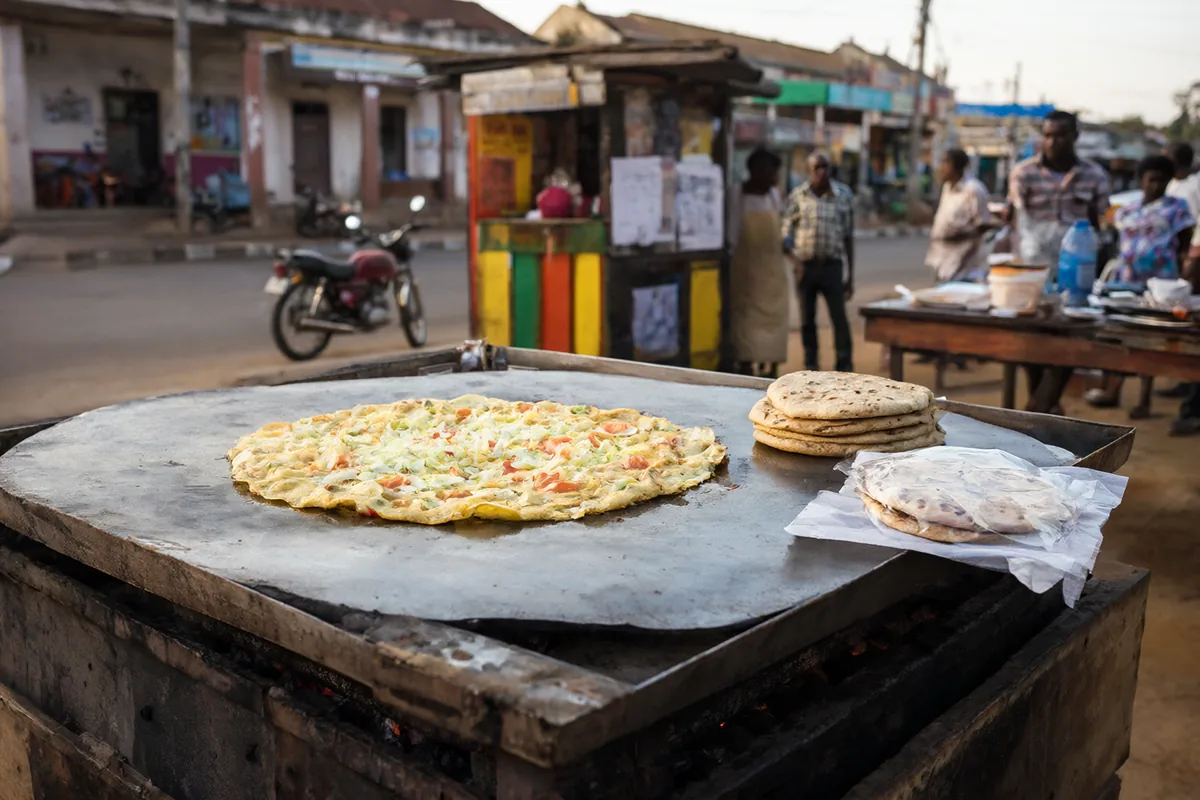
- Rolex: an omelette with cabbage, tomato and onion, cooked on a hot plate and rolled in a chapati. The name is a pun on "rolled eggs". Cheap, filling and sold on almost every street corner.
- Posho: stiff maize-meal porridge, called kawunga in Luganda, eaten with beans or stew. The everyday staple for students, workers and schools.
- Muchomo: skewers of goat, beef, chicken or pork roasted over charcoal at roadside stalls and bars, often with roasted plantain and cassava.
- Katogo: a breakfast of matooke or cassava cooked in a pot with offal, beef, beans or groundnut sauce.
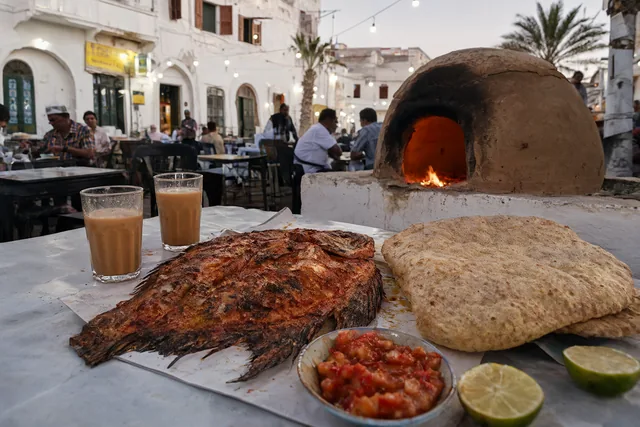
- Fried tilapia and Nile perch: whole fish from Lake Victoria and the other lakes, deep-fried and served with chips, matooke or posho and a squeeze of lime.
- Nsenene: grasshoppers, plucked and fried with onion and salt. A seasonal delicacy, sold in bags on the street around April and May and again around November and December.
- Kikomando: a chopped-up chapati served with beans, a student favourite and one of the cheapest meals in Uganda.
- Gonja: ripe plantain, roasted over charcoal at the roadside or fried, a sweet snack sold on the way into towns.
- Chai: tea brewed with milk, sugar and sometimes ginger or spices, drunk at breakfast and in the afternoon with mandazi (fried doughnuts) or samosas.
Uganda grows excellent coffee, both robusta and the arabica of Mount Elgon, and fresh passion fruit, pineapple, mango and tiny sweet bananas are sold everywhere. Chapati, samosas and pilau rice show the influence of the country's long-established Indian community.
How to read a menu in Uganda
English is an official language, and menus in Uganda are almost always in English. What confuses visitors are the local names for dishes, which are usually in Luganda, the language of the Baganda people around Kampala, or in the languages of other regions, and some uniquely Ugandan English food terms.
| Term | Language | Meaning |
|---|---|---|
| Matooke | Luganda | Steamed and mashed green cooking bananas |
| Luwombo | Luganda | Stew steamed in a banana leaf parcel |
| Binyebwa (ebinyebwa) | Luganda | Groundnut (peanut) sauce |
| Posho, kawunga | English, Luganda | Stiff maize-meal porridge |
| Katogo | Luganda | Breakfast of matooke cooked with offal, meat or beans |
| Gonja | Luganda | Plantain, roasted or fried |
| Nsenene | Luganda | Fried grasshoppers, seasonal |
| Muchomo | Swahili | Roasted meat skewers |
| Eshabwe | Runyankole | Creamy ghee sauce from Ankole |
| Malakwang | Acholi | Sour leaves in groundnut or sesame paste |
| Rolex | Ugandan English | Chapati rolled around an omelette |
| Kikomando | Ugandan English | Chopped chapati with beans |
| Local buffet | Ugandan English | Lunchtime self-service of staples and stews |
| Waragi | Ugandan English | Local gin |
"Food" on a Ugandan menu means the starch, so "chicken with food" means chicken with matooke, posho, rice or potatoes. On menus, "Irish" means ordinary potatoes, as opposed to sweet potatoes.
A Kampala lunch board might say "luwombo, katogo, binyebwa, gonja" without any explanation, and prices run into the tens of thousands of shillings. swap.menu explains each local dish in plain words, converts shilling prices to your home currency and flags VAT and service lines, so you know what you are ordering and what it costs.
Tipping, tax and paying the bill
Local restaurants and street stalls in Uganda charge the price shown. Upmarket restaurants and hotels may add VAT (18 percent) and a service charge, sometimes noted at the bottom of the menu. Our guide to tax and service charges on menus explains how these lines work around the world.
Tipping is not obligatory, but it is appreciated. In sit-down restaurants, around 5 to 10 percent is generous, and at local eateries rounding up is enough. Guides, drivers and porters, especially on gorilla treks and safaris, expect a tip at the end of the trip.
The currency is the Ugandan shilling (UGX, written USh). Prices run into thousands of shillings, so count the zeros. Cards are accepted at hotels, supermarkets and upmarket restaurants in Kampala and Entebbe, but local restaurants, markets, street food and most places outside the big towns take cash or mobile money only. ATMs are common in towns. If you bring US dollars, newer notes in good condition get the best rates, as older notes are often refused. If a card machine offers to charge you in your home currency, decline: our guide to paying in local currency explains why.
Breakfast is tea with bread, katogo or a rolex. Lunch, from about 1pm to 2:30pm, is the main meal in towns, and local restaurants often run out of the best dishes by mid-afternoon. Dinner is from about 7pm to 9pm. Alcohol is widely available: Ugandan lagers, waragi gin, tonto (banana beer) and in the north and east malwa, millet beer drunk through long straws from a shared pot. Uganda is mostly Christian with a significant Muslim minority, and Ramadan has little effect on restaurant opening hours outside Muslim neighbourhoods.
Where to eat in Uganda, city by city
These towns and cities run from Kampala and Lake Victoria to the mountains of the west and the north. Jump to a city:
Where to eat in Kampala
Kampala, the capital, sprawls over hills beside Lake Victoria, and it has the best range of Ugandan and international food in the country. For local food, the lunchtime local buffet restaurants in the city centre serve matooke, posho, rice, sweet potatoes, cassava and a choice of stews and groundnut sauce, and some do excellent luwombo. Rolex stands are everywhere, and Wandegeya, near Makerere University, is famous for them. Nakasero Market is the place for fruit, vegetables and spices, and the vast Owino Market (St Balikuddembe) downtown sells everything, with food stalls in the middle.
Kampala's nightlife and eating out are centred on Kabalagala and Kansanga along Ggaba Road, with bars, muchomo grills and "pork joints", bars that roast pork over charcoal and serve it with fried plantain and avocado. Kololo and Bugolobi are the upmarket districts, with international restaurants, cafés and Indian restaurants. At Ggaba, the fish landing site on the lakeshore south of the city, you can eat fried tilapia straight from the boats. Kampala tip: traffic is heavy, and the motorbike taxis called boda bodas are quick but risky, so plan meals near your base.
Where to eat in Entebbe
Entebbe, on a peninsula in Lake Victoria about 40 kilometres from Kampala, is home to the international airport and a quieter, greener place to spend the first or last night of a trip. The best food in Entebbe is by the lake: beach bars and restaurants along the shore serve whole fried tilapia, grilled chicken, chips and cold drinks, and are busy with families from Kampala at weekends.
The town's market and the small restaurants around it serve local buffets, rolexes and chai at low prices, and the hotels have more formal restaurants with lake views. Entebbe's Botanical Gardens and the Uganda Wildlife Education Centre make it easy to fill a day before an evening flight, ending with a fish dinner on the lakeshore. Entebbe is also the place to buy coffee and dried fruit to take home.
Where to eat in Jinja
Jinja, about two hours east of Kampala, sits where the Nile leaves Lake Victoria, and is Uganda's adventure capital for rafting, kayaking and bungee jumping. The town and the surrounding Busoga region are often said to be where the rolex began, and Jinja's rolex stands are among the best. Main Street, lined with old colonial-era shopfronts, many built by Jinja's Indian traders, has cafés, Indian restaurants and local eateries, and the central market sells fresh fruit and vegetables.
Along the river outside Jinja, lodges and camps catering to rafters serve hearty food and cold drinks on terraces over the Nile, and fresh fish is on most menus. Jinja has a relaxed, backpacker-friendly feel, and it is a good place to try a local buffet at lunch, followed by a sunset drink by the river. Order Nile perch or tilapia, grilled or fried, as close to the water as you can.
Where to eat in Fort Portal
Fort Portal, in the west at the foot of the Rwenzori Mountains, is the capital of the Tooro kingdom and the base for the crater lakes and Kibale Forest, famous for chimpanzees. The hills around Fort Portal are covered with tea estates, and the fresh produce here is superb: matooke, beans, avocados, pineapples and passion fruit. Local restaurants in Fort Portal serve matooke with groundnut sauce, beans and stews, and millet bread (kalo) is a traditional staple of the west.
The town centre has cafés and simple restaurants, and the lodges around the crater lakes outside Fort Portal serve good home-style meals with lake views. The central market is a good place to see the region's produce. Fort Portal has a cool climate thanks to its altitude, making hot chai and a plate of katogo a good breakfast before a day of walking.
Where to eat in Mbarara
Mbarara, in the south-west, is the main town of the Ankole region, famous for its long-horned Ankole cattle. This is dairy country: milk, yoghurt, fermented milk and ghee are central to the local diet, and the signature dish is eshabwe, a creamy white sauce made from ghee and salt, served with matooke, millet bread or sweet potatoes. Ask for it at local restaurants in Mbarara, as it is rarely found elsewhere.
Mbarara is a busy commercial town, with local buffets, grills and muchomo, cafés and restaurants on the main streets, and roadside stalls on the highways in and out of town selling roasted plantain, meat skewers and fresh milk. Mbarara is a common stop on the way to Lake Mburo National Park and the gorilla parks further south-west, and a good place for a proper lunch on a long drive.
Where to eat in Kabale
Kabale, high in the terraced hills of the Kigezi region near the Rwandan border, is the gateway to Lake Bunyonyi and the gorillas of Bwindi. The cool highlands grow potatoes, sorghum, beans and vegetables, and the local drink is obushera, made from sorghum or millet, served fresh or fermented. Kabale has simple restaurants, local buffets and cafés, and a busy market.
At Lake Bunyonyi, a short drive from Kabale, the island and lakeside lodges serve the lake's famous crayfish, often in curries, garlic butter or omelettes, along with fish and local dishes. A meal on a terrace overlooking the lake and its islands is one of the most relaxing in Uganda. Kabale's evenings can be chilly, so bring a jacket for dinner.
Where to eat in Gulu
Gulu, in the north, is the main town of the Acholi people, and its food is quite different from that of the south. Northern cooking uses less matooke and more millet, sorghum, cassava, beans, pigeon peas and sesame. Order malakwang, sour leaves cooked in groundnut or sesame paste, boo (cowpea leaves in groundnut paste), millet bread and smoked fish, and look for malwa, the millet beer shared through long straws.
Gulu's central market is the place to see the north's produce, including sesame paste, shea butter, dried fish and grains, and the town has local restaurants, cafés and bars. Gulu is a convenient stop on the way to Murchison Falls or Kidepo Valley National Park, and its local restaurants are inexpensive and friendly. In Gulu, ask for "local food" and you will be served the northern dishes rather than the Kampala buffet.
Vegetarian, vegan and allergy tips
Uganda is easier for vegetarians than many visitors expect. Beans, groundnut sauce, matooke, posho, sweet potatoes, cassava, cabbage, greens and fruit are everyday food, and many local buffets have several meat-free dishes. Vegetarian rolexes and Indian restaurants make life easy in towns. Ugandans will understand "I don't eat meat" in English, or sirya nnyama in Luganda. Ask whether the beans or greens are cooked with meat or smoked fish, which is common.
The biggest allergy issue in Uganda is peanuts: groundnut sauce and groundnut paste are in many dishes, and they are often called "g-nuts". Sesame paste is common in the north. Ghee and milk feature in western dishes such as eshabwe. Our guide to eating abroad with food allergies explains how to communicate an allergy clearly.
Useful Luganda phrases for eating out
English is widely spoken, but Luganda, the main language around Kampala, is the language of markets and street food, and a few words earn a big smile.
Oli otya? "How are you?" The reply is "Gyendi", "I am fine"
Wasuze otya nno? "Good morning", literally "How did you sleep?"
Ssebo / Nnyabo "Sir / Madam", the polite way to address a waiter or stallholder
Nsaba... "Please, may I have...", used when asking for something
Ssente mmeka? "How much money?"
Sirya nnyama "I don't eat meat"
Kiwoomu nnyo "It is very tasty"
Webale nnyo "Thank you very much"
How swap.menu helps you eat in Uganda
Ugandan menus are in English, but they are full of words like luwombo, katogo, binyebwa and eshabwe that are hard to guess. Photograph the menu with swap.menu and every dish is explained in plain words, so you know that katogo is a breakfast stew and that "chicken with food" comes with matooke. Prices in Ugandan shillings, which run into tens of thousands, are converted to your home currency, and we flag VAT and service lines. Your scanned menus are saved, so you can look back at what you ate and where.
For visitors whose first language is not English, swap.menu translates every dish into any of 29 languages, so the menu can be read in German, French, Japanese or Chinese. Tap the dishes you want, add a note such as "no peanuts, please", and show the waiter your phone. Try it now on a sample menu with the free demo, or see travel pass prices.
Off to Uganda? Your first 3 menu scans are free, and a travel pass starts from $4.99 with nothing that renews.
Start free with 3 scansUganda food FAQ
What is the national dish of Uganda?
Matooke, steamed and mashed green cooking bananas, is usually considered the national dish, often served with groundnut sauce or as part of luwombo, a stew steamed in banana leaves. The rolex, a chapati rolled around an omelette, is the country's most famous street food.
Do you tip in restaurants in Uganda?
Tipping is not obligatory, but 5 to 10 percent is appreciated in sit-down restaurants, and rounding up is enough at local eateries. Guides, drivers and porters on safaris and gorilla treks expect a tip.
Is it expensive to eat out in Uganda?
No, local food in Uganda is very cheap. A rolex or a plate at a local buffet costs very little, while international restaurants and hotels in Kampala charge much more and may add VAT and service.
What is a rolex in Uganda?
A rolex is an omelette cooked with cabbage, tomato and onion and rolled up in a chapati. The name comes from "rolled eggs", and it is sold at street stands all over Uganda.
Is tap water safe to drink in Uganda?
No, drink bottled or boiled and filtered water, which is widely available. Peel fruit yourself or buy it from places with good hygiene.
Do I need help reading a menu in Uganda?
Menus are in English, but local dish names in Luganda and other languages can be confusing. Photograph the menu with swap.menu to get a plain explanation of every dish, prices converted to your currency and a translation into your own language if English is not your first.
Travelling further in East Africa? Read our food guides for neighbouring countries:
Or browse every travel food guide.