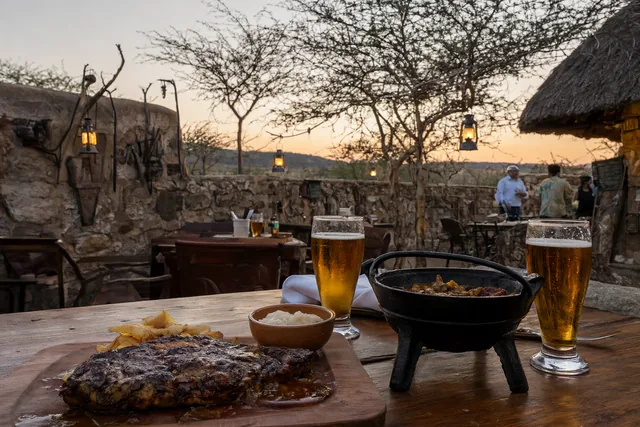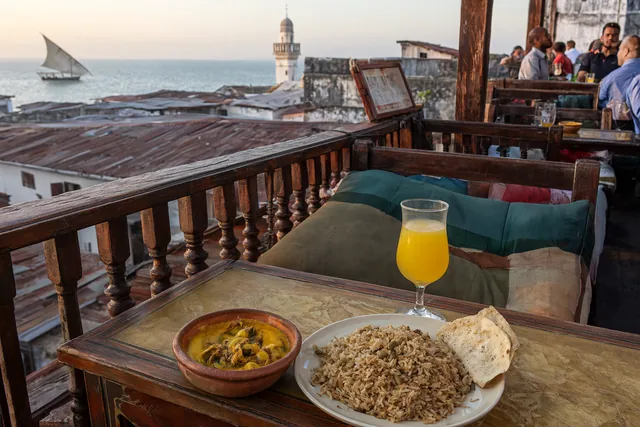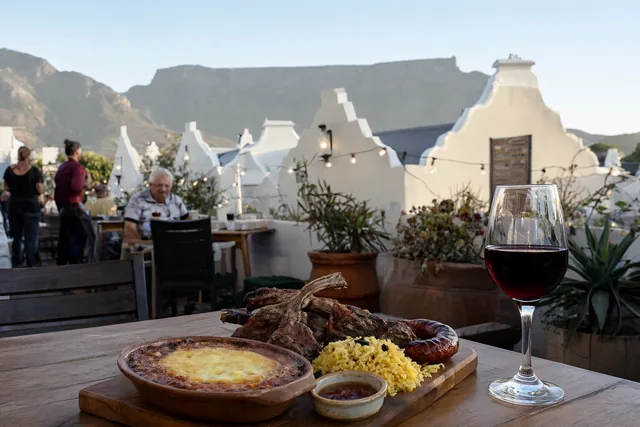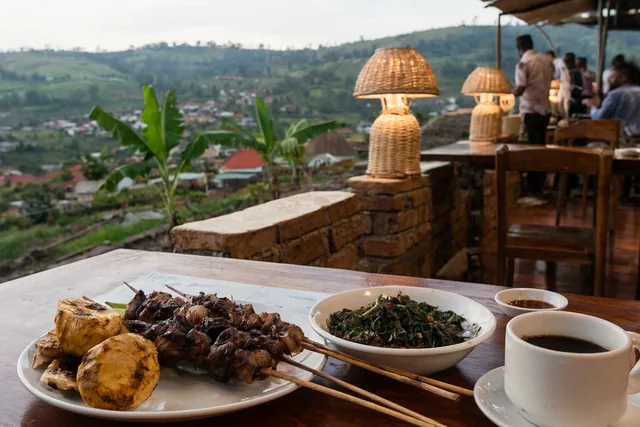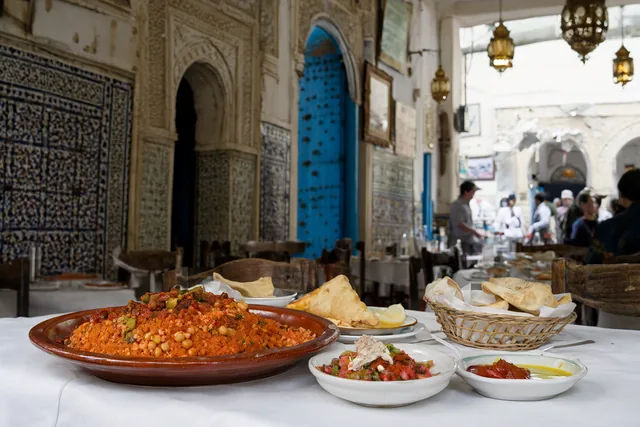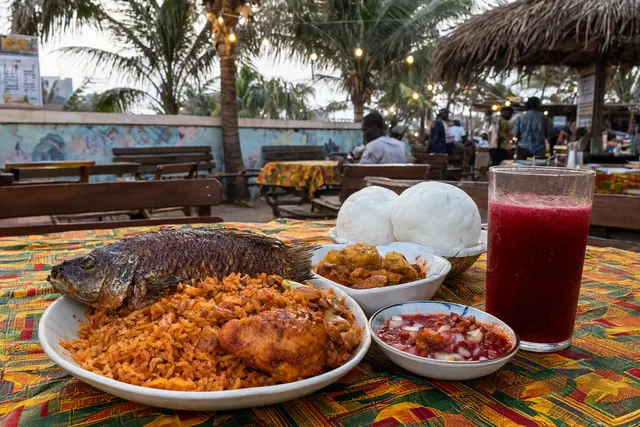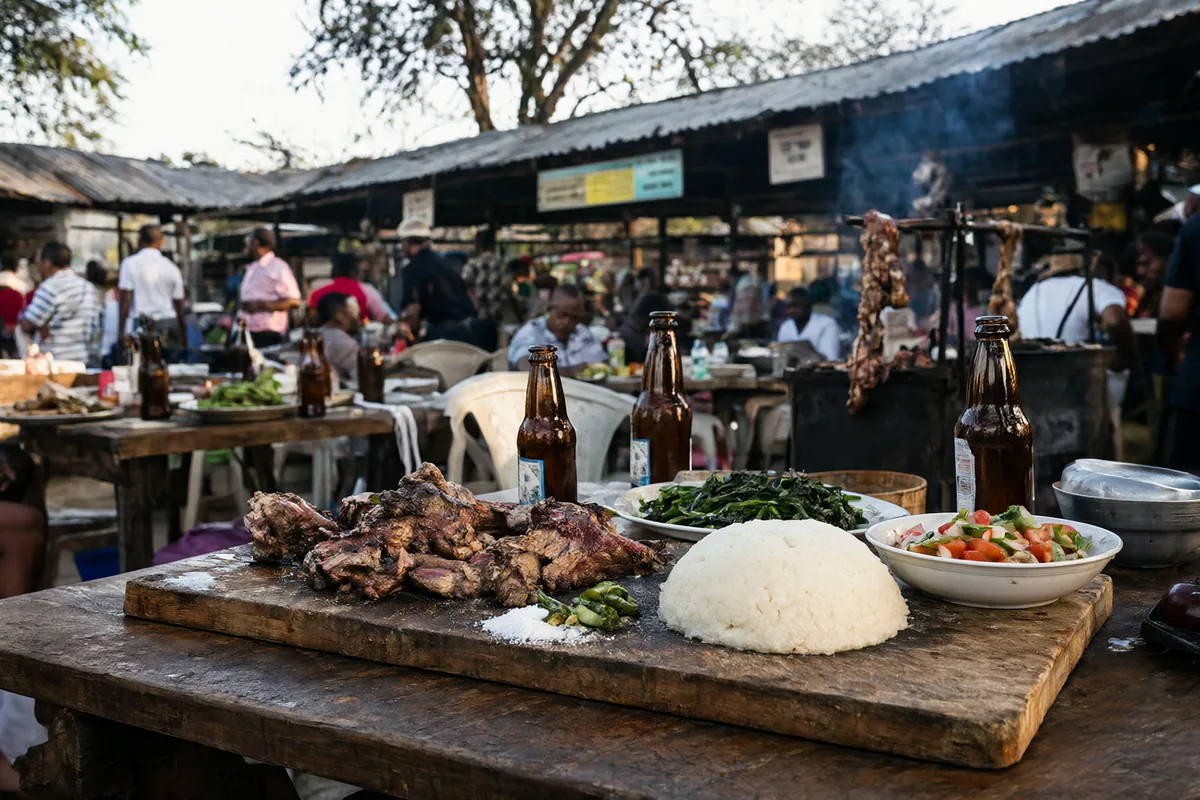
Kenyan food is straightforward and generous: roast goat shared from a wooden board, maize porridge eaten with your hand, and sweet milky tea at every hour of the day. On the coast it changes completely, into the coconut, spice and rice of Swahili cooking. This Kenya food guide covers the dishes to order, how to read a menu in Swahili, how tipping and mobile payments work, and then goes city by city through where to eat in Nairobi, Mombasa, Diani Beach, Lamu, Malindi and Watamu, Kisumu and the Maasai Mara. Most visitors arrive for a safari, but Kenya rewards anyone who eats outside the lodge.
What to eat in Kenya: 12 dishes to know
Inland Kenya eats simply and well; the coast eats with spice and coconut. These are the dishes to know, with the place they belong to where it matters.
- Nyama choma (everywhere, especially Nairobi): "roast meat", usually goat or beef, slow-grilled over charcoal, chopped on a wooden board and eaten with salt, chilli and your fingers. You often order by weight, a half kilo or a kilo for the table.
- Ugali (everywhere): a stiff porridge of white maize flour, the staple of most Kenyan meals. Pull off a piece, roll it into a ball, press a dent with your thumb and use it to scoop up stew or greens.
- Sukuma wiki (everywhere): collard greens fried with onion and tomato. The name means "push the week", because it is cheap enough to stretch a budget until payday.
- Kachumbari (everywhere): a fresh salad of tomato, onion, coriander and chilli, served with nyama choma and much else.
- Pilau (the coast and everywhere): rice cooked with cumin, cardamom, cloves and cinnamon, usually with beef or chicken. A Swahili dish, eaten at weddings and celebrations.
- Biryani (Mombasa and the coast): the Swahili coast version, with spiced meat or chicken layered with rice, often with potatoes, served with a tamarind or chilli relish.
- Githeri and mukimo (central Kenya): githeri is maize and beans stewed together, a Kikuyu staple; mukimo is mashed potato with peas, maize and pumpkin leaves, served with roast meat.
- Chapati (everywhere): a soft, layered, flaky flatbread from the Indian Ocean trade, eaten with stews, beans and tea.
- Samaki wa kupaka (the coast): grilled fish in a sauce of coconut milk, tamarind and spices.
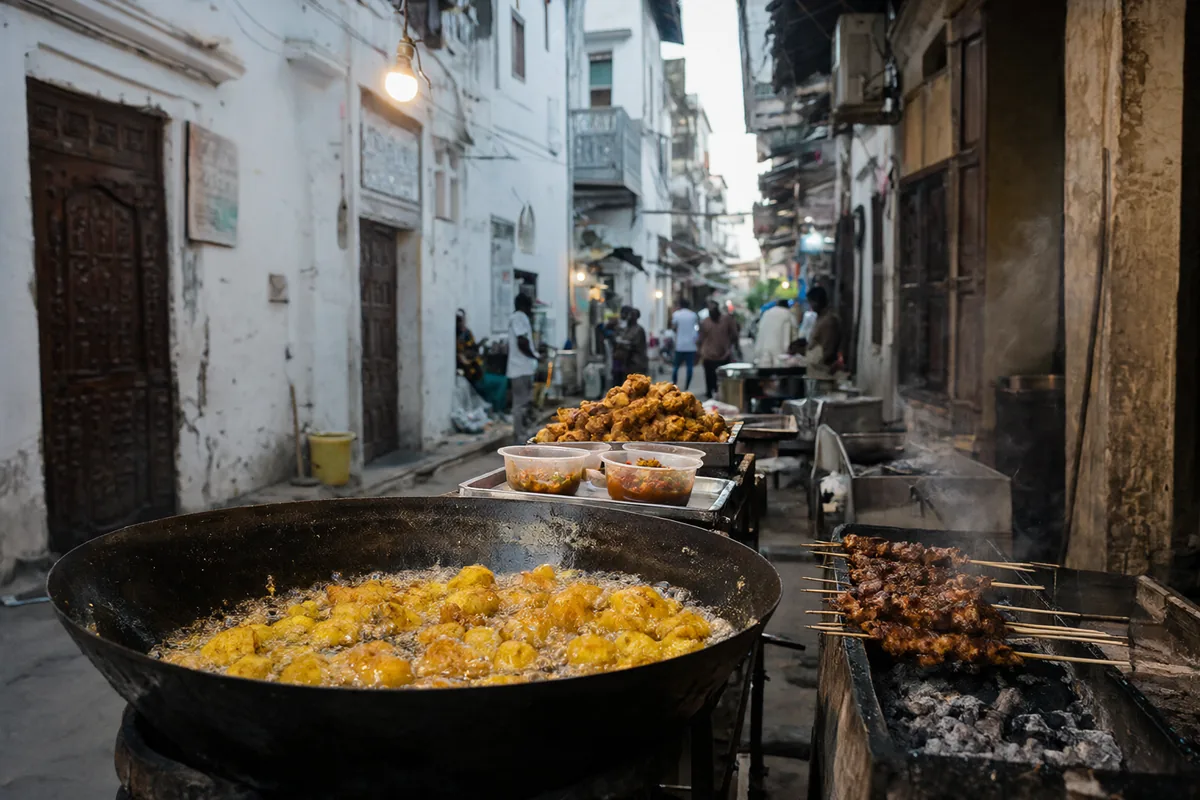
- Viazi karai (Mombasa): potatoes in a spiced, turmeric-yellow batter, deep-fried and served with tamarind sauce and chilli, a Mombasa street classic.
- Mandazi and mahamri (everywhere and the coast): fried doughnut-like breads; mahamri, the coastal version, is made with coconut milk and cardamom.
- Chai (everywhere): tea boiled together with milk, sugar and often ginger or masala spices. Kenya is one of the world's largest tea exporters, and most Kenyans drink tea rather than coffee.
How to read a Swahili menu
English is widely spoken in Kenya and menus in towns and tourist areas are usually in English, but local eateries, often called kibandas or "hotels" (a "hotel" in Kenyan English is often just a small café), use Swahili names for dishes, or write them on a board. Kenyan menu English has its own terms too: "wet fry" means cooked in a tomato and onion sauce, and "dry fry" means fried without sauce. These are the words worth knowing.
| Swahili | Meaning |
|---|---|
| Nyama choma | Roast meat (nyama is meat, choma means roasted or grilled) |
| Mbuzi / ng'ombe / kuku | Goat / beef / chicken |
| Samaki | Fish |
| Ugali | Stiff maize porridge |
| Wali / pilau | Plain rice / spiced rice |
| Maharagwe | Beans, often stewed in coconut milk on the coast |
| Mboga | Vegetables, or the stew served with ugali |
| Sukuma wiki | Collard greens |
| Ya nazi | In coconut milk (nazi is coconut) |
| Kukaanga / kuchoma | Fried / grilled or roasted |
| Mayai | Eggs |
| Pilipili | Chilli |
| Chai / maji | Tea / water |
| Bila | Without (bila sukari, without sugar; bila pilipili, without chilli) |
At a nyama choma place, meat is usually chosen and priced by weight before it goes on the grill, and sides like ugali and kachumbari are ordered separately. Ask the price per kilo first. swap.menu reads Swahili menus and boards, explains each dish and converts Kenyan shilling prices to your home currency.
Tipping, tax and paying the bill in Kenya
Tipping is appreciated in Kenya. In restaurants, around 10 percent is normal if a service charge has not been added; many hotel and upmarket restaurants add a service charge automatically, in which case anything extra is optional. Menus often state that prices include VAT, which is 16 percent, and a 2 percent catering levy charged by hotels and restaurants. Safari guides and camp staff are tipped separately, usually at the end of a stay. Our guide to tax and service charges on menus explains these lines in more detail.
The currency is the Kenyan shilling (KES), written KSh or Ksh. Kenya runs on M-Pesa, the mobile money system, and almost every business, down to market stalls and taxis, accepts it. Visitors can register for M-Pesa with a local SIM card and a passport. Cards are accepted in hotels, malls and most restaurants in Nairobi and the resorts, but carry cash for small eateries and markets. When a card machine offers to charge you in your home currency, choose shillings: our guide to paying in local currency explains why.
Breakfast is often chai with mandazi or chapati, lunch is the main meal for many people, roughly 1pm to 2:30pm, and dinner is from 7pm. Nyama choma places are busiest on weekend afternoons. On the coast, especially in Lamu and Mombasa's Old Town, many eateries close during the day in Ramadan and open after sunset.
Where to eat in Kenya, city by city
Kenya's food changes from the highlands to the coast. Jump to a destination:
Where to eat in Nairobi
Nairobi is East Africa's biggest city and its most varied place to eat. Start with nyama choma: roast meat joints all over the city serve goat and beef by the kilo with ugali, kachumbari and cold beer, and Kenyatta Market, south west of the centre, is famous among Nairobians for its cluster of choma grills. In the city centre and around the bus stations, cheap kibandas serve plates of ugali, beans, greens and stew to office workers at lunchtime.
Nairobi's street food is worth trying: smokie pasua (a smoked sausage split and filled with kachumbari), mayai pasua (the same with a boiled egg), roasted maize (mahindi choma) rubbed with lime and chilli, and mutura, a spiced sausage grilled at roadside stalls in the evening. Westlands is the centre of Nairobi's nightlife and has a wide range of restaurants, while Parklands next door, home to much of the city's South Asian community, is the place for Indian food. Kilimani, Lavington and Karen have garden restaurants and cafés serving Kenyan coffee. Nairobi traffic is heavy, so allow plenty of time to cross the city for dinner.
Where to eat in Mombasa
Mombasa, Kenya's second city and its oldest port, is the heart of Swahili cooking, shaped by centuries of trade with Arabia, Persia and India. The Old Town, around Fort Jesus, is the place to eat: small cafés serve biryani, pilau and fish curry at lunch, and in the evening the streets fill with vendors grilling mishkaki (marinated meat skewers) and frying viazi karai and bhajia (spiced potato fritters). Breakfast on the coast is mahamri with mbaazi, pigeon peas cooked in coconut milk, and sweet chai.
Marikiti Market in central Mombasa is the city's busy fruit and vegetable market, with mangoes, passion fruit and spices, and you will find sellers of madafu, green coconuts cut open for drinking, all over town. Look out for kaimati, small fried dumplings soaked in syrup, and mabuyu, baobab seeds coated in red sugar and spice. Mombasa is hot and humid, so eat the big meal of the day at lunchtime and graze on street food after dark, when the city is cooler and much livelier.
Where to eat in Diani Beach
Diani, south of Mombasa, is Kenya's best-known beach resort, with a long strip of white sand and the Diani Beach Road running behind it. Most restaurants are along that road or on the beach itself, and they serve grilled fish, prawns, lobster and octopus, often in coconut and lime, alongside pizza and international dishes. Hotels dominate, but independent beach bars and seafood places make it easy to eat outside your resort.
For a more local meal, look for small Swahili cafés in Ukunda, the town at the inland end of Diani, serving pilau, biryani and chapati at a fraction of beach prices. Day trips by boat to Wasini Island and Shimoni, further south, usually include a seafood lunch with crab and grilled fish. Tuk-tuks and motorbike taxis run up and down Diani Beach Road and are the easiest way to get to dinner.
Where to eat in Lamu
Lamu Old Town, on an island near the Somali border, is the oldest and best-preserved Swahili town in East Africa and a UNESCO World Heritage Site. There are almost no cars: people get around on foot, by donkey and by dhow. Lamu's food is classic Swahili coast cooking: fish in coconut sauce, octopus curry, coconut rice, pilau and samosas, and fresh juices of mango, passion fruit, tamarind and lime sold along the seafront.
The waterfront of Lamu town has simple cafés where you can eat grilled fish and watch the dhows come in, and the village of Shela, a walk or short boat ride along the shore, has guesthouses and a few restaurants by the beach. A dhow trip with fresh fish grilled on a sandbank or beach is a Lamu tradition. Lamu is a conservative Muslim town, so dress modestly, and expect alcohol only in some hotels and in Shela.
Where to eat in Malindi and Watamu
Malindi and Watamu, north of Mombasa, have had a strong Italian presence since the second half of the 20th century, and it shows. Italian is spoken in many shops and hotels, and Malindi has a surprising number of pizzerias, Italian restaurants and gelato shops alongside its Swahili cafés. The local seafood, from prawns to tuna and lobster, is cooked in both styles.
Watamu, a smaller beach village next to a marine national park, is quieter, with restaurants along the beach and in the village serving grilled fish, Swahili curries and Italian dishes. In Malindi, the old town around the market has the cheapest Swahili food. Both towns are popular with Italian visitors in the European winter, so restaurants in Malindi and Watamu are busiest from December to March.
Where to eat in Kisumu
Kisumu, Kenya's third city, sits on the shore of Lake Victoria in the far west, and its food is all about fish. The classic meal is a whole tilapia (ngege in the local Dholuo language), deep-fried or stewed, served with ugali and greens, and eaten at simple lakeside restaurants. Dunga Beach, a fishing village just south of the city centre, is the best-known place to eat it, with boats pulled up on the shore and hippos sometimes visible in the lake.
The other Lake Victoria speciality is omena, tiny silver fish dried in the sun, then fried or stewed with tomatoes and onion. You will see them drying on mats along the shore. Kisumu is a relaxed city, and its markets and lakeside are good places to try the Luo cooking of western Kenya, with plenty of greens such as osuga (African nightshade) and dek (spider plant).
Where to eat in the Maasai Mara
In the Maasai Mara, as in most of Kenya's safari parks, you eat at your camp or lodge. Meals are usually included, served as buffets or set menus, and many camps offer a bush breakfast or bush dinner out in the reserve, cooked over a fire with a view of the plains. Evening "sundowners", drinks taken at a viewpoint as the sun sets, are a safari tradition.
Camp food tends to be international with Kenyan touches, so ask the kitchen if they will cook nyama choma, ugali or pilau; many are happy to. Camps can cater for vegetarians and allergies with notice, which is worth giving when you book, as remote camps cannot always shop at short notice.
Vegetarian, vegan and allergy tips
Kenya is easier for vegetarians than its love of roast meat suggests. Ugali with sukuma wiki, githeri, beans in coconut, chapati, lentils, and the large Indian vegetarian tradition in Nairobi and Mombasa make it possible to eat well without meat. The Swahili word for vegetarian food is often just "mboga" (vegetables), but say "Sili nyama" ("I don't eat meat") to be clear. Watch for beef stock in stews and for small amounts of meat in greens and beans at local eateries.
Peanuts appear in some stews in western Kenya, coconut is in much of the coastal cooking, and wheat is in chapati, mandazi and samosas. Ghee and milk are common, so vegans should ask about chai and Indian dishes. Our guide to eating abroad with food allergies explains how to communicate a serious allergy clearly.
Useful Swahili phrases for ordering
Jambo / Habari? "Hello" / "How are you?", the standard greetings (reply "Nzuri", fine)
Nataka hii, tafadhali "I want this one, please" (pointing)
Bei gani? "What is the price?"
Bila pilipili "Without chilli"
Sili nyama "I don't eat meat"
Naomba bili "Could I have the bill, please?"
Chakula ni kitamu sana "The food is very tasty"
Asante sana "Thank you very much"
How swap.menu helps you eat in Kenya
Menus in Kenya switch between English and Swahili, and the local eateries where you eat best often have only a board or a handwritten list. Photograph it with swap.menu and every dish appears in your language with its Swahili name beside it and a short explanation, so you know that mutura is a spiced offal sausage, that mbuzi wet fry is goat in a tomato sauce, and that matumbo is tripe before you order it. Prices are converted from Kenyan shillings to your home currency, and service charges and levies are flagged.
Tap the dishes you want, add a note such as "no chilli" or "vegetarian", typed or spoken, and swap.menu translates your order into Swahili. Show the waiter your phone, or let them scan the QR code and read your order on their own screen. Try it on a sample menu with the free demo, or see travel pass prices.
Off to Kenya? Your first 3 menu scans are free, and a travel pass starts from $4.99 with nothing that renews.
Start free with 3 scansKenya food FAQ
Do you tip in restaurants in Kenya?
Tipping around 10 percent is appreciated in Kenyan restaurants when no service charge has been added. Many upmarket places include a service charge on the bill, and safari guides and camp staff are usually tipped separately at the end of a trip.
What food is Kenya famous for?
Nyama choma (roast goat or beef), ugali, sukuma wiki, chapati and sweet milky chai are Kenya's best-known foods. On the coast, Swahili dishes such as biryani, pilau and fish in coconut sauce are the highlights.
Is it expensive to eat out in Kenya?
Local food at kibandas, street stalls and nyama choma places is very cheap. Restaurants in Nairobi's upmarket suburbs and beach resorts cost much more, and safari lodges are expensive, though meals are usually included.
Is tap water safe to drink in Kenya?
No, visitors should not drink tap water in Kenya. Bottled or filtered water is widely available, and most hotels and camps provide safe drinking water for guests.
Which city in Kenya is best for food?
Nairobi has the widest range, from nyama choma to Indian and international restaurants, while Mombasa and Lamu are best for Swahili coastal cooking. Kisumu is the place for fresh Lake Victoria fish.
How can I read a Swahili menu if I do not speak Swahili?
Learn a few words such as nyama, kuku, samaki and wali, or photograph the menu with swap.menu. It translates Swahili and English menus into your language, explains each dish, converts shilling prices to your currency and translates your order back into Swahili.
Travelling further in East Africa? Read our food guides for nearby countries:
- Tanzania food guide
- Rwanda food guide
- Seychelles food guide
- Egypt food guide
- South Africa food guide
Or browse every travel food guide.