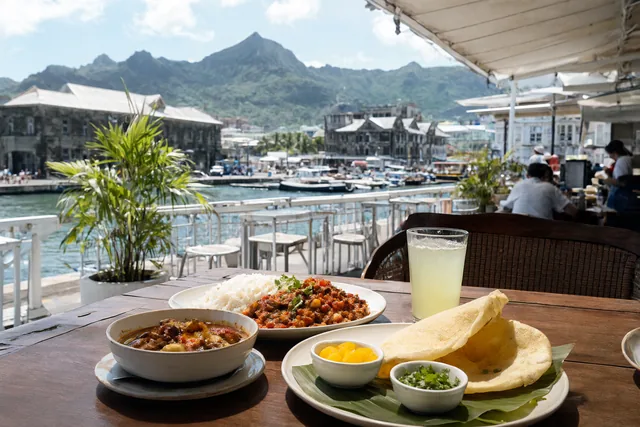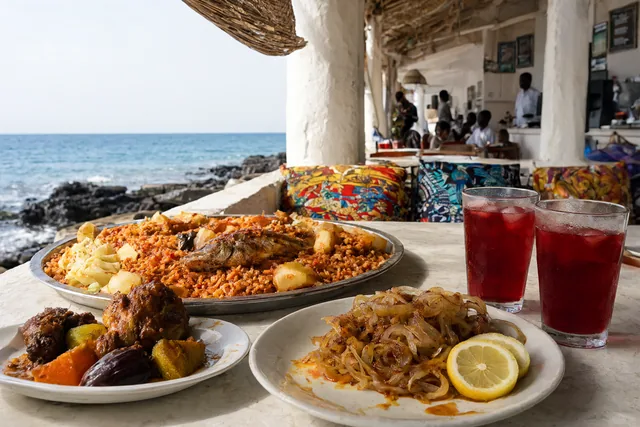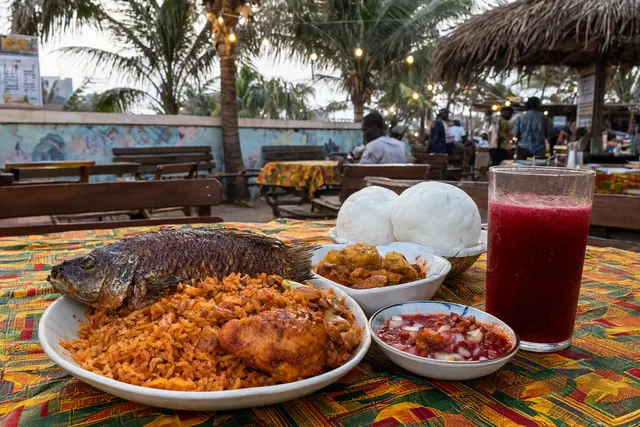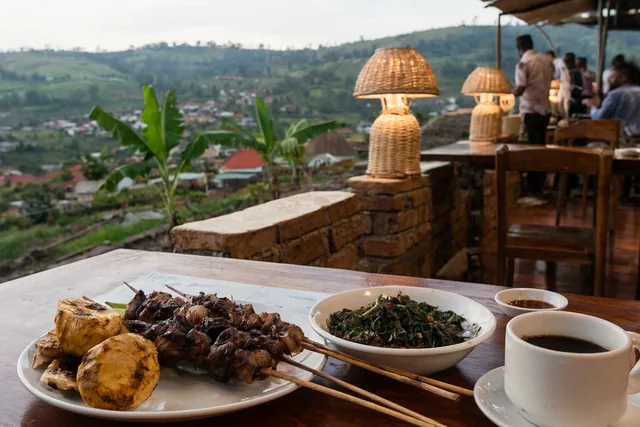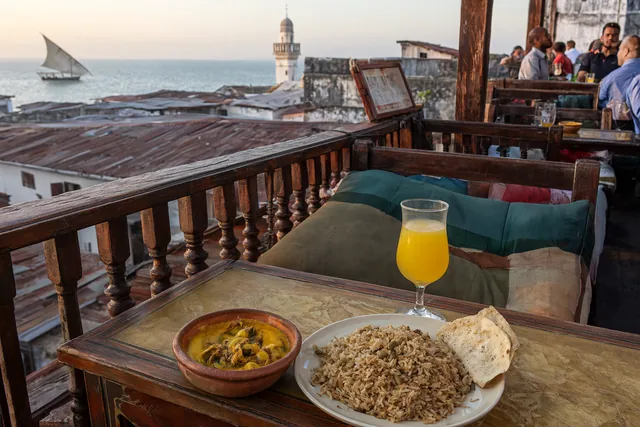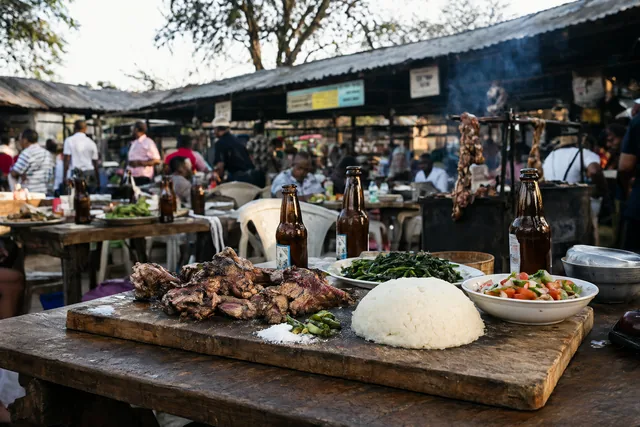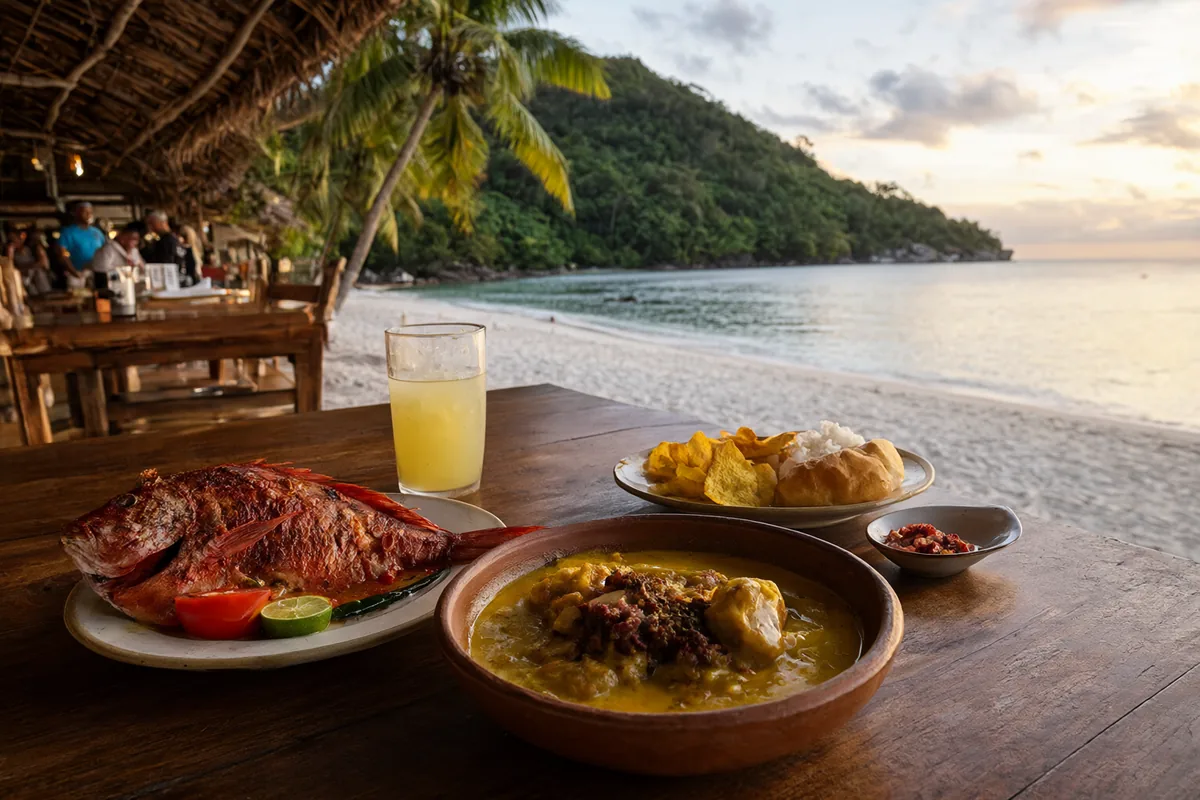
Seychellois Creole cooking is island food in the simplest sense: fish caught that morning, coconut, breadfruit, chillies, rice and a cupboard of spices left behind by French planters, African settlers and Indian and Chinese traders. This Seychelles food guide covers the dishes to order, how to read a menu in Creole and French, how tipping and paying in rupees works, and then goes island by island through where to eat in Victoria, at Beau Vallon, on the south coast of Mahé, on Praslin and on La Digue. The Seychelles has a reputation as one of the most expensive places in the world to eat, and at resorts it deserves it; the takeaways, markets and family-run restaurants are where the real Creole food is, at a fraction of the price.
What to eat in the Seychelles: 12 dishes to know
Fish is at the centre of almost every Seychellois meal. These are the dishes and ingredients worth knowing.
- Kari pwason (everywhere): fish curry, usually made with coconut milk, turmeric, ginger, garlic and fresh herbs, and eaten with rice and a chutney. The everyday Creole meal.
- Kari zourit (everywhere): octopus curry in coconut milk, slow-cooked until tender. Often the best dish on a Creole menu.
- Grilled fish (everywhere): red snapper (bourzwa), jobfish, trevally (karang) and tuna, grilled whole or as steaks and served with a sos kreol, a tomato, onion and chilli sauce.
- Rougay pwason (everywhere): fish in a rich Creole tomato sauce with onion, garlic, thyme and chilli.
- Satini reken (everywhere): shark chutney, boiled shark flesh mashed with bilimbi (a sour local fruit), lime, onion and turmeric. Served as a side with rice and curry.
- Ladob (everywhere): ripe plantain or breadfruit simmered in coconut milk with sugar, vanilla and nutmeg, served warm as a dessert. A savoury version is made with salted fish.
- Friyapen (everywhere): breadfruit, eaten as chips, boiled, grilled in the embers of a fire or in curries. Local legend says anyone who eats breadfruit will return to the Seychelles.
- Salade de palmiste (everywhere, often on special occasions): a salad of thinly sliced heart of palm, sometimes called "millionaire's salad" because a whole palm tree is cut down to make it.
- Kari sousouri (Mahé and Praslin): fruit bat curry, a traditional Creole dish that adventurous eaters can find on some local menus.
- Soup tektek (beach areas, seasonally): a broth made with tiny clams called tektek gathered from the sand.
- Smoked fish (everywhere): smoked sailfish, marlin and tuna, served as starters or in salads.
- Fresh juices and local drinks (everywhere): passion fruit, mango, papaya and lime juices, fresh coconut, and two traditional drinks, kalou (fermented coconut palm sap) and baka (a fermented sugarcane drink), alongside locally made rum and beer.
How to read a Seychelles menu in Creole and French
The Seychelles has three official languages: Seychellois Creole (Kreol Seselwa), English and French. Restaurant menus are usually in English, sometimes with French, while takeaways and local places write dishes in Creole on a board. A "Creole buffet" is a common hotel dinner on certain nights of the week and a good way to try many dishes at once. These are the words that matter.
| Creole | French | Meaning |
|---|---|---|
| Pwason | Poisson | Fish |
| Zourit | Ourite, poulpe | Octopus |
| Kari | Cari | Curry |
| Griye | Grillé | Grilled |
| Bourzwa | Bourgeois | Red snapper |
| Rougay | Rougaille | Spicy tomato sauce |
| Satini | Chutney | Chutney, often of fish, shark or fruit |
| Diri | Riz | Rice |
| Friyapen | Fruit à pain | Breadfruit |
| Bannann | Banane | Banana or plantain |
| Koko | Coco | Coconut |
| Piman | Piment | Chilli |
| Sousouri | Chauve-souris | Fruit bat |
| Ladob | Ladob | Plantain or breadfruit in sweet coconut milk |
For a cheap Creole lunch, look for a takeaway: small counters that sell boxes of rice with curry, grilled fish, chutney and lentils at lunchtime, often for much less than a sit-down restaurant. swap.menu reads Creole boards and menus, explains each dish and converts Seychelles rupee prices to your home currency.
Tipping, tax and paying the bill in the Seychelles
Tipping is not expected in the Seychelles, though it is appreciated for good service. Many hotels and some restaurants add a service charge to the bill, in which case nothing more is needed; otherwise, rounding up or leaving around 5 to 10 percent is generous. VAT is 15 percent and is usually included in menu prices, but some resort restaurants list prices before tax and service, so read the small print. Our guide to tax and service charges on menus explains these lines in detail.
The currency is the Seychelles rupee (SCR), written SR or SCR. Cards are widely accepted in hotels, restaurants and shops on Mahé and Praslin, while takeaways, market stalls and small shops on La Digue often prefer cash. Some resorts and activity operators quote prices in euros or US dollars. When a card machine offers to charge you in your home currency, choose rupees: our guide to paying in local currency explains why.
Lunch is from about midday to 2pm, and takeaways often sell out early. Dinner is from 7pm, and many restaurants outside the resorts close their kitchens by 9pm or 9:30pm. Victoria is very quiet in the evening and on Sundays.
Where to eat in the Seychelles, island by island
Most visitors split their stay between Mahé, the main island, and the smaller islands of Praslin and La Digue, linked by ferry. Jump to a destination:
Where to eat in Victoria
Victoria, on Mahé, is one of the smallest capital cities in the world, and you can walk across its centre in 15 minutes. The place to start is the Sir Selwyn Selwyn-Clarke Market, the covered market on Market Street, where fishmongers lay out tuna, red snapper, jobfish and parrotfish in the morning, alongside stalls of chillies, spices, vanilla, breadfruit and tropical fruit. Saturday morning is the busiest and liveliest time, and some stalls upstairs and around the market sell snacks, juices and local spices to take home.
The streets around the market and the clock tower have takeaways serving Creole lunch boxes of fish curry, octopus curry, lentils and rice to office workers, and a few cafés and Indian and Chinese restaurants. Victoria is a lunchtime town: most shops and many places to eat close by early evening, so plan to eat dinner elsewhere on Mahé.
Where to eat at Beau Vallon
Beau Vallon, on the north west coast of Mahé, is the island's most popular beach, a long curve of sand with calm water, sunsets and a cluster of hotels, guesthouses, restaurants and bars behind it. It is the easiest place on Mahé to eat out in the evening. Restaurants along the beach road serve grilled fish, octopus curry, pizza and seafood platters, and snack stalls under the trees sell grilled fish, samosas and fresh coconuts during the day.
Beau Vallon also hosts a weekly evening beach market, traditionally on Wednesdays, with stalls selling grilled fish, curries, local snacks and drinks to locals and visitors alike, often with live music. The neighbouring village of Bel Ombre has a small fishing harbour and a few restaurants further along the coast. Beau Vallon is where the Creole food of Mahé is easiest to find after dark.
Where to eat in South Mahé
The south and west of Mahé are quieter and greener, with small villages, granite headlands and beach restaurants spread along the coast road. Anse Royale on the east coast has takeaways, a spice garden with a restaurant, and a beach popular with families. On the west coast, Anse à la Mouche, Baie Lazare and Port Glaud have restaurants serving grilled fish and Creole curries with views of the sunset.
Near Takamaka, a rum distillery in an old plantation house at La Plaine St André offers tours, tastings and a restaurant serving Creole food. Some of the best local meals in South Mahé are at small family-run restaurants and guesthouses that cook a set Creole menu; ask at your accommodation, and book ahead, as many open only when they have reservations.
Where to eat on Praslin
Praslin, the second-largest island, is an hour from Mahé by fast ferry and home to the Vallée de Mai, the forest where the giant coco de mer palm grows. Its restaurants are spread around the coast, with the biggest concentration at Côte d'Or (Anse Volbert), a long, calm beach on the north east with hotels, restaurants, takeaways and supermarkets. Grand Anse on the west coast and Baie Sainte Anne, the ferry port, have local shops and takeaways.
Restaurants on Praslin serve the classic Creole repertoire: fish and octopus curries, grilled fish with Creole sauce, breadfruit, and fruit bat curry at some local places. Beach restaurants near Anse Lazio, often named among the world's best beaches, are popular for long lunches, but they are expensive. Takeaways and self-catering are the way to keep costs down on Praslin, and many guesthouses have kitchens.
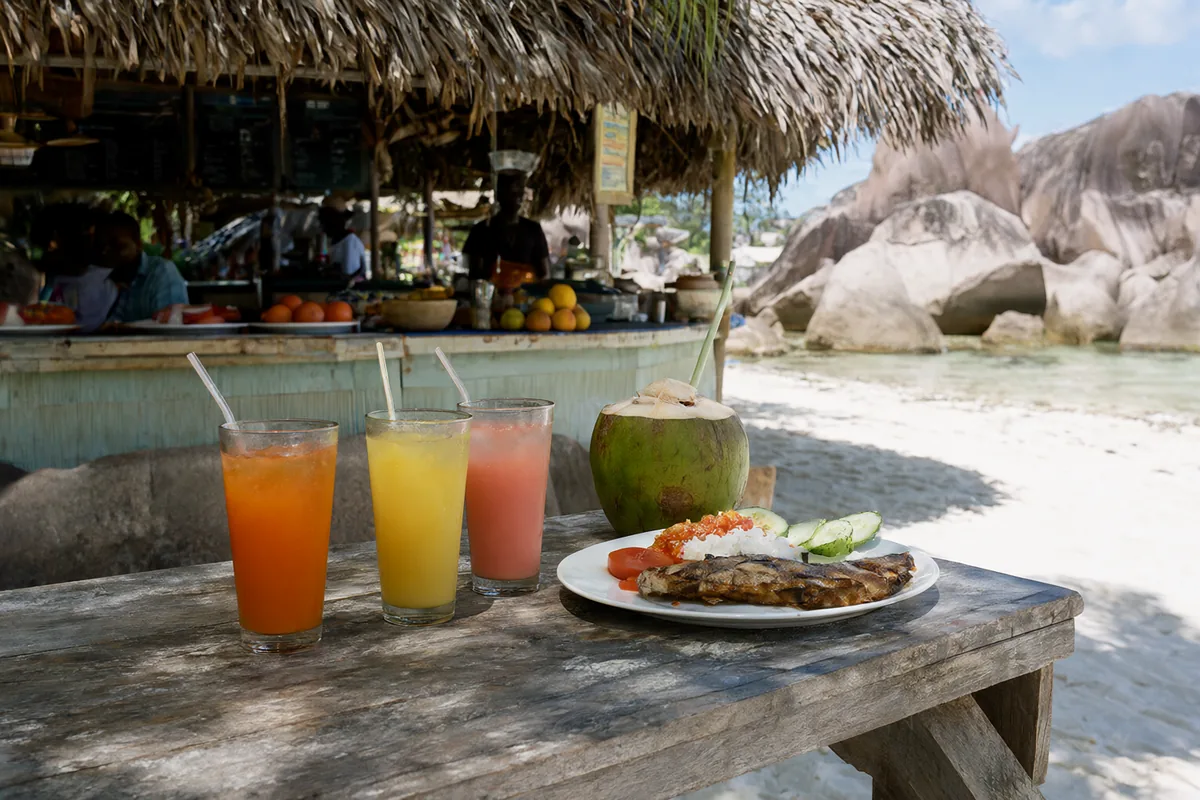
Where to eat on La Digue
La Digue, a short ferry ride from Praslin, is a small island where most people get around by bicycle and the beaches are framed by huge pink granite boulders. Food here is simple and relaxed. Around La Passe, the village by the jetty, you will find takeaways, small restaurants, bakeries and shops, and Creole lunch boxes of fish curry and rice are the cheapest meal on the island.
On the way to Anse Source d'Argent, through the old L'Union Estate with its copra mill and vanilla plantation, and on beaches such as Grand Anse, small shacks sell fresh fruit juices, coconuts and grilled fish lunches. Many restaurants on La Digue close early and some do not take cards, so carry cash and plan dinner before dark, especially if you are cycling back along unlit roads.
Vegetarian, vegan and allergy tips
Seychellois cooking is built on fish, and vegetarians need to plan a little. Lentils (lantiy), vegetable curries with aubergine, pumpkin or green papaya, breadfruit, rice, salads and tropical fruit are the main options, and most restaurants will prepare a vegetable curry on request. Many curries and chutneys contain fish or are cooked with fish stock, so ask. In French, say "Je suis végétarien" (or végétarienne for a woman), and add "pas de poisson" (no fish), as fish is often not counted as meat.
Seafood and shellfish are in a great many dishes, coconut is in most curries and desserts, and shark chutney is made with shark, which some visitors prefer to avoid. Our guide to eating abroad with food allergies explains how to communicate a serious allergy clearly.
Useful Creole and French phrases for ordering
Bonzour "Hello" in Seychellois Creole
Ki mannyer? "How are you?"
Mon anvi sa "I would like that one" (pointing)
Konbyen sa? "How much is that?"
Pas trop pimenté, s'il vous plaît "Not too spicy, please" in French
L'addition, s'il vous plaît "The bill, please" in French; English works everywhere too
Mersi bokou "Thank you very much"
How swap.menu helps you eat in the Seychelles
Menus in the Seychelles mix English, French and Creole, and a takeaway board may list nothing but kari zourit, satini reken, lantiy and bourzwa griye. Photograph it with swap.menu and every dish appears in your language with its original name beside it and a short explanation, so you know that satini reken is shark chutney and that sousouri is fruit bat before you order. Every price is converted from Seychelles rupees, or the euros and dollars some resorts use, to your home currency, and tax and service lines are flagged.
Tap the dishes you want, add a note such as "no shellfish" or "not spicy", typed or spoken, and swap.menu translates your order into French or Creole. Show the waiter your phone, or let them scan the QR code and read your order on their own screen. Try it on a sample menu with the free demo, or see travel pass prices.
Off to the Seychelles? Your first 3 menu scans are free, and a travel pass starts from $4.99 with nothing that renews.
Start free with 3 scansSeychelles food FAQ
Do you tip in restaurants in the Seychelles?
Tipping is not expected in the Seychelles, and many hotels and restaurants already add a service charge. If no service charge is on the bill, rounding up or leaving 5 to 10 percent for good service is appreciated.
What food is the Seychelles famous for?
The Seychelles is famous for Creole fish and octopus curries in coconut milk, grilled red snapper, shark chutney, breadfruit and ladob. Fresh tropical fruit and juices are everywhere.
Is it expensive to eat out in the Seychelles?
Yes, the Seychelles is one of the more expensive places to eat out, especially at resorts and beach restaurants. Takeaways, market food and self-catering are much cheaper and serve authentic Creole food.
Is tap water safe to drink in the Seychelles?
Tap water on Mahé and Praslin is treated and generally considered safe, but many visitors prefer bottled or filtered water, especially on the smaller islands. Bottled water is sold everywhere.
What time do people eat dinner in the Seychelles?
Dinner usually starts around 7pm, and many restaurants outside the resorts close their kitchens by 9pm or 9:30pm. Takeaways are mainly a lunchtime option and often sell out by early afternoon.
How can I read a Seychelles menu if I do not speak Creole or French?
Most restaurant menus include English, but takeaway boards and local places use Creole. Photograph the menu with swap.menu to see every dish translated and explained in your language, with prices converted to your currency and your order translated for the waiter.
Travelling further in the Indian Ocean? Read our food guides for nearby destinations:
Or browse every travel food guide.