Most visitors to the Maldives eat at their resort and never taste Maldivian food, which is a shame, because the local cooking is simple, cheap and very good. It is built on three things: tuna, coconut and chilli. This Maldives food guide covers the dishes to know, the Dhivehi words you will see in local teashops, the service charge and tax on your bill, the rules on alcohol and Ramadan, then goes island by island through where to eat in Malé, Hulhumalé, Maafushi, Thoddoo and on the resort islands. If you only try one thing, make it a breakfast of mas huni and warm roshi.
What to eat in the Maldives: 12 dishes to know
Maldivian food comes from a country of small coral islands where little grows, so fish is in almost everything, usually skipjack or yellowfin tuna, fresh, smoked or dried. These are the dishes worth ordering.
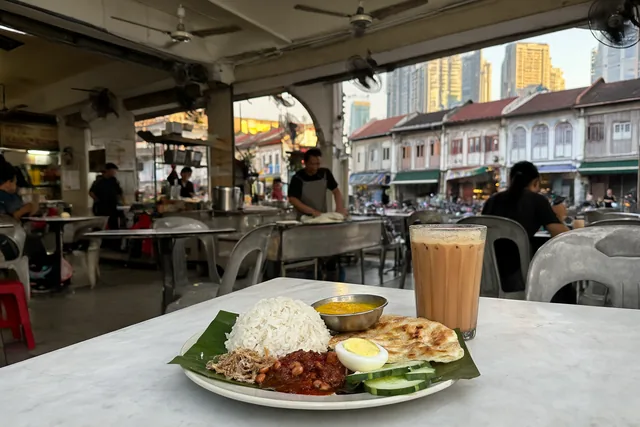
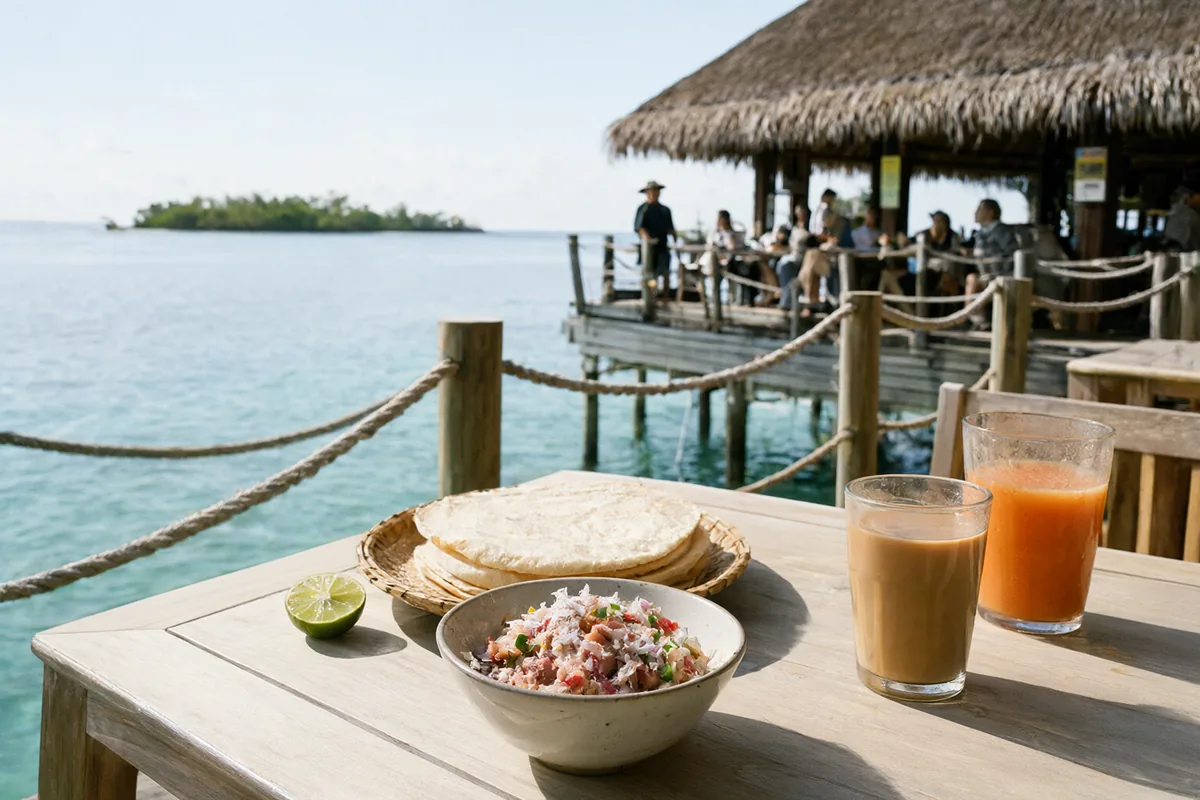
- Mas huni: shredded smoked or tinned tuna mixed with grated coconut, onion, chilli and lime. The national breakfast, eaten with roshi and sweet tea.
- Roshi: a thin, soft unleavened flatbread, like a chapati, served with almost every meal.
- Garudhiya: a clear tuna broth, the oldest Maldivian dish, eaten with rice, lime, chilli and raw onion.
- Rihaakuru: a thick, dark, salty paste made by boiling garudhiya down for hours. A little goes a long way, with rice or roshi.
- Mas riha: tuna curry, made with coconut milk, curry leaves and spices, usually eaten with rice or roshi.
- Kukulhu riha: chicken curry, the alternative for people who have had enough fish.
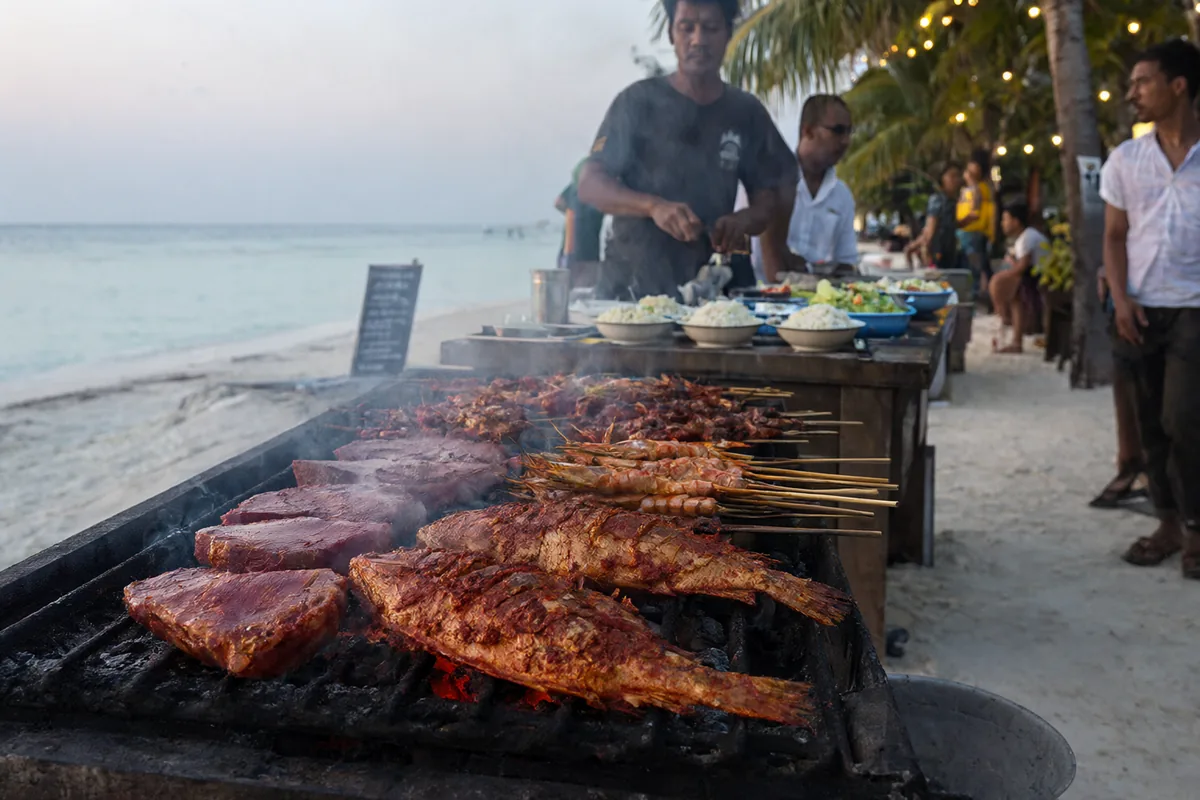
- Fihunu mas: whole or sliced fish rubbed with a chilli paste and grilled over coals.
- Valhomas: smoked tuna, the base of many dishes and the flavour you will taste in salads, curries and snacks.
- Gulha: small fried dough balls filled with tuna, coconut, onion and chilli, the most popular short eat.
- Bis keemiya: a fried pastry roll filled with cabbage, boiled egg and tuna, a Maldivian cousin of the samosa.
- Masroshi: roshi dough wrapped around mas huni and baked or fried, a filling snack.
- Bondibai: a sweet rice pudding with coconut milk, cardamom and rose water, served at celebrations.
Short eats are known as hedhikaa, and they are served with tea in the late afternoon and at the evening meal that breaks the fast during Ramadan. Breadfruit chips, fried in coconut oil, are the local crisp, and the traditional drink is raa, fresh sweet sap tapped from the coconut palm.
How to read a Dhivehi menu
The Maldivian language is Dhivehi, written in Thaana, a script that runs from right to left. Resort and guesthouse menus are in English, and many local cafés in Malé use English as well, but a small teashop (sai hotaa, ސައިހޮޓާ) may write its specials and prices only in Thaana. These are the words that matter.
| Dhivehi | Romanised | Meaning |
|---|---|---|
| މަސް | mas | Fish, almost always tuna |
| ވަޅޮމަސް | valhomas | Smoked tuna |
| ރިހަ | riha | Curry |
| ކުކުޅު | kukulhu | Chicken |
| ބިސް | bis | Egg |
| ބަތް | bath | Rice |
| ރޮށި | roshi | Flatbread |
| ހުނި | huni | Grated coconut |
| ގަރުދިޔަ | garudhiya | Tuna broth |
| ހެދިކާ | hedhikaa | Short eats, snacks |
| ތެލުލި | theluli | Fried |
| މިރުސް | mirus | Chilli |
| ސައި | sai | Tea |
| ފޮނި | foni | Sweet |
In a teashop, short eats are usually set out on the counter or brought to the table on a plate, and you pay for what you take. Tea comes sweet and milky unless you ask otherwise. Resort menus use the same dish names, so knowing that mas is fish and riha is curry helps on a Maldivian night buffet as well.
Resort menus in the Maldives are often priced in US dollars before service charge and tax, while local cafés price in rufiyaa. swap.menu converts either currency to your own and flags the "++" at the bottom of the menu, so you can see what a dinner will really cost.
Service charge, tax, tipping and paying
Resorts, hotels and most restaurants that serve tourists add a 10 percent service charge and a goods and services tax, which is charged at a higher rate in the tourism sector than in ordinary shops. Menus usually show prices before both, marked "++" or "subject to service charge and GST". Together they add a significant amount to every bill, so factor them into your budget. Our guide to tax and service charges on menus explains how these lines work.
Because the service charge is already included, tipping is not required. At resorts many guests leave a tip at the end of their stay for staff who looked after them, such as their room attendant or butler, and some resorts have a tip box. In local cafés on inhabited islands nobody expects a tip.
The currency is the Maldivian rufiyaa (MVR, Rf). Resorts and many guesthouses price in US dollars, and resort bills are usually charged to your room and paid by card at check-out. In Malé and on local islands, cafés and shops price in rufiyaa. Cards are widely accepted in Malé, but small teashops and island shops may take cash only. If a card machine offers to charge you in your home currency, decline: our guide to paying in local currency explains why.
The Maldives is a Muslim country, and the rules differ sharply between resorts and inhabited islands. Alcohol is served only at resorts, on liveaboard boats and at a few licensed hotels on non-residential islands. It is not available in Malé, Hulhumalé or on local guesthouse islands, and you cannot bring alcohol into the country: customs will confiscate it at the airport. Pork is likewise found only at resorts. On inhabited islands, shops and cafés close briefly for each of the five daily prayers, and for longer around midday prayers on Friday.
During Ramadan, most cafés and restaurants on inhabited islands are closed during daylight hours or serve only behind screens, and eating, drinking or smoking in public in the daytime is disrespectful. After sunset the cafés fill up and the short eats come out. Resorts carry on as normal throughout the month.
Where to eat in the Maldives, island by island
The Maldives is a chain of atolls, and where you eat depends on which island you are on. Jump to an island:
Where to eat in Malé
Malé, the capital, is one of the most densely populated cities in the world, packed onto a single small island, and it is the best place in the country to eat everyday Maldivian food. The essential experience is a teashop in the late afternoon, when office workers and families sit down to sweet tea and a plate of hedhikaa: gulha, bis keemiya, masroshi, fish cutlets and fried snacks, each costing very little. Teashops in Malé also serve mas huni and roshi in the morning and rice with mas riha or garudhiya at lunch.
On the northern waterfront, the Malé fish market is where the tuna boats unload in the afternoon, and the fish are cleaned and sold on tiled floors, while the Local Market next door sells coconuts, bananas, chillies, betel leaf and jars of rihaakuru. Majeedhee Magu, the main street, and the streets near the artificial beach have cafés serving juices, coffee and international food alongside Maldivian dishes. Malé has no bars, and most cafés stay open late into the evening, which is when the city comes out. It is a short ferry or bridge crossing from the airport, so you can visit Malé for a meal even on a resort holiday.
Where to eat in Hulhumalé
Hulhumalé is a modern island built on reclaimed land next to the airport and linked to Malé by road. Many visitors stay here on their first or last night, and its long beachfront road is lined with cafés and restaurants serving grilled reef fish, seafood platters, burgers, pizza, juices and Maldivian breakfasts. It is calmer and more spread out than Malé, and the beach makes it a pleasant place for an evening meal.
Hulhumalé's food is mostly casual and mid-priced, aimed at transit travellers, residents and local families who come over from Malé on weekend evenings. Look for teashops in the residential streets behind the beachfront for cheaper short eats and tea. As in Malé, no alcohol is served in Hulhumalé, and cafés pause during prayer times. If you have a late-night flight, Hulhumalé is a good place to eat before heading to the airport, which is a few minutes away.
Where to eat on Maafushi
Maafushi, in South Malé Atoll, was one of the first local islands to open to guesthouse tourism, and it is now the busiest of them, with dozens of guesthouses and small restaurants. Most visitors eat at their guesthouse, which usually offers breakfast and set dinners, or at the restaurants along the beachfront and the main streets. The signature Maafushi meal is a seafood barbecue on the sand in the evening, with grilled tuna, reef fish, prawns and squid, rice and salad.
For local food on Maafushi, look for the small teashops used by islanders, which sell short eats, mas huni and fish curry for a fraction of the restaurant price. Many guesthouses can also arrange a Maldivian dinner cooked by a local family. Maafushi is a local island, so no alcohol is served on it, and visitors who want a drink take a boat trip to a resort or a licensed boat offshore. Dress modestly away from the designated tourist beach, and remember that cafés close during prayer times.
Where to eat on Thoddoo
Thoddoo, in Alif Alif Atoll, is unusual in the Maldives because it is a farming island. Its fertile soil produces watermelons, papayas, bananas, cucumbers, chillies and other vegetables that are shipped to Malé and the resorts, and fresh fruit is the reason to eat here. Visitors can walk or cycle through the farms and buy fruit and juice straight from the growers, and Thoddoo watermelon is known across the country.
Food on Thoddoo is mostly home cooking at guesthouses: fish curries, grilled fish, mas huni, salads made with island vegetables and plenty of fruit. There are a few small cafés and teashops in the village, but this is a quiet island, so do not expect a wide choice of restaurants. Thoddoo is a local island with no alcohol, and the guesthouse is usually the best place to eat, especially for dinner.
Where to eat on the resort islands
Each resort in the Maldives occupies its own island, so you eat where you stay. Most resorts offer meal plans: bed and breakfast, half board (breakfast and dinner), full board (all three meals) or all inclusive, which may or may not include alcohol, premium drinks, minibar items and the resort's specialty restaurants. Check exactly what your plan covers before you arrive, because prices on resort islands are high and there is nowhere else to go.
Larger resorts have several restaurants, often including an over-water restaurant, a beach grill, Japanese or Asian dining and a main buffet. Many hold a weekly Maldivian night, with dishes such as garudhiya, mas riha, fihunu mas and hedhikaa, and many will add mas huni and roshi to the breakfast buffet if you ask. Some resorts offer private sandbank or beach dinners and visits to a nearby local island, which is the easiest way to see how Maldivians eat. Resort islands are the only places where alcohol is freely served.
Vegetarian, vegan and allergy tips
Maldivian cooking is built on fish, and tuna turns up in dishes that look vegetarian, including salads, curries, snacks and even some breads, as smoked tuna, fish stock or rihaakuru. On local islands, vegetarian options can be limited to roshi, rice, vegetable curries and fruit, so ask clearly. Resorts are used to vegetarian, vegan and other diets and will cook to order, especially if you tell them in advance. There is no common Dhivehi word used on menus for vegetarian, so English "vegetarian" or "no fish, no meat" is the clearest way to ask.
For allergies, the main risks are fish, which is nearly everywhere, coconut, used in most dishes, and shellfish at barbecues and resorts. On local islands, staff may not be used to allergy requests, so be precise. Our guide to eating abroad with food allergies explains how to describe an allergy clearly when you do not share a language.
Useful Dhivehi phrases for ordering
English is spoken on resorts and in most guesthouses, so you will rarely need Dhivehi, but a few words go down well in a local teashop.
އައްސަލާމު ޢަލައިކުމް Assalaamu alaikum: "Peace be upon you", the usual greeting
ކިހިނެއް؟ Kihineh?: "How are you?"
ކިހާ ވަރެއް؟ Kihaa vareh?: "How much is it?"
މިރުސް ނުލާ Mirus nulaa: "Without chilli"
ހަކުރު ނުލާ Hakuru nulaa: "Without sugar", useful because tea comes very sweet
ވަރަށް މީރު Varah meeru: "Very tasty"
ޝުކުރިއްޔާ Shukuriyya: "Thank you"
How swap.menu helps you eat in the Maldives
Resort menus in the Maldives are in English, but they mix dish names like garudhiya, rihaakuru and fihunu mas with prices in US dollars before a "++" of service charge and tax. Photograph the menu with swap.menu and every dish is explained in your language, every price is converted from dollars or rufiyaa to your home currency, and we flag the service charge and GST lines so you know the real total before you order. In a local teashop, it reads boards written in Thaana as well.
Tap the dishes you want, add a note such as "no fish" or "not spicy", typed or spoken, and swap.menu translates your order into Dhivehi. Show the waiter your phone, or let them scan the QR code and read your order on their own screen. You can try it now on a sample menu with the free demo, or see travel pass prices.
Off to the Maldives? Your first 3 menu scans are free, and a travel pass starts from $4.99 with nothing that renews.
Start free with 3 scansMaldives food FAQ
Do you tip in the Maldives?
A 10 percent service charge is added to most bills at resorts and tourist restaurants, so tipping is not required. Many resort guests leave a tip at the end of their stay for staff who looked after them. Local cafés do not expect a tip.
Can you drink alcohol in the Maldives?
Yes, but only at resorts, on liveaboard boats and at a few licensed hotels. Alcohol is not available in Malé, Hulhumalé or on local guesthouse islands, and you cannot bring it into the country.
What food is the Maldives famous for?
Tuna in every form: mas huni for breakfast, garudhiya broth, mas riha curry and grilled fihunu mas. Short eats such as gulha and bis keemiya with sweet tea are the everyday snack.
Is it expensive to eat in the Maldives?
Eating at resorts is expensive, and service charge and tax are added on top of menu prices. Food on local islands such as Maafushi and in Malé teashops is far cheaper, and short eats cost very little.
Is tap water safe to drink in the Maldives?
Tap water on most islands is desalinated, but most visitors drink the bottled or filtered water provided by their resort or guesthouse. That is the safer choice, especially on small local islands.
How can I read a menu in the Maldives?
Most menus for visitors are in English, with Dhivehi dish names, and local teashops may use Thaana script. Photograph the menu with swap.menu to have every dish explained in your language, prices converted from rufiyaa or dollars, and your order translated into Dhivehi.
Travelling further in the Indian Ocean? Read our food guides for nearby countries:
- Sri Lanka food guide
- India food guide
- Seychelles food guide
- Mauritius food guide
- Malaysia food guide
Or browse every travel food guide.