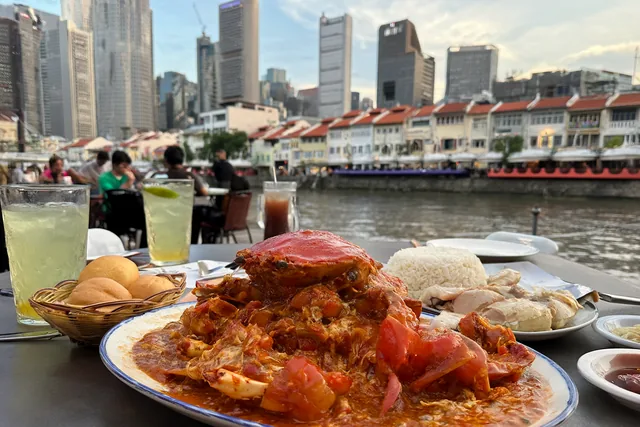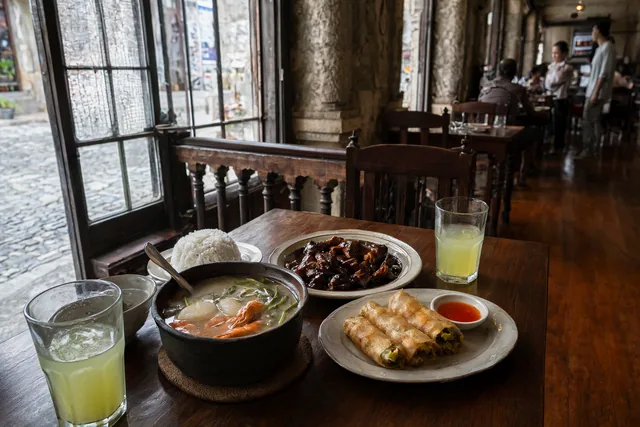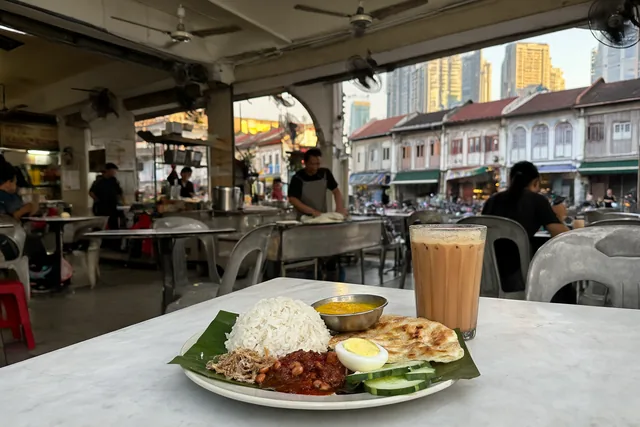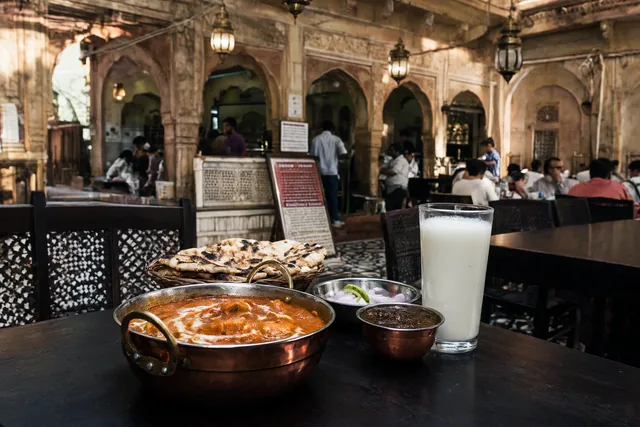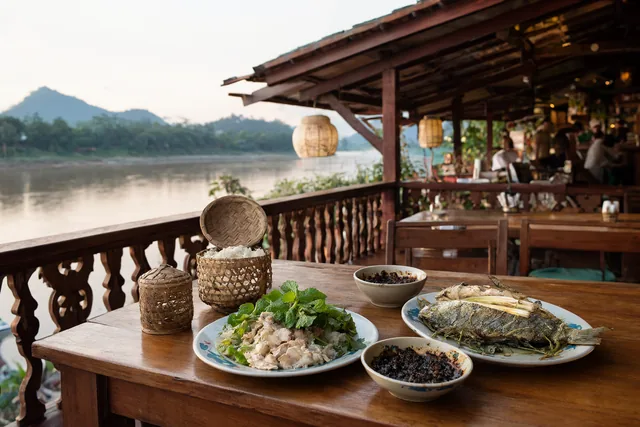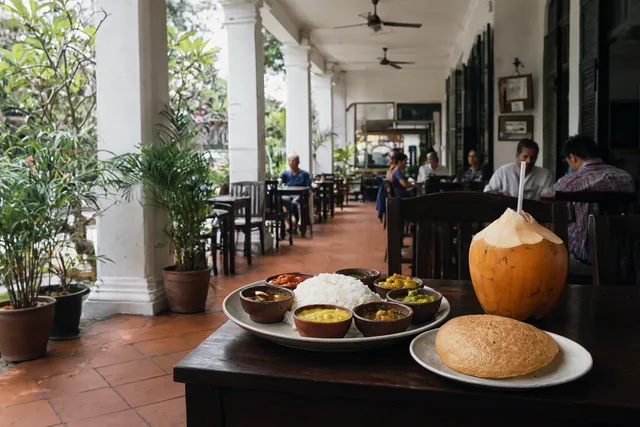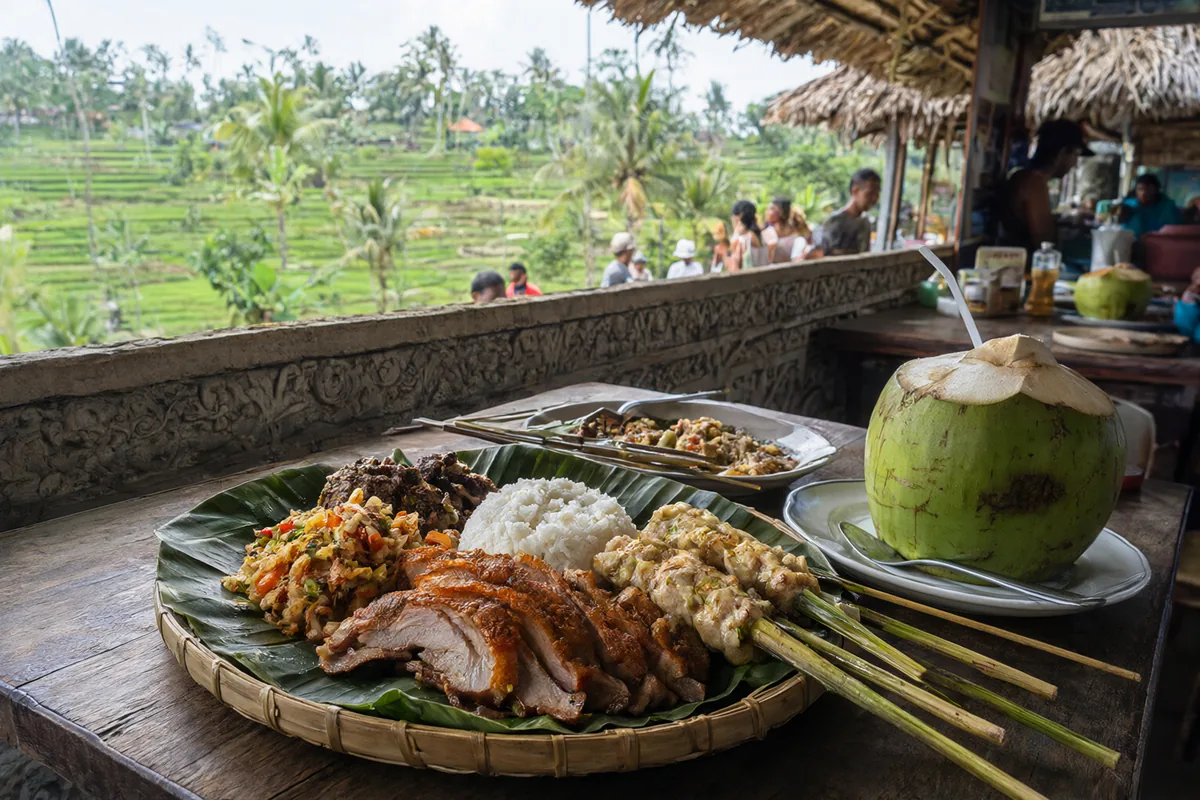
Indonesia is a nation of more than 17,000 islands and hundreds of ethnic groups, and its food is as varied as you would expect. The thread that ties it together is rice, sambal and the warung, the small family-run eatery found on every street. This Indonesia food guide covers the dishes to know, how to read an Indonesian menu, how tax, service and "++" work, and then goes island by island and city by city through where to eat in Bali, Jakarta, Yogyakarta, Bandung, Surabaya, Padang, Makassar and Lombok. Most visitors start in Bali, which has its own Hindu food traditions, including pork dishes rarely found in the rest of this mostly Muslim country, so it pays to travel further and taste the differences.
What to eat in Indonesia: 12 dishes to know
These are the dishes worth seeking out, with the island or city they belong to where relevant.
- Nasi goreng (everywhere): fried rice with sweet soy sauce (kecap manis), shallots, garlic and chilli, usually topped with a fried egg and served with prawn crackers.
- Rendang (West Sumatra): beef slow-cooked for hours in coconut milk and spices until the sauce has been absorbed and the meat is dark and tender. The pride of Minangkabau cooking.
- Sate (everywhere): skewers grilled over charcoal. Sate ayam (chicken) comes with peanut sauce; Bali's sate lilit is minced fish or pork wrapped around lemongrass stalks.
- Gado-gado (Jakarta): blanched vegetables, tofu, tempeh, egg and rice cakes covered in peanut sauce and topped with crackers.
- Babi guling (Bali): spit-roast suckling pig stuffed with a spice paste, served with crackling, lawar (minced meat and coconut salad), sausage and rice.
- Bebek betutu (Bali): duck rubbed with spices, wrapped in banana leaves and slow-cooked until falling apart. Ayam betutu is the chicken version.
- Soto (everywhere): a family of soups. Soto ayam is a turmeric chicken broth with noodles; soto Betawi in Jakarta is beef in a creamy coconut milk broth.
- Bakso (everywhere): beef meatball soup with noodles, sold from push carts with a distinctive bell or knock.
- Gudeg (Yogyakarta): young jackfruit stewed for hours with palm sugar and coconut milk, served with rice, chicken, egg and spicy beef skin (krecek).
- Rawon (Surabaya and East Java): a black beef soup coloured by keluak nuts, served with rice, salted egg and bean sprouts.
- Martabak (everywhere at night): either martabak manis, a thick sweet pancake filled with chocolate, cheese or peanuts, or martabak telur, a crisp savoury pancake stuffed with egg and minced meat.
- Tempeh (Java): fermented soybean cake, fried crisp or simmered in sweet soy (tempe bacem). A great option for vegetarians.
How to read an Indonesian menu
Indonesian (Bahasa Indonesia) uses the Latin alphabet, and dish names are usually built from a base, a main ingredient and a cooking method: nasi goreng ayam is chicken fried rice, and ikan bakar is grilled fish. Tourist areas in Bali usually have English menus, but warung across the country often list dishes only in Indonesian, sometimes just on a board or a wall. These are the words you will see most.
| Indonesian | Meaning |
|---|---|
| Nasi | Cooked rice (nasi campur is rice with a selection of dishes; nasi putih is plain rice) |
| Mie / bihun / kwetiau | Egg noodles / rice vermicelli / flat rice noodles |
| Goreng | Fried |
| Bakar | Grilled over charcoal |
| Rebus / kuah | Boiled / soup or gravy |
| Ayam / sapi / kambing / babi | Chicken / beef / goat or mutton / pork |
| Ikan / udang / cumi | Fish / prawn / squid |
| Sayur | Vegetables |
| Tahu / tempe | Tofu / tempeh |
| Sambal | Chilli relish, served with almost everything |
| Pedas / tidak pedas | Spicy / not spicy |
| Es / panas | Iced / hot (es teh manis is sweet iced tea) |
| Bungkus / makan di sini | Takeaway / eat here |
| Pajak / servis | Tax / service charge |
Indonesian prices have a lot of zeros, so menus shorten them: "35", "35K" and "35rb" (from ribu, thousand) all mean 35,000 rupiah. swap.menu reads the shorthand, converts every price to your home currency and adds any "++" tax and service, so you see what you will actually pay.
Tax, service, tipping and paying in Indonesia
Warung and street stalls charge exactly what is on the board. Restaurants and cafés, especially in Bali and the big cities, often add a regional restaurant tax (usually 10 percent) and a service charge on top, which menus show as "++" or "prices subject to tax and service". In Bali's tourist areas, the two together can add a noticeable amount to the bill. Our guide to tax and service charges on menus explains how "++" works, and our guide on how to order at a Bali warung covers the cheaper, simpler way to eat on the island.
Tipping is not traditionally expected in Indonesia, but it is common in Bali's tourist restaurants, and leaving small change or rounding up is appreciated anywhere if there is no service charge. The currency is the rupiah (IDR, written Rp). Warung, markets and street carts want cash, and small notes help. Restaurants, cafés and supermarkets in the cities and in Bali accept cards, and the national QR code system (QRIS) is used almost everywhere by locals. When a card machine offers to charge you in your home currency, choose rupiah: our guide to paying in local currency explains why.
Indonesians tend to eat early and often. Breakfast is around 6am to 8am, lunch from 11am to 1pm and dinner from about 6pm, with night markets and street carts busy until late. Outside Bali, most of the country is Muslim, so restaurants are generally halal and pork is rare except in Chinese restaurants and in Christian and Hindu areas. During Ramadan, many places close in the day or serve behind curtains, and food stalls set up in the late afternoon for breaking the fast. Eat and pass food with your right hand.
Where to eat in Indonesia, city by city
Every island has its own cuisine, and the food changes as much between Java and Sumatra as between two countries. Jump to a destination:
Where to eat in Bali
Bali is Indonesia's only Hindu-majority province, and its cooking is built around ceremonies, spice pastes (base genep) and pork. The dishes to seek out are babi guling, bebek betutu, sate lilit, lawar and nasi campur Bali, rice with a little of everything. In and around Ubud, small warung serve babi guling at lunchtime until the pig runs out, and crispy duck is served at restaurants among the rice fields. Ubud also has many vegetarian and vegan cafés, and its morning market is a good place for Balinese cakes and snacks.
In the south, Seminyak is Bali's restaurant district, with Jalan Kayu Aya and the streets of Petitenget lined with modern restaurants, cafés and beach clubs, and nearby Canggu is full of brunch cafés. For seafood, Jimbaran Bay sets tables on the sand at sunset with grilled fish, prawns and clams sold by weight, so check the price per kilo first. Sanur has a busy night market with cheap Balinese and Javanese food. Warung all over Bali serve nasi campur from a glass cabinet, and pointing is perfectly acceptable.
Where to eat in Jakarta
Jakarta, the capital, is a huge, crowded city where food from every corner of Indonesia comes together. Its own cuisine is Betawi, the cooking of the city's original inhabitants: soto Betawi, beef soup in coconut milk; kerak telor, a crispy omelette of sticky rice, egg, coconut and fried shallots sold from carts around the old town of Kota Tua; nasi uduk, coconut rice; and ketoprak, tofu and noodles in peanut sauce.
Jalan Sabang in central Jakarta is a long-running street food strip, busiest at night. Glodok and the lanes of Petak Sembilan are Jakarta's Chinatown, with Chinese-Indonesian noodles, pork dishes and old-style coffee shops. Pecenongan is known for late-night seafood and martabak stalls, while Senopati, Kemang and Blok M in the south have Jakarta's newer restaurants, cafés and bars. Traffic can make a short trip take an hour, so pick one area per meal.
Where to eat in Yogyakarta
Yogyakarta, usually called Jogja, is Java's cultural capital, home to a working sultan's palace and the base for visiting Borobudur and Prambanan. Its signature dish is gudeg, the slow-stewed sweet jackfruit, and the street called Wijilan, near the palace (Kraton), is lined with gudeg shops. Javanese food here is notably sweet. Also try ayam goreng Kalasan, chicken simmered in coconut water and spices then fried, and sate klathak, goat skewered on iron bicycle spokes and grilled with little more than salt, from the area south of the city.
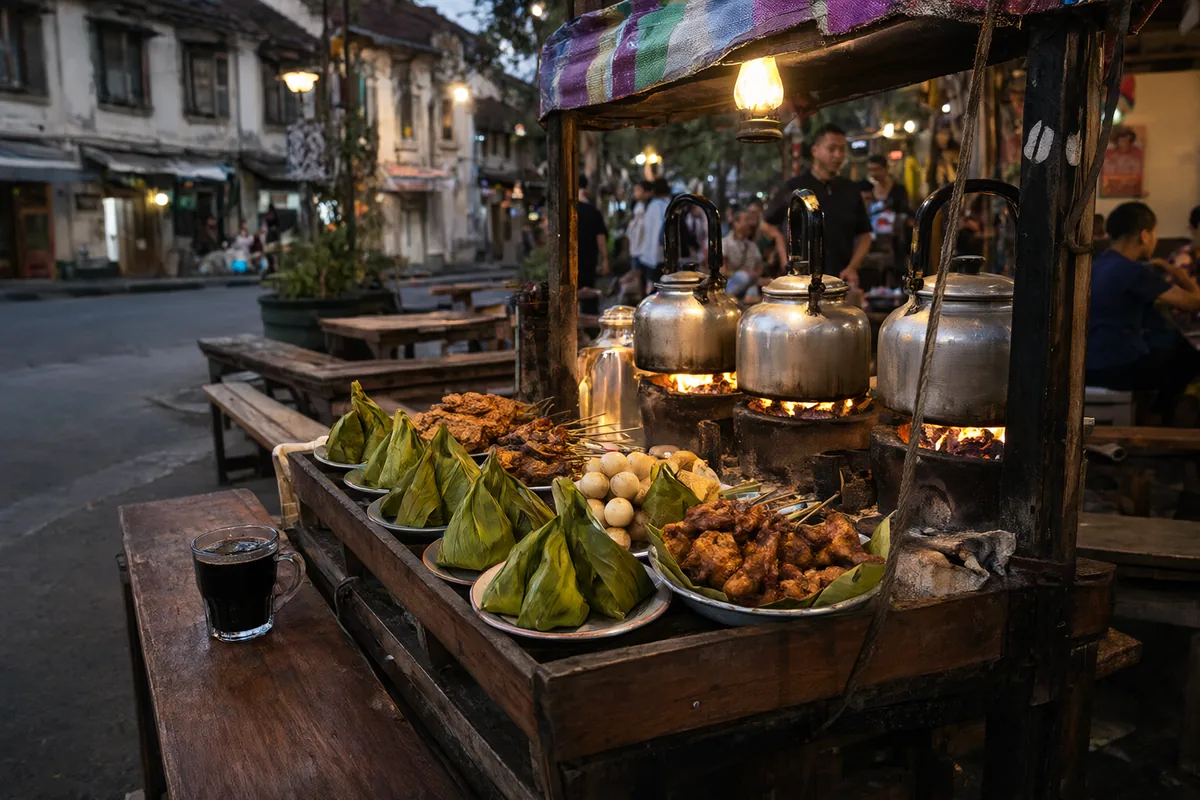
At night, Jogja's streets fill with angkringan, small carts with a tarpaulin and benches, selling nasi kucing ("cat rice", tiny parcels of rice with sambal and fish), skewers of satay and offal, fried snacks and kopi joss, coffee served with a lump of burning charcoal dropped in. The area around Tugu station is famous for them. Along Malioboro street, lesehan stalls lay out mats so you eat sitting on the ground. Take home bakpia, small filled pastries sold by the box in the Pathuk area.
Where to eat in Bandung
Bandung, in the cool highlands of West Java, is a weekend escape for people from Jakarta and the centre of Sundanese cooking, which is fresher and lighter than much Indonesian food. A Sundanese meal means nasi timbel (rice wrapped in banana leaf), fried chicken or fish, tofu and tempeh, lalapan (a plate of raw vegetables and leaves) and fiery sambal. Karedok is a raw vegetable salad with peanut sauce, the uncooked cousin of gado-gado.
Bandung is also a city of snacks: batagor (fried fish dumplings with peanut sauce), siomay (steamed fish dumplings), surabi (small rice flour pancakes) and seblak (spicy wet crackers). Jalan Braga, with its Dutch-era Art Deco buildings, has cafés and restaurants, and the hilly Dago area has restaurants with views over the city. Weekends in Bandung are crowded, so visit on a weekday if you can.
Where to eat in Surabaya
Surabaya, Indonesia's second-largest city and the capital of East Java, is a working port with robust, often spicy food. Its signature dishes are rawon, the black beef soup, lontong balap, rice cakes with bean sprouts, tofu and fried shallots in broth, and rujak cingur, a salad of vegetables, fruit and sliced cow's nose in a thick black shrimp paste and peanut sauce. Duck fried in the Madura style, with a black spice paste, is another favourite.
The old Ampel district, around the historic Sunan Ampel mosque, is Surabaya's Arab quarter, with stalls selling dates, martabak, curry goat and rice dishes. Surabaya also has a large Chinese-Indonesian community and good seafood restaurants. Many visitors pass through on the way to Mount Bromo, so take an evening to eat in the city. Surabaya is hot all year, and evening is when the street food comes out.
Where to eat in Padang
Padang, on the west coast of Sumatra, is the home of the Minangkabau people and of nasi Padang, the most widely exported regional cuisine in Indonesia. The headline dish is rendang, but a Padang meal is also gulai (curries), dendeng balado (crisp beef with red chilli), ayam pop (pale steamed then fried chicken), and sate Padang with its thick, spicy yellow sauce.
In a traditional rumah makan Padang, the waiter stacks a dozen or more small plates on your table without being asked, a style called hidang. You pay only for what you eat, so if you do not want a dish, leave it untouched. Padang's restaurants are everywhere in Indonesia, but in Padang the cooking is at its most intense and spicy. The highland town of Bukittinggi, a few hours inland, is another great place to eat Minangkabau food, especially at its central market.
Where to eat in Makassar
Makassar, the main city of Sulawesi, is a seafaring port and the gateway to Tana Toraja. It has a strong food identity built on beef and seafood. Order coto Makassar, a rich beef and offal soup thickened with ground peanuts and eaten with rice cakes, konro, beef rib soup with dark keluak nuts, or konro bakar, the ribs grilled and glazed. Pallubasa is a similar beef soup, often served with a raw egg yolk stirred in.
In the evening, Losari Beach, the waterfront promenade, is lined with stalls selling pisang epe, grilled bananas pressed flat and topped with palm sugar syrup, and the seafood restaurants nearby grill fish, squid and prawns over charcoal. Try es pisang ijo, banana wrapped in green rice flour dough with coconut milk and syrup, a Makassar dessert. Makassar sunsets over the water are a highlight of eating here.
Where to eat in Lombok
Lombok, Bali's eastern neighbour, is home to the mostly Muslim Sasak people, and its food is known for heat, which suits an island whose name is also the Javanese word for chilli. The signature dish is ayam taliwang, young chicken grilled and coated in a spicy chilli, garlic and shrimp paste sauce. Also try plecing kangkung, water spinach with a fresh tomato and chilli sambal, sate rembiga, sweet and spicy beef skewers, and nasi balap puyung, rice with spicy shredded chicken and fried peanuts.
The coastal area of Senggigi and the surf town of Kuta Lombok have restaurants and cafés for travellers, while the capital, Mataram, is the place for local warung serving taliwang. Off the northwest coast, the Gili Islands have small night markets selling grilled seafood, satay and Indonesian dishes. Food in Lombok is generally halal, and alcohol is less widely available than in Bali.
Vegetarian, vegan and allergy tips
Indonesia is reasonably good for vegetarians, thanks to tempeh and tofu, which appear in many everyday dishes, and Bali has a large number of vegetarian and vegan cafés, especially in Ubud and Canggu. The word vegetarian is widely understood, and tanpa daging means "without meat". The hidden ingredient to watch is terasi, fermented shrimp paste, which goes into most sambal and many sauces. Ask for tanpa terasi. Broths often use chicken or beef stock, and fried snacks may be cooked in the same oil as meat.
Peanuts are central to Indonesian food: in satay sauce, gado-gado, karedok, coto Makassar and many sambal. Prawn crackers come with many dishes. Coconut is everywhere, and sweet soy sauce contains wheat. In Bali's tourist areas, staff are used to allergy requests, while warung elsewhere may not be. Our guide to eating abroad with food allergies explains how to communicate an allergy clearly.
Useful Indonesian phrases for ordering
Selamat pagi / siang / malam "Good morning / afternoon / evening"
Boleh lihat menunya? "Can I see the menu?"
Saya mau yang ini "I would like this one" (pointing)
Tidak pedas, ya "Not spicy, please"
Saya vegetarian, tidak makan daging "I am vegetarian, I do not eat meat"
Saya alergi kacang tanah "I am allergic to peanuts"
Minta bon "The bill, please"
Enak sekali! Terima kasih "Very delicious! Thank you"
How swap.menu helps you eat in Indonesia
Outside the tourist strips of Bali, menus in Indonesia are in Indonesian, often handwritten on a board, and dish names are regional. Photograph the menu with swap.menu and every dish appears in your language with the Indonesian name beside it and a short explanation, so you know that rujak cingur contains cow's nose, that nasi kucing is a tiny portion of rice, not cat, and that babat is tripe. Every price, including "35K" shorthand, is converted from rupiah to your home currency, and the "++" tax and service charge are added in before you order.
Tap the dishes you want, add a note such as "no shrimp paste" or "not spicy, please", typed or spoken, and swap.menu translates your order into Indonesian. Show the staff your phone, or let them scan the QR code and read your order on their own screen. Try it on a sample menu with the free demo, or see travel pass prices.
Off to Indonesia? Your first 3 menu scans are free, and a travel pass starts from $4.99 with nothing that renews.
Start free with 3 scansIndonesia food FAQ
Do you tip in restaurants in Indonesia?
Tipping is not traditionally expected, but it is common in Bali's tourist restaurants. Many restaurants add tax and a service charge, shown as "++". At warung and street stalls, leaving small change is appreciated but not required.
What does "++" mean on a menu in Bali?
It means a restaurant tax and a service charge will be added to the prices shown. The restaurant tax is usually 10 percent, and the service charge is added on top, so check the bottom of the menu for the exact amounts.
What food is Indonesia famous for?
Nasi goreng, rendang, satay, gado-gado, soto, bakso and tempeh. Regional favourites include babi guling in Bali, gudeg in Yogyakarta, rawon in Surabaya and nasi Padang from West Sumatra.
Which city in Indonesia is best for food?
Padang is often named the best for its spicy Minangkabau cooking, Yogyakarta for Javanese street food and Jakarta for variety, while Bali has the widest range of restaurants for visitors. Each destination in this guide has its own section on where to eat.
Is tap water safe to drink in Indonesia?
No, drink bottled or filtered water. Many hotels and cafés in Bali offer filtered water refills, and ice in established restaurants is usually made from purified water.
How can I read an Indonesian menu?
Learn a few words like nasi, mie, goreng, bakar and ayam, or photograph the menu with swap.menu. It translates every dish into your language, explains what it is, converts prices from rupiah and translates your order into Indonesian for the staff.
Travelling further in Southeast Asia? Read our food guides for nearby countries:
- How to order at a Bali warung
- Malaysia food guide
- Singapore food guide
- Philippines food guide
- Vietnam food guide
Or browse every travel food guide.