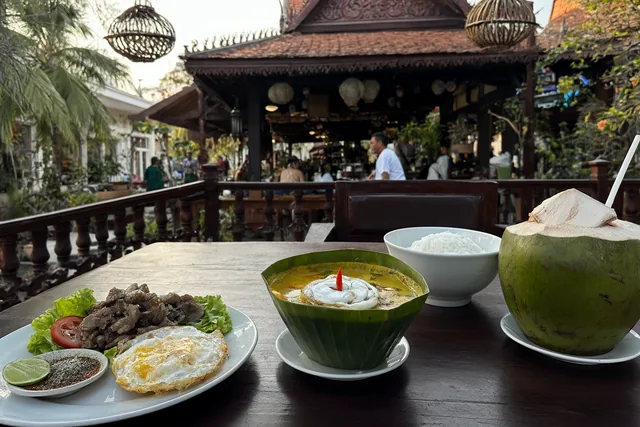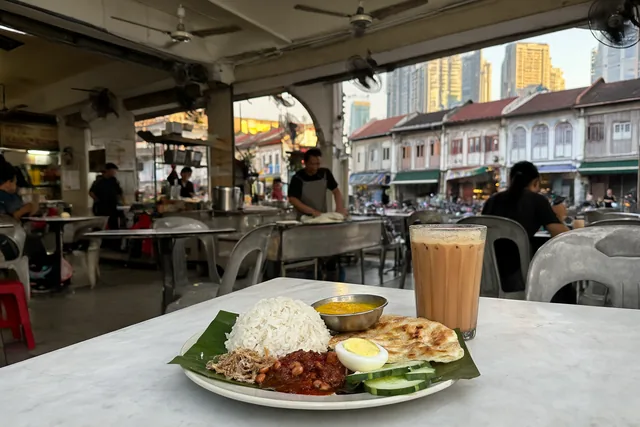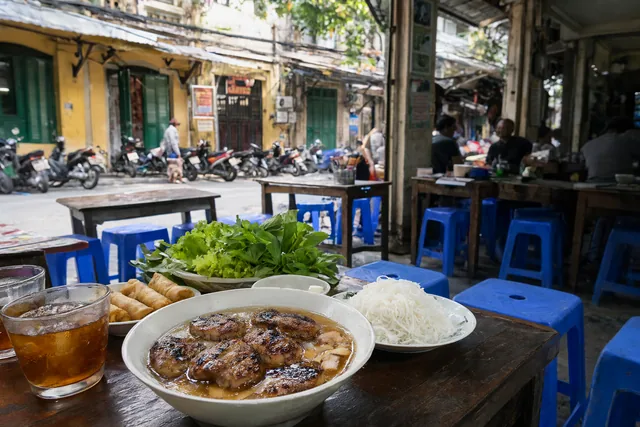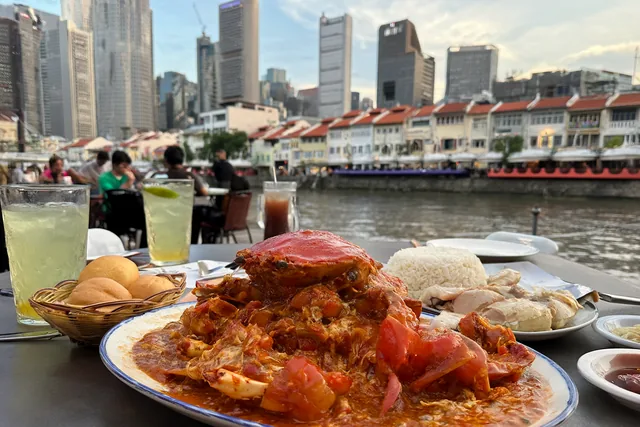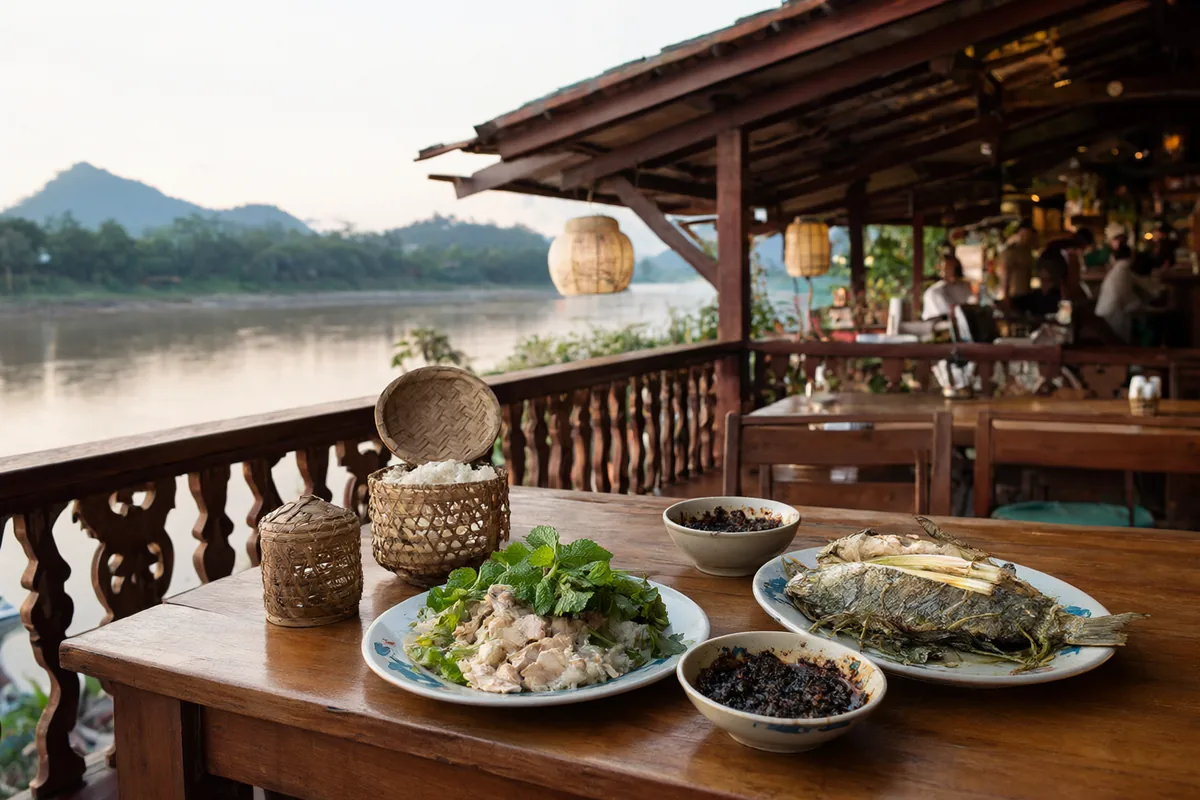
Lao food is fresh, herby, sour and often fiery, and it is eaten with the hands, using balls of sticky rice to scoop up meat salads, grilled fish and chilli dips. This Laos food guide covers the dishes to know, how to read a Lao menu, how paying in kip works, and where to eat in Luang Prabang, Vientiane, Vang Vieng, Pakse, Si Phan Don and Luang Namtha. Laos is small, landlocked and mostly rural, and the best meals are often the simplest: a basket of sticky rice, a plate of laap and a dip of roasted chilli by the Mekong. The French colonial era also left a lasting love of baguettes and strong coffee.
What to eat in Laos: 12 dishes to know
These are the dishes to look for. Lao romanisation varies a great deal, so expect to see laap as larb or lap, and khao as kao.
- Laap: the national dish, a salad of minced meat or fish dressed with lime, fish sauce, chilli, fresh herbs and toasted ground rice. Made with chicken, pork, beef, duck or river fish, and sometimes raw.
- Khao niao: sticky rice, steamed and served in a small woven bamboo basket. Roll a ball with your fingers and use it to pick up food.
- Tam mak hoong: green papaya salad pounded in a mortar with chilli, lime, garlic and fermented fish sauce. Lao versions are funkier and saltier than Thai som tam.
- Jeow: chilli dips made from grilled chillies, garlic, shallots and herbs. Jeow bong from Luang Prabang is sweet, smoky and made with strips of buffalo skin.
- Or lam (Luang Prabang): a thick, herby stew of meat, aubergine, beans and greens, flavoured with sakhan, a peppery wood that numbs the tongue.
- Khao piak sen: thick, slightly chewy rice and tapioca noodles in a rich chicken or pork broth, topped with fried garlic. The Lao breakfast soup.
- Khao soi (the north): rice noodles in clear broth topped with a spicy minced pork and tomato sauce. Different from the curry noodle of the same name in northern Thailand.
- Mok pa: fish mixed with herbs, chilli and lemongrass, wrapped in banana leaf and steamed.
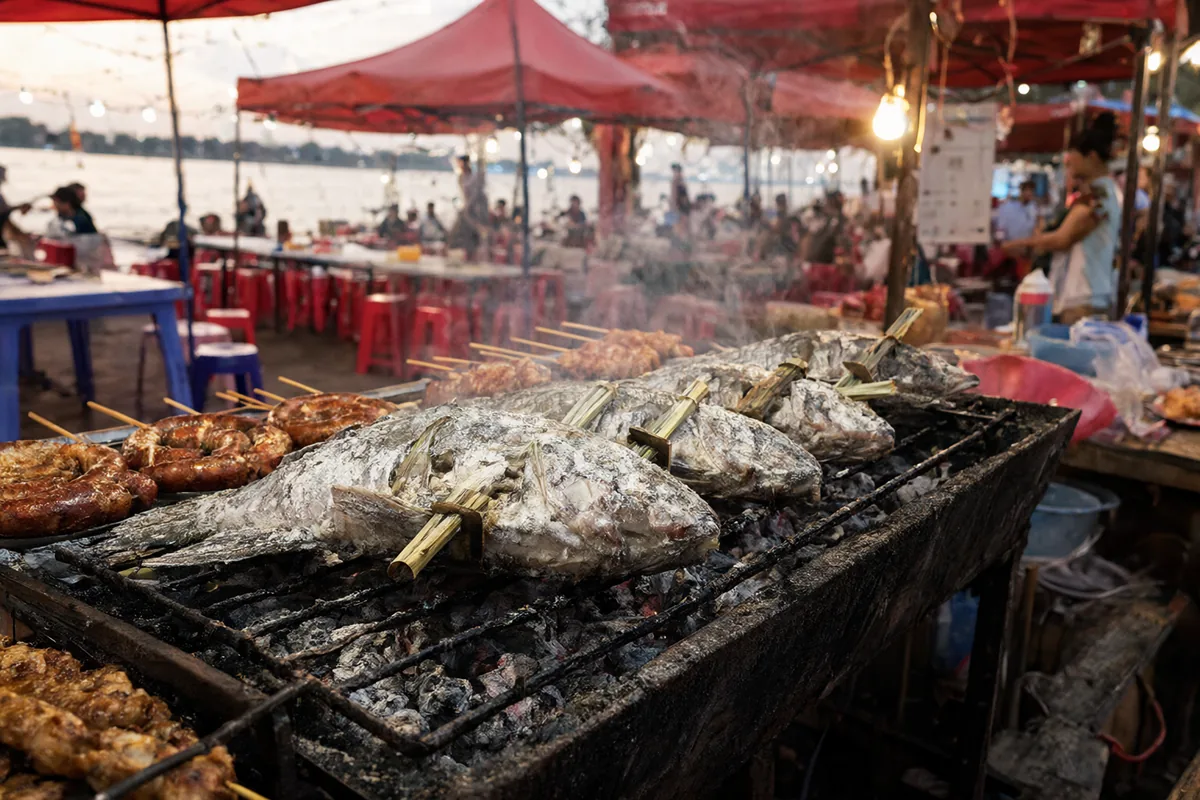
- Ping pa and ping kai: whole river fish stuffed with lemongrass and grilled in a salt crust, and marinated chicken grilled over charcoal.
- Sai oua: coarse pork sausage with lemongrass, galangal, kaffir lime and chilli, grilled and eaten with sticky rice.
- Khai paen (Luang Prabang): thin sheets of Mekong river weed pressed with sesame, garlic and tomato, dried and fried until crisp, eaten with jeow bong and a cold beer.
- Khao jee pâté: a French-style baguette filled with pâté, cold cuts, pickled vegetables and chilli sauce, sold from street carts every morning.
How to read a Lao menu
Lao has its own script, related to Thai, and it is written without spaces between words. Guesthouses and restaurants in tourist towns usually have English menus, but markets, noodle shops and roadside stalls often have only Lao signs. Lao food is close to the food of Isan in northeast Thailand, and many dishes share names, so our guide on how to read a Thai menu is a useful companion if you are crossing the border.
| Lao | Romanised | Meaning |
|---|---|---|
| ເຂົ້າໜຽວ | khao niao | Sticky rice |
| ລາບ | laap | Minced meat or fish salad with lime and herbs |
| ຕຳໝາກຫຸ່ງ | tam mak hoong | Pounded green papaya salad |
| ແຈ່ວ | jeow | Chilli dip |
| ປີ້ງ | ping | Grilled over charcoal |
| ຂົ້ວ | khua | Stir-fried |
| ທອດ | thot | Deep-fried |
| ຕົ້ມ | tom | Boiled, usually a soup |
| ໝົກ | mok | Steamed in banana leaf |
| ໄກ່ / ໝູ / ງົວ / ປາ | kai / mu / ngua / pa | Chicken / pork / beef / fish |
| ຜັກ | phak | Vegetables |
| ເຝີ / ເຂົ້າປຽກເສັ້ນ | fer / khao piak sen | Rice noodle soup (Lao pho) / thick noodle soup |
| ເຜັດ / ບໍ່ເຜັດ | phet / bo phet | Spicy / not spicy |
| ນ້ຳກ້ອນ | nam kon | Ice |
Lao "not spicy" is still spicy by most standards, and papaya salad is often pounded with a fistful of chillies. Ask for bo phet and also for the chilli on the side. swap.menu explains each dish on the menu, including which ones are traditionally very hot or contain raw meat, before you order.
Tipping, paying and meal times in Laos
Tipping is not expected in Laos, though rounding up or leaving small notes at a restaurant is appreciated, especially in tourist towns. Upmarket restaurants and hotels may add a service charge and VAT, sometimes shown on the menu as "++". Market stalls and local eateries never do. Our guide to tax and service charges on menus explains these extra lines.
The currency is the kip (LAK, written ₭). Prices run into the tens and hundreds of thousands, and they have risen quickly in recent years, so menu prices may be updated by hand. Thai baht and US dollars are accepted by some hotels, tour agents and tourist restaurants, but you will get a better deal paying in kip. Laos is mainly a cash economy: ATMs are common in towns but have low withdrawal limits and fees, and cards are accepted mostly at hotels and upmarket restaurants, often with a surcharge. When a card machine offers to charge you in your home currency, choose kip: our guide to paying in local currency explains why.
Laos eats early. Noodle soup and baguette stalls are busiest from 6am to 9am, lunch is 11am to 1pm, and dinner runs from about 6pm. Night markets wind down by 10pm, and Luang Prabang in particular goes quiet early, with most restaurants and bars closed by around 11pm. Dishes are shared, and sticky rice comes in one basket per person or one for the table.
Where to eat in Laos, town by town
Most travellers move north to south along the Mekong, and the food changes along the way. Jump to a town:
Where to eat in Luang Prabang
Luang Prabang, the old royal capital on a peninsula between the Mekong and Nam Khan rivers, is a UNESCO World Heritage town and the place to eat traditional Lao food at its best. Its own dishes are or lam, jeow bong, khai paen and sai oua, and many restaurants serve a Luang Prabang tasting plate so you can try them together. Riverside restaurants along both rivers are the classic setting for a long lunch or sunset dinner.
The night market on the main street sells handicrafts, and the narrow alley beside it is lined with food stalls: grilled fish, sausages, skewers and a famous vegetarian buffet where you pile a bowl for a set price. In the morning, the small market in the lanes near the old palace sells river fish, herbs, sticky rice and snacks, and Phousi Market is bigger and more local. Luang Prabang is also one of the best places in Laos for a cooking class. If you watch the dawn alms procession of monks, do so quietly and at a distance, and only take part if you can do it respectfully.
Where to eat in Vientiane
Vientiane is one of the most relaxed capitals in Asia, and it has the widest range of food in Laos: Lao, Vietnamese, Chinese, Thai and French. Breakfast is khao piak sen or fer at a noodle shop, or a baguette and strong coffee at one of the city's many Lao-French bakeries and cafés. In the evening, try sindad, Lao barbecue cooked on a domed grill with a moat of broth around the edge for vegetables and noodles.
The Mekong riverside, around Chao Anouvong Park, has an evening market and food stalls selling grilled fish, ping kai, sausages and papaya salad, with plastic tables facing the river and Thailand on the other bank. The Morning Market (Talat Sao) area and the markets around That Luang are good for daytime snacks. Vientiane also has Vietnamese spring roll shops serving naem nuang, grilled pork rolled at the table with herbs and rice paper. Most of central Vientiane is walkable, and tuk-tuks and ride-hailing apps cover the rest.
Where to eat in Vang Vieng
Vang Vieng sits among limestone karsts on the Nam Song river, and it has grown from a backpacker party town into a centre for kayaking, caving and hot air balloons. The food reflects its visitors: there are many restaurants serving Western, Korean and Chinese dishes, alongside Lao kitchens. For Lao food, look for grilled river fish, laap, mok pa and sindad barbecue, and eat at one of the riverside restaurants with a view of the karsts at sunset.
The morning market in Vang Vieng sells noodle soup, sticky rice and snacks, and roadside stalls sell baguette sandwiches and fruit shakes all day. Outside town, small restaurants near the caves and blue lagoons serve simple lunches of fried rice, noodles and grilled chicken. Vang Vieng is now an easy stop on the railway between Vientiane and Luang Prabang.
Where to eat in Pakse
Pakse, in the far south on the Mekong, is the base for visiting the Bolaven Plateau, the cool upland where most of Laos's coffee is grown, and the ancient temple of Wat Phou near Champasak. Southern Lao food shows Vietnamese and Thai influence, and breakfast here is fer, khao piak sen or nam neuang, Vietnamese-style grilled pork meatballs rolled in rice paper with herbs.
Dao Heuang Market, one of the largest markets in Laos, is the place to see produce from across the south, including coffee, fruit and dried fish. Riverside restaurants in Pakse serve grilled fish and laap at sunset. Up on the Bolaven Plateau, around the town of Paksong, small farms and cafés offer tastings of locally grown coffee, and roadside stalls sell fruit and vegetables from the cool, fertile soil.
Where to eat in Si Phan Don
Si Phan Don, the Four Thousand Islands, is a stretch of the Mekong near the Cambodian border where the river spreads out among countless islands. The main islands for visitors are Don Det, Don Khon and the larger, quieter Don Khong. Food here is all about the river: grilled fish, laap pa (fish laap), mok pa and fish soups, served at guesthouse restaurants on wooden decks over the water.
Menus on the islands are simple and similar from place to place, and many restaurants serve Western dishes too. Cash is essential, as there are few ATMs and card machines. Rent a bicycle to explore Don Khon and the waterfalls, and come back for a cold drink and grilled fish while the sun sets over the Mekong. Food is cooked to order and service is slow, which suits the pace of the islands.
Where to eat in Luang Namtha
Luang Namtha, in the far north near the Chinese border, is a small town surrounded by rice fields and forested hills, and the base for trekking in the Nam Ha protected area. It is home to many ethnic groups, including the Tai Dam, Khmu and Akha, and the food is more rustic than in the south: grilled meats, river fish, bamboo shoots, wild greens and plenty of sticky rice.
The night market in the centre of Luang Namtha is the place for dinner, with stalls grilling skewers, sausages and whole fish, and selling khao soi, the northern noodle soup with a minced pork and tomato sauce. The morning market has noodle stalls, fresh produce and forest foods. On a trek, homestay meals with village families are often the most memorable food of a trip to Laos.
Vegetarian, vegan and allergy tips
Lao cooking leans heavily on fish sauce (nam pa) and padaek, a fermented fish sauce, which flavour papaya salads, jeow and many soups. Jeow bong contains buffalo skin, and laap is a meat or fish dish by definition, though tourist restaurants often offer mushroom or tofu versions. The word for vegetarian is ເຈ (jay), from the Chinese Buddhist tradition, and "I eat vegetarian" is khoi kin jay. Also ask for no fish sauce, as it may not be considered meat.
MSG is widely used, and you can ask for bo sai paeng nua, "no MSG". Raw or lightly cooked meat and fish appear in some laap and salads, so ask for it cooked (suk) if you prefer. Peanuts are less common than in Thai food but appear in some dishes, and river fish and shrimp paste are everywhere. Our guide to eating abroad with food allergies explains how to explain an allergy clearly.
Useful Lao phrases for ordering
ສະບາຍດີ sabaidee, "Hello"
ຂໍເບິ່ງເມນູແດ່ kho beung menu dae, "Can I see the menu, please?"
ເອົາອັນນີ້ ao an nee, "I'll have this one" (pointing)
ບໍ່ເຜັດ bo phet, "Not spicy"
ຂ້ອຍກິນເຈ khoi kin jay, "I eat vegetarian"
ໄລ່ເງິນແດ່ lai ngeun dae, "The bill, please"
ແຊບຫຼາຍ ຂອບໃຈ saep lai, khop jai, "Very delicious, thank you"
How swap.menu helps you eat in Laos
Lao menus can be in Lao script, in translated English that leaves you guessing, or both. Photograph the menu with swap.menu and every dish appears in your language with the Lao name beside it and a short explanation, so you know that som moo is fermented raw pork sausage, that koy pa is a raw fish salad and that or lam is a mild, herby stew. Every price is converted from kip to your home currency, which helps when menus run into hundreds of thousands.
Tap the dishes you want, add a note such as "no fish sauce" or "not spicy, please", typed or spoken, and swap.menu translates your order into Lao. Show the cook your phone, or let them scan the QR code and read your order on their own screen. Try it on a sample menu with the free demo, or see travel pass prices.
Off to Laos? Your first 3 menu scans are free, and a travel pass starts from $4.99 with nothing that renews.
Start free with 3 scansLaos food FAQ
Do you tip in restaurants in Laos?
Tipping is not expected in Laos, but rounding up or leaving small notes for good service is appreciated in tourist towns. Some upmarket restaurants and hotels add a service charge and tax to the bill.
What food is Laos famous for?
Laap, the minced meat salad that is the national dish, sticky rice, green papaya salad, jeow chilli dips, grilled fish and sausages, and Luang Prabang dishes such as or lam and khai paen. Lao coffee from the Bolaven Plateau is also well known.
How do you eat sticky rice in Laos?
Take a small amount from the basket with your right hand, roll it into a ball with your fingers, and use it to pick up food or dip into jeow. Close the basket lid when you finish so the rice does not dry out.
Is Laos expensive to eat out?
No. Noodle soups, baguettes and market food are cheap, and a meal in a local restaurant costs little. Prices are higher in Luang Prabang's riverside restaurants and in hotels, and imported food and wine are expensive.
Is tap water safe to drink in Laos?
No, drink bottled or filtered water. Many guesthouses offer refills, and ice in towns is usually made from purified water.
How can I read a menu in Laos?
Tourist restaurants usually have English menus, but markets and noodle shops often do not. Photograph the menu with swap.menu and it translates every dish into your language, explains it, converts prices from kip and translates your order into Lao for the staff.
Travelling further in Southeast Asia? Read our food guides for nearby countries:
Or browse every travel food guide.