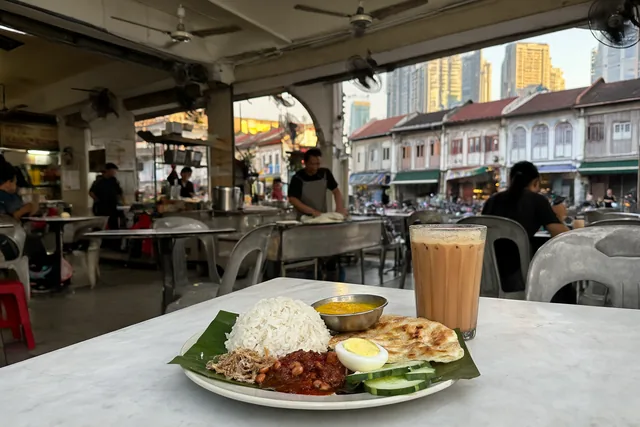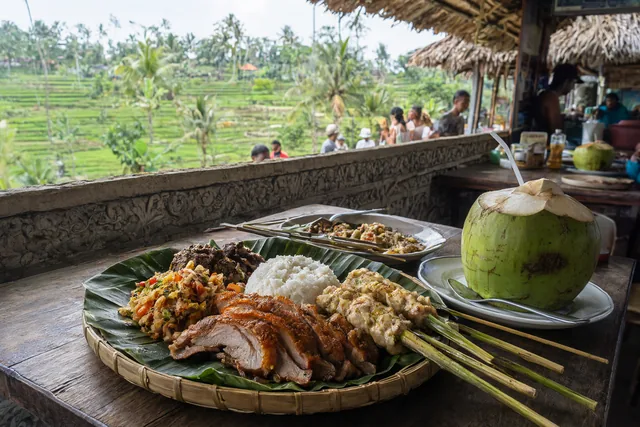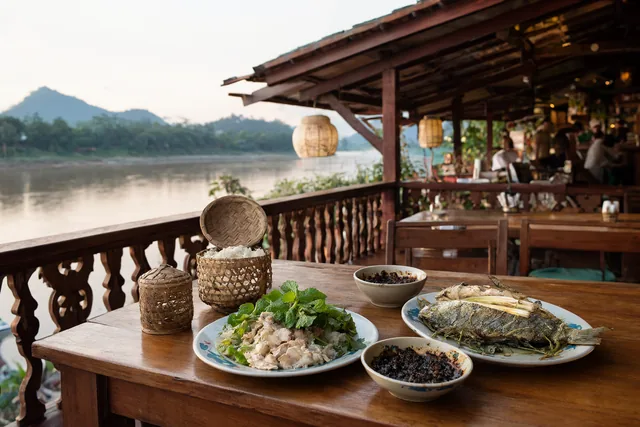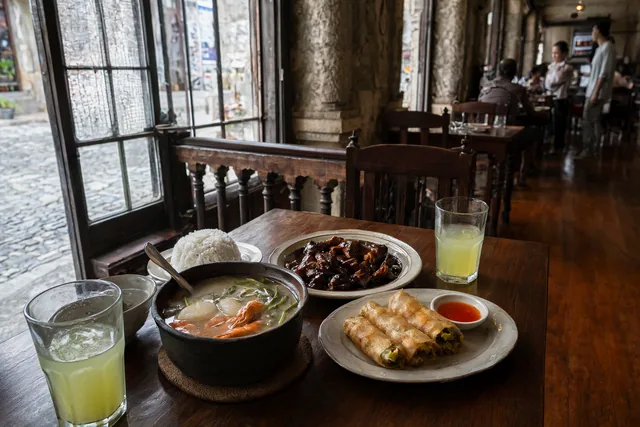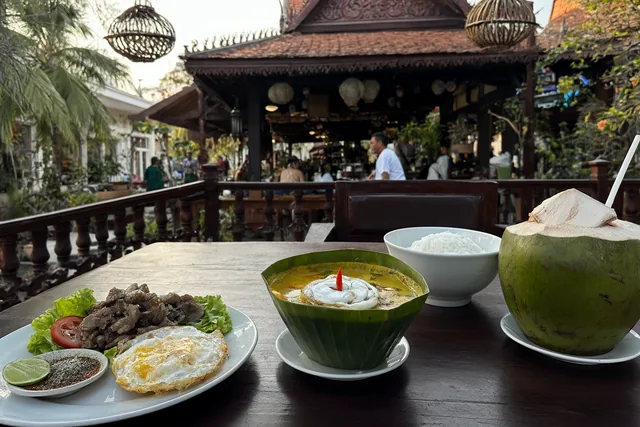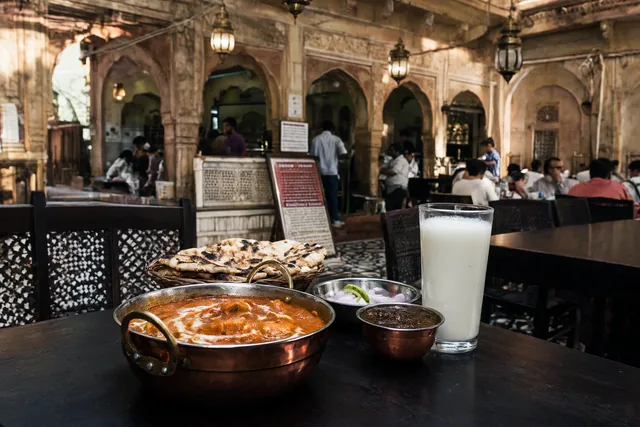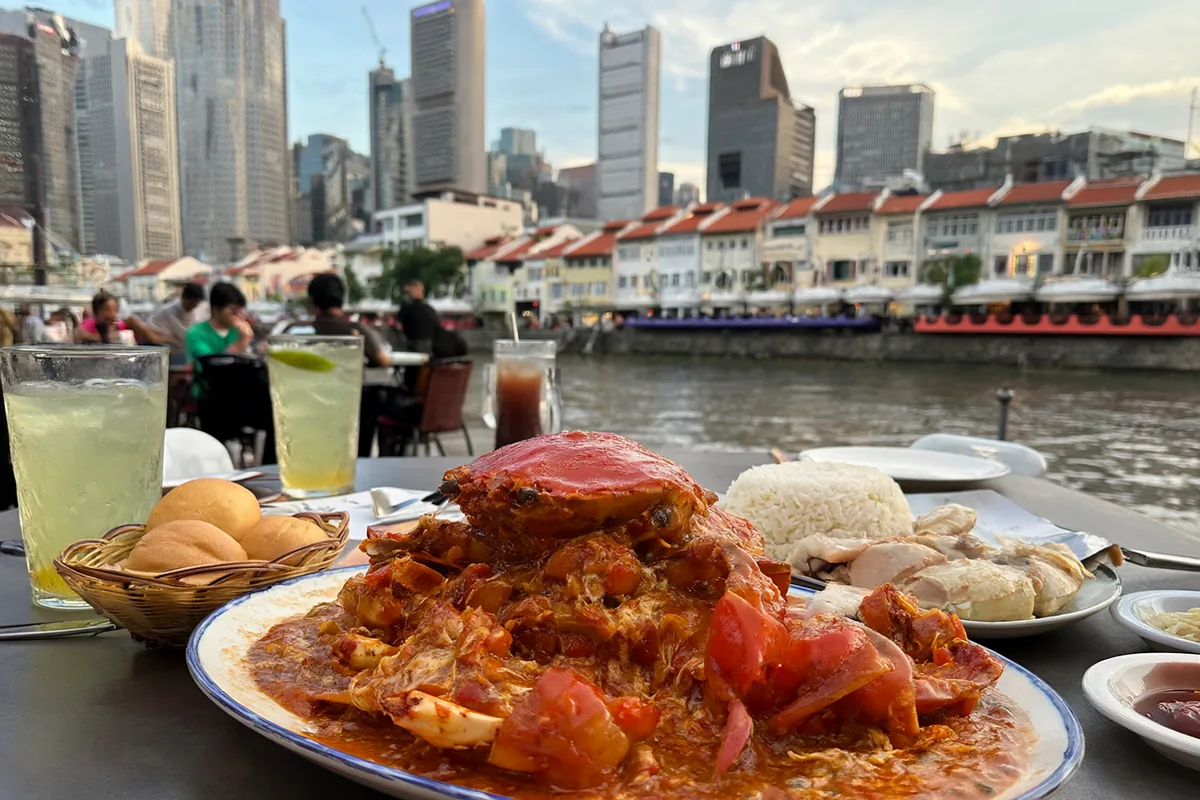
Singapore is a small city with an enormous appetite, and the best way to eat it is at a hawker centre, where dozens of stalls each cook one or two dishes to a standard perfected over decades. Singapore's hawker culture is recognised by UNESCO as intangible cultural heritage, and a plate of chicken rice can cost less than a coffee in a mall. This Singapore food guide covers the dishes to order, how hawker centres and coffee shop drinks work, what "++" means on a restaurant menu, and where to eat in Marina Bay, Chinatown, Little India, Kampong Glam, Tiong Bahru, Katong and Joo Chiat, and the East Coast. English is the common language, but menus are full of Hokkien, Malay, Tamil and Singlish words, and those are what this guide decodes.
What to eat in Singapore: 12 dishes to know
Singapore's food draws on Chinese, Malay, Indian and Peranakan traditions, and many dishes are shared with Malaysia, with friendly arguments over who does them best.
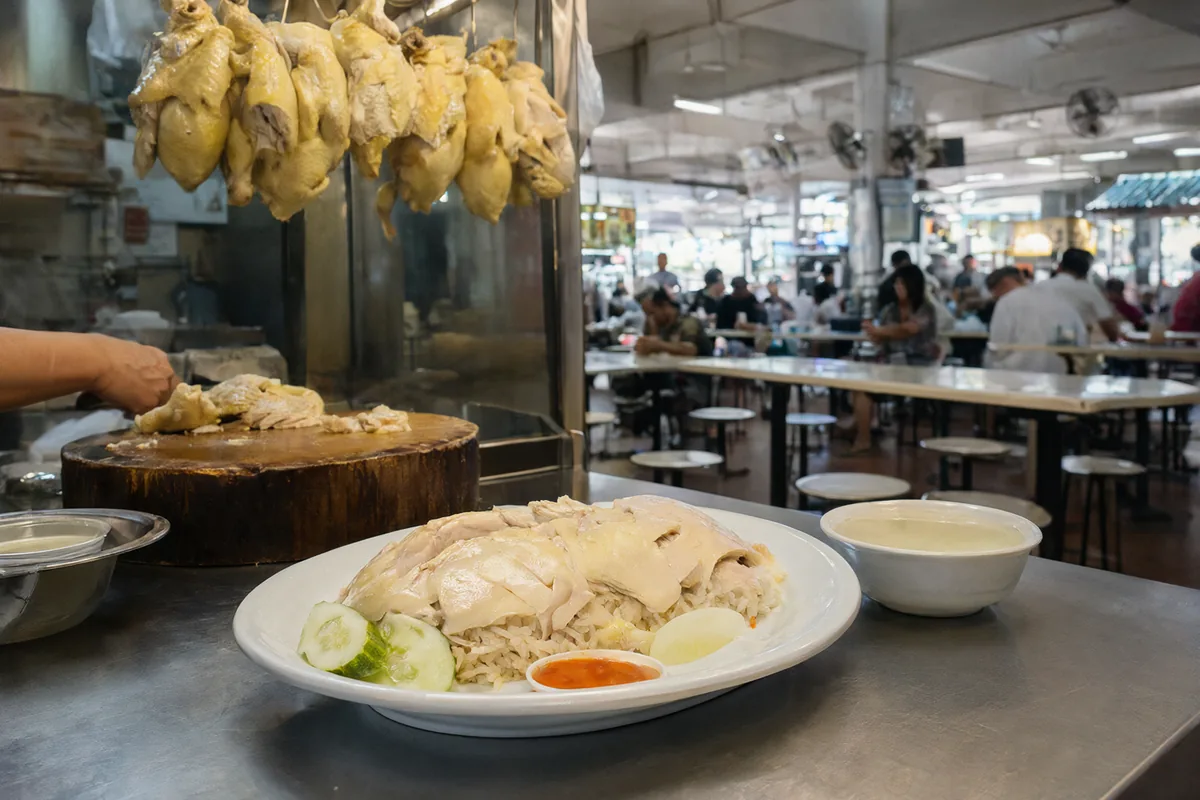
- Hainanese chicken rice: poached chicken, silky and served at room temperature, with rice cooked in chicken stock and garlic, chilli sauce, ginger and dark soy. The unofficial national dish.
- Chilli crab: mud crab in a thick, sweet and gently spicy tomato and chilli sauce with ribbons of egg, mopped up with fried mantou buns. Priced by weight.
- Black pepper crab: crab wok-fried with butter and a lot of crushed black pepper, drier and hotter than chilli crab.
- Laksa: rice noodles in a rich, spicy coconut curry broth with prawns, cockles and fish cake. Katong laksa has the noodles cut short so you eat it with a spoon.
- Char kway teow: flat rice noodles and yellow noodles fried with dark soy, Chinese sausage, cockles, egg and bean sprouts. Singapore's version is darker and sweeter than Penang's.
- Hokkien prawn mee: yellow noodles and rice vermicelli fried in a rich prawn stock with prawns, squid and pork belly, served with sambal and lime.
- Bak kut teh: pork ribs in a clear, peppery and garlicky broth (the Teochew style common in Singapore), with rice and fried dough sticks to dip.
- Kaya toast: toast spread with kaya (coconut and egg jam) and a slab of cold butter, with soft-boiled eggs seasoned with soy and white pepper, and kopi. The classic breakfast.
- Satay: grilled skewers of chicken, mutton or beef with peanut sauce, cucumber, onion and ketupat rice cakes.
- Carrot cake (chai tow kway): not cake and not carrot, but cubes of steamed radish cake fried with egg and preserved radish, either "white" or "black" with sweet dark soy.
- Fish head curry: a whole fish head in a sour, spicy curry with okra and aubergine, a Singapore invention from Little India.
- Roti prata: flaky griddled flatbread with fish or mutton curry, the Singapore name for roti canai, ordered plain, with egg or with cheese.
How to read a menu in Singapore
Menus in Singapore are almost always in English, but the dish names and ordering terms come from many languages, and hawker stall signs often show the name in Chinese characters too. These are the words and customs that confuse visitors most.
| Term | Meaning |
|---|---|
| Hawker centre | A large open-air food hall of licensed stalls with shared tables. Order and pay at each stall |
| Coffee shop / kopitiam | A smaller shop with a drinks counter and a few food stalls |
| Zi char | A stall cooking dishes to order for sharing, like a small Chinese restaurant |
| Economy rice / cai png | Rice with dishes chosen from trays, priced by what and how much you take |
| Kopi / teh | Coffee / tea, both with sweetened condensed milk unless you say otherwise |
| O / C | Black with sugar / with evaporated milk and sugar (kopi O, teh C) |
| Kosong / siew dai / ga dai | No sugar / less sweet / extra sweet |
| Peng | Iced |
| Dabao / ta pau | Takeaway |
| Chope | To reserve a table, often by leaving a packet of tissues on it |
| Dry / soup | Noodles tossed in sauce with soup on the side / noodles in broth |
| Small / medium / large | Portion sizes at hawker stalls, often shown as $4 / $5 / $6 on the sign |
| Seasonal price / SP / MP | Market price, usually for crab and seafood by weight. Ask before ordering |
| ++ | Service charge and GST will be added to the price shown |
Chilli crab is priced per kilo, and a single crab can weigh more than a kilo, so the "seasonal price" on the menu is only the start. Ask for the weight and the total before the crab is cooked. swap.menu flags seasonal and by-weight prices, adds the "++" and shows the result in your home currency, so you know the real cost of the meal.
Service charges, GST, tipping and paying in Singapore
Tipping is not expected in Singapore. Most restaurants add a 10 percent service charge and then 9 percent GST on top, which is what "++" next to a price means, so a $50 menu price becomes a little under $60 on the bill. Hawker centres and coffee shops do not add a service charge, and the price on the stall sign is what you pay. Our guide to tax and service charges on menus explains "++" and how it works across Asia.
The currency is the Singapore dollar (SGD, written S$ or $). Cards and contactless payment are accepted almost everywhere, including on public transport. Many hawker stalls take local QR payments that visitors may not be able to use, and some still take only cash, so keep small notes and coins for hawker centres. When a card machine offers to charge you in your home currency, choose Singapore dollars: our guide to paying in local currency explains why.
Lunch is noon to 2pm, when hawker centres in the business district are packed with office workers, and dinner runs from about 6:30pm. Many hawker stalls close one day a week and some sell out early, while supper spots stay busy late. At a hawker centre, find a table first (locals "chope" one with a tissue packet), note the table number, then order at the stalls. When you finish, return your tray and crockery to the tray return points, which is required at hawker centres.
Where to eat in Singapore, neighbourhood by neighbourhood
Singapore is compact and the MRT reaches almost everywhere, so you can eat in a different neighbourhood at every meal. Jump to an area:
Where to eat around Marina Bay
Marina Bay and the Civic District are Singapore's postcard: the skyline, the riverside quays and the gardens. The restaurants here are mostly in hotels and malls and priced to match, but there are good hawker options too. Lau Pa Sat, a Victorian cast-iron market hall in the heart of the financial district, is a hawker centre by day, and in the evening the street beside it, Boon Tat Street, closes to traffic and fills with satay grills. Satay by the Bay at Gardens by the Bay is a hawker centre in the gardens, handy after the evening light show.
Along the Singapore River, Boat Quay and Clarke Quay have rows of restaurants in restored shophouses facing the water, many serving chilli crab and seafood. The setting is lovely but prices are high and some touts are pushy, so check the menu price per kilo before you sit down. For a cheaper lunch near Marina Bay, follow the office crowds to the hawker centres around Telok Ayer and Amoy Street.
Where to eat in Chinatown
Chinatown has the highest concentration of famous hawker food in Singapore. Maxwell Food Centre is known above all for Hainanese chicken rice, with queues at the best-known stalls at lunchtime, plus congee, fish soup and desserts. Chinatown Complex Food Centre, on the floor above a wet market, is one of the largest hawker centres in the city, with stalls selling claypot rice, soya sauce chicken, noodles and craft beer. Amoy Street Food Centre, at the edge of the business district, is a lunchtime favourite with office workers.
Beyond the hawker centres, Chinatown's streets have old Cantonese dim sum houses, Teochew porridge shops and traditional bakeries. Shops along New Bridge Road and Smith Street sell bak kwa, sweet barbecued pork jerky, which draws long queues before Chinese New Year. Keong Saik Road and Club Street, on the edge of Chinatown, are where Singapore goes for cocktail bars and modern restaurants in restored shophouses.
Where to eat in Little India
Little India, centred on Serangoon Road, is the heart of Singapore's Tamil and South Indian community and one of the most colourful parts of the city. Tekka Centre is the main hawker centre here, with stalls selling biryani, roti prata, thosai (dosa), Indian rojak (fritters with a sweet chilli dip), mee goreng and teh tarik. Fish head curry is the signature dish of the neighbourhood, served at restaurants along Race Course Road.
Little India is the easiest place in Singapore to eat vegetarian, with many South Indian restaurants serving thali and banana leaf meals, dosai and vadai, plus North Indian dishes. Sweet shops along Serangoon Road sell bright Indian sweets, especially busy before Deepavali, when the streets are lit with decorations. Eat banana leaf meals with your right hand, as locals do, or ask for cutlery, which is always available.
Where to eat in Kampong Glam
Kampong Glam, around the golden-domed Sultan Mosque, is Singapore's historic Malay and Muslim quarter. The neighbourhood is famous for murtabak, a griddled pancake stuffed with minced mutton or chicken, egg and onion, served with curry, at long-running shops along North Bridge Road. It is also a good place for nasi padang, Indonesian and Malay rice with a choice of curries, rendang and vegetables from a counter display.
Arab Street, Bussorah Street and the narrow, mural-covered Haji Lane have Middle Eastern, Turkish and Malay restaurants, cafés and bars. During Ramadan, a large bazaar sets up nearby in the evenings with food stalls for breaking the fast. Kampong Glam's restaurants are mostly halal, and some do not serve alcohol.
Where to eat in Tiong Bahru
Tiong Bahru is one of Singapore's oldest public housing estates, built in the 1930s with curved Art Deco blocks, and it has become one of the city's favourite neighbourhoods for a slow breakfast. Tiong Bahru Market has a hawker centre upstairs above a wet market, where the local speciality is chwee kueh, small steamed rice cakes topped with fried preserved radish and chilli. Also look for lor mee (noodles in a thick braised gravy), fish soup, steamed buns and pork rib soup.
Around the market, the low-rise streets are full of independent cafés, bakeries and small bookshops, making Tiong Bahru a popular weekend spot for brunch, coffee and croissants. It is a short walk from Tiong Bahru MRT station and pleasant to explore on foot. Go early for the market, as the best stalls are busiest in the morning.
Where to eat in Katong and Joo Chiat
Katong and Joo Chiat, in the east of the island, are the heart of Singapore's Peranakan community, whose Chinese and Malay heritage shows in the brightly painted shophouses of streets like Koon Seng Road. This is the home of Katong laksa, with its short-cut noodles eaten with a spoon, and of Peranakan restaurants serving ayam buah keluak (chicken cooked with black keluak nuts), babi pongteh (braised pork with fermented soybean) and kueh, colourful steamed cakes sold in small shops along East Coast Road.
Joo Chiat Road has a growing number of cafés, bars and modern restaurants alongside old coffee shops and Peranakan bakeries. Nearby Geylang Serai Market is a centre of Malay food, with stalls selling nasi lemak, mee rebus and Malay cakes, and a large bazaar during Ramadan. Katong is about 20 minutes from the city centre by MRT or bus, and well worth the trip.
Where to eat on the East Coast
The East Coast is Singapore's long seaside park, and it is where many Singaporeans go for a seafood dinner. The East Coast Seafood Centre has a row of large seafood restaurants serving chilli crab, black pepper crab, cereal prawns (prawns fried with crunchy, buttery cereal flakes) and steamed fish, with outdoor tables near the water. Seafood is sold by weight, so confirm the price and the weight of the crab before you order.
For something cheaper, the East Coast Lagoon Food Village is a beachside hawker centre known for satay, barbecued stingray in sambal on banana leaf, and seafood dishes, eaten with a sea breeze. Rent a bike and ride along the coast path before dinner. Further east, near the airport, Changi Village has a hawker centre famous for nasi lemak, a good last meal before a flight.
Vegetarian, vegan and allergy tips
Singapore is a relatively easy city for vegetarians. Little India has many vegetarian restaurants, Chinese Buddhist vegetarian stalls (look for 素食 or 斋) are found in many hawker centres, and food labels and restaurant menus are often clear. In ordinary hawker dishes, watch for hidden ingredients: belacan (shrimp paste) is in sambal and many sauces, laksa broth uses dried shrimp, noodles are cooked in pork or chicken stock, and lard is used in some fried noodles. Ask for "vegetarian" clearly, and check whether egg and dairy are acceptable to the cook.
Peanuts appear in satay sauce, rojak and some noodles, and shellfish is everywhere in prawn noodles, laksa and seafood dishes. Soy sauce contains wheat. Restaurants are generally good with allergy requests, and staff speak English, but busy hawker stalls may not be able to guarantee a dish is free of an allergen. Our guide to eating abroad with food allergies explains how to communicate an allergy clearly.
Singlish and hawker phrases for ordering
Uncle, one chicken rice, dabao "One chicken rice to take away, please". Uncle and Auntie are polite, friendly ways to address older stallholders
Kopi C kosong peng "Iced coffee with evaporated milk and no sugar"
Teh siew dai "Tea with milk, less sweet"
Dry or soup? The question you will be asked at a noodle stall: sauce-tossed noodles with broth on the side, or noodles in broth
Got chilli? / No chilli, can? "Is it spicy?" / "Can you make it without chilli?"
This seat got people? "Is this seat taken?", useful at a crowded hawker centre
Shiok! "Delicious, deeply satisfying", the highest praise for a plate of food
How swap.menu helps you eat in Singapore
Menus in Singapore are in English, but that does not mean they make sense to a visitor: chai tow kway, chwee kueh, orh luak and kway chap are listed with no explanation, and the price of a crab is "SP". Photograph the menu or the stall sign with swap.menu and every dish is explained in plain language, from what orh luak (oyster omelette) contains to why carrot cake has no carrot in it. Prices are converted from Singapore dollars to your home currency with the "++" service charge and GST added in, and you can save the menus of places you liked to find them again.
If English is not your first language, swap.menu shows every menu in your own language, in any of 29 languages, and translates your order and notes such as "no peanuts" into the language the stall understands. Show the staff your phone, or let them scan the QR code. Try it on a sample menu with the free demo, or see travel pass prices. Heading on to Indonesia? Our guide on how to order at a Bali warung covers the next stop.
Off to Singapore? Your first 3 menu scans are free, and a travel pass starts from $4.99 with nothing that renews.
Start free with 3 scansSingapore food FAQ
Do you tip in restaurants in Singapore?
No, tipping is not expected in Singapore. Most restaurants add a 10 percent service charge and 9 percent GST, shown as "++" on the menu. Hawker centres have no service charge, and tipping there is not customary.
What does "++" mean on a Singapore menu?
It means a 10 percent service charge and 9 percent GST will be added to the price shown. Together they add a little under 20 percent to the bill.
What food is Singapore famous for?
Hainanese chicken rice, chilli crab, laksa, char kway teow, Hokkien prawn mee, satay, bak kut teh and kaya toast. Singapore is also famous for its hawker centres, where you can try many of these dishes cheaply.
Is Singapore expensive to eat out?
Restaurants are expensive, especially once service charge and GST are added, but hawker centres are very good value, with full meals at low prices. Eating most meals at hawker centres keeps a Singapore trip affordable.
Is tap water safe to drink in Singapore?
Yes, tap water in Singapore is safe to drink straight from the tap. Restaurants usually serve water on request, sometimes for a small charge.
How does swap.menu help in Singapore if menus are in English?
It explains unfamiliar dish names like chai tow kway or chwee kueh, converts Singapore dollar prices to your home currency with service charge and GST included, and saves menus for later. Visitors who prefer another language can read every menu in any of 29 languages.
Travelling further in Southeast Asia? Read our food guides for nearby countries:
- Malaysia food guide
- Indonesia food guide
- Hong Kong food guide
- Philippines food guide
- Vietnam food guide
Or browse every travel food guide.