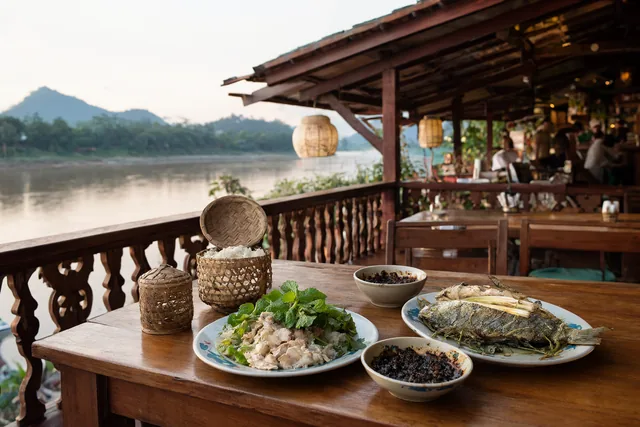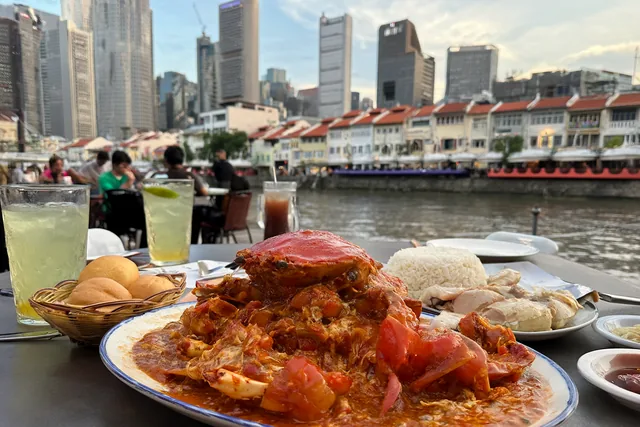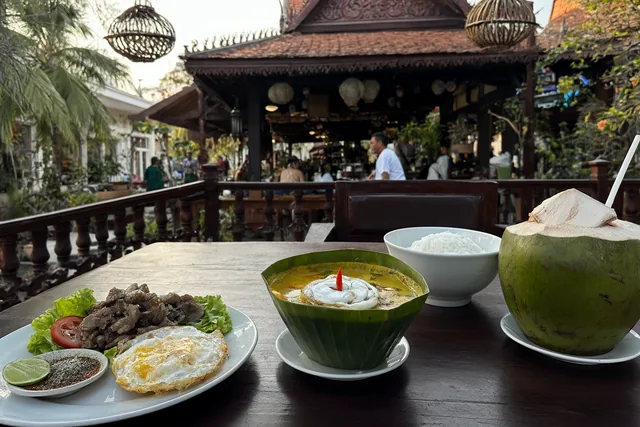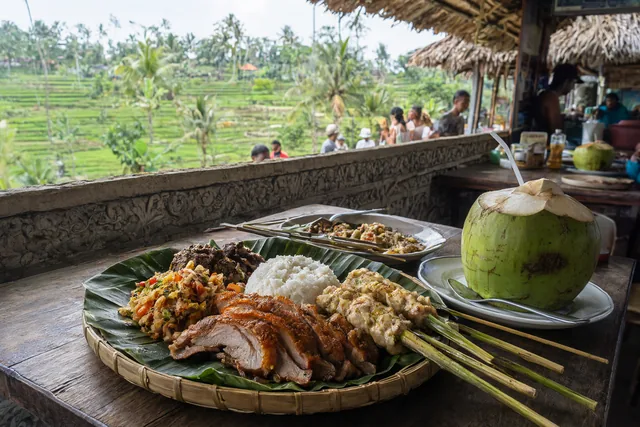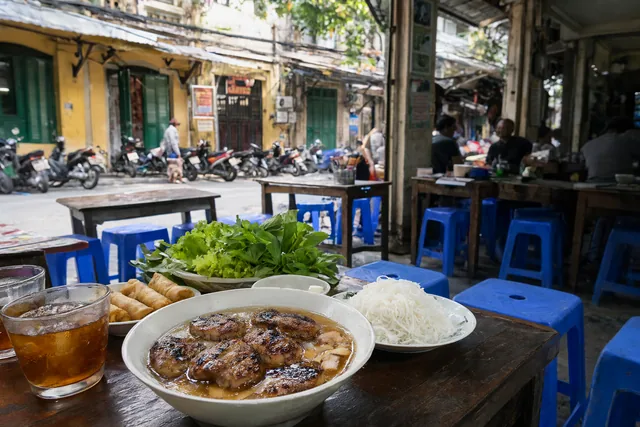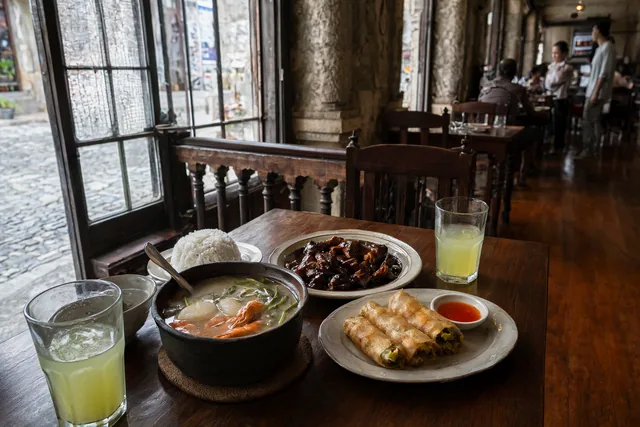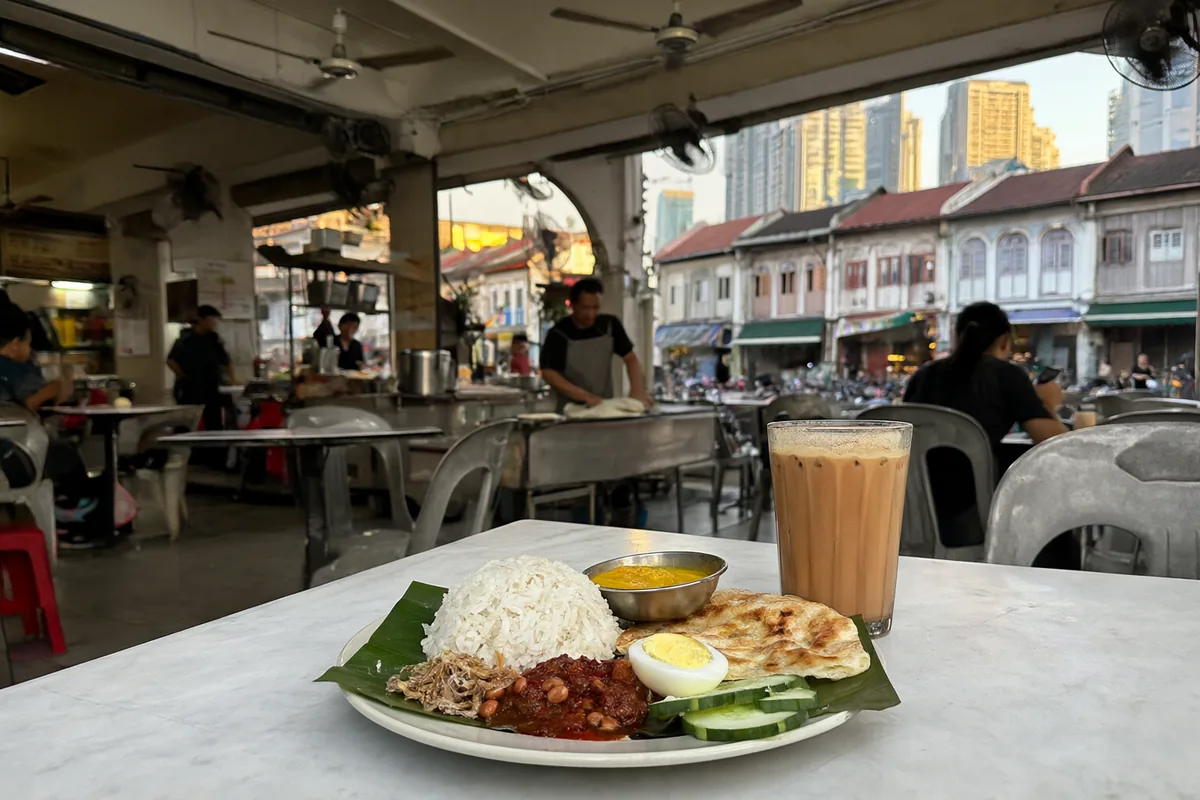
Malaysians talk about food more than almost anything else, and with reason. Malay, Chinese, Indian, Peranakan and Indigenous Bornean cooking all live side by side here, often in the same hawker centre, and the arguments over which town makes the best laksa never end. This Malaysia food guide covers the dishes to know, how to read a Malay menu and order a coffee like a local, how service charges and tax work, and then goes city by city through where to eat in Kuala Lumpur, Penang, Melaka, Ipoh, Kota Kinabalu, Kuching, Langkawi and Johor Bahru. Most of the best food is cheap, eaten at plastic tables, and available from breakfast until well after midnight.
What to eat in Malaysia: 12 dishes to know
These dishes are a starting point, with the city or region they are most associated with. Every state has its own versions.
- Nasi lemak (everywhere): rice cooked in coconut milk with sambal, fried anchovies, peanuts, cucumber and a boiled or fried egg, often with fried chicken or rendang. The national breakfast, sold wrapped in banana leaf.
- Char kway teow (Penang): flat rice noodles stir-fried in a very hot wok with prawns, cockles, Chinese sausage, egg and bean sprouts.
- Laksa: noodle soup in many regional forms. Asam laksa in Penang is sour, with tamarind and mackerel; curry laksa in Kuala Lumpur is rich with coconut; Sarawak laksa in Kuching has a spiced, creamy broth with prawns and chicken.
- Roti canai (everywhere): flaky, stretched and griddled flatbread served with dhal and curry at mamak (Indian Muslim) restaurants.
- Satay: skewers of chicken, beef or mutton grilled over charcoal and served with peanut sauce, cucumber, onion and rice cakes (ketupat).
- Hainanese chicken rice: poached or roasted chicken with rice cooked in chicken stock, chilli sauce and ginger. In Melaka, the rice is shaped into balls.
- Rendang: beef or chicken slow-cooked in coconut milk and spices until almost dry and deeply savoury, served at festivals and with nasi lemak.
- Nasi kandar (Penang): rice with a choice of curries, fried chicken, fish and vegetables, with several curry gravies poured over the top (banjir, "flooded").
- Bak kut teh (Klang): pork ribs simmered in a dark, herbal broth, eaten for breakfast with rice and fried dough sticks.
- Mee goreng mamak: yellow noodles fried with egg, tofu, potato and a sweet and spicy sauce, a late-night favourite.
- Cendol: shaved ice with green rice flour jelly, coconut milk and dark palm sugar syrup (gula Melaka).
- Teh tarik: strong black tea with condensed milk, "pulled" between two jugs from a height to cool it and build a frothy top.
How to read a Malay menu
Malay (Bahasa Malaysia) is written in the Latin alphabet, and many menus are in English, Malay and Chinese, but hawker stalls and Malay eateries often use only Malay. Dish names are built from a base and a method: nasi goreng is fried rice, mee goreng is fried noodles and ikan bakar is grilled fish. Learn these words and most boards become readable.
| Malay | Meaning |
|---|---|
| Nasi | Cooked rice (nasi campur is rice with a choice of dishes from a counter) |
| Mee / mee hoon / kuey teow | Yellow egg noodles / rice vermicelli / flat rice noodles |
| Goreng | Fried |
| Bakar / panggang | Grilled, usually over charcoal |
| Rebus / sup | Boiled / soup |
| Kuah | Gravy, sauce or broth |
| Ayam / daging / kambing | Chicken / beef / mutton or goat |
| Ikan / udang / sotong / ketam | Fish / prawn / squid / crab |
| Sayur | Vegetables |
| Pedas / tak pedas | Spicy / not spicy |
| Kurang manis | Less sweet, useful for drinks |
| Ais / panas | Iced / hot |
| Bungkus / makan sini | Takeaway / eat here |
| Tambah | Add, extra (tambah nasi is extra rice) |
Coffee shop drinks have their own code. Kopi is coffee with sweetened condensed milk. Kopi O is black with sugar, kopi C comes with evaporated milk and sugar, and adding kosong means no sugar. Peng or ais means iced. The same rules work for teh (tea), so teh O ais limau is iced black tea with lime.
Mid-range and upmarket restaurants in Malaysia often show "++" next to prices, which means a service charge and government service tax are added at the end. swap.menu spots the "++" on the menu and shows you the real price in your home currency, so you know what the bill will be before you order.
Service charges, tipping and paying in Malaysia
Tipping is not expected in Malaysia. Many restaurants, and almost all hotel restaurants, add a 10 percent service charge, and businesses registered for it also add the government's service tax (SST). Menus show this with "++" or a line at the bottom. Hawker stalls, kopitiam (coffee shops) and mamak restaurants do not add either. If there is no service charge and the service was good, rounding up is a kind gesture but not required. Our guide to tax and service charges on menus explains "++" and similar lines in detail.
The currency is the ringgit (MYR, written RM). Cards are widely accepted in restaurants, malls and cafés, and many hawker stalls now take local QR payments or e-wallets, but carry some cash for smaller stalls and night markets. When a card machine offers to charge you in your home currency, choose ringgit: our guide to paying in local currency explains why.
Malaysia eats all day. Breakfast is nasi lemak, roti canai or dim sum from early morning, lunch runs from noon to 2pm, dinner from about 7pm, and supper is a meal of its own, with mamak restaurants often open 24 hours. Malay restaurants are halal, and Chinese restaurants often serve pork, sometimes signalled by a "pork-free" sign at those that do not. During Ramadan, Ramadan bazaars set up in the late afternoon selling food to take home for breaking the fast, and they are some of the best food markets of the year.
Where to eat in Malaysia, city by city
Each Malaysian city has its own claim to the best version of something. Jump to a city:
Where to eat in Kuala Lumpur
Kuala Lumpur, the capital, brings together food from every state and community in Malaysia. Start with nasi lemak for breakfast, roti canai and teh tarik at a mamak, curry laksa, Hokkien mee (thick noodles braised in dark soy, the KL version), and banana leaf rice, served on a banana leaf with curries and vegetables and eaten with your right hand. The town of Kajang, just outside the city, is famous for satay, and Klang, to the west, for bak kut teh.
Jalan Alor in Bukit Bintang is KL's best-known food street, lined every evening with Chinese seafood restaurants, satay grills and fruit stalls. It is lively and good fun, though not the cheapest. Petaling Street in Chinatown has old coffee shops and noodle stalls, Kampung Baru, a Malay village close to the Petronas Towers, is the place for nasi lemak and Malay home cooking, and Brickfields, KL's Little India, has the best banana leaf restaurants and Indian sweets. Kuala Lumpur's suburbs, such as Bangsar, are where locals go for cafés and newer restaurants.
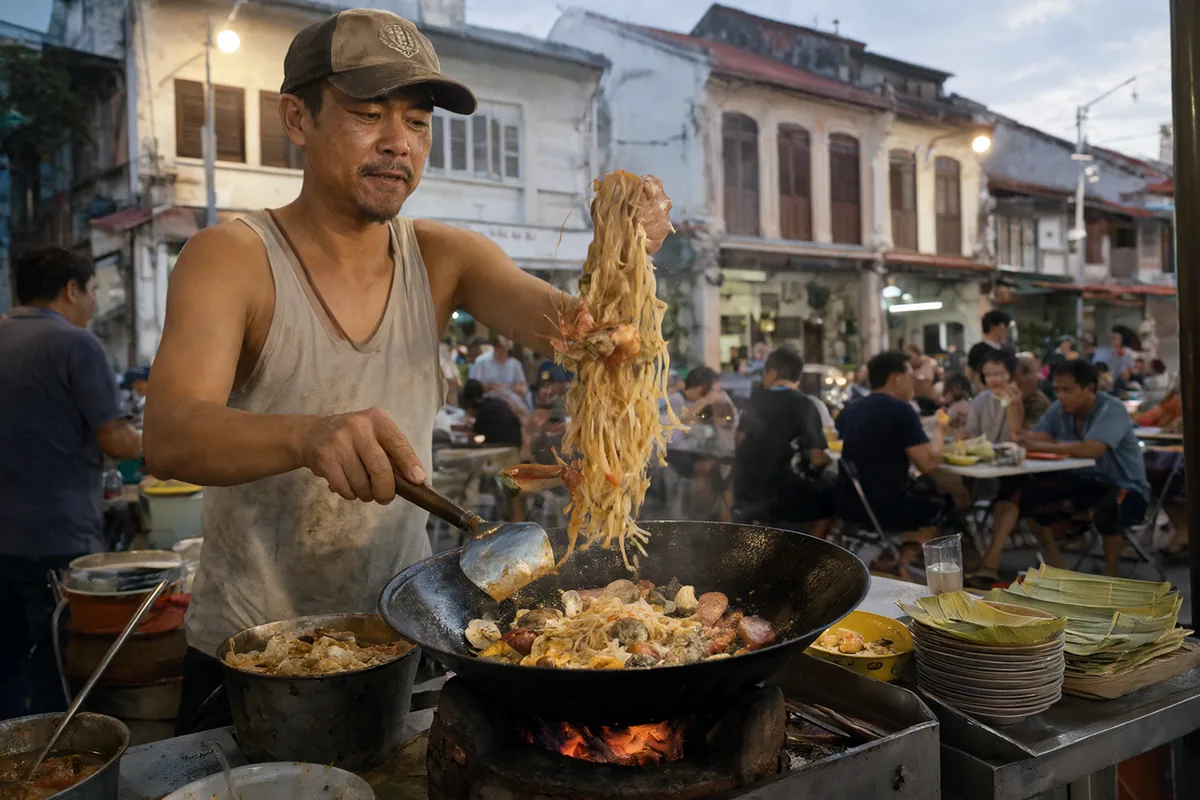
Where to eat in Penang
Penang is widely considered the food capital of Malaysia, and its old capital, George Town, is a UNESCO World Heritage city of shophouses, temples and hawker stalls. The island's dishes are char kway teow, asam laksa, Hokkien mee (here a spicy prawn noodle soup), nasi kandar, oh chien (oyster omelette), lor bak (five-spice pork rolls), rojak (fruit salad with shrimp paste sauce) and cendol.
Gurney Drive hawker centre on the seafront is the most famous and busiest. In George Town, New Lane (Lorong Baru) and Chulia Street fill with hawker stalls in the evening, Kimberley Street has duck noodle soup and other Teochew dishes at night, and Little India around Lebuh Queen and Lebuh Pasar is the place for nasi kandar, banana leaf rice and Indian sweets. The market at Air Itam, near Kek Lok Si temple, is known for asam laksa. Many Penang hawkers sell out early or take a rest day each week, so if you have your heart set on one stall, check before you go.
Where to eat in Melaka
Melaka, a historic port on the west coast and a UNESCO World Heritage city, is the home of Nyonya or Peranakan cooking, the cuisine of Chinese families who settled in the region centuries ago and married into Malay culture. Order ayam pongteh (chicken and potato braised in fermented soybean paste), Nyonya laksa, itik tim (duck and salted vegetable soup) and colourful kuih, small steamed cakes. Melaka's own snacks are chicken rice balls, satay celup (skewers you cook yourself in a pot of peanut sauce) and cendol made with local gula Melaka.
Jonker Street (Jalan Hang Jebat), in the heart of the old town, turns into a crowded night market from Friday to Sunday, with snacks, drinks and grilled food. For something different, visit the Portuguese Settlement, home to the Kristang community, descendants of Portuguese settlers, where seafront restaurants serve grilled seafood and curry debal (devil's curry), a fiery, sour curry. Melaka gets very crowded at weekends, so a weekday visit is calmer.
Where to eat in Ipoh
Ipoh, a former tin-mining city in Perak, between KL and Penang, has a big reputation for food among Malaysians. Its signatures are Ipoh white coffee, made from beans roasted in palm oil margarine and served with condensed milk, bean sprout chicken (tauge ayam), poached chicken with plump bean sprouts that locals credit to the area's water, and kai si hor fun, silky flat rice noodles in a prawn and chicken broth with shredded chicken.
The Old Town is the place for white coffee in old kopitiam with marble tables, and for dim sum breakfasts. Concubine Lane is a restored, touristy lane of snack stalls and shops, while the New Town across the river has many of the best-known bean sprout chicken and noodle shops. Ipoh is also famous for salt-baked chicken, pomelos and heong peng, a flaky biscuit filled with malt sugar. It is an easy day trip by train from Kuala Lumpur.
Where to eat in Kota Kinabalu
Kota Kinabalu, capital of Sabah on the island of Borneo, is a seafood city. Its seafood restaurants have tanks of fish, crabs, lobsters and prawns, priced by weight and cooked to order, and the waterfront night market near the Filipino Market has rows of stalls grilling fish, squid and chicken wings. Sabah's local dishes include hinava, raw fish cured with lime, chilli, shallot and ginger, a Kadazan-Dusun speciality, and Tuaran mee, springy egg noodles fried with egg and char siu.
Also look for ngiu chap, a beef noodle soup with tripe and balls, and Sabah's pork noodle soups at Chinese coffee shops. The Gaya Street Sunday Market is a good morning out, with snacks, fruit and crafts. Sabah also grows tea on the slopes near Mount Kinabalu. When choosing seafood in Kota Kinabalu, ask the price per kilo and the weight before it goes to the kitchen.
Where to eat in Kuching
Kuching, the capital of Sarawak, has a distinct food culture shaped by Chinese, Malay and Dayak communities. Breakfast is Sarawak laksa, a spiced, creamy broth with rice vermicelli, prawns, chicken and omelette strips, or kolo mee, springy noodles tossed with shallot oil and topped with char siu and minced pork. Try midin, a crunchy jungle fern stir-fried with garlic or shrimp paste, and manok pansoh, chicken cooked in a bamboo tube, a Dayak dish.
Sarawak is known for its layer cakes (kek lapis Sarawak), elaborately patterned and brightly coloured, sold in shops around the city, and for Sarawak pepper. The Kuching Waterfront along the Sarawak River, the old shophouse streets of Carpenter Street and India Street, and the weekend market at Satok are good places to eat and shop. Kuching's open-air seafood centres are a popular dinner choice.
Where to eat in Langkawi
Langkawi is an island of beaches and rainforest off the northwest coast, close to the Thai border. Most visitors stay around Pantai Cenang, where beachfront restaurants serve grilled seafood, Malay and Thai dishes at sunset. The local favourite is ikan bakar, fish grilled in banana leaf with sambal, and simple Malay rice dishes at the stalls around the main town of Kuah.
Langkawi's night markets (pasar malam) move to a different location on each day of the week, and they are the best place to eat cheaply: satay, murtabak, grilled chicken, nasi lemak, Malay cakes and fresh fruit juices. Ask at your hotel which one is on that evening. Langkawi is a duty-free island, so imported drinks and chocolate are cheaper than on the mainland. Thai influences are strong here, and our guide on how to read a Thai menu helps if you head north across the border.
Where to eat in Johor Bahru
Johor Bahru sits just across the causeway from Singapore, and many Singaporeans cross for weekend meals. The state has its own dishes: laksa Johor, a thick fish and coconut gravy served, unusually, with spaghetti, mee rebus, yellow noodles in a sweet potato gravy, and kacang pool, a spiced bean stew with a fried egg and toasted bread, showing the state's Arab heritage. Nearby Muar is known for otak-otak, spiced fish paste grilled in leaves.
The heritage streets of Jalan Tan Hiok Nee and Jalan Dhoby in the old town have cafés, old coffee shops and bakeries in restored shophouses. Johor Bahru also has many Chinese seafood restaurants and late-night supper spots. Expect long queues at the border at weekends and on public holidays, and plan your Johor Bahru meals around the traffic.
Vegetarian, vegan and allergy tips
Malaysia is easier for vegetarians than many neighbours, thanks to its Indian restaurants and Chinese Buddhist vegetarian places. South Indian banana leaf restaurants serve plenty of vegetarian curries, and Chinese vegetarian restaurants (look for 素食 or 斋) serve mock meats and tofu. The Malay word for vegetarian is vegetarian or sayur-sayuran sahaja, "vegetables only", and you can ask for tanpa daging, "without meat". Watch for hidden ingredients: belacan (fermented shrimp paste) is in sambal, dried anchovies (ikan bilis) are in nasi lemak, and many noodle soups use pork, chicken or prawn stock.
Peanuts are common, in satay sauce, nasi lemak and rojak, and shellfish appears in many noodle dishes. Coconut milk is used widely in Malay and Nyonya cooking, and soy sauce contains wheat. Restaurants in malls and hotels are generally used to allergy requests, while hawker stalls may not fully understand them. Our guide to eating abroad with food allergies explains how to explain an allergy clearly.
Useful Malay phrases for ordering
Selamat pagi / Selamat petang "Good morning / Good afternoon"
Boleh saya tengok menu? "Can I see the menu?"
Saya mahu yang ini "I would like this one" (pointing)
Tak mahu pedas "Not spicy, please"
Saya alah kepada kacang tanah "I am allergic to peanuts"
Kira, bang / Kira, kak "The bill, please" (to a man / to a woman), said informally at hawker stalls and mamaks
Sedap! Terima kasih "Delicious! Thank you"
How swap.menu helps you eat in Malaysia
Malaysian menus mix Malay, English, Chinese and Tamil, and the same dish can have three names. Photograph the menu or the hawker stall board with swap.menu and every dish appears in your language with its original name beside it and a short explanation, so you know that sambal petai is made with pungent "stink beans", that Hokkien mee means something different in Penang and Kuala Lumpur, and that kopi C kosong peng is iced coffee with evaporated milk and no sugar. Every price is converted from ringgit to your home currency, and "++" service and tax are added in.
Tap the dishes you want, add a note such as "no peanuts" or "less spicy, please", typed or spoken, and swap.menu translates your order into Malay or Chinese. Show the staff your phone, or let them scan the QR code and read your order on their own screen. Try it on a sample menu with the free demo, or see travel pass prices.
Off to Malaysia? Your first 3 menu scans are free, and a travel pass starts from $4.99 with nothing that renews.
Start free with 3 scansMalaysia food FAQ
Do you tip in restaurants in Malaysia?
Tipping is not expected in Malaysia. Many restaurants add a 10 percent service charge plus service tax, shown as "++" on the menu. Hawker stalls and coffee shops do not add charges, and tipping there is not customary.
What food is Malaysia famous for?
Nasi lemak, char kway teow, laksa, roti canai, satay, Hainanese chicken rice, rendang and teh tarik. Malaysia's food blends Malay, Chinese, Indian and Peranakan cooking, so the range is huge.
Which city in Malaysia is best for food?
Penang, especially George Town, is widely considered the best food city in Malaysia for its hawker dishes. Ipoh, Melaka and Kuala Lumpur are close behind, and Kuching is the best place for Sarawak dishes. Each city in this guide has its own section on where to eat.
Is Malaysia expensive to eat out?
Hawker centres, kopitiam and mamak restaurants are very cheap, and you can eat well on a small budget. Restaurants in malls and hotels cost more, especially once service charge and tax are added.
Is tap water safe to drink in Malaysia?
Tap water is treated in the cities, but most Malaysians boil or filter it before drinking. Visitors usually drink bottled or filtered water, which is cheap and easy to find.
How can I read a menu in Malaysia?
Learn a few Malay words like nasi, mee, goreng and ayam, or photograph the menu with swap.menu. It translates every dish into your language, explains what it is, converts prices from ringgit and translates your order into Malay or Chinese for the staff.
Travelling further in Southeast Asia? Read our food guides for nearby countries:
- Singapore food guide
- Indonesia food guide
- How to order at a Bali warung
- How to read a Thai menu
- Vietnam food guide
- Philippines food guide
Or browse every travel food guide.