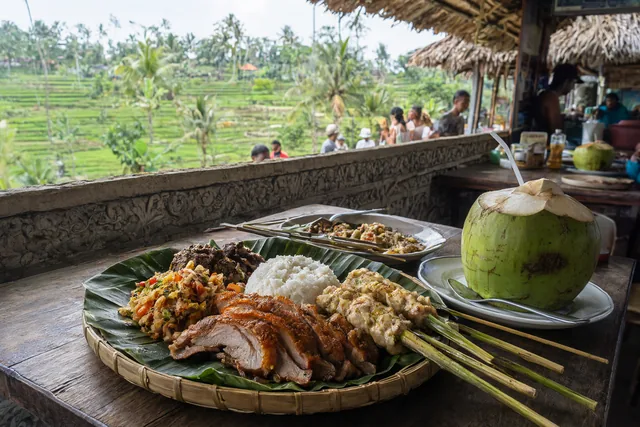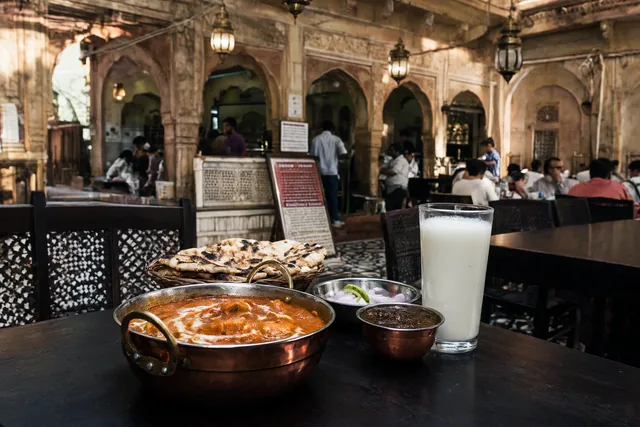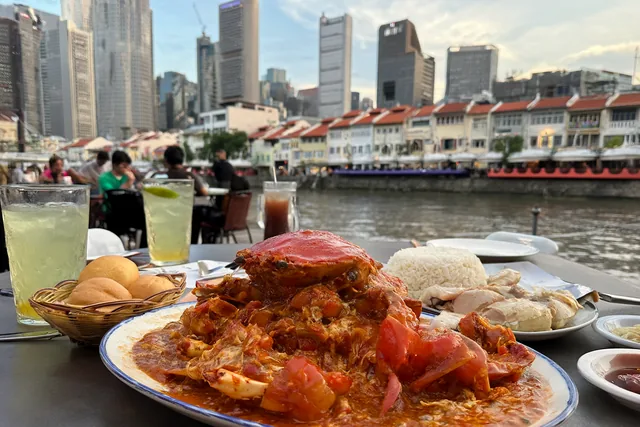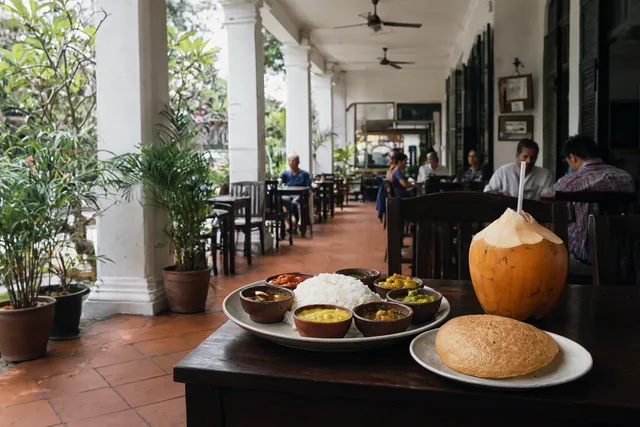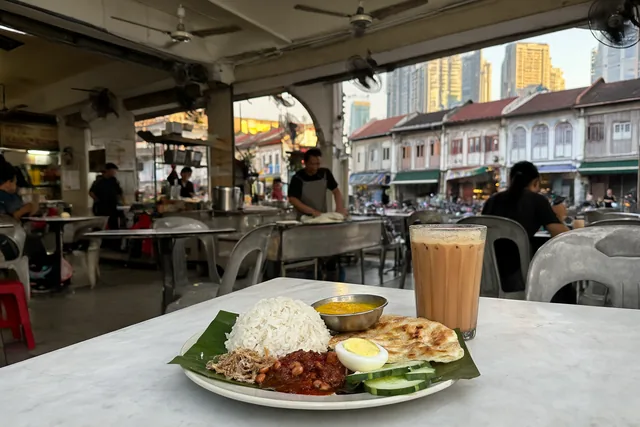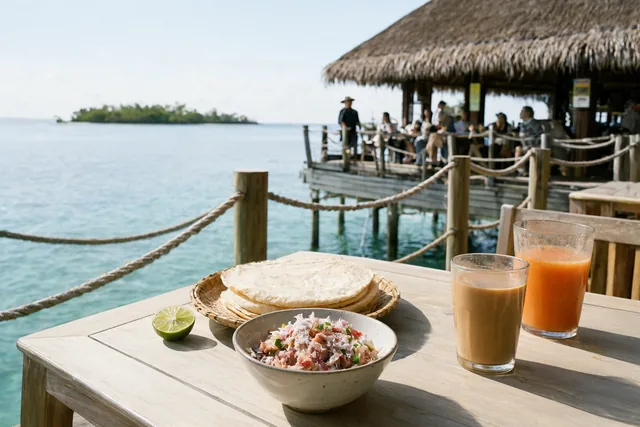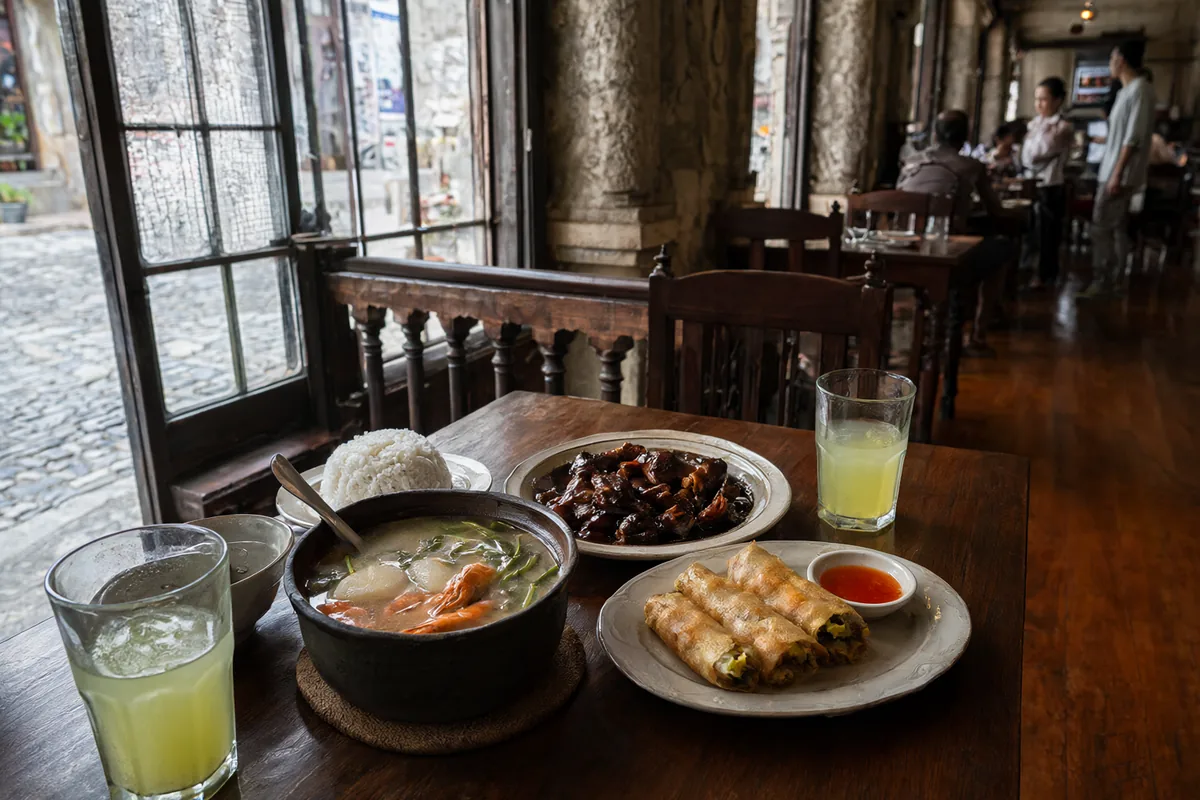
Filipino food is hearty, sour, salty and sweet, shaped by Malay roots, centuries of Spanish rule, Chinese traders and American influence, and it is one of the most underrated cuisines in Asia. This Philippines food guide covers the dishes to know, the Filipino words that appear on menus even when everything else is in English, how tipping and paying in pesos work, and then goes city by city through where to eat in Manila, Cebu, Pampanga, Iloilo, Bacolod, Davao, Palawan and Vigan. With more than 7,000 islands, the Philippines has strong regional cooking, and the best meals are often in a simple carinderia, at a market, or at a family table eaten with your hands.
What to eat in the Philippines: 12 dishes to know
These are the dishes to look for, with the place they are most associated with where relevant.
- Adobo (everywhere): chicken or pork braised in vinegar, soy sauce, garlic, bay leaf and black pepper. Every family has its own version, and it is often called the national dish.
- Sinigang (everywhere): a sour soup, usually soured with tamarind, with pork, prawns or fish, radish, water spinach and long beans.
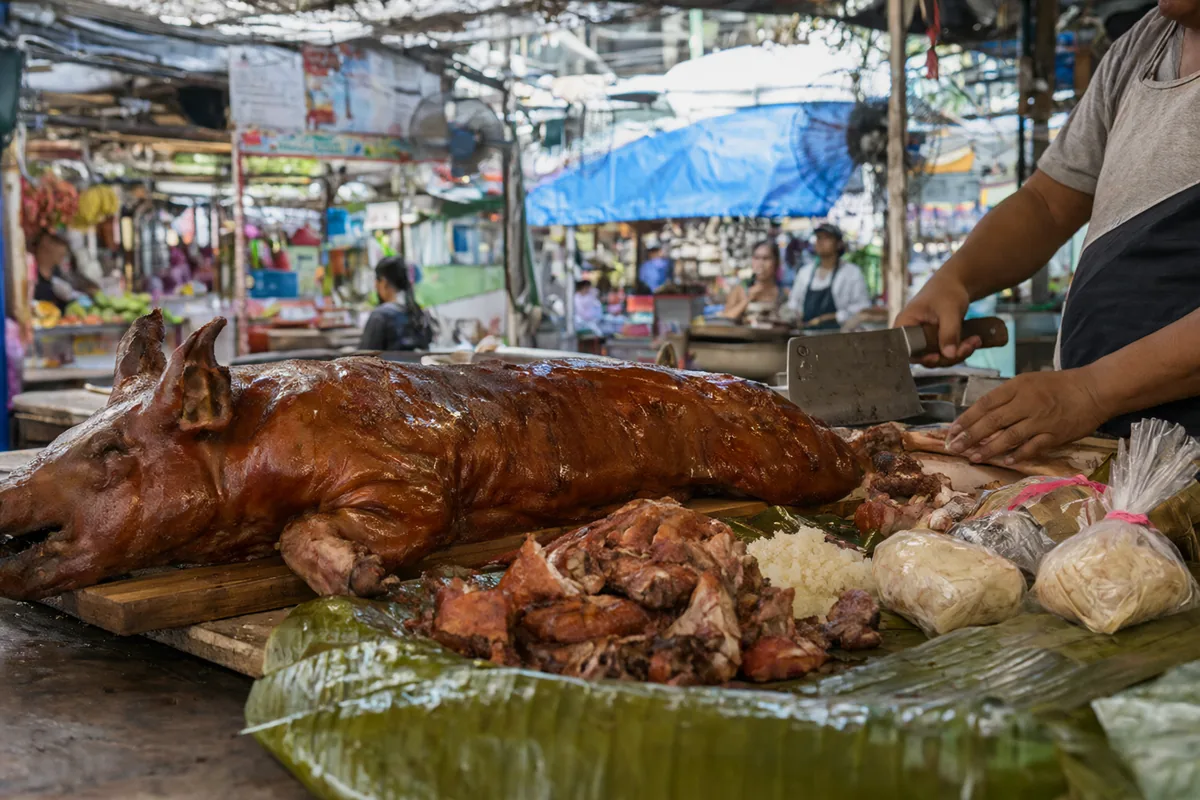
- Lechon (Cebu and Manila): whole spit-roasted pig with glassy, crackling skin. Cebu's version is stuffed with lemongrass and herbs and needs no sauce.
- Sisig (Pampanga): chopped pig's face and ears, grilled then sizzled on a hot iron plate with onion, chilli and calamansi, often topped with an egg.
- Kare-kare (Pampanga and Luzon): oxtail and tripe stewed in a thick peanut sauce with vegetables, served with salty shrimp paste (bagoong) on the side.
- Chicken inasal (Bacolod): chicken marinated in calamansi, vinegar, lemongrass and garlic, grilled over charcoal and basted with annatto oil.
- La Paz batchoy (Iloilo): egg noodles in a rich pork broth with offal, crushed pork crackling and fried garlic.
- Kinilaw (the Visayas and Mindanao): raw fish cured in vinegar or calamansi with ginger, onion and chilli, the Filipino cousin of ceviche.
- Pancit (everywhere): stir-fried noodles in many styles, from pancit canton (egg noodles) to pancit bihon (rice noodles), eaten at birthdays for long life.
- Lumpia (everywhere): spring rolls, either fried and filled with pork (lumpiang shanghai) or fresh with vegetables in a soft wrapper (lumpiang sariwa).
- Tapsilog (everywhere): the breakfast combo of tapa (cured beef), sinangag (garlic fried rice) and itlog (a fried egg).
- Halo-halo (everywhere): "mix-mix", shaved ice with evaporated milk, sweet beans, jellies, fruit, leche flan and purple yam (ube), stirred together before eating.
How to read a Filipino menu
English is an official language in the Philippines and most menus are written in it, but dish names and cooking terms are in Filipino (Tagalog) or regional languages such as Cebuano, Ilonggo and Kapampangan. Learn these words and the menu stops being a list of mysteries.
| Filipino | Meaning |
|---|---|
| Ulam | The main dish eaten with rice, as opposed to snacks |
| Kanin / sinangag | Steamed rice / garlic fried rice |
| -silog | A breakfast plate with garlic rice and egg: tapsilog (beef), longsilog (sausage), tocilog (sweet cured pork) |
| Adobo / adobong | Braised in vinegar, soy and garlic (adobong pusit is squid adobo) |
| Sinigang | Sour soup |
| Inihaw | Grilled over charcoal |
| Prito / pritong | Fried |
| Ginataan / ginataang | Cooked in coconut milk |
| Kinilaw | Raw seafood cured in vinegar or citrus |
| Manok / baboy / baka / isda / hipon | Chicken / pork / beef / fish / prawn |
| Maanghang | Spicy |
| Pulutan | Snacks served with drinks |
| Unli rice | Unlimited rice, included with the meal |
| Paluto | Buy seafood at the market and pay a nearby kitchen to cook it |
At a paluto seafood market, or a restaurant with tanks, fish and shellfish are priced per kilo, and cooking is charged separately per kilo or per dish. Confirm both before you buy. swap.menu explains each dish and cooking style on the menu and converts prices from pesos to your home currency, so you can work out the real cost of a seafood feast.
Tipping, service charges and paying in the Philippines
Menu prices in the Philippines usually include 12 percent VAT, and many restaurants say so on the menu. Mid-range and upmarket restaurants often add a service charge, commonly 10 percent, which is shown on the bill. If a service charge has been added, an extra tip is not expected. If not, leaving around 10 percent at a sit-down restaurant is appreciated, and leaving small change at a carinderia or food stall is a kind gesture. Our guide to tax and service charges on menus explains these lines in more detail.
The currency is the Philippine peso (PHP, written ₱). Cards are accepted in malls, hotels and most mid-range restaurants in the cities, but carinderias, markets, street food and smaller towns run on cash, and small notes are useful because change can be short. Filipinos use the GCash and Maya e-wallets for many payments. When a card machine offers to charge you in your home currency, choose pesos: our guide to paying in local currency explains why.
Filipinos eat often. Breakfast is early, lunch is around noon, merienda is an afternoon snack around 3 to 4pm, and dinner is from about 7pm. The usual cutlery is a spoon in the right hand and a fork in the left, with no knife. For a kamayan or "boodle fight" meal, food is laid out on banana leaves on the table and everyone eats with their hands. Shopping malls are a big part of eating out, with huge food courts and restaurant floors.
Where to eat in the Philippines, city by city
Every island group has its own dishes, and food is a source of fierce regional pride. Jump to a destination:
Where to eat in Manila
Metro Manila is a sprawling region of cities, and it has every Filipino dish plus a fast-moving modern restaurant scene. Start in Binondo, founded in 1594 and often called the oldest Chinatown in the world, where a walk along Ongpin Street and its side lanes takes in dumplings, fried siopao (filled buns), fresh lumpia, hopia pastries and noodle houses. Nearby, the walled city of Intramuros has Filipino restaurants in Spanish colonial buildings, and Quiapo is a busy market district with street food around the church.
In Makati, the Salcedo Saturday Market and Legazpi Sunday Market are weekend food markets with regional specialities, lechon and fresh produce, and the Poblacion district is full of bars and small restaurants. Bonifacio Global City (BGC) has many of the city's newer restaurants. In Quezon City, Maginhawa Street is a long strip of casual eateries popular with students. For seafood, a dampa, a market where you buy fresh seafood and have it cooked next door, is a classic Manila night out. Manila traffic is notorious, so plan to eat close to where you are staying.
Where to eat in Cebu
Cebu is the lechon capital of the Philippines, and many Filipinos say Cebu lechon is the best in the country, stuffed with lemongrass, garlic, spring onion and herbs and roasted until the skin shatters. Buy it by the kilo at shops in Cebu City, or at the roadside in Carcar and Talisay, south of the city, where lechon is roasted every day. Eat it with puso, rice cooked inside a small pouch of woven coconut leaves, which is Cebu's portable rice.
On Mactan Island, near the airport, seafood restaurants serve sutukil: you choose your seafood and have it sugba (grilled), tuwa (in soup) or kilaw (cured raw). Cebu is also known for ngohiong, a Chinese-style fried spring roll with five-spice, dried mangoes, and danggit, salted dried fish sold at the Taboan Market. In the evening, the barbecue stalls near Fuente Osmeña grill skewers of pork, chicken and offal to eat with puso. In Cebuano, delicious is lami.
Where to eat in Pampanga
Pampanga, a province north of Manila, is often called the culinary capital of the Philippines, and Kapampangan cooks have a reputation for skill and adventurous eating. Angeles City is the home of sisig, and you can try it where it was first made popular, sizzling and crisp. Pampanga is also famous for tocino (sweet cured pork), longganisa, kare-kare and bringhe, a Kapampangan sticky rice dish cooked with coconut milk and turmeric, often compared to paella.
For the adventurous, Pampanga has buro, fermented rice with fish or shrimp eaten with vegetables, and betute tugak, stuffed and fried frogs. The provincial capital, San Fernando, is known for its giant Christmas lanterns and its bakeries and sweets shops. Pampanga is about two hours from Manila by road, and the towns around Angeles, San Fernando and Guagua make a rewarding food day trip.
Where to eat in Iloilo
Iloilo City, on the island of Panay in the Western Visayas, was named a UNESCO City of Gastronomy, and its Ilonggo cooking is gentle, savoury and often slightly sweet. The essential bowl is La Paz batchoy, eaten at the La Paz Public Market, where it was born. Also order pancit Molo, a soup of pork dumplings named after the Molo district of the city, and KBL, a sour soup of kadyos (pigeon peas), baboy (pork) and langka (jackfruit).
Iloilo is a seafood city too, with restaurants along the coast grilling fish, prawns and scallops. The Iloilo River Esplanade is pleasant for an evening walk to dinner, and the old Spanish-era mansions and churches of the city make it good for wandering between meals. Take a short ferry to Guimaras island, famous for its sweet mangoes, in season around April and May.
Where to eat in Bacolod
Bacolod, on Negros island, is the capital of the Philippines' sugar country and the home of chicken inasal. The place to eat it is Manokan Country, a cluster of open-air grill restaurants where chicken is marinated, skewered and grilled over charcoal, then served with garlic rice, chicken oil (for pouring over the rice), soy sauce, vinegar and calamansi. Order a paa (leg) or pecho (breast), and an extra serving of rice.
Bacolod's sugar heritage shows in its sweets: piaya, a flat bread filled with muscovado sugar, napoleones, a cream-filled puff pastry, and many cake shops and bakeries. Bacolod calls itself the "City of Smiles", and its MassKara Festival in October brings street food and parties to the city centre. Bacolod is a short ferry ride from Iloilo, so it is easy to combine the two.
Where to eat in Davao
Davao City, on the southern island of Mindanao, is known for fruit and seafood. It is the durian capital of the Philippines, and stalls around the city sell durian, pomelo, mangosteen, rambutan and marang, a soft, sweet fruit with a fragrance of its own. Many hotels and taxis in Davao do not allow durian, so eat it at the stall. Davao is also close to the tuna fishing grounds of southern Mindanao, so look for grilled tuna jaw (panga), tuna kinilaw and tuna sashimi.
Sinuglaw, a mix of grilled pork belly and kinilaw, is a Mindanao favourite. The Roxas Night Market in central Davao is the best place for cheap grilled meat, seafood and fruit shakes. Davao is a clean, orderly city with strict local rules, including a ban on smoking in public places. The city is also a base for trips to Samal Island and Mount Apo.
Where to eat in Palawan
Palawan, the long island in the west, is best known for its beaches and lagoons, and most visitors eat seafood. In Puerto Princesa, the capital, look for chao long, a noodle soup with Vietnamese roots introduced by refugees who settled there, and for the city's seafood restaurants. The brave can try tamilok, a long, soft mollusc that bores into mangrove wood, eaten raw as kinilaw. Palawan is also known for its cashew nuts, sold in local shops.
In El Nido and Coron, island-hopping boat tours usually include a lunch of grilled fish, pork, seafood, rice and tropical fruit, cooked by the crew and served on a beach. Back in town, restaurants along the waterfront serve Filipino dishes, seafood and international food. Prices in El Nido are higher than in the rest of the Philippines because supplies arrive by road and boat, and ATMs can run out of cash, so bring enough pesos.
Where to eat in Vigan
Vigan, in Ilocos Sur in the north of Luzon, is a UNESCO World Heritage city of Spanish colonial houses and cobbled streets, and the home of Ilocano cooking. The street snack to try is the Vigan empanada, a crisp orange rice flour shell filled with green papaya, egg and garlicky Vigan longganisa, fried to order at stalls around Plaza Burgos. Dip it in spiced cane vinegar.
Ilocano dishes include bagnet, pork belly boiled then deep-fried until the skin blisters, pinakbet, a vegetable stew with bitter melon and fermented fish paste, okoy (shrimp fritters) and sinanglao, a sour beef soup. The heritage street of Calle Crisologo is lined with restaurants and cafés in old ancestral houses, and it is at its prettiest in the evening when the lamps are lit.
Vegetarian, vegan and allergy tips
The Philippines is one of the harder countries in Asia for vegetarians. Meat, especially pork, is at the centre of most dishes, and vegetable dishes are often cooked with pork, shrimp or bagoong (fermented shrimp or fish paste). Fish sauce (patis) seasons many soups. Vegetarian restaurants exist in Manila, Cebu and tourist areas, and Chinese Buddhist restaurants in Binondo serve meat-free dishes. Say gulay lang po, "vegetables only, please", or walang karne, "no meat", and check for pork bits and shrimp paste.
Peanuts are central to kare-kare, and appear in some sauces and sweets. Shellfish and shrimp paste are everywhere, coconut milk is common in ginataan dishes, and soy sauce contains wheat. Staff in city restaurants usually speak English, which makes explaining an allergy easier, but cross-contamination is common in small kitchens. Our guide to eating abroad with food allergies explains how to explain an allergy clearly.
Useful Filipino phrases for ordering
Magandang umaga po / Magandang gabi po "Good morning / Good evening". Adding po makes any phrase polite
Ito po "This one, please" (pointing)
Magkano po? "How much is it?"
Hindi po maanghang "Not spicy, please"
Walang karne po "No meat, please"
Bill out po "The bill, please", the usual way to ask in a restaurant
Ang sarap! Salamat po "Delicious! Thank you"
How swap.menu helps you eat in the Philippines
Menus in the Philippines are usually in English, but the dish names are not: dinuguan, bulalo, laing and papaitan appear without explanation, and regional names change from island to island. Photograph the menu with swap.menu and every dish is explained in plain language, so you know that dinuguan is a pork stew in pig's blood, that balut is a fertilised duck egg and that laing is taro leaves in coconut milk. Every price is converted from pesos to your home currency, and the service charge is pointed out before the bill arrives.
If English is not your first language, swap.menu shows every menu in your own language, in any of 29 languages, and translates your order and notes such as "no pork" or "not spicy" into the language the staff understand, with the option of Filipino. Show the staff your phone, or let them scan the QR code. You can also save the menus of places you loved. Try it on a sample menu with the free demo, or see travel pass prices.
Off to the Philippines? Your first 3 menu scans are free, and a travel pass starts from $4.99 with nothing that renews.
Start free with 3 scansPhilippines food FAQ
Do you tip in restaurants in the Philippines?
If the bill includes a service charge, an extra tip is not expected. If it does not, around 10 percent is appreciated at sit-down restaurants. At carinderias and food stalls, leaving small change is a kind gesture but not required.
What food is the Philippines famous for?
Adobo, sinigang, lechon, sisig, kare-kare, pancit, lumpia and halo-halo. Regional dishes such as chicken inasal from Bacolod, La Paz batchoy from Iloilo and Vigan empanada are just as loved.
Which city in the Philippines is best for food?
Pampanga is often called the culinary capital, Cebu is famous for lechon, and Iloilo is a UNESCO City of Gastronomy. Manila has the widest choice of restaurants. Each destination in this guide has its own section on where to eat.
Is the Philippines expensive to eat out?
Local food at carinderias, markets and street stalls is cheap, and fast food and mall food courts are good value. Restaurants in upmarket districts of Manila and in tourist areas like El Nido cost more.
Is tap water safe to drink in the Philippines?
Visitors should drink bottled or purified water. Water refilling stations are common, and most restaurants serve purified water, but ask if you are unsure.
How does swap.menu help if menus in the Philippines are in English?
It explains Filipino and regional dish names that English menus leave untranslated, converts peso prices to your home currency and points out service charges. Visitors who prefer another language can read every menu in any of 29 languages.
Travelling further in Asia? Read our food guides for nearby destinations:
Or browse every travel food guide.