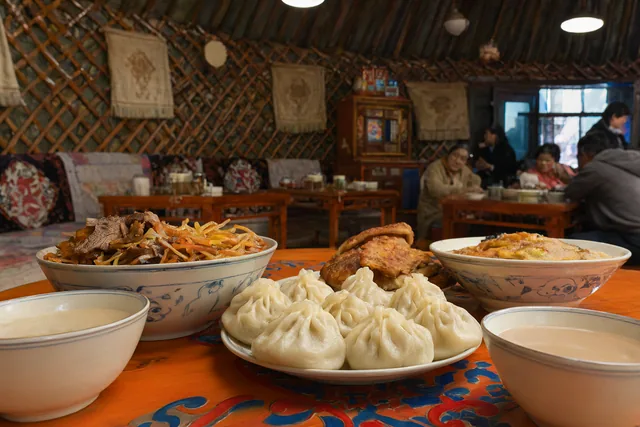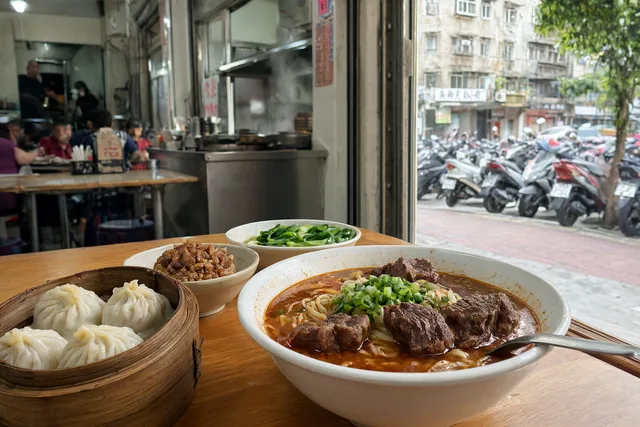
There is no such thing as "Chinese food" once you are in China. There are dozens of regional cuisines, and the gap between the numbing heat of Sichuan and the delicate dim sum of Guangdong is as wide as the gap between Mexico and Sweden. This China food guide covers the dishes worth crossing a city for, how to read a Chinese menu when there is no English on it, how paying works in a country that runs on phone apps, and then goes city by city through where to eat in Beijing, Shanghai, Chengdu, Chongqing, Xi'an, Guangzhou, Hangzhou and Changsha.
What to eat in China: 12 dishes to know
These dishes are a starting point, with the city or region they belong to. You will find many of them all over the country, but they are almost always best at home.
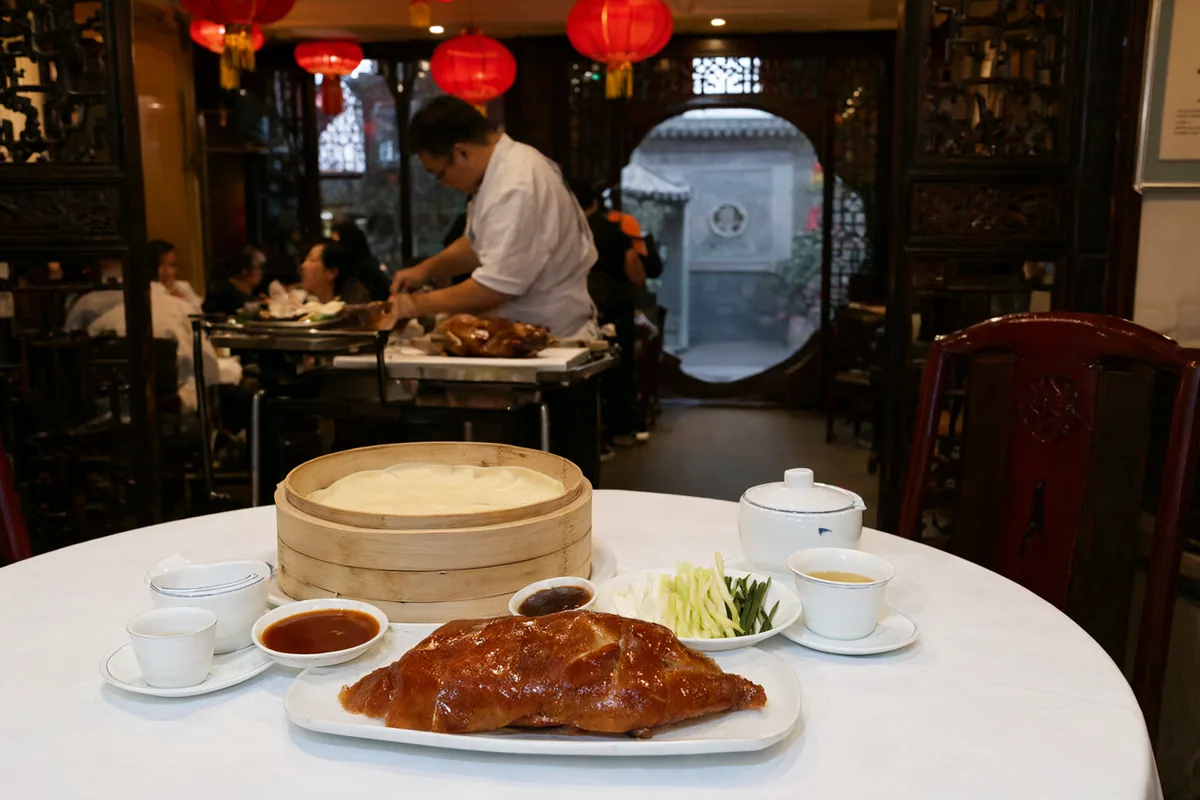
- Peking duck (Běijīng kǎoyā, Beijing): roast duck with lacquered, crackling skin, carved at the table and rolled into thin pancakes with scallion, cucumber and sweet bean sauce.
- Xiaolongbao (Shanghai): small steamed dumplings filled with pork and a spoonful of hot broth. Bite a small hole, sip the soup, then eat the rest with a little black vinegar and ginger.
- Mapo tofu (mápó dòufu, Chengdu): soft tofu in a red, oily sauce of chilli bean paste, minced beef and Sichuan pepper, which leaves your lips tingling.
- Hotpot (huǒguō, Chongqing and Chengdu): a bubbling pot of spiced broth in the middle of the table, into which you dip thin slices of meat, offal, tofu and vegetables.
- Kung pao chicken (gōngbǎo jīdīng, Sichuan): diced chicken stir-fried with dried chillies, Sichuan pepper and peanuts.
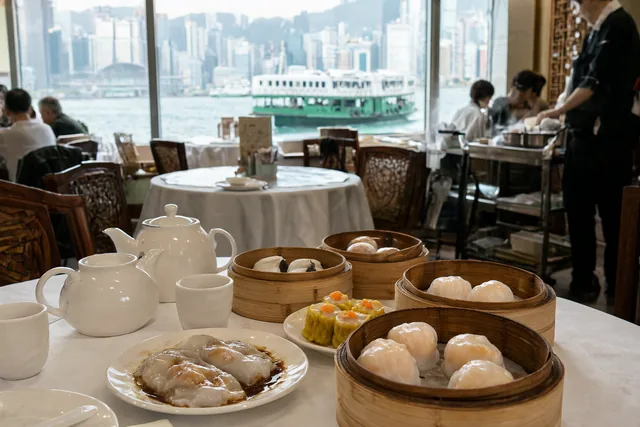
- Dim sum (Guangzhou): small plates eaten with tea in the morning, from har gow prawn dumplings to cheung fun rice rolls and char siu buns.
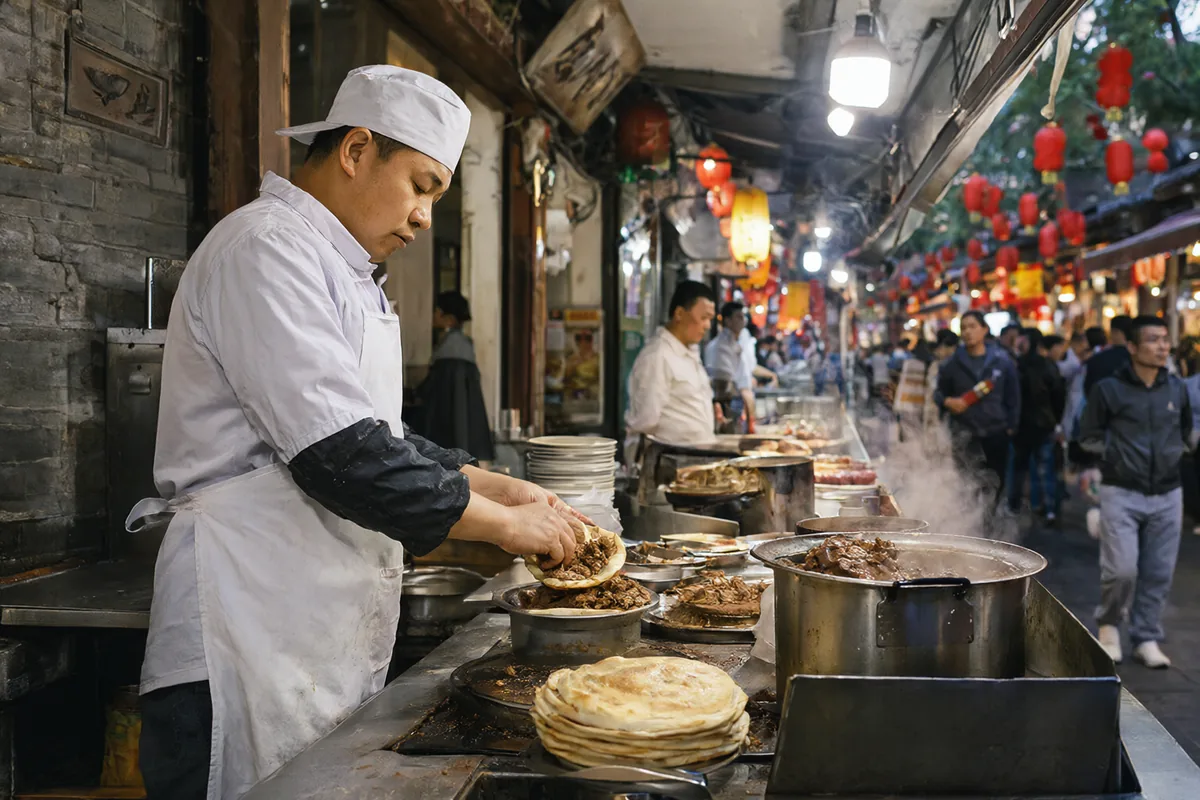
- Roujiamo (ròujiāmó, Xi'an): chopped braised meat stuffed into a flatbread, often called the Chinese burger. In Xi'an's Muslim Quarter it is made with beef or lamb.
- Biangbiang noodles (Xi'an): very wide, hand-pulled belt noodles tossed with chilli flakes, garlic and sizzling oil.
- Zhajiangmian (zhájiàngmiàn, Beijing): thick wheat noodles with a salty fried soybean and pork sauce, topped with shredded cucumber.
- Jianbing (northern China): a breakfast crêpe made on a hot plate with egg, scallion, herbs, sauce and a crisp cracker folded inside.
- Lanzhou beef noodles (Lánzhōu niúròu lāmiàn, everywhere): clear beef broth with hand-pulled noodles, radish and chilli oil, served in halal noodle shops across the country.
- Dongpo pork (Dōngpō ròu, Hangzhou): squares of pork belly braised slowly in Shaoxing wine and soy until they almost melt.
How to read a Chinese menu
Many restaurants outside the big tourist areas have menus only in Chinese, often with photos, and a growing number ask you to scan a QR code on the table and order on your phone. Mainland China uses simplified characters, and dish names are often a recipe: cooking method, then flavour, then main ingredient. Learn a handful of characters and you can make sense of a surprising amount. Pinyin, the romanised spelling, is given here with tone marks.
| Chinese | Pinyin | Meaning |
|---|---|---|
| 凉菜 | liángcài | Cold dishes, usually listed first: cucumber salad, marinated meats, preserved egg |
| 热菜 | rècài | Hot dishes, the main part of the meal |
| 主食 | zhǔshí | Staples: rice, noodles, dumplings, buns. Often ordered at the end |
| 汤 | tāng | Soup |
| 猪肉 / 牛肉 / 羊肉 / 鸡 | zhūròu / niúròu / yángròu / jī | Pork / beef / lamb or mutton / chicken |
| 鱼 / 虾 / 海鲜 | yú / xiā / hǎixiān | Fish / prawn / seafood |
| 豆腐 / 青菜 | dòufu / qīngcài | Tofu / green vegetables |
| 炒 | chǎo | Stir-fried |
| 红烧 | hóngshāo | Red-braised in soy sauce, sugar and wine |
| 蒸 / 烤 / 炸 | zhēng / kǎo / zhá | Steamed / roasted or grilled / deep-fried |
| 麻辣 | málà | Numbing and spicy, the Sichuan signature |
| 微辣 / 不辣 | wēi là / bú là | Mildly spicy / not spicy |
| 时价 | shíjià | Market price, ask before ordering |
| 斤 / 两 | jīn / liǎng | Priced by weight: a jin is 500 g, a liang is 50 g (dumplings and noodles are often sold by the liang) |
Live fish and seafood in tanks are usually priced per jin (500 g), and the whole fish is weighed before it is cooked, so a "cheap" price on the board can become a large bill. Ask the weight before the fish goes to the kitchen. swap.menu reads Chinese menus, including handwritten wall boards, and flags priced-by-weight and market-price dishes so you know what you are agreeing to.
If your trip continues to Japan or South Korea, the scripts and menus work differently again: see our guides on how to read a Japanese menu and how to read a Korean menu.
Tipping, paying and meal times in China
Tipping is not part of the culture in mainland China, and in ordinary restaurants staff may try to hand back money you leave on the table. Upmarket hotel restaurants and some high-end places add a service charge of 10 to 15 percent, which will be printed on the menu or bill. Some restaurants also charge a small amount per person for tea (cháwèifèi) or for the sealed plastic packs of bowls and cups placed on the table. These are normal and not a scam, but you can ask for tea not to be served if you do not want it. Prices on the menu include tax. Our guide to tax and service charges on menus explains these extra lines.
The currency is the renminbi, counted in yuan (CNY, written ¥ or 元, and called kuai in everyday speech). China runs on mobile payments: almost everyone pays with Alipay or WeChat Pay by scanning a QR code, from street stalls to department stores. Visitors can now link an international Visa or Mastercard to both apps, and it is worth setting this up before you travel. Hotels and larger restaurants take foreign cards, and cash is legal tender, but small places may struggle with change for large notes. When a card terminal offers to charge you in your home currency, choose yuan instead: our guide to paying in local currency explains why.
China eats early. Lunch runs from about 11:30am to 1:30pm and dinner starts around 5:30 to 6pm, with many kitchens winding down by 9pm. Hotpot restaurants, barbecue skewer stalls and night food streets keep going much later. Meals are shared: dishes arrive when they are ready, not in courses, and everyone takes from the middle. Order roughly one dish per person plus rice or noodles.
Where to eat in China, city by city
Each of these cities has its own cuisine, its own breakfast and its own idea of what spicy means. Jump to a city:
Where to eat in Beijing
Beijing's headline dish is Peking duck, and it is worth doing properly at a dedicated roast duck restaurant, where a chef carves the bird beside your table and the skin comes first, dipped in sugar. Book ahead at popular places, especially at weekends. The city's everyday food is wheaty and northern: zhajiangmian noodles, jiaozi (boiled dumplings, sold by the liang), jianbing from breakfast carts and shuan yangrou, an old-style hotpot of thinly sliced lamb cooked in plain broth in a copper pot with a chimney, dipped in sesame sauce.
The hutongs, the old lanes around Gulou (the Drum Tower), Shichahai and Dongsi, are the most pleasant places to wander and eat, with small noodle shops, dumpling houses and courtyard restaurants. Guijie (Ghost Street, on Dongzhimennei Dajie) is a long strip of restaurants lit with red lanterns that stays open late and is famous for spicy crayfish and hotpot. For halal Hui Muslim food, head to Niujie in the southwest, around the city's oldest mosque.
Where to eat in Shanghai
Shanghai cooking is sweeter and richer than most of China, heavy on soy sauce, sugar and Shaoxing wine. The essential orders are xiaolongbao, shengjianbao (pan-fried pork buns with crisp bottoms and soup inside), hongshao rou (red-braised pork belly), congyou banmian (noodles tossed in fried scallion oil) and, from late September to November, hairy crab, steamed whole and eaten with ginger vinegar. Breakfast is a Shanghai institution: look for youtiao (fried dough sticks), ci fan tuan (sticky rice rolls) and sweet or savoury soy milk from early morning stalls.
The area around Yuyuan Garden is famous for xiaolongbao but crowded and pricey. Locals send visitors to Huanghe Road near People's Square for shengjianbao and to Yunnan Road (South) for a long run of old-style restaurants. The tree-lined streets of the Former French Concession are where Shanghai goes for coffee, bakeries and newer restaurants, and Wujiang Road near Nanjing West Road has quick bites.
Where to eat in Chengdu
Chengdu was named a UNESCO City of Gastronomy, and it is the home of Sichuan cooking at its most complex. Sichuan food is not only about heat: chefs talk of many distinct flavour profiles, from yuxiang ("fish-fragrant", a sweet, sour and garlicky sauce with no fish in it) to guaiwei ("strange flavour"). Order mapo tofu, dan dan noodles, hui guo rou (twice-cooked pork), fuqi feipian (thin slices of beef and offal in chilli oil) and long chao shou, wontons in chilli oil. Chuan chuan xiang, skewers cooked in a communal pot and paid for by counting the sticks, is the cheap, fun version of hotpot.
Kuanzhai Xiangzi (Wide and Narrow Alleys) and Jinli Ancient Street gather many of Chengdu's snacks in one place, though prices are higher. For a more local feel, explore the Yulin neighbourhood and the snack stalls on Jianshe Road. Spend an afternoon in a teahouse in People's Park, where locals play mahjong. If you are not used to chilli, ask for wēi là (mild), and know that the tingling from Sichuan pepper fades after a few minutes.
Where to eat in Chongqing
Chongqing is the capital of hotpot, and its version is the fiercest in China: a broth of beef tallow, dried chillies and Sichuan pepper, often divided into a nine-square grid so different ingredients cook at different speeds. Classic dips include tripe, duck intestine, goose intestine and thin beef, swirled briefly in the broth and then dunked in sesame oil with garlic. If you want a break from the heat, ask for a yuanyang pot, split between spicy and mild broth.
Breakfast in Chongqing is xiaomian, "small noodles" in a chilli oil sauce, eaten at tiny shops all over the city. Also look for la zi ji, fried chicken pieces buried in a mountain of dried chillies, and grilled whole fish in a spicy sauce. The streets around Jiefangbei are packed with hotpot restaurants, the riverside Hongyadong complex is busy and touristy but fun at night, and Ciqikou, an old riverside town within the city, has snack stalls selling mahua (twisted dough) and spicy treats.
Where to eat in Xi'an
Xi'an was the eastern end of the Silk Road, and its food reflects that: wheat rather than rice, lamb and beef rather than pork, and cumin and chilli everywhere. The heart of eating in Xi'an is the Muslim Quarter (Huimin Jie), the streets around Beiyuanmen behind the Drum Tower, where Hui Muslim families have cooked for centuries. Order roujiamo, biangbiang noodles, cumin lamb skewers, liangpi (cold, slippery wheat noodles with chilli and vinegar) and guantang baozi, soup-filled buns.
The classic sit-down dish is yangrou paomo: you are handed a hard flatbread to tear into tiny pieces by hand, and the kitchen then cooks it in rich lamb broth. The main street of the Muslim Quarter is crowded and touristy; the side lanes, such as Sajinqiao, are where locals eat. Food here is halal, so there is no pork, and many places do not serve alcohol.
Where to eat in Guangzhou
Guangzhou is the home of Cantonese cooking, the style most of the world knew as Chinese food before the regional cuisines travelled. It prizes freshness and lightness over heat. The ritual to join is yum cha ("drink tea"), a morning of dim sum in a large teahouse: har gow, siu mai, cheung fun, char siu buns and egg tarts, ordered by ticking a paper list. Later in the day, look for char siu (barbecued pork), roast goose, wonton noodles, silky congee and, in the cooler months, clay pot rice with crisp edges.
The old Xiguan area in Liwan district, around Shangxiajiu pedestrian street, is where traditional teahouses and dessert shops cluster. Try shuang pi nai (double-skin milk pudding) and ginger milk curd. Beijing Road is lively for snacks, and colonial-era Shamian Island is quieter, with cafés along shady streets. In a Guangzhou teahouse, you will be charged a small tea fee per person, and locals rinse their bowls and cups with the first pour of tea before eating.
Where to eat in Hangzhou
Hangzhou, an hour from Shanghai by fast train, has a delicate, slightly sweet cuisine built around the fish, shrimp and greens of West Lake and the surrounding hills. The famous dishes are Dongpo pork, West Lake fish in vinegar sauce (xihu cuyu), Longjing shrimp (river shrimp stir-fried with Longjing green tea leaves) and beggar's chicken (jiaohua ji), a whole chicken baked in lotus leaves and clay. For a quick lunch, pian'erchuan noodles with pickled greens, pork and bamboo shoots are the local favourite.
The streets around Hefang Street and the lakeside Hubin area are full of restaurants and snack stalls. Take a bus or taxi into the tea hills to the villages of Longjing and Meijiawu, where farming families serve home-style lunches with freshly picked tea.
Where to eat in Changsha
Changsha is the capital of Hunan province, and Hunan cooking is often said to be even spicier than Sichuan, with fresh and pickled chillies and smoky cured meats rather than numbing pepper. The dishes to order are duo jiao yu tou, a whole fish head steamed under a blanket of chopped salted red chillies, Mao's red-braised pork (Mao shi hongshao rou), named after the province's most famous son, smoked pork stir-fried with garlic shoots and stir-fried pork with green chillies.
The street snack Changsha is known for is black stinky tofu (chou doufu), fried until crisp and filled with garlic chilli sauce. Breakfast is a bowl of rice noodles (mifen) with a choice of toppings, eaten in seconds by commuters. Pozi Street and the restored Taiping Street are Changsha's best-known food streets, and late-night crayfish and barbecue stalls stay busy into the early hours.
Vegetarian, vegan and allergy tips
China has a long tradition of Buddhist vegetarian cooking, and restaurants near temples often serve entirely meat-free menus, including convincing mock meats made from tofu and gluten. In ordinary restaurants, though, vegetarianism is less understood. Vegetable dishes are often cooked in lard or chicken stock, or finished with minced pork, dried shrimp or oyster sauce. The word for vegetarian food is 素食 (sùshí), and saying 我吃素 (wǒ chī sù, "I eat vegetarian") is clearer than just asking for no meat, which may be understood as "no big pieces of meat".
Peanuts are common in Sichuan and Guizhou dishes, sesame paste and oil turn up in noodles and dips, and soy sauce contains wheat, which makes gluten-free eating difficult. MSG (味精 wèijīng) is widely used. Shellfish and fish sauces appear in Cantonese cooking. Carry your allergy written in Chinese characters and show it to staff before you order: our guide to eating abroad with food allergies explains how to do this well.
Useful Chinese phrases for ordering
你好 nǐ hǎo, "Hello"
服务员 fúwùyuán, "Waiter", called out to get attention; this is normal and not rude in China
有英文菜单吗? yǒu yīngwén càidān ma?, "Do you have an English menu?"
我要这个 wǒ yào zhège, "I want this one" (pointing)
不要辣 / 少辣 bú yào là / shǎo là, "Not spicy / less spicy"
我对花生过敏 wǒ duì huāshēng guòmǐn, "I am allergic to peanuts"
买单 mǎidān, "The bill, please"
很好吃 hěn hǎochī, "Very delicious"
How swap.menu helps you eat in China
The best meals in China are often in places where the menu is a wall of characters with no pictures, and dish names are poetic rather than literal. Photograph the menu with swap.menu and every dish appears in your language with the Chinese name beside it and a short explanation, so you know that fuqi feipian, "husband and wife lung slices", is actually beef and offal in chilli oil, and that mayi shang shu, "ants climbing a tree", is glass noodles with minced pork. Every price is converted from yuan to your home currency, and dishes priced by the jin or at market price are flagged.
Tap the dishes you want, add a note such as "no peanuts" or "not spicy, please", typed or spoken, and swap.menu translates your order into Chinese. Show the waiter your phone, or let them scan the QR code and read your order on their own screen. Try it on a sample menu with the free demo, or see travel pass prices.
Off to China? Your first 3 menu scans are free, and a travel pass starts from $4.99 with nothing that renews.
Start free with 3 scansChina food FAQ
Do you tip in restaurants in China?
No. Tipping is not expected in mainland China, and staff in ordinary restaurants may return money left on the table. Some upmarket hotel restaurants add a service charge of 10 to 15 percent, which is shown on the bill.
How do tourists pay for food in China?
Most people pay with Alipay or WeChat Pay by scanning a QR code, and visitors can link an international card to either app. Hotels and larger restaurants accept foreign cards, and cash in yuan is still legal tender, though small stalls may have trouble giving change.
What food is China most famous for?
Peking duck from Beijing, xiaolongbao from Shanghai, mapo tofu and hotpot from Sichuan and Chongqing, dim sum from Guangzhou and hand-pulled noodles from Xi'an and Lanzhou. Each region has its own cuisine, so the best dish depends on where you are.
Which Chinese city is best for food?
Chengdu is the favourite of many food lovers for Sichuan cooking and snacks, Guangzhou is the home of Cantonese food and dim sum, Xi'an is best for noodles and street food, and Shanghai has the widest range of restaurants. Each city in this guide has its own section on where to eat.
Is tap water safe to drink in China?
Tap water in China should be boiled before drinking. Hotels provide kettles or bottled water, restaurants usually serve hot water or tea, and bottled water is cheap and sold everywhere.
How can I read a Chinese menu if I do not speak Chinese?
Learn a few characters for meat, cooking methods and spice levels, or photograph the menu with swap.menu. It translates every dish into your language, explains what it is, converts prices from yuan to your currency and translates your order back into Chinese for the waiter.
Travelling further in Asia? Read our food guides for nearby destinations:
- Hong Kong food guide
- Macau food guide
- Taiwan food guide
- Mongolia food guide
- Vietnam food guide
- How to read a Japanese menu
Or browse every travel food guide.