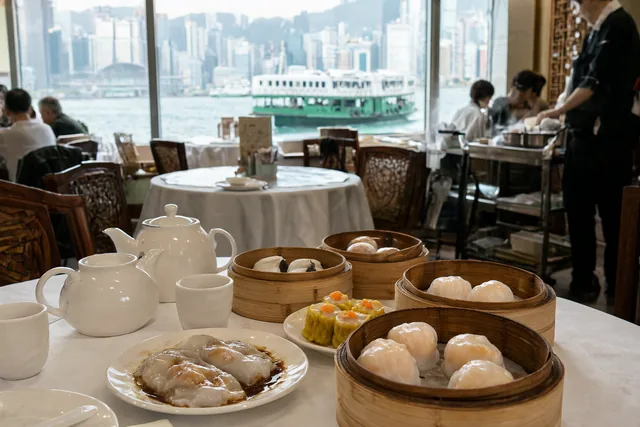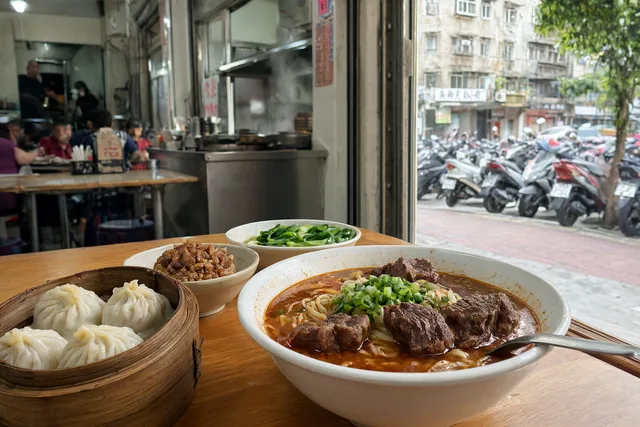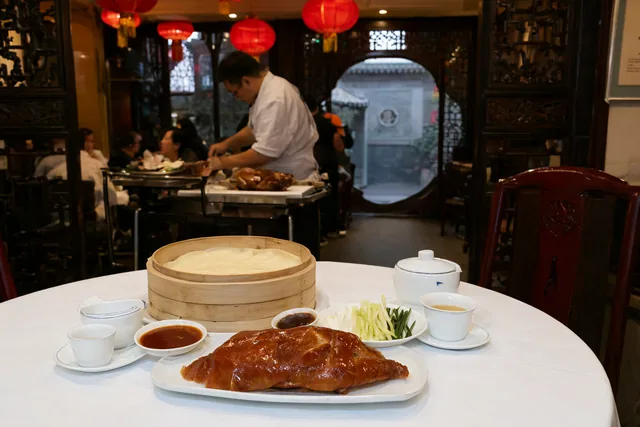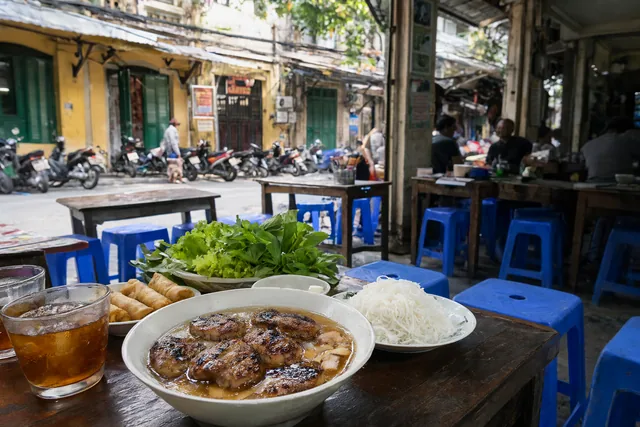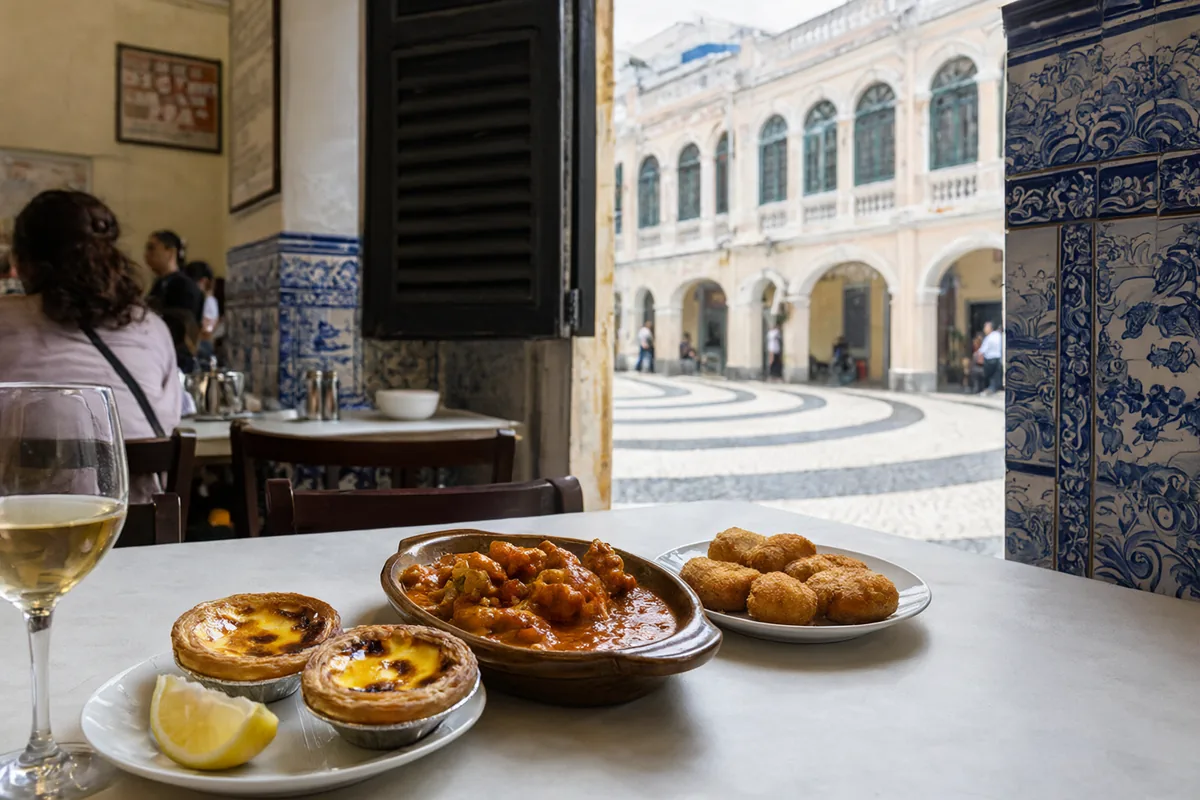
Macau was a Portuguese territory for more than four centuries, and the result is a food culture found nowhere else: Cantonese noodle shops beside Portuguese taverns, and in between them Macanese cooking, the Creole cuisine of Macau's mixed Portuguese and Asian families. This Macau food guide covers the dishes to know, how to read a menu written in Chinese, Portuguese and English, how patacas and service charges work, and where to eat in the historic centre, Northern Macau, Taipa Village, Cotai and Coloane. Macau was named a UNESCO City of Gastronomy, and it is small enough that you can eat your way across all of it in a weekend.
What to eat in Macau: 12 dishes to know
Macau's dishes fall into three groups: Macanese (the local fusion cuisine), Portuguese, and Cantonese. Try something from each.
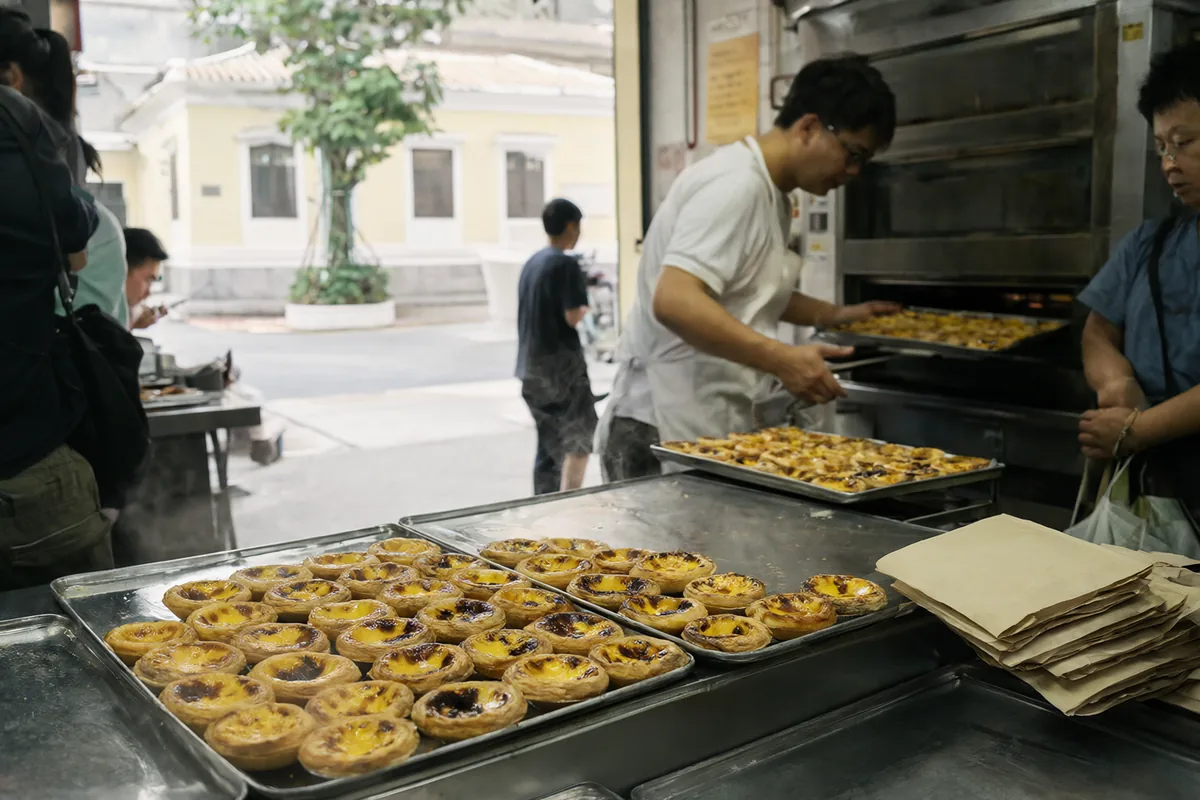
- Portuguese egg tart (pastel de nata): flaky pastry around a rich custard with a blistered, caramelised top. Macau's version is famous across Asia, and Coloane is where it took off.
- Pork chop bun (jyu pa baau): a marinated, fried pork chop, bone and all in older shops, inside a crusty bread roll. The unofficial snack of Macau.
- Minchi (Macanese): minced beef or pork fried with soy sauce, onion and diced potato, topped with a fried egg and served with rice. It is the comfort food of Macanese homes.
- African chicken (galinha à africana, Macanese): grilled chicken in a thick, spicy sauce of chilli, garlic, coconut and peanut, created in Macau despite the name.
- Bacalhau (Portuguese): dried salted cod, served as fried croquettes (bolinhos de bacalhau), baked with potatoes, or shredded with egg and potato straws (bacalhau à Brás).
- Macanese curry crab: crab cooked in a fragrant, mildly spicy curry sauce, shared and eaten with your hands.
- Porco balichão tamarindo (Macanese): pork braised with tamarind and balichão, a fermented shrimp paste that is central to Macanese cooking.
- Serradura: "sawdust pudding", layers of whipped cream and crushed biscuit, served chilled.
- Almond cookies (hang yan beng): crumbly cookies made with almond and mung bean flour, sold in boxes by the shops near the Ruins of St Paul's.
- Pork and beef jerky (yuk gon): sweet, sticky sheets of grilled dried meat, cut to order with scissors.
- Bamboo pole noodles (juk sing min): thin, springy egg noodles traditionally pressed with a large bamboo pole, often served dry with shrimp roe or in broth with wontons.
- Ginger milk curd (geung jap jong naai): hot milk set into a soft pudding by fresh ginger juice, a Cantonese dessert found at old dessert shops.
How to read a menu in Macau
Chinese and Portuguese are both official languages, and Macau uses traditional Chinese characters. Most people speak Cantonese, very few speak Portuguese, and English is common in hotels and tourist areas. Menus at Portuguese and Macanese restaurants are often trilingual, while noodle shops, cafés and bakeries usually list dishes in Chinese only, sometimes with Portuguese. These are the words you will see most.
| Chinese | Cantonese | Meaning |
|---|---|---|
| 葡國菜 | pou gwok choi | Portuguese food (cozinha portuguesa) |
| 土生菜 | tou saang choi | Macanese food (cozinha macaense) |
| 葡撻 / 葡式蛋撻 | pou taat / pou sik daan taat | Portuguese egg tart (pastel de nata) |
| 豬扒包 | jyu pa baau | Pork chop bun |
| 馬介休 | maa gaai yau | Salt cod (bacalhau) |
| 非洲雞 | fei jau gai | African chicken (galinha à africana) |
| 免治 | min ji | Minced meat, the dish Macanese call minchi |
| 咖喱蟹 | ga lei haai | Curry crab |
| 木糠布甸 | muk hong bou din | Serradura, "sawdust pudding" |
| 杏仁餅 | hang yan beng | Almond cookies |
| 豬肉乾 / 牛肉乾 | jyu yuk gon / ngau yuk gon | Pork jerky / beef jerky, sold by weight |
| 雞 / 豬肉 / 牛肉 / 魚 | gai / jyu yuk / ngau yuk / yu | Chicken / pork / beef / fish (galinha / porco / vaca / peixe) |
| 服務費 | fuk mou fai | Service charge (taxa de serviço) |
| 時價 | si ga | Market price, ask before ordering |
Jerky shops on the streets near the Ruins of St Paul's price their meat by weight, often per catty (about 600 g), and staff may cut a generous piece before you say how much you want. Point to a small amount and ask the price first. swap.menu converts patacas to your home currency and flags priced-by-weight items, so a snack does not become a surprise.
Service charges, tipping and paying in Macau
Most sit-down restaurants, and nearly all hotel and resort restaurants, add a 10 percent service charge to the bill. Tipping on top is not expected, though leaving small change is common. Noodle shops, bakeries, cafés and street snack stalls do not add a service charge. Macau has no sales tax or GST on food, so menu prices are what you pay apart from the service charge. Our guide to tax and service charges on menus explains how these lines work elsewhere in Asia.
The currency is the pataca (MOP, written MOP$). Hong Kong dollars are accepted almost everywhere in Macau, but change usually comes back in patacas, and patacas are hard to spend or exchange once you leave, so use them up before you go. Cards are accepted in hotels, casinos, resort restaurants and most mid-range restaurants. Small shops, market stalls and older cafés often prefer cash, though local mobile payment apps and the Macau Pass card are common. When a card machine offers to charge you in your home currency, choose patacas: our guide to paying in local currency explains why.
Meal times follow Hong Kong: lunch from noon to 2pm, dinner from around 7pm, with dim sum and congee in the morning and dessert shops open late. Casino resorts in Cotai run food courts and restaurants at almost every hour. Weekends and public holidays bring crowds of day-trippers, so the historic centre and Taipa Village are much calmer on weekday mornings.
Where to eat in Macau, area by area
Macau is made up of the old peninsula, connected by bridges to Taipa and Coloane, with the reclaimed resort strip of Cotai between them. Jump to an area:
Where to eat in Macau's historic centre
The Historic Centre of Macau is a UNESCO World Heritage Site, a run of churches, squares and Chinese temples on the peninsula, and it is also where the city's food is most concentrated. From Senado Square, with its black and white wave-patterned pavement, the lanes leading up to the Ruins of St Paul's are lined with shops selling almond cookies, egg rolls and jerky, many handing out free samples. Behind the square, the side streets are full of old cafés serving pork chop buns and milk tea, noodle shops with bamboo pole noodles, and dessert shops for ginger milk curd and double-skin milk pudding.
Rua da Felicidade, a restored street of red-shuttered houses that was once the red-light district, now has restaurants serving Cantonese dishes, dim sum and roast meats. For Macanese and Portuguese cooking, the peninsula has several long-established family restaurants, especially around the old streets towards the A-Ma Temple and Barra. Macau's historic centre gets very busy from late morning, so start early and save the main lanes for later in the evening when the day-trippers have gone.
Where to eat in Northern Macau
Northern Macau is where most residents live, and it is the place to see how the city really eats. The Red Market (Mercado Vermelho), a red-brick Art Deco market building, is the busiest wet market on the peninsula, surrounded by streets of noodle shops, bakeries and cheap Cantonese restaurants. Nearby, the area around the Three Lamps District (Rotunda de Carlos da Maia) is known for its Southeast Asian food, especially Burmese dishes, brought by migrants who settled in Macau.
Look out for bowls of Burmese fish noodle soup, curries, tea leaf salad and milky Southeast Asian tea at small shops around the roundabout, alongside Chinese bakeries selling egg tarts and wife cakes. This part of Macau has few English menus and very few tourists, prices are lower than in the historic centre, and many places are cash only. It is an easy walk or short bus ride north of Senado Square, and the morning market crowd is part of the experience.
Where to eat in Taipa Village
Taipa Village is the old heart of Taipa island, a small grid of lanes with pastel Portuguese houses and Chinese shopfronts. Its main lane, Rua do Cunha, is a pedestrian snack street packed with stalls selling pork chop buns, egg tarts, serradura, almond cookies, jerky, crab congee and durian desserts. It is crowded and touristy but fun, and the best way to try a lot of Macau's snacks in one walk.
Step off Rua do Cunha and Taipa Village has some of Macau's best-known Portuguese restaurants, with tiled walls, Portuguese wine lists and dishes like grilled sardines, clams with garlic and coriander, caldo verde (kale and potato soup), suckling pig and bacalhau. Many serve Macanese dishes too, including African chicken and minchi. The Taipa Houses, a row of restored colonial villas by the old waterfront, are a short walk away. Restaurants here are busy at weekends, so book or go at lunch on a weekday.
Where to eat in Cotai
Cotai is the strip of reclaimed land between Taipa and Coloane, filled with huge casino resorts. It is not traditional Macau, but it has a large share of the city's restaurants, from high-end Cantonese dining rooms and international steakhouses to sprawling food courts with noodles, roast meats, dim sum and Southeast Asian dishes at mall prices. Hotel buffets are popular with visiting families, and many resorts have long-running dim sum restaurants that open early.
The food courts are the practical choice here: menus have pictures, prices are clear and you pay at the counter. Resort restaurants add a 10 percent service charge, and prices are noticeably higher than in the old town. Free shuttle buses run between the resorts, the ferry terminals and the historic centre, which makes it easy to stay in Cotai and eat elsewhere, and Taipa Village is within walking distance of the northern end of the strip.
Where to eat in Coloane
Coloane is the quietest and greenest part of Macau, with hiking trails, beaches and a small, slow village on the water. Coloane Village is where Macau's famous Portuguese egg tart took hold, and its bakeries still draw queues for trays fresh from the oven. Eat one standing in the square beside the yellow and white Chapel of St Francis Xavier, then walk the waterfront lane past old shops and stalls selling dried fish and seafood.
The village also has a few small Portuguese and Macanese restaurants and Cantonese seafood places, and across the island, Hac Sa Beach (black sand beach) is known for long, relaxed lunches of grilled chicken, sardines, clams and Portuguese wine at its beachside restaurants. Coloane is a short bus or taxi ride from Cotai, and it is the best place in Macau to slow down. Go on a weekday afternoon if you can.
Vegetarian, vegan and allergy tips
Macau is not an easy place for vegetarians. Portuguese and Macanese cooking is built on pork, chicken, sausage and salt cod, and Cantonese dishes often use pork stock, oyster sauce or dried shrimp. Buddhist vegetarian restaurants exist, and resort food courts have some meat-free options. The Chinese character to look for is 齋 (jaai, vegetarian), and in Portuguese the word is vegetariano. Many pastries, including egg tarts, use lard or butter and egg.
Shellfish is common, and balichão, the fermented shrimp paste used in Macanese cooking, can be hidden in sauces. African chicken contains peanut and coconut, almond cookies contain nuts, and soy sauce contains wheat. Resort restaurants are generally used to allergy requests, while small family places may not be. Our guide to eating abroad with food allergies explains how to explain an allergy clearly.
Useful Cantonese phrases for ordering
你好 nei hou, "Hello"
唔該 m goi, "Excuse me" to get attention, and "thank you" for service
有冇英文餐牌? yau mou ying man chaan paai?, "Do you have an English menu?"
我要呢個 ngo yiu ni go, "I want this one" (pointing)
唔要辣 m yiu laat, "Not spicy"
唔該埋單 m goi maai daan, "The bill, please"
Obrigado / Obrigada "Thank you" in Portuguese (obrigado for a man, obrigada for a woman). Few people speak it, but it is appreciated in Portuguese restaurants
How swap.menu helps you eat in Macau
Macau's menus can be confusing even when they are in three languages, because the English is often a literal translation and the Macanese dishes have no equivalent anywhere else. Photograph the menu with swap.menu and every dish appears in your language with its original name and a short explanation, so you know that minchi is spiced minced meat with potato, that tacho is a hearty Macanese winter stew of meats and vegetables, and that 馬介休 is simply salt cod. Every price is converted from patacas to your home currency, and the 10 percent service charge is pointed out before you order.
Tap the dishes you want, add a note such as "no shellfish" or "no pork, please", typed or spoken, and swap.menu translates your order into Chinese for the staff. Show your phone, or let the waiter scan the QR code and read your order on their own screen. Try it on a sample menu with the free demo, or see travel pass prices.
Off to Macau? Your first 3 menu scans are free, and a travel pass starts from $4.99 with nothing that renews.
Start free with 3 scansMacau food FAQ
Do you tip in restaurants in Macau?
Tipping is not expected. Most sit-down and hotel restaurants add a 10 percent service charge, and leaving small change is enough. Snack stalls, cafés and noodle shops do not add a service charge.
What food is Macau famous for?
Portuguese egg tarts, pork chop buns, almond cookies and jerky, along with Macanese dishes such as African chicken, minchi and curry crab. Macau is also known for its Portuguese restaurants and Cantonese noodle shops.
What is the difference between Macanese and Portuguese food?
Portuguese food in Macau is cooked much as it is in Portugal, with dishes like bacalhau, grilled sardines and caldo verde. Macanese food is the local Creole cuisine of Macau's mixed Portuguese and Asian families, combining Portuguese recipes with Chinese, Indian, Malay and African spices and ingredients.
Can I use Hong Kong dollars in Macau?
Yes, Hong Kong dollars are accepted almost everywhere, but change is usually given in patacas. Patacas are hard to use outside Macau, so spend them before you leave.
Is Macau expensive to eat out?
Casino resort restaurants are expensive, but snacks, noodle shops, cafés and food courts are reasonably priced. Portuguese and Macanese family restaurants sit in the middle, and sharing several dishes keeps costs down.
How can I read a menu in Macau if I do not read Chinese or Portuguese?
Tourist areas often have English menus, but many local cafés and noodle shops do not. Photograph the menu with swap.menu and it translates every dish into your language, explains Macanese dishes, converts prices from patacas and translates your order into Chinese for the staff.
Travelling further in Asia? Read our food guides for nearby destinations:
Or browse every travel food guide.