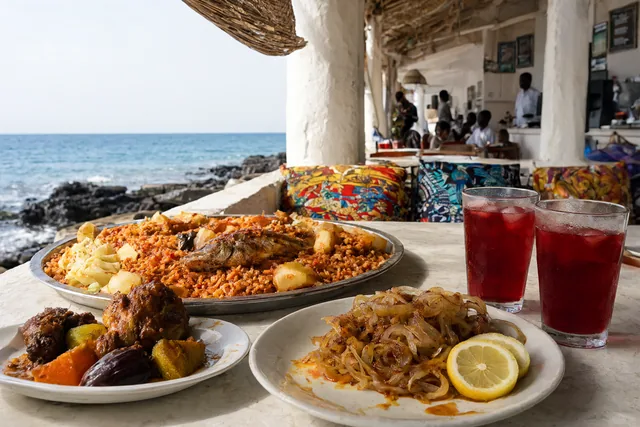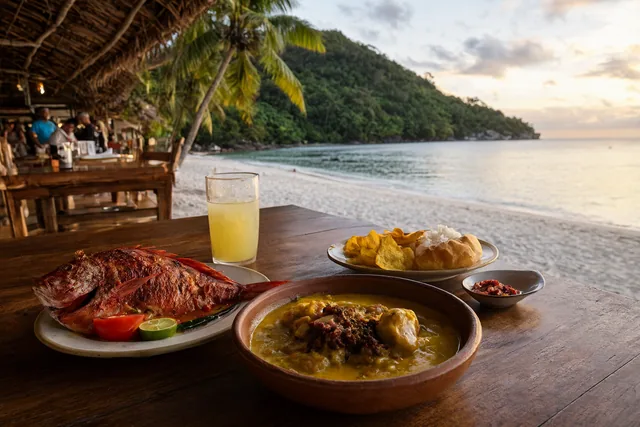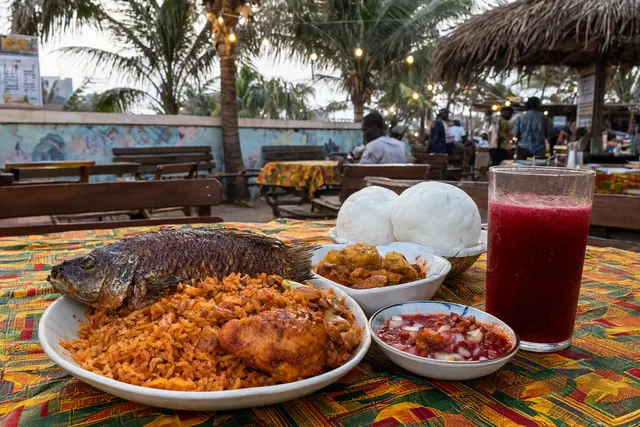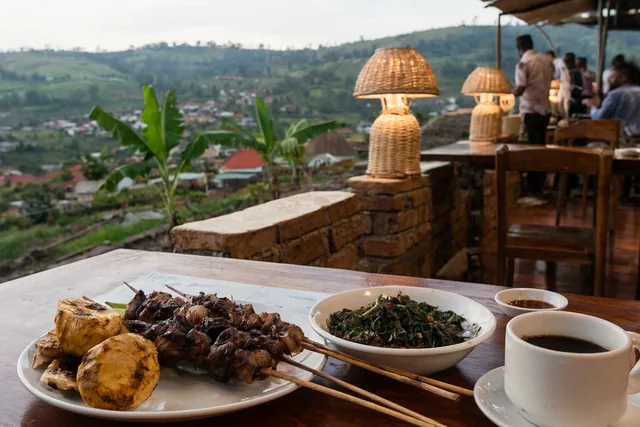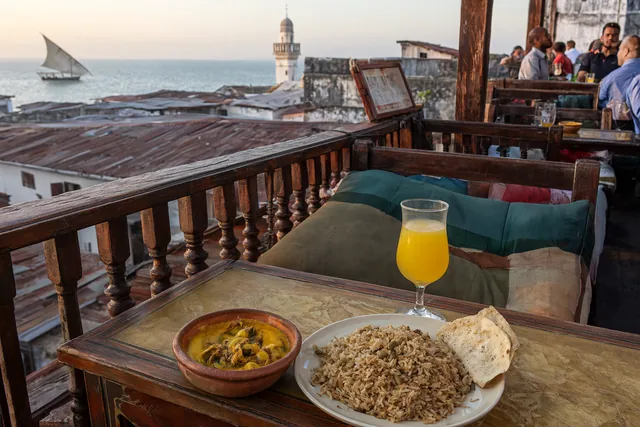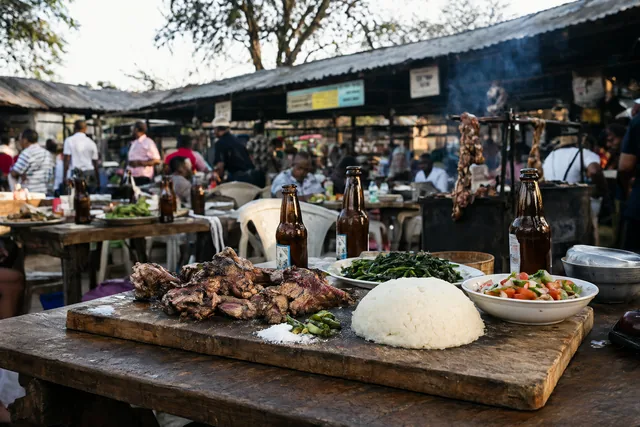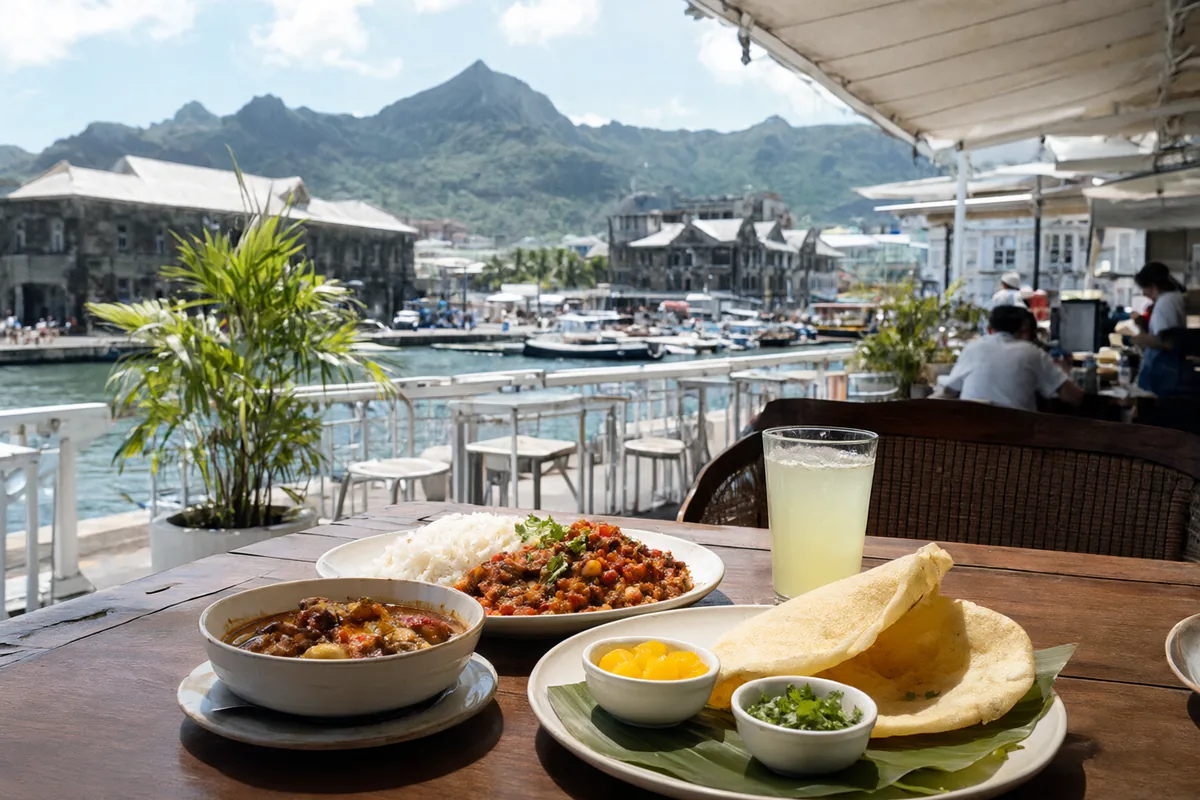
Mauritian food is what happens when Indian, African, Chinese and French cooking share one small island for two centuries. A single lunch might be a split pea flatbread with bean curry, a plate of Chinese fried noodles and a Creole octopus stew, followed by a rose-flavoured milk drink with basil seeds. This Mauritius food guide covers the dishes to order, how to read a menu in French and Creole, how tipping and paying in rupees works, and then goes place by place through where to eat in Port Louis, Grand Baie, Flic en Flac, Mahébourg, Chamarel and the island of Rodrigues. Most visitors eat at their resort; the best Mauritian food is just outside it.
What to eat in Mauritius: 12 dishes to know
Mauritius has some of the best street food in the Indian Ocean, and many of its signature dishes cost very little. These are the ones to know.
- Dholl puri (everywhere): a thin, soft flatbread made with ground yellow split peas, wrapped around bean curry, rougaille, pickles and chutney. The national street food, sold in pairs from stalls and bicycles.
- Farata (everywhere): the Mauritian paratha, a flaky, layered flatbread filled the same way as dholl puri, with curries and chutneys.
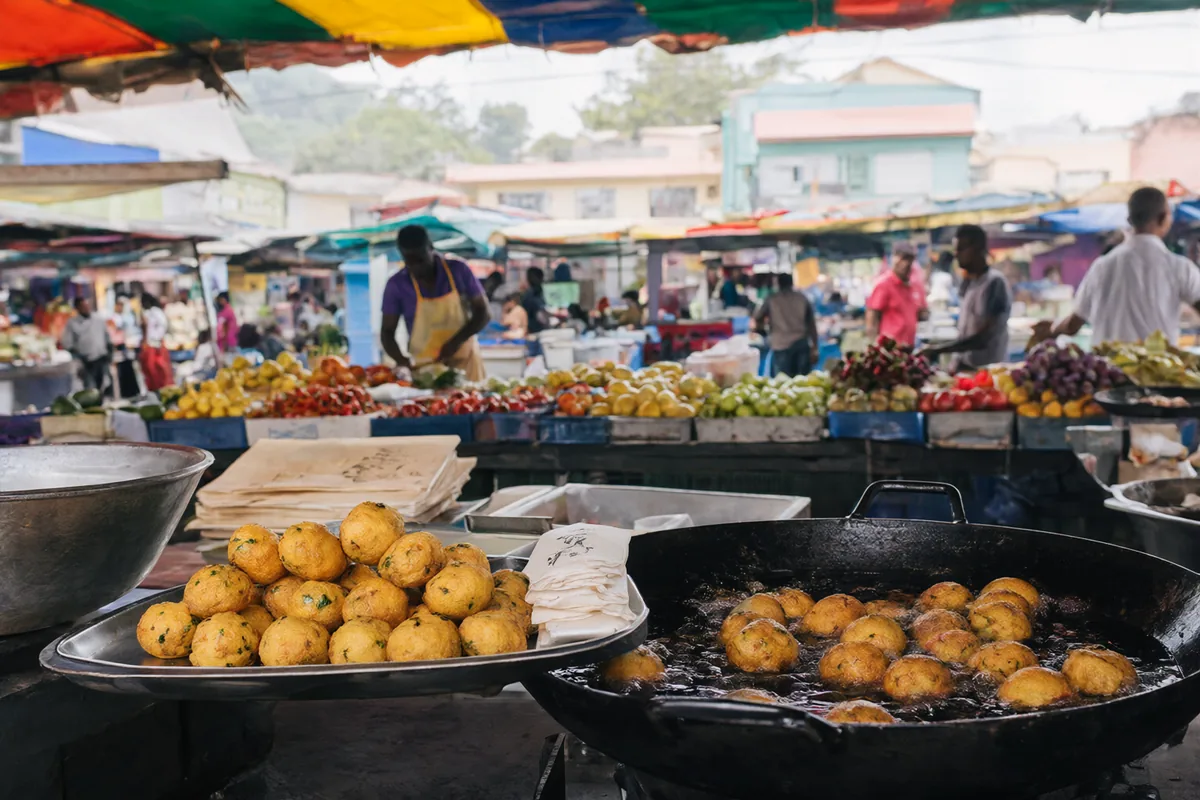
- Gâteaux piments (everywhere): small, crisp split pea fritters with chilli and herbs, often sold hot in a paper bag or stuffed in a baguette.
- Mine frite (everywhere): Chinese-Mauritian fried noodles with vegetables, egg and chicken or seafood, served with chilli sauce. Mine bouille is the boiled version.
- Bol renversé (everywhere): the "upside-down bowl", a dome of rice turned out onto a plate and topped with a chicken or seafood stir-fry and a fried egg.
- Boulettes (Port Louis and everywhere): Chinese dumplings of fish, chicken, prawn or chayote (chouchou), steamed and served in a clear broth.
- Rougaille (everywhere): the Creole tomato sauce with onion, garlic, thyme and chilli, cooked with sausage, salted fish, prawns or corned beef.
- Vindaye (everywhere): fish or octopus (ourite) cooked with mustard seed, turmeric, garlic and vinegar, tangy and bright yellow, often eaten cold.
- Cari (everywhere): Mauritian curries of chicken, fish, octopus, venison or goat, usually served with rice, lentils (dholl), brèdes (leafy greens) and chutney.
- Briani (everywhere, especially at weddings and on weekends): the Mauritian biryani, with potatoes, spiced meat and saffron rice, cooked in huge pots.
- Achards (everywhere): pickled vegetables in mustard and turmeric oil, served with almost everything, alongside mazavaroo, a fiery chilli paste.
- Alouda (Port Louis and everywhere): a sweet, cold milk drink flavoured with vanilla or rose and filled with basil seeds and agar jelly, sold at market stalls.
How to read a Mauritian menu in French and Creole
English is the official language of Mauritius, French is used widely in the media and on menus, and almost everyone speaks Mauritian Creole (Kreol Morisien) at home. Restaurant menus are usually in French, often with English alongside, while street stalls and snack bars use Creole names. These are the words that matter.
| Creole | French | Meaning |
|---|---|---|
| Dholl puri | Dholl puri | Split pea flatbread with fillings |
| Gato piman | Gâteaux piments | Chilli split pea fritters |
| Minn frir | Mine frite | Fried noodles |
| Kari | Cari | Curry |
| Rougay | Rougaille | Spicy tomato sauce |
| Zourit | Ourite, poulpe | Octopus |
| Pwason | Poisson | Fish |
| Poul | Poulet | Chicken |
| Diri | Riz | Rice |
| Bred | Brèdes | Leafy greens, cooked in broth or stir-fried |
| Satini | Chutney | Fresh chutney of tomato, coconut or coriander |
| Piman | Piment | Chilli |
| Dilo | Eau | Water |
| Napoliten | Napolitaines | Pink-iced shortbread sandwich biscuits with jam |
Some resort and beach restaurants list prices "hors taxes" (before tax) or add a service charge, so the total can be noticeably higher than the menu suggests. swap.menu flags tax and service lines when it reads the menu and converts every rupee price to your home currency.
Tipping, tax and paying the bill in Mauritius
Tipping is not compulsory in Mauritius, but it is appreciated. In restaurants, leaving around 5 to 10 percent for good service is normal if no service charge has been added; at street stalls and snack bars, no tip is expected. VAT is 15 percent and is usually included in menu prices, though some hotels and upmarket restaurants show it separately. Our guide to tax and service charges on menus explains these lines in detail.
The currency is the Mauritian rupee (MUR), written Rs on menus. Cards are widely accepted in hotels, restaurants and supermarkets, but street food, markets and small snack bars are cash only, so carry small notes. When a card machine offers to charge you in your home currency, choose rupees: our guide to paying in local currency explains why.
Lunch is roughly midday to 2pm, and dinner from 7pm. Street food stalls are busiest from morning to early afternoon, and many close by late afternoon. Port Louis empties after office hours, so it is a city for lunch rather than dinner, and much of it closes on Sunday afternoons.
Where to eat in Mauritius, place by place
Mauritius is small enough to drive across in an hour or two, and each coast has its own character. Jump to a destination:
Where to eat in Port Louis
Port Louis, the capital, is the best place on the island for street food. The Central Market, a covered market in the city centre, is the starting point: fruit and vegetable stalls, spice sellers, and food stalls serving dholl puri, farata, gâteaux piments and glasses of cold alouda. Queues at the best dholl puri stalls start mid-morning. Around the market and along the streets near the Jummah Mosque, vendors sell samosas, bhajias and briani.
Port Louis's Chinatown, centred on Royal Street, is the place for boulettes, mine frite, dim sum and Chinese bakeries, and the Plaine Verte district has Muslim restaurants serving briani and haleem, a slow-cooked lentil and meat soup. The Caudan Waterfront by the harbour has sit-down restaurants and cafés with views across the water. Port Louis is hot, crowded and best on a weekday lunchtime; by early evening most of the centre has closed.
Where to eat in Grand Baie
Grand Baie, on the north coast, is the island's busiest resort town and its nightlife centre, with a sheltered bay full of boats and a long strip of restaurants, bars and shops. You will find everything here, from Indian, Chinese and Creole restaurants to pizza and sushi. For cheap local food, look for the food vans and stalls near the public beach, especially on weekends, selling mine frite, briani, dholl puri and grilled corn.
Just north, Pereybère has a small public beach with snack stalls and casual restaurants, and the red-roofed church at Cap Malheureux is a short drive further on. Many boat trips from Grand Baie to the northern islets include a barbecue lunch of grilled fish and Creole salads on board or on the beach. Grand Baie is busy and pricier than inland towns, so walk a street back from the water for better value.
Where to eat in Flic en Flac
Flic en Flac, on the sunny west coast, has one of the longest public beaches in Mauritius, and on weekends Mauritian families arrive with pots of briani and curry for long picnics under the casuarina trees. Food vans and stalls along the beach road sell dholl puri, gâteaux piments, mine frite, ice cream and fresh coconut, and the town has a strip of inexpensive restaurants serving Creole, Indian and Chinese dishes.
Further south, the fishing villages of Tamarin and Black River (Rivière Noire) are bases for dolphin-watching and deep-sea fishing trips, and their restaurants serve the catch: marlin, tuna and dorado, often smoked or as carpaccio. The west coast faces the sunset, so book a table with a view for the evening in Flic en Flac.
Where to eat in Mahébourg
Mahébourg, on the south east coast near the airport, is an old colonial town on a wide lagoon, and one of the most authentically Mauritian places to eat. Its big weekly market, held on Mondays, fills the streets near the waterfront with fruit, vegetable, clothing and street food stalls: dholl puri, gâteaux piments, samosas, napolitaines and fresh juices. The waterfront promenade has small restaurants serving octopus curry, fish vindaye and seafood with views across the bay.
Nearby Blue Bay has a marine park, a public beach with snack vans, and boat trips to the lagoon islets. Mahébourg is quieter and cheaper than the north coast, and many Mauritians come here for seafood on weekends. If you arrive on an early flight, Mahébourg is the obvious place for your first dholl puri.
Where to eat in Chamarel
Chamarel, high in the hills of the south west, is known for its Seven Coloured Earth dunes and its waterfall, but it is also one of the best places on the island for a long Creole lunch. Hillside table d'hôte restaurants serve home-style dishes such as venison curry (cari cerf), wild boar, heart of palm salad and fish in rougaille, with views down to the coast. Coffee is grown around Chamarel, and you can taste it locally.
Chamarel also has a rum distillery making agricultural rum from fresh sugarcane juice, with tastings and a restaurant. Across the south, look for rhum arrangé, rum infused with fruit, vanilla or spices, made at home and in small restaurants. The roads around Chamarel and the Black River Gorges are winding and slow, so plan for lunch rather than dinner, and do not drink and drive.
Where to eat in Rodrigues
Rodrigues, a small, rugged island about an hour and a half's flight east of Mauritius, has its own quieter food culture. Octopus is the speciality: caught in the lagoon, sun-dried on lines in the villages and served in curries, salads and the classic ourite salad with lemon and onion. Rodrigues also grows tiny, fiercely hot chillies, small aromatic lemons (limons), honey, red beans and maize, all used in its cooking.
The Saturday market in Port Mathurin, the island's small capital, starts very early and is the place to buy pickled chillies, limon pickle, honey and the local tourte rodriguaise, a sweet tart filled with coconut or papaya. Most visitors stay in guesthouses that serve table d'hôte dinners of home-cooked Rodriguan food. Rodrigues is slow, simple and has few restaurants, so book your dinners ahead.
Vegetarian, vegan and allergy tips
Mauritius is one of the easiest places in the Indian Ocean for vegetarians, thanks to its large Hindu population. Dholl puri, farata, gâteaux piments, vegetable curries, lentils, brèdes, achards and chutneys are all meat-free, and many Indian-Mauritian restaurants are fully vegetarian. The word is végétarien in French and vegetarien in Creole, and you can say "Mo pa manz lavian" (I don't eat meat). Watch for fish sauce and dried shrimp in Chinese dishes and for salted fish in rougaille.
Seafood and shellfish are everywhere, peanuts appear in some snacks and sauces, and wheat is in farata, dholl puri and noodles. Ghee is common in Indian dishes, so vegans should ask. Our guide to eating abroad with food allergies explains how to communicate a serious allergy clearly.
Useful Creole and French phrases for ordering
Bonzour "Hello" in Mauritian Creole
Ki manier? "How are you?"
Mo anvi sa "I would like that one" (pointing)
Ki pri sa? "How much is that?"
Pa tro pike "Not too spicy"
L'addition, s'il vous plaît "The bill, please" in French
Li bon! "It's good!"
Mersi "Thank you"
How swap.menu helps you eat in Mauritius
Mauritian menus jump between French, English and Creole, sometimes on the same board, and the dish names make sense only if you already know them. Photograph the menu with swap.menu and every dish appears in your language with its original name beside it and a short explanation, so you know that vindaye ourite is octopus in mustard and turmeric, that bol renversé is rice topped with stir-fry and egg, and that cari cerf is venison curry. Every rupee price is converted to your home currency, and tax and service lines are flagged.
Tap the dishes you want, add a note such as "not spicy" or "no shellfish", typed or spoken, and swap.menu translates your order into French. Show the waiter your phone, or let them scan the QR code and read your order on their own screen. Try it on a sample menu with the free demo, or see travel pass prices.
Off to Mauritius? Your first 3 menu scans are free, and a travel pass starts from $4.99 with nothing that renews.
Start free with 3 scansMauritius food FAQ
Do you tip in restaurants in Mauritius?
Tipping is not required in Mauritius, but around 5 to 10 percent is appreciated in restaurants when no service charge has been added. No tip is expected at street stalls or snack bars.
What food is Mauritius famous for?
Mauritius is famous for dholl puri, gâteaux piments, mine frite, octopus curry, rougaille and fish vindaye. Its food blends Indian, Creole, Chinese and French cooking, and its street food is some of the best in the Indian Ocean.
Is it expensive to eat out in Mauritius?
Street food and local snack bars are very cheap, while resort restaurants and beachfront dining can be expensive. Eating at least some meals outside your hotel is the easiest way to save money and eat better.
Is tap water safe to drink in Mauritius?
Tap water is treated, but quality varies by area and can be affected after heavy rain or cyclones. Most visitors drink bottled water, which is cheap and sold everywhere.
Where is the best street food in Mauritius?
The Central Market and Chinatown in Port Louis are the best places for street food, followed by the Monday market in Mahébourg and the beach food vans at Flic en Flac and Grand Baie on weekends.
How can I read a Mauritian menu if I do not speak French or Creole?
Many menus include English, but dish names are often French or Creole. Photograph the menu with swap.menu to see every dish translated and explained in your language, with rupee prices converted to your currency and your order translated into French for the waiter.
Travelling further in the Indian Ocean? Read our food guides for nearby destinations:
- Seychelles food guide
- Maldives food guide
- India food guide
- South Africa food guide
- Tanzania food guide
Or browse every travel food guide.