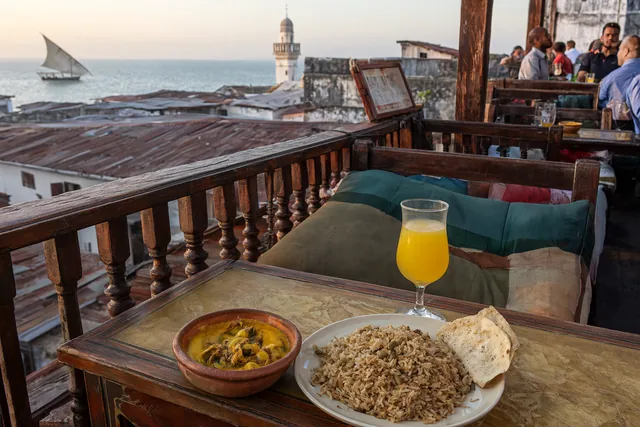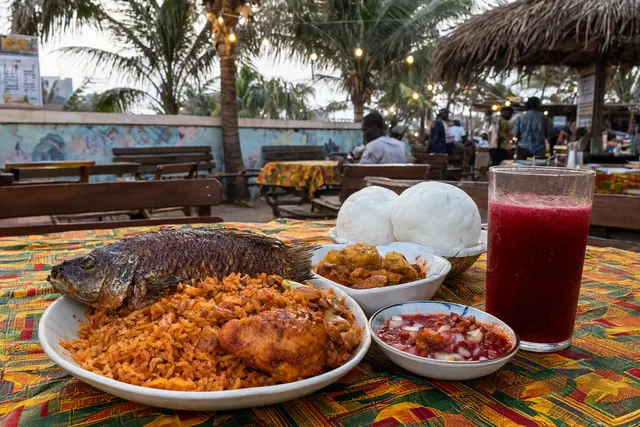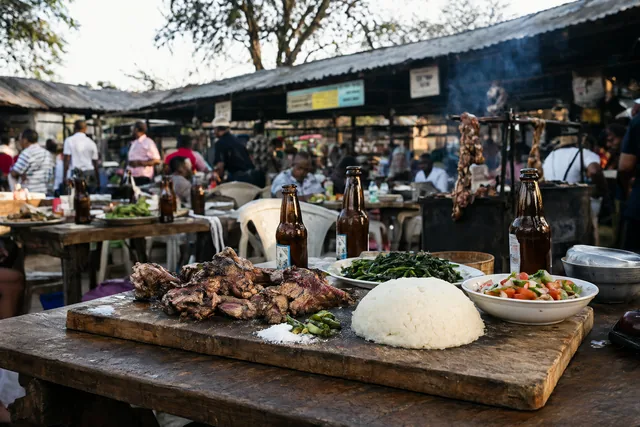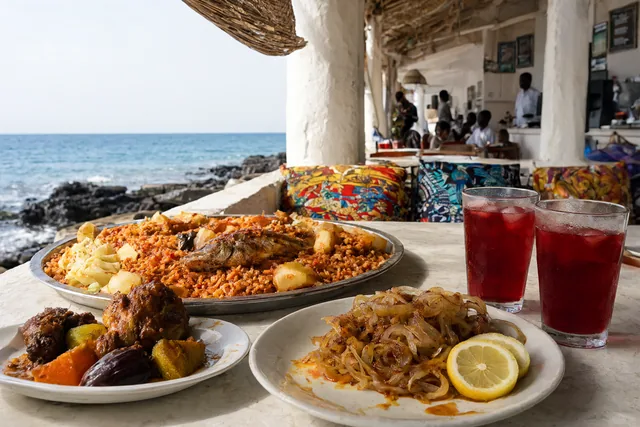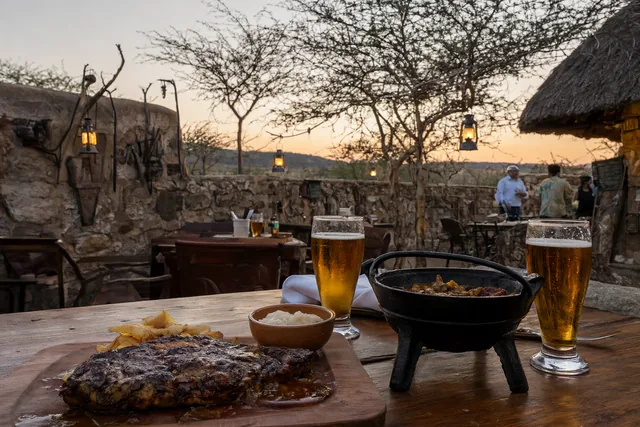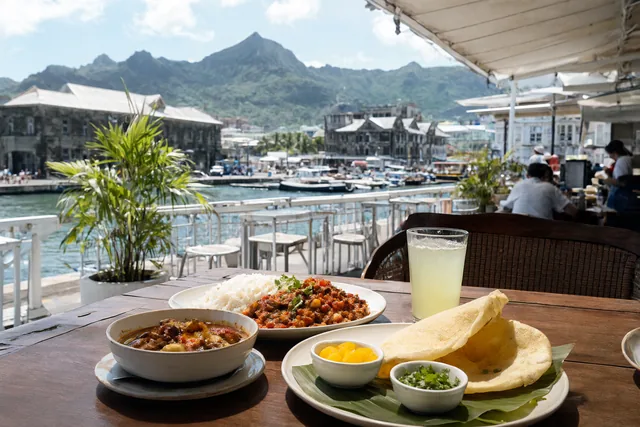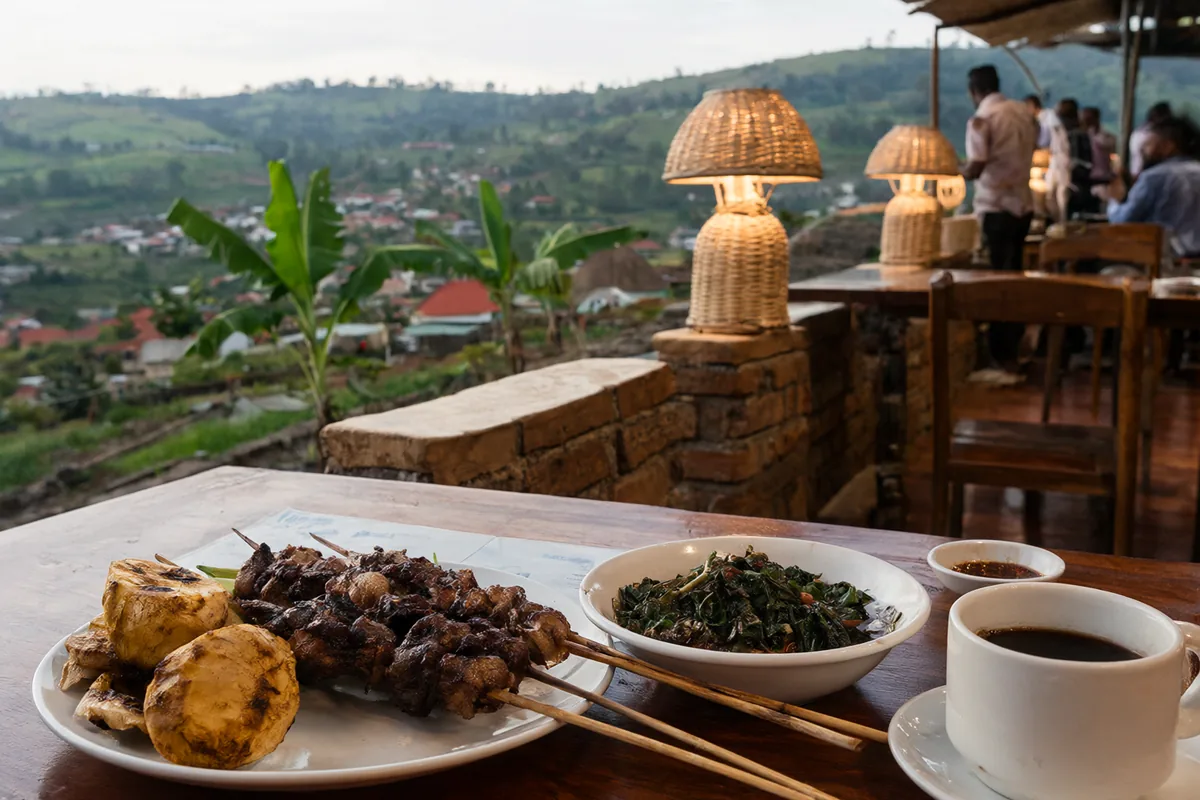
Rwanda is small, green and mountainous, and its food is grown on the hillsides you drive past: bananas, beans, potatoes, cassava and some of the best coffee and tea in Africa. This Rwanda food guide covers the dishes to order, the menu words you will see in Kinyarwanda, French and English, how tipping and paying works, and then goes town by town through where to eat in Kigali, Musanze, Rubavu, Karongi, Huye and the Nyungwe forest. Most visitors come to see mountain gorillas, but the evening ritual of goat brochettes, grilled plantains and a cold drink is a reason to love the country in its own right.
What to eat in Rwanda: 11 dishes to know
Rwandan cooking is simple, filling and based on what grows locally. These are the dishes you will meet again and again.
- Brochettes (everywhere): skewers of goat, beef or fish grilled over charcoal, often served with chips or grilled plantains. The national bar food, eaten in the evening with a beer or soft drink.
- Isombe (everywhere): cassava leaves pounded and slow-cooked, often with aubergine, spinach, onion and palm oil or peanut paste. Dark green, rich and very Rwandan.
- Ibitoke and agatogo (everywhere): ibitoke are cooking bananas, served boiled, grilled or fried; agatogo is a stew of plantains cooked with meat or fish, tomatoes and onions.
- Ibishyimbo (everywhere): beans, eaten at almost every meal, stewed with onion and tomato or mixed with maize or bananas.
- Ibirayi (Musanze and the north): potatoes, grown in the rich volcanic soil of the north and served as chips, boiled or in stews.
- Ubugali (everywhere): a stiff porridge made from cassava or maize flour, eaten with stews and greens.
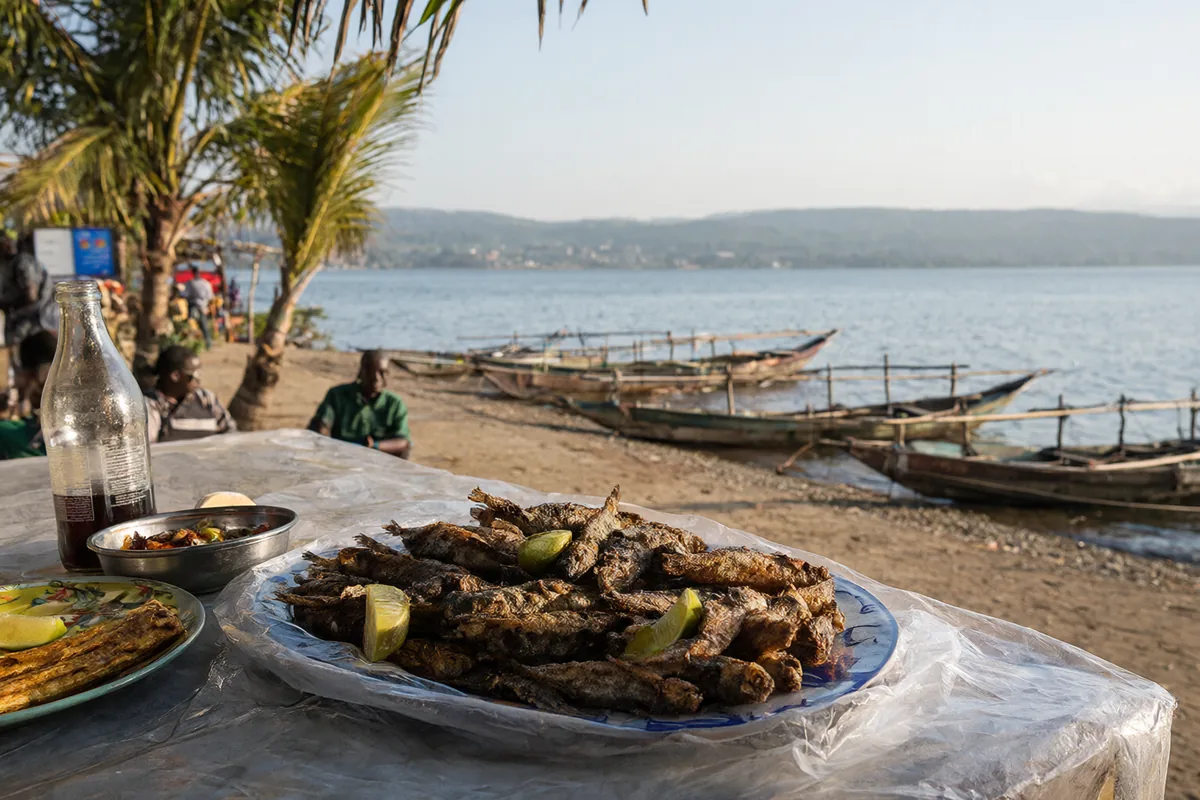
- Sambaza (Lake Kivu): small, sardine-like lake fish, deep-fried whole and eaten like chips with chilli and lime.
- Igisafuliya (everywhere, especially at gatherings): a one-pot dish of chicken or goat cooked with bananas, vegetables and spices, the pot traditionally sealed with banana leaves.
- Akabenz (Kigali and the cities): crisp fried pork, served with chips or plantains in bars. The nickname is said to come from its reputation as a luxury, like a Mercedes-Benz.
- Ikivuguto (everywhere): thick, fermented milk similar to drinking yoghurt. Milk has deep cultural importance in Rwanda, and "milk bars" sell fresh and fermented milk by the glass.
- Coffee and tea (everywhere): Rwanda produces highly regarded speciality coffee and fine black tea. Order a cup of local coffee wherever you see an espresso machine.
Look out also for akabanga, a fiercely hot yellow chilli oil sold in tiny bottles, which Rwandans add drop by drop to their food. One or two drops are plenty.
How to read a menu in Rwanda: Kinyarwanda, French and English
Rwanda has four official languages: Kinyarwanda, English, French and Swahili. Restaurant menus in Kigali are usually in English, older places and many in the countryside use French, and local eateries may write their dishes on a board in Kinyarwanda. Lunch in local restaurants is often a buffet, sometimes called a mélange, where you pay one price and fill your plate once from dishes of rice, beans, plantains, potatoes, greens and stew. These are the words worth knowing.
| Kinyarwanda | French | English |
|---|---|---|
| Inyama | Viande | Meat |
| Inyama y'inka | Boeuf | Beef |
| Ihene | Chèvre | Goat |
| Inkoko | Poulet | Chicken |
| Ifi | Poisson | Fish |
| Ibirayi | Pommes de terre, frites | Potatoes, chips |
| Ibitoke | Bananes plantains | Cooking bananas |
| Umuceri | Riz | Rice |
| Ibishyimbo | Haricots | Beans |
| Imboga | Légumes | Vegetables |
| Amata / ikivuguto | Lait / lait fermenté | Milk / fermented milk |
| Amazi | Eau | Water |
| Ikawa / icyayi | Café / thé | Coffee / tea |
| Urusenda | Piment | Chilli (often called pili pili) |
At a lunch buffet in Rwanda you usually fill your plate only once, so take a little of everything on the first pass rather than going back. Brochettes and drinks are ordered and paid for separately. swap.menu reads menus in Kinyarwanda, French and English, explains each dish and converts Rwandan franc prices to your home currency.
Tipping, tax and paying the bill in Rwanda
Tipping is not a strong tradition in Rwanda, but it is increasingly common in Kigali restaurants and in places used to visitors. Leaving around 5 to 10 percent for good service, or rounding up, is appreciated. Hotels and some upmarket restaurants add a service charge. VAT is 18 percent and is generally included in menu prices. Gorilla trekking guides, porters and lodge staff are tipped separately. Our guide to tax and service charges on menus explains these lines in more detail.
The currency is the Rwandan franc (RWF), often written FRw. Mobile money (MoMo) is used everywhere, and cards are accepted in most hotels, cafés and restaurants in Kigali, but carry cash for markets, small eateries and the countryside. When a card machine offers to charge you in your home currency, choose francs: our guide to paying in local currency explains why.
Lunch, often a buffet, runs from about midday to 2pm, and dinner from around 7pm. Service can be unhurried, so order early if you are in a rush. On the last Saturday morning of each month, Rwanda holds umuganda, a national community work session, and most shops, restaurants and transport stop until around midday. Plastic bags are banned in Rwanda, so do not bring them in your luggage.
Where to eat in Rwanda, town by town
Rwanda is small enough that most visitors base themselves in Kigali and travel out to the volcanoes, Lake Kivu and Nyungwe. Jump to a destination:
Where to eat in Kigali
Kigali, the capital, spreads over a series of green hills and is one of the cleanest and safest cities in Africa. It is also where Rwanda's restaurant culture is growing fastest, with Rwandan buffets, brochette bars, coffee shops roasting local beans, and restaurants serving Indian, Ethiopian, Congolese and international food. Kimironko Market, the city's biggest, is the place to see Rwandan produce, from tree tomatoes and passion fruit to dried fish, beans and cassava flour, and to eat cheaply at the food stalls inside.
Nyamirambo, Kigali's oldest neighbourhood and its Muslim quarter, is the liveliest place to eat in the evening, with brochette grills, small restaurants, juice bars and street food along its main road. Kiyovu, near the city centre, and Kimihurura and Kacyiru on the next hills have upmarket restaurants, garden cafés and hotel bars, while Remera has busy local bars serving brochettes, akabenz and grilled plantains late into the night. Kigali's hills make walking between neighbourhoods tiring, so use a moto taxi or a ride-hailing app.
Where to eat in Musanze
Musanze, formerly called Ruhengeri, is the base for gorilla trekking in Volcanoes National Park, and most visitors are in bed early for a pre-dawn start. The town sits in the potato-growing heart of Rwanda, and ibirayi appear at every meal: as chips with brochettes, boiled, or in stews. Local restaurants serve lunch buffets of potatoes, beans, rice, plantains and greens at low prices, and the Musanze market is full of produce from the volcanic farmland.
Most lodges around the park serve full board, often with packed lunches for trekking days. In Musanze town itself, brochette bars and small hotels are the places to eat in the evening. The twin lakes of Burera and Ruhondo, a short drive away, have a few lakeside lodges where you can eat tilapia with views of the volcanoes.
Where to eat in Rubavu
Rubavu, still widely known as Gisenyi, is a lakeside town on the northern shore of Lake Kivu, right on the border with the Democratic Republic of the Congo. It is Rwanda's beach town, with sandy shores, palm-lined avenues and lakeside hotels. The local speciality is sambaza, small fish from the lake fried whole and eaten with chilli and lime, along with whole grilled tilapia and fish brochettes. Lakeside bars and restaurants serve them with grilled plantains and chips.
In the evening, watch the fishermen on Lake Kivu row out in their linked wooden boats, singing as they go, to fish through the night. Rubavu is also home to Rwanda's largest brewery, and coffee grown on the hills around the lake is among the country's best. The Rubona peninsula, a short drive south, has natural hot springs and small fish restaurants by the water, a good place for a long lunch in Rubavu.
Where to eat in Karongi
Karongi, often still called Kibuye, sits on a deeply indented stretch of Lake Kivu's shore further south, with green peninsulas and wooded islands scattered across the water. It is quieter than Rubavu and has fewer restaurants, mostly at lakeside hotels serving grilled tilapia, sambaza, brochettes and buffets. Boat trips to the islands, including one known for its colony of fruit bats, often end with a lakeside meal.
Karongi is a stop on the Congo Nile Trail, the hiking and cycling route along Lake Kivu, and the trail passes coffee washing stations and small villages where you can try local food. Hotel dining in Karongi tends to be slow, so order well before you are hungry.
Where to eat in Huye
Huye, formerly Butare, is Rwanda's university town and its intellectual centre, home to the national university and the Ethnographic Museum, one of the best museums in East Africa. Its food scene is modest: student cafés, buffets and brochette bars along the main road, and coffee shops serving beans from the surrounding hills. The area around Maraba, just outside town, is well known for its speciality coffee, and some cooperatives and washing stations welcome visitors.
A short drive north, the royal palace museum at Nyanza keeps a herd of inyambo, the long-horned cattle of the Rwandan kings, a reminder of how central cows and milk are to Rwandan culture. Try ikivuguto in a local milk bar in Huye, where it is served cold in tall glasses.
Where to eat around Nyungwe
Nyungwe National Park, in the south west, is one of the oldest rainforests in Africa, with chimpanzees, monkeys and a canopy walkway high above the trees. There are no towns inside the park, so you eat at your lodge, where full board is usual. The road through the forest passes the bright green Gisakura tea estate, and lodges in the area serve tea grown just outside the door.
West of the forest, the town of Rusizi (also known as Kamembe) sits at the southern tip of Lake Kivu, with simple restaurants serving lake fish, brochettes and Congolese-influenced dishes. If you are driving through Nyungwe, bring snacks and water, as there are few places to stop for food along the forest road.
Vegetarian, vegan and allergy tips
Rwanda is one of the easiest countries in East Africa for vegetarians, because everyday Rwandan food is mostly plant-based: beans, plantains, potatoes, sweet potatoes, cassava, rice and greens make up the lunch buffet, and meat is often a separate dish. Isombe and stews can contain meat or fish, however, so ask. In French say "Je suis végétarien" (or végétarienne for a woman); in Kinyarwanda, "Sindya inyama" means "I don't eat meat". Vegans should check for milk and butter in sauces and for ghee in Indian restaurants.
Peanut paste (ubunyobwa) is used in isombe and some sauces, so people with peanut allergies should ask about every green stew. Palm oil is common, and wheat is in chapati and bread. Our guide to eating abroad with food allergies explains how to communicate a serious allergy clearly.
Useful Kinyarwanda and French phrases for ordering
Muraho "Hello", the standard greeting at any time of day
Mwaramutse "Good morning"
Ni angahe? "How much is it?"
Sindya inyama "I don't eat meat"
Sans piment, s'il vous plaît "Without chilli, please" in French (or "no pili pili" in English)
L'addition, s'il vous plaît "The bill, please" in French; "the bill, please" works just as well in Kigali
Biraryoshye "It is delicious"
Murakoze "Thank you"
How swap.menu helps you eat in Rwanda
Menus in Rwanda can be in English, French, Kinyarwanda or a mix of all three, and the buffet boards in local restaurants use names like isombe, agatogo and ibihaza (pumpkin) that no phrasebook prepares you for. Photograph the menu with swap.menu and every dish appears in your language with its original name beside it and a short explanation. Prices are converted from Rwandan francs to your home currency, and any service charge is flagged.
Tap the dishes you want, add a note such as "no peanuts" or "not spicy", typed or spoken, and swap.menu translates your order into Kinyarwanda, French or English. Show the waiter your phone, or let them scan the QR code and read your order on their own screen. Try it on a sample menu with the free demo, or see travel pass prices.
Off to Rwanda? Your first 3 menu scans are free, and a travel pass starts from $4.99 with nothing that renews.
Start free with 3 scansRwanda food FAQ
Do you tip in restaurants in Rwanda?
Tipping is not traditional in Rwanda, but leaving 5 to 10 percent or rounding up is appreciated, especially in Kigali. Some hotels and upmarket restaurants add a service charge, and gorilla trekking guides and porters are tipped separately.
What food is Rwanda famous for?
Goat brochettes, isombe (cassava leaves), plantains, beans and sambaza fish from Lake Kivu are the best-known Rwandan foods. The country is also known for its speciality coffee and tea, and for ikivuguto, a fermented milk drink.
Is it expensive to eat out in Rwanda?
Local buffets and brochette bars are cheap. Upmarket restaurants in Kigali and lodges near the national parks cost much more, and lodge meals are often included in the room rate.
Is tap water safe to drink in Rwanda?
Visitors should drink bottled or filtered water in Rwanda. Hotels and lodges usually provide drinking water, and bottled water is easy to buy in every town.
What is umuganda and does it affect restaurants?
Umuganda is a national community work morning held on the last Saturday of every month. Most shops, restaurants and transport stop until around midday, so plan to have breakfast at your hotel and eat out later in the day.
How can I read a menu in Rwanda if I do not speak Kinyarwanda or French?
Most Kigali menus are in English, but local eateries use Kinyarwanda and French. Photograph the menu with swap.menu to see every dish translated and explained in your language, with prices converted from francs to your currency and your order translated back for the waiter.
Travelling further in East Africa? Read our food guides for nearby countries:
Or browse every travel food guide.