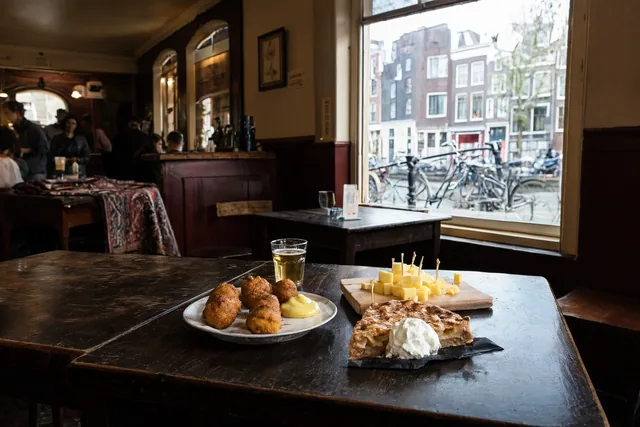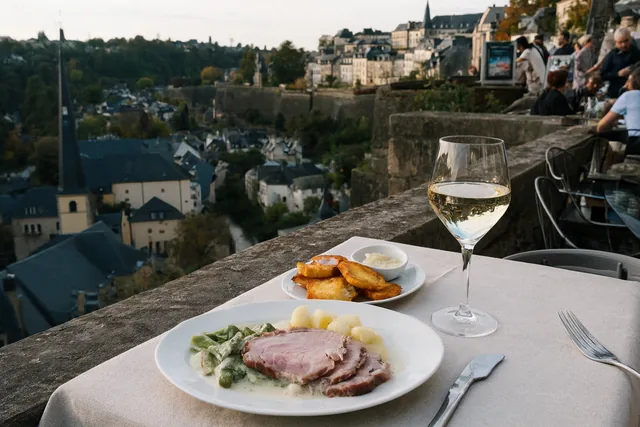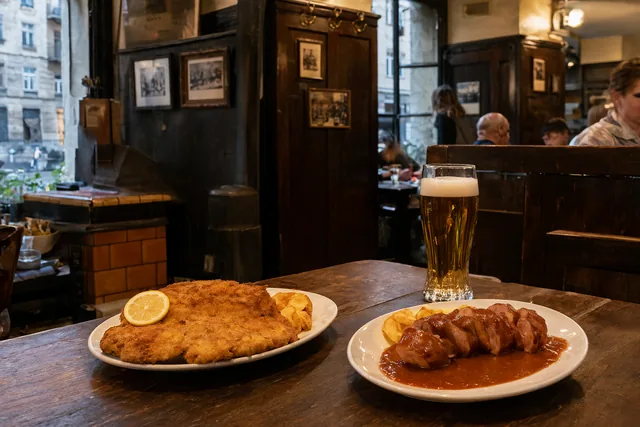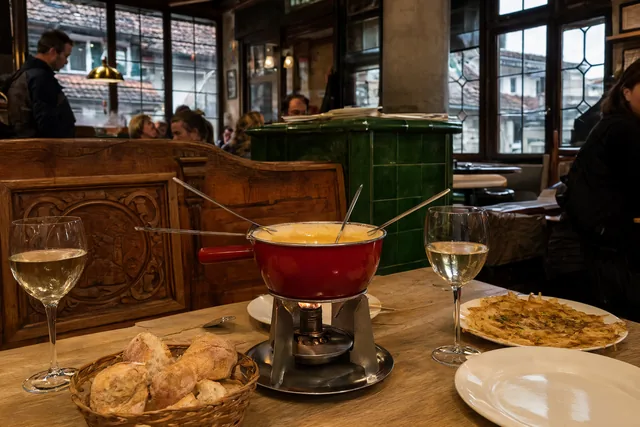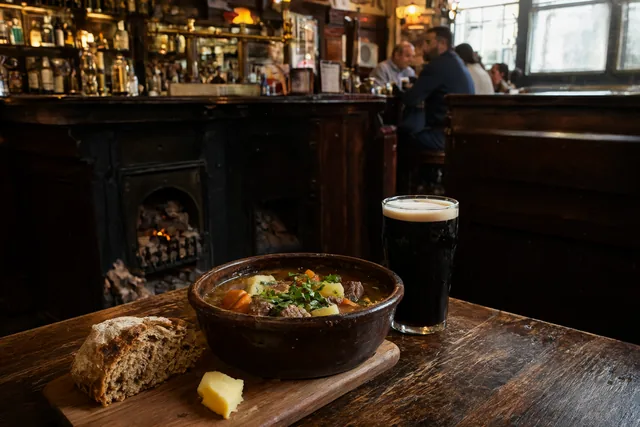
Belgium is a small country with a big appetite. It cooks with French technique and Flemish heartiness, makes some of the best chips, chocolate and beer in the world, and serves portions that would satisfy a farmhand. This Belgium food guide covers the dishes to know, how to read a menu in a country with two main languages, how tipping and paying work, then goes city by city through where to eat in Brussels, Antwerp, Ghent, Bruges, Liège and Leuven. Flanders in the north speaks Dutch, Wallonia in the south speaks French, and Brussels is officially both, so the same dish often has two names.
What to eat in Belgium: 12 dishes to know
These are the dishes worth ordering, with their French and Dutch names where they differ. Most are on the menu of any traditional brasserie or estaminet.
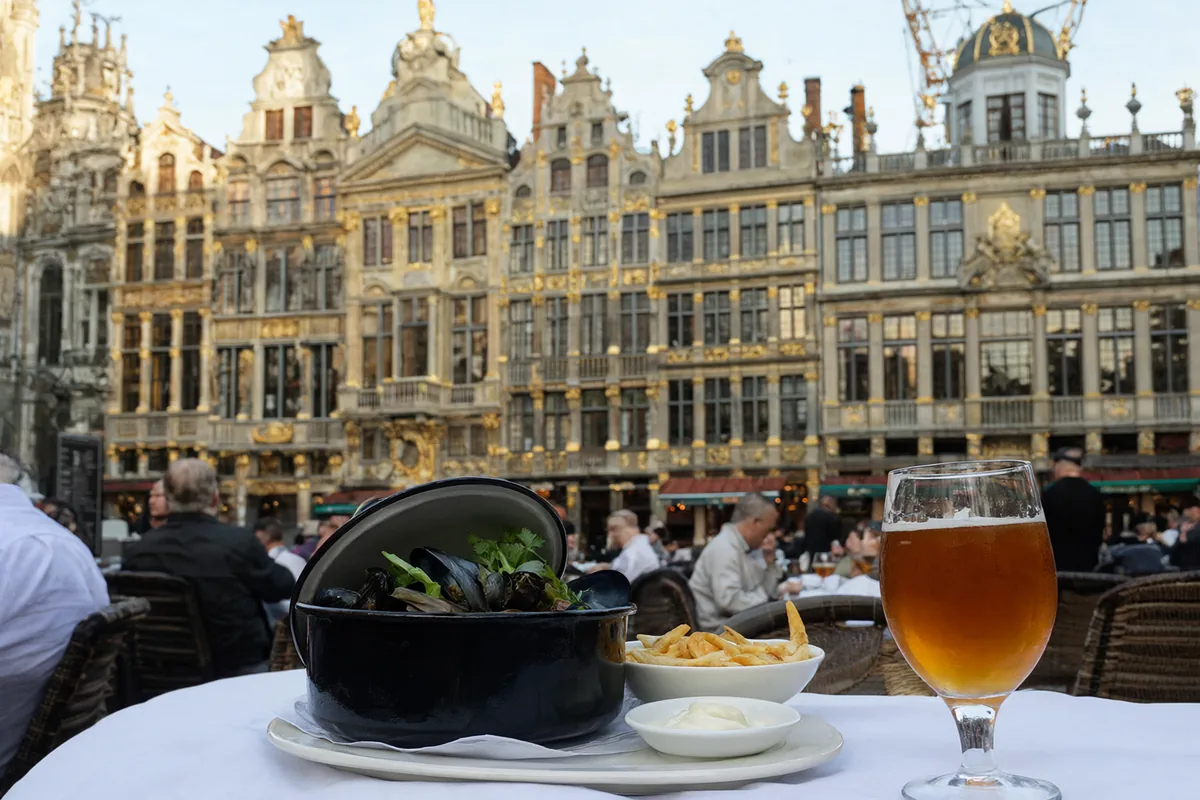
- Moules-frites / mosselen met friet (everywhere): a big black pot of mussels steamed with celery and onion, or in white wine or cream, with frites on the side. Best from autumn to early spring.
- Frites / friet (everywhere): thick chips fried twice, ideally in beef fat, served in a paper cone with mayonnaise or one of a dozen other sauces from a friterie or frietkot.
- Carbonade flamande / stoofvlees (everywhere): beef stewed slowly in dark beer with onions, mustard and bread, served with frites.
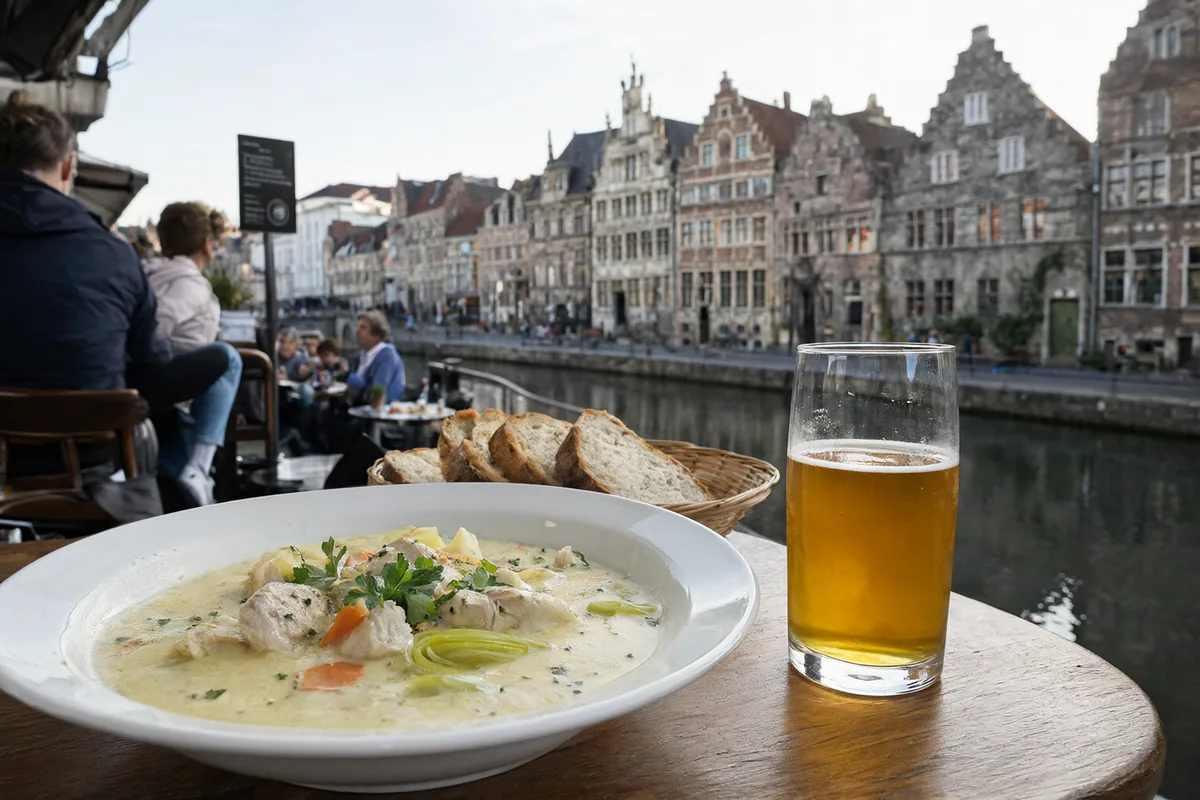
- Waterzooi (Ghent): a creamy stew-soup of chicken or fish with vegetables, enriched with egg yolk and cream.
- Waffles / gaufres / wafels (everywhere): the light, rectangular Brussels waffle or the dense, chewy Liège waffle with caramelised pearl sugar.
- Boulets à la liégeoise (Liège): large meatballs in a sweet and sour sauce made with sirop de Liège, a thick apple and pear syrup.
- Croquettes aux crevettes / garnaalkroketten (the coast and everywhere): croquettes filled with tiny North Sea grey shrimp in a creamy sauce, served with fried parsley and lemon.
- Chicons au gratin / witloof met kaas en hesp (everywhere): Belgian endive wrapped in ham and baked in cheese sauce.
- Filet américain (everywhere): raw minced beef with mayonnaise and seasoning, eaten with frites or on bread. It is not cooked, whatever the name suggests.
- Stoemp (Brussels): mashed potato with vegetables such as carrots, leeks or spinach, served with sausage or bacon.
- Speculoos (everywhere): spiced caramelised biscuits, traditionally for Saint Nicholas Day, now served with every coffee.
- Pralines (everywhere): filled chocolates, invented in Belgium and sold in chocolate shops in every town.
How to read a Belgian menu
In Brussels most menus are in French, often with Dutch and English alongside. In Flanders (Antwerp, Ghent, Bruges, Leuven) menus are in Dutch, often with a few local Flemish words, and in Wallonia (Liège, Namur) they are in French. The structure is French: starters, mains and desserts, with a plat du jour or dagschotel at lunch that is usually the best value.
| French | Dutch | Meaning |
|---|---|---|
| Entrées | Voorgerechten | Starters |
| Plats | Hoofdgerechten | Main courses |
| Desserts | Nagerechten | Desserts |
| Plat du jour | Dagschotel | Dish of the day |
| Moules | Mosselen | Mussels |
| Frites | Friet / frieten | Chips |
| Boeuf / porc / veau | Rundvlees / varkensvlees / kalfsvlees | Beef / pork / veal |
| Poulet / lapin | Kip / konijn | Chicken / rabbit |
| Crevettes grises | Grijze garnalen | Tiny North Sea brown shrimp |
| Chicon | Witloof | Belgian endive |
| Américain | Américain / préparé | Raw seasoned minced beef |
| Anguilles au vert | Paling in 't groen | Eel in green herb sauce |
| Bière au fût / pression | Bier van 't vat / pintje | Draught beer |
| Eau du robinet | Kraantjeswater | Tap water |
A toast cannibale on a Brussels bar menu is raw seasoned beef on toast, and sauce lapin in Liège contains no rabbit at all. Belgian menus are full of names like these. swap.menu reads menus in French and Dutch and explains every dish in your language, so you know what is coming.
Tipping, beer and paying the bill
Service is included in Belgian menu prices (service compris or dienst inbegrepen), and so is VAT (TVA in French, BTW in Dutch). Tipping is optional: Belgians round up or leave a few euros, and up to around 10 percent for excellent service. There is usually no cover charge. Our guide to tax and service charges on menus explains how these lines work around the world.
Belgian beer deserves respect. Many beers are strong, often 8 to 11 percent alcohol, and each is served in its own glass, chosen to suit the beer. Trappist beers are brewed by or under the supervision of monks, and the sour lambic, gueuze and cherry kriek of the Brussels region are unlike beer anywhere else. In a café you usually order at the table and pay when you leave.
Prices are in euros (€). Cards and contactless payment are accepted in most restaurants and cafés, and Belgium's own debit network, Bancontact, is everywhere. Some friteries, market stalls and small cafés prefer cash. If a card machine offers to charge you in your home currency, choose euros: our guide to paying in local currency explains why.
Lunch is from about noon to 2pm and dinner from about 6:30pm to 9:30pm. Many restaurants close one or two days a week, often Sunday evening and Monday, so check before you set out. Tap water is safe, but Belgian restaurants are not obliged to serve it, and many will offer only bottled water.
Where to eat in Belgium, city by city
Belgium's cities are close together, and you can eat in three of them in a single day by train. Jump to a city:
Where to eat in Brussels
Brussels is the place for moules-frites, stoemp, shrimp croquettes and waffles, and for a sandwich called the mitraillette, half a baguette stuffed with meat, frites and sauce. The city's best frites come from stands in neighbourhood squares, such as Place Flagey and Place Jourdan in Ixelles and Etterbeek, where the queue is a good sign. Order a lambic, gueuze or kriek in an old estaminet, the traditional Brussels café. The Sablon is the area for chocolate shops.
The Grand-Place is magnificent, but the narrow streets beside it, especially rue des Bouchers, are lined with restaurants whose staff stand outside persuading tourists to come in, and the food rarely matches the price. Head instead to Sainte-Catherine, the old fish market area, for seafood restaurants and stands selling snails and shrimp, to Saint-Gilles and the Marolles for neighbourhood cafés, and to Matongé in Ixelles for Congolese food. The huge Sunday market by Gare du Midi is the place for Moroccan bread, olives and street food. Brussels is a city of many nationalities, and its international food is excellent.
Where to eat in Antwerp
Antwerp is Belgium's second city, a port, a fashion centre and the heart of the diamond trade. The local beer is served in a round glass called a bolleke, and the local sweet is the Antwerpse handje, a biscuit or chocolate shaped like a hand, after the legend that gave the city its name. Look also for Elixir d'Anvers, a sweet herbal liqueur. Antwerp menus feature mussels, stoofvlees, eel in green sauce and North Sea fish.
The Grote Markt and the old centre around the cathedral have many restaurants, but the best areas for eating are Het Zuid, the southern district of wide avenues, galleries and cafés, and Het Eilandje, the old docks, now full of waterfront restaurants. The streets near Antwerp's Central Station include the city's Jewish quarter, with kosher bakeries, and a small Chinatown around Van Wesenbekestraat. On Sundays, the Vogelenmarkt on Theaterplein sells food and produce. Antwerp's restaurants are known for being stylish, so book ahead at weekends.
Where to eat in Ghent
Ghent is a university city with a medieval centre and a reputation as the vegetarian capital of Europe: in 2009 it launched a weekly meat-free day, and almost every restaurant has good vegetarian dishes. The city's own dish is Gentse waterzooi, originally made with fish and now usually with chicken. Look for Gentse stoverij (Ghent's beef stew), Ghent mustard, and cuberdons, cone-shaped purple sweets with a runny raspberry centre, sold from carts on the Groentenmarkt, where Ghentians call them neuzekes, "little noses".
The canal-side quays of the Graslei and Korenlei are the city's postcard view and have terraces for a drink. The Patershol, a maze of narrow medieval streets, has the densest concentration of restaurants, and the Vrijdagmarkt square hosts a market on Fridays and is surrounded by beer cafés. Ghent is livelier and more local than Bruges, and in July the ten-day Gentse Feesten festival fills the streets with music and food stalls.
Where to eat in Bruges
Bruges is one of the most visited towns in Europe, and the restaurants around its main squares are priced accordingly. Even so, it is a good place to try Flemish classics: stoofvlees made with local beer, mussels, paling in 't groen (eel in a green herb sauce) and fish soups. The two frites stands at the foot of the belfry on the Markt are an institution, and the town has more chocolate shops per street than seems possible.
To eat well in Bruges, walk ten minutes from the Markt and the Burg to quieter quarters such as Sint-Anna and the streets around Langestraat, where locals eat. The Wednesday morning market on the Markt and the Vismarkt, the old fish market colonnade, are worth a look. Most day-trippers leave by late afternoon, so Bruges is calmer and better value in the evening, and staying overnight lets you see it at its best.
Where to eat in Liège
Liège, the main city of French-speaking Wallonia, is the home of the Liège waffle, made from a brioche-like dough with nibs of pearl sugar that caramelise on the iron. Eat one warm from a street stall. The city's main dish is boulets à la liégeoise, two large meatballs in sauce lapin ("rabbit sauce"), a sweet and sour gravy of onions, brown sugar, vinegar and sirop de Liège, with frites. Try salade liégeoise, a warm salad of green beans, potatoes and bacon, and the pungent soft cheese from the nearby Pays de Herve.
The local spirit is pékèt, a juniper gin served in small glasses and drunk in quantity on 15 August, when the Outremeuse district holds its big street festival. On Sunday mornings, La Batte market stretches along the River Meuse with food, produce and street stalls, one of the oldest and largest markets in Belgium. The lively area known as Le Carré is the centre of Liège nightlife and has many brasseries and cheap places to eat.
Where to eat in Leuven
Leuven is home to one of the oldest universities in Europe, founded in 1425, and its food scene is shaped by tens of thousands of students and a long brewing tradition. The Oude Markt, a large square lined entirely with cafés and bars, is often described as the longest bar in Europe, and on warm evenings its terraces join into one. It is the place for a Belgian beer and simple café food such as croque-monsieur, spaghetti bolognaise (a Belgian café favourite) and frites.
For a sit-down meal, the Muntstraat, a narrow lane near the Grote Markt, is lined with restaurants and terraces. Around the Ladeuzeplein and the university library, cafés serve cheap lunches to students. Leuven is only about 20 minutes from Brussels by train, an easy evening trip, and its compact centre is quieter than Bruges or Ghent outside term time.
Vegetarian, vegan and allergy tips
Belgian food is meat-heavy, but vegetarian options have grown fast, especially in Ghent, Brussels and Antwerp. Watch for hidden animal products: frites are traditionally fried in beef fat (graisse de boeuf or ossewit), so ask at a friterie whether they use vegetable oil; soups are often made with meat stock; and stoemp may be served with bacon. The words are végétarien in French and vegetarisch in Dutch, and vegan in both.
EU rules require restaurants to tell you about the 14 major allergens if you ask. Nuts appear in pralines and pastries, celery is in mussels broth and many sauces, and shellfish turns up in croquettes and soups. Gluten-free is sans gluten or glutenvrij. Our guide to eating abroad with food allergies explains how to explain an allergy clearly in another language.
Useful French and Dutch phrases for ordering
Use French in Brussels and Wallonia and Dutch in Flanders. In Flanders, opening in English is often better received than opening in French.
Bonjour / Goeiedag "Hello" in French / Dutch
Une table pour deux, s'il vous plaît / Een tafel voor twee, alstublieft "A table for two, please"
Je voudrais ceci / Ik wil graag dit "I would like this" (pointing)
Une pression / Een pintje "A draught beer", the house lager in a small glass
Je suis allergique à... / Ik ben allergisch voor... "I am allergic to..."
L'addition, s'il vous plaît / De rekening, alstublieft "The bill, please"
Merci, c'était délicieux / Dank u, het was heerlijk "Thank you, it was delicious"
How swap.menu helps you eat in Belgium
A Belgian menu might be in French, Dutch or both, and a beer list can run to a hundred names with no description at all. Photograph it with swap.menu and every dish appears in your language with the original name beside it and a short explanation, so you know that américain is raw beef, that sauce lapin has no rabbit in it and that tête pressée is head cheese. Every price is converted from euros to your home currency.
Tap the dishes you want, add a note such as "no shellfish", "cooked through" or "vegetarian", typed or spoken, and swap.menu translates your order into French or Dutch, whichever the restaurant uses. Show the waiter your phone, or let them scan the QR code and read your order on their own screen. You can try it right now on a sample menu with the free demo, or see travel pass prices.
Off to Belgium? Your first 3 menu scans are free, and a travel pass starts from $4.99 with nothing that renews.
Start free with 3 scansBelgium food FAQ
Do you tip in restaurants in Belgium?
Tipping is optional in Belgium because service is included in menu prices. Rounding up or leaving a few euros is common, and up to around 10 percent is generous for excellent service.
What food is Belgium most famous for?
Frites, moules-frites, waffles, chocolate and beer above all. Belgian classics also include carbonade flamande (beef and beer stew), waterzooi, shrimp croquettes, endive with ham and cheese, and speculoos biscuits.
What language are menus in Belgium?
Menus are in Dutch in Flanders (Antwerp, Ghent, Bruges, Leuven), in French in Wallonia (Liège, Namur) and usually in French with Dutch and often English in Brussels. Tourist areas almost always have English menus too.
Is tap water free in Belgian restaurants?
Tap water is safe to drink in Belgium, but restaurants are not required to serve it and many offer only bottled water, which is charged. You can ask for tap water, and some places will bring it.
Which Belgian city is best for food?
Brussels has the widest choice and the best frites stands, Ghent is the most relaxed and vegetarian-friendly, Antwerp has the most stylish restaurants and Liège is the home of the Liège waffle and boulets. Each city in this guide has its own section.
How can I read a Belgian menu if I do not speak French or Dutch?
Learn a few words such as moules, frites and plat du jour, or photograph the menu with swap.menu. It translates every dish from French or Dutch into your language, explains what it is, converts prices from euros to your currency and translates your order for the waiter.
Travelling further in Europe? Read our food guides for neighbouring countries:
- Netherlands food guide
- France food guide
- Luxembourg food guide
- Germany food guide
- United Kingdom food guide
Or browse every travel food guide.