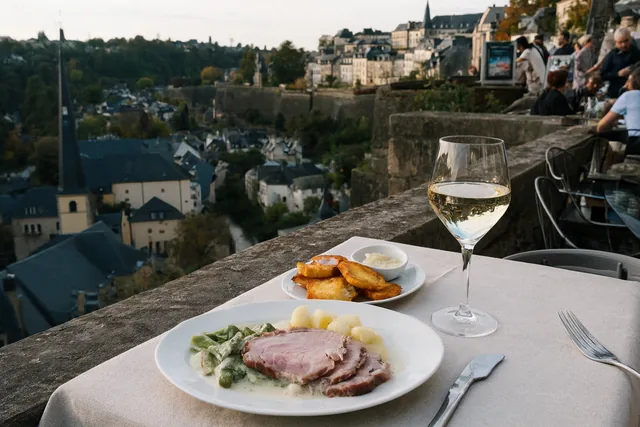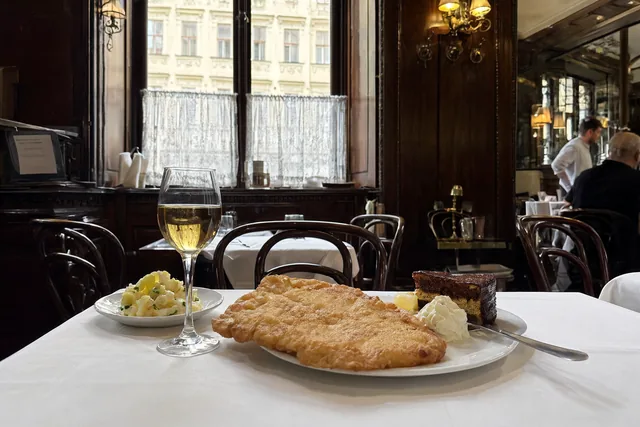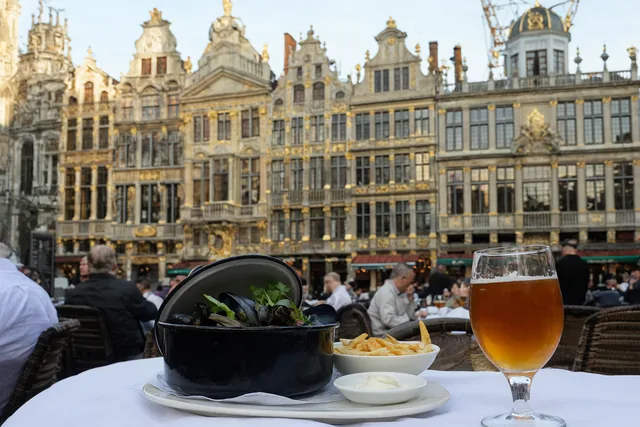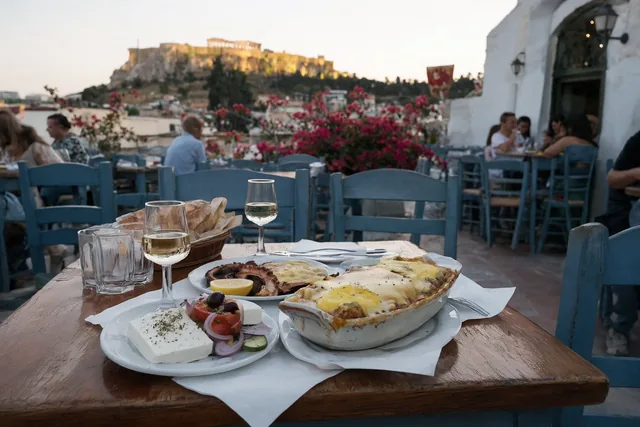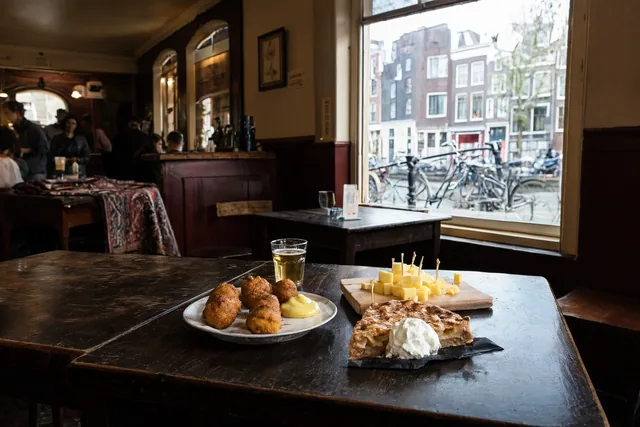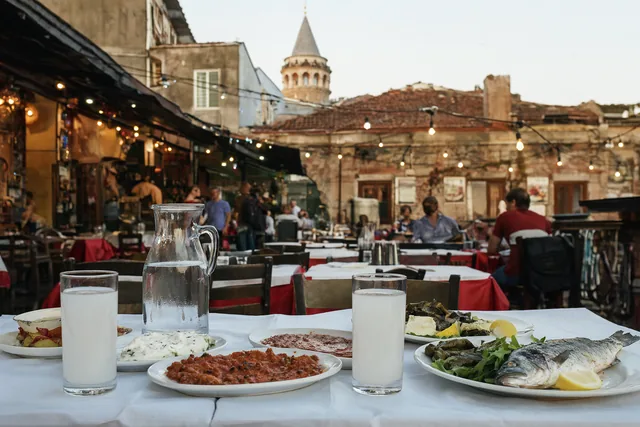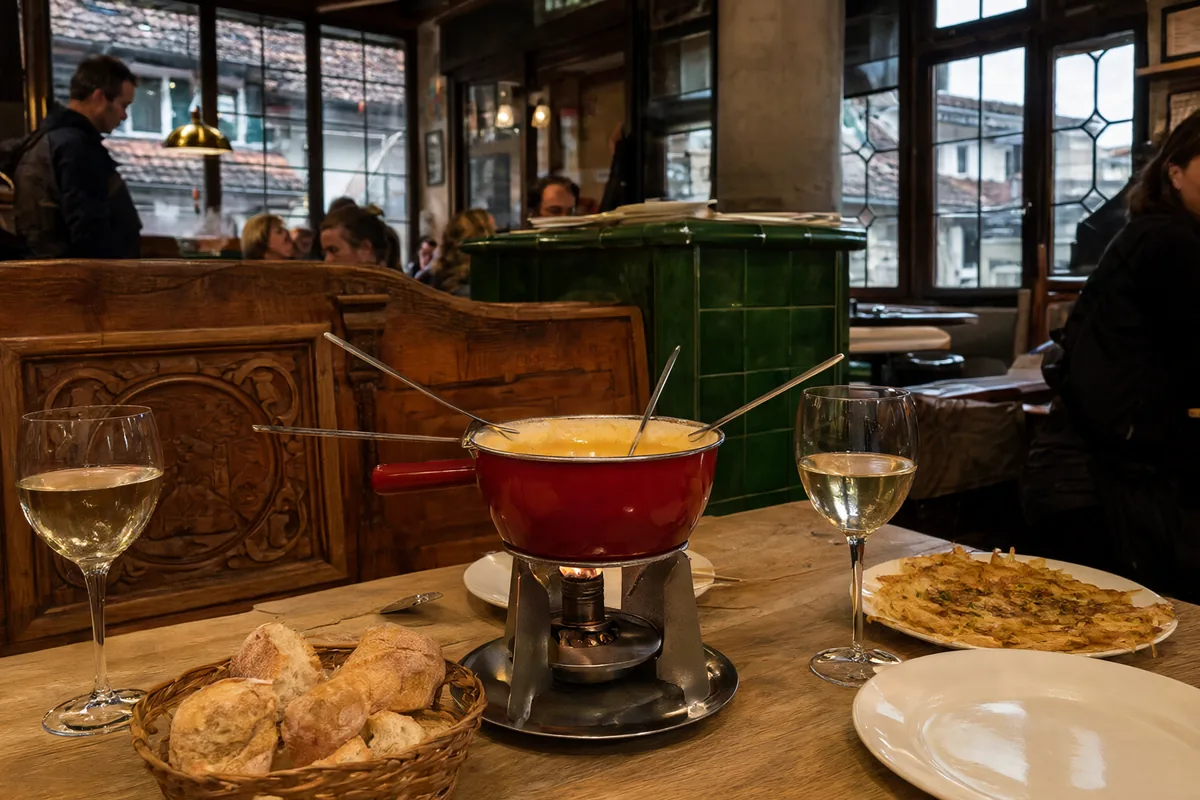
Switzerland cooks in four languages. The German-speaking north eats rösti and sausages, the French-speaking west makes fondue and drinks lakeside white wine, the Italian-speaking south lives on polenta, risotto and Merlot, and the mountains everywhere produce some of the best cheese in the world. This Switzerland food guide covers the dishes to know, how to read a Swiss menu in German, French or Italian, how prices, francs and tipping work, then goes city by city through where to eat in Zurich, Geneva, Bern, Basel, Lucerne, Lausanne and Lugano. Switzerland is expensive, but it is also easy: the food is reliable, the portions are honest and the tap water is some of the best in Europe.
What to eat in Switzerland: 12 dishes to know
These are the dishes worth ordering, with the region they belong to. Cheese dishes are traditionally a cold-weather meal, though tourist restaurants serve them all year.
- Cheese fondue (western Switzerland and everywhere): melted cheese and white wine in a pot called a caquelon, kept warm over a flame, with bread cubes on long forks. Moitié-moitié is half Gruyère, half Vacherin fribourgeois.
- Raclette (Valais): a half wheel of cheese melted under heat and scraped onto boiled potatoes, with pickled onions and gherkins.
- Rösti (Bern and the German-speaking north): grated potato fried in a crisp golden cake, once a farmer's breakfast, now a side dish to almost anything.
- Zürcher Geschnetzeltes (Zurich): thin strips of veal in a cream and mushroom sauce, served with rösti.
- Älplermagronen (central Switzerland and the Alps): "Alpine herders' macaroni" with potatoes, cream, cheese and fried onions, served with apple sauce.
- Bündnerfleisch (Graubünden): air-dried beef from the mountains, sliced paper thin.
- Bündner Nusstorte (Engadine): a shortcrust tart filled with caramelised walnuts, very rich and very good with coffee.
- Papet vaudois (Vaud): leeks and potatoes stewed with cream, served with a smoked saucisson vaudois.
- Filets de perche (Lake Geneva): small fillets of lake perch fried in butter, served with chips and lemon.
- Polenta and risotto (Ticino): Italian-speaking Switzerland's staples, often with braised beef (brasato) or the local sausage, luganighe.
- Cervelat (everywhere): Switzerland's national sausage, grilled over a fire on hikes or served cold in a salad (Wurstsalat).
- Birchermüesli (Zurich and everywhere): the original muesli of soaked oats, grated apple, nuts and yoghurt, invented by a Zurich doctor around 1900.
How to read a Swiss menu
Swiss menus are written in the language of the region: German in Zurich, Bern, Basel and Lucerne, French in Geneva and Lausanne, and Italian in Lugano. Many tourist-area restaurants add English. At lunch, look for the Tagesmenü, menu du jour or menù del giorno, a set dish with soup or salad that is by far the best value in an expensive country. Wine is often sold by the decilitre (dl): a 1 dl glass is a small pour, 2 dl a standard one.
| German | French | Italian | Meaning |
|---|---|---|---|
| Vorspeise | Entrée | Antipasto | Starter |
| Hauptgang | Plat principal | Piatto principale | Main course |
| Dessert | Dessert | Dolce | Dessert |
| Tagesmenü | Menu du jour | Menù del giorno | Set menu of the day |
| Beilage | Accompagnement | Contorno | Side dish |
| Schwein | Porc | Maiale | Pork |
| Rind | Boeuf | Manzo | Beef |
| Kalb | Veau | Vitello | Veal |
| Fisch | Poisson | Pesce | Fish |
| Käse | Fromage | Formaggio | Cheese |
| Offenwein | Vin ouvert | Vino aperto | Wine by the glass or carafe |
| Hahnenwasser | Eau du robinet | Acqua del rubinetto | Tap water |
| Herkunft | Provenance | Provenienza | Country of origin (of the meat or fish) |
Swiss restaurants have to declare where their meat and fish come from, so you will see lines like "Herkunft: Schweiz" or "provenance: Suisse" on the menu. The perch on a lakeside menu in Geneva, for example, is not always from the lake. swap.menu translates these origin lines along with every dish, so you know what you are paying for.
Francs, tipping and paying the bill
Service has been included in Swiss menu prices for decades, and so is VAT (MWST, TVA or IVA, depending on the language). There is no cover charge. Tipping is optional: locals round up or leave around 5 to 10 percent for good service, and nobody expects more. Tell the server the amount you want to pay when they bring the card machine or take your cash. Our guide to tax and service charges on menus explains how these lines work elsewhere.
Switzerland is not in the euro. The currency is the Swiss franc, written CHF or Fr. Some restaurants and shops in tourist areas accept euros, but they give change in francs at their own rate, which is rarely in your favour. Cards and contactless payment are accepted almost everywhere, and Swiss people also pay with a mobile app called TWINT. If a card machine offers to charge you in your home currency rather than francs, decline: our guide to paying in local currency explains why.
Swiss meal times are early and firm. Lunch is from about 11:30am to 1:30pm, and dinner from about 6:30pm to 9pm. Many kitchens close at 2pm and again at 9:30pm, and outside those hours you may only find cold snacks. Tap water is excellent everywhere, and so is the water from the public fountains in Swiss cities, unless a sign says otherwise. Restaurants will bring tap water if you ask, though some charge a small amount for it.
Where to eat in Switzerland, city by city
Swiss cities are close together and linked by fast trains, and each one eats in its own language and its own style. Jump to a city:
Where to eat in Zurich
Zurich is Switzerland's largest city and its most international, but the local classic is still Zürcher Geschnetzeltes with rösti, served in the old guild houses (Zunfthäuser) along the River Limmat and in wood-panelled restaurants in the old town. For something quick, Zurich's sausage stands sell Kalbsbratwurst, a pale veal sausage, with a crusty bread roll and mustard. Zurich is very expensive at dinner, so the weekday Mittagsmenü at lunch is the way to try good restaurants for less.
The Niederdorf, the old town on the east bank, has fondue restaurants, bars and traditional places. Kreis 4, around Langstrasse, is the cheapest and most diverse area, with Turkish, Eritrean, Thai and Balkan food, and Zurich West in Kreis 5 has restaurants in old industrial buildings and a market hall built into the arches of a railway viaduct. The farmers' market at Bürkliplatz, by the lake, runs on Tuesday and Friday mornings. In summer, Zurich's lake and river baths turn into bars in the evening.
Where to eat in Geneva
Geneva, home to the UN and many international organisations, is French-speaking, expensive and full of restaurants from around the world. The local classics are filets de perche, longeole (a pork sausage flavoured with fennel seeds, with protected status), the cardon genevois (a cardoon gratin eaten in winter) and fondue. In December, during the Escalade festival, Genevans smash chocolate pots (marmites) filled with marzipan vegetables to celebrate a defeat of the Duke of Savoy in 1602.
The old town around the Place du Bourg-de-Four has terraces and traditional restaurants. Across the Arve, Carouge, built in an Italian style by the kings of Sardinia, is the best area for bistros and wine bars, with a market on Wednesday and Saturday mornings. The Pâquis, behind the lakefront near the station, has the most affordable international food in Geneva, from Ethiopian and Lebanese to Portuguese. In winter, the public lake baths at the Bains des Pâquis serve fondue by the water.
Where to eat in Bern
Bern, the Swiss capital, has a medieval old town of sandstone arcades listed by UNESCO, and many of its restaurants and bars are in vaulted cellars below the arcades. The local feast is the Berner Platte, a huge platter of smoked and boiled meats and sausages served with sauerkraut, green beans and potatoes, traditionally eaten in autumn and winter. Bernese rösti is said to be the original, and Bern is close to the Emmental, home of the cheese with holes.
On the fourth Monday of November, Bern holds the Zwiebelmärit, an onion market where the old town is filled with braided onions, onion tarts and onion soup from dawn. The market on the Bundesplatz, in front of the parliament, runs on Tuesday and Saturday mornings. For dessert, order meringue with thick double cream from the Bernese Oberland, or Berner Haselnusslebkuchen, a hazelnut gingerbread. In summer, locals float down the River Aare and then eat at riverside cafés.
Where to eat in Basel
Basel sits on the Rhine where Switzerland, France and Germany meet, and its cooking borrows from all three. The city's sweet is Basler Läckerli, a hard spiced biscuit made with honey, almonds and candied peel. During Fasnacht, Basel's carnival, which begins at 4am on the Monday after Ash Wednesday, the city eats Mehlsuppe (a brown flour soup), onion tarts and cheese tarts (Zwiebelwähe and Käsewähe), and fried pastries called Fasnachtskiechli.
The Marktplatz, in front of the red town hall, has a produce market most mornings. In summer, the place to be is the riverbank in Kleinbasel, the north side of the Rhine, where small seasonal bars called buvettes serve drinks and snacks and locals swim downstream with their clothes in a waterproof bag. Basel is so close to France and Germany that you can cross the border by tram for Alsatian tarte flambée or a German beer garden.
Where to eat in Lucerne
Lucerne, on its lake below the mountains, is one of the most visited places in Switzerland. Its own dish is the Luzerner Chügelipastete, a large puff pastry case filled with small veal meatballs, mushrooms and raisins in a cream sauce. Fish from the lake, such as Egli (perch) and Felchen (whitefish), is often on the menu, and Kaffee Luz, a weak coffee with fruit schnapps served in a glass, is the local warming drink.
The old town squares, the Kornmarkt and Weinmarkt, and the streets around the wooden Chapel Bridge are lined with restaurants, some aimed squarely at tour groups. The market along the River Reuss runs on Tuesday and Saturday mornings. Lucerne's carnival, in the week before Lent, is loud and colourful, and the city's restaurants fill up. Take a boat or a cog railway to the mountain restaurants on Rigi or Pilatus for Älplermagronen with a view.
Where to eat in Lausanne
Lausanne, the hilly capital of the canton of Vaud, looks out over Lake Geneva to the French Alps. The local white wine is Chasselas, grown on the terraced vineyards of Lavaux, a UNESCO-listed stretch of the shore between Lausanne and Montreux. In the wine villages such as Cully and Epesses, small caveaux run by local winemakers open on certain evenings for tastings with cheese and charcuterie. Vaudois dishes include papet vaudois, perch from the lake and the taillé aux greubons, a flaky pastry made with pork crackling.
The Ouchy lakefront has restaurants serving perch fillets on terraces by the water. Up the hill, the Flon, a former warehouse district, has bars and restaurants, and the old town around the cathedral and Place de la Palud holds a market on Wednesday and Saturday mornings. Lausanne is a student city as well as a wine one, so it has more affordable places to eat than Geneva.
Where to eat in Lugano
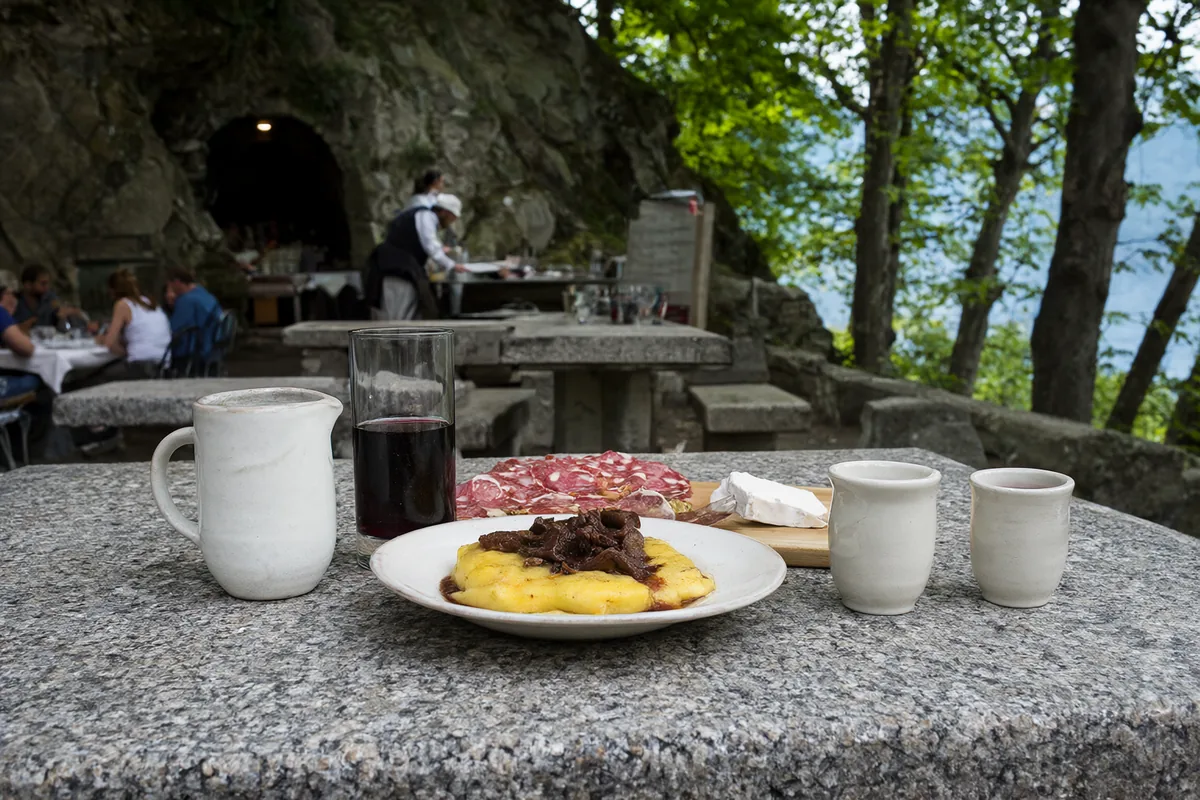
Lugano, on its lake in the Italian-speaking canton of Ticino, has the warmest climate and the most Italian food in Switzerland. The place to eat is a grotto: originally a stone cellar dug into the hillside to keep wine and cheese cool, now a rustic restaurant with granite tables under chestnut trees. Grotti serve polenta with braised beef, rabbit or luganighe sausage, risotto made with Merlot, cold cuts, and local cheeses such as zincarlin, a fresh cheese with pepper from the Valle di Muggio. Merlot del Ticino is traditionally poured into small ceramic cups from a jug called a boccalino.
In the centre of Lugano, the Piazza della Riforma and the arcaded Via Nassa have cafés and restaurants, and the lakeside promenade is good for gelato. The best grotti are in the villages and woods around the lake, such as Gandria, reached by boat or a lakeside path, and on the slopes of Monte Brè and Monte San Salvatore. In autumn, chestnuts are roasted on the streets and served in soups, cakes and vermicelles, a sweet chestnut purée dessert. Many grotti are seasonal and close in winter.
Vegetarian, vegan and allergy tips
Switzerland is easy for vegetarians. Fondue, raclette, rösti, Älplermagronen (ask for it without bacon), cheese tarts and Ticino polenta dishes are all meat-free or can be, and Zurich is home to some of the oldest vegetarian restaurants in Europe. Watch for bacon (Speck or lardons) in rösti, salads and pasta, and meat stock in soups. Vegans will find Swiss traditional food built on cheese and cream, but cities have plenty of vegan places. The words are vegetarisch, végétarien or vegetariano.
Swiss food law requires restaurants to tell you about allergens if you ask, and staff are used to the question. Nuts appear in Nusstorte, Läckerli, gingerbread and many cakes, and cheese fondue contains wine and sometimes kirsch. Gluten-free is glutenfrei, sans gluten or senza glutine. Our guide to eating abroad with food allergies explains how to explain an allergy clearly in another language.
Useful Swiss phrases for ordering
Use German in the north and centre, French in the west and Italian in Ticino. Swiss German differs from standard German, but standard German is understood everywhere.
Grüezi / Bonjour / Buongiorno "Hello" in Swiss German, French and Italian
Einen Tisch für zwei, bitte "A table for two, please" (German)
Ich hätte gern das / Je voudrais ceci "I would like this" (German / French)
Zwei Deziliter Weisswein, bitte "Two decilitres of white wine, please", a standard glass
Ich bin allergisch auf... "I am allergic to...", as said in Switzerland
En Guete! "Enjoy your meal!" in Swiss German, said before eating
Zahlen, bitte / L'addition, s'il vous plaît / Il conto, per favore "The bill, please"
Merci vielmal "Thank you very much" in Swiss German
How swap.menu helps you eat in Switzerland
In Switzerland you might read a menu in German in the morning, French at lunch and Italian at dinner, with Swiss German words like Rüebli (carrots) or Nidle (cream) that no standard dictionary will help with. Photograph it with swap.menu and every dish appears in your language with the original name beside it and a short explanation, so you know that Capuns are chard-wrapped dough parcels from Graubünden and that Hörnli are macaroni. Every price is converted from Swiss francs to your home currency, which is the most useful thing of all in a country where a simple lunch can surprise you.
Tap the dishes you want, add a note such as "no bacon", "vegetarian" or "gluten-free", typed or spoken, and swap.menu translates your order into German, French or Italian. Show the server your phone, or let them scan the QR code and read your order on their own screen. You can try it right now on a sample menu with the free demo, or see travel pass prices.
Off to Switzerland? Your first 3 menu scans are free, and a travel pass starts from $4.99 with nothing that renews.
Start free with 3 scansSwitzerland food FAQ
Do you tip in restaurants in Switzerland?
Tipping is optional in Switzerland because service is included in menu prices. Locals round up or leave around 5 to 10 percent for good service. Tell the server the total you want to pay when you settle the bill.
What food is Switzerland famous for?
Cheese fondue, raclette, rösti, chocolate and cheeses such as Gruyère and Emmental. Regional dishes include Zürcher Geschnetzeltes, Älplermagronen, Bündnerfleisch, Lake Geneva perch and the polenta and risotto of Ticino.
Is it expensive to eat out in Switzerland?
Yes, Switzerland is one of the most expensive countries in the world for eating out. The weekday set lunch menu is the best value, and bakeries, supermarkets, sausage stands and market stalls are cheaper options for a quick meal.
Can I pay in euros in Switzerland?
Switzerland uses the Swiss franc, not the euro. Some tourist businesses accept euros, but they usually give change in francs at an unfavourable rate. Paying by card in francs is normally the better choice.
Is tap water safe to drink in Switzerland?
Yes, Swiss tap water is excellent, and the water in public fountains is drinkable unless a sign says otherwise. Restaurants will bring tap water if you ask, although some charge a small amount.
How can I read a Swiss menu if I do not speak German, French or Italian?
Learn a few words in the language of the region, or photograph the menu with swap.menu. It translates every dish into your language, explains what it is, converts prices from Swiss francs to your currency and translates your order into the local language for the server.
Travelling further in Europe? Read our food guides for neighbouring countries:
Or browse every travel food guide.