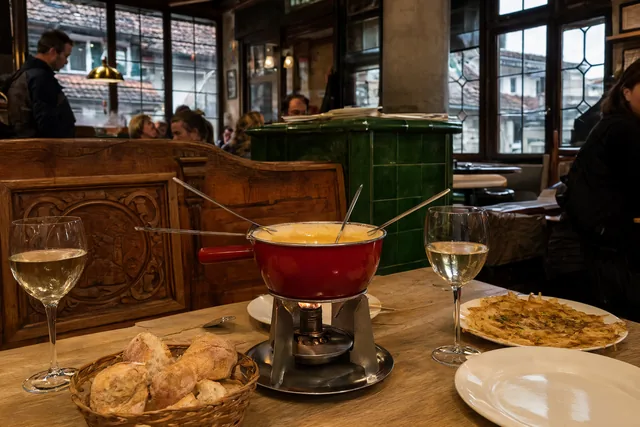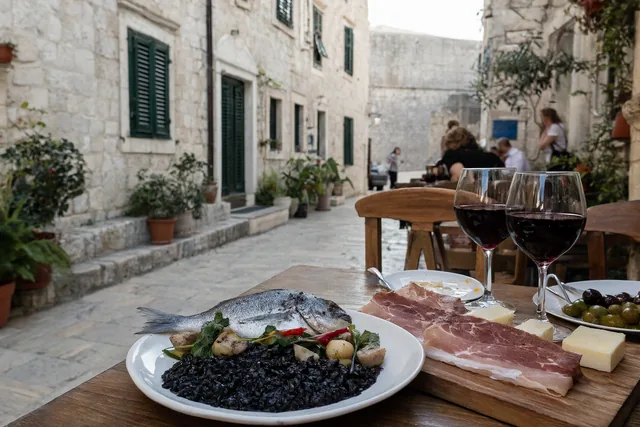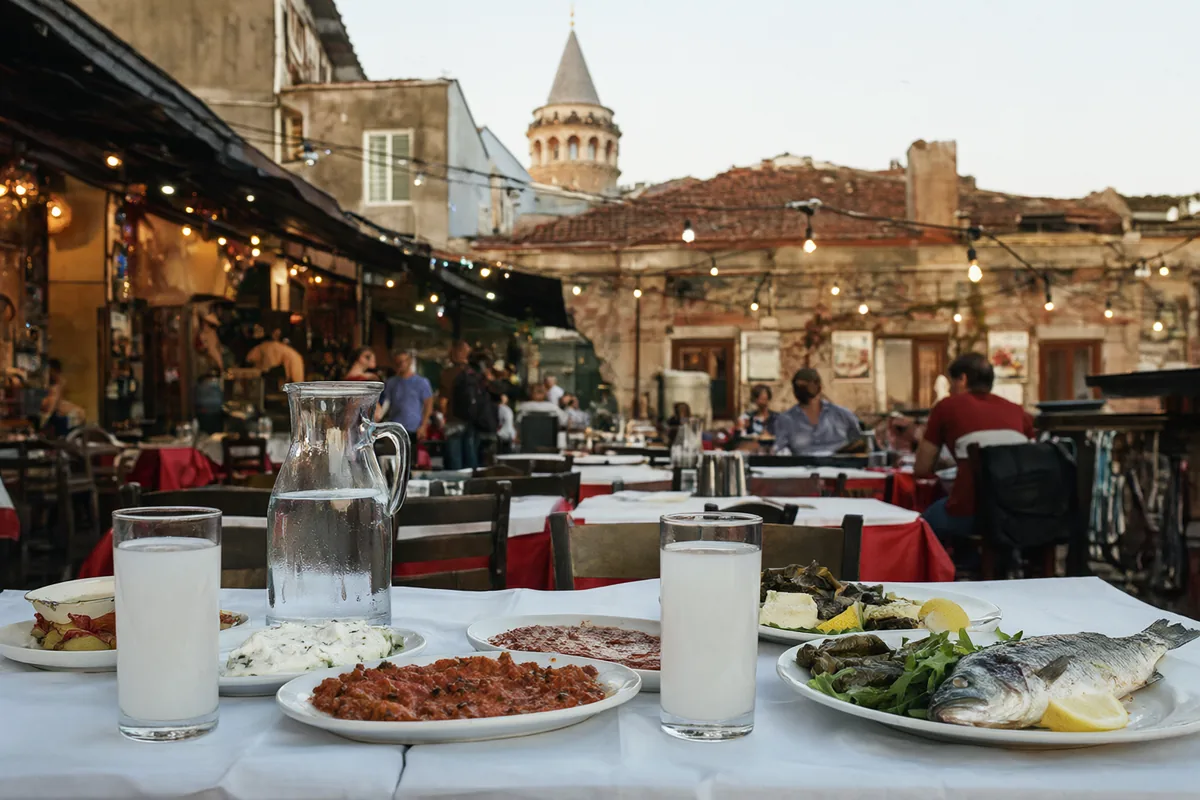
Turkish food is far more than kebabs, although the kebabs alone would justify the trip. The country stretches from the Aegean to the borders of Iran and Syria, and its cooking changes with every region: olive oil vegetables on the west coast, anchovies and cornbread on the Black Sea, fiery minced lamb in the south and pistachio pastries in the south-east. This Turkey food guide covers the dishes to know, how to read a Turkish menu, tipping and paying, then goes city by city through where to eat in Istanbul, Gaziantep, Izmir, Antalya, Cappadocia, Adana, Ankara and Trabzon. The rule that works everywhere: eat what the city is known for, at the place full of locals.
What to eat in Turkey: 12 dishes to know
These are the dishes worth seeking out, with the city or region each one belongs to. Many are served all over Turkey, but the best versions are found where they began.
- Adana kebabı (Adana): hand-minced lamb with tail fat and red pepper, pressed onto a wide flat skewer and grilled over charcoal, served with flatbread, onions and grilled peppers.
- İskender kebap (Bursa): thin slices of döner over cubes of pide bread, covered in tomato sauce and sizzling butter, with yoghurt on the side.
- Lahmacun (south-east): a very thin, crisp flatbread spread with spiced minced meat, rolled up with parsley and a squeeze of lemon.
- Pide (Black Sea and everywhere): boat-shaped bread baked with toppings such as cheese, minced meat or egg.
- Mantı (Kayseri): tiny meat dumplings topped with garlic yoghurt and melted butter with red pepper.
- Meze (everywhere): small cold and hot starters, from haydari (thick yoghurt with herbs) to ezme (a spicy chopped tomato and pepper salad).
- Kahvaltı (everywhere): the Turkish breakfast spread of cheeses, olives, tomatoes, cucumber, honey, clotted cream (kaymak), eggs and endless glasses of tea.
- Menemen (everywhere): eggs scrambled into tomatoes and green peppers, eaten from the pan with bread.
- Mercimek çorbası (everywhere): red lentil soup with lemon and chilli butter, served at any time of day.
- İmam bayıldı (west coast): aubergine stuffed with onion, garlic and tomato, slowly cooked in olive oil and served cold.
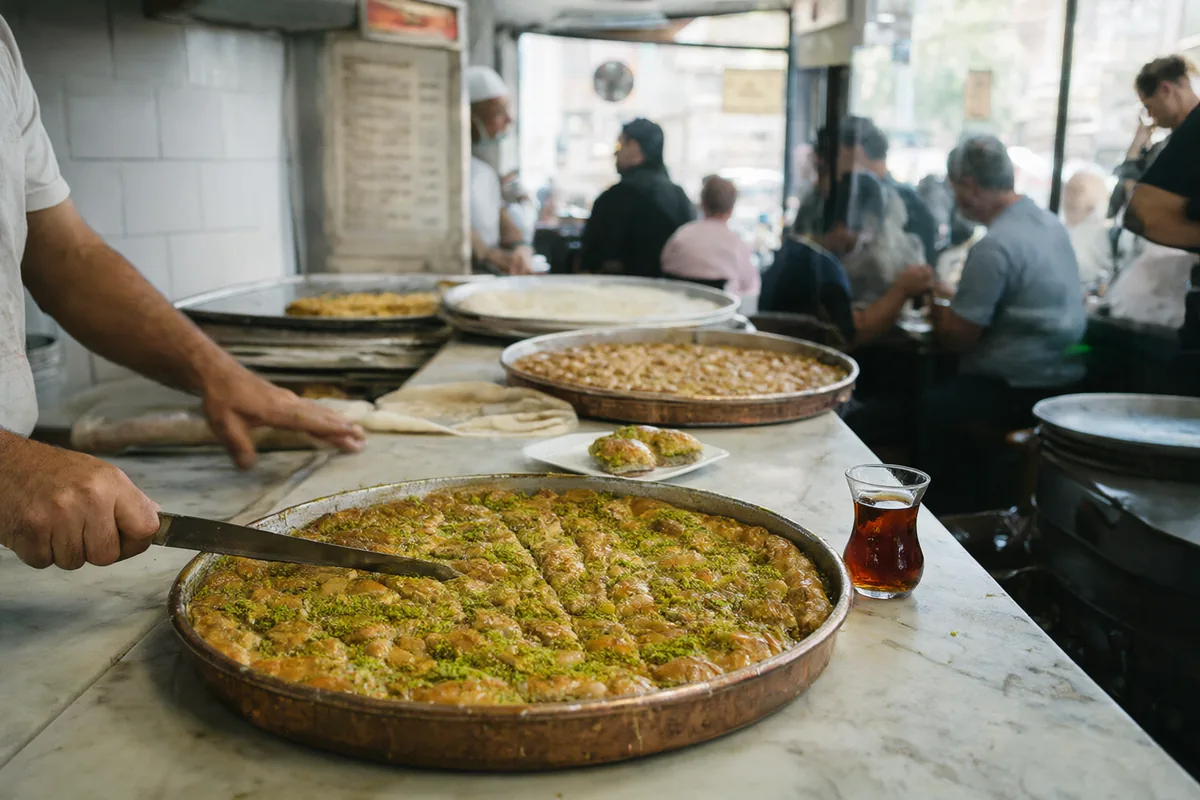
- Baklava (Gaziantep): layers of filo with pistachio or walnut, soaked in syrup. Gaziantep's pistachio baklava is the benchmark.
- Künefe (Hatay): shredded pastry layered with stretchy unsalted cheese, baked, soaked in syrup and eaten hot.
How to read a Turkish menu
Turkish uses the Latin alphabet with a few extra letters: ç sounds like "ch", ş like "sh", c like "j", and ğ is silent and lengthens the vowel before it. Many places specialise in one thing, such as a kebapçı (kebab house), a pideci (pide bakery), a lokanta (a canteen with ready-cooked dishes in trays) or a meyhane (a tavern serving meze, fish and rakı). These are the words you will see most often.
| Turkish | Meaning |
|---|---|
| Çorbalar | Soups |
| Mezeler | Cold starters, often chosen from a tray brought to the table |
| Ara sıcaklar | Hot starters: fried pastries, grilled halloumi-style cheese, calamari |
| Ana yemekler | Main dishes |
| Izgara / Kebaplar | From the grill / kebabs |
| Hazır yemek / Sulu yemek | Ready-cooked dishes, stews served from trays in a lokanta |
| Zeytinyağlı | Cooked in olive oil and served cold, usually vegetables and no meat |
| Etli | "With meat", usually minced meat added to a vegetable dish |
| Kuzu / dana / tavuk / balık | Lamb / beef or veal / chicken / fish |
| Acılı / acısız | Spicy / not spicy |
| Porsiyon / yarım / bir buçuk | Portion / half portion / one and a half portions |
| Tatlılar | Desserts |
| Ev yapımı | Homemade |
| Kuver / Servis ücreti | Cover charge / service charge |
At a meyhane or fish restaurant, a waiter often brings a large tray of cold meze to the table and you point at what you want. Those plates are charged one by one, and fish is often priced by weight, so a relaxed dinner can add up quickly. swap.menu reads the printed menu and shows each meze and fish price in your currency, so you can choose with the numbers in front of you.
Tipping, cover charges and paying the bill
Bread is usually free in Turkey and keeps coming, and many places bring a glass of tea at the end of the meal without charge. Some restaurants, mostly meyhanes, fish restaurants and smarter places in tourist areas, add a kuver (cover charge) per person or a servis ücreti (service charge), and these should appear on the menu. Check the bill for both before adding a tip. Our guide to tax and service charges on menus explains how these lines work around the world. Turkish VAT is called KDV and is included in menu prices.
Tipping, bahşiş, is customary at sit-down restaurants: around 5 to 10 percent is normal, and a little more for excellent service at a nice dinner. At a kebab house, lokanta or pide bakery, rounding up is enough. Leave the tip in cash on the table if you can, as card tips do not always reach staff.
The currency is the Turkish lira, shown as ₺ or TL. Cards are accepted widely in cities, including at most restaurants and cafés, but carry cash for small places, markets, street food and villages. Prices in Turkey have risen quickly in recent years, so prices quoted in older reviews or blogs are unlikely to be accurate. When a card machine offers to charge you in your home currency, choose lira instead: our guide to paying in local currency explains why.
Lunch is from about 12pm to 2pm and dinner from around 7pm, with meyhane evenings running late. Many lokantas cook in the morning and are best at lunchtime, when the trays are full. Not every restaurant serves alcohol, particularly kebab houses, lokantas and places in more conservative cities. During Ramadan, some restaurants in conservative areas close in the daytime, and everything fills up at sunset for iftar, the meal that breaks the fast.
Where to eat in Turkey, city by city
Every Turkish city is proud of a few dishes and will tell you its version is the original. Jump to a city or region:
Where to eat in Istanbul
Istanbul draws cooks and dishes from every corner of Turkey, so you can eat your way across the country without leaving the city. Start at Eminönü by the Galata Bridge, where balık ekmek (grilled mackerel in bread) is sold by the water, and walk through the Spice Bazaar for Turkish delight, dried fruit and spices. On the Asian side, the market streets of Kadıköy are where Istanbul shops for food: fishmongers, pickle shops, delis, and lokantas serving home cooking at lunch. Karaköy is known for its baklava shops and breakfast cafés, and in Beşiktaş there is a whole street of places serving the full kahvaltı.
For a classic Istanbul night out, book a meyhane: meze, grilled fish and rakı (an aniseed spirit mixed with water) over several hours. The streets around Nevizade in Beyoğlu and the fish restaurants along the Bosphorus are the traditional places. In Fatih, the area known as the Women's Bazaar (Kadınlar Pazarı) has restaurants specialising in slow-roasted lamb from south-eastern Turkey. Look out for street snacks: simit (a sesame bread ring), midye dolma (mussels stuffed with spiced rice), kokoreç (grilled lamb intestines in bread) and roasted chestnuts in winter. Restaurants on the main square in Sultanahmet cater mainly to tourists, so walk a few streets away.
Where to eat in Gaziantep
Gaziantep, in south-eastern Turkey, is the city many Turks name as the country's food capital, and UNESCO lists it as a Creative City of Gastronomy. It is the home of pistachio baklava, made with the bright green local pistachio, Antep fıstığı, and baklava shops across the city sell it by weight from early morning. Breakfast in Gaziantep is serious: try katmer, a paper-thin pastry folded around pistachio and clotted cream, or beyran, a peppery soup of rice and pulled lamb that locals eat first thing in the morning.
Gaziantep is also known for its kebabs and its lahmacun, which is thinner and spicier here than in Istanbul, and for yuvalama (small rice and meat dumplings in a yoghurt soup) and ali nazik (lamb on smoky aubergine and garlic yoghurt). The old bazaar streets, including the Coppersmiths' Bazaar (Bakırcılar Çarşısı) and the area around the castle, are full of small eateries, spice shops and stalls selling dried aubergines and peppers for stuffing. Finish with menengiç kahvesi, a coffee made from roasted terebinth berries. Gaziantep is conservative, and many places do not serve alcohol.
Where to eat in Izmir
Izmir, on the Aegean coast, eats lighter than the rest of Turkey: olive oil, wild greens, fish and vegetables. The city has its own breakfast pastry, boyoz, a flaky Sephardic-origin bun eaten with a hard-boiled egg, and Izmir people call the sesame bread ring gevrek rather than simit. Another local favourite is kumru, a soft sesame bun filled with cheese, sucuk sausage and tomato, especially associated with nearby Çeşme.
The old market district of Kemeraltı is the place to graze, with its covered lanes, coffee houses, delis and lokantas. In the evening, the seafront Kordon and the Alsancak neighbourhood fill with meyhanes and bars, and vendors sell midye dolma late into the night. Look for Aegean meze based on wild greens and herbs, such as şevketi bostan and radika, and dishes cooked in olive oil. The wine villages around Urla, a short drive west of Izmir, have become a popular weekend trip for food and wine.
Where to eat in Antalya
Antalya is the gateway to Turkey's Mediterranean resorts, and many visitors only see hotel buffets. The city has its own dishes, though. Antalya piyaz is a white bean salad dressed with a tahini, lemon and garlic sauce, unlike the vinegar-dressed piyaz of other regions, and it is traditionally served alongside şiş köfte, grilled meatballs on skewers. Hibeş, a tangy dip of tahini, lemon, cumin and chilli, is another local speciality, and the region grows oranges, pomegranates and bananas.
The old town of Kaleiçi, inside the city walls above the harbour, has the atmosphere and the tourist menus. Better value is in the neighbourhoods just outside it and in the city's lokantas, where office workers eat at lunchtime. Antalya's weekly street markets are worth finding for fruit, cheese and village produce. Along the coast either side of Antalya, simple places serving grilled fish and gözleme (thin stuffed flatbread cooked on a griddle) are often better than the resort restaurants.
Where to eat in Cappadocia
Cappadocia, in central Anatolia, is known for its rock formations and balloon flights, and for one dish in particular: testi kebabı, a stew of meat and vegetables slow-cooked in a sealed clay pot, which is cracked open at the table. The pottery town of Avanos, on the Red River, has been making those pots for centuries. The region is also close to Kayseri, home of mantı and pastırma, a spiced cured beef, and both appear on menus across Cappadocia.
Most visitors stay in Göreme or Ürgüp, and both have plenty of restaurants, some in caves. Göreme's are aimed squarely at visitors, while Ürgüp has more local life. Cappadocia also makes wine, from grapes such as the white Emir, and wineries around Ürgüp offer tastings. Try pekmez, grape molasses, at breakfast with tahini, and dried apricots and nuts from the markets. Evenings are cool, even in summer, which suits slow-cooked pottery stews.
Where to eat in Adana
Adana, in the south near the Mediterranean, gave its name to Turkey's most famous kebab, and eating it here is the reason to come. A proper Adana kebabı is hand-chopped lamb and tail fat, seasoned with red pepper, grilled over charcoal and served with thin lavaş bread, sumac onions, parsley and charred peppers. The kebab houses of Adana serve it from morning until late, and many start the day with ciğer, grilled liver kebab.
The drink that goes with an Adana kebab is şalgam, a sour, salty juice of fermented purple carrot and turnip, served acılı (spicy) or acısız (not spicy). It is an acquired taste. In the hot Adana summer, look for bici bici, shaved ice with rose syrup and starch jelly. The old centre around the Stone Bridge (Taşköprü) and the city's markets are where to find the long-established kebab houses and dessert shops.
Where to eat in Ankara
Ankara, the capital, is a government city and its food is solid rather than showy. The local dish is Ankara tava, lamb baked with rice or orzo until the top turns crisp. The city is also a good place for İskender kebap, which arrived from nearby Bursa, and for home cooking at lokantas, where civil servants eat at lunch. The red wine grape Kalecik Karası comes from the province around Ankara.
The old quarter of Ulus, below the citadel, has traditional restaurants, markets and shops selling dried fruit, nuts and honey. Hamamönü, a restored area of Ottoman wooden houses, has cafés and restaurants serving Anatolian dishes, and the modern centre around Kızılay and Tunalı Hilmi street is where students and young professionals eat and drink. Ankara is a good stop between Istanbul and Cappadocia.
Where to eat in Trabzon
Trabzon and the eastern Black Sea coast have a cuisine of their own: green, wet and mountainous country, where corn, butter, cabbage and anchovies replace the wheat and lamb of central Turkey. In winter the star is hamsi, the Black Sea anchovy, fried in cornmeal, baked into a rice pilaf or even made into bread. All year, try kuymak (also called muhlama), a fondue-like dish of cornmeal, butter and stretchy local cheese, and Akçaabat köfte, meatballs from the town just west of Trabzon.
Black Sea pide is boat-shaped with a raw egg and a knob of butter added as it leaves the oven, and Laz böreği is a custard-filled pastry. The centre of Trabzon around Meydan square has plenty of pide bakeries and köfte houses. The tea that Turkey drinks all day is grown along this coast, especially around Rize to the east, and the plantations climb the hillsides behind the villages.
Vegetarian, vegan and allergy tips
Turkey is better for vegetarians than it first looks. Zeytinyağlı dishes, vegetables cooked in olive oil and served cold, are traditionally meat-free, and meze trays, lentil soup, gözleme with spinach or cheese, menemen and the breakfast spread give plenty of choice. The word for vegetarian is vejetaryen, and etsiz means "without meat". The traps are meat or chicken stock in soups and rice (even lentil soup sometimes), butter in pilafs, and minced meat added to vegetable dishes, which are labelled etli. Ask "Et suyu var mı?", "Is there meat stock in it?"
Vegans should watch for yoghurt, butter and cheese, which appear in a large share of dishes. Pork is rarely served in Turkey. Common allergens include pistachio, walnut and hazelnut in desserts, sesame on simit and in tahini, and dairy almost everywhere. Our guide to eating abroad with food allergies explains how to make an allergy clear when you do not speak the language.
Useful Turkish phrases for ordering
Merhaba "Hello", the all-purpose greeting as you walk in
İki kişilik bir masa, lütfen "A table for two, please"
Ne tavsiye edersiniz? "What do you recommend?"
Bunu istiyorum "I would like this" (pointing)
Acısız olsun, lütfen "Not spicy, please"
... alerjim var "I have an allergy to ...", for example "Fıstığa alerjim var", "I am allergic to nuts"
Hesap, lütfen "The bill, please"
Elinize sağlık "Health to your hands", the compliment Turks give the cook after a good meal
How swap.menu helps you eat in Turkey
Outside the tourist centres, many Turkish menus are in Turkish only, and the dish names rarely describe the dish: hünkar beğendi means "the sultan liked it" and turns out to be lamb stew on aubergine purée, and kadınbudu köfte, "lady's thigh meatballs", are rice and meat patties dipped in egg and fried. Photograph the menu with swap.menu and every dish appears in your language with the Turkish name beside it and a short explanation. Every price is converted from Turkish lira to your home currency, and we point out any kuver or servis ücreti on the menu.
Tap the dishes you want, add a note such as "not spicy" or "no meat stock", typed or spoken, and swap.menu translates your order into Turkish. Show the waiter your phone, or let them scan the QR code and read your order on their own screen. You can try it right now on a sample menu with the free demo, or see travel pass prices.
Off to Turkey? Your first 3 menu scans are free, and a travel pass starts from $4.99 with nothing that renews.
Start free with 3 scansTurkey food FAQ
Do you tip in restaurants in Turkey?
Yes, tipping is customary at sit-down restaurants in Turkey, usually around 5 to 10 percent. Check first whether the bill already includes a service charge or cover charge. At kebab houses, lokantas and cafés, rounding up is enough.
What food is Turkey most famous for?
Kebabs such as Adana and İskender, döner, lahmacun, pide, meze, mantı, the Turkish breakfast, baklava and Turkish delight are the best known. Regional dishes are just as good, such as testi kebabı in Cappadocia, hamsi on the Black Sea and pistachio baklava in Gaziantep.
Which city in Turkey is best for food?
Istanbul has the widest choice, because cooks from every region have moved there. Gaziantep is often called the food capital for its baklava, kebabs and breakfast dishes, and Adana is the place for kebab. Izmir is best for Aegean olive oil cooking and seafood.
Is tap water safe to drink in Turkey?
Tap water in Turkish cities is treated, but most locals do not drink it and buy bottled water instead, which is cheap and sold everywhere. Restaurants usually serve bottled water. Using tap water for brushing your teeth is fine.
What time do people eat dinner in Turkey?
Dinner usually starts from around 7pm to 8pm, and meyhane dinners can run until well after midnight. Lunch is typically between 12pm and 2pm. During Ramadan, many people eat at sunset, and restaurants are busiest at that time.
How can I read a Turkish menu if I do not speak Turkish?
Learn a few words such as çorba (soup), ızgara (grilled) and acısız (not spicy), or photograph the menu with swap.menu. It translates every dish into your language, explains what it is, converts prices from lira to your currency and translates your order back into Turkish for the waiter.
Travelling further in Europe? Read our food guides for neighbouring countries:
Or browse every travel food guide.