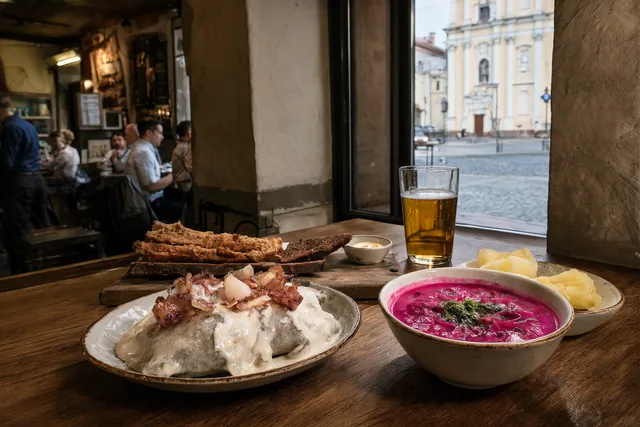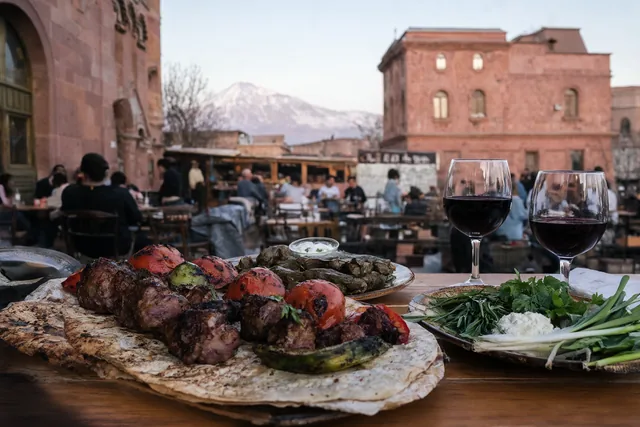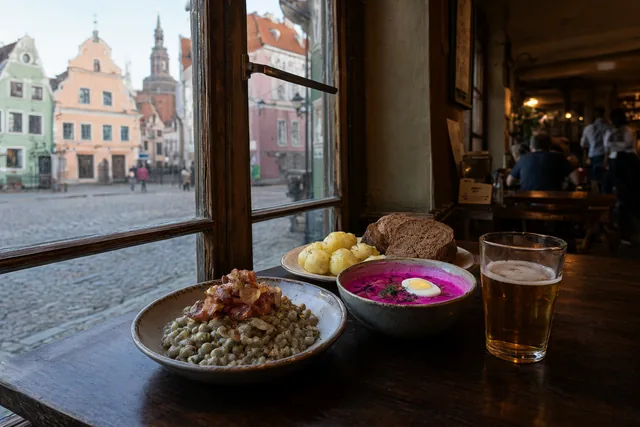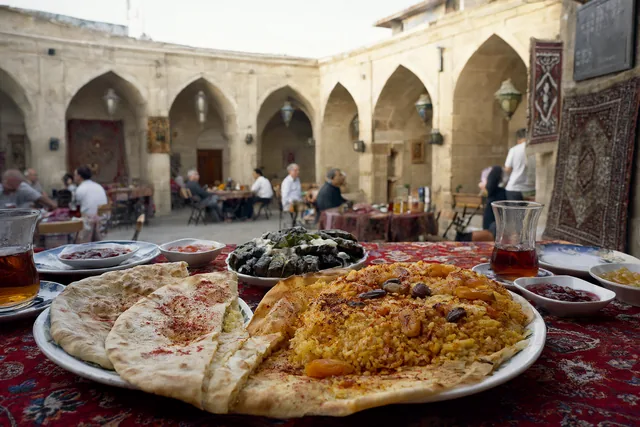
Georgia is one of the great food countries that most travellers have not yet discovered: cheese-filled breads straight from the oven, juicy dumplings, walnut sauces, fresh herbs at every meal, and wine made in buried clay jars for 8,000 years. This Georgia food guide covers the dishes to know, how to read a Georgian menu in its own alphabet, service charges and the customs of the supra feast, then goes region by region through where to eat in Tbilisi, Kakheti, Kazbegi, Kutaisi, Mestia and Batumi. Every region has its own version of khachapuri, and ordering the local one is the best rule for eating in Georgia.
What to eat in Georgia: 12 dishes to know
Georgian food leans on walnuts, garlic, coriander, blue fenugreek, pomegranate and cheese, and a proper meal starts with a table full of cold dishes to share. These are the dishes to look for, with the region they come from.
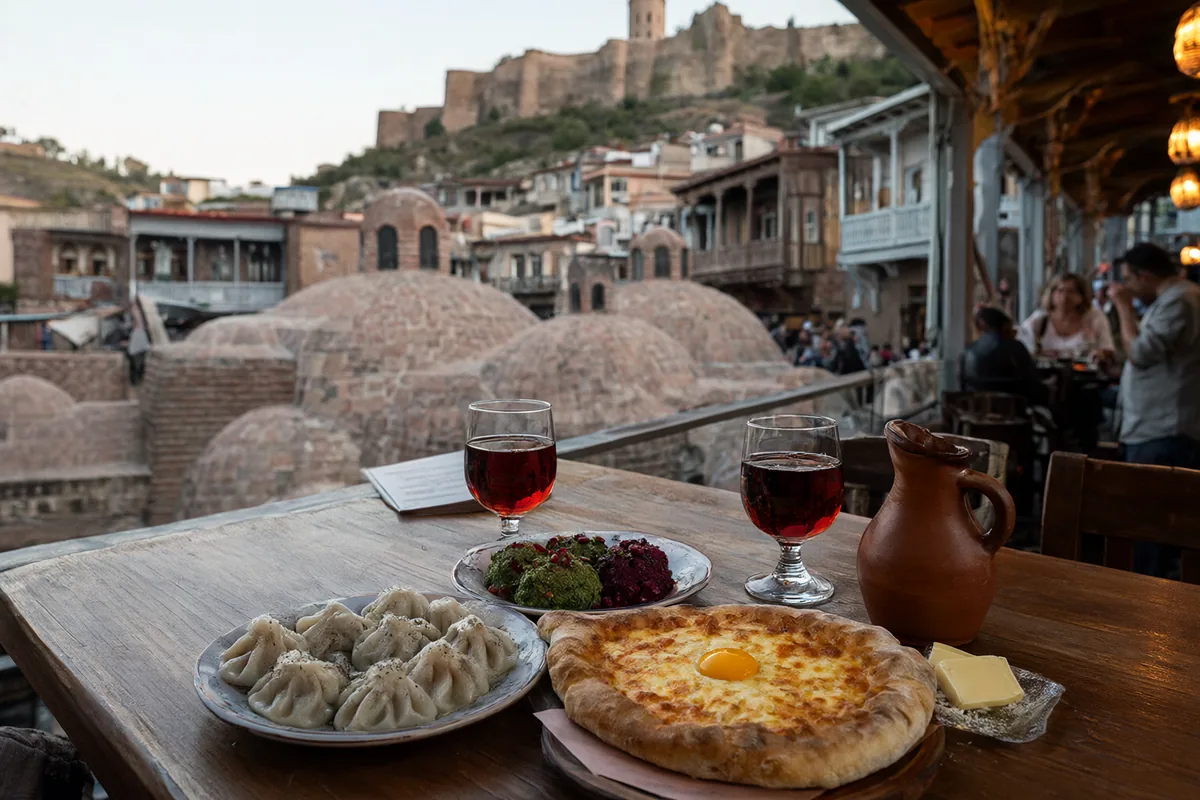
- Khachapuri (everywhere): cheese bread, in many regional styles. Imeruli (Imereti) is round with cheese inside, Megruli (Samegrelo) has extra cheese on top, and Adjaruli (Adjara) is a boat-shaped bread filled with molten cheese, butter and a raw egg yolk that you stir in and eat by tearing off the crust.
- Khinkali (the mountains and everywhere): twisted dumplings filled with spiced meat and broth. Hold them by the knot, bite a small hole, sip the broth, then eat the rest and leave the knot on your plate. They are ordered by the piece.
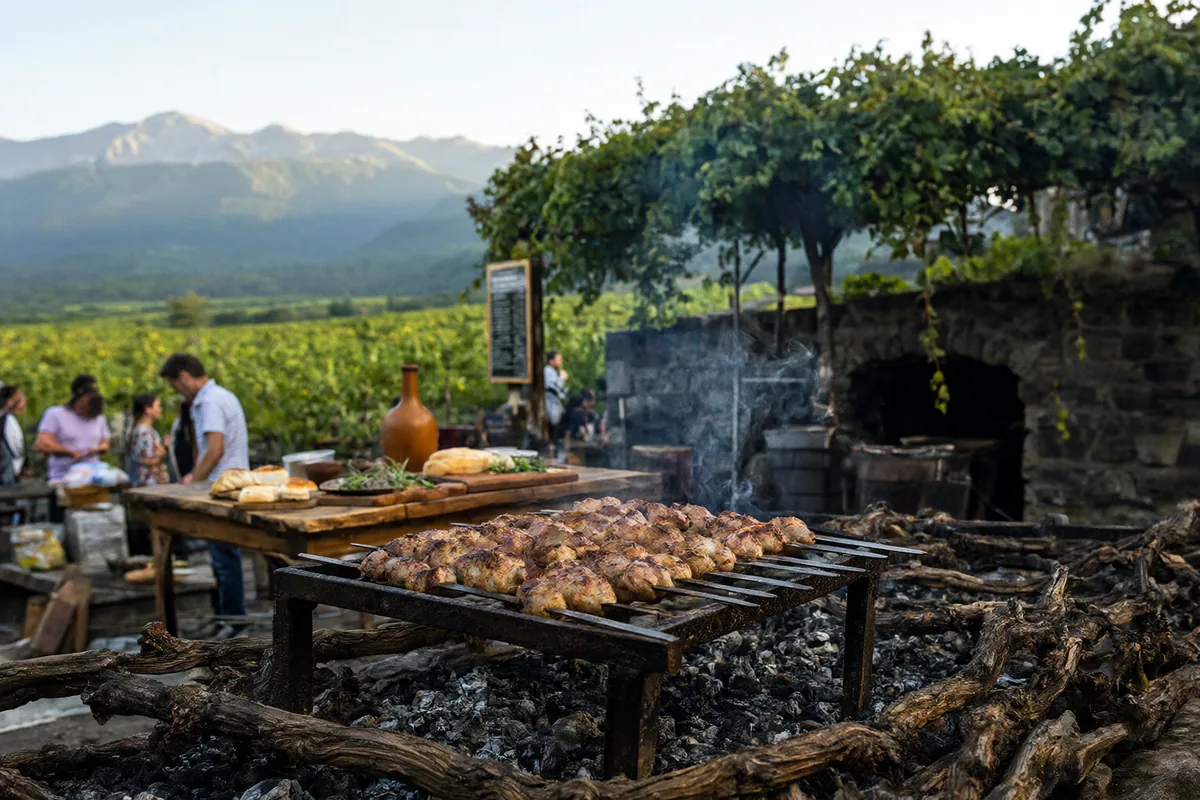
- Mtsvadi (everywhere, especially Kakheti): skewers of pork or veal grilled over vine cuttings, served with raw onion and pomegranate seeds or a sour plum sauce.
- Badrijani nigvzit (everywhere): strips of fried aubergine rolled around a garlicky walnut paste and topped with pomegranate seeds.
- Pkhali (everywhere): finely chopped spinach, beetroot, leek or beans mixed with ground walnuts, garlic and herbs, shaped into balls or patties.
- Lobio (everywhere): kidney beans stewed with herbs and spices, served in a clay pot with mchadi, dense cornbread, and pickles. Lobiani is bread filled with spiced beans.
- Chkmeruli (Racha and everywhere): fried chicken baked in a clay dish with a rich garlic and milk sauce.
- Chakapuli (spring): lamb or veal stewed with white wine, tarragon, green plums and herbs, a seasonal dish around Easter.
- Kharcho (everywhere): in Tbilisi a beef soup with rice, walnuts and sour plum; in Samegrelo a spicy beef stew in walnut sauce.
- Elarji (Samegrelo): thick cornmeal porridge beaten with stretchy sulguni cheese, served hot.
- Kubdari (Svaneti): a round bread stuffed with chopped beef or pork, spiced with Svan salt and herbs.
- Churchkhela (everywhere, made in autumn): strings of walnuts or hazelnuts dipped repeatedly in thickened grape juice and dried, sold hanging at markets and roadside stalls.
Georgian wine is a reason to visit on its own. The traditional method of fermenting grapes with their skins in a buried clay jar called a qvevri is on UNESCO's list of intangible heritage, and it produces deep amber white wines as well as reds from the Saperavi grape. Also try chacha, a strong grape spirit, and Lagidze waters, sweet syrup sodas in flavours such as tarragon and cream that were invented in Tbilisi.
How to read a Georgian menu
Georgian has its own alphabet, the rounded Mkhedruli script, which is unrelated to any other. Tourist restaurants in Tbilisi and Batumi usually have English and Russian menus, but village restaurants, bakeries and roadside cafés often have Georgian only. These are the words worth recognising.
| Georgian | Romanised | Meaning |
|---|---|---|
| ხაჭაპური | khachapuri | Cheese bread (აჭარული adjaruli, იმერული imeruli, მეგრული megruli) |
| ხინკალი | khinkali | Meat dumplings with broth inside |
| მწვადი | mtsvadi | Grilled meat skewers |
| ხორცი | khortsi | Meat (ღორის ghoris, pork; ხბოს khbos, veal; ცხვრის tskhvris, lamb) |
| ქათამი | katami | Chicken |
| თევზი | tevzi | Fish |
| ყველი | qveli | Cheese |
| პური | puri | Bread (შოთი shoti is the canoe-shaped loaf from the clay oven) |
| სალათი | salati | Salad |
| ნიგოზი | nigozi | Walnut, a key ingredient to watch for if you have a nut allergy |
| ღვინო | ghvino | Wine (წითელი tsiteli, red; თეთრი tetri, white) |
| წყალი | tsqali | Water |
| მომსახურება | momsakhureba | Service, the service charge line on the bill |
| სამარხვო | samarkhvo | Lenten food, made without meat, dairy or eggs |
Georgian menus list dishes by their own names, and the same khachapuri can come in three sizes. Many places also price khinkali per piece and wine per litre or by the bottle from a jug. Photograph the menu with swap.menu and every dish is read from the Georgian script, explained in your language and converted to your currency, so a full supra table holds no surprises.
Service charges, tipping and paying the bill
Many restaurants in Tbilisi and Batumi add a service charge to the bill, usually somewhere between 10 and 18 percent, shown as a separate line. Check before you tip: if it is there, nothing more is expected, though rounding up for good service is kind. If there is no service charge, around 10 percent is the norm in restaurants, and cafés and bakeries do not expect a tip. Our guide to tax and service charges on menus explains how these lines work.
Georgia's currency is the lari (GEL, ₾). Cards are widely accepted in Tbilisi, Batumi and Kutaisi, but cash is still needed in villages, at markets, for roadside churchkhela and in many guesthouses in the mountains. When a card terminal offers to charge you in your home currency, choose lari: our guide to paying in local currency explains why.
Georgians eat late and long. Lunch runs from about 1pm to 4pm and dinner from 8pm onwards, and a full supra, the traditional feast, can last for hours. It is led by a tamada, a toastmaster who proposes a series of toasts to family, the dead, friendship and Georgia; you drink wine during the toasts, not between them. Food is shared, and the table is meant to look overloaded. Order a few cold starters, bread and one or two hot dishes for the table rather than a main each.
Where to eat in Georgia, region by region
Georgia packs very different landscapes into a small country, from the wine valleys of Kakheti to the high Caucasus and the subtropical Black Sea coast, and each region cooks differently. Jump to a destination:
Where to eat in Tbilisi
Tbilisi has food from every corner of Georgia, so it is the easiest place to try everything at once. Old Tbilisi, around the brick domes of the Abanotubani sulphur baths and below Narikala Fortress, is full of restaurants with carved wooden balconies, and the cobbled streets of Sololaki just above have wine bars pouring natural and qvevri wines by the glass. Across the river, Aghmashenebeli Avenue, a long, restored 19th-century street, is lined with traditional Georgian restaurants, and the area around Fabrika, a former Soviet sewing factory turned courtyard of bars and cafés, is where younger Tbilisi residents go out.
For markets, the Dezerter Bazaar near Station Square is the city's big, noisy central market, with cheese, churchkhela, spices, herbs, pickles and fruit; go in the morning and taste before you buy. Look for basement bakeries with a round clay oven called a tone, where shoti bread is slapped onto the hot walls and sold for small change. Tbilisi restaurants on the main tourist squares charge more, while family-run khinkali houses and khachapuri bakeries a few streets away cost very little.
Where to eat in Kakheti
Kakheti, east of Tbilisi, is Georgia's main wine region, a wide valley of vineyards under the Caucasus mountains. The towns of Sighnaghi, perched on a hill with views across the Alazani Valley, and Telavi, the regional centre, are the bases for visits. Many family wineries have a marani, a cellar with qvevri buried in the floor, and will serve lunch with their wine: fresh bread, cheese, herbs, pkhali, and mtsvadi grilled over vine cuttings, which is the Kakheti dish above all others.
Book wine tastings ahead or go with a driver, since many cellars are on quiet village roads and Kakheti hospitality involves a lot of wine. September and October bring the rtveli, the grape harvest, when families make wine, chacha and churchkhela in their yards, and visitors are often invited to join. Kakhetian amber wines, made from grapes such as Rkatsiteli and Kisi in qvevri, are the region's signature, and they pair well with the rich, herby food.
Where to eat in Kazbegi
The Georgian Military Road climbs north from Tbilisi through the mountains to Stepantsminda, the town most people still call Kazbegi, below Gergeti Trinity Church and Mount Kazbek. The drive passes Pasanauri, which is widely considered the home of khinkali, and roadside restaurants there and along the route serve them freshly made. Mountain khinkali (mtiuluri) are filled with meat, onion, salt and pepper, while the city style (kalakuri) adds fresh herbs.
In Kazbegi itself, most visitors eat at their guesthouse, where home-cooked dinners of soup, cheese, khinkali and khabizgina, an Ossetian-style bread stuffed with potato and cheese, are often the best food on the trip. There are also a handful of cafés and restaurants in town. Weather on the road can close it in winter, and choice shrinks out of season, so carry snacks and cash.
Where to eat in Kutaisi
Kutaisi, Georgia's third city and the capital of the Imereti region, is where many budget flights arrive, and it is the home of Imeretian khachapuri, the round, cheese-filled classic. Imeretian cooking uses fresh herbs and young cheese and is a little lighter on walnuts than food further east. The Green Bazaar, Kutaisi's central market, is one of the best in Georgia for cheese, spices, pickles, churchkhela and seasonal fruit.
Restaurants in central Kutaisi around the theatre, the fountain square and the river serve Imeretian and wider Georgian dishes at prices lower than Tbilisi. Kutaisi is also the gateway to the mountain region of Racha, famous for smoked ham, ham-filled lobiani and the semi-sweet Khvanchkara red wine, and to Samegrelo to the west, where the cooking is spicier, with ajika chilli paste, elarji and gebzhalia, cheese rolls in a mint and yoghurt sauce.
Where to eat in Mestia
Mestia is the main town of Svaneti, a remote high valley in the Caucasus known for its medieval stone defence towers, and its food is its own. Order kubdari, the spiced meat bread, chvishtari, cornbread baked with cheese, and tashmijabi, mashed potato beaten with sulguni until it stretches. Everything is seasoned with Svanuri marili, Svan salt, a mix of salt, garlic, blue fenugreek, coriander and other spices that makes a good souvenir.
Most visitors to Mestia stay in family guesthouses and eat breakfast and dinner there, which is the most reliable way to taste real Svan cooking. The small centre has cafés and restaurants serving trekkers, and fewer options open in villages further up the valley such as Ushguli. Hiking days are long, so stock up on bread, cheese and churchkhela in Mestia before you set out.
Where to eat in Batumi
Batumi, on the Black Sea in the subtropical Adjara region, is Georgia's beach city, and it is the home of the boat-shaped Adjarian khachapuri. Other Adjarian dishes to look for are achma, a layered dish of boiled dough and cheese, a little like lasagne, and borano, melted cheese cooked in butter and eaten with cornbread. Batumi restaurants in the restored streets of Old Batumi and around Europe Square serve these alongside the full range of Georgian food.
Fish is the other reason to eat in Batumi. At the fish market near the port you can choose fresh Black Sea fish, such as red mullet, horse mackerel or, in winter, anchovies, and have it fried at the restaurants alongside. Along the seafront boulevard, cafés and terraces fill up from June to September, when Batumi is very busy with holidaymakers from across Georgia and the region.
Vegetarian, vegan and allergy tips
Georgia is surprisingly good for vegetarians and vegans, thanks to the Orthodox tradition of fasting. Many dishes are naturally samarkhvo, made without meat, dairy or eggs for Lent and fasting days: lobio, pkhali, badrijani nigvzit, mushrooms baked in clay dishes, salads with walnut dressing and many pickles. During Lent some restaurants print a separate fasting menu. Watch for lobio cooked with pork in some regions, broth in soups, and cheese in almost all breads. The word for vegetarian is ვეგეტარიანელი (vegetarianeli).
The biggest risk for allergy sufferers is walnuts, which are ground into sauces, pastes and stuffings that you cannot see, including in badrijani, pkhali, satsivi and some kharcho. Hazelnuts are common in western Georgia and in churchkhela. Coriander is used heavily, which matters if it tastes like soap to you. Our guide to eating abroad with food allergies explains how to communicate an allergy clearly in any language.
Useful Georgian phrases for ordering
გამარჯობა Gamarjoba: "Hello", the greeting for any time of day
რას მირჩევთ? Ras mirchevt?: "What do you recommend?"
ეს მინდა Es minda: "I would like this" (pointing)
ხორცს არ ვჭამ Khorts ar vcham: "I don't eat meat"
ნიგოზზე ალერგია მაქვს Nigozze alergia makvs: "I am allergic to walnuts"
ანგარიში, თუ შეიძლება Angarishi, tu sheidzleba: "The bill, please"
მადლობა, ძალიან გემრიელი იყო Madloba, dzalian gemrieli iqo: "Thank you, it was very tasty"
გაუმარჯოს! Gaumarjos!: "Cheers!", literally "to victory"
How swap.menu helps you eat in Georgia
Outside the main tourist streets, Georgian menus are often written only in the Georgian alphabet, sometimes with Russian underneath, which leaves most visitors pointing at photos. Photograph the menu with swap.menu and every dish is read from the script and shown in your language with the Georgian name beside it and a short explanation, so you know that kuchmachi is a dish of chopped offal with walnuts, and that ojakhuri is fried pork and potatoes, before you order. Every price is converted from lari to your home currency, and the service charge line is pointed out.
Tap the dishes you want, add a note such as "no walnuts" or "vegetarian, please", typed or spoken, and swap.menu translates your order into Georgian. Show the waiter your phone, or let them scan the QR code and read the order on their own screen. Try it on a sample menu with the free demo, or see travel pass prices.
Off to Georgia? Your first 3 menu scans are free, and a travel pass starts from $4.99 with nothing that renews.
Start free with 3 scansGeorgia food FAQ
Do you tip in restaurants in Georgia?
Check the bill first, because many restaurants in Tbilisi and Batumi add a service charge of around 10 to 18 percent. If it is included, no extra tip is expected. If not, around 10 percent is normal in restaurants, and cafés do not expect a tip.
What food is Georgia famous for?
Khachapuri cheese bread, khinkali dumplings, mtsvadi grilled skewers, walnut dishes such as badrijani and pkhali, and churchkhela. Georgia is also famous for wine made in buried clay qvevri jars, a tradition thousands of years old.
Is Georgia expensive to eat out?
Georgia is very good value. Bakeries and khinkali houses cost very little, and a full meal with wine at a mid-range restaurant in Tbilisi costs far less than in western Europe. Prices on the main tourist streets and in Batumi in summer are higher.
Is tap water safe to drink in Georgia?
Tap water in Tbilisi is generally considered safe to drink, and many locals drink it. Elsewhere, and if you have a sensitive stomach, bottled water is cheap, and Georgia's mineral waters are among the best known in the region.
How do you eat khinkali?
Pick the dumpling up by its twisted knot, bite a small hole in the side and sip the hot broth, then eat the rest. Leave the knot on your plate. Using a knife and fork lets the broth run out, which is why Georgians eat them by hand.
How can I read a Georgian menu if I cannot read the alphabet?
Ask for an English or Russian menu in tourist areas, learn to recognise a few dish names, or photograph the menu with swap.menu. It reads the Georgian script, translates every dish into your language, explains what it is, converts lari prices and translates your order back into Georgian.
Travelling further in the Caucasus and beyond? Read our food guides for neighbouring countries:
- Armenia food guide
- Azerbaijan food guide
- Turkey food guide
- Uzbekistan food guide
- Kazakhstan food guide
Or browse every travel food guide.