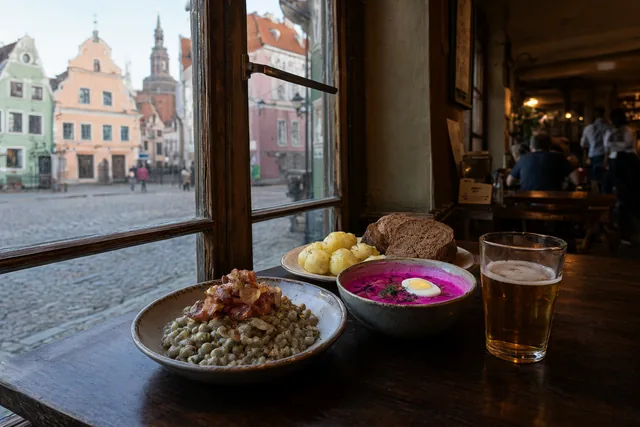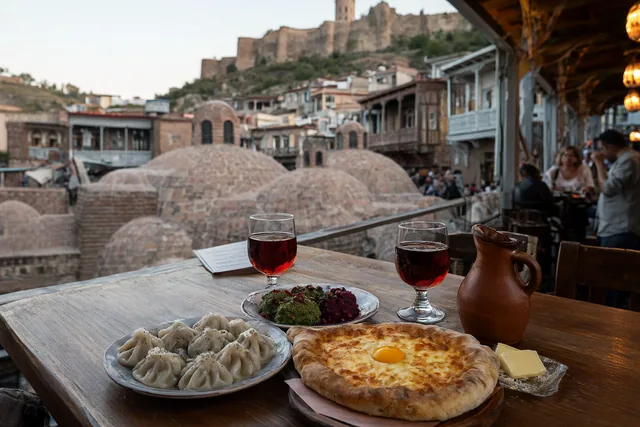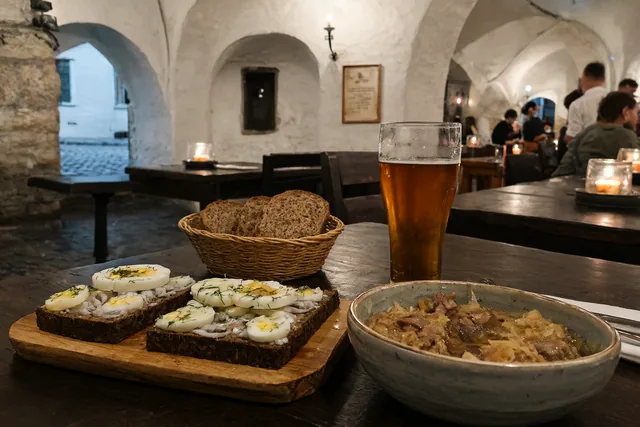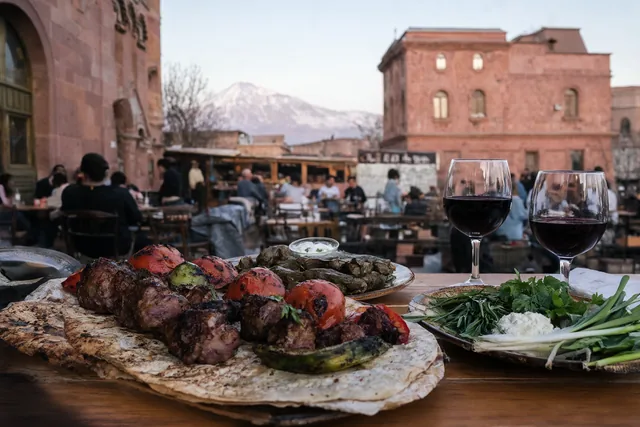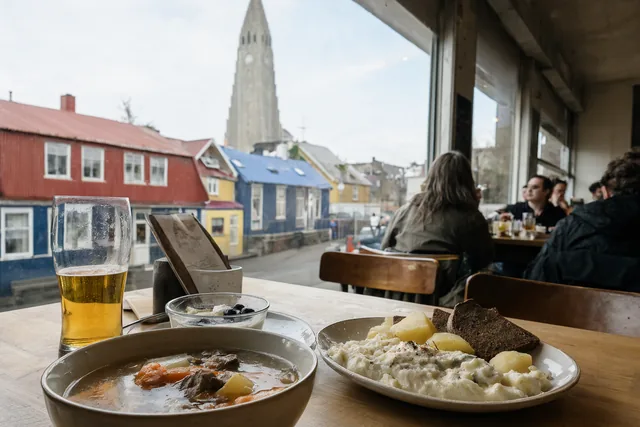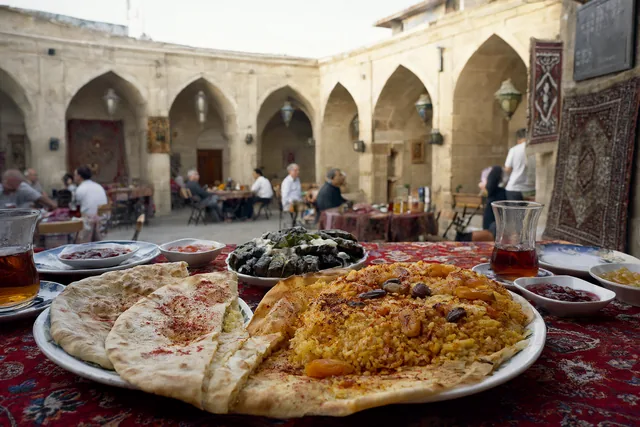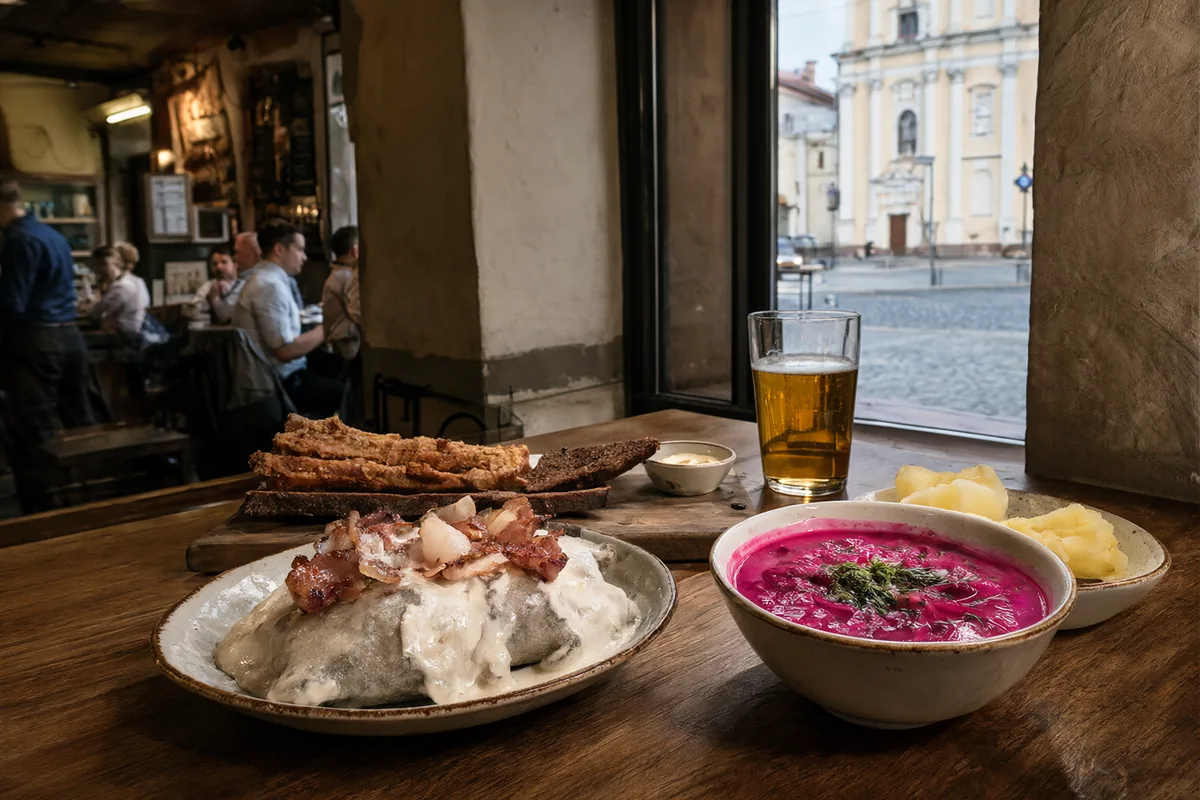
Lithuanian food is potato country cooking at heart, with rye bread, pork, curd cheese, sour cream and mushrooms, plus smoked fish from the Baltic coast and pastries brought by the small Karaim community centuries ago. This Lithuania food guide covers the dishes worth ordering, how to read a Lithuanian menu, tipping and lunch deals, then goes destination by destination through where to eat in Vilnius, Trakai, Kaunas, Klaipėda, the Curonian Spit and Druskininkai. Vilnius has grown into a confident restaurant city, but the classics, cepelinai, pink soup and fried rye bread with beer, are what most visitors remember.
What to eat in Lithuania: 12 dishes to know
Potatoes arrived late in Lithuania but took over the kitchen, and many of the best-known dishes are built on them. These are the dishes and drinks to look for, with the region they belong to where it matters.
- Cepelinai (everywhere): large zeppelin-shaped dumplings of grated potato, filled with minced pork, curd cheese or mushrooms, and served with sour cream and spirgai, fried bacon and onion. Also called didžkukuliai. One portion is two dumplings and very filling.
- Šaltibarščiai (summer): cold beetroot soup made with kefir, cucumber, dill and egg, a shocking pink colour, served with hot boiled potatoes on the side. Vilnius even holds a pink soup festival.
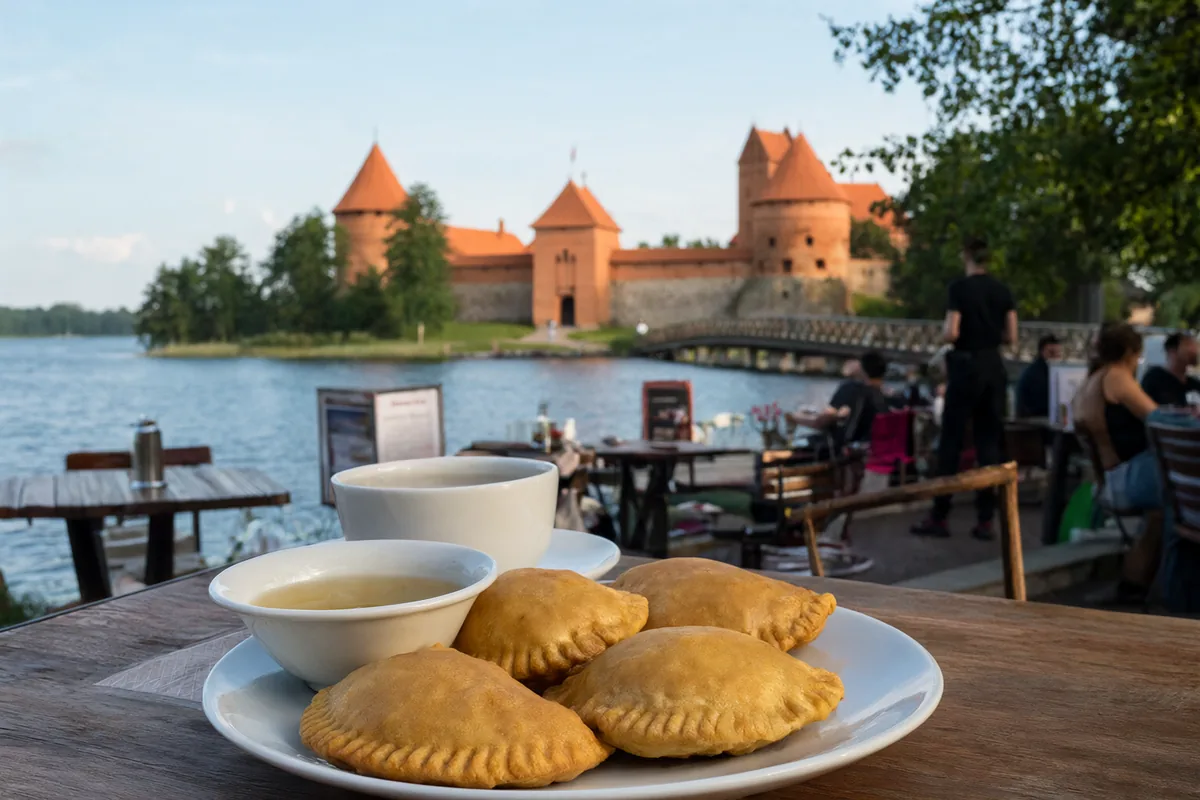
- Kibinai (Trakai): crescent-shaped pastries filled with mutton, beef, chicken or vegetables, brought by the Karaim, a Turkic people who have lived in Trakai since the 14th century.
- Kepta duona (everywhere): strips of dark rye bread fried and rubbed with garlic, usually served with a cheese sauce. The essential beer snack.
- Bulviniai blynai (everywhere): crisp potato pancakes with sour cream. Žemaičių blynai, from the Samogitia region, are potato pancakes stuffed with minced meat.
- Kugelis (everywhere): a baked pudding of grated potato, bacon and onion, cut in squares and served with sour cream. Also called bulvių plokštainis.
- Vėdarai (everywhere): sausage of grated potato, sometimes with bacon, stuffed into pork casing and baked until crisp.
- Juoda duona (everywhere): dark, dense rye bread, often with caraway seeds, served with almost every meal.
- Skilandis (everywhere): cold-smoked minced pork pressed into a pig stomach and dried, sliced thin as a starter with rye bread.
- Varškėčiai (everywhere): small fried curd cheese pancakes, served with sour cream and jam for breakfast or dessert.
- Rūkyta žuvis (the coast): smoked fish, especially bream and eel from the Curonian Lagoon, sold from smokehouses on the Curonian Spit.
- Šakotis (Dzūkija and everywhere): "tree cake", a tall, spiky cake baked layer by layer on a rotating spit over a fire. It is the centrepiece of weddings and celebrations.
To drink, Lithuania has a strong farmhouse beer tradition, especially in the north around Biržai and Pasvalys, as well as gira (a fermented bread drink similar to kvass), midus (mead), and trauktinė, a herbal bitters taken in small glasses.
How to read a Lithuanian menu
Lithuanian is one of the oldest living Indo-European languages and is related only to Latvian, so most visitors will not recognise much. It uses the Latin alphabet with extra letters such as ą, č, ė, š and ž. Menus in Vilnius are usually in English too, but the lunch board, the café in a small town or the stall in a market often are not. These are the words you will see most.
| Lithuanian | Meaning |
|---|---|
| Užkandžiai | Starters, snacks |
| Sriubos | Soups |
| Pagrindiniai patiekalai / karštieji patiekalai | Main courses / hot dishes |
| Desertai | Desserts |
| Gėrimai | Drinks |
| Dienos pietūs / dienos pasiūlymas | Lunch of the day / daily offer |
| Kiauliena / jautiena / ėriena / vištiena | Pork / beef / lamb / chicken |
| Žuvis / lašiša / silkė | Fish / salmon / herring |
| Bulvės / daržovės | Potatoes / vegetables |
| Grietinė / spirgai | Sour cream / fried bacon and onion topping |
| Kepta / rūkyta / virta | Fried or roasted / smoked / boiled |
| Grybai / varškė | Mushrooms / curd cheese |
| Su / be | With / without |
| Vegetariškas / veganiškas | Vegetarian / vegan |
Cepelinai come with several fillings, and the menu usually tells you which only with one word: su mėsa (with meat), su varške (with curd cheese) or su grybais (with mushrooms). swap.menu translates the filling and the topping, so you know whether the bacon crackling is coming too, before you order.
Tipping, lunch deals and paying the bill
Tipping in Lithuania is appreciated but not compulsory. In restaurants with table service, around 10 percent for good service is normal in Vilnius and Kaunas, while in cafés and bars people round up or leave small change. Service charges are uncommon, though a few places add one for groups, and it should be shown on the bill. Menu prices include VAT. Our guide to tax and service charges on menus explains how these lines appear in different countries.
Lithuania uses the euro, and cards and contactless payment are accepted in nearly all restaurants, cafés and shops. Some market stalls, smokehouses on the Curonian Spit and village cafés prefer cash, so carry a little. If a card machine asks whether to charge you in your home currency, choose euros: our guide to paying in local currency explains why.
Look for the weekday dienos pietūs (lunch of the day), usually soup and a main at a fixed price, served from about 11am to 3pm. It is the cheapest way to eat proper Lithuanian food. Dinner is from around 6pm, and kitchens outside the big cities often close by 9pm or 10pm. In summer, terraces stay open late under the long Baltic evenings.
Where to eat in Lithuania, city by city
Lithuania is compact, and the main destinations are no more than a few hours apart. Each has its own speciality, from Trakai's pastries to smoked fish on the dunes. Jump to a destination:
Where to eat in Vilnius
The baroque Old Town of Vilnius, one of the largest in eastern Europe, is where most visitors eat. Pilies gatvė, the main street up to the cathedral, is lined with places aimed at tourists, so walk one street over. Vokiečių gatvė, a wide street with a green central strip, has a good spread of restaurants, wine bars and beer bars, and the lanes around it hide cellar restaurants serving cepelinai, kugelis and potato pancakes. Across the little Vilnia river, Užupis, the self-declared artists' republic, has relaxed cafés and riverside terraces.
For markets, the Halės turgus, a 19th-century covered market hall near the railway station, has produce, smoked meats, cheese and small food counters, while the larger Kalvarijų turgus north of the river is where Vilnius residents do their weekly shopping. Modern Lithuanian cooking, built on foraged herbs, fermented vegetables, freshwater fish and game, is the most interesting thing happening in Vilnius restaurants now, and tasting menus here cost far less than in Scandinavia. In June, look out for the pink soup festival celebrating šaltibarščiai.
Where to eat in Trakai
Trakai, about half an hour west of Vilnius, is famous for its red-brick island castle on Lake Galvė, and for kibinai. The Karaim, a small Turkic-speaking community brought here by Grand Duke Vytautas in the 14th century, still live along Karaimų gatvė, a street of colourful wooden houses each with three windows facing the road. The cafés and restaurants along this street bake kibinai to order, and you should eat them hot, ideally with a bowl of clear broth.
The classic filling is mutton, but beef, chicken, curd cheese, spinach and mushroom versions are common, and Karaim restaurants in Trakai serve other dishes from the community's kitchen as well. Lakeside terraces also serve smoked and fried fish from the surrounding lakes. Trakai is very busy on summer weekends, so come on a weekday or for an early lunch, and buy a bag of kibinai to take back to Vilnius.
Where to eat in Kaunas
Kaunas, Lithuania's second city and its capital between the two world wars, is known for its interwar modernist architecture, now on the UNESCO World Heritage list, and for a strong café and coffee culture. Laisvės alėja, the long pedestrian boulevard through the new town, is lined with cafés and restaurants, and the Old Town around the Town Hall Square has cellar bars and traditional Lithuanian kitchens serving cepelinai, potato pancakes and kepta duona.
Kaunas is a student city and a basketball city, so beer bars are full on match nights and prices are lower than in Vilnius. Look for bars pouring farmhouse beers from northern Lithuania, and for bakeries selling rye bread and pastries. The confluence of the Nemunas and Neris rivers at the tip of the Old Town is a pleasant place for a walk after lunch, and Kaunas makes an easy stop between Vilnius and the coast.
Where to eat in Klaipėda
Klaipėda is Lithuania's only seaport, a city whose German past shows in the half-timbered houses of its Old Town around Theatre Square. The Old Town and the riverside along the Danė have the best concentration of restaurants, pubs and cafés, and fish is the thing to order in Klaipėda: smoked and fried Baltic herring, salmon, and freshwater fish from the Curonian Lagoon. The Sea Festival in late July is the city's biggest party, with food stalls all along the waterfront.
Klaipėda is also the base for the coast. A short ferry crossing takes you to the Curonian Spit, and half an hour north is Palanga, Lithuania's main summer resort, where Basanavičiaus street fills with cafés, ice cream stands and restaurants from June to August. Palanga empties out in winter, while Klaipėda keeps its restaurants open all year.
Where to eat on the Curonian Spit
The Curonian Spit is a narrow strip of sand dunes and pine forest between the Baltic Sea and the Curonian Lagoon, shared with Russia and listed by UNESCO. Its villages, especially Nida and Juodkrantė, were built by fishermen, and smoked fish is still the reason to eat here. Smokehouses (rūkykla) along the lagoon shore sell bream, roach, perch and eel smoked over alder wood, priced by weight, and you eat them at outdoor tables with rye bread and beer.
Restaurants in Nida serve fish soup, fried lagoon fish and smoked fish platters, with terraces looking across the water. The season is short: most places open fully from late May to September, and in winter choice is very limited. There is a toll to bring a car onto the spit, and many visitors cycle between the villages, so a long fish lunch is easy to build into the day.
Where to eat in Druskininkai
Druskininkai is a spa town on the Nemunas river in the far south, in the forested Dzūkija region, and it is one of the best places in Lithuania to eat mushrooms. Dzūkija's sandy pine forests are full of them in late summer and autumn, and menus in Druskininkai fill with chanterelle and porcini soups, mushroom sauces and mushroom-filled cepelinai. The region is also known for buckwheat, and grikių babka, a baked buckwheat and potato dish, is worth asking for.
The town's restaurants and cafés cater to spa guests, so there is plenty of choice along the river and around the main park, from traditional Lithuanian food to lighter modern menus. Dzūkija is also a home of šakotis, the spit-baked tree cake, so look for it in bakeries. The nearby town of Varėna holds a well-known mushroom festival in September.
Vegetarian, vegan and allergy tips
Vilnius and Kaunas have many vegetarian and vegan restaurants, and modern menus usually mark plant-based dishes. Traditional food needs care: the spirgai topping on cepelinai and potato pancakes is fried bacon, kugelis and vėdarai often contain bacon, and soups may use meat stock. Curd-filled cepelinai and mushroom versions are the safest traditional choice for vegetarians, as long as you ask for them without spirgai. Sour cream and curd cheese are everywhere, so vegans should ask too. The words to know are vegetariškas (vegetarian) and veganiškas (vegan).
Gluten-free is be glitimo, and it is increasingly marked on menus in the cities. Rye bread and kepta duona contain gluten, kibinai are made with wheat pastry, and caraway seeds often appear in bread and cheese. Our guide to eating abroad with food allergies explains how to explain an allergy clearly when you do not share a language.
Useful Lithuanian phrases for ordering
Laba diena "Good day", the polite greeting when you walk in
Staliuką dviem, prašau "A table for two, please"
Ką rekomenduotumėte? "What would you recommend?"
Norėčiau šito "I would like this" (pointing)
Be spirgų, prašau "Without the bacon topping, please"
Man alergija... "I have an allergy to..." followed by the ingredient
Sąskaitą, prašau "The bill, please"
Ačiū, buvo labai skanu "Thank you, it was very tasty"
How swap.menu helps you eat in Lithuania
A Lithuanian menu can list five kinds of potato dish with names that look nothing alike, and the café in Druskininkai or the smokehouse in Nida may not have an English version at all. Photograph the menu with swap.menu and every dish appears in your language with the Lithuanian name beside it and a short explanation, so you know that vėdarai is potato sausage and balandėliai are cabbage rolls before you order. Prices are shown in euros and converted to your home currency.
Tap the dishes you want, add a note such as "no bacon" or "gluten-free, please", typed or spoken, and swap.menu translates your order into Lithuanian. Show the server your phone, or let them scan the QR code and read your order on their screen. Try it now on a sample menu with the free demo, or see travel pass prices.
Off to Lithuania? Your first 3 menu scans are free, and a travel pass starts from $4.99 with nothing that renews.
Start free with 3 scansLithuania food FAQ
Do you tip in restaurants in Lithuania?
Tipping is not required in Lithuania, but around 10 percent for good table service is normal in Vilnius and Kaunas restaurants. In cafés and bars, rounding up is enough. Service charges are uncommon and appear on the bill if added.
What food is Lithuania famous for?
Cepelinai potato dumplings, šaltibarščiai cold pink beetroot soup, kibinai pastries from Trakai, kepta duona fried garlic rye bread, and šakotis tree cake. Smoked fish from the Curonian Spit and farmhouse beer are also well known.
Is Lithuania expensive to eat out?
Lithuania is good value compared with western Europe and the Nordic countries. The weekday lunch of the day is the cheapest way to eat, and even tasting menus in Vilnius cost much less than in nearby capitals.
Is tap water safe to drink in Lithuania?
Yes, tap water in Lithuania comes largely from groundwater and is safe to drink. Many restaurants will bring tap water on request, though bottled mineral water is also commonly ordered.
What time do people eat dinner in Lithuania?
Dinner usually starts between 6pm and 8pm, and restaurant kitchens in smaller towns may close by 9pm or 10pm. Lunch is typically between noon and 2pm, when weekday lunch deals are served.
How can I read a Lithuanian menu if I do not speak Lithuanian?
Learn a few words such as sriubos (soups), dienos pietūs (lunch of the day) and su or be (with or without), or photograph the menu with swap.menu. It translates every dish into your language, explains it, converts euro prices and translates your order back into Lithuanian.
Travelling further in the Baltics? Read our food guides for neighbouring countries:
Or browse every travel food guide.