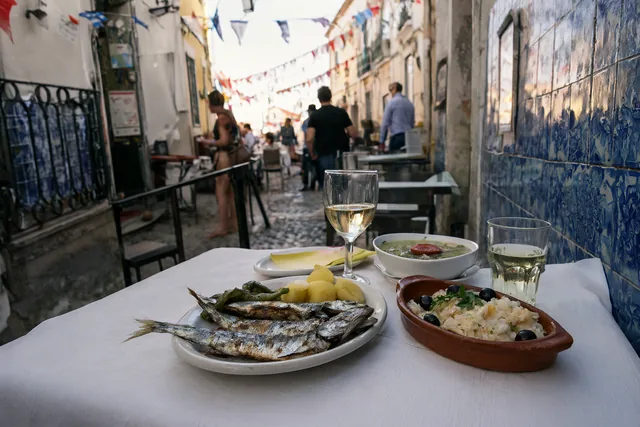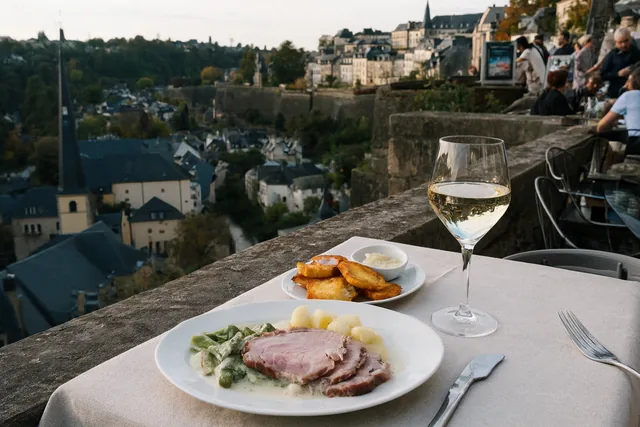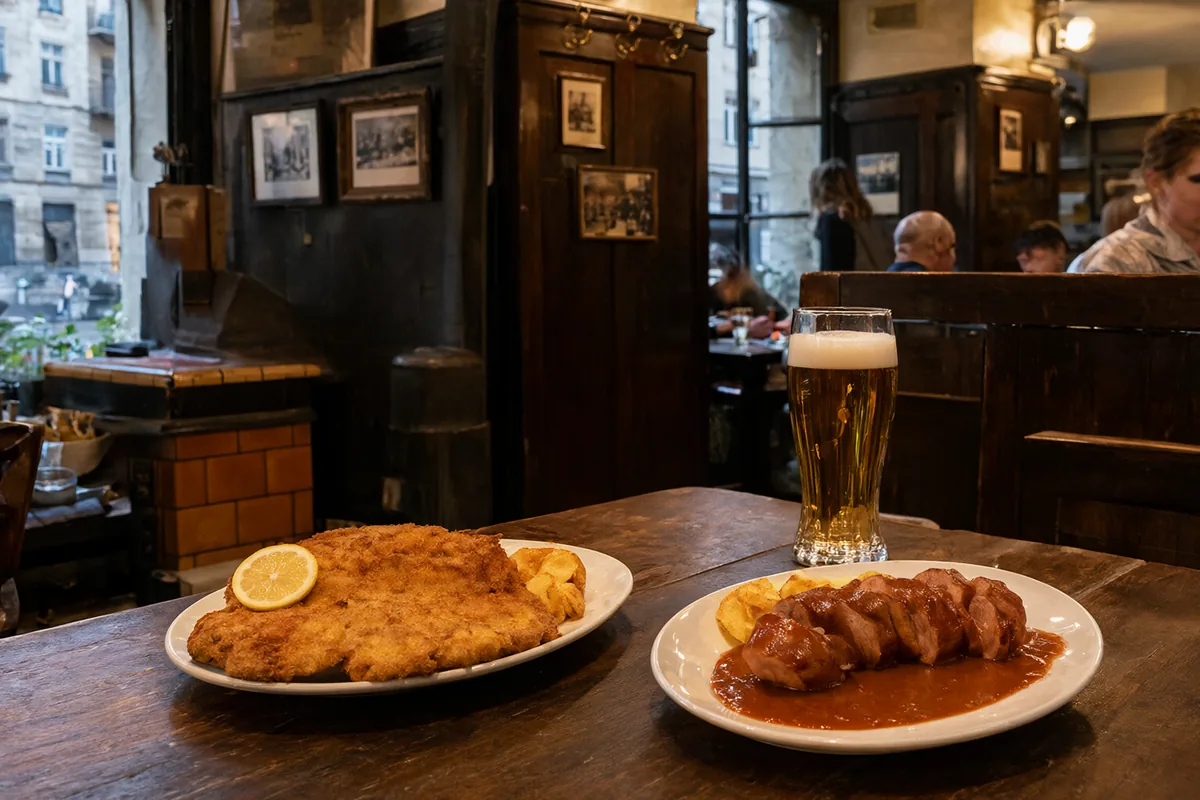
German food is much more than sausage and beer, although both are excellent and worth taking seriously. This Germany food guide covers the dishes to know, how to read a German menu, how tipping and paying the bill work (they are different from most countries), then goes city by city through where to eat in Berlin, Munich, Hamburg, Cologne, Frankfurt, Stuttgart and Nuremberg. Germany was a patchwork of separate states until 1871, and its food is still fiercely regional: Bavaria has its beer halls and white sausages, Swabia its noodles and dumplings, Hamburg its fish sandwiches, Cologne and Frankfurt their own beers and ciders. Order the local dish and drink the local drink, and Germany is a hearty, good-value place to eat.
What to eat in Germany: 12 dishes to know
These are the dishes worth seeking out, with the region they belong to. Many are best in a traditional Gasthaus (inn) or a brewery tavern.
- Bratwurst (everywhere): grilled pork sausage, and every region has its own. Nuremberg's are finger-sized, Thuringia's long and spiced with marjoram.
- Currywurst (Berlin and the Ruhr): sliced sausage under a sweet tomato and curry sauce, with chips or a bread roll.
- Schweinshaxe (Bavaria): a whole roasted pork knuckle with crackling skin, served with potato dumplings and sauerkraut or cabbage.
- Schnitzel (everywhere): a thin breaded cutlet. A Wiener Schnitzel should be veal; "Schnitzel Wiener Art" is the cheaper pork version. Jägerschnitzel comes with mushroom sauce.
- Sauerbraten (Rhineland): beef marinated for days in vinegar and spices, braised and served with a sweet and sour gravy, red cabbage and dumplings.
- Käsespätzle (Swabia and the Allgäu): soft egg noodles baked with mountain cheese and topped with crispy fried onions.
- Maultaschen (Swabia): large filled pasta parcels of meat and spinach, served in broth or fried with onions.
- Brezel (south): the soft pretzel, with a dark, glossy, salted crust. In Bavaria it is a Brezn.
- Döner kebab (Berlin and everywhere): grilled meat in flatbread with salad and sauces, popularised by Turkish Germans and now one of the country's most eaten dishes.
- Fischbrötchen (Hamburg and the north): a bread roll filled with pickled herring, smoked mackerel, brown shrimp or fried fish.
- Spargel (everywhere, spring): white asparagus, served from April to late June with hollandaise or butter, potatoes and ham. Menus get a whole separate page for it.
- Schwarzwälder Kirschtorte (Black Forest): chocolate sponge layered with cherries, cream and cherry brandy, eaten at afternoon coffee time.
How to read a German menu
German menus are usually long and grouped by course, with sausages, schnitzels and roasts listed separately and a page of seasonal specials. At lunch, look for the Tagesgericht or Mittagstisch, a cheaper dish of the day. In Bavaria, a Brotzeit is a cold snack platter of cured meats, cheese, radish and bread, served with beer.
| German | Meaning |
|---|---|
| Vorspeisen | Starters |
| Suppen | Soups |
| Hauptgerichte | Main courses |
| Beilagen | Side dishes |
| Nachspeisen / Nachtisch | Desserts |
| Tagesgericht / Mittagstisch | Dish of the day / lunch menu |
| Schwein / Rind / Kalb / Lamm / Hähnchen | Pork / beef / veal / lamb / chicken |
| Fisch / Wurst | Fish / sausage |
| Kartoffeln / Bratkartoffeln / Pommes | Potatoes / fried sliced potatoes / chips |
| Knödel / Klöße | Dumplings, usually potato or bread |
| Hausgemacht | Homemade |
| Vom Fass | On tap (draught beer) |
| Mit / ohne Kohlensäure | Sparkling / still (water) |
| Kleine Portion / Kinderteller | Small portion / children's plate |
Order "Wasser" in Germany and you will usually get sparkling mineral water in a bottle, charged like any other drink. Ask for "stilles Wasser" for still, or "Leitungswasser" for tap water, which some restaurants will bring and some will not. swap.menu explains dishes such as Leberkäse, which contains neither liver nor cheese, when it translates the menu.
Tipping, splitting the bill and paying
Service is included in German menu prices, and so is MwSt, the German VAT. There is no cover charge, although bread may be charged if you eat it. Tipping is still normal: Germans round up or add around 5 to 10 percent for good service. Our guide to tax and service charges on menus explains how these lines work around the world.
The way you tip is the part visitors get wrong. Do not leave money on the table. When the server brings the bill, tell them the total you want to pay, tip included: if the bill is 27 euros, hand over a note and say "dreißig" (thirty), or say "stimmt so" (keep the change). The server will often ask "zusammen oder getrennt?", together or separately, and splitting a bill item by item is completely normal in Germany.
Prices are in euros (€). Germany has long been a cash-loving country, and while cards are now accepted in most restaurants, some small bars, bakeries, beer gardens and market stalls still take cash only or set a minimum for cards. Carry some notes and coins. If a card machine offers to charge you in your home currency, choose euros: our guide to paying in local currency explains why. At Christmas markets and some festivals, you pay a deposit (Pfand) on your mug or glass, refunded when you return it.
Germans eat early. Lunch is from about noon to 2pm, and dinner from about 6pm to 9pm. In the afternoon, Kaffee und Kuchen, coffee and cake, is a tradition, especially on weekends. Most shops close on Sundays, but bakeries open in the morning and restaurants are open as usual.
Where to eat in Germany, city by city
Each German city has its own dishes, its own beer or wine and its own kind of tavern. Jump to a city:
Where to eat in Berlin
Berlin is Germany's most international food city and its cheapest capital to eat in. The two street foods to try are currywurst, ordered "mit Darm" (with skin) or "ohne Darm" (without), and the döner kebab, which Turkish Berliners turned into the city's unofficial national dish. Old Berlin cooking survives in traditional pubs: Eisbein (boiled pork knuckle) with sauerkraut and pea purée, Buletten (meat patties) and Berliner Weisse, a sour wheat beer served with raspberry or green woodruff syrup. The jam doughnut the rest of Germany calls a Berliner is a Pfannkuchen here.
Kreuzberg and Neukölln are the places for Turkish, Middle Eastern and cheap international food, and the Turkish market on the Maybachufer canal bank runs on Tuesdays and Fridays. Markthalle Neun in Kreuzberg is a restored market hall with food stalls, Prenzlauer Berg has the Saturday market at Kollwitzplatz and plenty of cafés, and Kantstraße in Charlottenburg is lined with Chinese, Vietnamese and other Asian restaurants. Berlin has a large Vietnamese community, and its Vietnamese cooking is some of the best in Europe. Berliners eat late compared with the rest of Germany.
Where to eat in Munich
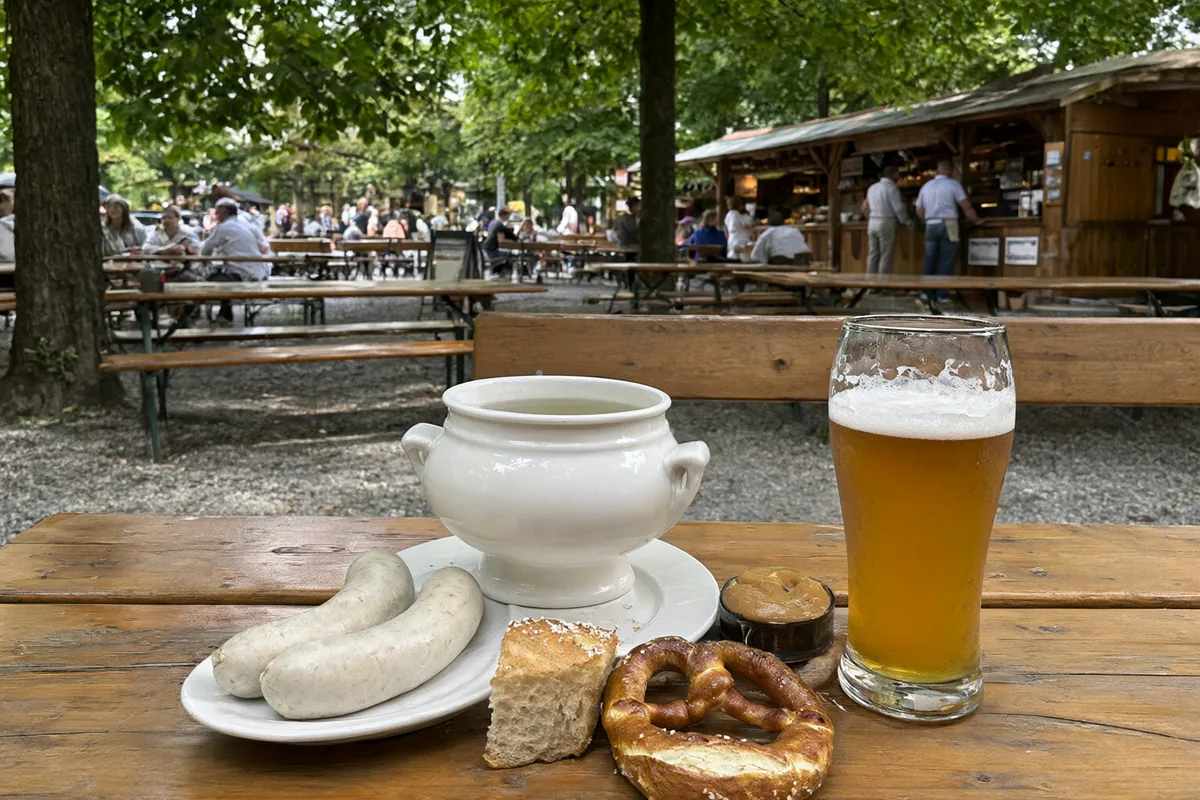
Munich is the capital of Bavaria and of German beer culture. The local ritual is the Weisswurstfrühstück: white veal sausages, kept warm in a bowl of hot water, eaten with sweet mustard, a pretzel and a wheat beer, traditionally before noon. Peel the skin off rather than eating it. For lunch or dinner, order Schweinsbraten (roast pork with crackling and dark beer gravy), Schweinshaxe, Obatzda (a spiced cheese and butter spread) and a slice of Leberkäse in a bread roll.
The Viktualienmarkt, the open-air food market in the centre, has butchers, cheese stalls and its own beer garden. Munich's beer gardens are the best thing about the city in summer: in the traditional ones you can bring your own food to tables without tablecloths and buy only drinks, and the beer comes in a one-litre Mass. The Englischer Garten has several. Munich's beer halls serve the same food year round. During Oktoberfest, from late September to early October, Munich hotels and restaurants fill up and prices rise, so book early. For quieter eating, try Haidhausen, Schwabing or the Glockenbachviertel.
Where to eat in Hamburg
Hamburg is a port city, and its food comes from the North Sea and the Elbe. The classic snack is the Fischbrötchen, a roll filled with Bismarckhering (pickled herring), Matjes (young salted herring), smoked mackerel or tiny North Sea brown shrimp, sold from kiosks along the harbour at the Landungsbrücken. Sit-down dishes include Labskaus, a sailor's mash of corned beef, potato and beetroot topped with a fried egg and a rollmop herring, Pannfisch (pan-fried fish with mustard sauce) and Rote Grütze, a red berry pudding with vanilla sauce.
On Sunday mornings, the Fischmarkt at Altona opens very early, around dawn, with traders shouting prices and a market hall full of breakfast-seekers, some still out from the night before. For pastries, try a Franzbrötchen, a flattened cinnamon roll unique to Hamburg. The Schanzenviertel and St. Pauli are lively places to eat and drink, Ottensen is calmer, and the streets near the harbour known as the Portuguese quarter have small Portuguese and Spanish restaurants with good grilled fish.
Where to eat in Cologne
Cologne eats and drinks in the Brauhaus, the big brewery taverns of the old town. The beer is Kölsch, a light, crisp beer served in small thin 0.2 litre glasses called Stangen. The waiters, known as Köbes, carry trays of them and replace your empty glass automatically until you put your beer mat on top. Order local dishes: Rheinischer Sauerbraten, Himmel un Ääd ("heaven and earth", black pudding with mashed potato and apple sauce), Reibekuchen (crisp potato pancakes) and Mettbrötchen, raw minced pork on a bread roll with onion.
The dish that confuses everyone is the Halve Hahn. It means "half a chicken", but it is a rye roll with a thick slice of Gouda, butter and mustard. The Altstadt near the cathedral has the most famous brewery taverns, the Belgian Quarter (Belgisches Viertel) has younger cafés and bars, and Ehrenfeld is the multicultural district. Cologne's carnival season peaks in the week before Lent, when the city drinks and eats in costume and many places are packed.
Where to eat in Frankfurt
Frankfurt is a banking city with a down-to-earth food tradition. Its drink is Apfelwein (Ebbelwoi in local dialect), a dry, sour cider served in a grey stoneware jug called a Bembel and drunk from a ribbed glass called a Geripptes. With it, order Grüne Soße, a cold green sauce of seven fresh herbs served with boiled eggs and potatoes, Frankfurter Rippchen (cured pork chop with sauerkraut), the original Frankfurter sausages, and Handkäs mit Musik, a tangy sour milk cheese marinated with onions; the "music" is said to come later.
The cider taverns are clustered in Sachsenhausen, across the river from the centre, where long shared tables are normal. Bornheim and the long Berger Straße have more local taverns and restaurants. The Kleinmarkthalle, a covered market in the centre, is the place to try Frankfurt's green sauce herbs, sausages and cheese. The station district (Bahnhofsviertel) is gritty but has some of Frankfurt's best international food. For something sweet, try Frankfurter Kranz, a ring-shaped buttercream cake.
Where to eat in Stuttgart
Stuttgart is the capital of Swabia, and Swabian food is some of the most comforting in Germany. Order Maultaschen, Käsespätzle, Linsen mit Spätzle und Saitenwürstle (lentils with noodles and thin sausages) and Zwiebelrostbraten, roast beef topped with crispy onions and gravy. Unusually for a big German city, Stuttgart is surrounded by vineyards, and the light red wine Trollinger is the local drink.
The best Stuttgart eating experience is a Besenwirtschaft, a simple wine tavern run by a winemaker for a few weeks a year, marked by a broom hung over the door. They serve home cooking and their own wine at low prices. The Art Nouveau Markthalle in the centre is a beautiful covered market, and the Bohnenviertel, the old bean quarter, has small restaurants and wine bars. In late summer, the city wine festival fills the old town with wine stalls, and in autumn the Cannstatter Wasen beer festival rivals Munich's.
Where to eat in Nuremberg
Nuremberg is famous for its small Nürnberger Rostbratwürste, finger-sized pork sausages grilled over a beech wood fire. Order them "drei im Weggla", three in a bread roll, from a stand, or sit down and order six, eight, ten or twelve on a pewter plate with sauerkraut, potato salad and horseradish. A sourer version, Saure Zipfel, poaches the sausages in a vinegar and onion broth. Franconian dishes include Schäufele, roast pork shoulder with crackling and dumplings.
Nuremberg is also the home of Lebkuchen, soft spiced gingerbread, and its Christmas market on the Hauptmarkt is one of the most famous in Germany, open from late November until Christmas Eve. The old town inside the walls has traditional sausage kitchens and taverns, and Franconia has more breweries than almost anywhere in the world. Take a day trip to nearby Bamberg to try Rauchbier, a smoked beer that tastes like bacon.
Vegetarian, vegan and allergy tips
Traditional German food is very meat-heavy, but German cities, especially Berlin, have become some of the easiest in Europe for vegetarians and vegans, with plant-based restaurants everywhere. In a traditional Gasthaus, look for Käsespätzle, potato pancakes, dumplings with mushroom sauce and asparagus in season. Watch for hidden meat: lentil and pea soups often contain sausage or bacon, potato salad may be made with meat stock, and dumplings may contain bacon (Speck). The words are vegetarisch and vegan.
EU rules require restaurants to tell you about the 14 major allergens, and menus often list them as codes in small print at the bottom. Mustard, celery, wheat and dairy are common in German food, and nuts appear in many cakes. Gluten-free is glutenfrei. Our guide to eating abroad with food allergies explains how to explain an allergy clearly in another language.
Useful German phrases for ordering
Guten Tag / Grüß Gott "Good day". In Bavaria and the south, "Grüß Gott" is the usual greeting
Einen Tisch für zwei, bitte "A table for two, please"
Was empfehlen Sie? "What do you recommend?"
Ich hätte gern das "I would like this" (pointing)
Ich bin allergisch gegen... "I am allergic to..."
Ein Leitungswasser, bitte "A tap water, please"
Zahlen, bitte / Die Rechnung, bitte "I'd like to pay, please" / "The bill, please"
Zusammen oder getrennt? Stimmt so. The server asks "together or separate?"; you reply "keep the change" when you hand over the money
How swap.menu helps you eat in Germany
A traditional German menu can run to several pages of compound words, sometimes in old-fashioned script, with a separate card for the season's asparagus or game. Photograph it with swap.menu and every dish appears in your language with the German name beside it and a short explanation, so you know that Saumagen is stuffed pig's stomach, that Strammer Max is ham and fried egg on bread and that a Halve Hahn is not chicken at all. Every price is converted from euros to your home currency, and allergen codes are explained.
Tap the dishes you want, add a note such as "no pork", "still water" or "gluten-free", typed or spoken, and swap.menu translates your order into German. Show the server your phone, or let them scan the QR code and read your order on their own screen. You can try it right now on a sample menu with the free demo, or see travel pass prices.
Off to Germany? Your first 3 menu scans are free, and a travel pass starts from $4.99 with nothing that renews.
Start free with 3 scansGermany food FAQ
Do you tip in restaurants in Germany?
Yes, tipping is normal in Germany even though service is included. Round up or add around 5 to 10 percent for good service. Tell the server the total you want to pay when you hand over the money, rather than leaving a tip on the table.
What food is Germany most famous for?
Sausages such as bratwurst and currywurst, pretzels, schnitzel, pork knuckle, sauerbraten, spätzle, sauerkraut, Black Forest cake and, of course, beer. Germany also has a huge range of breads and is known for white asparagus in spring.
Can you pay by card in German restaurants?
Most German restaurants now accept cards, but some small bars, bakeries, beer gardens and market stalls are still cash only or have a minimum card amount. It is wise to carry some euros in cash.
Is tap water safe to drink in Germany?
Yes, German tap water is safe and of high quality. In restaurants, ordering "Wasser" usually brings bottled sparkling water. Ask for "Leitungswasser" if you want tap water, although not every restaurant will serve it.
What time do people eat dinner in Germany?
Germans usually eat dinner between 6pm and 8pm, and many restaurant kitchens close around 9pm or 10pm. Lunch is between about noon and 2pm, and coffee and cake is a mid-afternoon tradition.
How can I read a German menu if I do not speak German?
Learn the main headings and a few meat words, or photograph the menu with swap.menu. It translates every dish into your language, explains what it is, converts prices from euros to your currency and translates your order into German for the server.
Travelling further in Europe? Read our food guides for neighbouring countries:
- Austria food guide
- Switzerland food guide
- Netherlands food guide
- Poland food guide
- Czech Republic food guide
- Denmark food guide
Or browse every travel food guide.