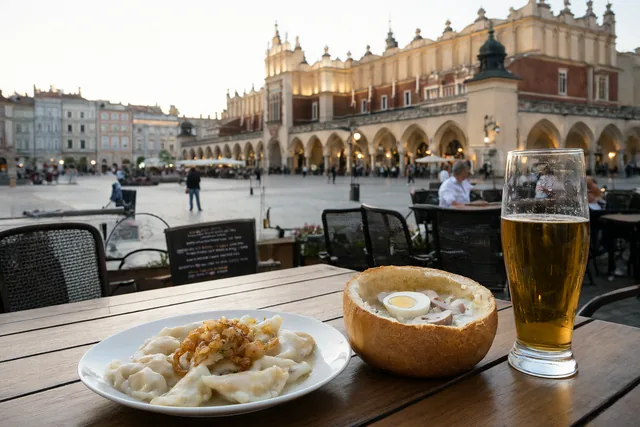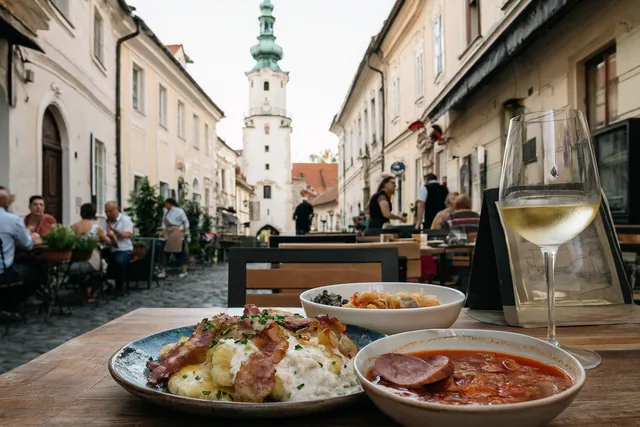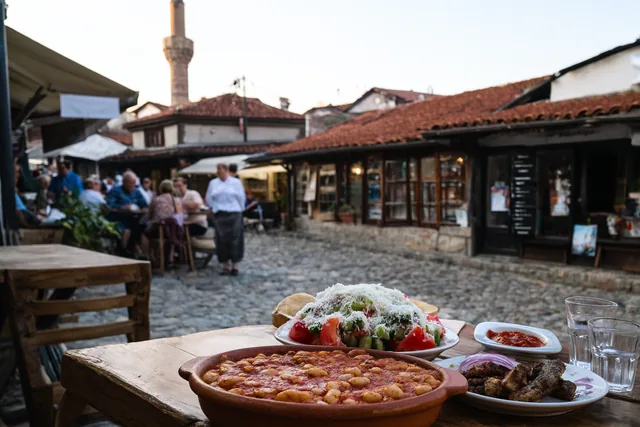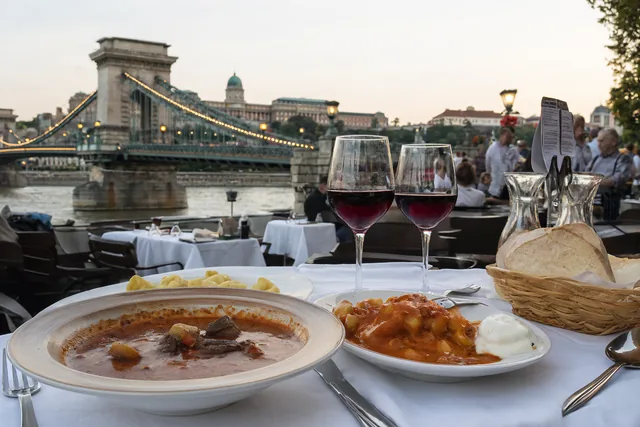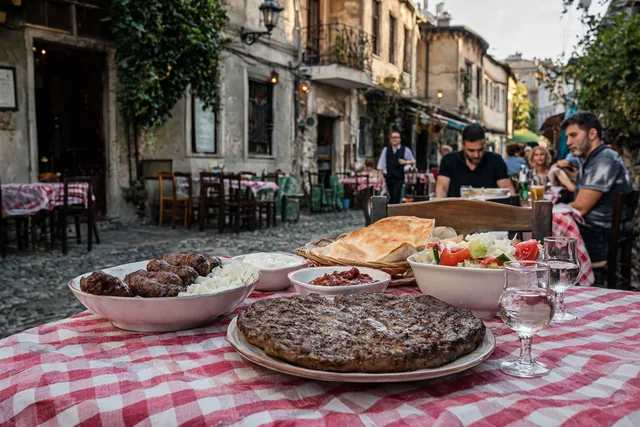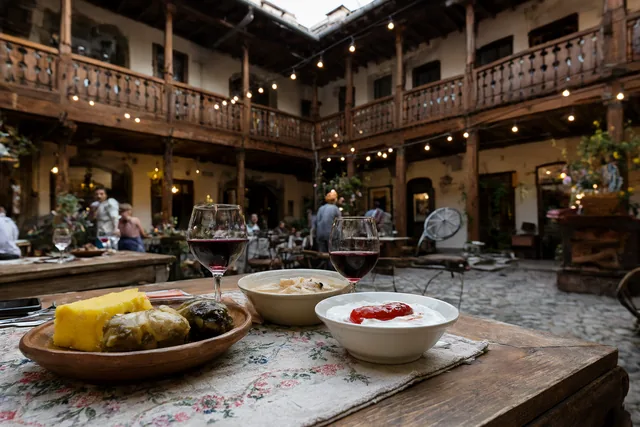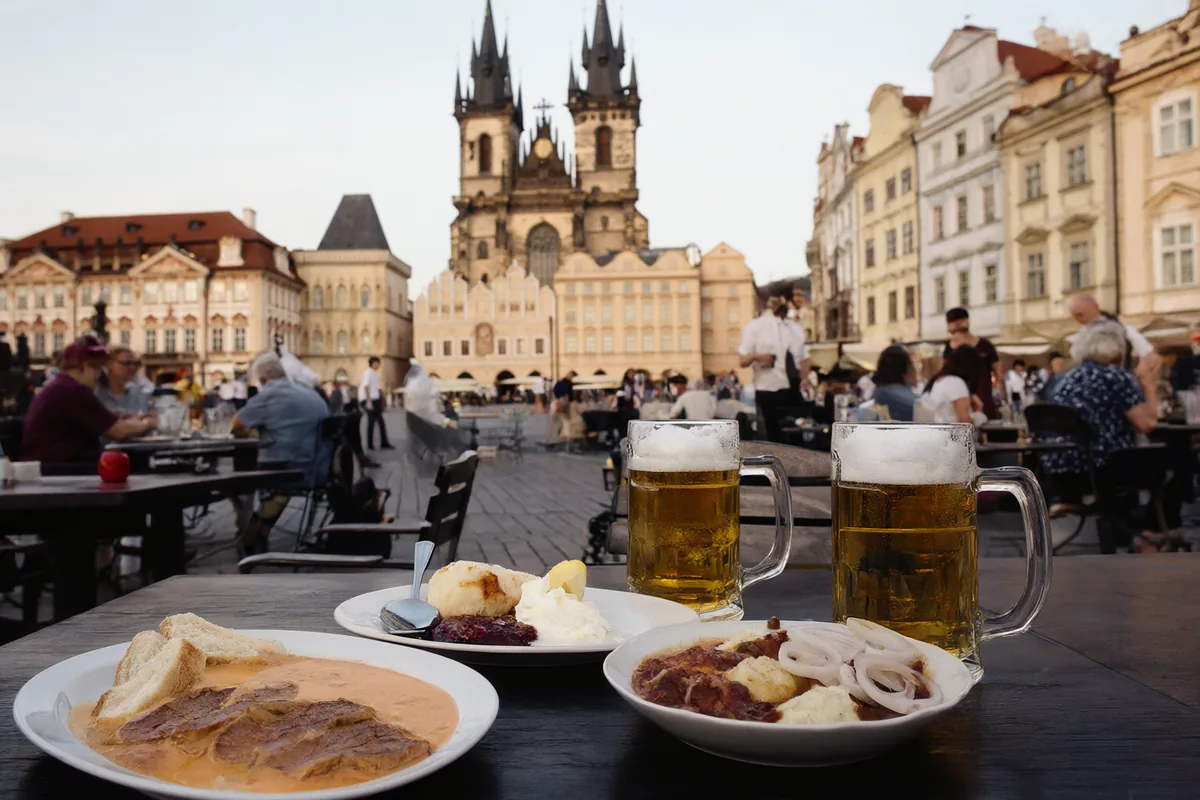
Czech food is built for cold winters and long evenings in the pub: rich sauces, bread dumplings, roast pork and duck, sauerkraut, and the best beer in Europe poured at a fraction of what you would pay elsewhere. This Czech Republic food guide covers the dishes to order, how to read a Czech menu and a Czech beer list, whether to tip and how to pay, then goes town by town through where to eat in Prague, Brno, Český Krumlov, Plzeň, Olomouc, Karlovy Vary and the wine country around Mikulov. Eat the weekday lunch menu like the locals do and you will eat well for very little.
What to eat in the Czech Republic: 12 dishes to know
Czech cooking shares a lot with Austria, Germany and Hungary, but it has its own classics. These are the dishes you will see on menus across Bohemia and Moravia.
- Svíčková na smetaně (everywhere): marinated beef sirloin in a creamy sauce of puréed root vegetables, served with bread dumplings, cranberry sauce, whipped cream and a slice of lemon. Many Czechs call it the national dish.
- Vepřo knedlo zelo (everywhere): roast pork, dumplings and sauerkraut, the classic Sunday lunch.
- Guláš (everywhere): Czech goulash is a thick beef or pork stew rather than a soup, served with bread dumplings and raw onion rings. In pubs it pairs naturally with beer.
- Knedlíky (everywhere): dumplings. Houskové are sliced bread dumplings, bramborové are made from potato.
- Pečená kachna (everywhere): roast duck with red or white cabbage and dumplings, a favourite in autumn and around St Martin's Day in November, when roast goose also appears.
- Smažený sýr (everywhere): a thick slice of Edam, breaded and deep-fried, with tartare sauce and fries. The standard vegetarian option for decades.
- Řízek (everywhere): a breaded pork or chicken schnitzel, often served with potato salad.
- Kulajda (South Bohemia): a creamy dill soup with potatoes, mushrooms and a poached egg.
- Česnečka (everywhere): garlic soup with potato and croutons, famous as a hangover cure.
- Bramboráky (everywhere): potato pancakes flavoured with marjoram and garlic.
- Nakládaný hermelín and utopenci (pubs): pub snacks. The first is a soft Camembert-style cheese pickled in oil with chilli and onion; the second, "drowned men", are pickled sausages.
- Ovocné knedlíky and koláče (everywhere): fruit dumplings filled with strawberries, apricots or plums, topped with quark, sugar and melted butter, and round pastries with poppy seed, plum jam or sweet curd cheese.
How to read a Czech menu
A Czech menu (jídelní lístek) usually runs from starters to soups, mains, sides and desserts. Two things are worth knowing. Sides (přílohy) are often priced separately, so check whether your main comes with dumplings or potatoes. And many restaurants split mains into hotová jídla, ready-cooked dishes such as goulash and svíčková that come out quickly, and minutky, dishes cooked to order. Beer lists show the glass size in litres, with 0.5 l the standard pour.
| Czech | Meaning |
|---|---|
| Předkrmy | Starters |
| Polévky | Soups |
| Hlavní jídla | Main courses |
| Hotová jídla / minutky | Ready-cooked dishes / dishes cooked to order |
| Přílohy | Sides, ordered separately: dumplings, potatoes, fries, rice |
| Moučníky / dezerty | Desserts |
| Bezmasá jídla | Meatless dishes (check for bacon and meat stock) |
| Vepřové / hovězí / kuřecí | Pork / beef / chicken |
| Ryby / pstruh / kapr | Fish / trout / carp |
| Smažený / pečený / vařený | Fried / roasted / boiled |
| Denní menu / polední menu | Daily set lunch, usually soup and a main, weekdays only |
| Pivo, velké / malé | Beer, large (0.5 l) / small (0.3 l) |
| Tankové / nefiltrované pivo | Tank beer (unpasteurised, delivered fresh) / unfiltered beer |
| Cena za 100 g | Price per 100 grams, common for fish and steak |
In some Prague restaurants the bread basket, the bowl of nuts or the small dish of olives set on your table is not free, and it appears on the bill if you touch it. Ask, or push it aside. swap.menu reads the menu and points out cover charges, per-100 g prices and items charged per piece, so you know what you are paying for before you order.
Tipping, beer tabs and paying the bill
Tipping is expected in Czech restaurants but modest. In a pub, round up to the nearest convenient amount; in a sit-down restaurant, about 10 percent is normal for good service. The usual way is to tell the waiter the total you want to pay as you hand over cash or card, rather than leaving money on the table. Some restaurants in central Prague add a service charge or a cover charge, which must be shown on the menu; if service is already included, there is no need to tip on top. Our guide to tax and service charges on menus explains how these lines work. VAT is included in menu prices.
In traditional pubs the waiter marks each beer on a slip of paper left on your table, and a fresh glass often arrives as soon as yours is nearly empty. Put your beer mat on top of the glass when you have had enough. At the end, you usually pay at the table and can split the bill (zvlášť, separately) without fuss.
Prices are in Czech koruna (Kč, code CZK), not euros. Some tourist-facing places accept euros, but at a poor rate, so pay in koruna. Cards and contactless are accepted almost everywhere in cities, though a few village pubs and market stalls prefer cash. When a card machine or cash machine offers to charge you in your home currency, say no: our guide to paying in local currency explains why.
Czechs eat lunch early, from about 11am to 2pm, and lunch is often the main hot meal of the day. Dinner is from about 6pm to 9pm, and outside Prague many kitchens stop taking orders by 9:30pm or 10pm.
Where to eat in the Czech Republic, town by town
Bohemia, in the west, is beer country; Moravia, in the east, makes wine and cooks a little differently. Jump to a town:
Where to eat in Prague
Prague has the widest choice of food in the country, but the streets between Old Town Square and Charles Bridge are full of restaurants that serve average goulash at high prices, and street stalls selling trdelník, a sugared spit cake that is marketed as old Czech tradition but is a recent arrival in Prague. Walk ten minutes in any direction and the food improves. Vinohrady and Žižkov, east of the centre, are residential neighbourhoods packed with pubs, wine bars and cafés, and Karlín has some of the city's best modern bistros. In Malá Strana, below the castle, the side streets are quieter than the main route up the hill.
For Prague food on the go, try chlebíčky, open sandwiches topped with ham, potato salad, egg or cheese, sold in delis across the city. On Saturday mornings the Náplavka farmers' market sets up along the Vltava embankment with cheese, sausages, pastries and coffee. In summer, the beer garden in Letná park has views over the river and the old town. On weekdays, almost every Prague restaurant and pub offers a polední menu, a set lunch of soup and a main course that costs far less than ordering from the regular menu.
Where to eat in Brno
Brno is the Czech Republic's second city and the capital of Moravia. It is a university town with a young crowd, and it has a reputation for coffee and cocktails out of proportion to its size: you will find specialty coffee bars and serious cocktail bars all over the compact centre. Food prices are lower than in Prague, and the weekday lunch menus aimed at students and office workers are some of the best value in the country.
The heart of Brno is Zelný trh, the Cabbage Market, a sloping square where a produce market has been held since the Middle Ages, now with fruit, vegetables, flowers and seasonal snacks. The streets around Náměstí Svobody and Jakubské náměstí are where to go for an evening out. Because Brno is the gateway to the South Moravian wine region, wine bars here pour local Welschriesling, Grüner Veltliner and Moravian reds by the glass, and many menus feature Moravian dishes such as roast goose, duck and smoked meats.
Where to eat in Český Krumlov
Český Krumlov is a small medieval town in South Bohemia, wrapped in a loop of the Vltava river below a huge castle. It is a UNESCO World Heritage site and very busy with day trippers between late morning and late afternoon. South Bohemian food leans on freshwater fish from the region's historic ponds, especially carp and trout, plus game, potatoes and mushrooms. This is the place to order kulajda, the creamy dill and mushroom soup, and river trout grilled with butter.
Many restaurants in Český Krumlov sit in old cellars or on wooden terraces right above the river, and a few play up the medieval theme with candles and costumed staff. Prices are higher than in surrounding villages. Eat dinner after the tour buses leave, when the lanes go quiet, and book ahead on summer weekends because the riverside terraces fill up. The nearby city of České Budějovice, a brewing town with one of the largest squares in Central Europe, makes an easy, less touristy stop for lunch.
Where to eat in Plzeň
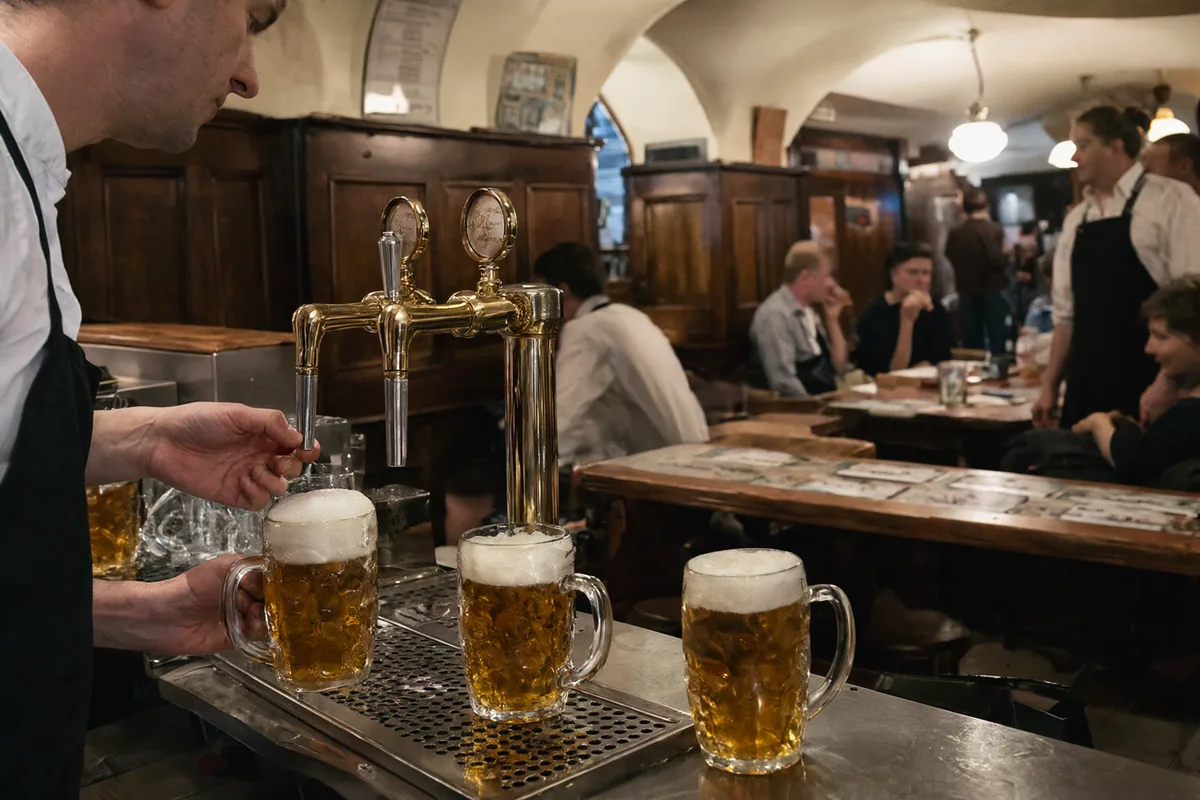
Plzeň (Pilsen in German) is where pale lager was first brewed in 1842, and every beer called a pilsner owes its name to this city. The original brewery runs tours that end in its sandstone cellars with a glass of unfiltered, unpasteurised beer drawn from an oak barrel. Around the city, pubs serve tankové pivo, beer delivered fresh in large tanks rather than kegs, and you will see three classic pours: the hladinka with a firm layer of foam, the šnyt, a smaller pour with more foam, and the mlíko, almost all foam, drunk quickly in a few gulps.
Food in Plzeň is pub food at its best: goulash, roast pork knee (pečené vepřové koleno), beer cheese, sausages and svíčková. The streets around Náměstí Republiky, the large main square with the Gothic Cathedral of St Bartholomew, have plenty of pubs and restaurants, and the brewery itself has a large beer hall. Plzeň is about 90 minutes from Prague by train, so it works well as a day trip, but staying the night lets you see its pubs at their liveliest.
Where to eat in Olomouc
Olomouc, in central Moravia, is a handsome university city with fewer tourists than its architecture deserves. Its food claim to fame is olomoucké tvarůžky, a small, ripened soft cheese with a very strong smell, made in the nearby town of Loštice. It is eaten with bread, onion and beer, marinated, breaded and fried, or baked into pastries, and Olomouc pubs put it into everything from spreads to soups. Even if you do not love it, it is worth trying once.
The centre of Olomouc is the Horní náměstí (Upper Square), with its UNESCO-listed Holy Trinity Column and an astronomical clock, and the lower square and surrounding streets have pubs, cafés and wine bars. With a big student population, Olomouc prices are low and the weekday lunch menus are generous. Moravian wine is easy to find here, and the local cooking adds Moravian dishes such as smoked meat with potato dumplings and spinach.
Where to eat in Karlovy Vary
Karlovy Vary is the most famous of the Bohemian spa towns, built along a river valley with ornate colonnades over its hot mineral springs. The local ritual is to buy a small porcelain spa cup with a spout and sip the warm, salty spring water as you walk. Between springs, look for lázeňské oplatky, large thin round spa wafers with a sweet filling of hazelnut, chocolate, vanilla or cinnamon, sold warm and fresh from stalls along the colonnades.
Karlovy Vary is also home to Becherovka, an herbal bitter made here since the 19th century, drunk as an aperitif or digestif, and often mixed with tonic as a beton. Restaurants along the main promenade are aimed at spa guests and visitors and can be expensive, so wander into the side streets or up the hillsides for better value. In early July the town hosts an international film festival, when hotels and restaurants fill and prices rise.
Where to eat in Mikulov and South Moravia
Mikulov is a small town under the limestone Pálava hills on the Austrian border, and the centre of the Czech Republic's main wine region. The whites are the stars: Welschriesling (Ryzlink vlašský), Grüner Veltliner (Veltlínské zelené) and the local Pálava grape. Villages around Mikulov are lined with rows of small family wine cellars (vinné sklepy), and many open their doors to visitors for tastings, often with simple plates of bread, cheese, smoked meat and pickles.
From late August to October, look for burčák, partly fermented young wine that is cloudy, sweet and lightly fizzy, sold in cellars and at markets. September brings harvest festivals (vinobraní) with music, roast meats and plenty of wine. South Moravian restaurants are relaxed and good value, and Mikulov pairs well with the nearby Lednice and Valtice chateaux. Arrange transport if you plan a cellar crawl, because the Czech Republic has a zero tolerance limit for alcohol when driving.
Vegetarian, vegan and allergy tips
Traditional Czech food is meat-centred, but Prague and Brno now have plenty of vegetarian and vegan restaurants. In traditional places, look for the bezmasá jídla (meatless dishes) section, which usually includes fried cheese, potato pancakes, mushroom dishes and fruit dumplings. The word for vegetarian is vegetariánský and for vegan veganský. Be careful, because "meatless" in older pubs can still mean bacon (slanina) in the potatoes, lard (sádlo) in the frying, pork crackling (škvarky) on dumplings, and meat stock in soups and sauces.
Dairy is everywhere: cream sauces, butter and quark appear in mains and desserts, so vegans should always ask. Bread dumplings contain wheat and often egg. Gluten-free (bezlepkový) dishes are increasingly marked on city menus, and the EU requires restaurants to be able to tell you which major allergens are in each dish. Our guide to eating abroad with food allergies explains how to explain an allergy clearly when you do not speak the language.
Useful Czech phrases for ordering
Dobrý den "Good day", the polite greeting to staff when you walk in (Dobrý večer in the evening)
Stůl pro dva, prosím "A table for two, please"
Co doporučujete? "What do you recommend?"
Dám si tohle "I will have this" (pointing)
Jedno pivo, prosím "One beer, please" (dvě piva for two)
Jsem alergický / alergická na... "I am allergic to..." (alergický for a man, alergická for a woman)
Zaplatím, prosím "I would like to pay, please"
Na zdraví! "Cheers!" Look your companions in the eye as you clink glasses
How swap.menu helps you eat in the Czech Republic
The pubs and lunch canteens where Czechs actually eat often post their daily menu in Czech only, sometimes handwritten or chalked on a board by the door. Photograph it with swap.menu and every dish appears in your language with the Czech name beside it and a short explanation, so you know that Španělský ptáček ("Spanish bird") is a beef roll stuffed with sausage, egg and gherkin, and that tlačenka is a pork brawn before you order. Every price is converted from koruna to your home currency, and we flag cover charges, sides priced separately and items sold per 100 g.
Tap the dishes you want, add a note such as "no bacon, I am vegetarian" or "dumplings instead of fries", typed or spoken, and swap.menu translates your order into Czech. Show the waiter your phone, or let them scan the QR code and read your order on their own screen. You can try it right now on a sample menu with the free demo, or see travel pass prices.
Off to the Czech Republic? Your first 3 menu scans are free, and a travel pass starts from $4.99 with nothing that renews.
Start free with 3 scansCzech Republic food FAQ
Do you tip in restaurants in the Czech Republic?
Yes, but modestly. Round up in pubs and leave about 10 percent in sit-down restaurants for good service. Tell the waiter the total you want to pay when you hand over your money, and skip the tip if a service charge is already on the bill.
What food is the Czech Republic famous for?
Svíčková (beef in cream sauce with dumplings), roast pork with dumplings and sauerkraut, goulash, roast duck, fried cheese and fruit dumplings. It is also famous for beer, especially pale lager from Plzeň, and for Moravian white wine.
Is Prague expensive to eat out?
Prague is cheaper than most western European capitals, especially if you eat the weekday set lunch and drink beer in neighbourhood pubs. Restaurants around Old Town Square and Charles Bridge charge much more, so walk a few streets away before you sit down.
Which Czech city is best for food?
Prague has the most choice and the best modern restaurants, Brno has excellent coffee, cocktails and good-value lunches, and Plzeň is the place for beer and pub food. South Moravia around Mikulov is best for wine.
Is tap water safe to drink in the Czech Republic?
Yes, tap water is safe to drink throughout the country. Restaurants usually sell bottled water, and many will bring tap water (kohoutková voda) if you ask, though not all do.
How can I read a Czech menu if I do not speak Czech?
Learn a few headings such as polévky (soups), hlavní jídla (mains) and přílohy (sides), or photograph the menu with swap.menu. It translates every dish into your language, explains what it is, converts prices from koruna to your currency and translates your order back into Czech for the waiter.
Travelling further in Europe? Read our food guides for neighbouring countries:
Or browse every travel food guide.