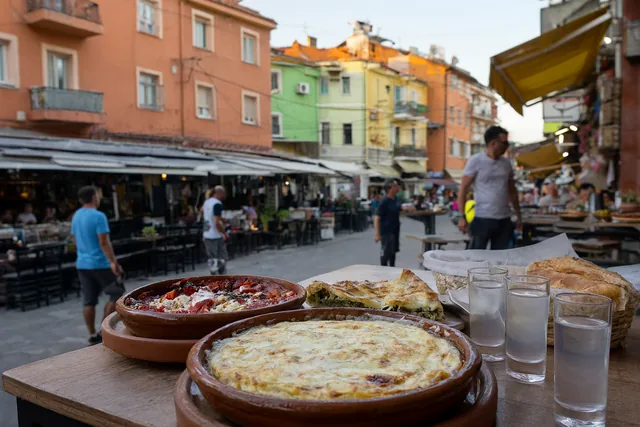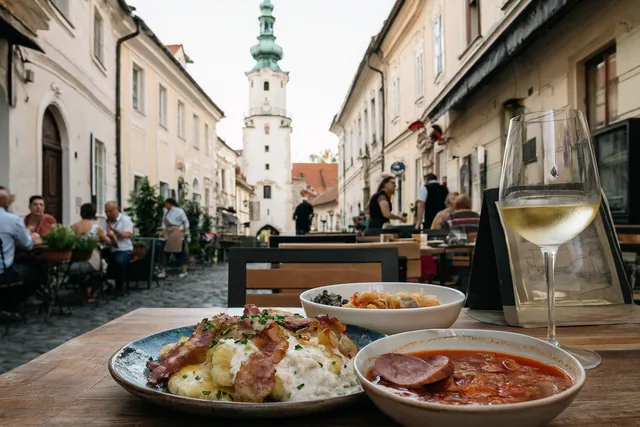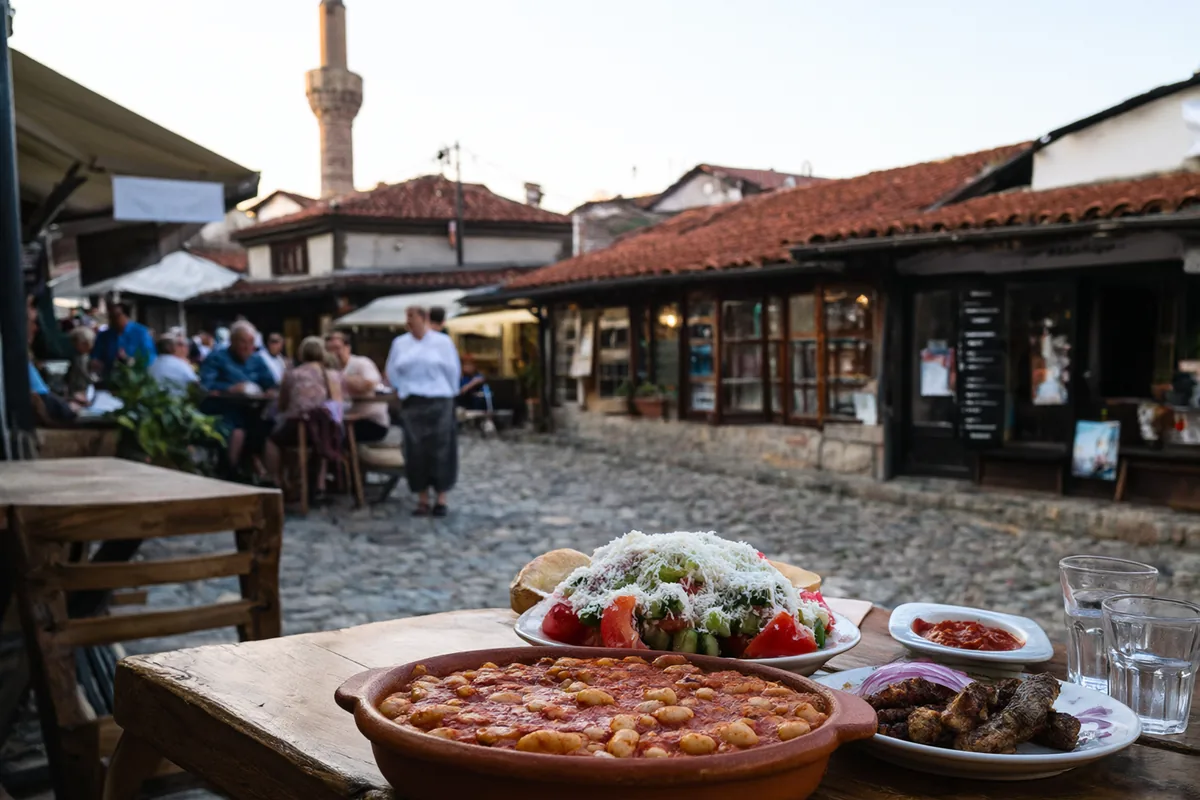
North Macedonia is a small, mountainous country with a big appetite. Its food is Balkan and Ottoman at heart, built on peppers, beans, white cheese, grilled meat and slow-baked clay dishes, and it is grown on the farms and orchards that surround every town. The country's sunny valleys produce some of the best peppers and tomatoes in Europe, and its wine is cheap and good. This North Macedonia food guide covers the dishes to know, how to read a Macedonian menu in the Cyrillic alphabet, tipping and paying in denars, then goes town by town through where to eat in Skopje, Ohrid, Bitola, Struga, Štip, the Tikveš wine region and Mavrovo.
What to eat in North Macedonia: 12 dishes to know
These are the dishes worth ordering, with the town or region each one is associated with. Many restaurants list them under "national dishes" or "traditional dishes".
- Tavče gravče (everywhere): white beans baked in a shallow clay pan with onion, dried red pepper and paprika, the national dish. It is often made without meat, but some versions add sausage.
- Ajvar (everywhere): a smoky relish of roasted red peppers, sometimes with aubergine, made by families every autumn and eaten with bread and cheese.
- Šopska salata (everywhere): chopped tomato, cucumber, onion and pepper buried under grated white cheese (sirenje).
- Pastrmajlija (Štip): an oval bread baked with cubes of cured, salted pork or mutton on top, often with an egg, a little like a meat pizza.
- Selsko meso (everywhere): "village meat", pieces of pork or veal with mushrooms, onion and wine, baked and served in a clay pot.
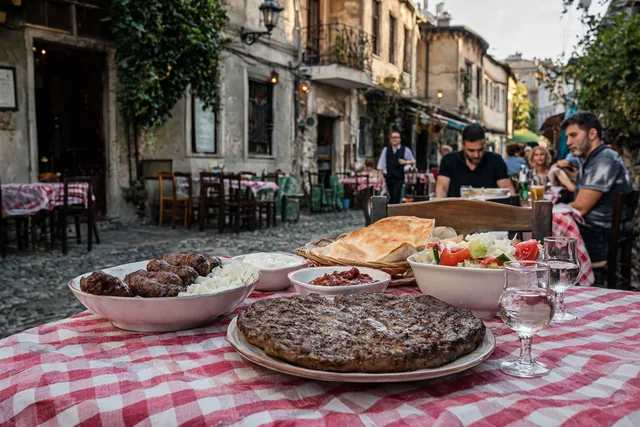
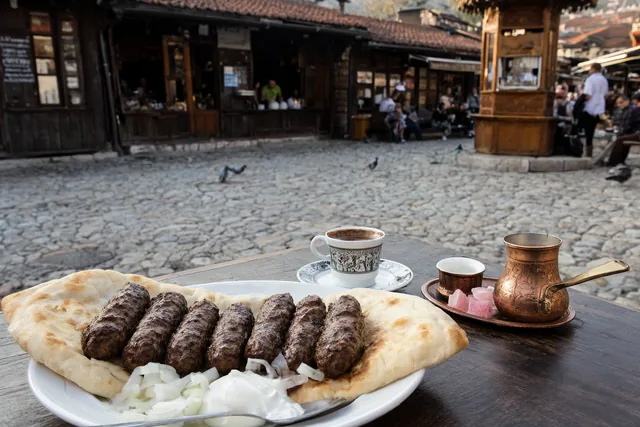
- Kebapi (everywhere, especially Skopje): small grilled fingers of minced meat served with bread, raw onion and pepper. Pleskavica is the large flat patty.
- Burek (Skopje and everywhere): flaky filo pie with meat, cheese or spinach, eaten for breakfast with a glass of drinking yoghurt.
- Polneti piperki (everywhere): peppers stuffed with rice and minced meat, or with cheese, and baked.
- Turli tava (everywhere): a slow-baked clay dish of mixed vegetables, often with meat.
- Pindžur and malidžano (everywhere): dips of roasted peppers, tomato and garlic, and of roasted aubergine.
- Mekici (everywhere): fried dough eaten for breakfast with white cheese, jam or honey.
- Tulumbi and baklava (everywhere): syrup-soaked fried pastries and walnut baklava from the Ottoman tradition.
To drink, North Macedonia's best-known wines are Vranec, a deep red, and Temjanika, a fragrant white, mostly from the Tikveš region. Rakija (grape brandy) and mastika, an aniseed spirit, are served as aperitifs. The toast is Na zdravje!
How to read a Macedonian menu
Macedonian is written in the Cyrillic alphabet, with a few letters of its own such as Ѓ, Ќ, Ѕ and Џ. Restaurants in central Skopje and Ohrid usually have menus in English as well, but traditional kafanas and village places may have Macedonian only. In the west of the country, including Struga and parts of Skopje, Albanian is also widely spoken and may appear on menus. These are the words you will see most often.
| Macedonian | Romanised | Meaning |
|---|---|---|
| Предјадења | Predjadenja | Starters: dips, cheese, cured meats |
| Салати | Salati | Salads |
| Супи и чорби | Supi i čorbi | Clear soups and thick soups |
| Главни јадења | Glavni jadenja | Main courses |
| Скара | Skara | Grill |
| Готвени јадења | Gotveni jadenja | Cooked dishes: stews and clay-pot bakes |
| Традиционални јадења | Tradicionalni jadenja | Traditional dishes |
| Свинско / телешко / јагнешко / пилешко | Svinsko / teleško / jagneško / pileško | Pork / veal / lamb / chicken |
| Риба / пастрмка | Riba / pastrmka | Fish / trout |
| Сирење / кашкавал | Sirenje / kaškaval | White brined cheese / yellow cheese |
| Леб | Leb | Bread |
| Домашно | Domašno | Homemade |
| Посно | Posno | Suitable for Orthodox fasting: no meat, dairy or eggs |
| Десерти | Deserti | Desserts |
Some Cyrillic letters look Latin but sound different: Р is "r", С is "s", Н is "n", В is "v" and Х is "h". So "СКАРА" reads "skara" (grill) and "РИБА" reads "riba" (fish). swap.menu reads Macedonian Cyrillic menus, explains each dish in your language and converts prices from denars into your home currency.
Tipping, denars and paying the bill
Menu prices in North Macedonia include VAT, and service charges and cover charges are rare. Some places charge separately for bread. Our guide to tax and service charges on menus explains how these lines work around the world.
Tipping is appreciated: around 10 percent is normal for good service at a sit-down restaurant, and rounding up is enough at cafés and bakeries. Leave the tip in cash, as card machines rarely offer a tip option.
The currency is the Macedonian denar (MKD), shown as "ден." or "den". Cards are accepted in many restaurants and hotels in Skopje and Ohrid, but cash is still important for bakeries, markets, kafanas and anywhere outside the main towns. Some tourist places accept euros, usually at a rounded rate. When a card machine offers to charge you in your home currency, decline and pay in denars: our guide to paying in local currency explains why.
Lunch, the main meal for many families, is eaten from about 1pm to 4pm, and dinner starts from around 8pm, later in summer. Café culture is strong, and the afternoon coffee can last for hours. Smoking is still common on café terraces and in some kafanas, so ask for a non-smoking area if it matters to you.
Where to eat in North Macedonia, town by town
North Macedonia is small, and most visitors combine Skopje with Lake Ohrid, but the wine country and mountains are close by. Jump to a destination:
Where to eat in Skopje
Skopje, the capital, is the best place to eat in North Macedonia, and its Old Bazaar (Stara Čaršija) is where to start. The bazaar, across the Stone Bridge from the main square, is one of the largest Ottoman-era bazaars in the Balkans, and its lanes are full of kebapčilnici grilling kebapi and pleskavica, bakeries selling burek, and pastry shops serving baklava and tulumbi with coffee. Next to it, the Bit Pazar is a huge open market for fruit, vegetables, peppers, cheese, spices and household goods.
For traditional Macedonian cooking in Skopje, head to Debar Maalo, a leafy neighbourhood west of the centre known for its kafanas and restaurants, where locals eat tavče gravče, selsko meso, grilled meats and salads with rakija and wine late into the evening. The centre around Macedonia Square has more international restaurants and cafés. A short trip from Skopje, Matka Canyon has a lakeside restaurant and walking trails, and it makes a good lunch outing. In autumn, look for home-made ajvar sold at Skopje's markets.
Where to eat in Ohrid
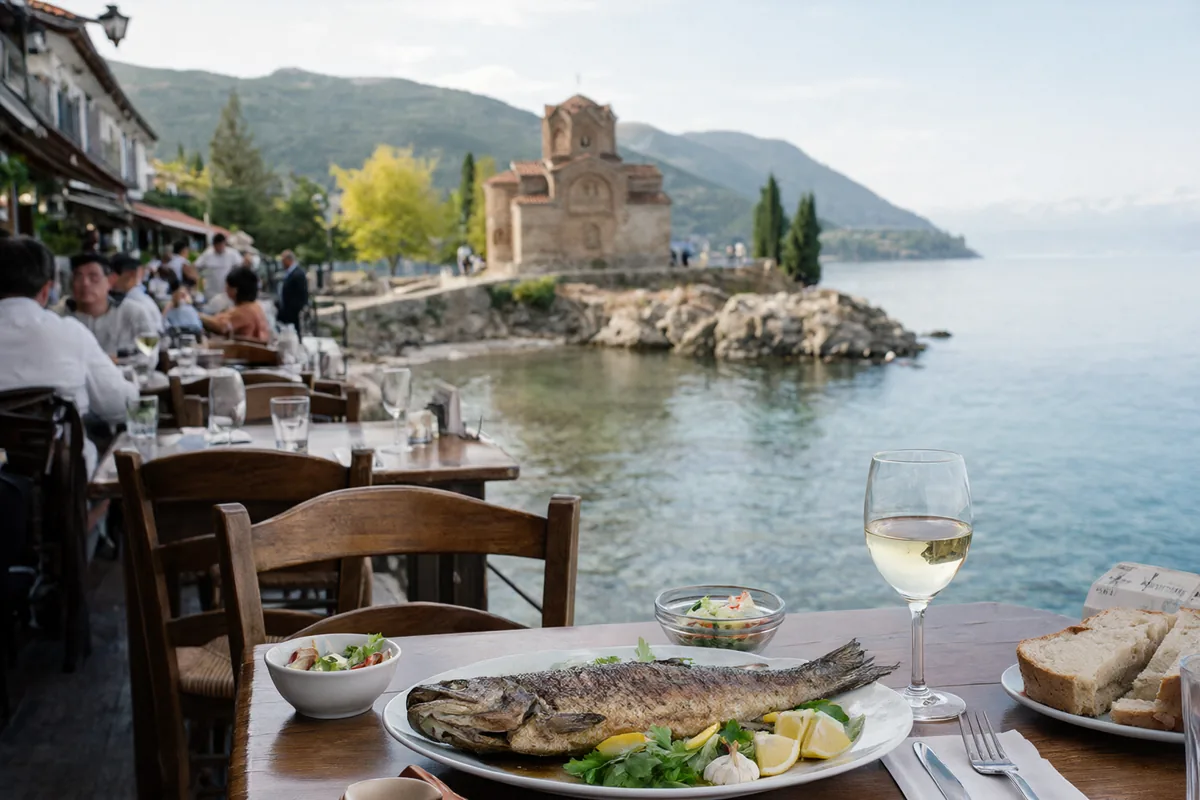
Ohrid, on the shore of Lake Ohrid, is the country's most popular destination, a UNESCO-listed old town of churches, stone houses and lake views. Restaurants along the lakeshore and on the terraces of the old town serve fish from the lake, grilled meats and traditional dishes. Lake Ohrid is famous for its endemic Ohrid trout, but it is protected and fishing it has been restricted, so most trout on menus is farmed or a related species. Ask what you are getting, and enjoy it grilled with lemon and garlic.
The old town of Ohrid, around the pedestrian street that runs up from the lake, has cafés, bakeries and small restaurants serving tavče gravče, selsko meso, stuffed peppers and Macedonian salads. Restaurants near the church of St John at Kaneo and on the lakeside below the fortress have the best views. Ohrid is busy in July and August with Macedonian and international holidaymakers, and many places along the lake are seasonal. For the Albanian side of the lake, see our Albania food guide.
Where to eat in Bitola
Bitola, the country's second city, in the south near the Greek border, has an elegant 19th-century centre and a strong café culture. The pedestrian street Širok Sokak is lined with cafés, bars and restaurants in old townhouses, and an evening stroll and coffee there is the Bitola ritual. The city's old bazaar has bakeries, grill houses and small shops, and the restaurants around it serve traditional food at low prices.
Bitola sits below Pelister National Park, and the mountain villages on its slopes have guesthouses and restaurants serving home cooking, lamb, cheese and mountain herbs. To the west, the area around Prespa Lake and the town of Resen is known for its apples, sold at roadside stalls in autumn. The ancient site of Heraclea Lyncestis is just outside Bitola. For the food across the border, see our Greece food guide.
Where to eat in Struga
Struga lies on the northern shore of Lake Ohrid, where the Black Drin river flows out of the lake, and it is a quieter alternative to Ohrid with a large Albanian community. The riverside promenade through the centre of Struga has cafés and restaurants, and lakeside places serve fish and grilled meats. The food mixes Macedonian and Albanian traditions, with pies, grills, stuffed peppers and baked dishes.
A short drive away, the village of Vevčani is known for its mountain springs, where restaurants serve trout and home cooking by the water, and for its winter carnival in January. Struga hosts a well-known international poetry festival each summer. The beaches along the lake between Struga and Ohrid have simple restaurants open in the warmer months.
Where to eat in Štip
Štip, in the east of the country, is a small town on the Bregalnica river, and it is the home of pastrmajlija, the oval bread topped with cubes of cured meat and often an egg. Štip celebrates it with an annual festival, and its bakeries and restaurants serve it every day, fresh from wood-fired ovens. Order it with a salad and a glass of local wine or a cold beer, and expect a large portion.
The town has a fortress on the hill above the river, and its centre has kafanas serving grilled meats, tavče gravče and local cheese. The surrounding region is agricultural, and in autumn the markets fill with peppers for ajvar. Štip is an easy stop on the way between Skopje and the east of the country, or a detour from the Tikveš wine region.
Where to eat in Tikveš
Tikveš, the warm valley around the towns of Kavadarci and Negotino in the centre of the country, is North Macedonia's main wine region. Its wineries, large and small, make Vranec, the deep red that is the country's signature grape, and Temjanika and Smederevka whites. Many offer tastings and lunches with local cheese, cured meats, ajvar and grilled meat. Wine here is very good value.
Kavadarci celebrates the grape harvest each September with a festival of wine, food and music. The region's restaurants serve hearty home cooking to match the wine: slow-baked clay dishes, lamb, stuffed peppers and tavče gravče. The ancient city of Stobi, near Negotino, is one of the most important archaeological sites in the country, and it makes a good stop combined with a winery visit.
Where to eat in Mavrovo
Mavrovo National Park, in the mountains of the west, is North Macedonia's largest national park, with a lake, ski slopes and old villages. Its food is pastoral: lamb, sheep's cheese, yoghurt, kaškaval and trout from the mountain rivers. The village of Galičnik, high in the park, is known for its sheep's cheese and kaškaval, and for the Galičnik Wedding, a traditional wedding festival held each July, with folk costumes, music and feasting.
Restaurants around Mavrovo Lake, near the half-submerged church of St Nicholas, serve grilled trout, lamb and local cheese, and guesthouses in the mountain villages cook home-style meals. The road from Skopje to Ohrid passes through or near the park, so Mavrovo makes a good lunch stop. In winter, the ski area brings hearty stews and grills to the menus.
Vegetarian, vegan and allergy tips
North Macedonia is easier for vegetarians than its grills suggest. Tavče gravče is often vegetarian, and dips such as ajvar, pindžur and malidžano, salads, stuffed peppers with cheese, burek with cheese or spinach, and mekici are widely available. The word for vegetarian is vegetarijanec (вегетаријанец) for a man and vegetarijanka for a woman, and bez meso (без месо) means "without meat". Watch for sausage or bacon in some versions of tavče gravče, lard in pastries, and meat broth in soups.
Vegans can ask for posno (посно) food, made for Orthodox fasting periods with no meat, dairy or eggs, which many kafanas offer, particularly during Lent and before Christmas. Common allergens include dairy in sirenje, kaškaval and yoghurt, walnuts in baklava and other desserts, and wheat in bread, pies and pastrmajlija. Our guide to eating abroad with food allergies explains how to make an allergy clear when you do not speak the language.
Useful Macedonian phrases for ordering
Добар ден / Добра вечер Dobar den / Dobra večer: "Good day / Good evening", the polite greeting as you walk in
Маса за двајца, ве молам Masa za dvajca, ve molam: "A table for two, please"
Што препорачувате? Što preporačuvate?: "What do you recommend?"
Би сакал / сакала ова Bi sakal / sakala ova: "I would like this" (sakal for a man, sakala for a woman)
Без месо, ве молам Bez meso, ve molam: "Without meat, please"
Алергичен / алергична сум на... Alergičen / alergična sum na...: "I am allergic to..." (alergičen for a man, alergična for a woman)
Сметката, ве молам Smetkata, ve molam: "The bill, please"
Благодарам, беше многу вкусно Blagodaram, beše mnogu vkusno: "Thank you, it was delicious"
How swap.menu helps you eat in North Macedonia
A Macedonian menu in Cyrillic is hard to decode, and even the transliterated dish names do not explain themselves: selsko meso means "village meat" but tells you nothing about the clay pot of pork and mushrooms that arrives, and pastrmajlija is a meat-topped bread, not a pastrami. Photograph the menu with swap.menu and every dish appears in your language with the Macedonian name beside it and a short explanation. Every price is converted from denars to your home currency.
Tap the dishes you want, add a note such as "posno, please" or "no pork", typed or spoken, and swap.menu translates your order into Macedonian. Show the waiter your phone, or let them scan the QR code and read your order on their own screen. You can try it right now on a sample menu with the free demo, or see travel pass prices.
Off to North Macedonia? Your first 3 menu scans are free, and a travel pass starts from $4.99 with nothing that renews.
Start free with 3 scansNorth Macedonia food FAQ
Do you tip in restaurants in North Macedonia?
Tipping is appreciated in North Macedonia, and around 10 percent is normal for good service at a sit-down restaurant. Rounding up is enough at cafés and bakeries. Leave tips in cash.
What food is North Macedonia famous for?
North Macedonia is best known for tavče gravče (baked beans), ajvar, šopska salad, kebapi, burek, selsko meso and pastrmajlija from Štip. It is also known for Vranec red wine and for the peppers and tomatoes grown in its valleys.
Is it expensive to eat out in North Macedonia?
No, North Macedonia is one of the cheapest countries in Europe for eating out. Burek, kebapi and coffee cost very little, and a full meal with wine at a kafana is good value. Lakeside restaurants in Ohrid in summer cost a little more.
Is tap water safe to drink in North Macedonia?
Tap water is generally safe to drink in Skopje and the larger towns, and Skopje's water comes from a mountain spring. In rural areas, ask locally. Bottled water is cheap and widely available.
What time do people eat dinner in North Macedonia?
Dinner usually starts from around 8pm, and later in summer, while lunch is eaten from about 1pm to 4pm and is often the main meal. Kafanas stay busy late into the evening, especially at weekends.
How can I read a Macedonian menu written in Cyrillic?
Learn a few letters and words, such as скара (skara, grill) and риба (riba, fish), or photograph the menu with swap.menu. It reads Cyrillic, translates every dish into your language, converts prices from denars and translates your order back into Macedonian for the waiter.
Travelling further in the Balkans? Read our food guides for neighbouring countries:
Or browse every travel food guide.