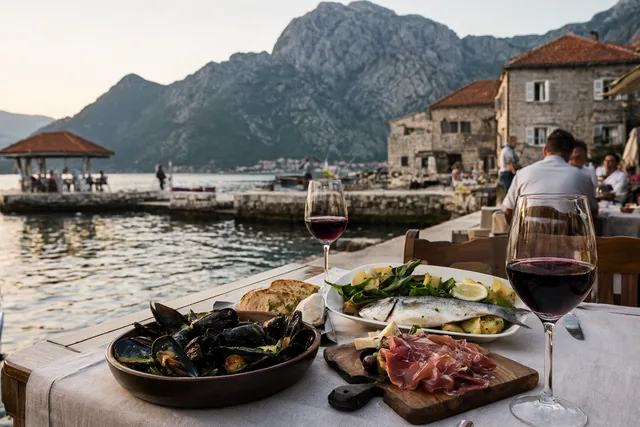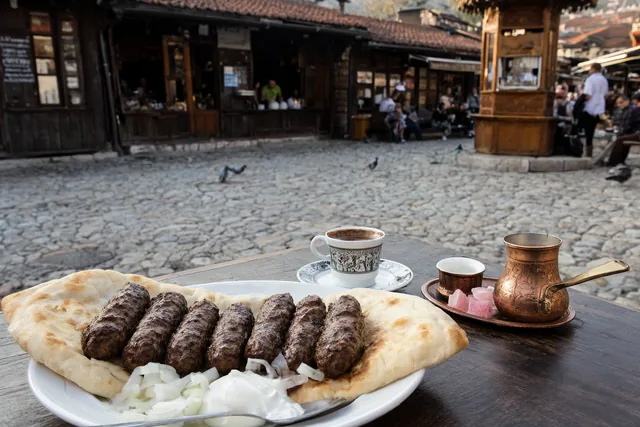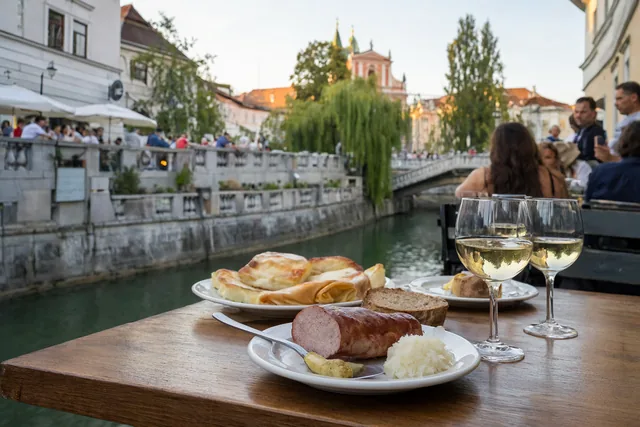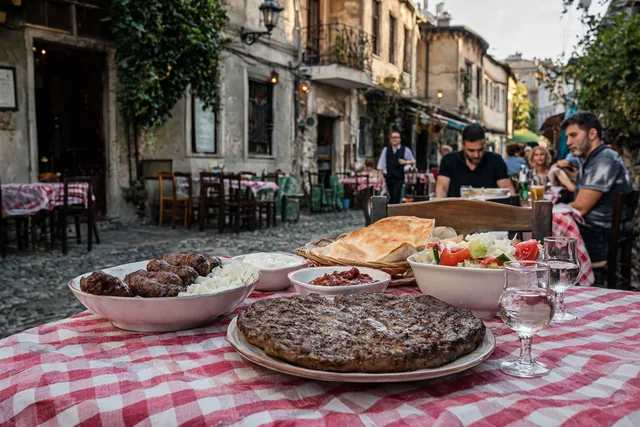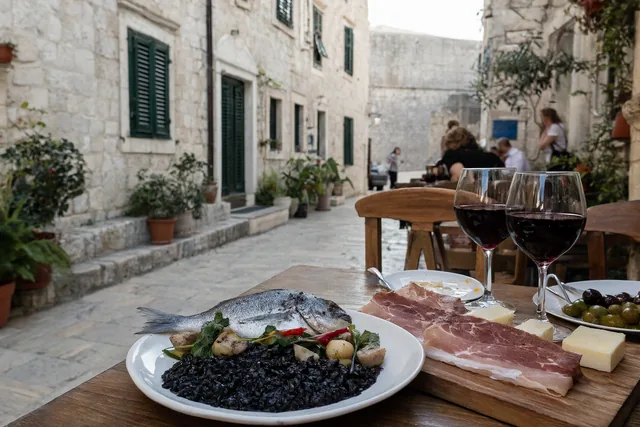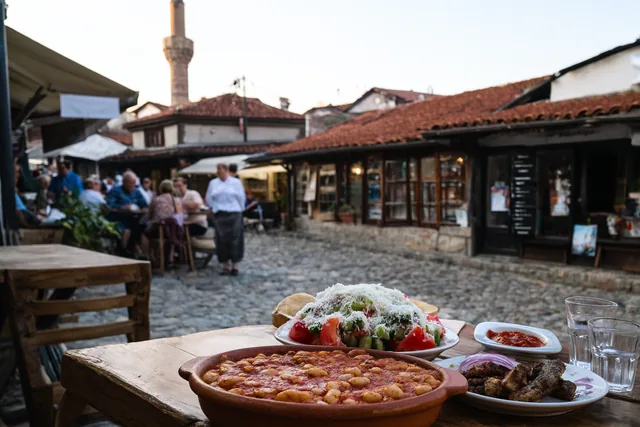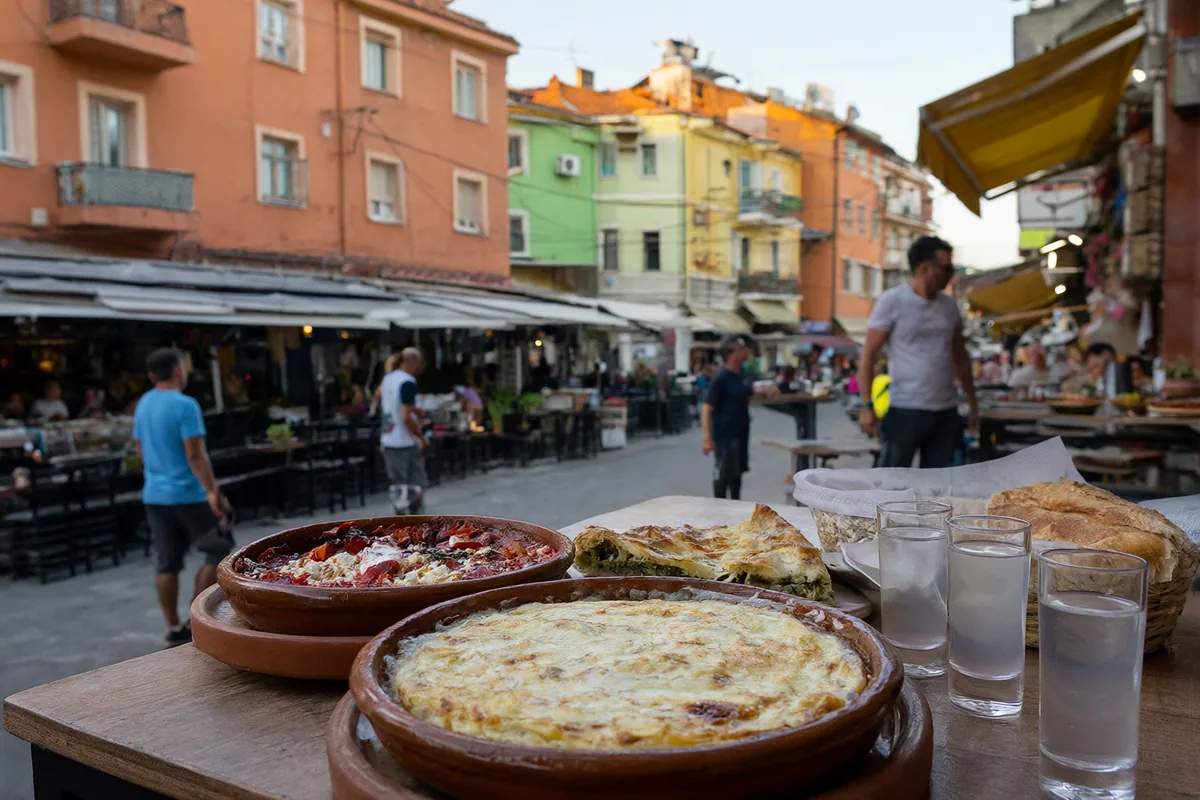
Albania is one of the best-value places to eat in Europe, and one of the least known. Its cooking combines Ottoman, Greek and Italian influences with a deep farm-to-table habit: much of what you eat was grown, raised or made within a few kilometres of the table. Expect baked yoghurt and lamb, flaky pies, grilled meats, lake and sea fish, fresh cheese, olive oil and homemade raki. This Albania food guide covers the dishes to know, how to read an Albanian menu, paying in lek and tipping, then goes city by city through where to eat in Tirana, Berat, Gjirokastër, Shkodër, Korçë, Durrës, Saranda and Vlorë.
What to eat in Albania: 12 dishes to know
These are the dishes worth ordering, with the town or region each one is most associated with. Many restaurants describe their food as gatime tradicionale, traditional cooking, and that is the section of the menu to read first.
- Tavë kosi (Elbasan, everywhere): lamb and rice baked under a thick layer of yoghurt and egg until set and golden, often called the national dish.
- Byrek (everywhere): flaky filo pie filled with spinach, cheese, minced meat, onion and tomato, or pumpkin, sold by the slice from bakeries called byrektore.
- Fërgesë (Tirana): a rich, bubbling bake of peppers, tomatoes and soft cottage cheese, sometimes with liver or meat, served in a clay dish with bread.
- Qofte (everywhere): grilled or fried meatballs of beef or lamb with herbs, often served with chips, salad and yoghurt.
- Speca të mbushura (everywhere): peppers stuffed with rice and meat or with soft cheese, and baked.
- Qifqi (Gjirokastër): fried rice balls bound with egg and flavoured with mint, a speciality of the south.
- Flija (north): layers of thin batter brushed with cream and cooked slowly under a hot metal lid, a long, patient dish for feasts.
- Lakror (Korçë): a round pie of thin pastry filled with greens, onion and tomato, or meat, cooked under embers.
- Mish qengji (everywhere): roast lamb, either baked in the oven or turned on a spit, the centrepiece of family celebrations.
- Krap and koran (Shkodër and Pogradec): carp baked from Lake Shkodër, and trout from Lake Ohrid.
- Tarator (everywhere): cold yoghurt with cucumber, garlic and olive oil, eaten as a salad or a light soup in summer.
- Trileçe (everywhere): a sponge cake soaked in three kinds of milk with a caramel top, the most popular dessert in Albania.
To drink, raki, a clear grape or mulberry spirit, is offered as a welcome, and many families make their own. Albania also makes wine from local grapes such as Kallmet, a red from the north, and Shesh (white and red) from the centre. Coffee is a national habit, served as espresso or as thick Turkish-style coffee.
How to read an Albanian menu
Albanian is written in the Latin alphabet, but it is not related closely to any other European language, so even a few words are hard to guess. Restaurants in Tirana and the resorts usually have English or Italian menus, as many Albanians speak Italian, but village places often have a short list in Albanian or no menu at all. A few letters to know: ë is a soft, often silent vowel, ç is "ch", xh is "j", sh is "sh" and q is close to "ch". These are the words you will see most often.
| Albanian | Meaning |
|---|---|
| Sallata | Salads |
| Supë / çorbë | Soup / thick soup |
| Antipasta / meze | Starters |
| Gatime tradicionale / gatim shtëpie | Traditional dishes / home cooking |
| Pjata kryesore | Main dishes |
| Në skarë | Grilled |
| Në furrë / tavë | Baked in the oven / a baked dish in a clay pot |
| Mish | Meat |
| Qengj / viç / derr / pulë | Lamb / veal / pork / chicken |
| Peshk / fruta deti | Fish / seafood |
| Djathë / gjizë | Cheese / soft curd cheese |
| Bukë | Bread |
| Verë shtëpie | House wine |
| Ëmbëlsira | Desserts |
Prices on Albanian menus are in new lek, but you may hear people quote prices in "old lek", which are ten times higher. If a spoken price sounds absurd, it is probably in old lek, so divide by ten or ask to see it written down. swap.menu reads the printed menu in lek and converts every price into your home currency, so you do not have to do the sums.
Lek, tipping and paying the bill
Menu prices in Albania include VAT, and cover charges and service charges are uncommon, though some upmarket places in Tirana and the resorts add one; it should be stated on the menu. Businesses are required to give you a fiscal receipt. Our guide to tax and service charges on menus explains how these lines work around the world.
Tipping was not traditionally expected in Albania, but it has become normal in restaurants, especially in Tirana and tourist areas. Around 10 percent for good service is appreciated, and rounding up is fine in cafés and byrek shops. Leave the tip in cash.
The currency is the lek (plural lekë, code ALL), shown as "L" or "Lekë". Albania is still largely a cash economy: cards are accepted in many restaurants and hotels in Tirana and the larger resorts, but bakeries, markets, village restaurants and small family places often take cash only. ATMs are easy to find in towns. Some places on the coast accept euros, usually at a rate that favours them. When a card machine offers to charge you in your home currency, decline and pay in lek: our guide to paying in local currency explains why.
Albanians eat lunch from about 12:30pm to 3pm and dinner from around 7:30pm, later on the coast in summer. The early evening xhiro, a stroll along the main street or seafront, comes before dinner. Coffee is drunk throughout the day, and cafés are always full. Many coastal restaurants are seasonal and close outside summer.
Where to eat in Albania, city by city
From the capital's grills to the stone towns of the south and the fish restaurants of the Riviera, each region of Albania has its own dishes. Jump to a destination:
Where to eat in Tirana
Tirana, the capital, has changed fast, and it now has Albania's widest choice of restaurants, from old-style grill houses to farm-to-table kitchens and international cafés. The best place to start is the New Bazaar (Pazari i Ri), a restored market area east of Skanderbeg Square where stalls sell fruit, vegetables, cheese, olives, honey and raki, and the surrounding streets are full of restaurants serving traditional food. Order fërgesë, Tirana's own dish, along with tavë kosi, qofte and grilled meats.
Blloku, the former residential district of the communist leadership, is now Tirana's busiest area for cafés, bars and restaurants, popular with young Albanians in the evening. For a cheap breakfast or lunch, look for a byrektore, where byrek comes hot by the slice with a glass of dhallë (salted yoghurt drink). Tirana's grill houses serve zgara, mixed grilled meats. On the edge of the city, restaurants on Mount Dajti, reached by cable car, and farm restaurants in the surrounding hills serve home cooking with views.
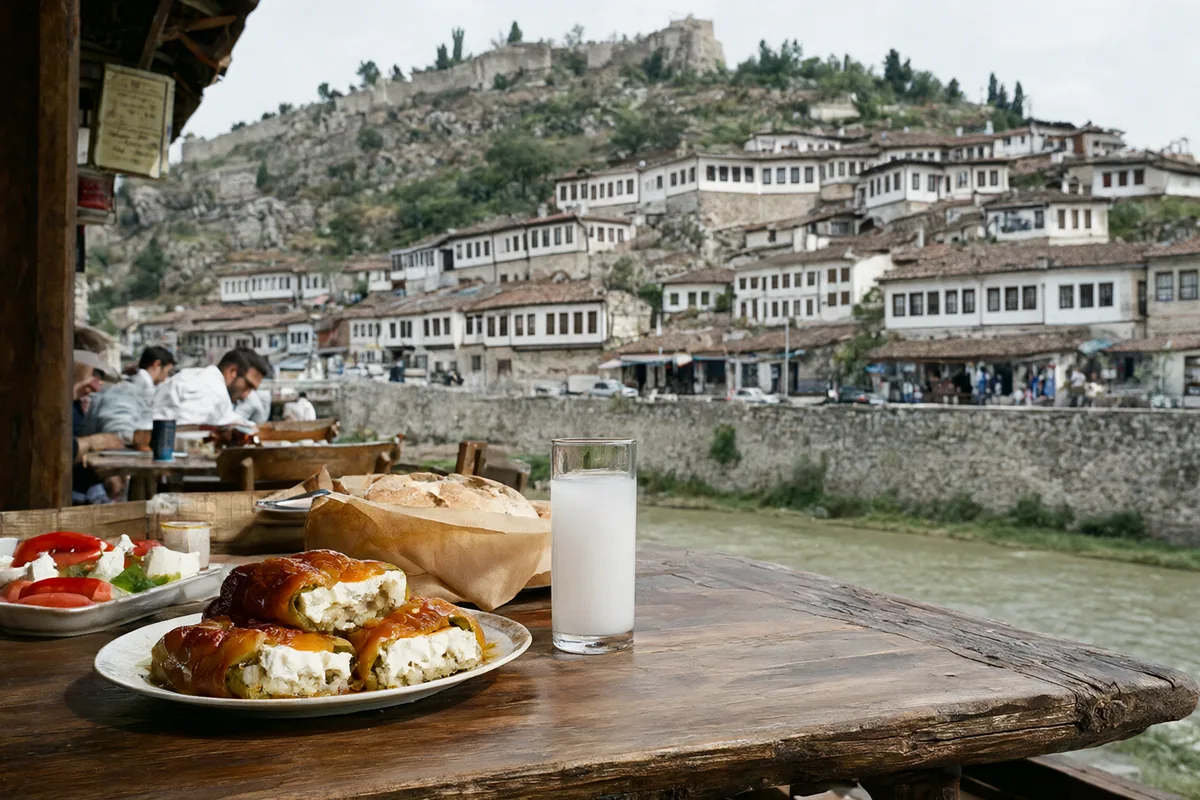
Where to eat in Berat
Berat, the "city of a thousand windows", is a UNESCO-listed town of white Ottoman houses climbing the hillside above the Osum river, with a castle on top where people still live. It is one of the most rewarding places in Albania to eat home-style food. Family-run restaurants in old houses in the Mangalem and Gorica quarters cook slow-baked lamb, stuffed peppers and vine leaves, byrek, tavë kosi, and salads with local cheese, often with produce from their own gardens.
The hills around Berat are an important wine region, and family wineries near the town offer tastings of local wines and raki. Inside the castle walls, a few small restaurants and guesthouses serve lunch with views over the valley. Berat is a popular day trip from Tirana, but staying overnight lets you eat dinner in the old town after the tour buses leave. In the evening, join the xhiro along the main boulevard by the river.
Where to eat in Gjirokastër
Gjirokastër, in the south, is a UNESCO-listed stone city of grey slate roofs and fortified tower houses below a huge castle. Its signature dish is qifqi, rice balls with egg and mint, fried in a special pan, and you should order it here. Other southern specialities include pispili, a cornbread pie with wild greens, and lamb and goat cooked slowly in the oven. The cheeses of the surrounding mountains are excellent, and local honey and walnuts appear in desserts.
The Old Bazaar of Gjirokastër, on the steep cobbled streets below the castle, has restaurants, cafés and shops in restored stone buildings, and some have terraces with views across the Drino valley. A short drive east, the town of Përmet is known throughout Albania for its gliko (fruit preserves served on a spoon) and raki, and for restaurants cooking local produce. Gjirokastër is a good stop between the coast at Saranda and the north.
Where to eat in Shkodër
Shkodër, in the north-west by Lake Shkodër, is one of Albania's oldest cities and its cultural capital, known for its cyclists and its pedestrian street, Rruga Kolë Idromeno, lined with cafés and restaurants in restored buildings. Food in Shkodër is defined by the lake: carp (krap), baked with onions and tomatoes, eel, and other freshwater fish. The northern wine grape Kallmet is grown in the region and makes a good partner.
Restaurants along the lake shore, especially towards the village of Shiroka, serve fish with views across the water to Montenegro. Shkodër is also the gateway to the Albanian Alps, including Theth and Valbona, where guesthouses cook mountain food: flija, homemade cheese, lamb, beans, honey and raki. Meals in the mountain villages are usually included with your room, and they are some of the most memorable in Albania. For Lake Skadar on the Montenegrin side, see our Montenegro food guide.
Where to eat in Korçë
Korçë, in the south-east near the Greek border, is a cultured, cool-climate town known for its music, its old houses and its food. The dish to order is lakror, a thin pie filled with greens, onions and tomato or meat, traditionally baked under a lid covered in embers. Korçë is also famous across Albania for its beer, and the town holds a beer festival in summer. The region grows apples and other fruit, and local restaurants serve hearty meat dishes, beans and pies suited to the cold winters.
The restored Old Bazaar in the centre of Korçë has restaurants, cafés and small guesthouses in its stone buildings, and it is the most atmospheric place to eat in the town. The mountain village of Voskopojë, a short drive away, has old churches and guesthouses serving home cooking. From Korçë it is a short trip to Pogradec on Lake Ohrid, where restaurants serve koran, the lake's trout, and our North Macedonia food guide covers the Macedonian side of the lake.
Where to eat in Durrës
Durrës, Albania's main port and second city, is less than an hour from Tirana and is where many people from the capital go to eat fish. Its seafront promenade and the long beach south of the city are lined with restaurants serving grilled fish, mussels, octopus, calamari and seafood pasta, which shows the strong Italian influence on the Albanian coast. The old centre near the Roman amphitheatre and the Venetian tower has bars and cafés.
In Durrës, fish is usually sold by weight, so choose and ask the price before it is cooked. Local restaurants also serve Albanian staples such as tavë kosi, qofte and byrek, and the bakeries near the port open early. The beach area of Durrës is busy with Albanian families in July and August, and quieter, cheaper places are a short walk back from the sand.
Where to eat in Saranda
Saranda, on the far south of the Albanian Riviera facing Corfu, is the main resort of the south and a good place for seafood. Its seafront promenade is lined with restaurants and cafés, and the fish is fresh and cheaper than across the water in Greece. The lagoon near the ancient city of Butrint is known for its farmed mussels, and they appear on menus all along this coast, steamed with wine and garlic or in a tomato sauce.
The village of Ksamil, south of Saranda, has beach restaurants overlooking small islands, and the castle of Lëkurësi above the town has a restaurant with views over the bay. North of Saranda, the Riviera villages of Himarë, Qeparo and Dhërmi have seafood restaurants and family places cooking olive oil, lamb and goat. Saranda is also reachable by ferry from Corfu, and our Greece food guide covers the island.
Where to eat in Vlorë
Vlorë sits where the Adriatic meets the Ionian Sea, and it is a busy coastal city with a long seafront promenade, the Lungomare, lined with restaurants and cafés. Its food is Mediterranean: grilled fish, seafood, olive oil from the groves around the bay, and salads with local cheese. North of the city, the Narta lagoon is surrounded by vineyards, and the village of Narta is known for its white wine.
South of Vlorë, the road climbs to the Llogara Pass, where roadside restaurants roast lamb on spits and serve it with salad, bread and local cheese, with views over the coast. Further on lie the Riviera villages. Vlorë is a practical base for exploring the coast and the Karaburun peninsula, where boat trips stop at small bays.
Vegetarian, vegan and allergy tips
Albania is better for vegetarians than its meaty grills suggest. Byrek with spinach (me spinaq) or cheese (me djathë), fërgesë without meat, stuffed peppers with cheese, tarator, salads, beans and grilled vegetables are easy to find. The word for vegetarian is vegjetarian, and pa mish means "without meat". Watch for meat in some versions of fërgesë and stuffed vegetables, meat broth in soups and beans (groshë), and butter or lard in pastries.
Vegans will find it harder, because yoghurt, cheese and butter are in many dishes. Common allergens include dairy almost everywhere, walnuts in bakllava and other desserts, eggs in qifqi and tavë kosi, and wheat in byrek and bread. Our guide to eating abroad with food allergies explains how to make an allergy clear when you do not speak the language.
Useful Albanian phrases for ordering
Note that some older Albanians shake their head from side to side to mean "yes" and nod to mean "no".
Mirëdita / Mirëmbrëma "Good day / Good evening", the polite greeting as you walk in
Një tavolinë për dy, ju lutem "A table for two, please"
Çfarë më rekomandoni? "What do you recommend?"
Dua këtë, ju lutem "I would like this, please" (pointing)
Pa mish, ju lutem "Without meat, please"
Jam alergjik / alergjike ndaj... "I am allergic to..." (alergjik for a man, alergjike for a woman)
Llogarinë, ju lutem "The bill, please"
Faleminderit, ishte shumë e shijshme "Thank you, it was delicious"
How swap.menu helps you eat in Albania
Albanian is one of the hardest European languages for visitors to guess, and the best family restaurants often have a short menu in Albanian only. Photograph it with swap.menu and every dish appears in your language with the Albanian name beside it and a short explanation, so you know that tavë kosi is lamb baked under yoghurt and that paçe koke is a soup made from a sheep's head, before you order. Every price is converted from lek to your home currency, which also takes the confusion out of old lek and new lek.
Tap the dishes you want, add a note such as "no meat" or "nut allergy", typed or spoken, and swap.menu translates your order into Albanian. Show the waiter your phone, or let them scan the QR code and read your order on their own screen. You can try it right now on a sample menu with the free demo, or see travel pass prices.
Off to Albania? Your first 3 menu scans are free, and a travel pass starts from $4.99 with nothing that renews.
Start free with 3 scansAlbania food FAQ
Do you tip in restaurants in Albania?
Tipping was not traditionally expected in Albania, but around 10 percent is now normal and appreciated in restaurants, especially in Tirana and tourist areas. Rounding up is enough in cafés and byrek shops. Leave tips in cash.
What food is Albania famous for?
Albania is best known for tavë kosi (lamb baked in yoghurt), byrek, fërgesë, qofte, stuffed peppers, roast lamb and trileçe. Regional dishes include qifqi in Gjirokastër, flija in the north, lakror in Korçë and lake fish in Shkodër.
Is it expensive to eat out in Albania?
No, Albania is one of the cheapest countries in Europe for eating out. A meal at a traditional restaurant costs far less than in Greece or Italy, and byrek and coffee are very cheap. Prices are higher in Tirana's smarter areas and on the Riviera in summer.
Is tap water safe to drink in Albania?
Tap water in Albania is not generally recommended for drinking, and most residents and visitors drink bottled water, which is cheap and sold everywhere. Mountain spring water in rural areas is often fine, but ask locally.
Can I pay by card in Albania?
Cards are accepted in many restaurants and hotels in Tirana and the main resorts, but Albania is still mainly a cash economy. Carry lek for bakeries, markets, village restaurants and small family places, and use ATMs in towns.
How can I read an Albanian menu if I do not speak Albanian?
Learn a few words such as mish (meat), peshk (fish) and në skarë (grilled), or photograph the menu with swap.menu. It translates every dish into your language, explains what it is, converts prices from lek to your currency and translates your order back into Albanian for the waiter.
Travelling further in the Balkans? Read our food guides for neighbouring countries:
- Greece food guide
- Montenegro food guide
- North Macedonia food guide
- Italy food guide
- Serbia food guide
Or browse every travel food guide.