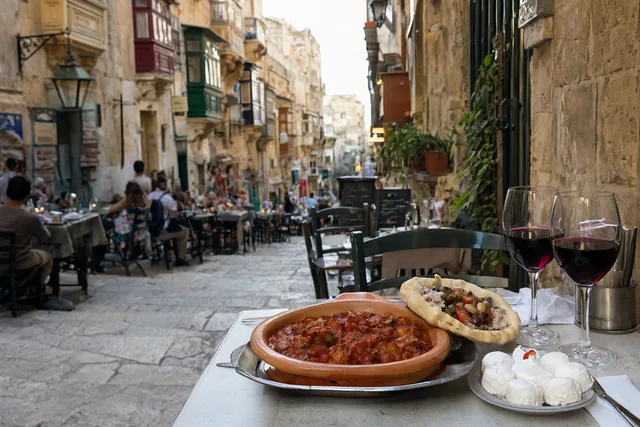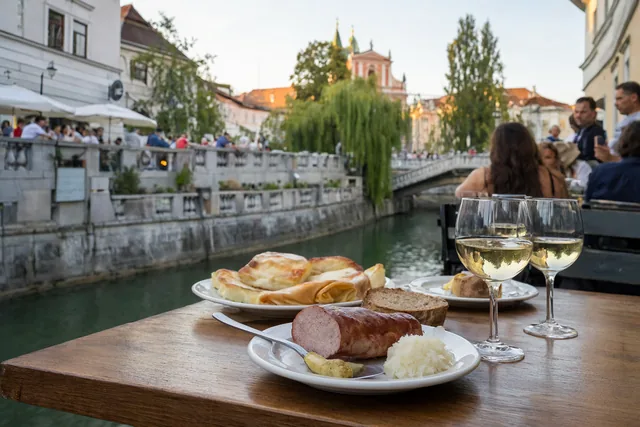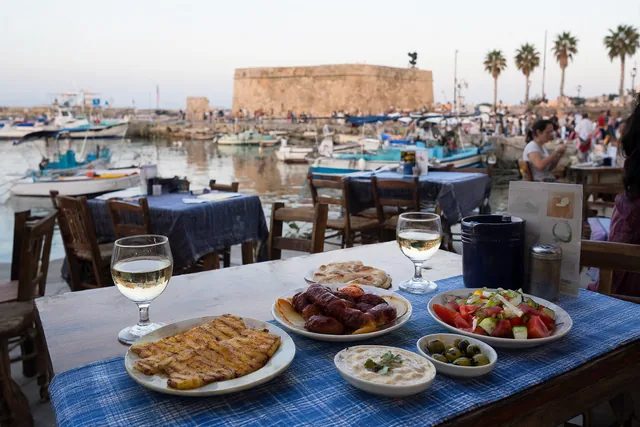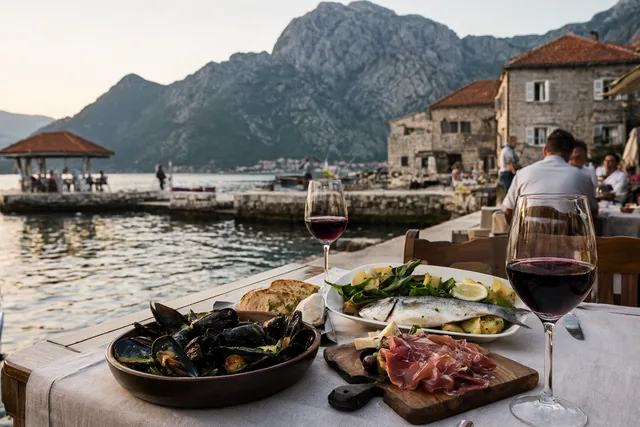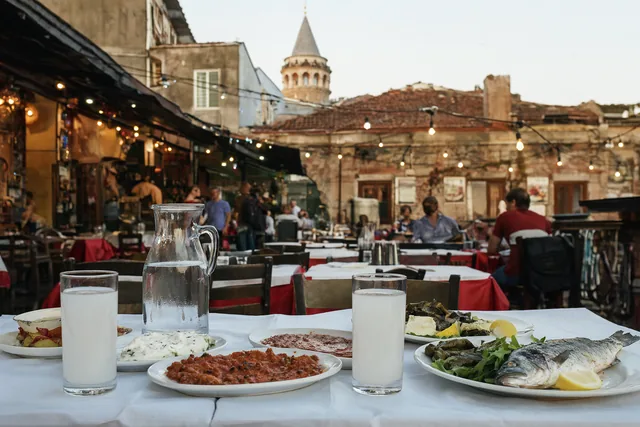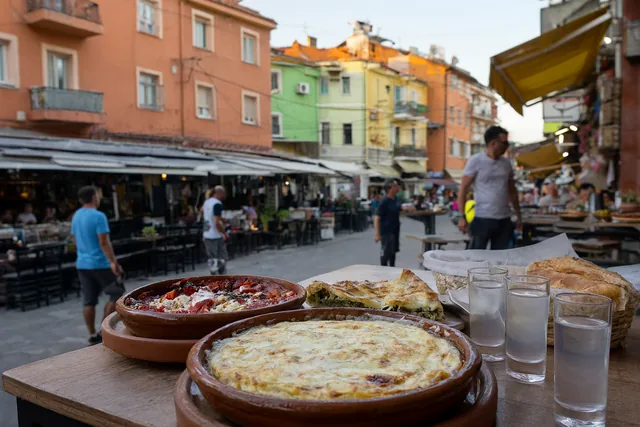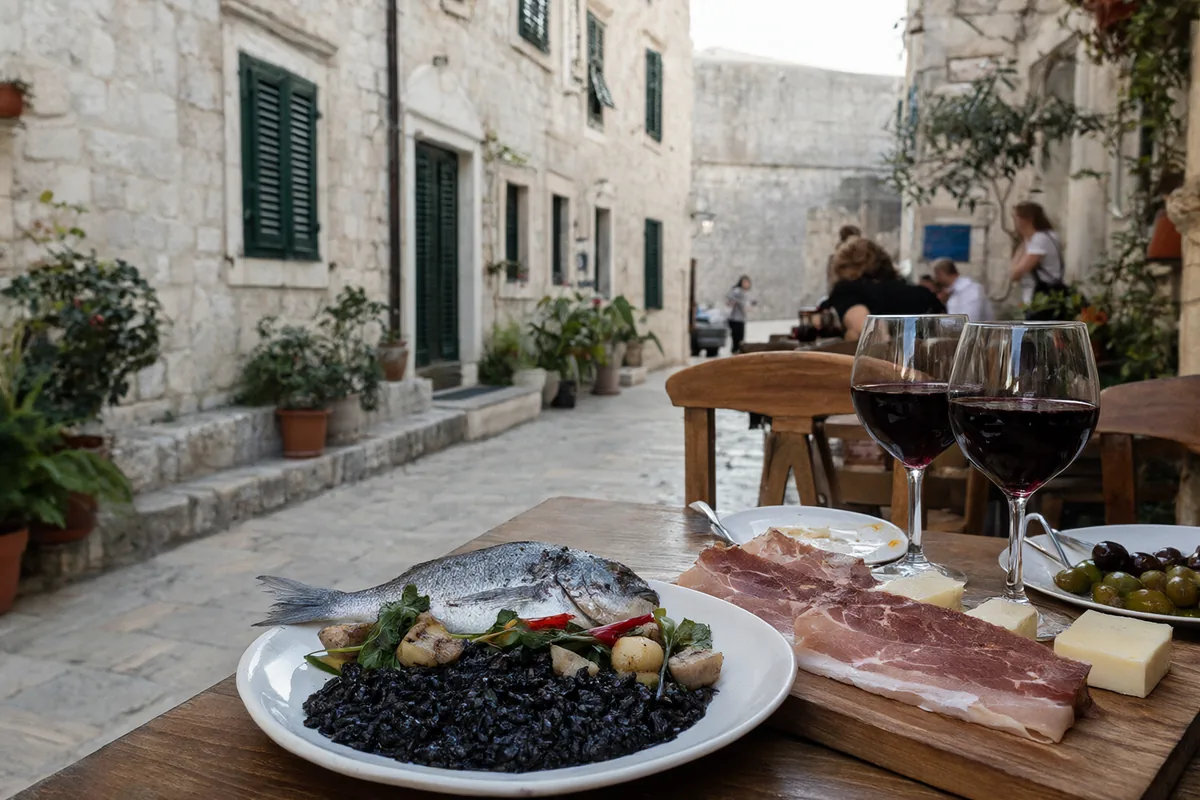
Croatia is really two food countries. Along the Adriatic coast and on the islands, the cooking is Mediterranean: grilled fish, olive oil, black risotto, prosciutto and wine, with strong Venetian and Italian roots. Inland, around Zagreb and in the eastern plains of Slavonia, it turns central European, with paprika, sausages, strudel and hearty stews. This Croatia food guide covers the dishes to know, how to read a Croatian menu, tipping and paying, then goes city by city through where to eat in Zagreb, Split, Dubrovnik, Istria, Zadar, Hvar, Rijeka and Osijek. The best meals are often at a konoba, a traditional tavern, rather than at a restaurant with a sea view.
What to eat in Croatia: 12 dishes to know
These are the dishes worth ordering, with the region each one belongs to. Croatian cooking is strongly seasonal and regional, so the local speciality is usually the best order.
- Peka (Dalmatia): lamb, veal or octopus slow-cooked with potatoes under an iron bell covered in embers. It usually has to be ordered a few hours ahead.
- Pašticada (Dalmatia, especially Split): beef marinated in vinegar, then braised for hours with prunes, wine and spices, served with gnocchi.
- Crni rižot (coast): black risotto made with cuttlefish or squid and its ink.
- Brudet (coast): a fish stew of several kinds of fish cooked with tomato, wine and vinegar, often served with polenta.
- Pršut and Paški sir (Dalmatia and Istria): dry-cured ham and the hard sheep's cheese from the island of Pag, the classic starter plate.
- Fuži with truffles (Istria): quill-shaped fresh pasta with shaved Istrian truffle, black most of the year and white in autumn.
- Buzara (coast): mussels or scampi cooked in white wine, garlic, parsley and breadcrumbs, sometimes with tomato.
- Štrukli (Zagreb and Zagorje): dough wrapped around fresh cheese, either boiled or baked with cream.
- Soparnik (Poljica, near Split): a thin pie filled with Swiss chard, onion and parsley, baked on an open hearth.
- Kulen (Slavonia): a spicy, paprika-red cured pork sausage, sliced thin.
- Ćevapi and burek (everywhere): grilled minced meat fingers in flatbread, and flaky filo pie with meat or cheese, both arrivals from Bosnia and now Croatian staples.
- Fritule (coast): small fried doughnuts flavoured with citrus zest and rakija, dusted with sugar, especially at Christmas.
Croatia makes good wine. Look for Plavac Mali, a big red from the Dalmatian coast and islands, Malvazija, the white of Istria, and Graševina, the white of Slavonia. On the coast, locals mix red wine with water as bevanda; inland, white wine with sparkling water is gemišt.
How to read a Croatian menu
Tourist restaurants on the coast have menus in English, German and Italian, but inland places and konobas off the main streets often have Croatian only, or a board of the day's dishes. Croatian uses the Latin alphabet with a few accents: č and ć are like "ch", š is "sh", ž is like the "s" in "measure" and j is "y". These are the words you will see most often.
| Croatian | Meaning |
|---|---|
| Hladna / topla predjela | Cold / hot starters |
| Juhe | Soups |
| Glavna jela | Main courses |
| Na žaru / s roštilja | Grilled / from the grill |
| Ispod peke | Cooked under the bell (peka), usually to order in advance |
| Riba / plodovi mora | Fish / seafood |
| Svinjetina / junetina / teletina / janjetina | Pork / beef / veal / lamb |
| Prilozi | Side dishes, often ordered separately |
| Blitva | Swiss chard with potatoes and olive oil, the standard Dalmatian side |
| Domaće | Homemade |
| Kućno vino | House wine |
| Kg / cijena po kilogramu | Price per kilo, common for fresh fish and shellfish |
| Kuver | Cover charge for bread, per person |
| Marenda / gablec | A hearty mid-morning or early lunch dish at a low fixed price |
In fish restaurants, the waiter often brings a tray of whole fresh fish to the table so you can choose one. The price is per kilo, and a large fish can easily serve two and cost much more than you expect. Ask how much it weighs before it is cooked. swap.menu flags per-kilo prices and any kuver on the menu, so the total is clear before you order.
Tipping, cover charges and paying the bill
Menu prices in Croatia include VAT. Some restaurants, particularly on the coast, add a kuver, a small cover charge per person for bread, and it should appear on the menu. A separate service charge is rare. Our guide to tax and service charges on menus explains how these lines work around the world.
Tipping is not compulsory, but around 10 percent is customary for good service at a sit-down restaurant, and rounding up is normal at cafés and bars. Card machines often have no option to add a tip, so leave the tip in cash on the table or tell the waiter the total you want to pay. You should always receive a printed receipt.
Croatia switched from the kuna to the euro (€) in 2023, so older guidebooks and blogs may quote kuna prices. Cards are accepted in most restaurants, cafés and shops, but bakeries, market stalls, small konobas and island bars may prefer cash. When a card machine offers to charge you in your home currency, decline and pay in euros: our guide to paying in local currency explains why.
Croatians usually eat lunch from about 1pm to 3pm and dinner from 7pm to 10pm, with coastal restaurants busy late in summer. Coffee is a social ritual and can last an hour. Many coastal and island restaurants open only from around Easter to October, so off-season visitors should check what is open.
Where to eat in Croatia, city by city
From the capital's market to the islands' fish taverns, every part of Croatia has its own dishes. Jump to a city or region:
Where to eat in Zagreb
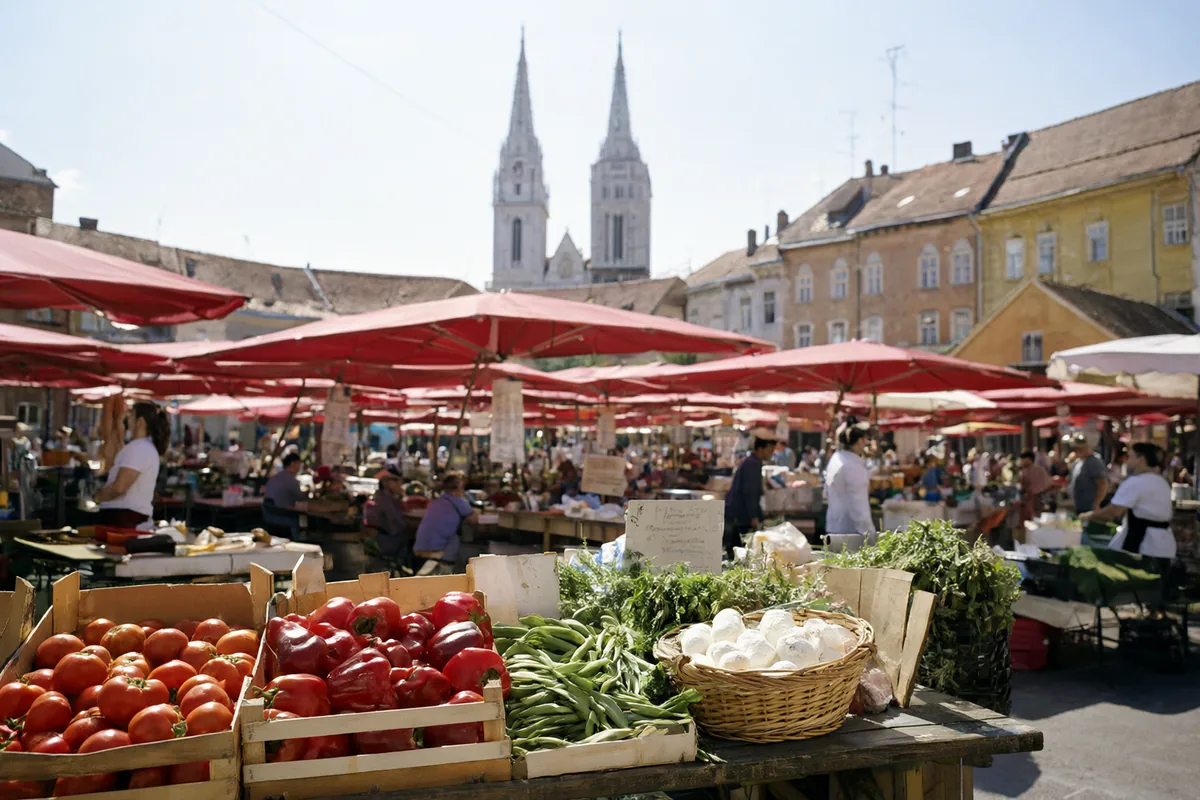
Zagreb, the capital, eats like central Europe: roast meats, strudel, sausages and cakes, with Dalmatian seafood brought up from the coast. The heart of food life in Zagreb is Dolac market, just above the main square, with its rows of red umbrellas, farmers selling fruit and vegetables, and an indoor hall for meat, cheese and the local fresh cheese with cream, sir i vrhnje. The fish market sits beside it. Arrive in the morning, then have a coffee on Tkalčićeva Street, the café street below the Upper Town.
The dish to order in Zagreb is štrukli, either boiled in broth or baked with cheese and cream until golden. From the hills of nearby Zagorje comes purica s mlincima, roast turkey with thin baked flatbreads soaked in the roasting juices. Many local places serve a cheap gablec, a hearty set lunch dish, on weekdays. Zagreb's Upper Town and the streets around the main square have traditional restaurants, and the town of Samobor, a short trip west, is famous for kremšnita, a custard cream slice. In December, Zagreb's Advent market fills the centre with food stalls and mulled wine.
Where to eat in Split
Split's old town is built inside the walls of the Roman emperor Diocletian's palace, and eating in Split means eating among its stone lanes. The waterfront Riva is for coffee and people-watching. For better food, look for konobas in the lanes of the old town and in Varoš, the old fishermen's and farmers' quarter on the slope west of the centre. Split's festive dish is pašticada with gnocchi, and its everyday food is grilled fish, blitva, black risotto and brudet.
Split's markets are worth a morning. The Pazar green market, just outside the palace's eastern gate, sells fruit, vegetables, cheese, dried figs and lavender, and the Peškarija fish market, west of the centre, sells the night's catch. Locals eat marenda, a hearty mid-morning meal, in simple places around the markets. From Split it is a short drive to the Poljica area for soparnik, the chard pie with protected status, and ferries leave for the islands of Brač, Šolta and Hvar.
Where to eat in Dubrovnik
Dubrovnik is Croatia's most visited city, and restaurants on and around the main street, the Stradun, charge for the location. Walk up the steep side lanes of the old town, where tables are squeezed onto stone steps, or head outside the walls to Lapad and Gruž, where locals live. The Gruž market, by the ferry port, is the morning market for fruit, vegetables and fish. Dubrovnik's own dishes include zelena menestra, a stew of cabbage and cured meats, and rožata, a caramel custard flavoured with a rose liqueur.
The best food trip from Dubrovnik is north to Ston, about an hour away on the Pelješac peninsula, where oysters and mussels are farmed in the bay of Mali Ston. Restaurants there serve them raw, grilled or in buzara. Pelješac is also the home of some of Croatia's best-known Plavac Mali reds. South of Dubrovnik, the Konavle valley has rural konobas serving lamb, peka and home-made cheese and wine. In the city itself, book ahead in summer, and expect the old town to be busiest when cruise ships are in.
Where to eat in Istria
Istria, the peninsula in the north-west, was ruled by Venice for centuries, and its food is the most Italian in Croatia: pasta, olive oil, truffles and prosciutto. If you are coming from Trieste, our Italy food guide and Slovenia food guide cover the other side of the border. The hilltop towns of Motovun, Grožnjan and Buzet above the Mirna valley are truffle country, and their konobas serve fuži and pljukanci (hand-rolled pasta) with shaved truffle, along with Istrian pršut and boškarin, the local long-horned ox.
On the coast, Rovinj is the prettiest town to eat in, with seafood restaurants around the harbour and old town, and the Lim Bay (Limski kanal) nearby is known for oysters and mussels. Pula has a covered market hall where locals buy fish, cheese and olive oil. Istrian olive oil and the white wine Malvazija are excellent, and many family farms offer tastings. In autumn, white truffle season brings festivals and truffle menus throughout the interior. Try maneštra, a thick bean and vegetable soup, on cooler days.
Where to eat in Zadar
Zadar, in northern Dalmatia, is less crowded than Split and Dubrovnik and has a growing food scene. The city is the historic home of Maraschino, a clear liqueur made from sour marasca cherries, still produced here. The nearby island of Pag gives Zadar two famous products: Paški sir, the hard sheep's cheese made from animals grazing on salty, herb-covered pastures, and Pag lamb. Order them together as a starter with pršut and olives.
Zadar's morning market on the old town peninsula sells local produce and fish, and the old town lanes have konobas and wine bars. Look for brudet, grilled fish and black risotto. The salt pans of Nin, just north of Zadar, produce sea salt by traditional methods. Zadar is a good base for the Kornati islands and the Krka and Plitvice national parks, where restaurants serve trout and grilled meats.
Where to eat in Hvar
Hvar is one of Croatia's most fashionable islands, and Hvar Town has some of the highest restaurant prices in the country. The island's real food culture is quieter. Stari Grad, on the north coast, is an older town with konobas around its harbour and the Stari Grad Plain behind it, an ancient Greek field system still farmed with vines and olives and listed by UNESCO. Inland villages such as Pitve, Velo Grablje and Brusje have rural konobas with peka, lamb and home-made wine.
The island's signature dish is gregada, a white fish stew with potatoes, garlic, olive oil and wine, and Hvar's fishermen also cook brudet and grilled fish. Hvar makes Plavac Mali reds and the local white Bogdanjuša, and is known for lavender, which turns up in honey and sweets. In summer, book ahead in Hvar Town, and consider a boat or bus to a quieter village for dinner.
Where to eat in Rijeka
Rijeka, Croatia's main port, is a working city with an honest food culture and few tourist menus. Its covered market, with an Art Nouveau fish hall, is one of the best places in Croatia to see the Adriatic's catch. The Kvarner Bay around Rijeka is famous for Kvarner scampi, often served na buzaru or simply grilled, and they command high prices. Order them with bread to mop up the sauce.
Along the coast, the elegant old resort of Opatija has restaurants and cafés in its Austro-Hungarian villas, and the town of Lovran is known for its chestnuts and cherries. The island of Krk, linked to the mainland by bridge, makes its own pršut, the white wine Žlahtina and a hand-rolled pasta called šurlice. Rijeka's carnival, before Lent, is one of the biggest in Europe and brings fritule and street food to the centre.
Where to eat in Osijek
Osijek is the capital of Slavonia, the flat, fertile east of Croatia, and its food is a world away from the coast: paprika, pork, river fish and rich stews, closer to Hungarian cooking. The dishes to order are kulen, the spicy cured sausage that is the pride of the region, čobanac, a paprika stew of several meats, and fiš paprikaš, river fish such as carp and catfish simmered in a spicy paprika broth, traditionally cooked in a kettle over an open fire and served with homemade noodles.
The old fortress quarter of Tvrđa in Osijek has cafés, bars and restaurants in its baroque buildings. North of Osijek, the Baranja region has wine villages with cellars dug into the hillsides and family farms serving home cooking, and the Kopački Rit wetlands nearby supply river fish. Slavonia is the home of Graševina, a crisp white wine, and its harvest season in autumn is the best time for a visit.
Vegetarian, vegan and allergy tips
Vegetarians eat reasonably well on the Croatian coast, with pasta, risotto, grilled vegetables, blitva, soparnik, salads, cheese and pizza widely available. Inland, the food is meatier. The word for vegetarian is vegetarijanac for a man and vegetarijanka for a woman, and bez mesa means "without meat". Watch for pancetta or pršut in vegetable dishes and stews, meat stock in soups, and fish stock in risottos.
Vegans should know that štrukli, burek and most pastries contain cheese, eggs or butter, while soparnik and blitva are usually plant-based. Common allergens include shellfish in risottos and pasta sauces, walnuts and poppy seeds in pastries and Christmas cakes, and wheat in almost every dish. Our guide to eating abroad with food allergies explains how to make an allergy clear when you do not speak the language.
Useful Croatian phrases for ordering
Dobar dan / Dobra večer "Good day / Good evening", the polite greeting as you walk in
Stol za dvoje, molim "A table for two, please"
Što preporučujete? "What do you recommend?"
Htio / htjela bih ovo "I would like this" (htio for a man, htjela for a woman)
Bez mesa, molim "Without meat, please"
Alergičan / alergična sam na... "I am allergic to..." (alergičan for a man, alergična for a woman)
Račun, molim "The bill, please"
Hvala, bilo je odlično "Thank you, it was excellent"
How swap.menu helps you eat in Croatia
The konobas that serve the best food in Croatia often have a short menu in Croatian or a chalkboard of the day's dishes, and even translated menus can be puzzling: "beef in sauce with gnocchi" does not tell you that pašticada has been marinating for a day, and few visitors guess that ispod peke needs ordering hours ahead. Photograph the menu with swap.menu and every dish appears in your language with the Croatian name beside it and a short explanation. Every price is converted from euros to your home currency, and we point out the kuver and any per-kilo fish prices.
Tap the dishes you want, add a note such as "no shellfish" or "without meat", typed or spoken, and swap.menu translates your order into Croatian. Show the waiter your phone, or let them scan the QR code and read your order on their own screen. You can try it right now on a sample menu with the free demo, or see travel pass prices.
Off to Croatia? Your first 3 menu scans are free, and a travel pass starts from $4.99 with nothing that renews.
Start free with 3 scansCroatia food FAQ
Do you tip in restaurants in Croatia?
Tipping is not compulsory in Croatia, but around 10 percent is customary for good service at a sit-down restaurant. Card machines often have no tip option, so leave cash on the table. At cafés and bars, rounding up is enough.
What food is Croatia famous for?
Croatia is known for peka, pašticada, black risotto, grilled Adriatic fish, Dalmatian pršut, Pag cheese, Istrian truffles and Ston oysters on the coast. Inland, štrukli from Zagreb and kulen from Slavonia are the best-known dishes.
Is it expensive to eat out in Croatia?
Prices on the Croatian coast in summer are close to those in western Europe, and the most famous spots such as Dubrovnik's old town and Hvar Town are expensive. Inland cities like Zagreb and Osijek are cheaper, and bakeries, ćevapi and burek are inexpensive everywhere. Fresh fish sold by the kilo is the item most likely to surprise you.
Is tap water safe to drink in Croatia?
Yes, tap water is safe to drink throughout Croatia, including on the islands, and it is generally of good quality. Restaurants will usually bring tap water if you ask, though many also offer bottled water.
Which city in Croatia is best for food?
Istria is often considered the best region for food, for its truffles, olive oil, pasta and wine. On the coast, Split has good markets and konobas, Dubrovnik is the base for Ston oysters, and Zagreb is best for continental dishes and its Dolac market.
How can I read a Croatian menu if I do not speak Croatian?
Learn a few words such as riba (fish), na žaru (grilled) and ispod peke (cooked under the bell), or photograph the menu with swap.menu. It translates every dish into your language, explains what it is, converts prices to your currency and translates your order back into Croatian for the waiter.
Travelling further in Europe? Read our food guides for neighbouring countries:
- Slovenia food guide
- Italy food guide
- Bosnia and Herzegovina food guide
- Montenegro food guide
- Hungary food guide
- Serbia food guide
Or browse every travel food guide.