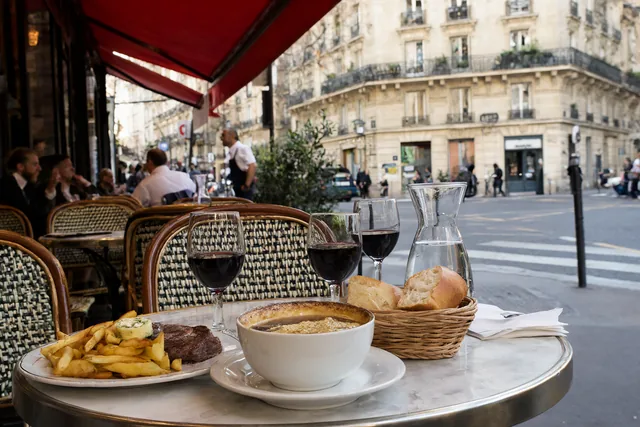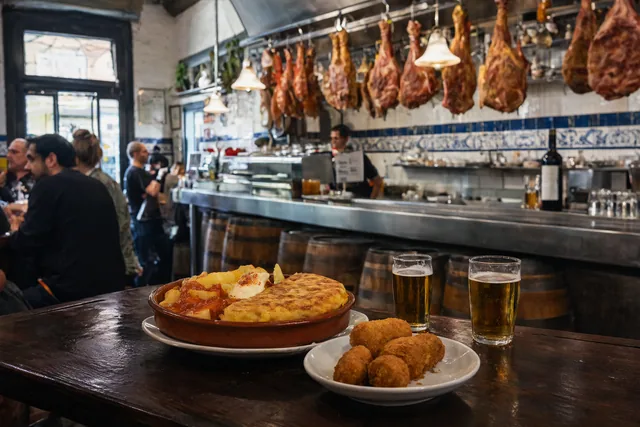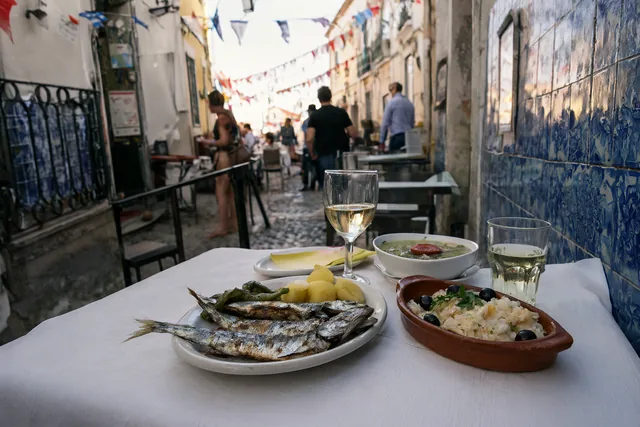
Italy is the country most travellers plan a whole trip around eating, and it rewards the effort. This Italy food guide covers what to eat, how an Italian menu is laid out, what the "coperto" on your bill means and whether to tip, then goes city by city through where to eat in Rome, Florence, Venice, Milan, Naples, Bologna, Palermo and Turin. Italian food is intensely regional: carbonara is Roman, ragù is from Bologna, pesto is Genoese and pizza as most of the world knows it was born in Naples. Order the local dish wherever you are and you will eat better than almost anyone around you.
What to eat in Italy: 12 dishes to know
These are the dishes worth seeking out, with the city or region they belong to. Ordering them where they come from is the single best piece of advice for eating in Italy.
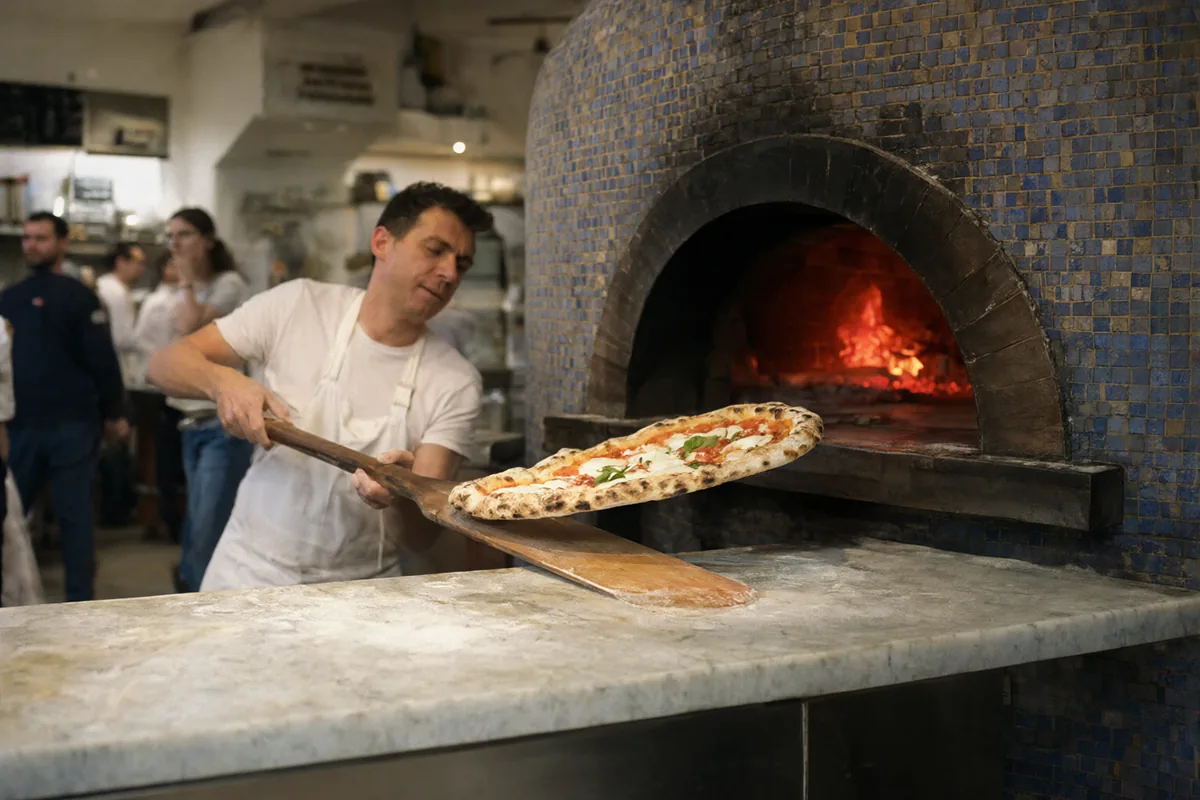
- Pizza napoletana (Naples): a soft, blistered crust baked for about 90 seconds in a wood-fired oven. Margherita and marinara are the classics.
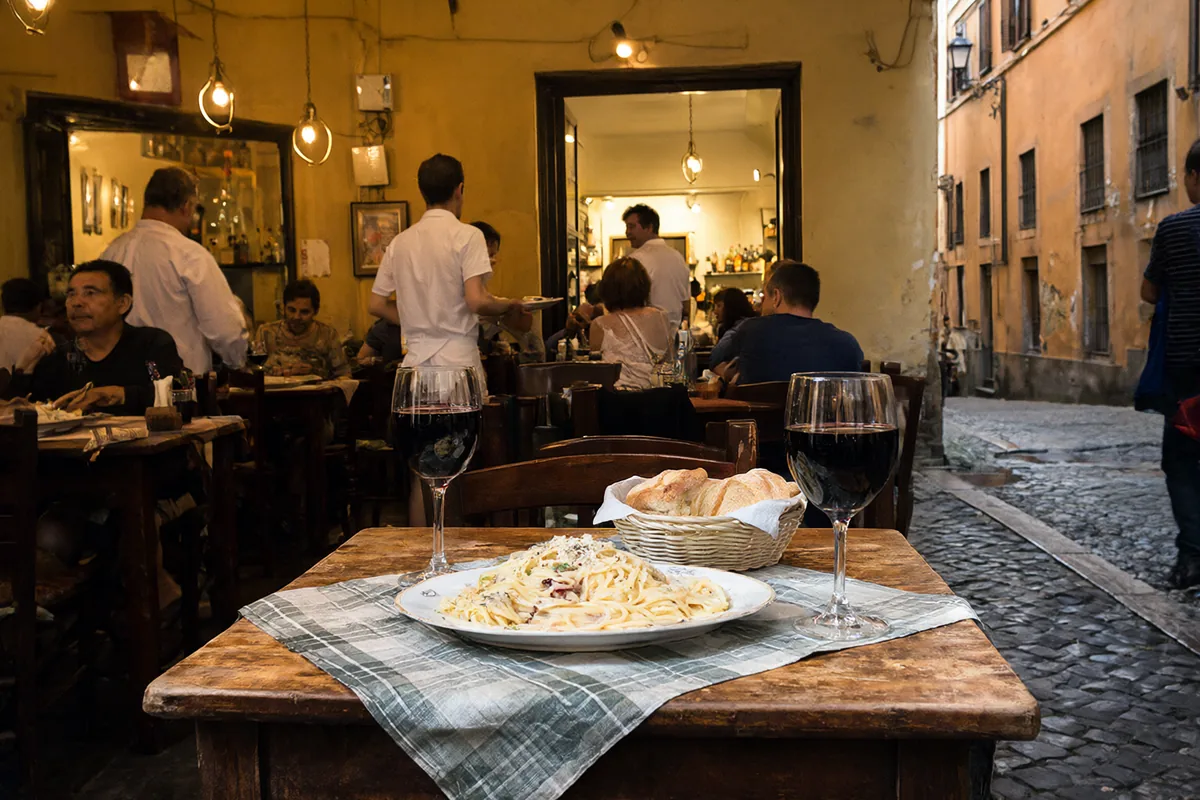
- Spaghetti alla carbonara (Rome): egg yolk, pecorino romano, black pepper and guanciale (cured pork cheek). No cream.
- Cacio e pepe (Rome): pasta with pecorino and black pepper, emulsified into a glossy sauce.
- Tagliatelle al ragù (Bologna): the slow-cooked meat sauce the rest of the world calls "bolognese", served with flat egg pasta, never spaghetti.
- Bistecca alla fiorentina (Florence): a thick T-bone from Chianina cattle, grilled rare and sold by weight, usually for two.
- Risotto alla milanese (Milan): saffron risotto, often served with ossobuco, braised veal shank.
- Cicchetti (Venice): small bar snacks, from baccalà mantecato (whipped salt cod) on toast to fried meatballs, eaten standing with a small glass of wine called an ombra.
- Arancini (Sicily): fried rice balls filled with ragù or ham and cheese. In Palermo they are arancine and round; in Catania they are cone-shaped.
- Pasta alla norma (Sicily): pasta with tomato, fried aubergine and salted ricotta.
- Trofie al pesto (Liguria): short twisted pasta with basil pesto, often with potato and green beans.
- Vitello tonnato (Piedmont): cold sliced veal with a creamy tuna and caper sauce.
- Gelato (everywhere): look for muted colours and flat metal tubs with lids. Bright, high-piled mounds usually mean added colour and air.
How to read an Italian menu
A full Italian meal runs in courses, and the menu follows the same order. You do not have to order every course: a primo and a contorno, or a secondo with a side, is a perfectly normal meal. Here are the section headings and the words you will see most often.
| Italian | Meaning |
|---|---|
| Antipasti | Starters: cured meats, bruschetta, fried things, marinated vegetables |
| Primi (piatti) | First courses: pasta, risotto, soup |
| Secondi (piatti) | Main courses: meat or fish, usually served on its own |
| Contorni | Side dishes, ordered separately: salad, potatoes, greens |
| Dolci | Desserts |
| Pane e coperto | Bread and cover charge, per person |
| Servizio (incluso) | Service charge (included) |
| Carne / pesce | Meat / fish |
| Maiale / manzo / vitello / agnello | Pork / beef / veal / lamb |
| Frutti di mare | Seafood, usually shellfish |
| Alla griglia / fritto / al forno | Grilled / fried / baked |
| Della casa | Of the house: house wine, house dessert |
| Piatto del giorno | Dish of the day |
| S.Q. or "all'etto" | Priced by weight (per 100 g), common for fish and steak |
When fish or a fiorentina steak is priced "all'etto" or "al kg", the number on the menu is not the price of your plate. Ask how much the piece weighs before it goes on the grill. swap.menu flags priced-by-weight items when it reads the menu, so the figure does not surprise you.
Coperto, tipping and paying the bill
Most sit-down restaurants add a coperto, a cover charge of roughly one to four euros per person for bread and the table setting. It is legal and normal across most of Italy, and it should be printed on the menu. In Rome and the wider Lazio region the coperto was officially phased out, though you may still see a charge for bread. A few places add servizio, a service charge, instead, typically 10 to 15 percent. Our guide to tax and service charges on menus explains how these lines work around the world.
Tipping is not expected in Italy. Locals round up or leave a euro or two for good service, and nobody will chase you for more. At a bar, coffee is cheaper standing at the counter (al banco) than sitting at a table (al tavolo), and in many bars you pay at the till first, then hand your receipt to the barista.
Prices are in euros. Cards are widely accepted and businesses are required to take them, but small bars and market stalls still prefer cash for tiny amounts. When a card machine offers to charge you in your home currency, say no and pay in euros: our guide to paying in local currency explains why that choice costs you money.
Meal times run late compared with Australia, the UK or the US. Lunch is roughly 12:30 to 2:30pm and dinner starts around 7:30pm in the north and closer to 9pm in the south. Many restaurants close between services, so a 4pm lunch usually means a bar snack.
Where to eat in Italy, city by city
Every Italian city has its own dishes, its own bar culture and its own idea of a proper lunch. Jump to a city:
Where to eat in Rome
Rome's food scene is built on four pastas: carbonara, cacio e pepe, amatriciana and gricia. Order them at a trattoria rather than a restaurant with a photo menu out front, and you will see why Romans argue about them. The neighbourhoods to eat in are Trastevere, busy and atmospheric in the evening, Testaccio, the old slaughterhouse district where offal dishes like coda alla vaccinara (oxtail stew) come from, and Monti, near the Colosseum but full of locals. The Jewish Ghetto is the place for carciofi alla giudia, a whole artichoke deep-fried until it opens like a flower.
For a quick lunch, Romans eat pizza al taglio, rectangular pizza cut with scissors and sold by weight, or supplì, fried rice croquettes with a string of mozzarella inside. The Testaccio market and the Campo de' Fiori morning market are good places to graze. Restaurants within sight of the Pantheon, the Trevi Fountain or the Vatican charge more for less, so walk two or three streets away before you sit down.
Where to eat in Florence
Florence is a meat city. The bistecca alla fiorentina is the headline, but the everyday dish is the lampredotto sandwich, the fourth stomach of the cow slow-cooked and served in a bread roll with green sauce from street carts. Tuscan cooking leans on bread and beans: ribollita (bread and vegetable soup), pappa al pomodoro (tomato and bread soup) and pici, thick hand-rolled pasta.
The Mercato Centrale in San Lorenzo has a food hall upstairs and butchers and produce stalls downstairs, and the Sant'Ambrogio market is smaller and more local. The Oltrarno, across the river around Santo Spirito, has the best concentration of trattorias where Florentines actually eat. In the evening, look for an enoteca or a vinaio, a wine bar serving Chianti by the glass with crostini.
Where to eat in Venice
Venice has a reputation for tired tourist menus, and around St Mark's Square it is deserved. The way to eat well is to do what Venetians do: a bacaro crawl. Bacari are small wine bars with a counter of cicchetti, and you hop between them ordering a snack and an ombra of wine at each. The Cannaregio district, especially along the Fondamenta della Misericordia, and the streets around the Rialto Market are where to start.
Venetian dishes worth ordering include sarde in saor (sweet and sour sardines with onions), risotto al nero di seppia (black cuttlefish ink risotto), bigoli in salsa (thick pasta with anchovy and onion) and fegato alla veneziana (calf's liver with onions). The Venetian spritz, with Aperol or the more bitter Select, is the aperitivo of choice.
Where to eat in Milan
Milan is Italy's business capital and its most international food city, but the Milanese classics still hold their own: saffron risotto alla milanese, ossobuco, and the cotoletta alla milanese, a breaded veal cutlet fried in butter. Milan also invented the modern aperitivo: buy a drink in the early evening and many bars bring snacks or put out a buffet, which in some places is generous enough to count as dinner.
The Navigli canals are the aperitivo heartland, Brera is smarter and more expensive, and Isola and Porta Venezia are where younger locals eat. For a quick bite, try a panzerotto, a fried pocket of dough filled with tomato and mozzarella, a speciality from Puglia that Milan has adopted as its own.
Where to eat in Naples
Naples is the place to eat pizza, full stop. A true Neapolitan pizza is soft enough to fold, charred in spots and still one of the cheapest good meals in Italy. The historic centre around Via dei Tribunali has the famous old pizzerias, where you take a ticket and queue. Do not overlook pizza fritta, fried pizza stuffed with ricotta and pork crackling, or a pizza a portafoglio, a small pizza folded in four and eaten on the street.
Beyond pizza, Naples is famous for sfogliatella, a crisp shell-shaped pastry filled with ricotta and citrus, the rum-soaked babà, spaghetti alle vongole (with clams) and ragù napoletano, a Sunday sauce simmered for hours with large cuts of meat. The Spanish Quarter and the Pignasecca market are great for street food. Naples is also the gateway to the Amalfi Coast, where lemons, seafood and limoncello take over.
Where to eat in Bologna
Bologna is nicknamed la grassa, "the fat one", and many Italians consider it the country's food capital. This is the home of tagliatelle al ragù, tortellini in brodo (tiny filled pasta in broth), lasagne verdi made with spinach pasta, and mortadella. The surrounding Emilia-Romagna region also gives the world Parmigiano Reggiano, Parma ham and traditional balsamic vinegar from Modena.
The Quadrilatero, the old market streets just off Piazza Maggiore, is lined with delis, pasta makers and tiny osterie where you can order a board of cured meats and cheese with a glass of Lambrusco. The Mercato delle Erbe is a covered market with a food court. Bologna is also an easy base for day trips to Modena and Parma.
Where to eat in Palermo
Palermo has one of the best street food cultures in Europe, shaped by centuries of Arab, Norman and Spanish rule. The markets are the place to try it: Ballarò, Vucciria and Il Capo are loud, crowded and full of fryers. Look for arancine, panelle (chickpea fritters) in a bun with crocchè (potato croquettes), sfincione (thick, spongy Sicilian pizza with onion and breadcrumbs) and, for the brave, pani ca' meusa, a spleen sandwich.
Sit-down Sicilian cooking brings pasta con le sarde (sardines, wild fennel, pine nuts and raisins), caponata (sweet and sour aubergine) and fresh swordfish. Finish with a cannolo filled to order, or do as Sicilians do in summer and eat granita with a brioche for breakfast.
Where to eat in Turin
Turin and the wider Piedmont region produce some of Italy's most refined food and its greatest red wines, Barolo and Barbaresco. Order agnolotti del plin (small pinched pasta parcels), tajarin (very thin egg pasta, often with butter and, in autumn, white truffle from Alba), vitello tonnato and bagna cauda, a warm garlic and anchovy dip for vegetables.
Turin's grand historic cafés are an attraction in themselves. Try a bicerin, layered coffee, chocolate and cream served in a small glass, and gianduiotti, the hazelnut chocolates the city invented. Turin also claims to have invented the aperitivo vermouth, and the arcaded streets around Piazza San Carlo are the place for one.
Vegetarian, vegan and allergy tips
Italy is one of the easiest countries in Europe for vegetarians: pasta, pizza, risotto, vegetable antipasti and contorni give you plenty of choice. Watch for hidden meat, though. Many tomato sauces and soups use meat stock, and dishes "all'amatriciana" or "alla carbonara" are built on cured pork. Vegans should know that fresh egg pasta (pasta all'uovo) is common in the north, while dried pasta in the south is usually egg-free. The word to look for is vegano.
Coeliac disease is well understood in Italy, and many restaurants and pizzerias offer senza glutine (gluten-free) options, some prepared in separate kitchens. Pine nuts appear in pesto and Sicilian dishes, and pistachio is everywhere in Sicily. Our guide to eating abroad with food allergies explains how to explain an allergy clearly when you do not speak the language.
Useful Italian phrases for ordering
Buongiorno / Buonasera "Good morning / Good evening", the polite way to greet staff as you walk in
Un tavolo per due, per favore "A table for two, please"
Cosa mi consiglia? "What do you recommend?"
Vorrei questo "I would like this" (pointing)
Sono allergico / allergica a... "I am allergic to..." (allergico for a man, allergica for a woman)
Il conto, per favore "The bill, please"
Grazie, era buonissimo "Thank you, it was delicious"
How swap.menu helps you eat in Italy
The best trattorias in Italy often have a handwritten menu, a chalkboard, or a single printed sheet in Italian only. Photograph it with swap.menu and every dish appears in your language with the Italian name beside it and a short explanation, so you know that trippa alla romana is tripe before you order it, and that bottarga is cured fish roe. Every price is converted from euros to your home currency, and we point out the coperto and any servizio so the bill holds no surprises.
Tap the dishes you want, add a note such as "no pork" or "gluten-free, please", typed or spoken, and swap.menu translates your order into Italian. Show the waiter your phone, or let them scan the QR code and read your order on their own screen. You can try it right now on a sample menu with the free demo, or see travel pass prices.
Off to Italy? Your first 3 menu scans are free, and a travel pass starts from $4.99 with nothing that renews.
Start free with 3 scansItaly food FAQ
Do you tip in restaurants in Italy?
Tipping is not expected in Italy. Most restaurants charge a coperto (cover charge) or, less often, a servizio (service charge). Rounding up the bill or leaving a euro or two for good service is a kind gesture, but it is never required.
What is the coperto on an Italian restaurant bill?
The coperto is a per-person cover charge, usually between one and four euros, for bread and the table setting. It is legal in most of Italy and should be shown on the menu. It is not a tip.
What food is Italy most famous for?
Pizza from Naples, pasta dishes like carbonara and cacio e pepe from Rome, ragù from Bologna, risotto alla milanese from Milan, bistecca alla fiorentina from Florence and gelato. Italian food is very regional, so the best dish to order depends on the city you are in.
What time do Italians eat dinner?
Dinner usually starts around 7:30 to 8pm in northern Italy and 8:30 to 9pm or later in the south. Lunch is typically between 12:30 and 2:30pm. Many restaurants close in the afternoon between services.
Which Italian city is best for food?
Bologna is often called Italy's food capital for its fresh pasta and cured meats, Naples is the home of pizza, Rome is best for classic pasta, and Palermo has some of the best street food in Europe. Each city in this guide has its own section on where to eat.
How can I read an Italian menu if I do not speak Italian?
Learn the course headings (antipasti, primi, secondi, contorni, dolci) and a few cooking words, or photograph the menu with swap.menu. It translates every dish into your language, explains what it is, converts prices from euros to your currency and translates your order back into Italian for the waiter.
Travelling further in Europe? Read our food guides for neighbouring countries:
- France food guide
- Switzerland food guide
- Austria food guide
- Slovenia food guide
- Croatia food guide
- Malta food guide
Or browse every travel food guide.