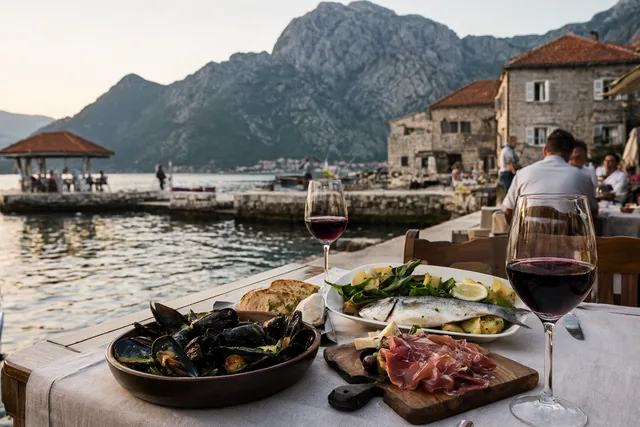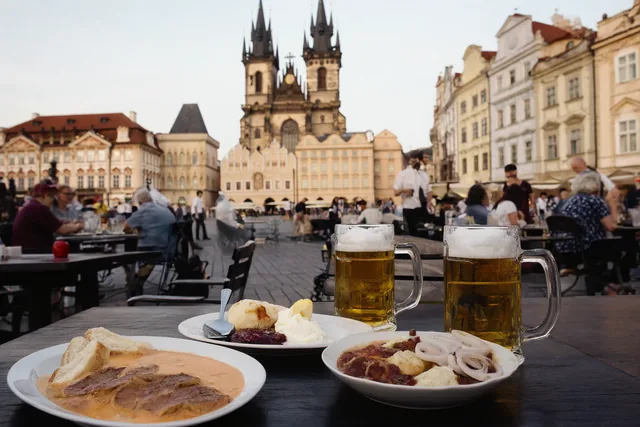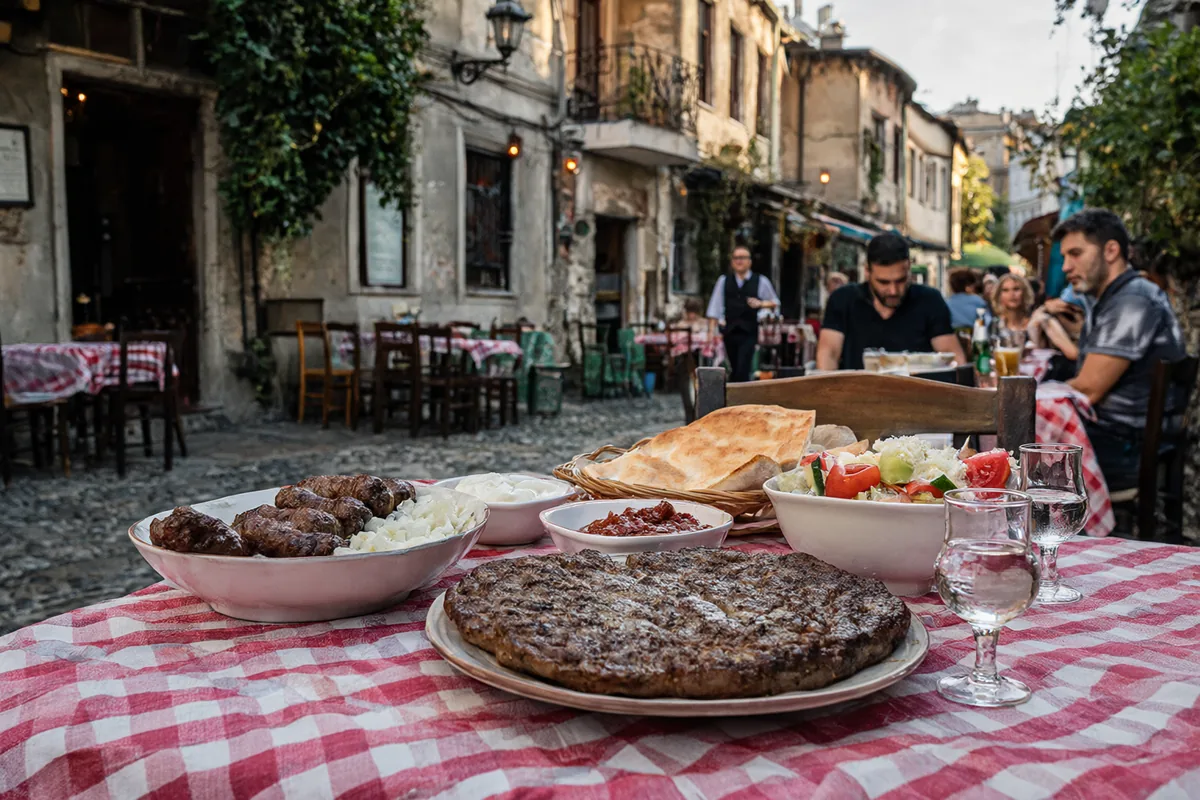
Serbian food is generous, meaty and made for long evenings. The grill is king, kajmak and ajvar go on almost everything, bakeries open before dawn, and a meal at a kafana, the traditional tavern, can last until the musicians go home. In the north, Hungarian and Austrian influences bring paprika fish stews, strudels and cakes. This Serbia food guide covers the dishes to know, how to read a Serbian menu written in Cyrillic or Latin, tipping and paying in dinars, then goes city by city through where to eat in Belgrade, Novi Sad, Niš, Subotica, Leskovac, Zlatibor and Sremski Karlovci.
What to eat in Serbia: 12 dishes to know
These are the dishes worth ordering, with the town or region each one is most associated with. Serbian portions are large, so share starters and side dishes.
- Pljeskavica (everywhere, especially Leskovac): a large, flat patty of minced meat grilled and served on a plate or in a lepinja (flatbread) with onion, kajmak and salad.
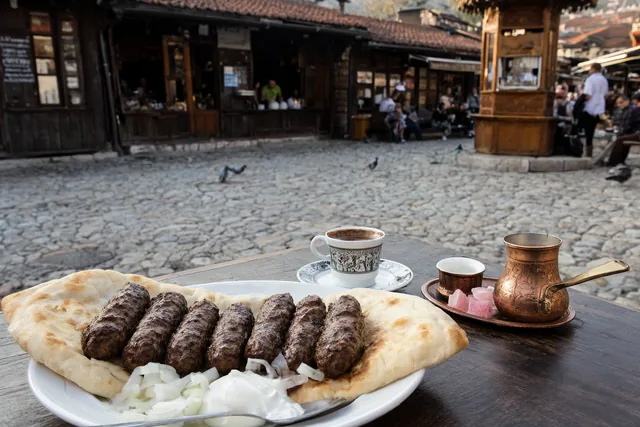
- Ćevapčići (everywhere): small grilled fingers of minced meat, served with chopped onion and bread.
- Karađorđeva šnicla (everywhere): a veal or pork escalope rolled around kajmak, breaded and fried, served with tartar sauce. Locals call it "the maiden's dream".
- Sarma (everywhere, winter): sour cabbage leaves rolled around minced meat and rice, slowly cooked with smoked meat.
- Pečenje (everywhere): pork or lamb roasted on a spit, often sold by weight from roadside restaurants.
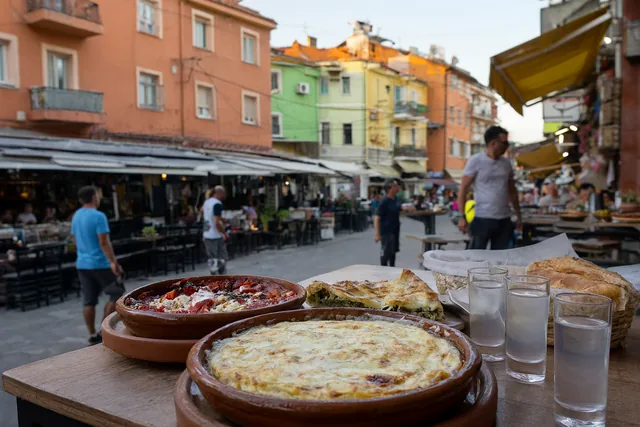
- Gibanica (everywhere): a layered pie of filo pastry, eggs and cheese, the classic breakfast and festive dish.
- Burek (everywhere, especially Niš): flaky pie with meat or cheese, eaten for breakfast with a glass of yoghurt.
- Ajvar and kajmak (everywhere): a relish of roasted red peppers, and a rich, slightly salty clotted cream, served with bread and grilled meat.
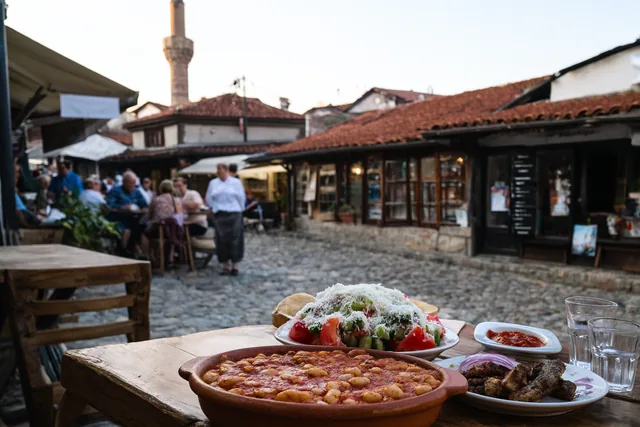
- Prebranac (everywhere): white beans baked slowly with onions and paprika, a classic fasting dish.
- Punjene paprike (everywhere): peppers stuffed with minced meat and rice in tomato sauce.
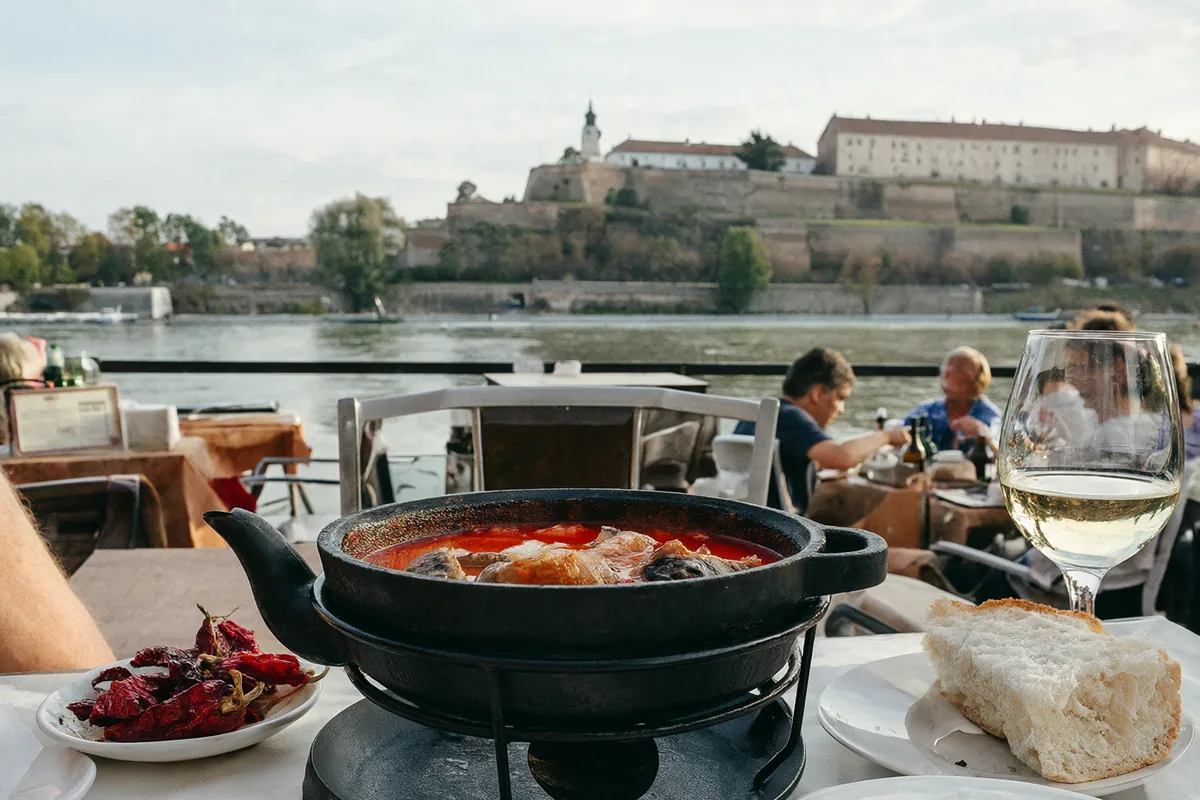
- Riblja čorba (Vojvodina): a spicy paprika fish soup made with Danube carp, catfish and pike, cooked in a kettle.
- Komplet lepinja (Zlatibor and Užice): a flatbread filled with kajmak, egg and roasting juices, baked until crisp.
Salads matter in Serbia. Šopska salata (tomato, cucumber, onion and grated white cheese), srpska salata (the same without cheese, with chilli), and urnebes, a spicy cheese spread with chilli, are ordered with every grill. The national drink is rakija, especially šljivovica (plum brandy), and the toast is Živeli!
How to read a Serbian menu
Serbian is written in two alphabets. Cyrillic is the official script, while Latin is used just as widely in daily life, and you will see both on menus. In Belgrade and Novi Sad many menus are in Latin, often with English, while traditional kafanas and places in smaller towns may use Cyrillic only. A Serbian menu is usually grouped by type of dish, with the grill as the longest section. These are the words you will see most often.
| Cyrillic | Latin | Meaning |
|---|---|---|
| Предјела | Predjela | Starters: cured meats, cheese, kajmak, ajvar |
| Чорбе и супе | Čorbe i supe | Thick soups and clear soups |
| Готова јела | Gotova jela | Ready-cooked dishes of the day |
| Јела по поруџбини | Jela po porudžbini | Dishes cooked to order |
| Роштиљ | Roštilj | Grill |
| Печење | Pečenje | Spit-roasted pork or lamb, often priced per kilo |
| Свињетина / јунетина / телетина / јагњетина | Svinjetina / junetina / teletina / jagnjetina | Pork / beef / veal / lamb |
| Риба | Riba | Fish |
| Салате | Salate | Salads |
| Прилози | Prilozi | Side dishes, ordered separately |
| Хлеб | Hleb | Bread, sometimes charged separately |
| Домаће | Domaće | Homemade |
| Посно | Posno | Suitable for Orthodox fasting: no meat, dairy or eggs |
| Посластице | Poslastice | Desserts |
Several Cyrillic letters look Latin but are not: Р is "r", С is "s", Н is "n", В is "v" and Х is "h", so "РИБА" reads "riba" (fish) and "ХЛЕБ" reads "hleb" (bread). Spit-roast pečenje and some fish are priced per kilo, not per plate. swap.menu reads Serbian menus in either alphabet, explains each dish and converts prices from dinars into your home currency.
Tipping, dinars and paying the bill
Menu prices in Serbia include VAT, and service charges are rare. Some restaurants charge separately for bread or a cover, and it should be on the menu. Our guide to tax and service charges on menus explains how these lines work around the world.
Tipping around 10 percent is customary for good service at a sit-down restaurant, and rounding up is normal at cafés and bars. Leave the tip in cash or tell the waiter the total you want to pay, as card machines often have no tip option. In kafanas with live musicians, guests sometimes tip the band for requests, but you are not expected to.
The currency is the Serbian dinar (RSD), shown as "din." or "дин." Cards are widely accepted in Belgrade, Novi Sad and other cities, including most restaurants, but bakeries, markets, small kafanas and rural places may prefer cash. Euros are not generally accepted for everyday purchases. When a card machine offers to charge you in your home currency, decline and pay in dinars: our guide to paying in local currency explains why.
Lunch is the main meal for many families and runs from about 1pm to 4pm, and dinner starts from around 8pm, with kafanas busy until late. Breakfast is often a slice of burek or gibanica from a bakery with yoghurt. Smoking is still allowed in some cafés and kafanas, so ask for a non-smoking area (nepušački deo) if it matters to you.
Where to eat in Serbia, city by city
From the capital's kafanas to the grill capital of the south and the Hungarian-influenced north, each part of Serbia has its own specialities. Jump to a city:
Where to eat in Belgrade
Belgrade, the capital, sits where the Sava meets the Danube, and it has the best and most varied food in Serbia. For a classic night out, go to a kafana. Skadarlija, the cobbled bohemian street in the old centre, is lined with traditional kafanas where musicians play at the tables; it is touristy but fun. For a more local feel, look for kafanas in Dorćol, Vračar and the side streets of the centre, and order a mixed grill, karađorđeva šnicla, sarma or teleća čorba (veal soup), with ajvar, kajmak and salads.
Belgrade's green markets are worth a morning. Kalenić market in Vračar and Zeleni venac near the centre sell fruit, vegetables, cheese, kajmak, ajvar, honey and rakija, often from the farmers who made them. Across the Sava, the old town of Zemun has fish restaurants along the Danube quay, serving riblja čorba and grilled fish. In summer, Belgrade moves onto the rivers: splavovi, floating restaurants and clubs moored along the banks, serve food by day and music at night. For a cheap breakfast, any pekara (bakery) in Belgrade sells burek, gibanica and pastries from early morning.
Where to eat in Novi Sad
Novi Sad, Serbia's second city and the capital of Vojvodina, has a relaxed, central European feel, and its food reflects the region's mix of Serbian, Hungarian, Slovak and German communities. The dishes to order are riblja čorba and fiš paprikaš, spicy paprika fish stews made with Danube fish, perkelt (a paprika meat stew), and strudels filled with poppy seed, walnut or cherries. Vojvodina also makes kulen, a spicy paprika sausage, particularly in the Slovak town of Bački Petrovac.
The pedestrian streets around Zmaj Jovina and Dunavska in the centre of Novi Sad are full of cafés, restaurants and pastry shops. Across the Danube, the Petrovaradin Fortress has restaurants with views over the city and the river. On the outskirts, salaši, old farmsteads turned into restaurants, serve Vojvodina home cooking in a rural setting, often with tamburica music. Novi Sad is the base for the wineries of Fruška Gora, the wooded hills to the south.
Where to eat in Niš
Niš, in southern Serbia, is one of the oldest cities in the Balkans and the birthplace of the Roman emperor Constantine. It is also one of the best places in Serbia to eat grilled meat and burek. The southern grill style is spicy and generous, and Niš kafanas serve pljeskavica, ćevapčići, grilled sausages and urnebes, the fiery cheese spread, with fresh lepinja bread. Niš bakeries are proud of their burek, and locals eat it for breakfast with a glass of yoghurt before work.
The old craftsmen's street of Kazandžijsko sokače, near the main square, is a short lane of low buildings full of cafés and kafanas, and it is the most atmospheric place to eat in Niš. The Niš Fortress, by the Nišava river, has restaurants and cafés inside its walls. The south of Serbia is also known for its brass band music, and some kafanas in Niš have live bands in the evening.
Where to eat in Subotica
Subotica, in the far north near the Hungarian border, is an Art Nouveau city with a large Hungarian community, and its food is the most Hungarian in Serbia. Order halászlé, the Hungarian fish soup, gulaš, paprikaš with dumplings, and pastries such as strudel and lángos (fried dough). Menus in Subotica are often in Serbian and Hungarian.
The centre of Subotica, around the remarkable Art Nouveau city hall, has cafés and restaurants in old buildings. A short drive east, Lake Palić is a lakeside resort with restaurants, terraces and wine bars, and the sandy soils between Subotica and the Hungarian border are an old wine region. Subotica is an easy day trip from Novi Sad or a stop on the way to Hungary.
Where to eat in Leskovac
Leskovac, in the south of Serbia, is known across the Balkans as the capital of the grill. The local Leskovac pljeskavica and ćevapčići are spiced with onion and hot pepper, and the town's grill houses also serve gurmanska pljeskavica, a patty stuffed with cheese and bacon, and Leskovačka mućkalica, a stew of grilled meats and peppers. Order with spicy urnebes, lepinja bread and a salad of roasted peppers.
Every year, in late summer, Leskovac holds the Roštiljijada, a grill festival where the main street turns into a long line of grills and the town attempts to make giant pljeskavicas. It draws visitors from across Serbia and the region. Outside festival time, the grill houses in the centre of Leskovac are the reason to stop, and the town is an easy detour on the main road south from Niš.
Where to eat in Zlatibor
Zlatibor is a mountain plateau and resort in western Serbia, and its food is rustic, smoky and rich. The nearby village of Mačkat is famous for Zlatibor pršuta, dried and smoked beef and pork, and for other smoked meats. Breakfast in Zlatibor is komplet lepinja, a speciality of the region and the nearby town of Užice: a flatbread hollowed out and filled with kajmak and egg, soaked in roasting juices and baked. Zlatibor's cheeses and kajmak are some of the best in the country.
Restaurants around the lake in the centre of the resort serve lamb and veal ispod sača, pečenje and grilled trout. The open-air museum village of Sirogojno and the Mokra Gora area, with its mountain railway, are popular day trips, with restaurants serving local dishes. Roadside stalls sell smoked meats, cheese, honey and rakija to take home.
Where to eat in Sremski Karlovci
Sremski Karlovci is a small baroque town on the Danube, about twenty minutes from Novi Sad, and one of Serbia's oldest wine towns. Its speciality is bermet, a sweet, spiced dessert wine made in the town for centuries. Local cellars and wineries offer tastings, and cafés serve kuglof, a bundt cake, alongside. The town's harvest festival in autumn brings food and wine stalls to the main square.
Sremski Karlovci sits on the edge of Fruška Gora, a national park of wooded hills with Orthodox monasteries and many family wineries. Restaurants in the town and in the Fruška Gora villages serve Vojvodina cooking: fish soup, roast meats, strudels and local cheese. Combine a visit with Novi Sad for an easy food and wine day.
Vegetarian, vegan and allergy tips
Serbia is a meat-loving country, but vegetarians can eat well with salads, ajvar, cheese, gibanica, cheese burek, stuffed peppers without meat and baked beans. The word for vegetarian is vegetarijanac (вегетаријанац) for a man and vegetarijanka for a woman, and bez mesa (без меса) means "without meat". Watch for lard (mast) in pastries and some bean dishes, smoked meat or bacon in beans and sarma, and meat broth in soups.
Vegans have a big advantage in Serbia: posno (посно) food, made for Orthodox fasting periods, contains no meat, dairy or eggs, and many kafanas mark posno dishes on the menu, especially during Lent and before Christmas. Posno dishes may still include fish. Common allergens include dairy almost everywhere, walnuts in cakes and strudels, egg in gibanica, and wheat in bread and pies. Our guide to eating abroad with food allergies explains how to make an allergy clear when you do not speak the language.
Useful Serbian phrases for ordering
Добро вече Dobro veče: "Good evening", the polite greeting as you walk in
Сто за двоје, молим Sto za dvoje, molim: "A table for two, please"
Шта препоручујете? Šta preporučujete?: "What do you recommend?"
Хтео / хтела бих ово Hteo / htela bih ovo: "I would like this" (hteo for a man, htela for a woman)
Без меса, молим Bez mesa, molim: "Without meat, please"
Алергичан / алергична сам на... Alergičan / alergična sam na...: "I am allergic to..." (alergičan for a man, alergična for a woman)
Рачун, молим Račun, molim: "The bill, please"
Хвала, било је одлично Hvala, bilo je odlično: "Thank you, it was excellent"
How swap.menu helps you eat in Serbia
A Cyrillic menu in a traditional kafana is impossible to guess, and even in Latin the names do not explain themselves: few visitors would know that karađorđeva šnicla is a rolled, breaded cutlet filled with kajmak, or that pihtije is a cold pork jelly. Photograph the menu with swap.menu and every dish appears in your language with the Serbian name beside it and a short explanation, whichever alphabet it is written in. Every price is converted from dinars to your home currency, and we flag prices given per kilo.
Tap the dishes you want, add a note such as "posno, please" or "no pork", typed or spoken, and swap.menu translates your order into Serbian. Show the waiter your phone, or let them scan the QR code and read your order on their own screen. You can try it right now on a sample menu with the free demo, or see travel pass prices.
Off to Serbia? Your first 3 menu scans are free, and a travel pass starts from $4.99 with nothing that renews.
Start free with 3 scansSerbia food FAQ
Do you tip in restaurants in Serbia?
Yes, tipping around 10 percent is customary for good service at a sit-down restaurant in Serbia. Rounding up is enough at cafés and bars. Leave the tip in cash, as card machines often cannot add one.
What food is Serbia famous for?
Serbia is best known for grilled meats such as pljeskavica and ćevapčići, karađorđeva šnicla, sarma, gibanica, burek, ajvar and kajmak, and for rakija, especially plum brandy. Vojvodina in the north is known for paprika fish soups and strudels.
Is it expensive to eat out in Serbia?
Eating out in Serbia is inexpensive compared with western Europe. Bakeries and grill houses are very cheap, and a full meal at a kafana is good value. Restaurants in central Belgrade and on the river rafts cost more.
Is tap water safe to drink in Serbia?
Tap water is safe to drink in Belgrade and most Serbian cities. In some towns in Vojvodina, locals prefer bottled water because of the local supply. Bottled water is cheap and sold everywhere.
What is a kafana in Serbia?
A kafana is a traditional Serbian tavern serving grilled meat, stews, salads and rakija, often with live music in the evening. Meals there are long and social, and a kafana is the best place to try classic Serbian food.
How can I read a Serbian menu written in Cyrillic?
Learn a few letters and words, such as роштиљ (roštilj, grill) and риба (riba, fish), or photograph the menu with swap.menu. It reads Cyrillic and Latin, translates every dish into your language, converts prices from dinars and translates your order back into Serbian.
Travelling further in the Balkans? Read our food guides for neighbouring countries:
- Bosnia and Herzegovina food guide
- Croatia food guide
- Montenegro food guide
- North Macedonia food guide
- Hungary food guide
- Bulgaria food guide
Or browse every travel food guide.