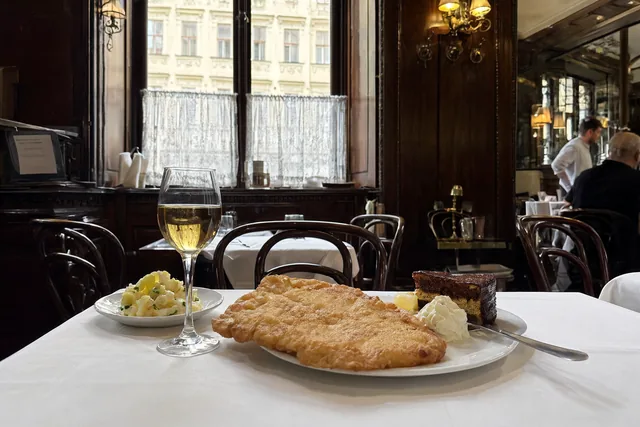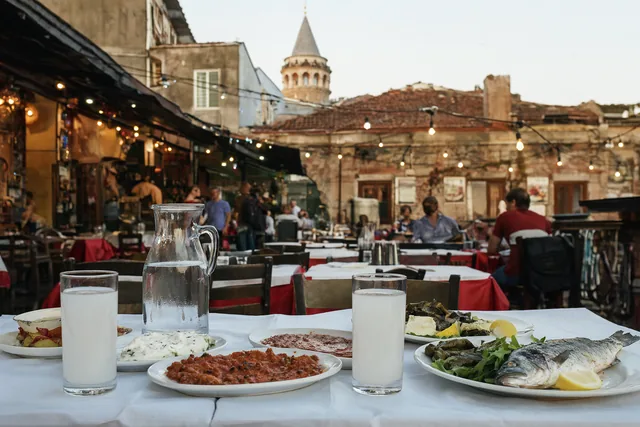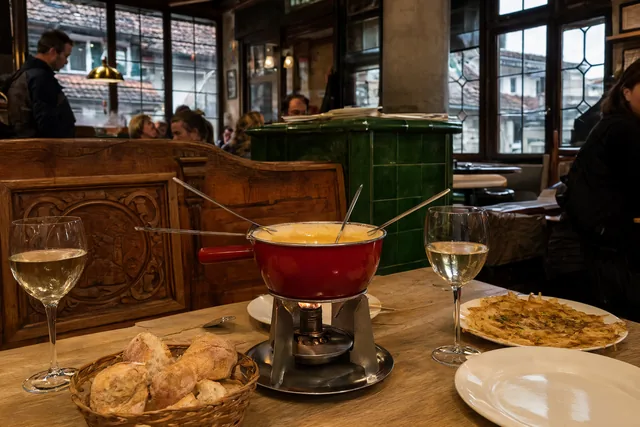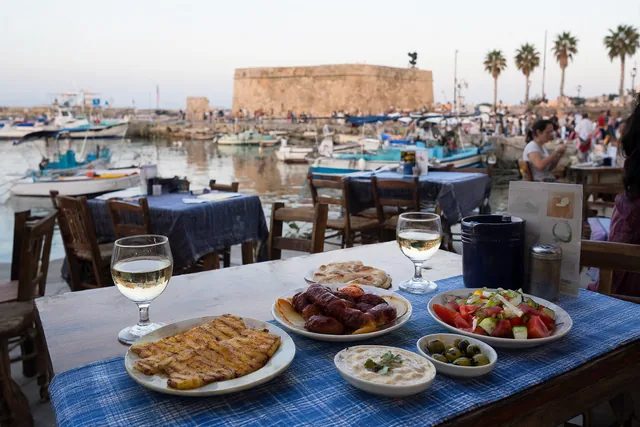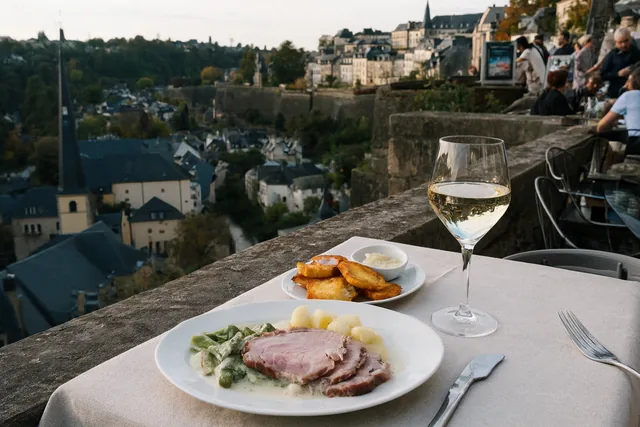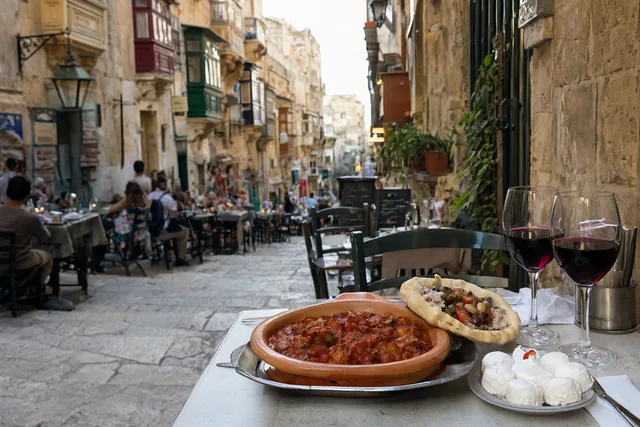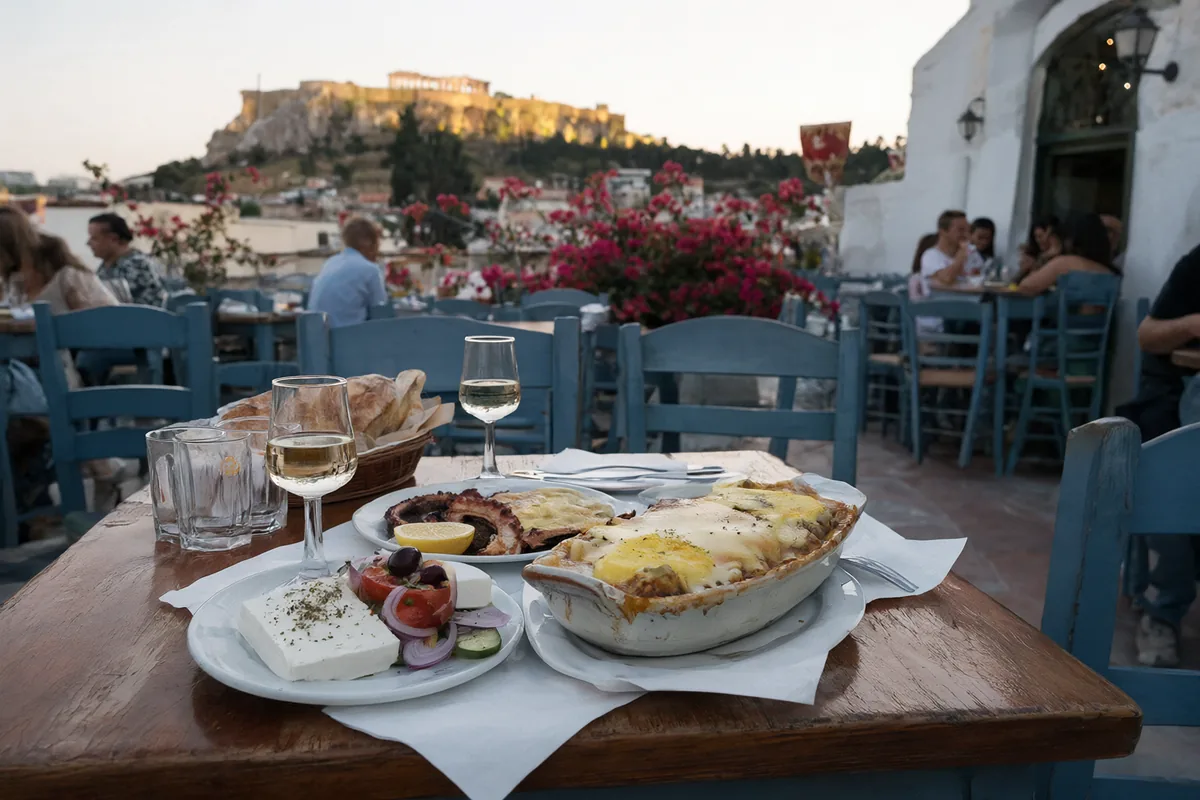
Greek food is simpler than most people expect and better than most tourist menus suggest. Good olive oil, ripe tomatoes, lemon, oregano, fresh fish and slow-cooked meat do most of the work, and the best meals happen at plain tavernas with paper tablecloths. This Greece food guide covers the dishes to know, how to read a Greek menu written in the Greek alphabet, the bread charge and tipping, then goes city by city through where to eat in Athens, Thessaloniki, Chania, Heraklion, Santorini, Naxos, Corfu and Ioannina. Greek cooking changes from region to region and island to island, so the local speciality is almost always the right order.
What to eat in Greece: 12 dishes to know
These are the dishes worth ordering, with the region they are most associated with. Many are shared across the country, but a few only make sense where they come from.
- Souvlaki and gyros (everywhere): grilled pork or chicken skewers, or meat shaved from a vertical spit, wrapped in pita with tomato, onion, tzatziki and often chips. In Athens the skewer itself is called a kalamaki.
- Moussaka (everywhere): layers of fried aubergine, spiced minced meat and a thick béchamel top, baked in a tray and served in squares.
- Horiatiki (everywhere): the "village salad" known abroad as Greek salad, with tomato, cucumber, onion, green pepper, olives and a slab of feta. No lettuce.
- Gemista (everywhere, summer): tomatoes and peppers stuffed with herbed rice and baked with potatoes.
- Spanakopita (everywhere): spinach and feta pie in filo pastry, eaten at bakeries for breakfast or as a starter.
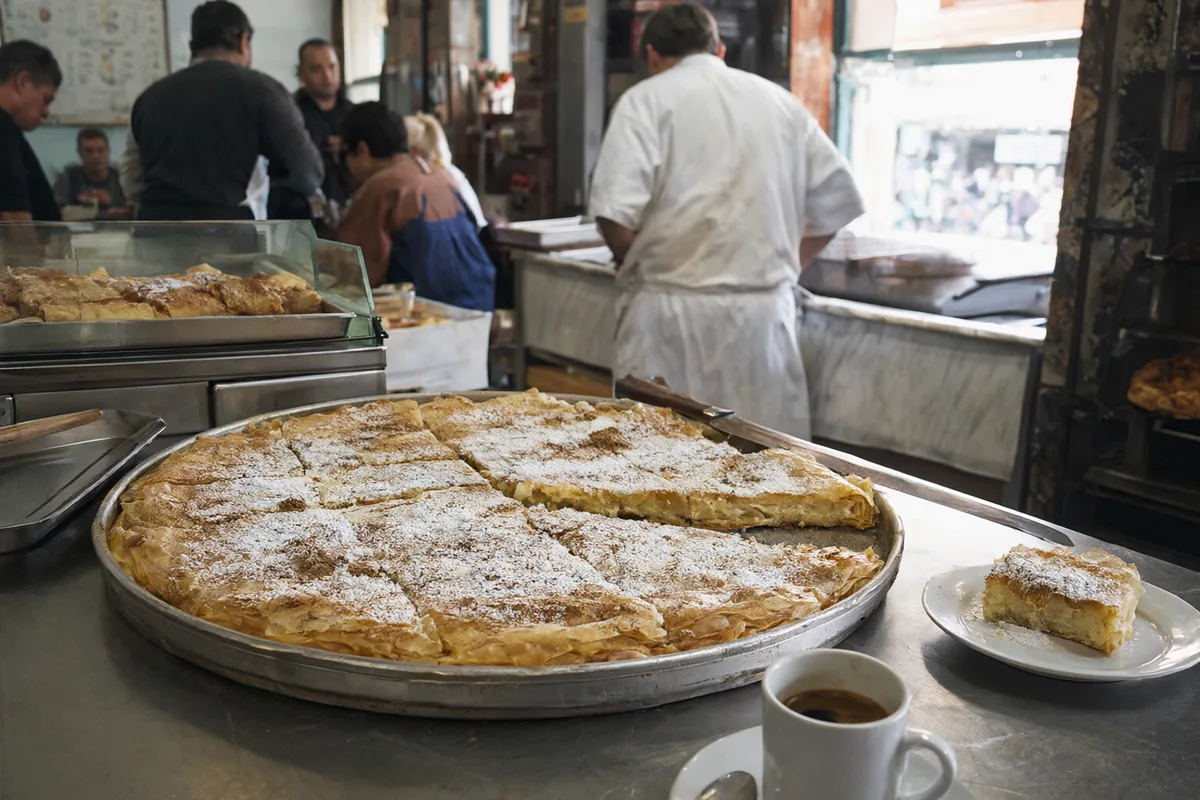
- Bougatsa (Thessaloniki): filo pastry filled with semolina custard, cheese or minced meat, cut into squares and dusted with icing sugar and cinnamon.
- Dakos (Crete): a hard barley rusk topped with grated tomato, crumbled mizithra cheese, olive oil and oregano.
- Kleftiko (mainland and islands): lamb slow-baked with garlic and lemon, traditionally sealed in paper or a clay pot.
- Grilled octopus (islands): octopus dried in the sun, then grilled and dressed with oil and vinegar, the classic partner to ouzo.
- Fava (Santorini and the Cyclades): a smooth purée of yellow split peas topped with raw onion, capers and olive oil.
- Fasolada (everywhere): white bean soup with tomato, carrot and celery, often called the national dish.
- Loukoumades (everywhere): small fried dough balls soaked in honey syrup and topped with cinnamon or walnuts.
Two habits shape a Greek meal. Dishes are shared, so a table orders several salads, dips and mains and everyone eats from the middle. And mezedes, small plates eaten with ouzo or tsipouro, are a meal in their own right at an ouzeri or tsipouradiko.
How to read a Greek menu
Tourist areas usually have an English menu, but the neighbourhood places where Greeks eat often do not, and the Greek alphabet makes guessing impossible. Several letters look Latin but are not: Ρ is "r", Η is "i" and Χ is "ch". A Greek menu is not divided into courses the way an Italian one is. It is grouped by type of dish, and you order everything at once to share. These are the headings and words you will see most often.
| Greek | Romanised | Meaning |
|---|---|---|
| Ορεκτικά | Orektika | Starters: dips, fried cheese, small plates |
| Σαλάτες | Salates | Salads |
| Μαγειρευτά | Mageirefta | Ready-cooked dishes of the day, baked or stewed earlier |
| Της ώρας | Tis oras | "Of the hour": cooked to order, usually grilled or fried |
| Ψητά / Σχάρας | Psita / Scharas | Roast / from the grill |
| Κρεατικά | Kreatika | Meat dishes |
| Ψάρια / Θαλασσινά | Psaria / Thalassina | Fish / seafood |
| Τιμή κιλού | Timi kilou | Price per kilo, common for fresh fish and lobster |
| Κατεψυγμένο (*) | Katepsygmeno | Frozen, often shown only as an asterisk |
| Χύμα κρασί | Chyma krasi | House wine from the barrel, ordered by the kilo or half kilo |
| Ψωμί και κουβέρ | Psomi kai kouver | Bread and cover charge, per person |
| Γλυκά / Επιδόρπια | Glyka / Epidorpia | Sweets / desserts |
| Νηστίσιμο | Nistisimo | Suitable for Orthodox fasting: no meat, dairy or eggs |
Fresh fish in Greece is usually sold by the kilo, and you often pick your fish from a display of ice before it is cooked. The price on the menu is per kilo, not per plate, so ask what the fish weighs first. swap.menu flags per-kilo prices and the asterisk for frozen produce when it reads the menu, so you know what you are paying for.
Bread charges, tipping and paying the bill
Many tavernas bring bread to the table as soon as you sit down and charge for it per person, listed as psomi or kouver (cover). It is a small, normal charge and should be printed on the menu. Most places also bring a jug of tap water without asking, which is free. Menu prices in Greece include VAT, so the figure you see is the figure you pay, apart from the bread charge. Our guide to tax and service charges on menus explains how these lines work around the world.
Tipping is appreciated but not obligatory. Greeks typically round up or leave around 5 to 10 percent in cash on the table for good service at a sit-down meal, and leave coins at cafés. Many card machines now offer a tip option, but cash left on the plate is still the usual way.
Greece uses the euro (€). Cards are accepted almost everywhere in cities and on the main islands, including at most tavernas, though small bakeries, kiosks and village places may prefer cash. If a card machine offers to charge you in your home currency, decline and pay in euros: our guide to paying in local currency explains why that conversion costs you more.
Greeks eat late. Lunch is the big meal for many families and runs from about 2pm to 4pm, and dinner rarely starts before 9pm, with tavernas filling up at 10pm in summer. Breakfast is light: a coffee and a pie or a koulouri, a sesame bread ring sold by street vendors.
Where to eat in Greece, city by city
Athens and Thessaloniki have the deepest food cultures, Crete has the most distinctive cooking, and every island has a few dishes it claims as its own. Jump to a destination:
Where to eat in Athens
Athens is a city of cheap, fast, excellent street food and long, loud dinners. Souvlaki is the daily staple, and the area around Monastiraki Square and the start of Mitropoleos Street has been grilling it for generations. For a proper taverna dinner, skip the menus with photos in Plaka and head instead to Psyrri, Koukaki, Pangrati or Exarchia, where Athenians eat. Look for a place with a tray of mageirefta in a glass cabinet by the door: that is home-style Athenian cooking, such as giouvetsi (beef baked with orzo) and youvarlakia (rice and meat balls in egg and lemon sauce).
The Varvakios Agora, the central meat and fish market on Athinas Street, is worth an early morning walk, and the small canteens around it serve tripe soup and grilled fish to market workers. For seafood, take the metro or a taxi to Mikrolimano in Piraeus, a small harbour lined with fish restaurants. In the evening, Athens is full of ouzeri and wine bars serving mezedes.
Where to eat in Thessaloniki
Many Greeks will tell you that Thessaloniki eats better than Athens, and they have a point. The city's cooking carries the influence of its Ottoman past, its Sephardic Jewish community and the Greek refugees who arrived from Asia Minor in the 1920s, and Thessaloniki has been named a UNESCO Creative City of Gastronomy. Start the day the local way with bougatsa, sweet with custard or savoury with cheese or mince, and a coffee. Through the day, look for koulouri Thessalonikis, the city's own sesame bread ring, and soutzoukakia smyrneika, cumin-scented meatballs in tomato sauce.
The old Kapani and Modiano markets near Aristotelous Square are the heart of Thessaloniki's food trade, packed with spice sellers, butchers, olive stalls and small ouzeri. In the evening, the cobbled streets of Ladadika, a restored warehouse district by the port, fill with tables serving mezedes and tsipouro. The hillside Ano Poli (Upper Town) has quieter tavernas with views. For dessert, Thessaloniki is known for trigona Panoramatos, crisp filo cones filled with cream, named after the suburb of Panorama.
Where to eat in Chania
Crete has its own cuisine within Greek cooking, built on wild greens, olive oil, sheep and goat cheese, snails and lamb, and Chania in the west is one of the best places on the island to try it. Order boureki, a Chania speciality of sliced courgette and potato baked with mint and soft mizithra cheese, kalitsounia (small cheese pies), chochlioi boubouristi (snails fried face-down in oil with rosemary and vinegar), staka (a rich butter made from sheep's milk cream, served with eggs or fries) and gamopilafo, the rice cooked in meat broth that is served at Cretan weddings.
The restaurants directly on the Venetian harbour in Chania have the views and the highest prices. Walk a few streets back into the Splantzia quarter or the lanes of the old town for better value and more locals. Some of the best Cretan food is in the villages outside Chania, especially in the hills towards the White Mountains, where tavernas cook lamb antikristo, slowly around an open fire. At the end of a meal in Crete you are usually brought a small carafe of raki (also called tsikoudia) and a little dessert on the house.
Where to eat in Heraklion
Heraklion is Crete's capital and its busiest city, and it is a practical place to eat well. Breakfast in Heraklion means bougatsa, but here the classic version is filled with sweet-salty mizithra cheese and dusted with sugar, and the cafés around Lions Square, by the Morosini fountain, are the traditional place for it. The covered market street known as 1866 Street (Odos 1866) is lined with stalls selling cheese, honey, herbs, olives and raki, and a few small eateries just off it serve home cooking to people who work in the centre.
Heraklion is also the gateway to the island's wine country. The villages around Archanes and Peza, a short drive south, grow local grapes such as Vidiano and Kotsifali, and their tavernas serve Cretan dishes like dakos, apaki (smoked cured pork) and slow-cooked goat with greens.
Where to eat in Santorini
Santorini is famous for sunsets, and many of its caldera-edge restaurants charge for them. The island's volcanic soil, though, produces some of the most distinctive ingredients in Greece. Look for tomatokeftedes, fritters made with the island's small, intense cherry tomatoes, Santorini fava, which has protected status, white aubergine, capers and caper leaves, and chlorotyri, a soft fresh goat's cheese. Santorini's wines are made mainly from the crisp white Assyrtiko grape, and the sweet Vinsanto is a traditional dessert wine.
For seafood in Santorini, walk or drive down to Ammoudi Bay below Oia, where fish tavernas sit right above the water. The inland villages of Pyrgos and Megalochori are quieter and better value than Fira or Oia, and several wineries in the centre of the island offer tastings with food. Book ahead for dinner in high summer, and check prices before you sit down anywhere with a caldera view.
Where to eat in Naxos
Naxos is the largest of the Cyclades and the most self-sufficient, with farmland, cattle and mountain villages, so its food is heartier than on most islands. The island is known across Greece for its potatoes, its graviera (a nutty hard cheese) and arseniko, a sharp aged cheese. Order grilled local beef or pork, rosto (pork in a wine and garlic sauce), and anything made with Naxos cheese. The citrus liqueur kitron, made from the leaves of the citron tree, is distilled on the island.
Chora, the main town of Naxos, has tavernas along the waterfront and better ones in the lanes of the old town below the Venetian castle. The real reward is a drive into the mountains: Halki, the old capital, has a kitron distillery and cafés under its trees, and Apiranthos is a marble-paved village with tavernas serving meat and cheese from the surrounding hills.
Where to eat in Corfu
Corfu was ruled by Venice for four centuries and was never part of the Ottoman Empire, and its cooking shows it. The dishes to order are pastitsada, rooster or beef cooked slowly in a spiced tomato sauce and served over thick pasta, sofrito, thin slices of veal in a white wine, garlic and parsley sauce, and bourdeto, a peppery red fish stew traditionally made with scorpion fish. The British period left tsitsibira, a local ginger beer, and the island grows kumquats, which are turned into a sweet liqueur and candied fruit.
Corfu Town is the best place to eat on the island. The arcaded Liston promenade is for coffee and people-watching, and the narrow lanes of the old town, known locally as kantounia, hold the tavernas worth finding. Away from the resorts, the hill villages and the quieter north-east coast have family tavernas serving grilled fish and home cooking.
Where to eat in Ioannina
Ioannina, in the mountainous north-west region of Epirus, is a lake city with a very different table from the islands. Epirus is famous across Greece for its pites, hand-rolled savoury pies filled with greens, cheese, leeks, meat or even trahana, and the bakeries of Ioannina sell dozens of kinds. Lake Pamvotis supplies trout, crayfish and, a local speciality, frog's legs. From the nearby mountains come lamb, goat and metsovone, a smoked cheese from the village of Metsovo.
The old town of Ioannina, inside the castle walls by the lake, and the streets around the market have traditional tavernas and grill houses. A short boat ride takes you to the small island in the lake, where restaurants cook trout and frog's legs. Ioannina is also the base for the stone villages of Zagori, where guesthouses and tavernas serve slow-cooked meat, pies and local cheese.
Vegetarian, vegan and allergy tips
Greece is easier for vegetarians than its souvlaki reputation suggests. Salads, dips like melitzanosalata (aubergine) and tzatziki, fava, gemista, briam (oven-roasted vegetables), gigantes (giant baked beans) and vegetable pies give you plenty to share. The Greek word for vegetarian is chortofagos, written χορτοφάγος, and a vegetarian dish is chortofagiko. Watch for meat stock in soups and rice dishes, minced meat inside stuffed vegetables (ask whether gemista are made "me kima", with mince), and lard in some village pastries.
Vegans have a useful word: nistisimo, food suitable for Orthodox fasting periods such as Lent, which contains no meat, dairy or eggs. Be aware that fasting food can include octopus, squid and shellfish, and that honey is allowed. Common allergens include sesame (on koulouri, in tahini dips and halva), walnuts and pistachios in pastries like baklava, and egg and lemon sauce (avgolemono) in soups and stews. Our guide to eating abroad with food allergies explains how to make an allergy clear when you do not speak the language.
Useful Greek phrases for ordering
Greeks appreciate any attempt at their language. Note that Greek uses a semicolon (;) as its question mark.
Καλημέρα / Καλησπέρα Kalimera / Kalispera: "Good morning / Good evening", the polite greeting as you walk in
Ένα τραπέζι για δύο, παρακαλώ Ena trapezi gia dyo, parakalo: "A table for two, please"
Τι μας προτείνετε; Ti mas proteinete?: "What do you recommend?"
Θα ήθελα αυτό Tha ithela afto: "I would like this" (pointing)
Χωρίς κρέας, παρακαλώ Choris kreas, parakalo: "Without meat, please"
Είμαι αλλεργικός / αλλεργική σε... Eimai allergikos / allergiki se...: "I am allergic to..." (allergikos for a man, allergiki for a woman)
Τον λογαριασμό, παρακαλώ Ton logariasmo, parakalo: "The bill, please"
Ευχαριστώ, ήταν πολύ νόστιμο Efcharisto, itan poly nostimo: "Thank you, it was delicious"
How swap.menu helps you eat in Greece
The tavernas Greeks love most often have a menu in Greek only, sometimes handwritten, sometimes just a list of today's mageirefta on a sheet of paper. Photograph it with swap.menu and every dish appears in your language with the Greek name beside it and a short explanation, so you know that kokoretsi is lamb offal wrapped in intestines and roasted on a spit, and that kakavia is a fisherman's soup, before you order. Every price is converted from euros to your home currency, and we point out the bread charge, per-kilo fish prices and the asterisk for frozen produce.
Tap the dishes you want, add a note such as "no meat" or "nut allergy", typed or spoken, and swap.menu translates your order into Greek. Show the waiter your phone, or let them scan the QR code and read your order on their own screen. You can try it right now on a sample menu with the free demo, or see travel pass prices.
Off to Greece? Your first 3 menu scans are free, and a travel pass starts from $4.99 with nothing that renews.
Start free with 3 scansGreece food FAQ
Do you tip in restaurants in Greece?
Tipping is appreciated but not required in Greece. Locals usually round up or leave around 5 to 10 percent in cash for good service at a sit-down meal. Menu prices already include tax, and the only extra line you are likely to see is a small bread charge.
What is the bread charge on a Greek bill?
Many tavernas bring bread when you sit down and charge a small amount per person for it, shown as psomi or kouver. It is a normal, legal charge and should be printed on the menu. It is not a tip.
What food is Greece most famous for?
Souvlaki and gyros, moussaka, the village salad with feta, spanakopita, grilled octopus, tzatziki and baklava are the best known. Regional dishes are just as rewarding, such as bougatsa in Thessaloniki, dakos and boureki in Crete, fava in Santorini and pastitsada in Corfu.
What time do Greeks eat dinner?
Dinner in Greece usually starts around 9pm and often later in summer, with tavernas busiest from about 10pm. Lunch is typically eaten between 2pm and 4pm. Restaurants in tourist areas serve earlier, but you will eat among visitors if you sit down at 7pm.
Is tap water safe to drink in Greece?
Tap water is safe to drink in Athens, Thessaloniki and most of the mainland, and tavernas usually bring a free jug. On some smaller islands the water is desalinated or hard and tastes poor, so locals drink bottled water there. Ask at your accommodation if you are unsure.
How can I read a Greek menu if I cannot read the Greek alphabet?
Learn a few headings such as mageirefta (dishes of the day) and tis oras (cooked to order), or photograph the menu with swap.menu. It translates every dish into your language, explains what it is, converts prices from euros to your currency and translates your order back into Greek for the waiter.
Travelling further in Europe? Read our food guides for neighbouring countries:
- Cyprus food guide
- Turkey food guide
- Albania food guide
- North Macedonia food guide
- Bulgaria food guide
- Italy food guide
Or browse every travel food guide.