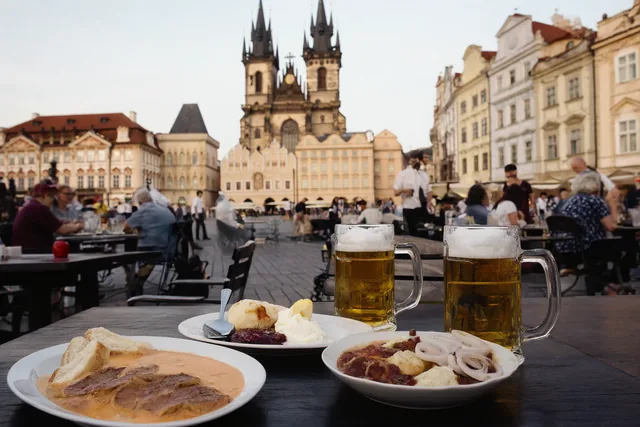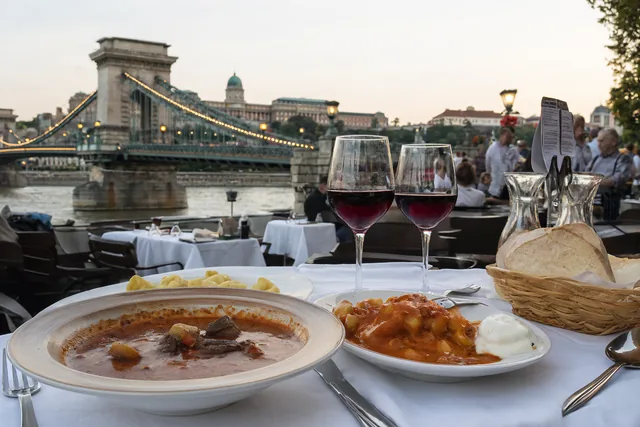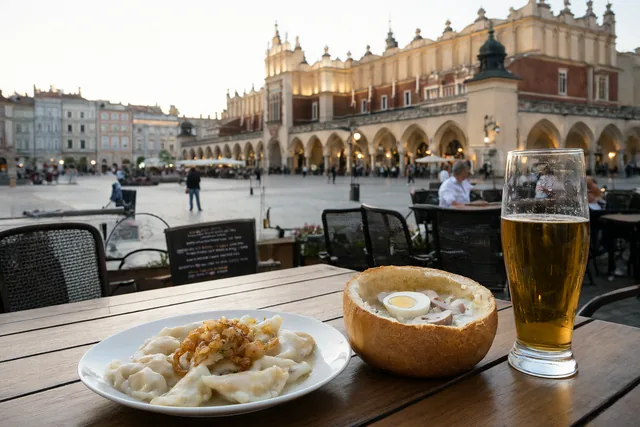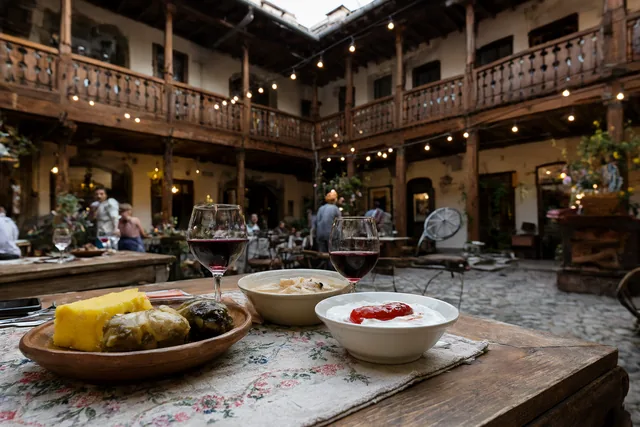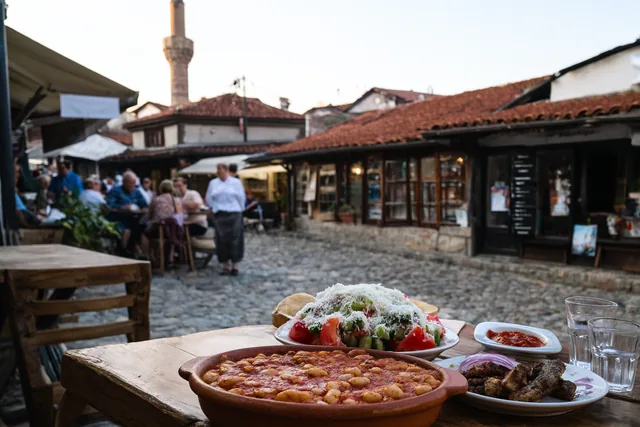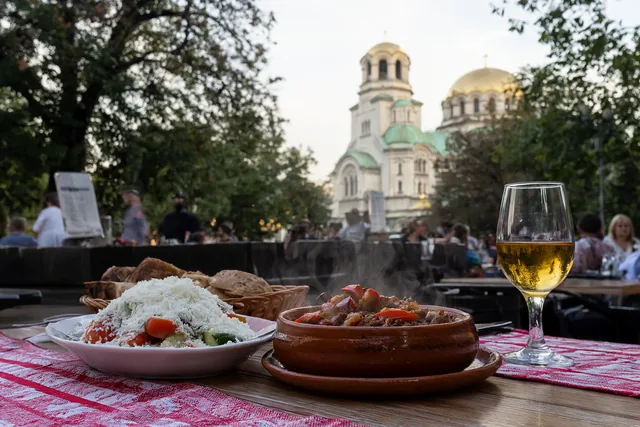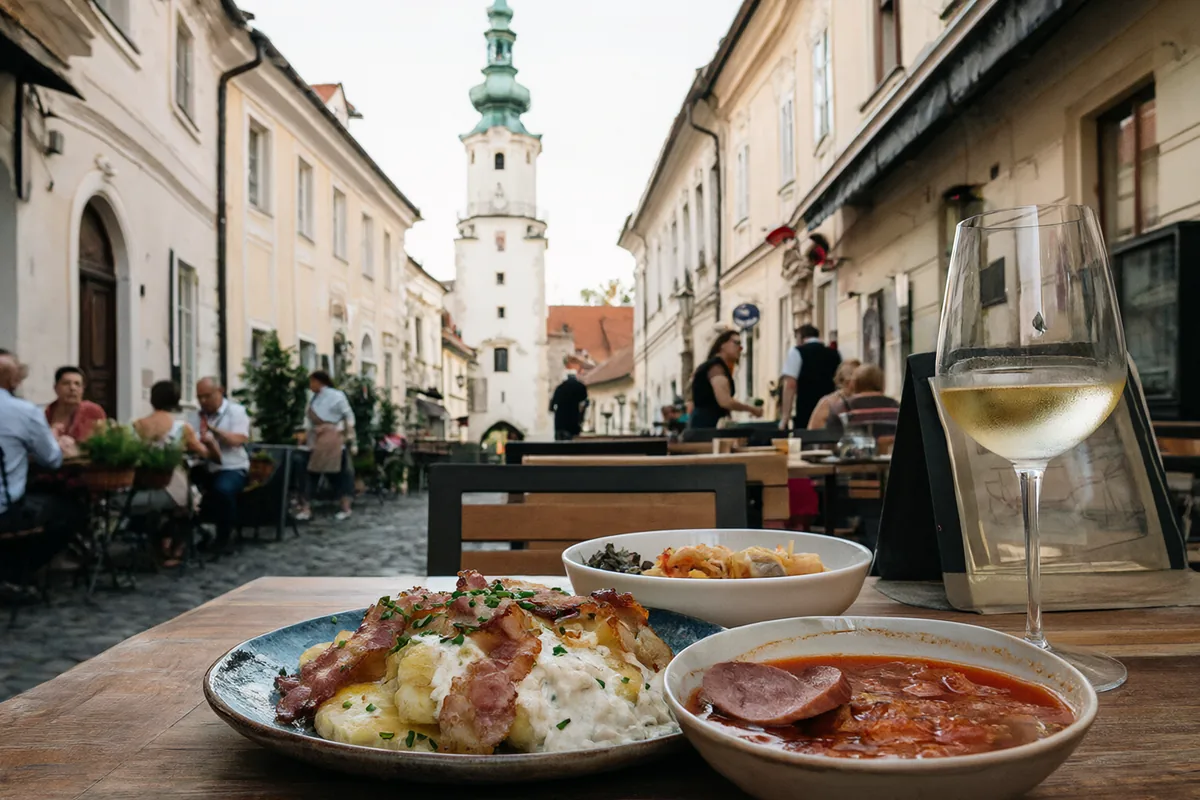
Slovakia is a small country of mountains, sheep pastures and wine villages, and its food tastes of all three. This Slovakia food guide covers the dishes to order, how to read a Slovak menu, tipping and paying, then goes region by region through where to eat in Bratislava, the Small Carpathian wine villages, Košice, the High Tatras, Liptov, Orava and Banská Štiavnica. The national dish is potato dumplings with sheep's cheese, the national drink is a juniper spirit, and the best meals are often eaten in a wooden shepherd's hut by the side of a mountain road.
What to eat in Slovakia: 12 dishes to know
Slovak cooking shares a lot with its Czech, Hungarian and Austrian neighbours, but sheep's cheese and potatoes give it its own character. These are the dishes and products to look for.
- Bryndzové halušky (everywhere): small, soft potato dumplings tossed with bryndza, a tangy, spreadable sheep's cheese, and topped with crisp fried bacon. The national dish.
- Strapačky (everywhere): the same dumplings with sauerkraut and bacon instead of cheese.
- Bryndzové pirohy (everywhere): half-moon dumplings filled with bryndza or potato and bryndza, with sour cream and bacon.
- Kapustnica (everywhere): sauerkraut soup with smoked sausage and mushrooms, sometimes with dried plums. Essential at Christmas, on menus all winter.
- Cesnaková polievka (everywhere): garlic soup, often served inside a hollowed-out round loaf (v chlebe).
- Vyprážaný syr (everywhere): a breaded, deep-fried slice of cheese with tartare sauce and fries.
- Lokše (western Slovakia): thin potato flatbreads, served with roast goose and goose fat, or rolled up sweet with poppy seeds or jam.
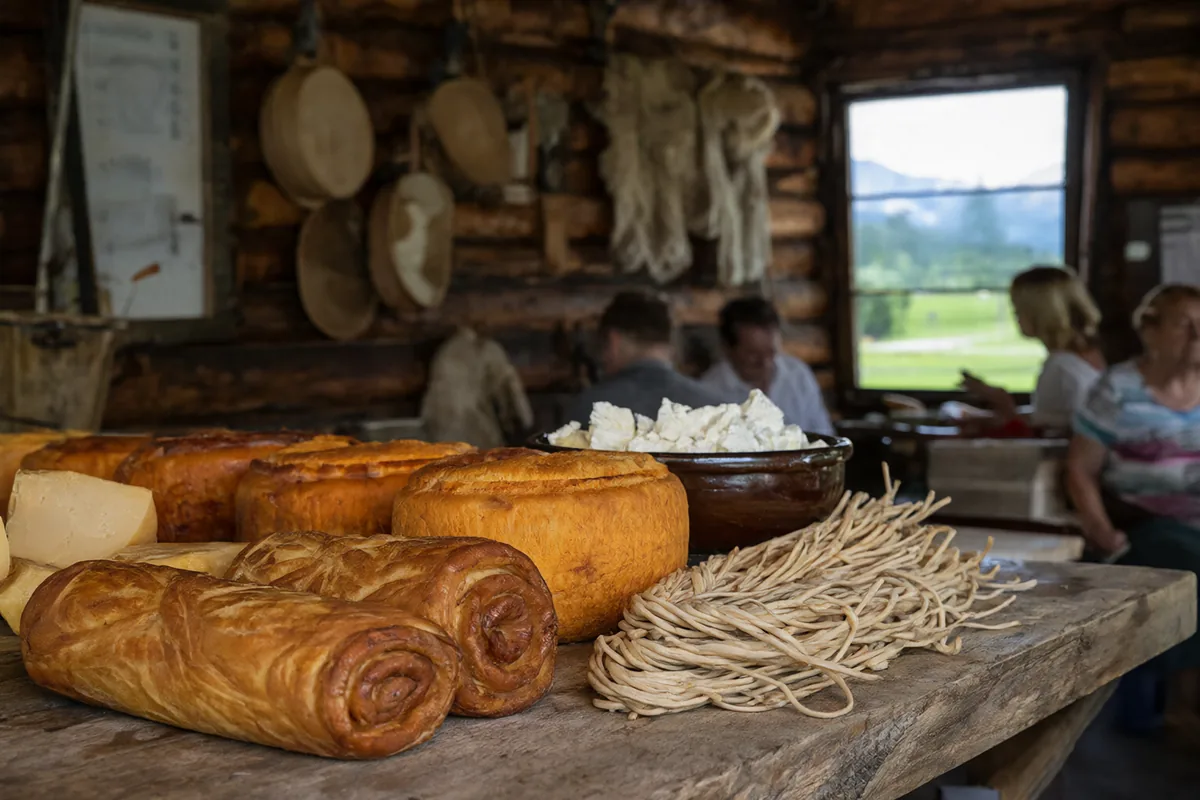
- Oštiepok (the mountains): a smoked sheep's cheese pressed in carved wooden moulds into an egg shape, eaten sliced or grilled.
- Parenica and korbáčiky (central and northern Slovakia): steamed sheep's cheese rolled into a spiral (parenica) or plaited into thin braids (korbáčiky), often lightly smoked.
- Segedínsky guláš (everywhere): pork and sauerkraut stew in a paprika and cream sauce, with bread dumplings.
- Bratislavské rožky (Bratislava): crescent-shaped pastries filled with walnut or poppy seed, protected as a traditional speciality.
- Borovička (everywhere): a strong juniper spirit, often offered as a welcome drink. Slivovica (plum brandy) is the other classic.
How to read a Slovak menu
Slovak menus (jedálny lístok) follow the usual central European pattern of starters, soups, mains, sides and desserts. Sides (prílohy) are often priced on their own, and many menus list the weight of the meat or the portion in grams. On weekdays, look for the obedové menu, a set lunch that almost always starts with soup. These are the words you will see most.
| Slovak | Meaning |
|---|---|
| Predjedlá | Starters |
| Polievky | Soups |
| Hlavné jedlá | Main courses |
| Prílohy | Sides, ordered separately: potatoes, dumplings, rice, fries |
| Dezerty / múčniky | Desserts / sweet flour dishes such as dumplings and pancakes |
| Bezmäsité jedlá | Meatless dishes (check for bacon) |
| Bravčové / hovädzie / kuracie | Pork / beef / chicken |
| Ryby / pstruh | Fish / trout |
| Bryndza / syr / slanina | Sheep's cheese spread / cheese / bacon |
| Vyprážaný / pečený / grilovaný | Breaded and fried / roasted / grilled |
| Obedové menu / denné menu | Weekday set lunch, usually soup plus a main |
| Domáce | Homemade |
| Pivo veľké / malé | Beer, large (0.5 l) / small (0.3 l) |
| Cena za 100 g | Price per 100 grams, common for trout and steak |
Mountain restaurants in Slovakia often price river trout and grilled meat per 100 grams, so the number beside the dish is not the price of your plate. Ask how heavy the fish is before it goes on the grill. swap.menu flags priced-by-weight items and separately priced sides when it reads the menu, so the bill matches what you expected.
Tipping, service and paying the bill
Tipping in Slovakia is appreciated but low-key. In pubs and casual places, round up the bill. In sit-down restaurants, 5 to 10 percent is a generous tip for good service. The common way is to tell the waiter the amount you want to pay when they bring the bill, rather than leaving coins on the table. Service charges are rare, though a few city-centre restaurants add one for large groups; if it is on the bill, there is no need to tip on top. Our guide to tax and service charges on menus explains how these lines work. VAT is included in menu prices.
Slovakia uses the euro (€). Cards and contactless payments are accepted in most restaurants, cafés and shops, but carry some cash for mountain huts, shepherd's huts and village wine cellars, where card machines are not guaranteed. If a card machine or cash machine offers to charge you in your home currency, decline and pay in euros. Our guide to paying in local currency explains why that choice costs you money.
Lunch is the main meal for many Slovaks, served from about 11am to 2pm, and the weekday set lunch is the best value meal in the country. Dinner runs from about 6pm to 9pm, and in smaller towns kitchens can close early, so do not leave dinner too late outside Bratislava.
Where to eat in Slovakia, region by region
Slovakia's food changes from the vineyards of the west to the sheep pastures of the mountains and the paprika-tinged cooking of the east. Jump to a region:
Where to eat in Bratislava
Bratislava's Old Town (Staré Mesto) is compact and walkable, and its main streets, Michalská and Ventúrska, run from St Michael's Gate down to the Main Square (Hlavné námestie), lined with terraces and cellar restaurants. This is where most visitors eat bryndzové halušky and kapustnica, and the restaurants here are perfectly good, though prices on the main square are higher than a few streets back. For better value, look for the weekday lunch menus in the streets around the Old Town, aimed at office workers rather than tourists.
The Stará tržnica, the Old Market Hall near the Old Town, hosts a Saturday food market with local producers, bakers and street food, and it is a good place to try Bratislava pastries and Slovak cheese. Along the Danube, the newer riverside developments have plenty of cafés and restaurants with terraces. If you take the trip out to Devín Castle, west of the city, try the local currant wine (ríbezľové víno), sold at stands below the ruins. Bratislava is an hour from Vienna, so many visitors come as a day trip; staying the night lets you see its wine bars and pubs at their best.
Where to eat in the Small Carpathians wine region
The Small Carpathians are a low range of hills running north-east from Bratislava, and their slopes are Slovakia's best-known wine country. The Small Carpathian Wine Route links the villages and towns of Rača, Svätý Jur, Pezinok and Modra, each with family cellars where you can taste local wines, especially Grüner Veltliner (Veltlínske zelené), Riesling, Müller-Thurgau and the red Blaufränkisch (Frankovka modrá). Pezinok and Modra hold harvest festivals (vinobranie) in September, and around St Martin's Day on 11 November the first young wine of the year is opened.
The village of Slovenský Grob, near Pezinok, is famous for roast goose with lokše, red cabbage and goose liver, served in family restaurants, with the autumn goose feasts (husacie hody) the peak season. Modra is also known for its hand-painted blue and yellow ceramics. The wine villages are an easy trip from Bratislava by train or bus, which is useful because Slovakia has a zero tolerance limit for alcohol when driving.
Where to eat in Košice
Košice is Slovakia's second city and the capital of the east, with a long main street, Hlavná ulica, running past the Gothic Cathedral of St Elisabeth and a singing fountain. The street and the lanes off it are full of cafés, wine bars and restaurants, and prices in Košice are noticeably lower than in Bratislava. Eastern Slovak cooking has more Hungarian and Rusyn influence than the west, so expect more paprika, goulash and stuffed cabbage, and pirohy filled with potato and cheese.
Košice was a European Capital of Culture in 2013, and the investment that came with it left the centre lively, with new cafés in restored courtyards. An hour or so south-east is Slovakia's small share of the Tokaj wine region, which it shares with Hungary, producing sweet and dry whites from the same grapes and volcanic soils. For lunch in Košice, look for a denné menu chalked on a board outside a restaurant: soup and a main for very little.
Where to eat in the High Tatras
The High Tatras are the highest mountains in the Carpathians, and their resort villages, Štrbské Pleso, Starý Smokovec and Tatranská Lomnica, are full of hotel restaurants and wooden koliby, chalet-style restaurants with open grills where you can order roast meats, sausages and halušky. Up in the mountains, hikers stop at the mountain huts (chaty), many of which are supplied by porters who carry loads up on their backs, and serve hot soups, goulash, strudel and tea with rum.
Food in the High Tatras resorts is pricier than in the towns below, so for better value eat in Poprad, the gateway town, or in the villages along the road. The nearby Spiš region, with Levoča and the vast ruins of Spiš Castle, makes a good side trip with simpler local restaurants. Hut kitchens keep short hours, and some close in the shoulder seasons, so check before you set off on a long hike.
Where to eat in Liptov
Liptov is the green valley between the High Tatras and the Low Tatras, centred on the town of Liptovský Mikuláš and the Liptovská Mara reservoir. This is sheep country, and the place to visit a salaš, a shepherd's hut that makes and sells fresh sheep's cheese. Many have small restaurants attached, serving bryndzové halušky made with cheese from the same farm, alongside žinčica, a sour whey drink, and kyslé mlieko, sour milk. You will see salaše signposted along the main roads through Liptov.
Liptov gave its name to Liptauer, the paprika cheese spread known across central Europe, made from bryndza mixed with butter, onion, paprika and caraway. In Slovakia it is called šmirkás or liptovská nátierka and is served with bread as a snack with beer. The UNESCO-listed village of Vlkolínec, with its wooden log houses, is nearby, and the thermal water parks around Liptov draw families, so restaurants are used to visitors and many have picture menus.
Where to eat in Orava
Orava is the far northern region along the Polish border, best known for Orava Castle, perched on a cliff above the river. It is the home of Oravský korbáčik, the braided sheep's cheese strings, which you will find at salaše and roadside stalls, smoked or plain. Orava cooking is mountain food: potato dishes, sauerkraut, halušky, smoked meats and soups, and plenty of sheep's cheese. Restaurants are simpler and cheaper than in the resort areas.
Just south of Orava, in the Malá Fatra mountains, the village of Terchová is known for its folk music and as the legendary home of Jánošík, a Slovak Robin Hood, and its kolibas and salaše are a popular stop for halušky after a hike in the Vrátna valley. Visit the Zuberec open-air museum to see traditional Orava wooden farmhouses, and stop at a salaš on the way for fresh cheese to take home.
Where to eat in Banská Štiavnica
Banská Štiavnica is a former silver-mining town in central Slovakia, built on steep hillsides inside an ancient volcanic crater and listed by UNESCO. Its old houses are now home to cafés, wine bars and small restaurants run by people who moved here from Bratislava for the slower pace, so the food is more varied than you might expect for a town of its size. Traditional Slovak dishes sit alongside good coffee, local craft beer and wine from the south of the country.
In summer, locals swim in the tajchy, artificial lakes built centuries ago to power the mines, and simple snack bars along their shores serve sausages, fried cheese and beer. In September, the town's Salamander Days festival fills the streets with a parade and food stalls. Banská Štiavnica is busy at weekends and very quiet midweek, so book dinner ahead on Fridays and Saturdays and check opening days if you visit out of season.
Vegetarian, vegan and allergy tips
Slovak food is meat and dairy heavy, and vegetarians need to be careful. The bezmäsité jedlá (meatless dishes) section usually offers fried cheese, potato pancakes, mushroom dishes and sweet dumplings. The national dish, bryndzové halušky, normally comes topped with bacon, so ask for it without (bez slaniny). The word for vegetarian is vegetariánsky and for vegan vegánsky. Watch for lard (masť) used in frying and pastry, and meat or smoked pork stock in soups such as kapustnica and bean soup.
Vegans have a hard time outside Bratislava and Košice, where dedicated vegan and vegetarian restaurants are growing. Gluten-free (bezlepkové) options are marked on some city menus, and EU rules require restaurants to tell you which major allergens a dish contains if you ask. Walnuts and poppy seeds fill many pastries. Our guide to eating abroad with food allergies explains how to explain an allergy clearly when you do not speak the language.
Useful Slovak phrases for ordering
Dobrý deň "Good day", the polite greeting to staff as you walk in (Dobrý večer in the evening)
Stôl pre dvoch, prosím "A table for two, please"
Čo odporúčate? "What do you recommend?"
Dám si toto "I will have this" (pointing)
Bez slaniny, prosím "Without bacon, please"
Som alergický / alergická na... "I am allergic to..." (alergický for a man, alergická for a woman)
Zaplatím, prosím "I would like to pay, please"
Na zdravie! "Cheers!"
How swap.menu helps you eat in Slovakia
Outside central Bratislava, many Slovak menus are in Slovak only, and the salaše and village restaurants that serve the best halušky rarely have an English version. Photograph the menu with swap.menu and every dish appears in your language with the Slovak name beside it and a short explanation, so you know that zemiakové placky are potato pancakes and pečené koleno is a whole roast pork knuckle before you order. Every price is shown in euros and in your home currency, and we flag sides priced separately and dishes sold per 100 g.
Tap the dishes you want, add a note such as "halušky without bacon" or "no nuts, please", typed or spoken, and swap.menu translates your order into Slovak. Show the waiter your phone, or let them scan the QR code and read your order on their own screen. You can try it right now on a sample menu with the free demo, or see travel pass prices.
Off to Slovakia? Your first 3 menu scans are free, and a travel pass starts from $4.99 with nothing that renews.
Start free with 3 scansSlovakia food FAQ
Do you tip in restaurants in Slovakia?
Tipping is appreciated but not obligatory. Round up in pubs and leave 5 to 10 percent in sit-down restaurants for good service. Tell the waiter the total you want to pay rather than leaving coins on the table.
What food is Slovakia famous for?
Bryndzové halušky, potato dumplings with sheep's cheese and bacon, is the national dish. Slovakia is also known for kapustnica (sauerkraut soup), sheep's cheeses such as oštiepok and korbáčiky, and drinks such as borovička and plum brandy.
Is Slovakia expensive to eat out?
Slovakia is good value compared with neighbouring Austria. A weekday set lunch with soup and a main is very cheap, and restaurants outside the main square in Bratislava and the mountain resorts are reasonably priced.
What is a salaš in Slovakia?
A salaš is a shepherd's hut where sheep's cheese is made and sold, usually in the mountain regions. Many have a simple restaurant attached that serves bryndzové halušky and other dishes made with their own cheese.
Is tap water safe to drink in Slovakia?
Yes, tap water is safe to drink across Slovakia. Restaurants usually sell bottled still or sparkling water, so ask specifically if you want tap water.
How can I read a Slovak menu if I do not speak Slovak?
Learn a few headings such as polievky (soups), hlavné jedlá (mains) and prílohy (sides), or photograph the menu with swap.menu. It translates every dish into your language, explains what it is, converts euro prices to your currency and translates your order back into Slovak for the waiter.
Travelling further in Europe? Read our food guides for neighbouring countries:
- Czech Republic food guide
- Austria food guide
- Hungary food guide
- Poland food guide
- Slovenia food guide
Or browse every travel food guide.