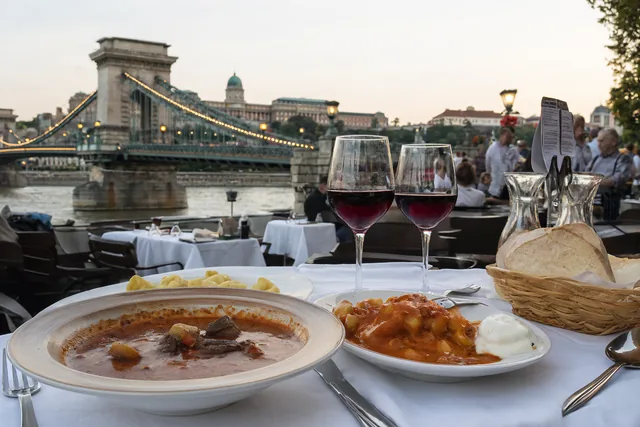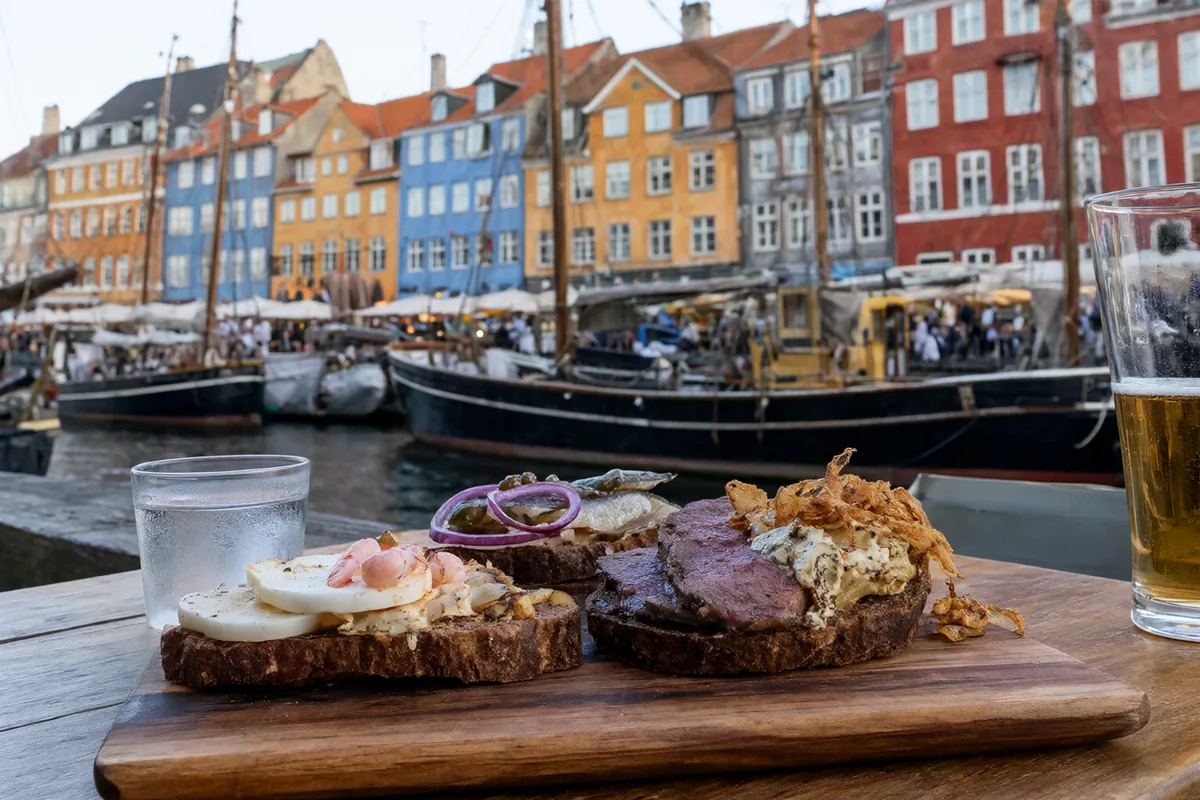
Denmark gave the world the New Nordic kitchen and some of its most famous restaurants, but everyday Danish food is just as rewarding: open sandwiches on dark rye, crisp pork with parsley sauce, pickled herring with a cold glass of akvavit, and pastries good enough to explain why the rest of the world named them after Denmark. This Denmark food guide covers the dishes to order, how to read a Danish menu, why you rarely need to tip, then goes city by city through where to eat in Copenhagen, Aarhus, Odense and Aalborg, and out to the fishing harbour of Skagen and the smokehouses of Bornholm.
What to eat in Denmark: 12 dishes to know
Danish food is built on rye bread, pork, fish from the North Sea and the Baltic, potatoes and dairy. These are the dishes and treats to look for.
- Smørrebrød (everywhere): open sandwiches on buttered rye bread, piled with toppings such as herring, egg and shrimp, roast beef with remoulade and crispy onions, or warm liver pâté with bacon and mushrooms. The classic Danish lunch.
- Sild (everywhere): pickled herring, marinated in vinegar, curry sauce or spiced, eaten on rye with onion and capers.
- Stegt flæsk med persillesovs (everywhere): crisp fried slices of pork belly with boiled potatoes and a creamy parsley sauce, voted Denmark's national dish.
- Frikadeller (everywhere): pan-fried pork and veal meatballs, served with potatoes and brown gravy or on rye bread.
- Flæskesteg (everywhere): roast pork with a crackling crust, the centre of the Christmas meal, and a popular sandwich filling year round.
- Stjerneskud (everywhere): "shooting star", fried and steamed fish fillets on white bread, topped with shrimp, asparagus, caviar and dressing.
- Rød pølse (everywhere): the bright red Danish hot dog, sold from street wagons (pølsevogne) with mustard, ketchup, remoulade, raw and crispy onion and sliced pickles.
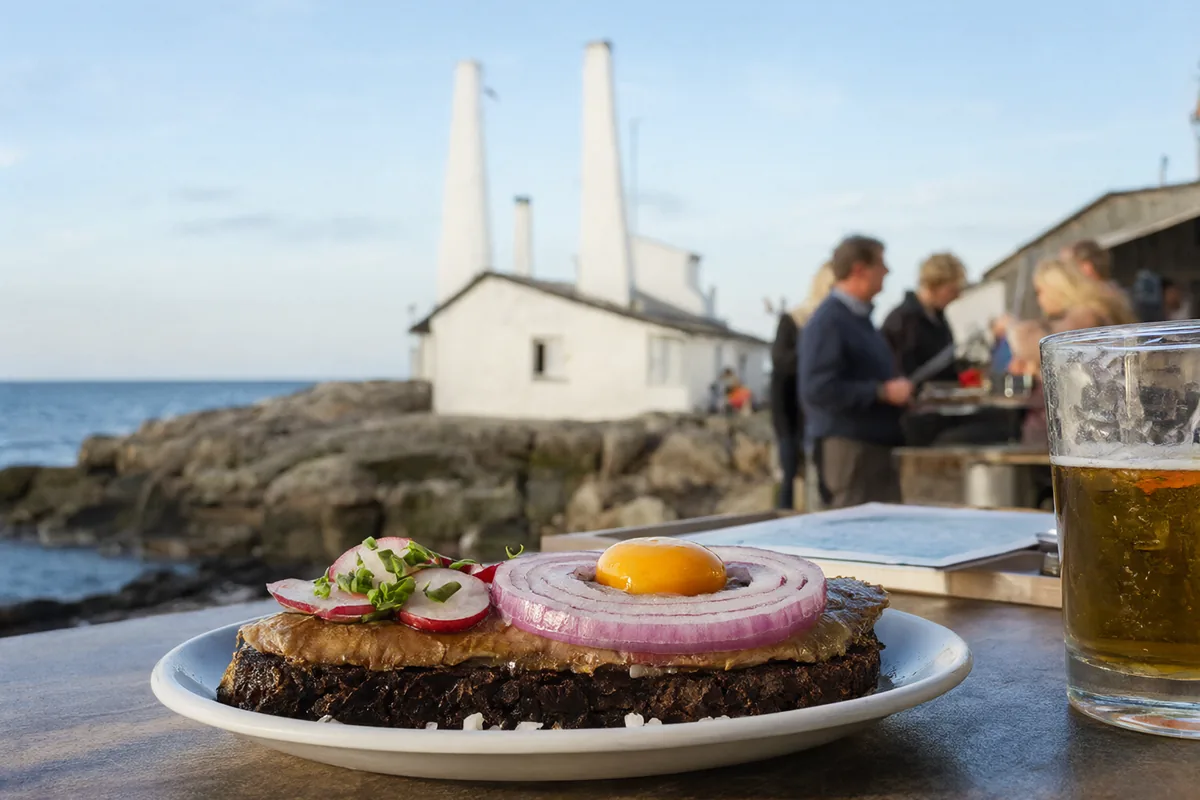
- Røget sild (Bornholm): smoked herring, served as Sol over Gudhjem, "sun over Gudhjem", on rye with a raw egg yolk, radishes and chives.
- Wienerbrød (everywhere): what the world calls a "Danish", laminated pastries filled with custard, marzipan or jam. Look also for the kanelsnegl, a cinnamon swirl.
- Æbleskiver (December): round, fluffy pancake balls dusted with icing sugar and dipped in jam, eaten with gløgg (mulled wine) at Christmas.
- Koldskål (summer): a cold, sweet buttermilk soup with lemon and vanilla, topped with small crunchy biscuits called kammerjunkere.
- Akvavit (everywhere): a caraway or dill flavoured spirit, called snaps, served ice cold with herring and smørrebrød.
How to read a Danish menu
Danish menus are simple and most restaurants in the cities have English versions, but lunch places, bakeries and country inns often do not. Lunch menus tend to list smørrebrød by the piece, and dinner menus run from starters to mains and dessert, often as a set menu of several courses. The old etiquette for a smørrebrød lunch is to eat herring first, then other fish, then meat, then cheese.
| Danish | Meaning |
|---|---|
| Forret | Starter |
| Hovedret | Main course |
| Dessert | Dessert |
| Frokost / aften | Lunch / evening |
| Dagens ret | Dish of the day |
| Smørrebrød / stykke | Open sandwich / per piece |
| Sild / laks / rejer | Herring / salmon / shrimp |
| Svinekød / flæsk | Pork / pork belly |
| Oksekød / kylling / lam | Beef / chicken / lamb |
| Kartofler | Potatoes |
| Stegt / kogt / røget | Fried or roasted / boiled / smoked |
| Rugbrød / franskbrød | Rye bread / white bread |
| Postevand | Tap water |
| Vegetarisk / vegansk / glutenfri | Vegetarian / vegan / gluten-free |
Danish prices are high, and the set menus at Copenhagen restaurants can run to many courses with optional drinks pairings that double the bill. Read the small print before you agree. swap.menu translates set menus line by line and converts every price from Danish kroner to your home currency, so you know what you are committing to before you order.
Tipping, service and paying the bill
Tipping is not expected in Denmark. Danish menu prices must include service and 25 percent VAT (moms), so the price you see is the price you pay, and staff are paid a proper wage. Danes may round up or leave a little extra for an exceptional meal, and card machines sometimes offer a tip option, but there is no obligation and you will not cause offence by skipping it. Our guide to tax and service charges on menus explains how this differs from countries where service is added on top.
Prices are in Danish kroner (kr., code DKK). Denmark is not on the euro, though a few tourist places accept euros at a poor rate. Denmark is close to cashless: cards and phone payments are accepted almost everywhere, including hot dog wagons and market stalls, and some places no longer take cash at all. A few businesses add a small surcharge for cards issued outside the EU, which should be shown at the till. When a card machine offers to charge you in your home currency, say no and pay in kroner: our guide to paying in local currency explains why.
Danes eat early. Lunch (frokost) is from about 11:30am to 2pm, and dinner from about 6pm, with most kitchens busiest between 6pm and 8:30pm. Outside Copenhagen and Aarhus, many restaurants stop serving by 9pm. Book ahead for dinner on Friday and Saturday nights, and for well-known Copenhagen restaurants, book weeks or months ahead.
Where to eat in Denmark, city by city
Denmark is small, and you can reach every place in this guide by train, ferry or a short flight. Jump to a destination:
Where to eat in Copenhagen
Copenhagen is one of the best food cities in Europe, and not only for its famous tasting-menu restaurants. For a traditional Copenhagen lunch, find a smørrebrød restaurant, often in a cellar or an old house in the inner city, and order two or three pieces with a beer and a snaps. Torvehallerne, two glass market halls at Israels Plads, are the place to graze on smørrebrød, fish, cheese, coffee and pastries. The colourful canal of Nyhavn is lined with terraces and is the classic photo spot, but it is expensive for what you get; enjoy a drink there and eat elsewhere.
For dinner, Vesterbro, and in particular the Kødbyen (Meatpacking District) of converted slaughterhouse buildings, is full of restaurants and bars. Nørrebro, with streets such as Jægersborggade, has small bakeries, wine bars and cafés, and Christianshavn has canal-side restaurants with a village feel. In summer, the Reffen street food market on Refshaleøen, across the harbour, has dozens of food stalls by the water. Copenhagen's bakeries are worth an early start: cardamom buns, cinnamon swirls and sourdough rye are among the best you will eat anywhere.
Where to eat in Aarhus
Aarhus, Denmark's second city, is a young, relaxed university town on the east coast of Jutland. It was a European Capital of Culture in 2017, when the wider Central Denmark Region was also named a European Region of Gastronomy, and its food scene has grown steadily since. The old Latin Quarter (Latinerkvarteret), with cobbled lanes near the cathedral, is full of cafés and bistros, and Jægergårdsgade in the Frederiksbjerg district is a street lined with restaurants and bars.
Aarhus has a large street food hall in a former bus garage near the main bus station, with stalls serving everything from smørrebrød to Asian and Middle Eastern food. The new harbour district of Aarhus Ø has waterside restaurants and a harbour bath where locals swim year round. Aarhus restaurants are generally a little cheaper than Copenhagen's, and the Jutland countryside around the city supplies excellent pork, dairy and vegetables.
Where to eat in Odense
Odense, on the island of Funen (Fyn), is Hans Christian Andersen's hometown and Denmark's third city. Funen is known as the garden of Denmark for its orchards, farms and market gardens, and Odense restaurants make good use of local produce: apples, berries, new potatoes, pork and cheese. Look for traditional Danish dishes such as brændende kærlighed ("burning love"), mashed potato topped with fried bacon and onions, and æggekage, a thick egg pancake with bacon and chives.
The old centre of Odense, around the Hans Christian Andersen museum and the pedestrian streets nearby, has cafés and restaurants in old timber-framed houses, and the Brandts cultural quarter, in a former textile factory, has bars, cafés and a lively square. Odense is a good base for exploring Funen's manor houses and farm shops, and the small islands to the south, such as Ærø, have harbour restaurants and local breweries.
Where to eat in Aalborg
Aalborg, in north Jutland, sits on the Limfjord, the long sound that cuts across the top of Jutland, and it is the place to try the region's seafood. Limfjord oysters and blue mussels are prized across Denmark and appear on menus from autumn through spring. Aalborg was long the home of Danish akvavit, and its restaurants and bars still serve a wide choice of snaps with herring and smørrebrød.
Aalborg's best-known street is Jomfru Ane Gade, a short lane of bars and restaurants that is busy until late, especially at weekends. The redeveloped harbourfront has newer restaurants, cafés and cultural buildings, and the old town around Budolfi Church has timber-framed houses with small restaurants. Aalborg is also a good stop on the way north to Skagen, about an hour away.
Where to eat in Skagen
Skagen is a fishing town at the northern tip of Denmark, where the Skagerrak and Kattegat seas meet. Its yellow houses with red tiled roofs and its famous light drew a colony of painters in the late 19th century, and today it is one of Denmark's most popular summer destinations. Skagen is famous for its shrimp (rejer), sold by the bag to peel yourself and eat with white bread, mayonnaise and lemon, and its harbour fish restaurants serve plaice, cod, mussels and fish cakes.
The harbour is the place to eat: a row of red fish warehouses houses restaurants and fishmongers, and on summer evenings the terraces are full. Skagen is very busy in July, when Danes holiday here, and much quieter outside summer, when some restaurants close. Book dinner in high season, and walk out to Grenen, the sandy tip of Denmark, to work up an appetite.
Where to eat on Bornholm
Bornholm is a rocky island in the Baltic Sea, closer to Sweden than to the rest of Denmark, and one of the country's favourite food destinations. Its trademark is the herring smokehouse (røgeri), recognisable by its tall white chimneys, where herring is smoked over alder wood. Most smokehouses have a simple restaurant or counter, and the dish to order is Sol over Gudhjem, warm smoked herring on rye bread with a raw egg yolk, radishes, chives and coarse salt. You will find smokehouses in Gudhjem, Hasle, Svaneke and Allinge.
Bornholm also has many small producers: breweries, cheese makers, smoked fish, caramels in Svaneke, ice cream and rapeseed oil, and its restaurants make the most of them. The island is reached by ferry from Køge in Denmark or Ystad in Sweden, or by a short flight from Copenhagen. Bornholm is busiest in summer, and many smokehouses and restaurants open only from spring to autumn, so check before you go.
Vegetarian, vegan and allergy tips
Denmark is easy for vegetarians and vegans in the cities: Copenhagen and Aarhus have plenty of vegetarian restaurants, most menus include a vegetarian main, and New Nordic cooking has made vegetables the focus of many dishes. The word for vegetarian is vegetarisk and for vegan vegansk. Traditional food is harder: smørrebrød is mostly fish and meat, though egg, potato and cheese versions exist, and sauces and gravies are often made with meat stock.
Watch for hidden ingredients: rye bread may be spread with lard (fedt) rather than butter in traditional places, many salads and remoulade contain egg, and pastries are rich in butter and often contain almond or marzipan. Danish restaurants are generally well informed about allergens and gluten-free (glutenfri) and lactose-free (laktosefri) requests. Our guide to eating abroad with food allergies explains how to explain an allergy clearly when you do not speak the language.
Useful Danish phrases for ordering
Hej / Goddag "Hello" / "Good day". Hej is fine almost everywhere
Et bord til to, tak "A table for two, please"
Hvad kan du anbefale? "What can you recommend?"
Jeg vil gerne have den her "I would like this one" (pointing)
Jeg er allergisk over for... "I am allergic to..."
Må vi bede om regningen? "May we have the bill?"
Skål! "Cheers!" Look your companions in the eye before and after you drink
Tak for mad "Thanks for the food", said at the end of a meal
How swap.menu helps you eat in Denmark
Most Danes speak excellent English, but menus in bakeries, lunch places and smokehouses are often in Danish only, and many dish names give nothing away. Photograph the menu with swap.menu and every dish appears in your language with the Danish name beside it and a short explanation, so you know that stjerneskud is a fish fillet sandwich, that brændende kærlighed is mashed potato with bacon, and that dyrlægens natmad ("the vet's midnight snack") is a smørrebrød of liver pâté, salt beef and aspic, before you order. Every price is converted from Danish kroner to your home currency, which matters in one of Europe's most expensive countries.
Tap the dishes you want, add a note such as "no egg" or "vegetarian, please", typed or spoken, and swap.menu translates your order into Danish. Show the waiter your phone, or let them scan the QR code and read your order on their own screen. You can try it right now on a sample menu with the free demo, or see travel pass prices.
Off to Denmark? Your first 3 menu scans are free, and a travel pass starts from $4.99 with nothing that renews.
Start free with 3 scansDenmark food FAQ
Do you tip in restaurants in Denmark?
Tipping is not expected in Denmark, because service is included in menu prices by law and staff are paid a full wage. Rounding up or leaving a little extra for exceptional service is appreciated but entirely optional.
What food is Denmark famous for?
Smørrebrød (open sandwiches on rye), pickled herring, stegt flæsk (crisp pork belly with parsley sauce), frikadeller (meatballs), Danish pastries and the red hot dog are the best known. Copenhagen is also famous for New Nordic cuisine.
Is Denmark expensive to eat out?
Yes, Denmark is one of the most expensive countries in Europe for eating out, especially in Copenhagen. Smørrebrød at lunch, hot dog wagons, bakeries and street food halls are the best ways to eat well for less.
Is tap water safe to drink in Denmark?
Yes, Danish tap water is very clean and safe to drink. Ask for postevand. Some restaurants charge a small amount for a jug of tap water, so check the menu.
What time do Danes eat dinner?
Danes eat early, usually between 6pm and 8pm. Lunch is eaten from about 11:30am to 1:30pm. Outside the big cities, many kitchens close by 9pm.
How can I read a Danish menu if I do not speak Danish?
Learn a few words such as forret (starter), hovedret (main) and sild (herring), or photograph the menu with swap.menu. It translates every dish into your language, explains what it is, converts prices from kroner to your currency and translates your order back into Danish for the waiter.
Travelling further in Europe? Read our food guides for neighbouring countries:
Or browse every travel food guide.