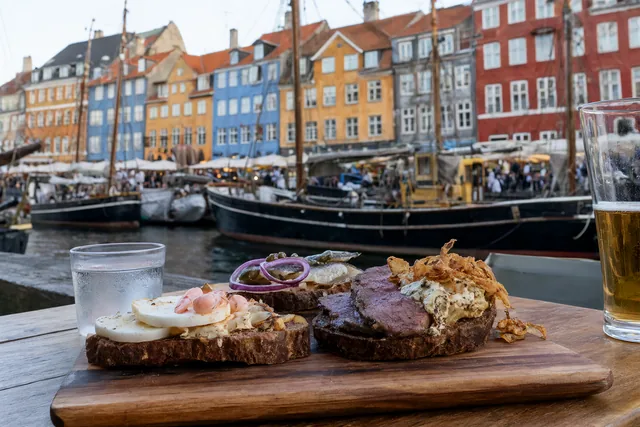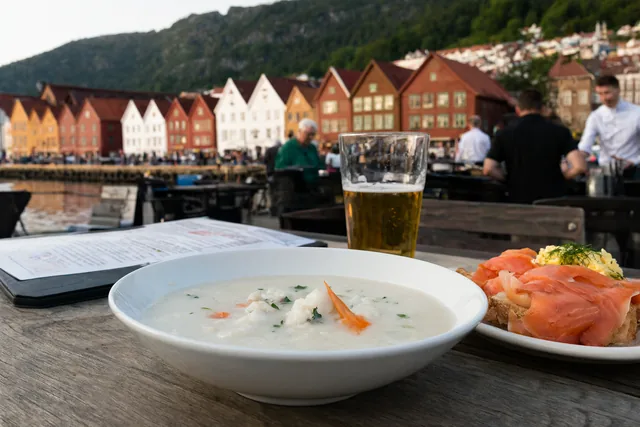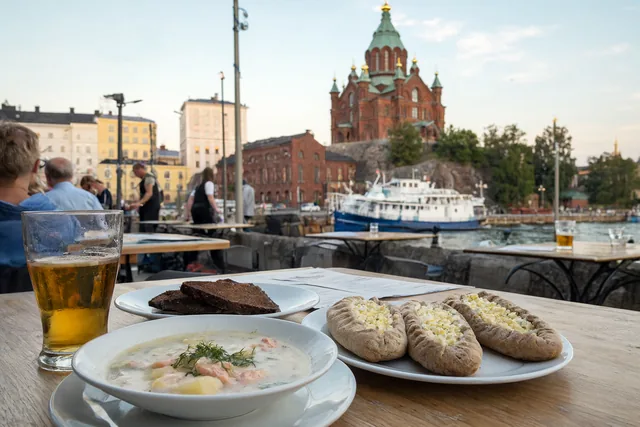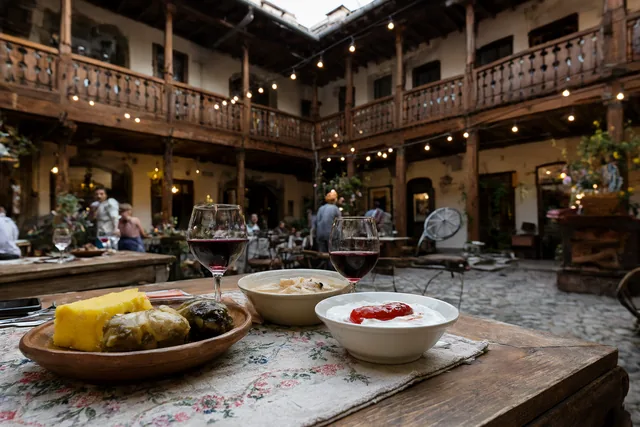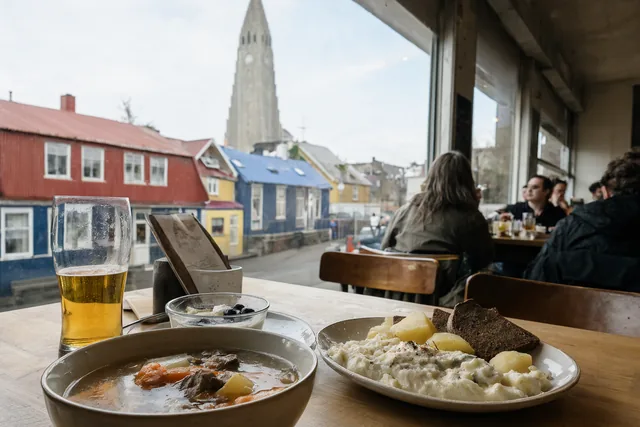
Swedish food is more than meatballs, though the meatballs are very good. This Sweden food guide covers the dishes to order, how to read a Swedish menu, whether to tip and how the great Swedish weekday lunch works, then goes city by city through where to eat in Stockholm, Gothenburg and Malmö, along the seafood coast of Bohuslän, on the island of Gotland, in the food city of Östersund and in Swedish Lapland. Expect herring and salmon in many forms, berries with everything from meat to pancakes, a serious coffee and bun culture called fika, and seasonal traditions such as crayfish parties that are still taken very seriously.
What to eat in Sweden: 12 dishes to know
These are the dishes you will meet on Swedish menus, with the region they come from where it matters. Many fall under husmanskost, traditional home cooking, which is still served at lunch all over the country.
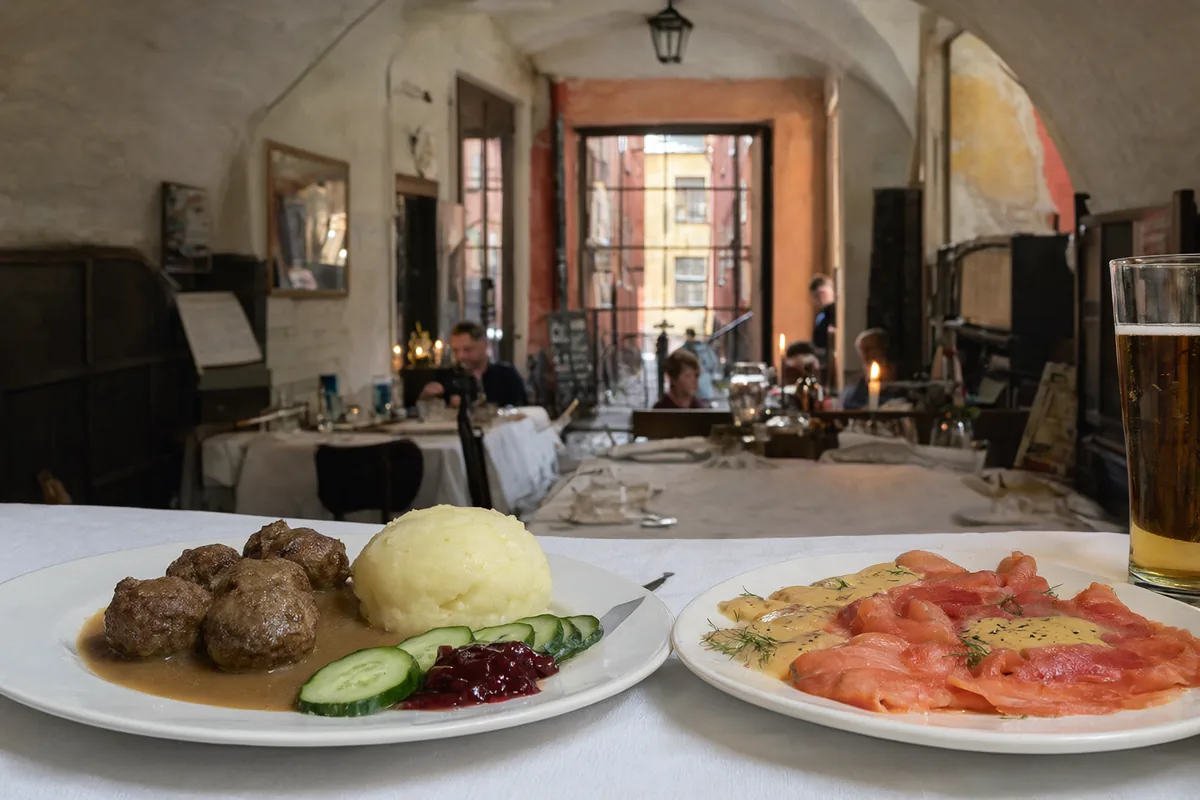
- Köttbullar (everywhere): meatballs with creamy gravy, mashed or boiled potatoes, lingonberry jam and pressed cucumber.
- Gravad lax (everywhere): salmon cured with salt, sugar and dill, sliced thin and served with hovmästarsås, a sweet mustard and dill sauce.
- Sill (everywhere): pickled herring in mustard, onion, dill or other marinades, eaten with boiled new potatoes, sour cream and chives. Essential at Midsummer and Christmas.
- Stekt strömming (Stockholm and the Baltic coast): fried fillets of small Baltic herring with mashed potato and lingonberries.
- Räksmörgås (everywhere, best on the west coast): an open sandwich piled high with shrimp, egg, mayonnaise and dill.
- Toast Skagen (everywhere): shrimp in a dill mayonnaise on fried bread, topped with fish roe, a classic starter.
- Janssons frestelse (everywhere): "Jansson's temptation", a creamy bake of potato, onion and Swedish sprats, a Christmas staple.
- Ärtsoppa och pannkakor (everywhere, Thursdays): yellow pea soup with pork, followed by thin pancakes with jam and cream. Many lunch restaurants serve it every Thursday.
- Kanelbulle and kardemummabulle (everywhere): cinnamon and cardamom buns, the centre of fika.
- Semla (January to Lent): a cardamom bun filled with almond paste and whipped cream, eaten on Shrove Tuesday and for weeks before and after.
- Kräftor (August): boiled freshwater crayfish with dill, eaten at a kräftskiva, a crayfish party with paper hats, songs and snaps.
- Renskav (Lapland and the north): thinly shaved reindeer meat sautéed with onion and cream, served with mashed potato and lingonberries.
How to read a Swedish menu
Most city restaurants in Sweden have an English menu, but lunch boards, cafés and country inns often do not. The key thing to understand is dagens lunch: on weekdays, from about 11am to 2pm, almost every restaurant offers a lunch deal at a fixed price, usually including a main course, salad, bread, a drink and often coffee. It is the best value meal in Sweden. Here are the words you will see most.
| Swedish | Meaning |
|---|---|
| Förrätt | Starter |
| Varmrätt | Main course (literally "warm dish") |
| Efterrätt | Dessert |
| Dagens lunch / dagens rätt | Weekday lunch deal / dish of the day |
| Husmanskost | Traditional Swedish home cooking |
| Smörgås | Sandwich, usually open |
| Sill / lax / räkor | Herring / salmon / shrimp |
| Fläsk / nötkött / kyckling | Pork / beef / chicken |
| Vilt / ren / älg | Game / reindeer / elk (moose) |
| Potatis / potatismos | Potatoes / mashed potato |
| Stekt / kokt / rökt / gravad | Fried / boiled / smoked / cured |
| Lingon / hjortron | Lingonberries / cloudberries |
| Kranvatten | Tap water |
| Vegetarisk / vegansk / laktosfri | Vegetarian / vegan / lactose-free |
The dagens lunch board outside a Swedish restaurant is usually handwritten in Swedish and changes every day, often with three or four choices including a fish, a meat and a vegetarian dish. Photograph it with swap.menu to see each option in your language, with the price converted to your home currency, before you go in.
Tipping, cashless payments and meal times
Service is included in Swedish restaurant prices, and tipping (dricks) is optional. At dinner, Swedes often round up or add 5 to 10 percent for good service, and card machines usually show a screen where you can add a tip or skip it. At lunch, in cafés and at counters, tipping is not expected. Our guide to tax and service charges on menus explains how this compares with countries where service is added on top. VAT (moms) is included in menu prices.
Prices are in Swedish kronor (kr, code SEK); Sweden does not use the euro. Sweden is one of the most cashless countries in the world, and many cafés, restaurants and even market stalls do not accept cash at all, so a contactless card or phone wallet is all you need. When a card machine offers to charge you in your home currency, decline and pay in kronor: our guide to paying in local currency explains why.
Swedes eat early. Lunch is from about 11am to 1:30pm, and dinner from about 6pm to 8:30pm, earlier outside the big cities. Wine, spirits and beer above 3.5 percent alcohol are sold in shops only by the state chain Systembolaget, which closes early on Saturdays and all day Sundays, though restaurants and bars serve alcohol as normal, at high prices.
Where to eat in Sweden, city by city
Sweden is long: Malmö in the south is closer to Berlin than to Kiruna in the north. Each region has its own produce and traditions. Jump to a destination:
Where to eat in Stockholm
Stockholm is built on islands, and its food scene is spread across them. Gamla stan, the old town, is full of cellar restaurants serving traditional Swedish food such as meatballs, herring and reindeer; it is touristy, but a good place to try husmanskost in an old vaulted room. For fresh produce and lunch counters, visit Östermalms Saluhall, an elegant market hall from 1888 with fish, game and cheese stalls and small restaurants, and Hötorgshallen, a busier, more international market hall below Hötorget square.
Södermalm, the island south of the old town, is where many younger Stockholmers eat and drink, especially around Nytorget and the SoFo area, with bakeries, natural wine bars and bistros. Stockholm's cafés are serious about fika, and a coffee with a cardamom bun is the standard mid-afternoon break. For a classic Stockholm street food, look for stalls selling fried Baltic herring (stekt strömming) with mash. In summer, ferries carry locals out to the archipelago, where harbour restaurants serve fish and shrimp by the water.
Where to eat in Gothenburg
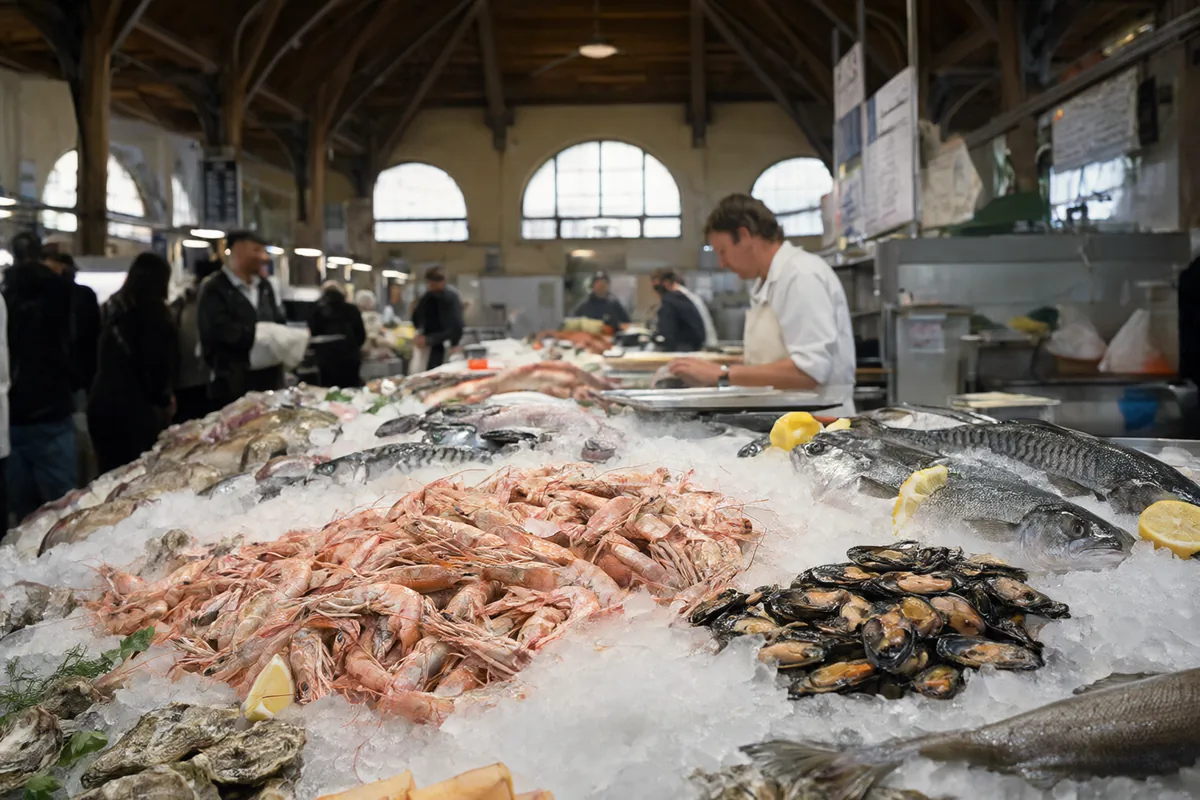
Gothenburg, on the west coast, is Sweden's seafood city. Its most famous food building is Feskekôrka, the "fish church", an 1874 market hall shaped like a Gothic church, with fishmongers selling shrimp, langoustine, mussels, oysters and smoked fish, and simple places to eat a shrimp sandwich or fish soup. The Saluhallen market hall at Kungstorget, from 1889, has delis, bakeries and lunch counters, and is the place to put together a picnic.
The old wooden district of Haga is famous for its cafés and their enormous cinnamon buns, and the neighbouring Linnéstaden has many of Gothenburg's best restaurants and wine bars. Majorna, further west, is more relaxed and local. Gothenburg is a good base for the fishing villages of the Bohuslän coast to the north. Restaurants in Gothenburg are generally a little cheaper than in Stockholm, and lunch deals are excellent value.
Where to eat in Malmö
Malmö is Sweden's third city, linked to Copenhagen by the Öresund Bridge, and one of its most international. Around a third of residents were born abroad, and the city's unofficial street food is the falafel, sold from countless small shops and eaten as the quick, cheap meal of choice. The Möllevången district, around Möllevångstorget square and its daily market, is the centre of Malmö's international food, with grocers, bakeries and restaurants from the Middle East, the Balkans and Asia.
The region of Skåne, around Malmö, is Sweden's farming heartland, with its own dishes: äggakaka, a thick egg pancake with crisp pork belly and lingonberries, and spettekaka, a tall, lacy cake baked on a spit. On 10 November, the eve of St Martin's Day, Skåne celebrates with a goose dinner (Mårten gås), starting with black soup made from goose blood. In the centre of Malmö, Lilla Torg is a small square of terraces, and the city's market hall near the station has lunch counters and delis.
Where to eat on the West Coast
The Bohuslän coast, north of Gothenburg, is a rocky granite shoreline of islands and fishing villages, and one of the best places in Europe for shellfish. Grebbestad is known as Sweden's oyster capital, and its flat native oysters are harvested from the cold, clean waters nearby. Lobster season opens in late September, and many villages offer lobster safaris on fishing boats, followed by a lobster dinner. Langoustine, mussels and shrimp are on menus all summer.
Villages such as Smögen, with its long wooden boardwalk of shops and restaurants, Fjällbacka and the car-free island of Käringön are busiest in July, when Swedes take their summer holidays. Many restaurants on the West Coast open only from around May to September, so out of season stick to the larger towns. Order a räksmörgås by the harbour, or a bag of freshly boiled shrimp to peel yourself with bread, mayonnaise and a squeeze of lemon.
Where to eat in Visby
Visby is the walled medieval town on the island of Gotland in the Baltic Sea, a UNESCO World Heritage site reached by ferry or a short flight from Stockholm. Gotland has its own food traditions. The dish to try is saffranspannkaka, a baked saffron rice pudding cake served with whipped cream and salmbärssylt, a jam made from dewberries. Gotland lamb is highly regarded, and the island also produces truffles in autumn, local beer and cheese.
Visby's restaurants and cafés are clustered inside the walls, around the main square, Stora Torget, and along the lanes leading down to the harbour. In summer, Visby is busy and lively, especially during Almedalen Week, when Swedish politicians and journalists descend on the town, and in August during Medieval Week, when the town fills with costumes, markets and feasts. Outside summer many restaurants close or cut their hours, so check ahead.
Where to eat in Östersund
Östersund, on the shore of the Storsjön lake in Jämtland, is a small city with an outsized food reputation: in 2010 UNESCO named it a Creative City of Gastronomy, one of the first in Europe. The region's mountain farms and lakes supply restaurants with goat's cheese, Arctic char, game such as elk and reindeer, mountain berries and craft beer, and local restaurants are proud of their links with producers.
The centre of Östersund is compact and walkable, with restaurants and cafés along the main streets and on the waterfront, and the island of Frösön, across the bridge, has views over the lake. Jämtland is also a big ski and hiking region, and the resort of Åre, about an hour west, has many restaurants that serve local mountain food. Look for fäbod farms, traditional summer mountain dairies, some of which sell cheese and serve simple meals to visitors.
Where to eat in Swedish Lapland
Swedish Lapland covers the far north, home of the Sámi people and of reindeer herding. Sámi food is built on reindeer, fish and berries: renskav with mash and lingonberries, suovas, salted and smoked reindeer meat, often served in a flatbread called gáhkku, and Arctic char cooked over an open fire. Cloudberries (hjortron), golden and tart, appear on desserts and with cheese, and Kalix löjrom, the orange roe of vendace from the Bothnian Bay, is a protected delicacy.
Restaurants are spread thinly across the region, mostly in towns such as Kiruna, Luleå and Jokkmokk, and in lodges near Abisko and the ski areas. In the Torne Valley, look for kaffeost, a squeaky cheese eaten in cubes dropped into hot coffee. The Jokkmokk Winter Market, held in early February every year since 1605, is the biggest Sámi gathering in Sweden, with food stalls selling reindeer, fish and bread. Many visitors eat mainly at their lodge, so check what meals are included.
Vegetarian, vegan and allergy tips
Sweden is one of the easiest countries in Europe for vegetarians and vegans. Almost every restaurant has a vegetarian option, dagens lunch nearly always includes one, and plant-based versions of Swedish classics, including vegetarian meatballs, are widely available. The word for vegetarian is vegetarisk and for vegan vegansk. In traditional food, watch for meat stock in gravies and soups, pork in pea soup, and fish in many sandwiches and starters.
Swedish restaurants are very used to allergy requests, and lactose-free (laktosfri) and gluten-free (glutenfri) options are commonly marked. Many buns and pastries contain almond paste or nuts, especially the semla. Our guide to eating abroad with food allergies explains how to explain an allergy clearly when you do not speak the language.
Useful Swedish phrases for ordering
Hej "Hello", used everywhere, at any time of day
Ett bord för två, tack "A table for two, please"
Vad rekommenderar du? "What do you recommend?"
Jag tar den här "I will have this one" (pointing)
Jag är allergisk mot... "I am allergic to..."
Kan vi få notan? "Can we have the bill?"
Skål! "Cheers!" Make eye contact before and after drinking
Tack för maten "Thanks for the food", said at the end of a meal
How swap.menu helps you eat in Sweden
Swedes speak excellent English, but the handwritten dagens lunch boards, café counters and country inns often list dishes in Swedish only. Photograph the menu with swap.menu and every dish appears in your language with the Swedish name beside it and a short explanation, so you know that pyttipanna is a fried hash of potato, onion and meat with a fried egg, and that kalops is a beef stew with allspice and bay before you order. Every price is converted from Swedish kronor to your home currency, which helps in one of Europe's pricier countries.
Tap the dishes you want, add a note such as "lactose-free, please" or "no nuts", typed or spoken, and swap.menu translates your order into Swedish. Show the waiter your phone, or let them scan the QR code and read your order on their own screen. You can try it right now on a sample menu with the free demo, or see travel pass prices.
Off to Sweden? Your first 3 menu scans are free, and a travel pass starts from $4.99 with nothing that renews.
Start free with 3 scansSweden food FAQ
Do you tip in restaurants in Sweden?
Tipping is optional in Sweden because service is included in menu prices. At dinner, Swedes often round up or add 5 to 10 percent for good service, using the tip screen on the card machine. Tipping is not expected at lunch, in cafés or at counters.
What food is Sweden famous for?
Meatballs with lingonberries, gravad lax (cured salmon), pickled herring, shrimp sandwiches, cinnamon buns and semla buns are the best known. Sweden is also famous for crayfish parties in August and for the coffee break called fika.
Is Sweden expensive to eat out?
Eating out in Sweden is expensive, especially dinner with alcohol. The best value by far is dagens lunch, the weekday lunch deal that includes a main, salad, bread and a drink at a fixed price.
Do I need cash in Sweden?
Usually not. Sweden is almost cashless, and many restaurants, cafés and shops do not accept cash at all. A contactless card or phone wallet works almost everywhere.
Is tap water safe to drink in Sweden?
Yes, Swedish tap water is excellent and safe to drink everywhere. Restaurants usually bring a jug of tap water (kranvatten) free of charge, and it is often included with dagens lunch.
How can I read a Swedish menu if I do not speak Swedish?
Learn a few words such as varmrätt (main course), dagens lunch (lunch deal) and husmanskost (home cooking), or photograph the menu with swap.menu. It translates every dish into your language, explains what it is, converts prices from kronor to your currency and translates your order back into Swedish for the waiter.
Travelling further in Europe? Read our food guides for neighbouring countries:
Or browse every travel food guide.