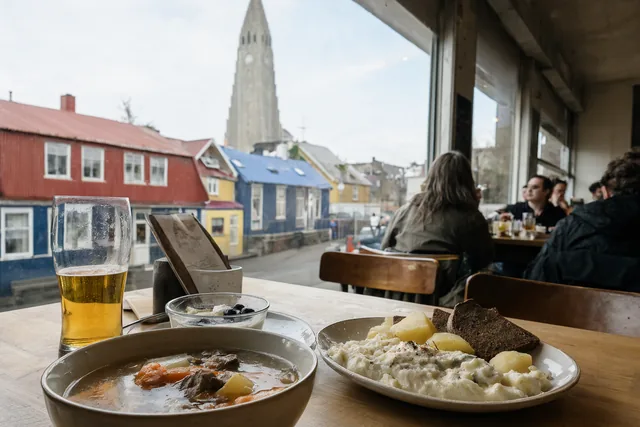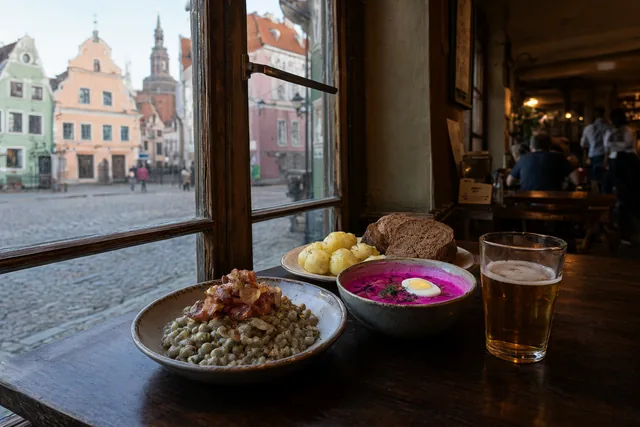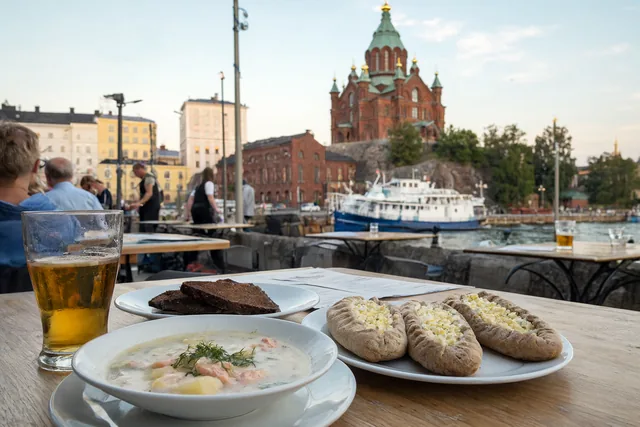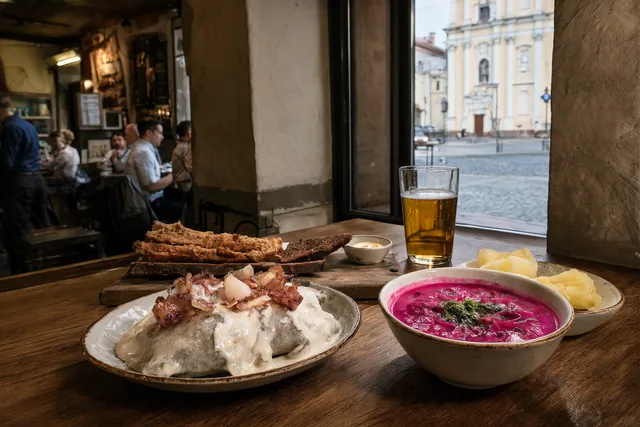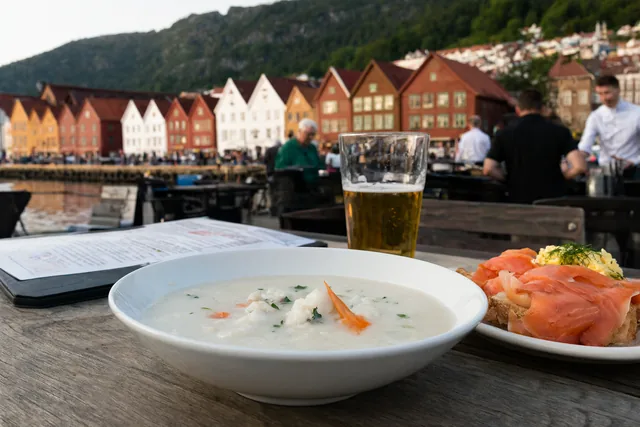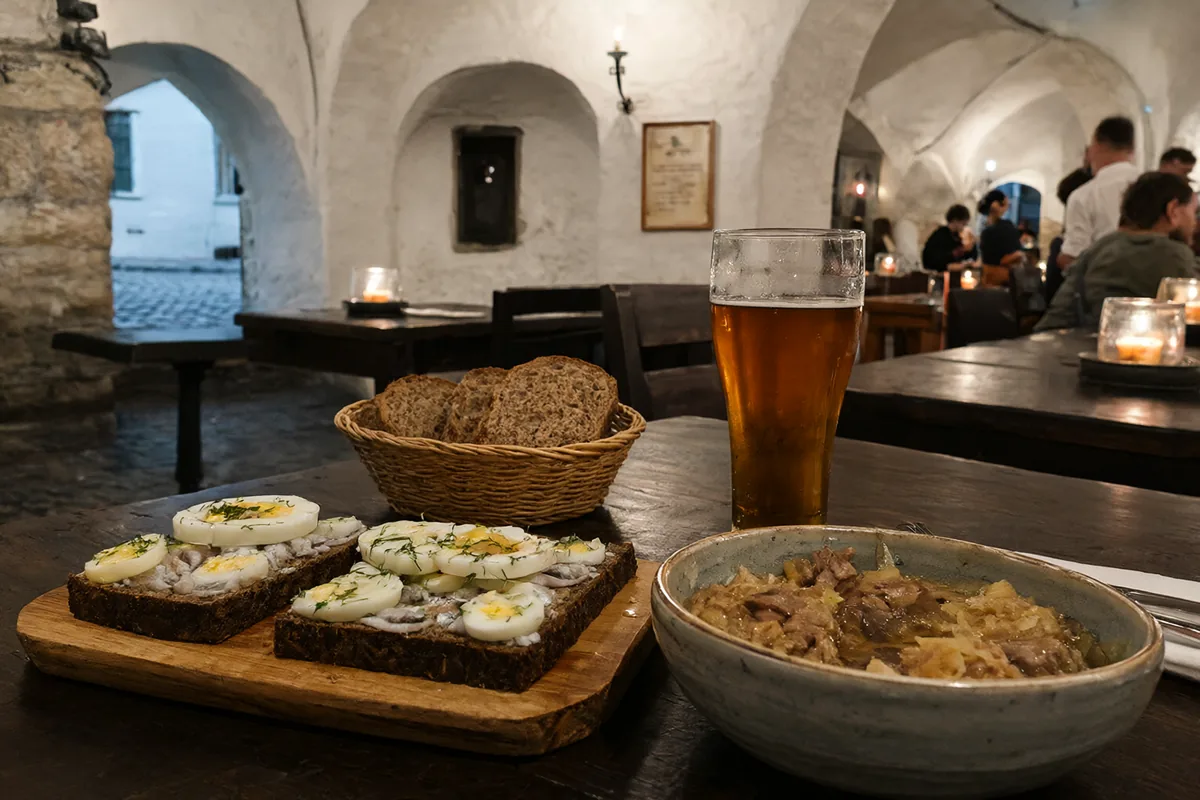
Estonia eats like a Nordic country with a Baltic heart: dark rye bread at every meal, smoked and pickled fish from the sea and the lakes, pork, potatoes and sour cream, and a summer season of berries and mushrooms that locals take very seriously. This Estonia food guide covers the dishes to know, how to read an Estonian menu, tipping and the weekday lunch deal, then goes destination by destination through where to eat in Tallinn, Tartu, Pärnu, Saaremaa, Viljandi and the villages along Lake Peipus. Tallinn now has one of the most confident restaurant scenes in northern Europe, but the old country dishes are still easy to find, and they are worth ordering at least once.
What to eat in Estonia: 12 dishes to know
Estonian cooking is simple, seasonal and built on a few staples: rye, barley, potatoes, pork, dairy and fish. These are the dishes and drinks you will see most often, with the region they belong to where it matters.
- Leib (everywhere): dense, dark, slightly sour rye bread, often sweetened with malt. It comes with almost every meal, and Estonians treat it with real respect. Dropping a slice on the floor is traditionally bad luck.
- Kiluvõileib (Tallinn): an open sandwich of spiced Baltic sprats on buttered rye, topped with boiled egg and dill or spring onion. It is the classic bar snack and a fixture at parties.
- Verivorst (everywhere, at Christmas): blood sausage made with barley, fried until crisp and served with lingonberry jam, sauerkraut and potatoes. In December it appears on almost every menu.
- Mulgipuder (Mulgimaa, around Viljandi): mashed potato and barley groats cooked together, topped with fried pork belly and onion. Filling, cheap and very good on a cold day.
- Mulgikapsad (Mulgimaa): sauerkraut stewed slowly with pork and barley, usually served with boiled potatoes.
- Sült (everywhere): jellied pork, served cold in slices with strong mustard and rye bread. A winter and holiday dish.
- Räim (the coast): Baltic herring, fried in breadcrumbs, marinated, or smoked whole. Fried räim with potatoes and sour cream is a coastal lunch.
- Suitsukala (Saaremaa and Lake Peipus): hot-smoked fish, from flounder and herring on the coast to perch and vendace from Lake Peipus, often sold straight from the smokehouse.
- Rosolje (everywhere): a pink salad of beetroot, potato, herring and pickles in a sour cream dressing. Good with rye bread and a cold beer.
- Kama (everywhere): a flour of roasted barley, rye, oats and peas, stirred into kefir or buttermilk for breakfast, or folded into cream as a dessert. It tastes nutty and malty, and it is very Estonian.
- Kringel (bakeries): a braided, twisted sweet yeast bread with cinnamon or cardamom, eaten with coffee and at birthdays.
- Kohuke (supermarkets and cafés): a small bar of sweetened curd cheese coated in chocolate, sold in the fridge section. Every Estonian grew up on them.
To drink, try kali, a lightly fermented bread drink similar to kvass, local craft beer (õlu), birch sap (kasemahl) in spring, and Vana Tallinn, a sweet, spiced rum liqueur that is usually added to coffee or poured over ice cream rather than drunk neat.
How to read an Estonian menu
Estonian is a Finno-Ugric language, close to Finnish and unrelated to Russian or the Baltic languages next door, so even confident European travellers rarely recognise a word. Tallinn menus are usually printed in English as well, but village cafés, lunch boards and market stalls often are not. Here are the headings and words you will meet most often.
| Estonian | Meaning |
|---|---|
| Eelroad / suupisted | Starters / snacks |
| Supid | Soups |
| Pearoad / praed | Main courses |
| Magustoidud | Desserts |
| Joogid | Drinks |
| Päevapraad / päevapakkumine | Dish of the day / daily lunch offer |
| Sealiha / veiseliha / lambaliha / kana | Pork / beef / lamb / chicken |
| Kala / räim / lõhe | Fish / Baltic herring / salmon |
| Kartul / köögiviljad | Potatoes / vegetables |
| Hapukoor / hapukapsas | Sour cream / sauerkraut |
| Praetud / küpsetatud / suitsutatud | Fried / baked or roasted / smoked |
| Seened / kukeseened | Mushrooms / chanterelles |
| Leib / sai | Rye bread / white bread |
| Taimetoit / vegan | Vegetarian food / vegan |
Estonian words pile up into long compounds, so suitsulõhevõileib is simply a smoked salmon sandwich. Chalkboard lunch menus in Tartu or Pärnu are where visitors most often get stuck. swap.menu reads handwritten boards and printed menus alike, splits the long words into a plain description, and shows you what is in the dish before you order.
Tipping, lunch deals and paying the bill
Tipping in Estonia is appreciated but not required. In sit-down restaurants in Tallinn, leaving around 10 percent for good service has become normal, while in cafés, bars and smaller towns people round up or leave the change. Service charges are rare, though some places add one for large groups, and it should be printed on the menu or bill if they do. Menu prices include VAT, so what you see is what you pay. Our guide to tax and service charges on menus explains how these lines work in other countries.
Estonia uses the euro, and it is one of the most card-friendly countries in Europe: contactless payment is accepted almost everywhere, including market stalls, taxis and small bakeries. You will rarely need cash. If a card terminal offers to charge you in your home currency, decline and pay in euros. Our guide to paying in local currency explains why.
The best value meal in Estonia is the weekday lunch. Look for päevapraad (dish of the day) or päevapakkumine (daily offer) on a board outside, usually served from about 11am to 3pm, often with soup or salad included. Lunch is generally between noon and 2pm, and dinner is early by European standards, from about 6pm, with many kitchens closing around 10pm outside Tallinn. In summer, terraces stay busy late because it hardly gets dark.
Where to eat in Estonia, city by city
Estonia is small enough that you can eat your way from the capital to the islands and the eastern lakes in a week. Each place has its own food, from Tallinn's tasting menus to smoked fish sold from a garden shed. Jump to a destination:
Where to eat in Tallinn
Tallinn has the widest choice of restaurants in Estonia, and two very different ways to eat. Inside the walls of the medieval Old Town (Vanalinn) you will find candlelit cellar restaurants, some of them themed on Hanseatic banquets with elk, wild boar and honey beer. They are fun once, but menus around Town Hall Square are priced for visitors. For the food Tallinn locals rate, head to the modern Estonian kitchens that cook with foraged herbs, Baltic fish, rye and fermented vegetables, many of them clustered in the Rotermann Quarter between the Old Town and the port, and in the seaside Noblessner district.
The old wooden suburb of Kalamaja and the converted factory buildings of Telliskivi Creative City next door are where to go for cafés, bakeries, craft beer bars and relaxed dinners. The Balti Jaama Turg market beside the main railway station has produce and smoked fish stalls plus a food hall serving everything from Estonian lunch plates to dumplings and ramen. For a cheap, filling meal in Tallinn, follow office workers to a weekday päevapraad, and in December do not miss the Christmas market on Town Hall Square, with mulled wine (hõõgvein) and blood sausage.
Where to eat in Tartu
Tartu is Estonia's second city and its university town, which shapes how it eats: plenty of affordable cafés, student pubs and long lunches, plus a handful of ambitious restaurants for the professors and visiting parents. The cobbled streets around Town Hall Square and Rüütli street are the centre of Tartu's evening life, with terraces in summer and cellar bars in winter. Order the weekday lunch special, a bowl of soup with rye bread, or a plate of fried herring with potatoes and sour cream.
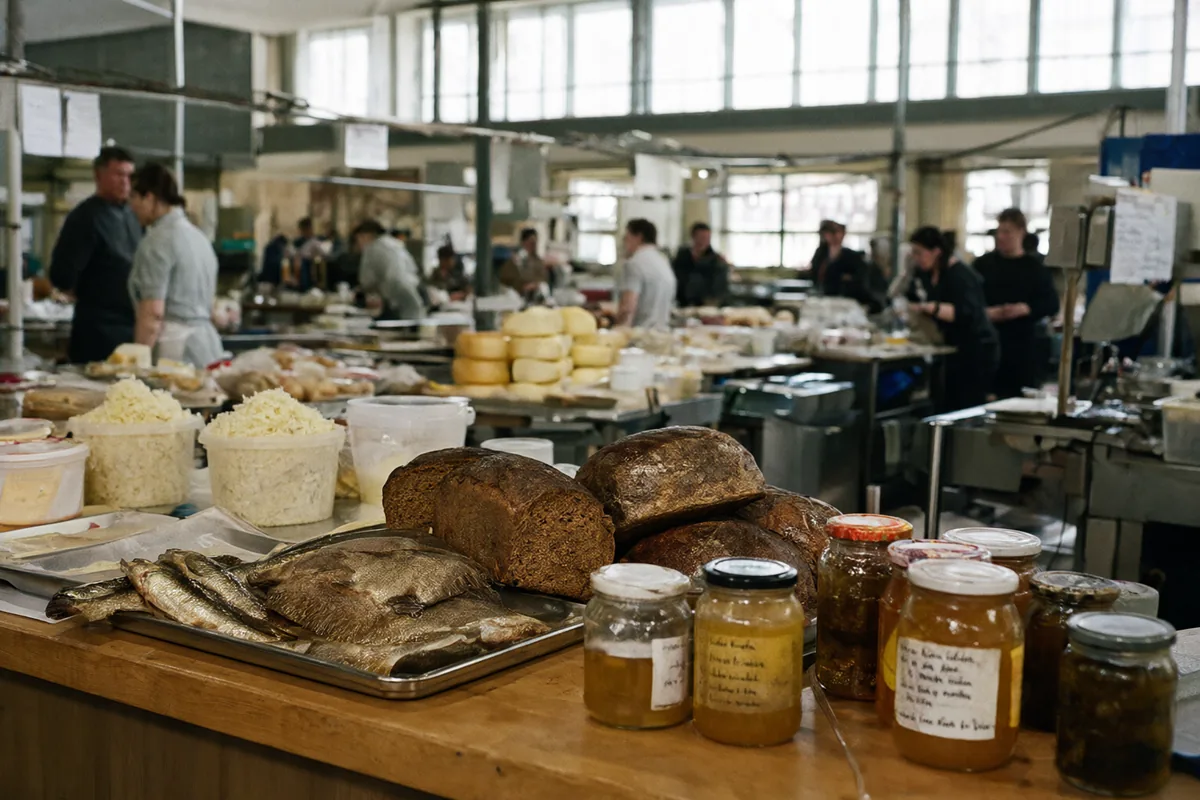
The Tartu Market Hall (Turuhoone) by the Emajõgi river is the place to buy rye bread, smoked fish, honey, sauerkraut and curd cheese, and in summer the outdoor stalls fill with strawberries, blueberries and chanterelles. Walk up into Supilinn, "Soup Town", a quarter of old wooden houses whose streets are named after vegetables such as pea, bean and potato, and into the Karlova district for small neighbourhood cafés. Tartu is also the best base for a day trip to the smoked fish and onion villages of Lake Peipus.
Where to eat in Pärnu
Pärnu is Estonia's summer capital, a seaside resort with a long sandy beach, spa hotels and a compact old town. From June to August it is busy and lively, with beach cafés, terraces along the pedestrian Rüütli street and seafood restaurants serving fried Baltic herring, smoked flounder and salmon soup (lõhesupp), a creamy fish soup with potato and dill. Ice cream and coffee on the beach promenade are part of the routine.
Out of season Pärnu is much quieter and some beach places close, but the spa hotels and old town restaurants stay open, and a long lunch of soup, rye bread and a hot main is good value. The town market sells smoked fish, berries and garden vegetables in summer. If you have time, take the ferry to Kihnu, a small island where traditional life is recognised by UNESCO, and where smoked and salted fish are still central to the local diet.
Where to eat in Saaremaa
Saaremaa is Estonia's largest island, a flat, quiet landscape of juniper, stone walls and windmills, and it has its own food identity. The island is known for home-brewed beer (koduõlu), a cloudy, often unfiltered farmhouse beer traditionally flavoured with juniper, and for dense Saaremaa rye bread. Smoked fish from the island's smokehouses, lamb from coastal pastures and juniper-smoked meats all appear on menus in Kuressaare, the island's main town, which grew up around its well-preserved castle.
Many of the best places to eat on Saaremaa are farm restaurants, guesthouses and summer cafés in the villages, so opening hours are seasonal: plan around June to September, and book ahead in July. On the way over, stop on Muhu, the smaller island you cross on the drive from the ferry, known for its slightly sweet black bread and for some of the most respected country restaurants in Estonia. Buy smoked fish from roadside smokehouses and eat it with rye bread by the sea.
Where to eat in Viljandi
Viljandi is a small, pretty hill town above a lake in the south of Estonia, and the centre of Mulgimaa, the historic Mulgi region whose cooking gave Estonia two of its best-known dishes. This is the place to order mulgipuder, the potato and barley mash with fried pork and onion, and mulgikapsad, sauerkraut stewed with pork and barley. Look out too for mulgikorp, an open pastry topped with curd cheese, at cafés and bakeries.
The town is best known for the Viljandi Folk Music Festival in late July, when food stalls and pop-up bars take over the area around the castle ruins and the town fills up. The rest of the year Viljandi is relaxed, with a few cafés and restaurants in the old centre and along the streets leading to the castle park. Ask in Viljandi for "Mulgi food" (Mulgi toit) and you will be pointed to the places that cook it properly.
Where to eat around Lake Peipus
Lake Peipus, on the border with Russia, is one of the largest lakes in Europe, and its western shore is home to villages of Russian Old Believers, who settled here centuries ago and kept their own church, language and food. The road through Kallaste, Kolkja and Varnja is known as the Onion Route (Sibulatee): in summer and autumn, houses sell braids of local onions, cucumbers, dried fish and smoked fish from tables by the gate.
The food here is the most Russian-influenced in Estonia: fish soup (kalasupp), small baked pies (pirukad), pickled cucumbers, and tea served from a samovar. The prize is smoked lake fish, especially perch and vendace, sold whole and still warm. There are a few village cafés and guesthouses that serve lunch in summer, but opening hours are short and irregular, so carry cash as a backup, go between June and September, and treat it as a picnic trip from Tartu.
Vegetarian, vegan and allergy tips
Tallinn and Tartu are easy for vegetarians and vegans, with plant-based cafés, vegetarian options on most modern menus and clear labelling. Traditional food is harder. Pork fat (pekk) is used to flavour mulgipuder, sauerkraut and soups, sült is set with gelatine from pork, and verivorst is made with blood. Sour cream (hapukoor) arrives on almost everything, and kama is mixed with kefir, so ask for a dairy-free version if you need it. The words to know are taimetoit (vegetarian food), taimetoitlane (a vegetarian person) and vegan.
Estonian labels and menus often mark gluteenivaba (gluten-free) and laktoosivaba (lactose-free) dishes, and lactose-free dairy is widely sold. Rye bread contains gluten and usually barley malt, so coeliacs should skip the bread basket. Fish appears in unexpected places, including salads like rosolje, and nuts are less common in savoury food. Our guide to eating abroad with food allergies explains how to make an allergy clear when you do not speak the language.
Useful Estonian phrases for ordering
Tere "Hello", the all-purpose greeting for staff when you walk in
Laud kahele, palun "A table for two, please"
Mida te soovitate? "What do you recommend?"
Ma sooviksin seda "I would like this" (pointing)
Ma olen taimetoitlane "I am vegetarian"
Mul on allergia... "I have an allergy to..." followed by the ingredient
Arve, palun "The bill, please"
Aitäh, see oli väga maitsev "Thank you, it was very tasty"
How swap.menu helps you eat in Estonia
Most Tallinn restaurants have an English menu, but the lunch board outside, the café in Viljandi and the smokehouse on Saaremaa often do not. Photograph the menu with swap.menu and every dish appears in your language with the Estonian name beside it and a short explanation, so you know that verikäkk is a blood dumpling and seapraad is roast pork before you order. Prices are shown in euros and converted to your home currency, and any service line is pointed out.
Tap the dishes you want, add a note such as "no pork" or "lactose-free, please", typed or spoken, and swap.menu translates your order into Estonian. Show the server your phone, or let them scan the QR code and read your order on their own screen. Try it now on a sample menu with the free demo, or see travel pass prices.
Off to Estonia? Your first 3 menu scans are free, and a travel pass starts from $4.99 with nothing that renews.
Start free with 3 scansEstonia food FAQ
Do you tip in restaurants in Estonia?
Tipping is appreciated but not required in Estonia. In Tallinn restaurants around 10 percent for good table service is common, while in cafés and bars people usually round up. Service charges are rare and are shown on the bill when they apply.
What food is Estonia famous for?
Dark rye bread, sprat sandwiches on rye, blood sausage at Christmas, mulgipuder (potato and barley mash with pork), smoked fish and kama, a roasted grain flour eaten with kefir. Modern Tallinn restaurants are also known for cooking with foraged and fermented local ingredients.
Is Estonia expensive to eat out?
Tallinn prices are similar to many western European cities, especially in the Old Town. The cheapest way to eat well is the weekday lunch special, usually a main with soup or salad at a fixed price. Smaller towns are noticeably cheaper than the capital.
Is tap water safe to drink in Estonia?
Yes, tap water is safe to drink throughout Estonia. Restaurants will bring tap water if you ask, though many people order sparkling or bottled water with meals.
Which city in Estonia is best for food?
Tallinn has the widest choice, from modern Estonian tasting menus to market food halls. Tartu is cheaper and more relaxed, Viljandi is best for traditional Mulgi dishes, and Saaremaa and Lake Peipus are the places for smoked fish and country cooking.
How can I read an Estonian menu if I do not speak Estonian?
Learn a few headings such as supid (soups), pearoad (mains) and päevapraad (dish of the day), or photograph the menu with swap.menu. It translates every dish into your language, explains what it is, converts euro prices to your currency and translates your order back into Estonian.
Travelling further in the Baltics and the north? Read our food guides for neighbouring countries:
Or browse every travel food guide.