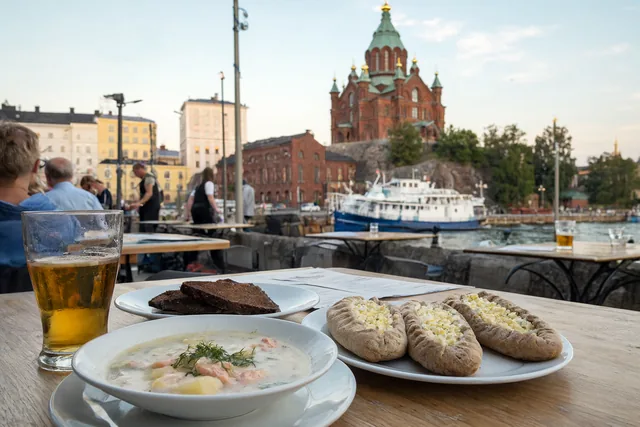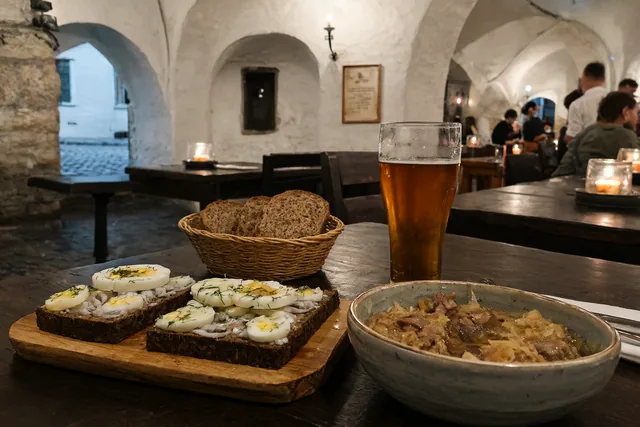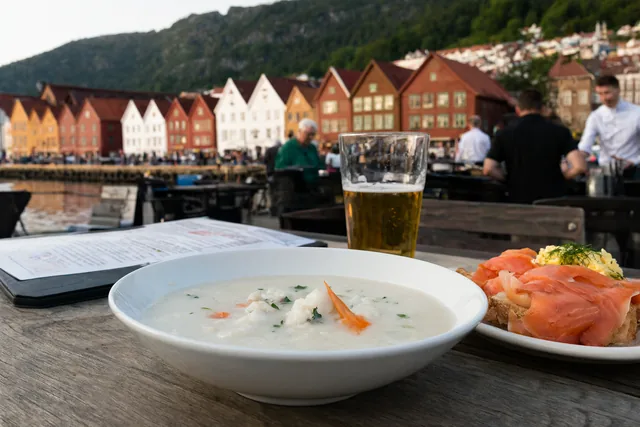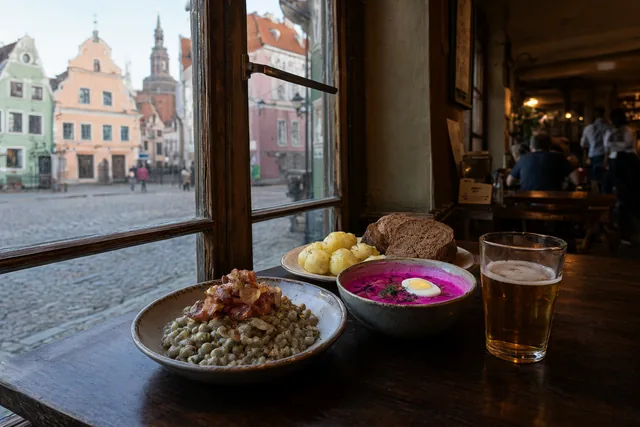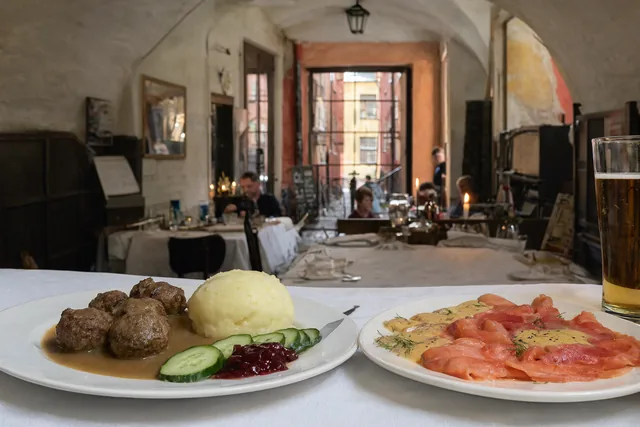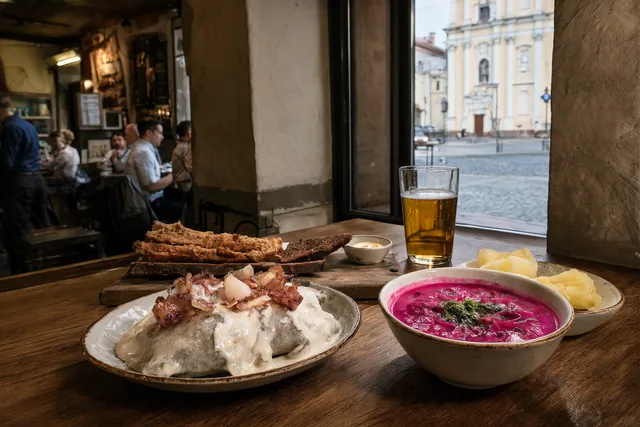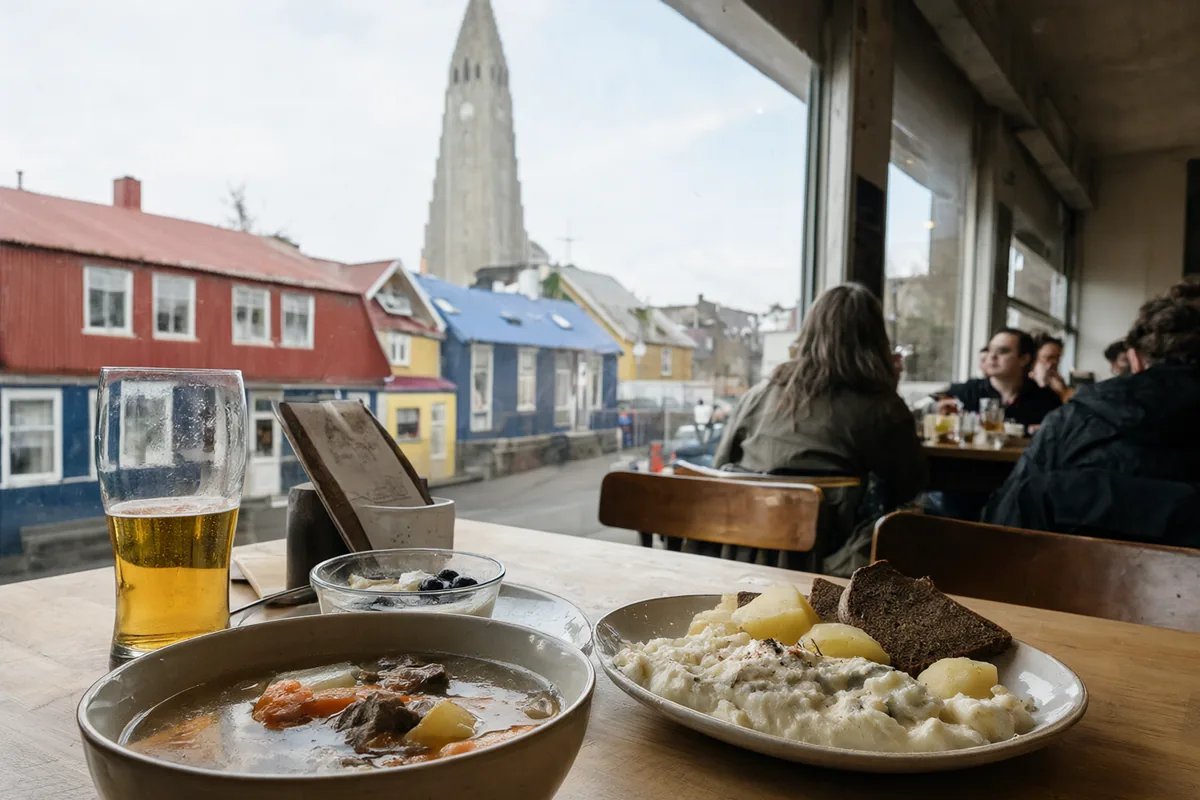
Icelandic food is shaped by a short growing season, a long coastline and centuries of making food last through dark winters. Today that means superb fresh fish, free-ranging lamb, skyr, rye bread baked in the hot ground, and greenhouse vegetables grown with geothermal heat, along with a few famously challenging traditional foods. This Iceland food guide covers the dishes to order, how to read an Icelandic menu, tipping and prices, then goes region by region through where to eat in Reykjavik, on the Golden Circle and the South Coast, on the Snæfellsnes Peninsula, in the Westfjords, in Akureyri and around Lake Mývatn. Outside the capital, distances are long and restaurants are few, so a little planning goes a long way.
What to eat in Iceland: 12 dishes to know
These are the dishes and foods you will meet around Iceland, with the region they are linked to where it matters.
- Kjötsúpa (everywhere): lamb soup with root vegetables, potatoes and rice or barley, the classic warming dish of the Icelandic winter.
- Plokkfiskur (everywhere): a creamy mash of cod or haddock, potatoes and onion in a white sauce, served with dark rye bread and butter.
- Lambakjöt (everywhere): Icelandic lamb, raised free on the mountains in summer, served roasted, grilled or as a slow-cooked shank.
- Fiskur dagsins (everywhere): the fish of the day, usually cod (þorskur), haddock (ýsa), Arctic char (bleikja) or wolffish (steinbítur), landed that morning.
- Humar (the South Coast, especially Höfn): langoustine, called "Icelandic lobster", served grilled in garlic butter or in a rich, creamy soup.
- Pylsur (everywhere): the Icelandic hot dog, made largely with lamb. Order ein með öllu, "one with everything": raw and crispy fried onion, ketchup, sweet brown mustard and remoulade.
- Skyr (everywhere): a thick, high-protein cultured dairy product, eaten like yoghurt with berries and cream, or in desserts.
- Rúgbrauð (everywhere, best at Mývatn): dense, sweet, dark rye bread. Hverabrauð is baked buried in hot geothermal ground for about a day.
- Harðfiskur (everywhere): wind-dried fish, usually haddock or cod, eaten as a snack spread with salted butter.
- Hangikjöt (Christmas, and the north): smoked lamb, often smoked over dried sheep dung in the traditional northern way, served thinly sliced.
- Kleinur and pönnukökur (everywhere): twisted fried pastries, and thin pancakes rolled with sugar or filled with jam and cream, both served with coffee.
- Hákarl and brennivín (Þorri festival and markets): fermented, dried Greenland shark with a strong ammonia smell, eaten in small cubes with a shot of brennivín, a caraway spirit. Try it once.
How to read an Icelandic menu
Almost everyone in Iceland speaks English, and most restaurants in Reykjavik and the tourist areas print their menus in English and Icelandic. Bakeries, petrol station grills, swimming pool cafés and country guesthouses are more likely to be Icelandic only. Icelandic uses two letters you will not see in English: þ, pronounced like "th" in "thin", and ð, like "th" in "this". These are the words that matter most.
| Icelandic | Meaning |
|---|---|
| Forréttir | Starters |
| Aðalréttir | Main courses |
| Eftirréttir | Desserts |
| Súpa dagsins / réttur dagsins | Soup of the day / dish of the day |
| Fiskur dagsins | Fish of the day |
| Þorskur / ýsa / lax / bleikja | Cod / haddock / salmon / Arctic char |
| Humar / skelfiskur | Langoustine / shellfish |
| Lambakjöt / nautakjöt / svínakjöt | Lamb / beef / pork |
| Hangikjöt | Smoked lamb |
| Kartöflur | Potatoes |
| Grillað / steikt / reykt | Grilled / pan-fried / smoked |
| Rúgbrauð / smjör | Rye bread / butter |
| Grænmetisréttur | Vegetarian dish |
| Kranavatn | Tap water |
Some menus in Iceland, especially those aimed at visitors, list puffin (lundi) and minke whale (hrefna, hvalur). Most Icelanders rarely eat either, and many travellers prefer to avoid them. swap.menu translates every item, including the Icelandic-only specials, so you always know what a dish is and what it costs in your own currency before you order.
Tipping, prices and paying the bill
Tipping is not expected in Iceland. Service and VAT are included in menu prices, staff are paid a full wage, and Icelanders do not usually tip. Card machines in some tourist restaurants now show a tip screen, and you can skip it without causing offence; leave something only if service was exceptional. Our guide to tax and service charges on menus explains how this compares with countries where service is added on top.
Prices are in Icelandic króna (kr, code ISK). Iceland is not in the EU and does not use the euro. It is one of the most card-friendly countries in the world: cards and contactless payments are accepted everywhere, even for a coffee or at remote petrol stations, and many visitors never use cash. When a card machine or cash machine offers to charge you in your home currency, decline and pay in krónur: our guide to paying in local currency explains why that choice costs you money.
Iceland is expensive, and alcohol is particularly so. Wine, spirits and full-strength beer are sold in shops only by the state chain Vínbúðin, which has short opening hours, and many Reykjavik bars have a happy hour in the late afternoon. To save money, eat your main meal at lunch, when many restaurants offer a soup or fish of the day at a lower price, buy from bakeries and supermarkets, and drink the excellent tap water. Lunch is from about 11:30am to 2pm and dinner from about 6pm to 9pm, though summer evenings stay light and Reykjavik restaurants serve later.
Where to eat in Iceland, region by region
Most visitors drive at least part of the Ring Road, and the places to eat thin out quickly once you leave the capital. Jump to a region:
Where to eat in Reykjavik
Reykjavik is home to most of Iceland's restaurants, and its compact centre is easy to explore on foot. The main shopping street, Laugavegur, and Skólavörðustígur, which climbs to the tall concrete church of Hallgrímskirkja, are lined with cafés, bakeries and restaurants serving everything from lamb soup to modern Nordic tasting menus. The Old Harbour and the Grandi district beyond it, in converted fish warehouses, have seafood restaurants, an ice cream parlour or two and the Grandi food hall, with stalls serving fish, lamb and international food.
The Hlemmur food hall, in a former bus station at the top of Laugavegur, is another good stop for an affordable lunch. At weekends, the Kolaportið flea market by the harbour has a food section where you can buy harðfiskur, rye bread and hákarl to try. Reykjavik's hot dog stands, including a famous one near the harbour that has been trading since 1937, are the cheapest hot meal in the city. Icelanders love ice cream, whatever the weather, and Reykjavik's ice cream shops are busy even in winter. Book dinner ahead at popular Reykjavik restaurants in summer.
Where to eat on the Golden Circle
The Golden Circle, the popular loop from Reykjavik to Þingvellir National Park, the Geysir geothermal area and the Gullfoss waterfall, runs through Iceland's greenhouse country. Geothermal heat lets farmers around Reykholt, Flúðir and Hveragerði grow tomatoes, cucumbers, peppers and mushrooms year round, and several greenhouses serve meals among the plants, the most famous being tomato soup with fresh bread in a working tomato greenhouse. Book ahead, as tour groups fill them at lunchtime.
Dairy farms along the route sell their own ice cream and skyr, and some have small farm restaurants serving beef and lamb raised on site. At Laugarvatn, rye bread is baked in the hot sand by the lake and served warm with butter and smoked trout. The visitor centres at Geysir and Gullfoss have large cafeterias with lamb soup and sandwiches, convenient but busy. Hveragerði, on the way back to Reykjavik, has bakeries and cafés and is a good place for a late afternoon stop.
Where to eat on the South Coast
The South Coast road runs past the waterfalls of Seljalandsfoss and Skógafoss to the black sand beaches of Vík, then on to the glacier lagoon at Jökulsárlón and the harbour town of Höfn. Restaurants are spread out, and most are in the small towns of Hvolsvöllur, Vík and Höfn or attached to hotels and farms. Expect lamb soup, fish of the day, burgers and fish and chips, often at high prices for simple food. Petrol stations along the route have grills serving hot dogs, burgers and soup, and they are a genuine part of an Icelandic road trip.
Höfn is Iceland's langoustine capital, and its harbour restaurants serve humar grilled in garlic butter, in pizza or in soup. The town holds a langoustine festival every summer. Because towns are far apart on the South Coast, plan where you will eat each day, carry snacks and water, and note that in winter some restaurants have shorter hours or close for the season.
Where to eat on the Snæfellsnes Peninsula
The Snæfellsnes Peninsula, a couple of hours north of Reykjavik, is often called Iceland in miniature, with a glacier-capped volcano, lava fields, black and golden beaches and fishing villages. Stykkishólmur, on the north coast, is known for blue mussels and scallops from the shallow, island-studded waters of Breiðafjörður, and its harbour restaurants serve them steamed or seared. Grundarfjörður, below the much-photographed Kirkjufell mountain, has cafés and a fish restaurant or two.
At the farm of Bjarnarhöfn, near Stykkishólmur, a family has produced hákarl for generations, and its small museum explains how the shark is fermented and dried, with a tasting to finish. On the south side of the peninsula, the villages of Arnarstapi and Hellnar have summer cafés serving fish soup and cakes with sea views. Services are limited, especially outside summer, so fill up the car and eat when you can.
Where to eat in the Westfjords
The Westfjords are Iceland's most remote region, a maze of steep fjords and mountain passes in the north-west, with small fishing villages and very few visitors compared with the south. Ísafjörður, the main town, has a handful of restaurants, cafés and a bakery, and fresh fish is the thing to order: cod, haddock, wolffish and plokkfiskur, often caught that morning. Some restaurants in the Westfjords serve set fish buffets in old wooden buildings near the harbour.
Elsewhere, food options are sparse: guesthouses serve dinner to their guests, a few villages such as Flateyri, Suðureyri and Patreksfjörður have a café or small restaurant, and petrol station grills fill the gaps. In late August, the hillsides are covered in wild blueberries and crowberries, free to pick. Many places in the Westfjords open only from June to August, and some roads close in winter, so plan meals and check opening times before you set off.
Where to eat in Akureyri
Akureyri, at the head of the long Eyjafjörður fjord, is Iceland's second largest urban area and the capital of the north. It is a relaxed town with a pedestrian main street, Hafnarstræti, lined with cafés, bakeries and restaurants, and its traffic lights glow with red hearts. Akureyri restaurants serve fish from the fjord, Arctic char, lamb from the northern valleys, and hangikjöt, and the town is known within Iceland for its ice cream and its hot dogs with a local twist.
Akureyri is the base for whale watching on the fjord, trips to the Goðafoss waterfall, and day trips to Lake Mývatn and Húsavík, and its restaurants fill with visitors in summer, so book dinner ahead. The small island of Hrísey, a short ferry ride north, has a quiet village with a café and walking trails. Akureyri is also a ski town in winter, with restaurants open year round.
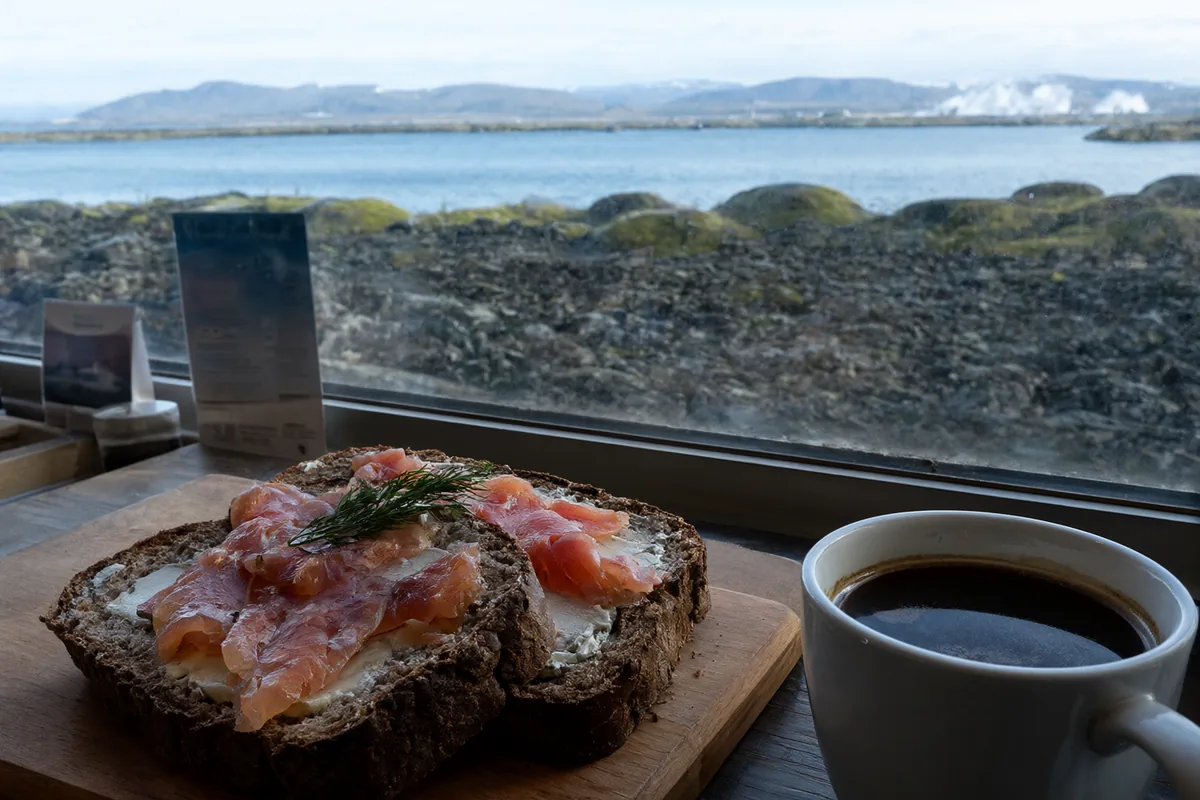
Where to eat at Lake Mývatn
Lake Mývatn, in the volcanic north-east, is surrounded by lava fields, craters, steaming vents and hot springs. Its food is shaped by the geothermal ground: hverabrauð, dark, sweet rye bread baked in pots buried in the hot earth for about 24 hours, is served across the area, usually with butter and smoked trout or Arctic char from the lake. Mývatn is also famous for its traditional smoked lamb, smoked over dried sheep dung, which gives it a distinctive flavour.
The few restaurants at Mývatn are clustered around the villages of Reykjahlíð and Skútustaðir, and include a farm café in a working cowshed where you can watch cows being milked while you eat. Combine lunch with a soak at the Mývatn Nature Baths. North of the lake, the harbour town of Húsavík, Iceland's whale watching capital, has fish restaurants and cafés on its waterfront. As everywhere outside Reykjavik, book dinner ahead in summer and expect reduced hours in winter.
Vegetarian, vegan and allergy tips
Reykjavik is easy for vegetarians and vegans, with several vegetarian restaurants, plant-based options at food halls and a vegetarian dish on most menus. Outside the capital it is harder: the choice may be limited to a vegetable soup, pasta or a veggie burger. The word for vegetarian is grænmetisæta (a vegetarian person), and vegetarian dishes are often labelled grænmetisréttur; vegan is vegan. Watch for lamb or fish stock in soups, and for butter on rye bread and fish dishes.
Dairy is central to Icelandic food, from skyr to cream sauces, and fish and shellfish appear in many soups and sauces, so tell staff about shellfish allergies clearly. Restaurants are generally well informed and used to questions about gluten-free and lactose-free food. Our guide to eating abroad with food allergies explains how to explain an allergy clearly when you do not speak the language.
Useful Icelandic phrases for ordering
Góðan daginn "Good day", a polite greeting (Hæ, "hi", is used everywhere)
Borð fyrir tvo, takk "A table for two, please"
Hverju mælir þú með? "What do you recommend?"
Ég ætla að fá þetta "I will have this" (pointing)
Ein með öllu "One with everything", the way to order a hot dog
Ég er með ofnæmi fyrir... "I have an allergy to..."
Get ég fengið reikninginn? "Can I have the bill?"
Skál! / Takk fyrir mig "Cheers!" / "Thank you for having me", said after a meal
How swap.menu helps you eat in Iceland
Most Reykjavik menus have English, but the bakeries, petrol station grills, swimming pool cafés and country guesthouses where you will eat on a road trip often list their dishes in Icelandic only, and traditional names give little away. Photograph the menu with swap.menu and every dish appears in your language with a short explanation, so you know that svið is a singed sheep's head and that sviðasulta is a brawn made from it before you order. Every price is converted from Icelandic krónur to your home currency, which matters in one of the most expensive countries in the world, and you can save the menus you have scanned to compare later.
Visitors from non-English-speaking countries can read the menu in their own language, in any of 29 languages. Tap the dishes you want, add a note such as "no shellfish" or "vegetarian, please", typed or spoken, and swap.menu translates your order into Icelandic. Show the waiter your phone, or let them scan the QR code. You can try it right now on a sample menu with the free demo, or see travel pass prices.
Off to Iceland? Your first 3 menu scans are free, and a travel pass starts from $4.99 with nothing that renews.
Start free with 3 scansIceland food FAQ
Do you tip in restaurants in Iceland?
No, tipping is not expected in Iceland. Service and VAT are included in menu prices and staff are paid a full wage. You can skip the tip screen on card machines without causing offence.
What food is Iceland famous for?
Lamb soup, fresh fish such as cod and Arctic char, langoustine, skyr, geothermal rye bread and the Icelandic hot dog are the best known. Traditional foods such as fermented shark and dried fish are famous too, though Icelanders eat them mainly at festivals.
Is Iceland expensive to eat out?
Yes, Iceland is one of the most expensive countries in the world for eating out, and alcohol is very expensive. Lunch specials, soups of the day, hot dogs, bakeries and supermarkets are the best ways to keep costs down.
Is tap water safe to drink in Iceland?
Yes, Icelandic cold tap water is some of the cleanest in the world and is free in restaurants. Ask for kranavatn. Hot tap water comes from geothermal sources and can smell of sulphur, so drink the cold water.
Where is the best food in Iceland outside Reykjavik?
Höfn for langoustine, Stykkishólmur for mussels and scallops, the Golden Circle greenhouses for fresh vegetables, and Lake Mývatn for geothermal rye bread and smoked trout. Akureyri has the best choice of restaurants in the north.
How can I read an Icelandic menu?
Most menus in Reykjavik are in English as well as Icelandic. For Icelandic-only menus, learn a few words such as fiskur dagsins (fish of the day) or photograph the menu with swap.menu, which translates every dish into your language, explains it and converts prices from krónur to your currency.
Travelling further in Europe? Read our food guides for other Nordic and North Atlantic countries:
Or browse every travel food guide.