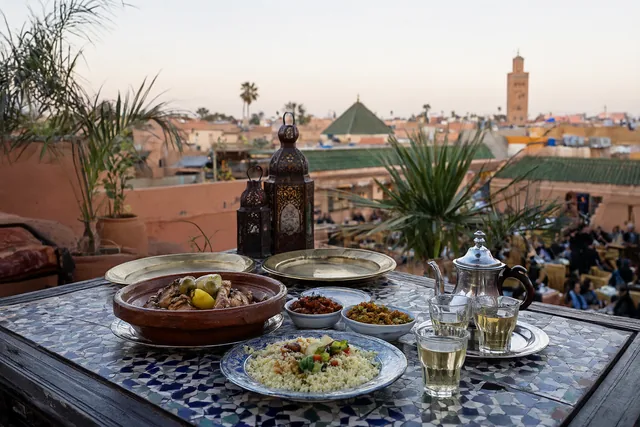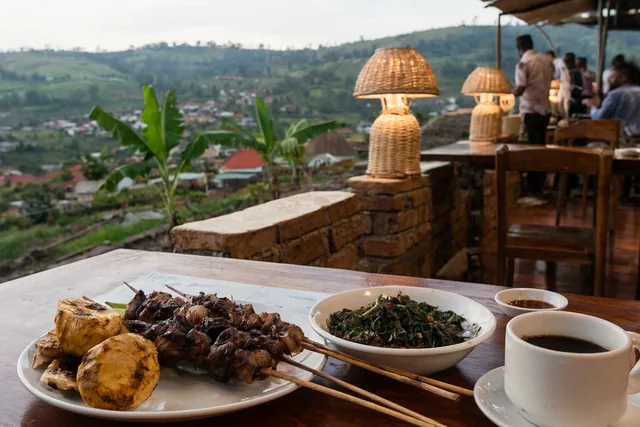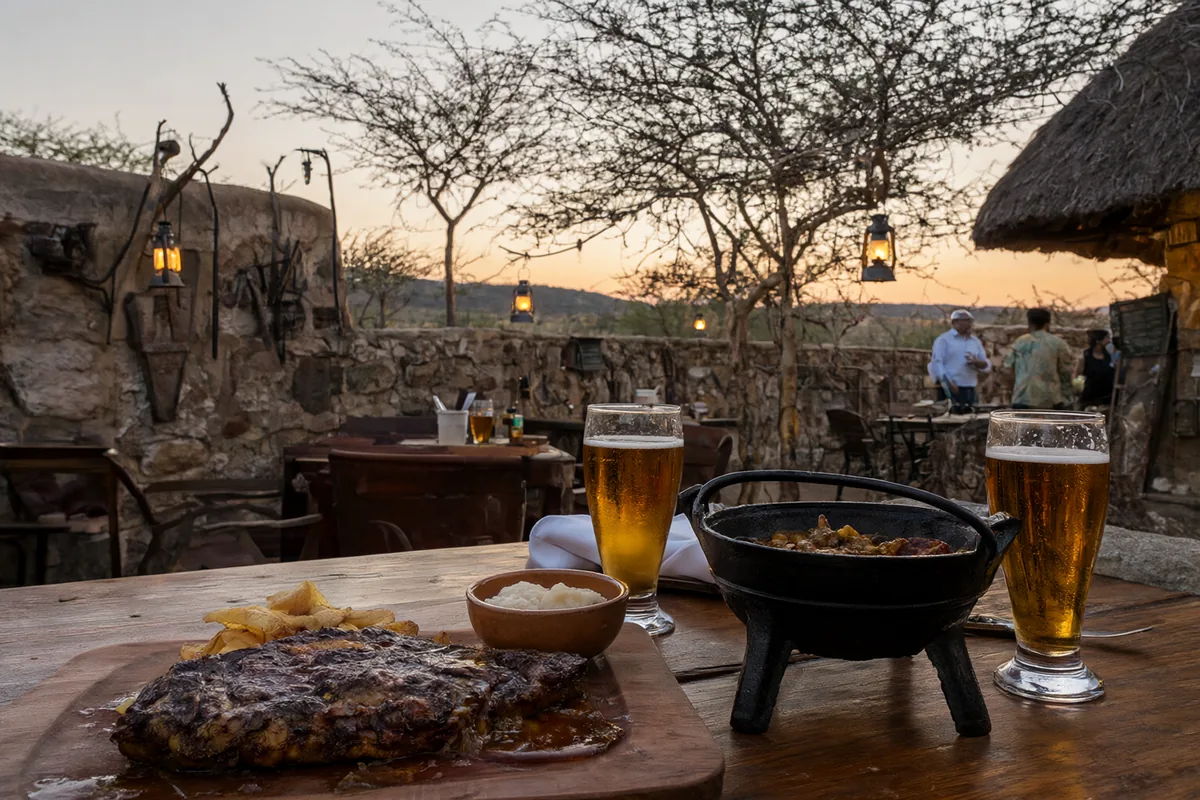
Namibia is one of the emptiest countries on earth, and its food reflects that: big plates of grilled meat, game from the farms and the bush, fresh oysters from a cold Atlantic coast, and German bakeries that survived a century after the colonial era ended. This Namibia food guide covers the dishes to order, the Afrikaans, German and Oshiwambo words you will see on menus, how tipping and paying works, and then goes town by town through where to eat in Windhoek, Swakopmund, Walvis Bay, Lüderitz, Sossusvlei and the south, and Etosha and the north. Most visitors travel by road, so this guide also covers the farm stalls, fuel stops and lodge dinners that make up much of a Namibian trip.
What to eat in Namibia: 11 dishes to know
Namibian food mixes southern African braai culture, German baking and brewing, and the staple foods of the Owambo, Herero, Nama and other peoples. These are the dishes to know.
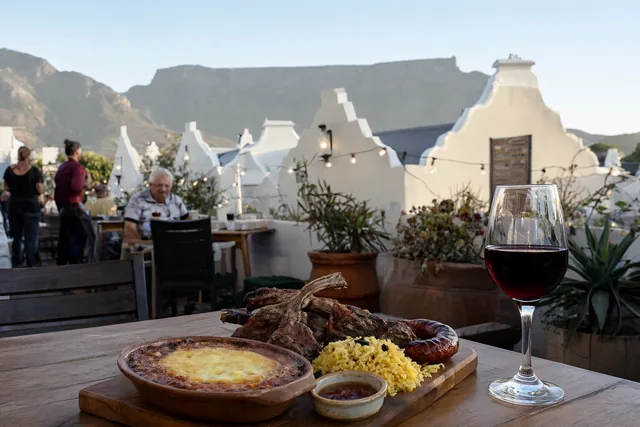
- Game meat (everywhere): oryx (also called gemsbok), kudu, springbok, eland and ostrich appear on restaurant menus across the country, usually as steaks, kebabs or stews. Oryx is the most common and tastes like lean, mild beef.
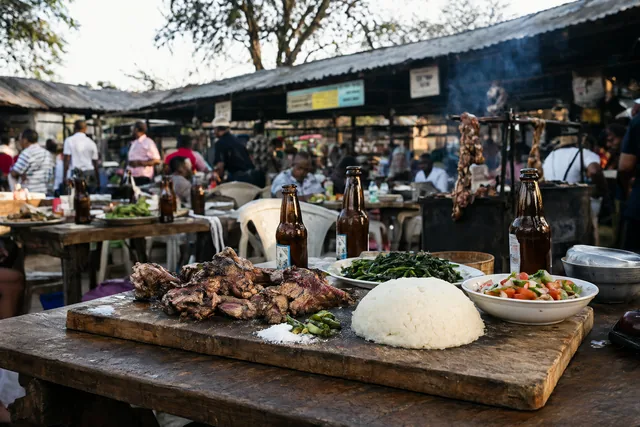
- Kapana (Windhoek and the north): street-grilled strips of beef, cut and cooked to order over open fires and dipped in a mix of salt and chilli. Eaten with your fingers, standing at the grill.
- Braai (everywhere): the barbecue, the centre of Namibian social life, with boerewors sausage, chops, steaks and game. Many campsites and lodges have their own braai areas.
- Biltong and droëwors (everywhere): dried spiced meat and dried sausage, often made from game. Every road trip needs a bag.
- Potjiekos (everywhere): meat and vegetables layered and slow-cooked in a three-legged cast iron pot over coals.
- Oshifima (the north): a stiff porridge made from mahangu (pearl millet), the staple food of northern Namibia, eaten with stews of meat, fish or spinach. In the south, maize pap plays the same role.
- Walvis Bay and Lüderitz oysters (the coast): oysters farmed in the cold, nutrient-rich water of the Benguela current, plump and sweet and among the best value anywhere.
- Kingklip and kob (the coast): firm white fish, grilled or fried, the staples of coastal restaurant menus alongside hake and rock lobster.
- Omajowa (central Namibia, in the rainy season): giant wild mushrooms that grow from termite mounds after the summer rains, sold at the roadside around January to March.
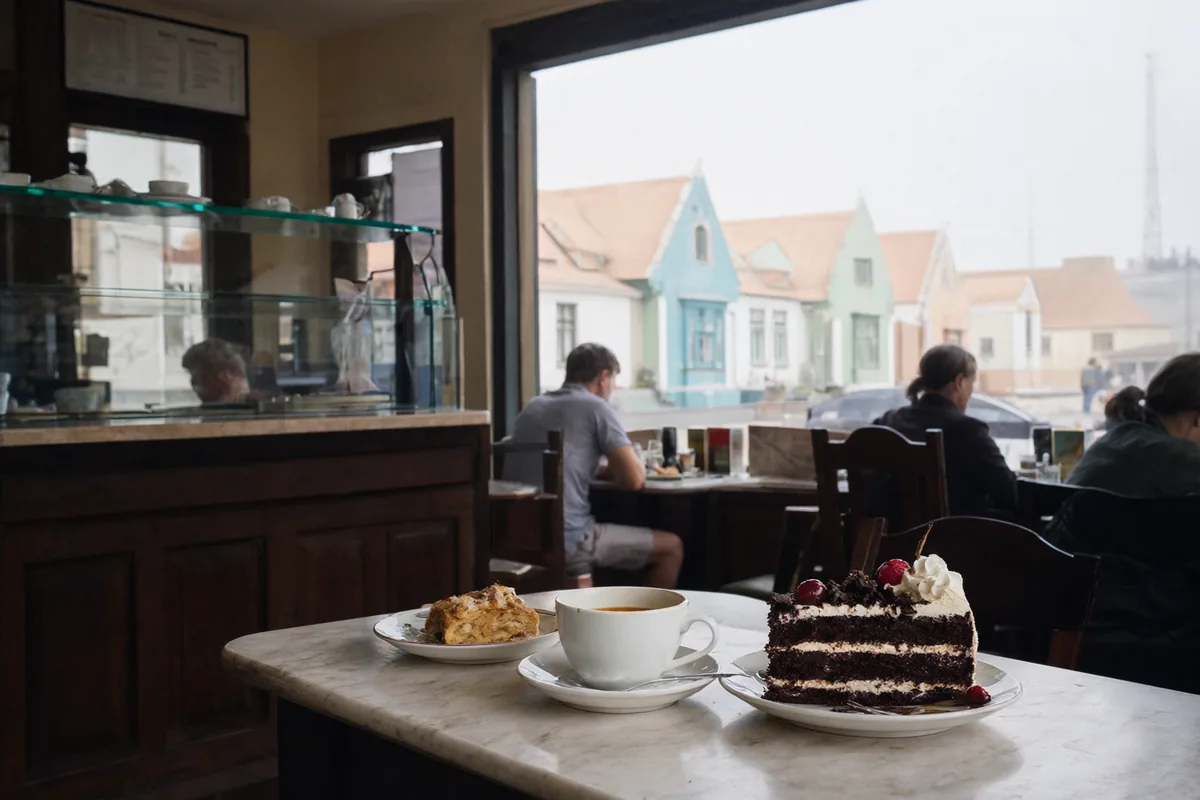
- German baking (Windhoek and Swakopmund): Brötchen (bread rolls), Apfelstrudel, Schwarzwälder Kirschtorte (Black Forest cake) and an afternoon tradition of Kaffee und Kuchen, coffee and cake.
- Namibian lager (everywhere): beer brewed in Windhoek according to the German purity law, the default drink with a braai.
How to read a menu in Namibia
English is Namibia's official language and almost every menu is in English, but the words on it come from Afrikaans, German and local languages, and German is still spoken widely in Windhoek and Swakopmund. Game is often listed by its local name, so it helps to know which animal you are ordering. These are the terms you will meet most often.
| Term | Origin | Meaning |
|---|---|---|
| Kapana | Namibian street slang | Grilled beef strips sold at open-air grills |
| Oshifima, mahangu | Oshiwambo | Pearl millet porridge, and the millet itself |
| Gemsbok, oryx | Afrikaans, English | The same large antelope, a common game meat |
| Kudu, springbok, eland | Local names | Other antelope served as game meat |
| Braai | Afrikaans | Barbecue |
| Boerewors | Afrikaans | Coiled, spiced beef and pork sausage |
| Potjie, potjiekos | Afrikaans | Stew cooked in a cast iron pot |
| Biltong, droëwors | Afrikaans | Dried meat strips, dried sausage |
| Pap | Afrikaans | Maize porridge |
| Vetkoek | Afrikaans | Fried dough, filled with mince or jam |
| Eisbein | German | Cured, boiled or roasted pork knuckle |
| Brötchen | German | Bread rolls, the standard breakfast in German cafés |
| Kaffee und Kuchen | German | Afternoon coffee and cake |
| Line fish | English | Whatever local fish was caught that day |
Game steaks are usually lean and best served medium rare; ordered well done, oryx and kudu can be dry. If you are unsure what an antelope name on the menu means, swap.menu explains each dish and converts every Namibian dollar price to your home currency.
Tipping, tax and paying the bill in Namibia
Tipping is customary in Namibia. In restaurants, 10 percent is normal for good service, and lodge staff are usually tipped through a shared tip box at the end of your stay. Petrol stations are full service, and attendants who fill your tank and clean your windscreen expect a small tip. VAT is 15 percent and included in menu prices. Our guide to tax and service charges on menus explains how these lines work around the world.
The currency is the Namibian dollar (NAD), written N$ on menus. The South African rand is legal tender in Namibia and accepted everywhere alongside it, but Namibian dollars are not accepted in South Africa, so spend them before you cross the border. Cards are widely accepted in towns, lodges and supermarkets, but carry cash for kapana grills, markets, small fuel stops and the long gaps between towns. When a card machine offers to charge you in your home currency, decline: our guide to paying in local currency explains why.
Namibia runs on early hours. Lunch is around midday to 2pm, dinner from 6:30pm, and lodges usually serve dinner at a set time, often around 7pm. Many restaurants and shops in small towns close early on Saturday afternoons and on Sundays, so plan ahead on weekend road trips.
Where to eat in Namibia, town by town
Distances in Namibia are huge, and many visitors eat as much at lodges and roadside stops as in towns. Jump to a destination:
Where to eat in Windhoek
Windhoek, the capital, is the start and end of most Namibian trips, and the best place in the country to eat game. Restaurants around the city centre and the suburbs of Klein Windhoek and Ludwigsdorf serve oryx, kudu, springbok and zebra steaks, game platters, potjies and Namibian lager in garden settings. German influence is strong: cafés along Independence Avenue and around the centre serve Brötchen, schnitzel and cakes, and you will hear German spoken at the next table.
For Windhoek's real street food, go to the Single Quarters market in Katutura, the township north west of the centre, where dozens of open-air grills cook kapana from fresh beef cut in front of you, served with a salt and chilli dip and sometimes a tomato and onion relish. It is busiest at lunchtime and on weekends, and is easiest to visit with a local guide or on a township tour. Windhoek also has the country's best supermarkets and butchers, so stock up on biltong and braai meat before heading into the desert.
Where to eat in Swakopmund
Swakopmund, on the coast four hours west of Windhoek, feels like a German seaside town set between the desert and the Atlantic, with colonial-era buildings, a long jetty and cool, often foggy weather. It is Namibia's most enjoyable town to eat in. German bakeries and cafés serve Apfelstrudel, Black Forest cake and strong coffee in the afternoon, and a few beer halls serve Eisbein, sausages and schnitzel with draught lager.
Swakopmund is also a seafood town, with kingklip, kob, hake, calamari, oysters and, in season, rock lobster on most menus. Restaurants on and near the jetty and along the seafront are the obvious choice for a sunset dinner. Swakopmund is the adventure capital of Namibia, so many visitors spend the day sandboarding or quad biking in the dunes and want a big meal at night; book ahead in the December holidays, when Namibian families pack the town.
Where to eat in Walvis Bay
Walvis Bay, 30 kilometres south of Swakopmund, is Namibia's main port and its oyster capital. The cold Benguela current makes the lagoon ideal for oyster farming, and the oysters here are large, fresh and cheap by world standards. The best way to try them is on a morning catamaran or kayak trip on the lagoon, where boats often serve oysters and sparkling wine on board while seals and dolphins swim alongside.
Back on land, the waterfront by the yacht club has seafood restaurants serving oysters, fish and chips and grilled kingklip, and the lagoon promenade is the place to see flamingos. Walvis Bay is a working port town rather than a resort, so evenings are quiet, and many visitors stay in Swakopmund and come down for the day.
Where to eat in Lüderitz
Lüderitz is a small, windswept harbour town on the south coast, cut off from the rest of the country by hundreds of kilometres of desert. Its German colonial buildings, painted in bright colours on the rocks above the harbour, make it one of the most unusual towns in Africa. Lüderitz is known for its oysters, farmed in the bay, and for rock lobster (crayfish) in season, which runs over the summer months.
Restaurants in Lüderitz are few, simple and mostly on or near the waterfront, serving oysters, lobster, line fish and German-style dishes. Most visitors come to see the ghost town of Kolmanskop, the abandoned diamond-mining settlement just inland, and eat in town before or after. Opening hours are short, especially out of season, so check in advance and plan to eat early in Lüderitz.
Where to eat around Sossusvlei and the south
Sossusvlei, with its red dunes and white clay pans, is Namibia's most visited sight, but there are no towns nearby: you eat at your lodge or campsite. Lodges serve set dinners of game, braai and salads, often outdoors under the stars, and many pack breakfast boxes for the pre-dawn drive into the dunes. Campers should bring all their food from Windhoek or Swakopmund, as the small shops at fuel stops have limited supplies.
The one food stop on everyone's route is Solitaire, a fuel station and bakery in the desert on the road between Sossusvlei and Walvis Bay, famous among self-drivers for its apple strudel. Further south, the farm stalls of the Karoo-like landscape sell biltong, rusks and homemade pies. Fuel stations here are far apart, and the same is true of food, so never leave a town without water and snacks.
Where to eat around Etosha and the north
Etosha National Park is Namibia's great wildlife park, and the restaurants inside it are at the rest camps, serving buffets and set meals with game and braai. Lodges just outside the park gates offer more choice and often better food, with dinners served by waterholes where animals come to drink. Like Sossusvlei, the area around Etosha is best enjoyed with a cool box of supplies bought in Tsumeb, Otjiwarongo or Outjo, the towns on the way in.
North of Etosha, in the Owambo heartland around Oshakati and Ondangwa, the food changes: oshifima made from mahangu millet, stews of chicken and dried spinach, kapana grills and open-air markets. Between January and March, look out for sellers with huge omajowa mushrooms by the roads in central Namibia, around Okahandja and Kalkfeld; they are sold fresh and fried in butter.
Vegetarian, vegan and allergy tips
Namibia is meat country, and vegetarians will find it harder than in most places. Windhoek and Swakopmund have restaurants with vegetarian dishes and international menus, and lodges will cater for vegetarians and vegans if told in advance, which is worth doing when you book. Away from the towns, the choice may be limited to salads, pap, roast vegetables and chips. Watch for hidden meat in potjies, gravies, soups and spinach stews, which are often cooked with meat or bacon.
The word "vegetarian" is understood everywhere, and German speakers will also recognise vegetarisch. Nuts are used in baking and some sauces, and wheat is in nearly all bread and cakes. Supermarkets in the main towns carry some gluten-free products, but not many. Our guide to eating abroad with food allergies has tips for explaining a serious allergy clearly.
Namibian food slang and ordering terms
Kapana, with salt and chilli How to order at a street grill; the vendor cuts and grills the beef in front of you
Medium rare, please The best way to order a lean game steak such as oryx or kudu
Lekker "Great" or "tasty" in Afrikaans, used across Namibia
Ein Stück Kuchen, bitte "A slice of cake, please" in German, understood in Swakopmund and Windhoek cafés
Wa lalapo "Good morning" in Oshiwambo, a friendly greeting in the north
Dankie "Thank you" in Afrikaans (danke in German)
Can I pay by card? Worth asking before you order at small fuel stops and farm stalls
How swap.menu helps you eat in Namibia
Namibian menus are mostly in English, but they mix in Afrikaans, German and local words, and the game section can be a puzzle: is a gemsbok the same as an oryx, and what is eland? Photograph the menu with swap.menu and every dish gets a short explanation, from Eisbein to potjiekos and oshifima. Every Namibian dollar price is converted to your home currency, and you can save the menus from the lodges and restaurants you liked along the route.
Visitors from non-English-speaking countries can read the whole menu in their own language, in any of 29 languages, and add notes such as "no pork" or "medium rare, please" that appear on the waiter's screen in English. Try it on a sample menu with the free demo, or see travel pass prices.
Off to Namibia? Your first 3 menu scans are free, and a travel pass starts from $4.99 with nothing that renews.
Start free with 3 scansNamibia food FAQ
Do you tip in restaurants in Namibia?
Yes, a tip of around 10 percent is customary in Namibian restaurants for good service. At lodges, tips are usually left in a shared box for all staff, and petrol attendants expect a small tip too.
What food is Namibia famous for?
Namibia is famous for game meat such as oryx and kudu, kapana street grills, biltong, braais, and the oysters of Walvis Bay and Lüderitz. German bakeries and beer are a legacy of the colonial era, especially in Swakopmund and Windhoek.
Is it expensive to eat out in Namibia?
Eating out in Namibian towns is reasonably priced, and game steaks and oysters are good value. Lodges in remote areas cost more because everything is trucked in, and their dinners are often included in the room rate.
Is tap water safe to drink in Namibia?
Tap water in Windhoek and the main towns is treated and generally safe to drink. At remote lodges and campsites the water may come from boreholes, so ask staff whether it is suitable for drinking.
What time do people eat dinner in Namibia?
Dinner is early in Namibia, usually from about 6:30pm, and lodges often serve it at a fixed time around 7pm. Kitchens in small towns can close by 9pm, and many places shut early on weekends.
Can swap.menu help with Namibian menus if they are in English?
Yes. It explains local game names, Afrikaans and German dishes and terms such as kapana and potjiekos, converts Namibian dollar prices to your home currency and saves the menus you scan. Visitors who do not read English can see the menu in their own language.
Travelling further in southern Africa? Read our food guides for nearby countries:
- South Africa food guide
- Tanzania food guide
- Kenya food guide
- Mauritius food guide
- Germany food guide
Or browse every travel food guide.