Djibouti is a small, hot country on the Horn of Africa, where the Red Sea meets the Gulf of Aden, and its food is a crossroads of Somali, Afar, Yemeni, Ethiopian, Indian and French cooking. In one evening in the capital you can eat fish baked in a clay oven the Yemeni way, spiced rice with goat, a Somali flatbread with honey and a French pastry. This Djibouti food guide covers the dishes to know, how to read menus in French, Arabic and Somali, tipping and paying, the customs around Ramadan, alcohol and khat, and then where to eat in Djibouti City, Moucha Island, Tadjourah, Ali Sabieh and Lac Abbé. Most of the restaurants are in the capital, so outside it this guide is honest about what you will find.
What to eat in Djibouti: 12 dishes to know
Djiboutian food is built on rice, goat and lamb, fish from the Gulf of Tadjourah, flatbreads and a warm spice mix heavy on cardamom, cumin, cloves and cinnamon. These are the dishes to look for.
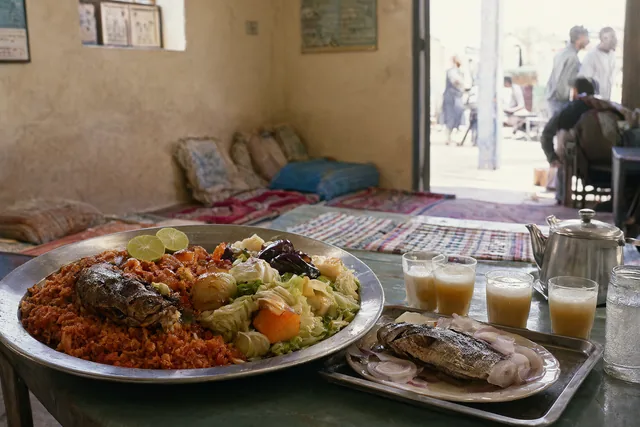
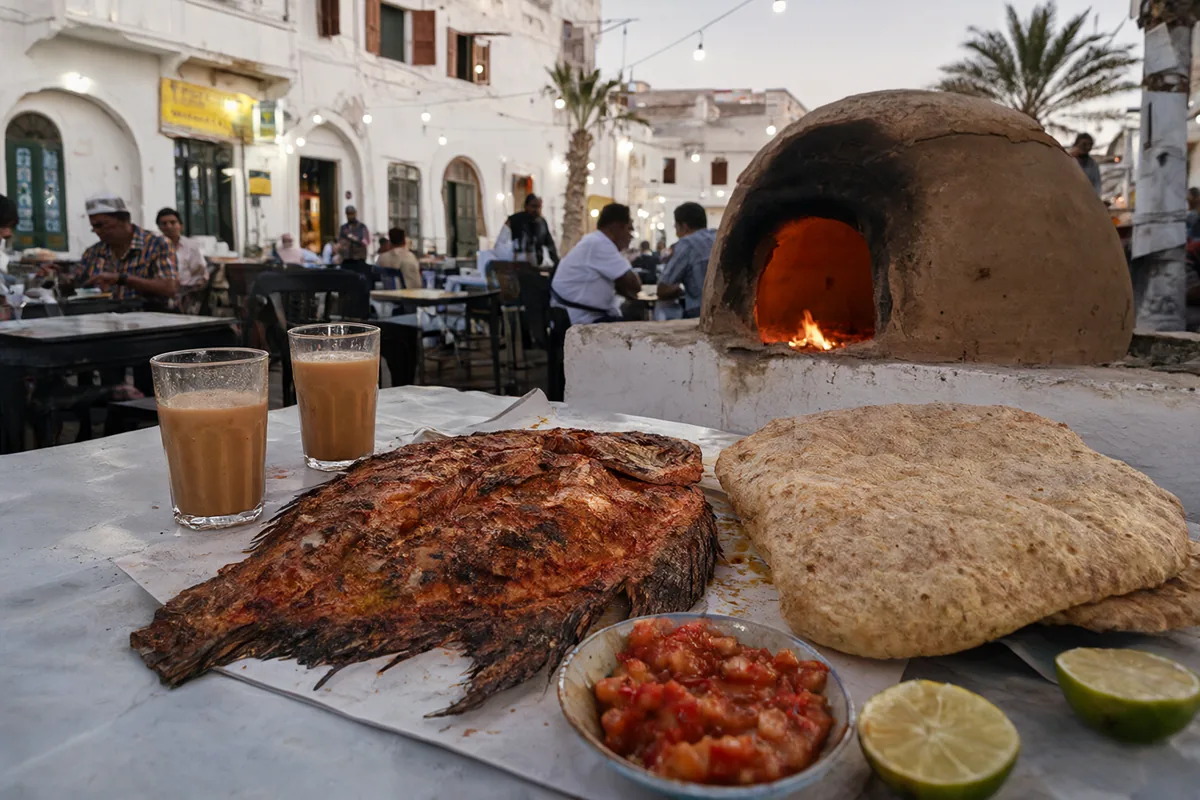
- Poisson à la yéménite: the classic Djibouti City meal, a whole fish split open, rubbed with a spicy paste and baked against the wall of a clay oven, served on paper with large flatbreads, a hot tomato sauce and lime. Eaten with your hands.
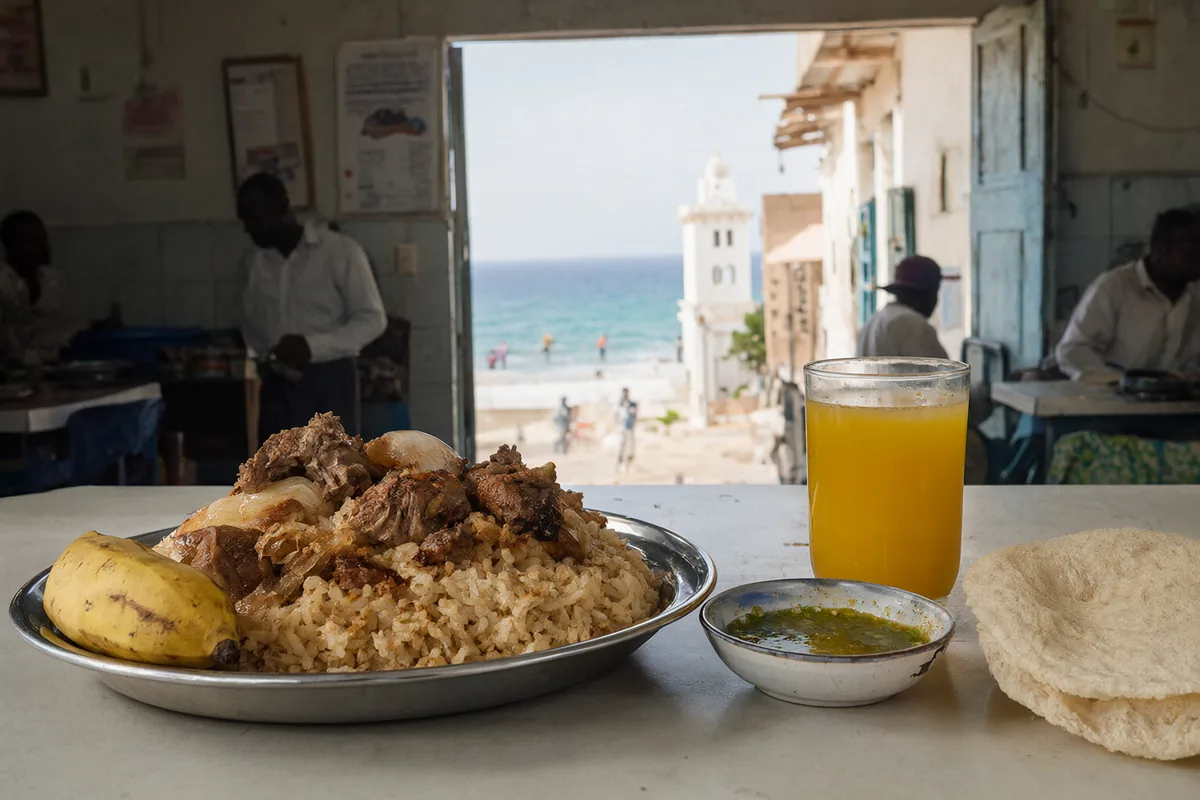
- Skoudehkaris: the national dish, rice cooked with goat or lamb, tomato, onion and a fragrant spice mix with cardamom and cloves.
- Fah-fah: a spicy goat soup with potato, carrot, green chilli and coriander, often eaten with flatbread for breakfast or lunch.
- Laxoox: a spongy, pancake-like flatbread, related to Ethiopian injera but thinner and smaller, eaten for breakfast with butter, honey and sugar, or with stew or meat.
- Sambuusa: fried triangular pastries filled with spiced minced meat or lentils, the Somali cousin of the samosa, sold everywhere and essential in Ramadan.
- Suqaar: small cubes of goat, lamb or beef fried with onion, pepper and spices, served with rice, pasta or flatbread.
- Bariis with banana: spiced rice served with a whole banana on the side, eaten together in the Somali way.
- Cambuulo: adzuki beans cooked soft and served with butter or oil and sugar, a cheap, filling dish.
- Malawax: thin, slightly sweet crêpes eaten for breakfast with tea.
- Xalwo: a sticky, jelly-like sweet of sugar, ghee, cardamom and nutmeg, served at weddings and Eid and sold in sweet shops.
- Shaah: tea brewed with milk, sugar and spices such as cardamom, cinnamon and cloves, drunk at any time of day.
- Fresh juices: mango, papaya, guava and lime juices, often blended, sold at juice bars all over the capital and welcome in the heat.
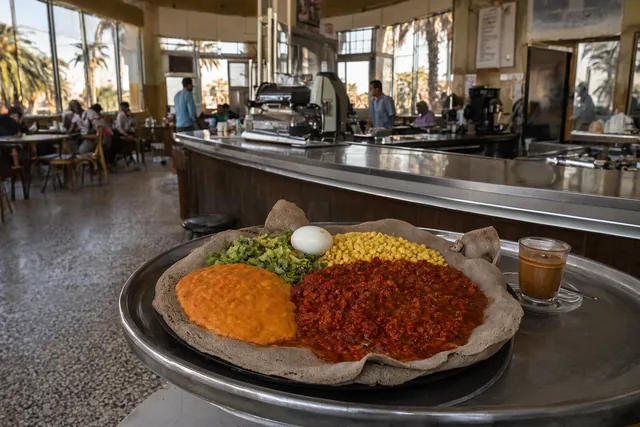
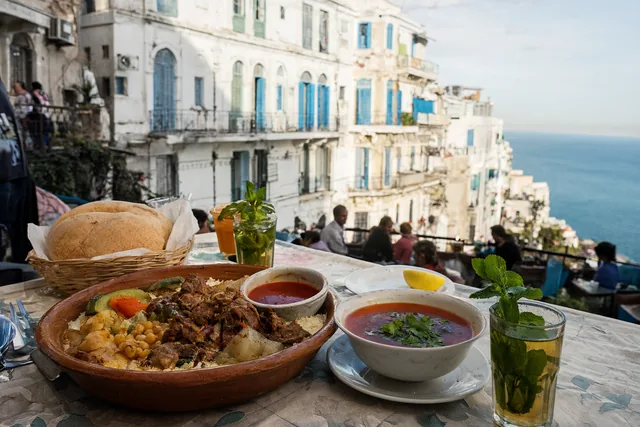
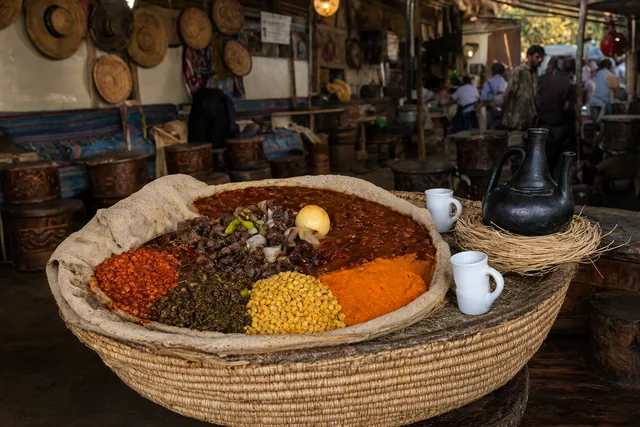
Ethiopian restaurants in Djibouti City serve injera with stews, Indian and Yemeni eateries serve biryani and grilled meat, and French bakeries sell baguettes, croissants and cakes. Seafood such as grouper, snapper, prawns and squid appears on the menus of the city's hotels and seaside restaurants.
How to read a menu in Djibouti (French, Arabic and Somali)
Djibouti's official languages are French and Arabic, and Somali and Afar are the most widely spoken languages at home. Restaurant menus are usually in French, sometimes with Arabic, and in Somali neighbourhood eateries there may be no menu at all. Arabic is written from right to left.
| French | Arabic | Somali | Meaning |
|---|---|---|---|
| viande | لحم (lahm) | hilib | Meat |
| cabri, chèvre | ماعز (ma'iz) | hilib ari | Goat |
| poulet | دجاج (dajaj) | digaag | Chicken |
| poisson | سمك (samak) | kalluun | Fish |
| riz | رز (ruz) | bariis | Rice |
| pain | خبز (khubz) | rooti | Bread |
| haricots | فاصوليا (fasuliya) | digir | Beans |
| lait | حليب (halib) | caano | Milk |
| thé | شاي (shay) | shaah | Tea |
| eau | ماء (ma) | biyo | Water |
| piment | حار (har) | basbaas | Chilli, spicy |
| végétarien | نباتي (nabati) | hilib la'aan | Vegetarian, without meat |
| l'addition | الحساب (al-hisab) | xisaabta | The bill |
Fish restaurants often price by the size or weight of the fish, so ask before ordering a large one. "Plat du jour" (dish of the day) and "menu" (a set meal, not the menu itself) are the two French terms most likely to confuse visitors.
A Djibouti City menu might list "poisson yéménite", "cabri grillé" and "skoudehkaris" with no explanation, and prices are in Djiboutian francs. swap.menu reads French and Arabic, explains each dish, converts prices to your home currency and flags priced-by-weight fish, so you can order with confidence.
Tipping, prices and paying
Djibouti is an expensive country by regional standards, because almost everything is imported, and meals in hotels and international restaurants cost about what they would in Europe. Local eateries, Yemeni fish restaurants and Somali cafés are much cheaper. Some hotel restaurants add a service charge or tax to the bill, so check before tipping. Our guide to tax and service charges on menus explains how these lines work around the world.
Tipping is not obligatory, but around 5 to 10 percent is appreciated in sit-down restaurants, and rounding up is enough in cafés and local eateries. Tip guides, drivers and boat crews on day trips.
The currency is the Djiboutian franc (DJF, written Fdj). Cards are accepted at hotels, supermarkets and upmarket restaurants in Djibouti City, but local eateries, markets, taxis and everything outside the capital work in cash, so carry francs. Euros and US dollars are easy to change in the city. If a card machine offers to charge you in your home currency, decline: our guide to paying in local currency explains why.
The heat shapes the day. Many businesses open early, close from around 1pm through the hottest part of the afternoon and reopen in the late afternoon, and Djiboutians eat lunch around 1pm and dinner late, often after 8:30pm. The cooler months, from about October to April, are the best time to visit. The weekend is Friday, with many offices also closing on Saturday.
Alcohol is legal and served in hotels, bars and many restaurants in Djibouti City, but rarely outside it. During Ramadan, local restaurants and cafés close in the day and open for iftar at sunset, and eating or drinking in public during daylight is not acceptable, though hotel restaurants serve guests. Many Djiboutians chew khat, a mildly stimulant leaf that is legal in Djibouti and arrives fresh every day from Ethiopia. Afternoon khat sessions are a social ritual, and some streets go quiet after lunch while they happen.
Where to eat in Djibouti, place by place
Almost all of Djibouti's restaurants are in the capital, and the rest of the country is about landscapes, with simple meals in towns and camps. Jump to a place:
Where to eat in Djibouti City
Djibouti City is home to most of the country's population and nearly all of its restaurants. The European Quarter, around Place Ménélik with its whitewashed arcaded buildings, has French-style cafés, bakeries, pizzerias and restaurants serving seafood and international food, and is the easiest area for a first meal. Just south, around Place Mahmoud Harbi and the central market, the streets of the African Quarter are full of Somali and Yemeni eateries, juice bars, tea stalls and sweet shops, where a plate of rice and goat or a fah-fah costs a fraction of hotel prices.
The essential Djibouti City meal is poisson yéménite. Yemeni fish restaurants in the city bake whole fish in clay ovens and serve them on paper with giant flatbreads, a spicy tomato sauce and lime, usually in the evening, and you eat at plastic tables with your hands. The seafront districts of Héron and the Plateau du Serpent have hotels and restaurants with sea views, best at sunset, and the city's Ethiopian restaurants are good for injera and vegetarian dishes. Djibouti City tip: many local restaurants close in the afternoon heat and come alive after dark, so plan lunch early and dinner late.
Where to eat on Moucha Island
Moucha Island, and the smaller Maskali next to it, lie in the Gulf of Tadjourah about half an hour by boat from Djibouti City. They are a popular day trip for swimming, snorkelling and beaches, and from around November to January, for the chance to swim near whale sharks in the gulf. There is very little on Moucha in the way of restaurants, but the island has simple beach accommodation, and most day trips include lunch.
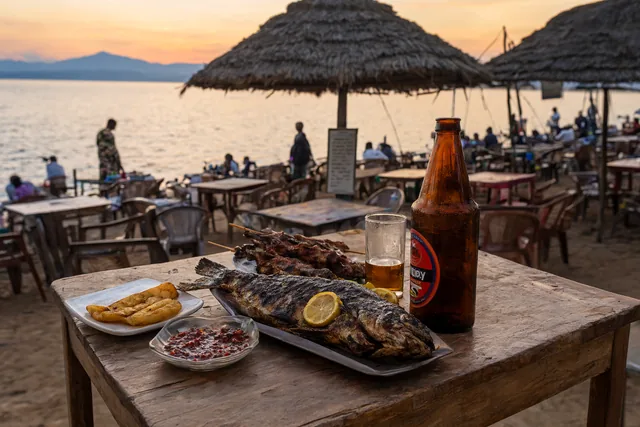
That lunch is usually grilled fish, often caught that morning, with rice, salad and bread, cooked by the boat crew or the camp and eaten in the shade. It is simple and fresh. Bring plenty of water and some snacks, as there are few places to buy anything on Moucha, and check what your trip includes before you book.
Where to eat in Tadjourah
Tadjourah, on the north shore of the Gulf of Tadjourah, is the oldest town in Djibouti, a quiet place of whitewashed houses and mosques facing the sea, and the historic centre of the Afar people. Its food scene is small: a handful of simple restaurants and tea shops near the waterfront and the market serve grilled fish, rice with goat, laxoox, sweet tea and fresh juice. The fish is excellent and very fresh, landed by the town's small fishing boats.
Tadjourah is reached by road or by boat from Djibouti City, and many visitors stay at beach camps along the coast nearby, such as those at the Plage des Sables Blancs, where meals are included. In Tadjourah, as in all Djibouti outside the capital, alcohol is rarely available and dress should be modest. Tadjourah makes a relaxed stop on the way to Lac Assal, the salt lake that is the lowest point in Africa.
Where to eat in Ali Sabieh
Ali Sabieh, in the south near the Ethiopian border, is Djibouti's second town, set among dry mountains on the railway line from Djibouti City to Addis Ababa. It is mainly a Somali town, and its food is everyday Somali and Djiboutian cooking: suqaar, rice and goat, fah-fah, laxoox, sambuusa and spiced tea, served at simple restaurants and tea shops around the market.
Ethiopian influence is strong in Ali Sabieh, and you may find injera and Ethiopian stews alongside the Somali dishes. Ali Sabieh has no restaurants aimed at visitors, so menus, where there are any, will be in French or not written down at all, and you will be pointing at what others are eating. Prices are low and portions generous. It is a good stop on a trip to the Grand Bara desert.
Where to eat at Lac Abbé
Lac Abbé, a salt lake on the Ethiopian border in the far south-west, is famous for its landscape of tall limestone chimneys that steam from hot springs, especially at dawn. It is remote, and the only place to stay and eat is a simple campement of huts near the chimneys, run with local Afar communities, where meals are included.
The food at Lac Abbé is basic and hearty: rice or pasta with goat, vegetables, flatbread and sweet tea, cooked over a fire and eaten together under the stars. Afar herders graze camels and goats around the lake, and you may be offered fresh milk. Bring snacks, water and anything you need for special diets, as there are no shops. The meal at Lac Abbé is part of the experience, not the reason to come.
Vegetarian, vegan and allergy tips
Djiboutian food is meat-centred, and rice and soups are often cooked with goat or lamb stock. Vegetarians eat best at Ethiopian restaurants, where lentil, chickpea and vegetable stews with injera are always on the menu, and at Indian eateries. Somali dishes such as cambuulo, laxoox with honey, malawax and lentil sambuusa are also meat-free. In French, say "je suis végétarien" (or "végétarienne" for a woman) and "sans viande"; in Somali, "hilib la'aan" means without meat. All meat is halal, and pork is not available outside a few hotel restaurants.
Ghee and butter are used in rice, breads and sweets such as xalwo, and milk is in spiced tea. Peanuts and sesame appear in some sauces and sweets, and wheat is in almost every bread. Our guide to eating abroad with food allergies explains how to communicate an allergy clearly when you do not speak the language.
Useful French, Somali and Arabic phrases for ordering
French is the language of menus and service in Djibouti City, Somali is the language of the street, and Arabic greetings are understood everywhere.
السلام عليكم Salam alaykum: "Peace be upon you", the standard greeting
Iska warran? Somali: "How are you?", a friendly greeting
Qu'est-ce que vous me conseillez ? French: "What do you recommend?"
Je voudrais ça, s'il vous plaît French: "I would like this, please" (pointing)
Sans viande, s'il vous plaît French: "Without meat, please"
Je suis allergique à... French: "I am allergic to..."
L'addition, s'il vous plaît French: "The bill, please"
Mahadsanid Somali: "Thank you"
How swap.menu helps you eat in Djibouti
In Djibouti, a French menu may list Somali, Yemeni and Ethiopian dishes side by side with no explanation, and neighbourhood eateries may have a board in French or Arabic. Photograph it with swap.menu and every dish appears in your language with the original name beside it and a short description, so you know that skoudehkaris is spiced rice with meat, that fah-fah is a spicy goat soup, and that "cabri" means young goat. Prices in Djiboutian francs are converted to your home currency, which helps in a country where prices vary so widely.
Tap the dishes you want, add a note such as "not spicy" or "no meat, please", typed or spoken, and swap.menu translates your order into French or Arabic. Show the waiter your phone, or let them scan the QR code and read your order on their own screen. Try it now on a sample menu with the free demo, or see travel pass prices.
Off to Djibouti? Your first 3 menu scans are free, and a travel pass starts from $4.99 with nothing that renews.
Start free with 3 scansDjibouti food FAQ
What is the national dish of Djibouti?
Skoudehkaris, rice cooked with goat or lamb, tomato and spices, is usually named as the national dish. Poisson à la yéménite, fish baked in a clay oven with flatbread, is the meal most visitors remember from Djibouti City.
Do you tip in restaurants in Djibouti?
Tipping is not obligatory, but 5 to 10 percent is appreciated in sit-down restaurants, and rounding up is enough at cafés and local eateries. Check hotel bills for a service charge first.
Is Djibouti expensive to eat out?
Hotel and international restaurants are expensive, often similar to European prices, because most food is imported. Local Somali and Yemeni eateries are much cheaper, and a meal of rice and goat or a baked fish with bread is good value.
Can you drink alcohol in Djibouti?
Yes, alcohol is legal and served in hotels, bars and many restaurants in Djibouti City. It is rarely available outside the capital, and during Ramadan its service is more discreet.
Is tap water safe to drink in Djibouti?
It is best to drink bottled water, which is sold everywhere in Djibouti City. In the heat you will need a lot of it, so carry water on any trip outside the capital.
How can I read a menu in Djibouti?
Most menus are in French, sometimes with Arabic. Learn a few words such as poisson, cabri and riz, or photograph the menu with swap.menu, which translates every dish into your language, explains it, converts prices to your currency and translates your order for the waiter.
Travelling further in the Horn of Africa? Read our food guides for neighbouring countries:
Or browse every travel food guide.