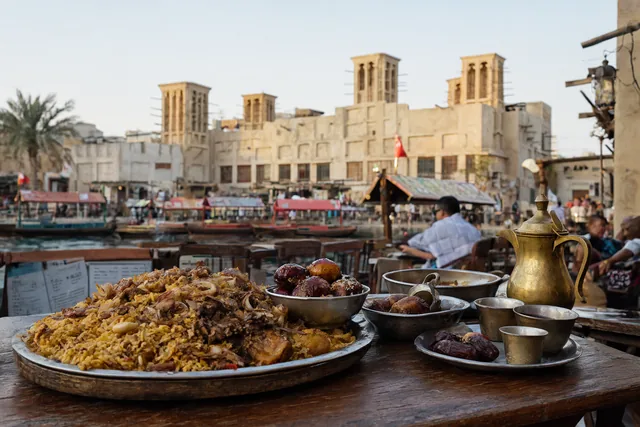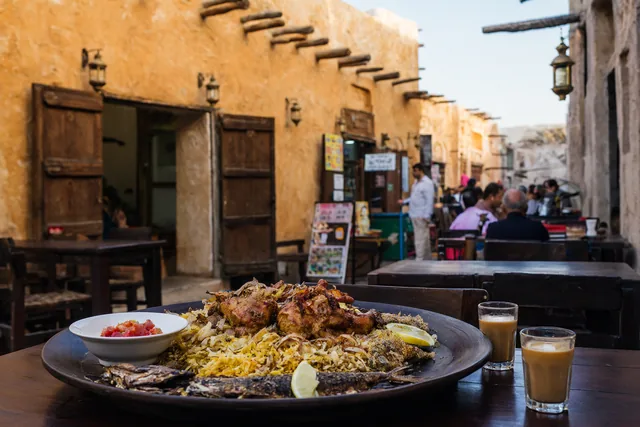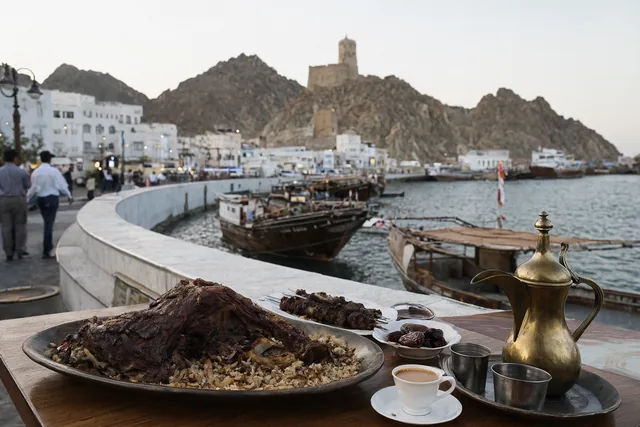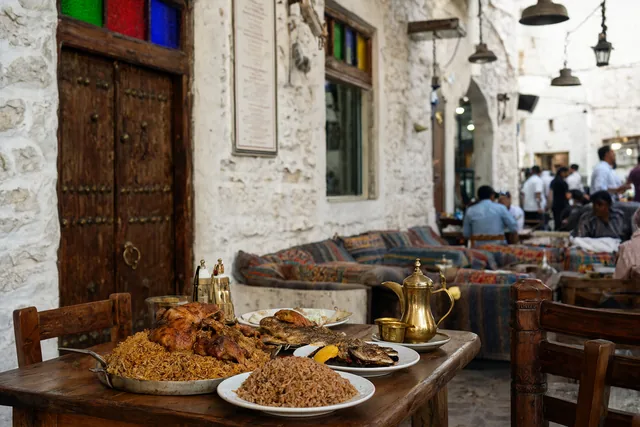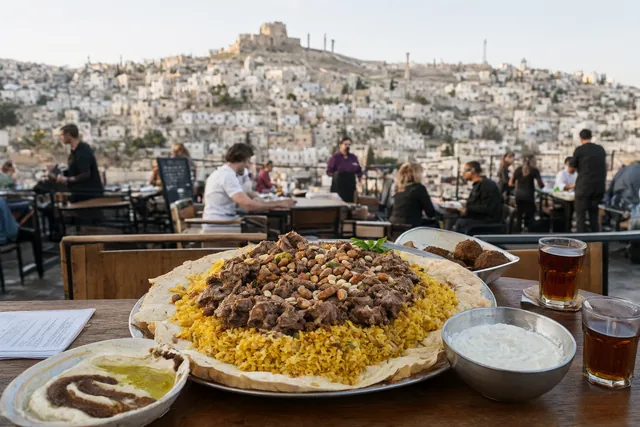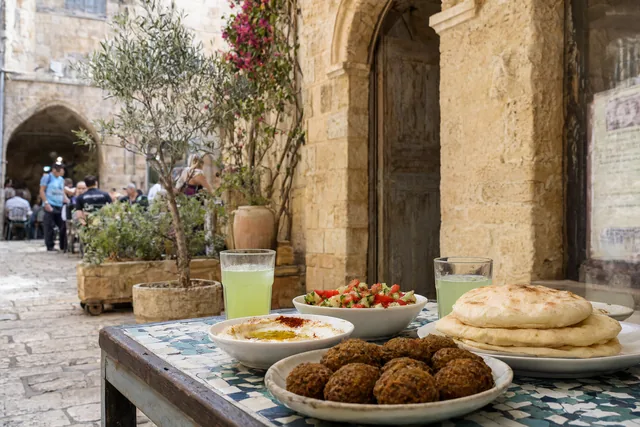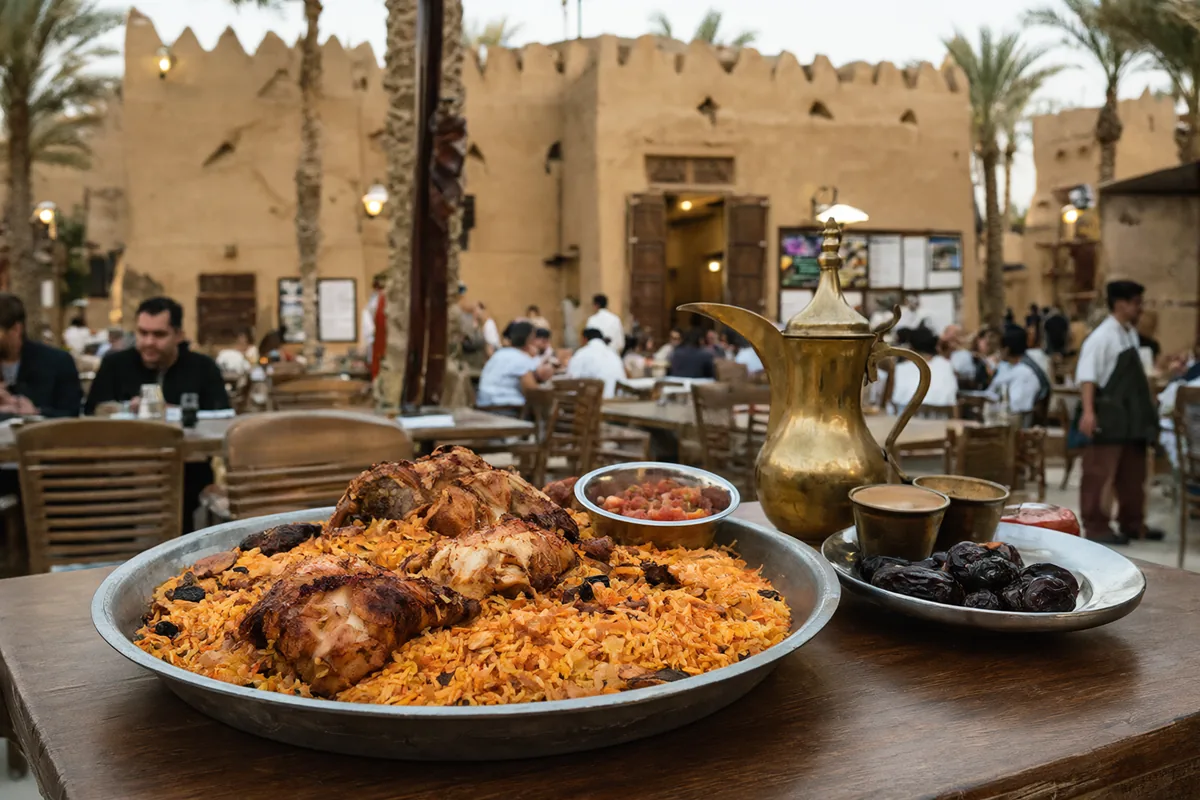
Saudi Arabia opened to leisure tourism only in 2019, and most visitors arrive knowing little about its food beyond kabsa. In fact the kingdom has several distinct regional cuisines: the hearty rice and wheat dishes of Najd in the centre, the cosmopolitan street food of the Hejaz on the Red Sea, the honey and bread of the Asir mountains and the seafood and dates of the Eastern Province. This Saudi Arabia food guide covers the dishes to know, the Arabic words on a menu, tipping and VAT, Ramadan and dining customs, then goes city by city through where to eat in Riyadh, Jeddah, AlUla, Al Khobar, Abha and Taif.
What to eat in Saudi Arabia: 12 dishes to know
Saudi food is generous and meant to be shared, often from one large platter in the centre of the table or on a mat on the floor. These are the dishes worth ordering, with the region they come from.
- Kabsa (everywhere): the national dish, long-grain rice cooked with chicken or lamb, tomato, dried lime and spices such as cardamom, cinnamon and black pepper, topped with nuts and raisins.
- Mandi (from Yemen, now everywhere): rice and meat or chicken cooked in a sealed underground or tannour oven, so the meat is smoky and falls off the bone.
- Mathbi (the south): meat or chicken grilled on hot flat stones, served with rice and a spicy tomato sauce.
- Jareesh (Najd): cracked wheat cooked slowly with yoghurt or buttermilk, onion and sometimes meat, smooth and comforting.
- Margoog (Najd): a stew of meat and vegetables with thin pieces of dough cooked in the sauce.
- Saleeg (Hejaz, especially Taif and Jeddah): short-grain rice cooked in broth and milk until creamy, served with roast chicken.
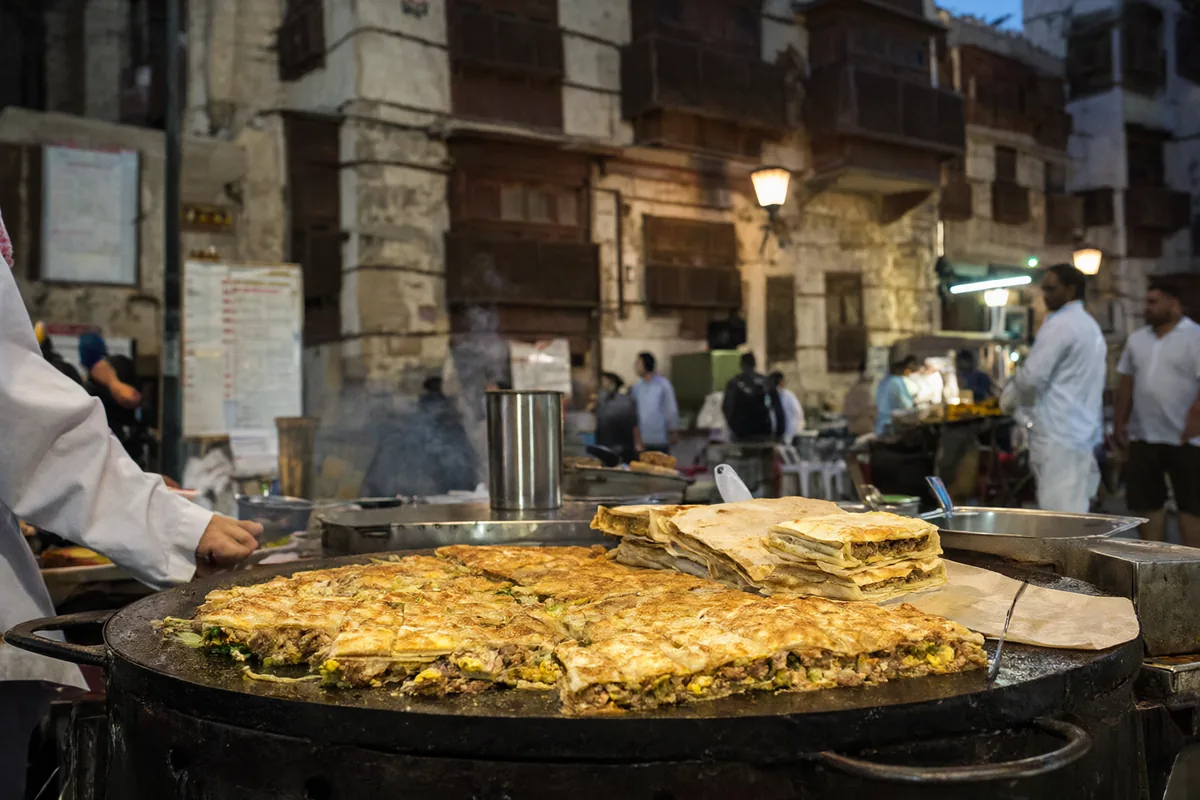
- Mutabbaq (Hejaz): a thin pastry folded around minced meat, egg and leek, or a sweet filling, fried on a griddle. Jeddah's favourite street snack.
- Ful and tamees (everywhere): mashed fava beans with oil, cumin and lemon, eaten for breakfast with tamees, a large, light flatbread baked in a clay oven.
- Masoub (Hejaz): bread mashed with ripe banana, then topped with cream, honey and sometimes cheese. A rich breakfast.
- Areeka (Asir): kneaded wholewheat dough served with ghee, honey and dates, a traditional winter breakfast in the south.
- Haneeth (Asir and the south): lamb slow-roasted until very tender and served on rice.
- Gahwa and dates (everywhere): Saudi coffee is lightly roasted, golden and flavoured with cardamom, sometimes saffron or cloves, poured into tiny cups and always served with dates.
For something sweet, look for kunafa, shredded pastry baked with cheese or cream and soaked in syrup, and luqaimat, fried dumplings with date syrup, especially in Ramadan. On menus you will also see "Saudi champagne", a non-alcoholic mix of apple juice, sparkling water and sliced fruit.
How to read an Arabic menu
Restaurants in Riyadh, Jeddah and Al Khobar usually print menus in Arabic and English, but local mandi houses, bakeries and smaller towns may use Arabic only, and prices or specials on boards are often in Arabic alone. Arabic is read from right to left, and Saudi menus often show prices in Arabic-Indic numerals as well. These are the words you will see most.
| Arabic | Romanised | Meaning |
|---|---|---|
| كبسة | kabsa | Spiced rice with chicken or meat |
| مندي | mandi | Rice with meat or chicken cooked in a sealed oven |
| مضغوط | madghout | Rice and meat cooked together in a pressure cooker |
| لحم | lahm | Meat, usually lamb |
| حاشي | hashi | Young camel meat |
| دجاج | dajaj | Chicken |
| سمك | samak | Fish |
| رز | ruz | Rice |
| تميس | tamees | Large clay-oven flatbread |
| مشويات | mashwiyat | Grills |
| فطور | futoor | Breakfast (also the meal that breaks the fast in Ramadan) |
| عائلات | a'ilat | Families: the family seating section |
| أفراد | afrad | Individuals: the singles section, traditionally for men |
| نباتي | nabati | Vegetarian |
Mandi and kabsa restaurants often sell by portion: a quarter, a half or a whole chicken, or a set weight of lamb, all served on rice. A half chicken with rice is usually enough for two people. Many traditional restaurants have private booths or floor seating with cushions, and you eat from the shared platter.
At mandi and kabsa houses in Saudi Arabia, the menu board is often a list of meats and sizes in Arabic, with prices in Arabic-Indic numerals. swap.menu reads both the words and the numbers, so you can tell a quarter chicken from a whole lamb and see the price in your own currency.
Tipping, VAT, paying and dining customs
A 15 percent VAT applies to restaurant bills. Most menus show prices including it, but some hotel restaurants add VAT and a service charge at the end, so check the bottom of the menu. Our guide to tax and service charges on menus explains how these lines work. Tipping is not expected in Saudi Arabia, but leaving around 10 percent in sit-down restaurants, or rounding up in cafés, is appreciated, and is more common in upmarket places.
The currency is the Saudi riyal (SAR). Saudi Arabia is one of the most card-friendly countries in the region: cards, phone payments and contactless are accepted almost everywhere, even at small cafés, but carry a little cash for markets and roadside stalls. If a card machine offers to charge you in your home currency, decline and pay in riyals: our guide to paying in local currency explains why.
Lunch, traditionally the main meal, is eaten from about 1pm to 4pm, and dinner is late, from 9pm to midnight or later. Many restaurants still have a family section, with partitions or private booths, alongside a singles section, though the old rules on separate entrances have been dropped. Some smaller shops and restaurants still close briefly during the five daily prayers, so a shut door at prayer time usually opens again within half an hour.
Alcohol is banned in Saudi Arabia and is not served anywhere, including hotels. Pork is also illegal. During Ramadan, restaurants are closed in daylight hours, and eating, drinking or smoking in public during the day is not allowed, for visitors as well as Saudis. At sunset, families break the fast with dates, water and coffee, then restaurants open and stay busy until the small hours, serving iftar and the late meal called suhoor. Ramadan evenings are a lively time to visit, especially in Jeddah.
Where to eat in Saudi Arabia, city by city
Saudi Arabia is huge, and each region eats differently. Jump to a city:
Where to eat in Riyadh
Riyadh, the capital, is the home of Najdi cooking: kabsa, jareesh, margoog and the light Najdi coffee. The best place to start is Diriyah, the old mud-brick capital on the edge of the city, where the UNESCO-listed At-Turaif district is surrounded by restaurants and cafés at Bujairi Terrace, many serving Najdi and other Saudi dishes in a setting of adobe walls and palm trees. In the old centre, the Souq Al Zal near Al Masmak fort is a traditional market selling dates, spices, coffee and incense, with simple eateries nearby.
For everyday food, Riyadh's mandi and kabsa houses are everywhere, and many have traditional floor seating. Al Olaya and the area around Tahlia Street have the city's cafés, modern Saudi restaurants and international chains, and Al Batha is the place for cheap Indian, Pakistani, Yemeni and Filipino food. Bakeries selling hot tamees from clay ovens are a Riyadh breakfast staple. From about October to March, the Riyadh Season festival brings outdoor food zones and pop-ups across the city.
Where to eat in Jeddah
Jeddah, on the Red Sea, has been the gateway for pilgrims for centuries, and its food reflects that, mixing Arab, Yemeni, Egyptian, Indonesian, Indian and East African influences. Hejazi cuisine is the local style: saleeg, masoub, sayadiyah (fish with spiced rice and caramelised onion) and street snacks like mutabbaq, balila (spiced chickpeas) and ful. The place to eat them is Al Balad, the historic centre, a UNESCO-listed district of coral-stone houses with wooden rawasheen balconies, where street stalls fry mutabbaq and bakeries sell bread late into the night.
Jeddah is also a seafood city. The central fish market, near the old port, sells the Red Sea catch each morning, and nearby restaurants will grill or fry fish you choose by weight. The Corniche, a long seafront promenade, is lined with cafés and is where families picnic on summer evenings. Jeddah is generally considered the most relaxed Saudi city, and during Ramadan Al Balad becomes one of the liveliest places in the country after dark, with stalls, lanterns and crowds until the early hours.
Where to eat in AlUla
AlUla, in the north-west, is an oasis valley of sandstone canyons, home to the Nabataean tombs of Hegra, Saudi Arabia's first UNESCO World Heritage site. The valley has been farmed for thousands of years and is known for its dates and citrus, and many restaurants in AlUla build their menus around local produce, from date-based sweets to farm vegetables. Some farms in the oasis welcome visitors for tastings and meals among the palms.
The restored AlUla Old Town, a mud-brick village on the edge of the oasis, has a market street with cafés and small restaurants serving Saudi coffee, dates and local dishes, and it is especially atmospheric in the evening. Tourism in AlUla is still young and sights are spread out, so plan meals around your excursions, book popular restaurants ahead, and expect higher prices than in the big cities. The cooler months, from October to March, are the best time to visit.
Where to eat in Al Khobar
Al Khobar, with neighbouring Dammam and Dhahran, is the main city of the Eastern Province on the Gulf coast. It has a large international community and a wide choice of restaurants, from Lebanese grills and Indian curry houses to Filipino and Western cafés. The seafront Khobar Corniche is the place for an evening walk, coffee and ice cream, and the waterfront restaurants serve Gulf fish such as hamour and safi, and prawns, grilled, fried or cooked in rice.
Nearby Qatif has one of the largest fish markets in the Gulf, and the coastal towns of the Eastern Province are known for their prawns. A day trip inland to Al Ahsa, one of the world's largest date palm oases and a UNESCO-listed site, is the best way to taste Saudi dates: the soft, caramel-like khalas is the local variety. Al Khobar is also linked to Bahrain by the King Fahd Causeway, so many visitors combine the two.
Where to eat in Abha
Abha, in the Asir mountains of the south-west, sits at more than 2,000 metres and is much cooler than the rest of the country, which makes it a summer escape for Saudi families. The food is different here: haneeth and mathbi, areeka with ghee and honey, and bread baked on hot stones. Asir is known for its honey, especially sidr honey, sold in markets and roadside shops, and the nearby Jazan region grows coffee beans on its mountain terraces, a rarity in Arabia.
In Abha, the painted houses of Al Muftaha village are an arts district with cafés, and the stone tower houses of Rijal Almaa, a historic village a short drive away, are worth a visit with lunch. Up on the plateau at Al Soudah, among juniper forests and fog, cafés serve coffee and grilled meats with long views. Abha's restaurants are mostly local and inexpensive, and families often eat outdoors in parks and viewpoints on summer evenings.
Where to eat in Taif
Taif, in the mountains above Mecca, is famous for its roses. In spring, usually March and April, the rose farms around Taif harvest the flowers to distil rose water and rose oil, and some farms open to visitors. The cool climate also produces fruit: pomegranates, figs, grapes and prickly pears are sold from roadside stalls along the mountain roads, especially at Al Hada and Al Shafa, along with local honey.
Taif is the place to eat saleeg, which many Saudis associate with the city, as well as Hejazi grills and kabsa. The central souq in Taif sells rose products, dried fruit, spices and sweets. Taif lies outside the area around Mecca that is closed to non-Muslims, but the most direct road from Jeddah passes Mecca, so non-Muslims should follow the signed route that bypasses the city.
Vegetarian, vegan and allergy tips
Saudi food centres on meat and rice, and vegetarians need to look a little harder. Rice in kabsa and mandi is cooked in meat stock, and many vegetable stews contain meat. The easiest options are breakfast dishes such as ful, falafel, hummus and cheese or za'atar breads, Levantine mezze in Lebanese restaurants, and Indian restaurants, which have full vegetarian menus. The Arabic word for vegetarian is nabati, and "without meat" is bidoon lahm.
For allergies, watch for sesame in tahini, breads and sweets, nuts, especially pine nuts and almonds on rice dishes and pistachios in desserts, dairy and ghee in jareesh, saleeg and many sweets, and gluten in tamees, margoog and areeka. Large restaurants in the cities are used to allergy questions, but small local places may not be. Our guide to eating abroad with food allergies explains how to describe an allergy clearly.
Useful Arabic phrases for ordering
English is widely understood in city restaurants, and many staff come from South Asia or the Philippines. In local places, a little Arabic goes a long way.
السلام عليكم As-salaam alaikum: "Peace be upon you", the standard greeting
ممكن المنيو؟ Mumkin al-menu?: "Could I have the menu?"
أبغى نص دجاج مندي Abgha nuss dajaj mandi: "I would like half a chicken mandi"
بدون حار Bidoon harr: "Not spicy"
أنا نباتي / نباتية Ana nabati / nabatiya: "I am vegetarian" (man / woman)
عندي حساسية من... Indi hasasiya min...: "I am allergic to..."
الحساب لو سمحت Al-hisaab law samaht: "The bill, please"
شكراً، لذيذ مرة Shukran, ladheedh marra: "Thank you, very tasty"
How swap.menu helps you eat in Saudi Arabia
Outside the big hotels, many Saudi restaurants have menus or boards in Arabic only, with dishes like madghout, margoog, haneeth and masoub and prices in Arabic-Indic numerals. Photograph the menu with swap.menu and each dish appears in your language with a short description, so you know that hashi is young camel and mathbi is cooked on hot stones before you order. Every price is converted from riyals to your home currency, and any VAT or service lines are flagged.
Tap the dishes you want, add a note such as "no nuts" or "not spicy", typed or spoken, and swap.menu translates your order into Arabic. Show the waiter your phone, or let them scan the QR code and read your order on their own screen. You can try it now on a sample menu with the free demo, or see travel pass prices.
Off to Saudi Arabia? Your first 3 menu scans are free, and a travel pass starts from $4.99 with nothing that renews.
Start free with 3 scansSaudi Arabia food FAQ
Do you tip in restaurants in Saudi Arabia?
Tipping is not expected, but around 10 percent in sit-down restaurants or rounding up in cafés is appreciated. Check the bill first, as some hotel restaurants add a service charge.
Is alcohol allowed in Saudi Arabia?
No. Alcohol is banned and is not served in restaurants, bars or hotels. Menus offer fresh juices, mocktails and the non-alcoholic "Saudi champagne" instead.
What is the national dish of Saudi Arabia?
Kabsa, spiced rice cooked with chicken or lamb, is the national dish. Mandi, jareesh, saleeg and mutabbaq are other favourites, and Saudi coffee with dates is served everywhere.
Can tourists eat during the day in Ramadan in Saudi Arabia?
Restaurants are closed during daylight hours in Ramadan, and eating, drinking or smoking in public during the day is not allowed for anyone. Hotels may serve guests in private, and restaurants open at sunset and stay open late.
Is it expensive to eat out in Saudi Arabia?
Local mandi and kabsa houses, bakeries and South Asian restaurants are inexpensive, especially when sharing a platter. Modern restaurants in Riyadh and Jeddah and hotel dining cost much more.
How can I read an Arabic menu in Saudi Arabia?
Learn a few words such as dajaj, lahm and ruz, or photograph the menu with swap.menu. It translates every dish into your language, reads Arabic numerals, converts riyal prices to your currency and translates your order into Arabic for the staff.
Travelling further in the Middle East? Read our food guides for nearby countries:
- United Arab Emirates food guide
- Bahrain food guide
- Qatar food guide
- Jordan food guide
- Oman food guide
- Egypt food guide
Or browse every travel food guide.