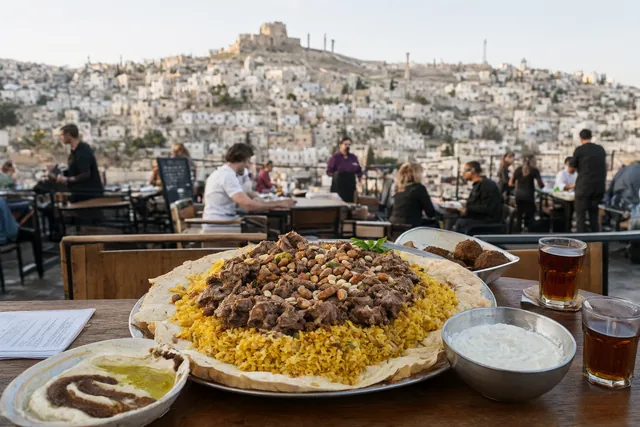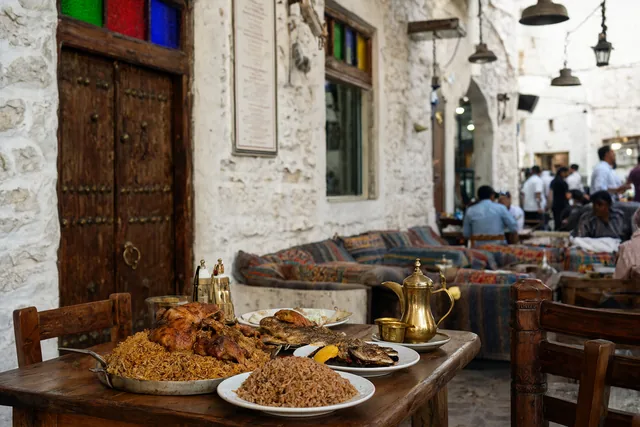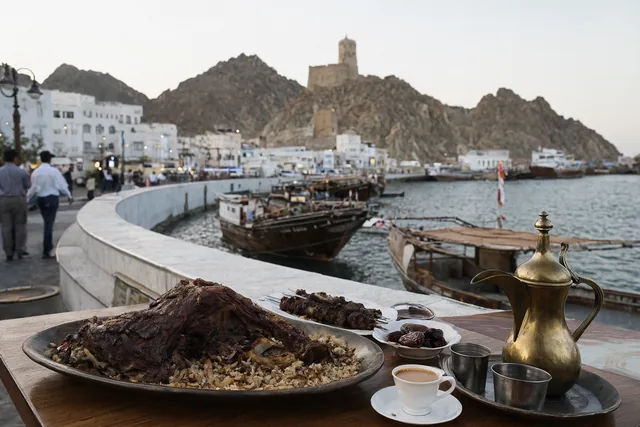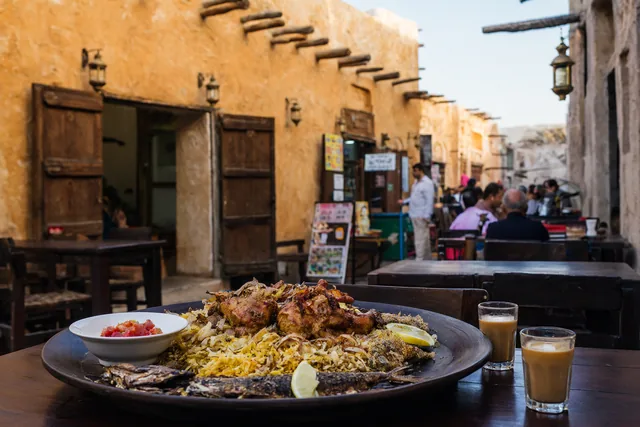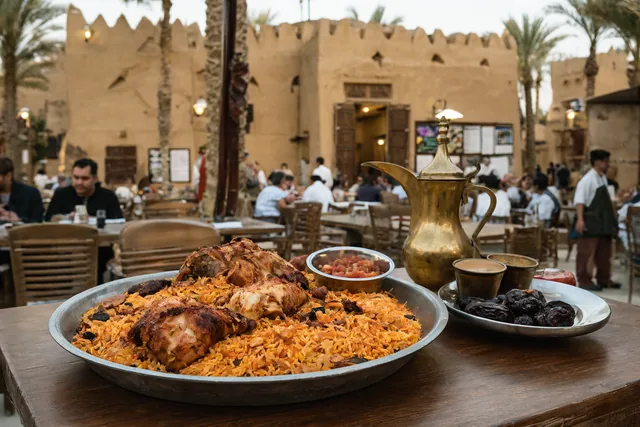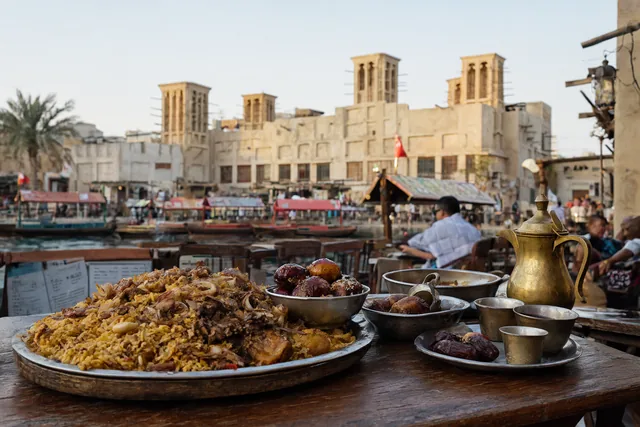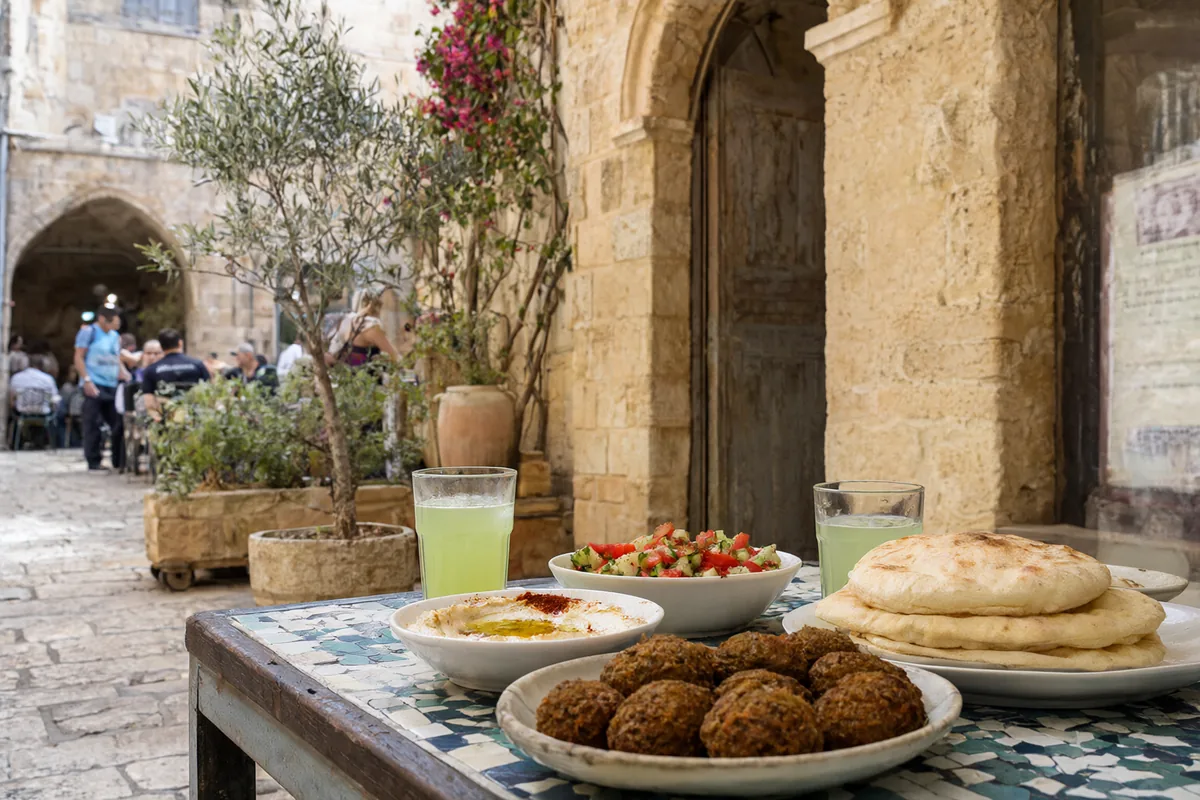
Israeli food is a mix of Middle Eastern cooking and the dishes brought by Jewish communities from Yemen, Iraq, Morocco, North Africa, Eastern Europe and the Balkans, alongside the Arab and Druze cooking of the region. The result is street food that is hard to beat, enormous breakfasts and an excellent choice for vegetarians. This Israel food guide covers the dishes to know, the Hebrew and kosher words on a menu, tipping, Shabbat opening hours and other customs, then goes city by city through where to eat in Jerusalem, Tel Aviv, Jaffa, Haifa, Akko, Nazareth and Eilat.
What to eat in Israel: 12 dishes to know
Much of the best food in Israel is eaten at a counter, from a pita or a small plate. These are the dishes worth ordering.
- Hummus: chickpeas blended with tahini, lemon and garlic, served warm in a shallow bowl with olive oil, often topped with whole chickpeas, fava beans (ful) or a hard-boiled egg. Specialist hummus restaurants often close in the afternoon when the day's batch runs out.
- Falafel: crisp chickpea fritters, stuffed into pita with salad, tahini, pickles and chilli sauce.
- Sabich: pita filled with fried aubergine, hard-boiled egg, tahini, salad and amba, a tangy mango pickle. An Iraqi Jewish breakfast turned street food.
- Shakshuka: eggs poached in a spiced tomato and pepper sauce, served in the pan with bread. A North African dish and a breakfast staple.
- Shawarma: turkey, chicken or lamb sliced from a vertical spit, served in pita or rolled in laffa, a large, chewy flatbread.
- Me'orav Yerushalmi (Jerusalem): "Jerusalem mixed grill", chicken hearts, livers and other cuts fried on a griddle with onion and spices, eaten in pita.
- Bourekas: flaky pastries filled with cheese, potato, spinach or mushroom, a Balkan and Turkish Jewish snack sold in bakeries.
- Jachnun: rolled, buttery Yemenite dough baked slowly overnight, served on Saturday mornings with grated tomato, a hard-boiled egg and zhug (green chilli paste).
- Malawach: a flaky Yemenite pan-fried bread, eaten with grated tomato and zhug or with honey.
- Kubbeh: semolina or bulgur dumplings filled with meat, served in a sour or beetroot soup, a Kurdish and Iraqi Jewish speciality.
- Israeli breakfast: a spread of eggs, chopped salad, cheeses, dips, olives, bread and coffee, served in cafés and hotels and often enough to skip lunch.
- Malabi: a milk or cream pudding set with cornflour, topped with rose syrup and chopped nuts.
At Middle Eastern grill restaurants, an order of grilled meat often comes with salatim, a table full of small salads and dips. To drink, try fresh lemonade blended with mint, freshly squeezed pomegranate juice and arak, an aniseed spirit drunk with ice and water.
How to read a Hebrew menu
Most restaurants in Israel have menus in Hebrew and English, but many small places, market stalls and bakeries write their menu boards in Hebrew only. Hebrew is written from right to left, usually without vowels, which makes dish names hard to sound out. In Arab towns such as Nazareth and Akko, menus are often in Arabic as well. These are the words that matter most.
| Hebrew | Romanised | Meaning |
|---|---|---|
| ראשונות | rishonot | Starters |
| עיקריות | ikariyot | Main courses |
| תוספות | tosafot | Side dishes |
| קינוחים | kinuchim | Desserts |
| בשר | basar | Meat |
| עוף | of | Chicken |
| דג | dag | Fish |
| כשר | kasher | Kosher |
| בשרי | bsari | Meat kosher: a kosher restaurant that serves meat and no dairy |
| חלבי | halavi | Dairy kosher: no meat, but dairy and often fish |
| פרווה | parve | Neither meat nor dairy |
| צמחוני / טבעוני | tzimhoni / tivoni | Vegetarian / vegan |
| חריף | harif | Spicy hot |
| עסקית | iskit | Business lunch: a weekday set lunch deal |
Kosher restaurants display a certificate called a hashgacha (השגחה), issued by a rabbinical authority; mehadrin (מהדרין) means a stricter level of supervision. Because kosher law separates meat and dairy, a bsari restaurant will not serve cheese, butter or milk, so your coffee comes with a non-dairy creamer, while a halavi restaurant serves no meat. Many restaurants, especially in Tel Aviv, are not kosher and serve both. In Arab towns, meat is usually halal.
Hebrew menu boards are usually written without vowels, so even a romanised guess at a dish name can be wrong. swap.menu reads Hebrew script directly, translates and explains each dish, and tells you whether a place's menu is meat or dairy, so you know why there is no cheese on your burger.
Tipping, paying and Shabbat hours
Service is not included in Israel, and tipping in sit-down restaurants and cafés is expected: around 10 to 15 percent is normal, with 12 percent a common choice. You can usually add the tip to the card payment, though some places prefer it in cash. Large groups may have a service charge added, so check the bill. No tip is expected at counters, falafel stands or market stalls. VAT is included in menu prices, and Eilat is a VAT-free zone. Our guide to tax and service charges on menus explains how these lines work around the world.
The currency is the new Israeli shekel (₪, ILS). Cards and contactless payments are accepted almost everywhere, including most market stalls. If a card machine offers to charge you in your home currency, decline and pay in shekels: our guide to paying in local currency explains why.
Shabbat, the Jewish day of rest, runs from Friday afternoon until Saturday after dark. Kosher restaurants and many shops close, public transport largely stops, and in Jerusalem much of the city goes quiet. Tel Aviv, Haifa and Arab towns such as Nazareth and Akko have plenty open, and Saturday brunch is a Tel Aviv institution. Friday morning, when everyone shops for the weekend, is the busiest time at the markets. During Passover, kosher restaurants serve no bread or leavened food.
Breakfast is a big meal, lunch runs from about noon to 3pm, often with a good-value iskit set menu on weekdays, and dinner starts around 8pm, later in Tel Aviv. Alcohol is widely available, and the legal drinking age is 18. In Arab towns during Ramadan, some restaurants close during the day while others stay open, and it is polite to avoid eating openly in the street in daylight.
Where to eat in Israel, city by city
Israel is small, and most cities are within a couple of hours of each other by train or bus. Jump to a city:
Where to eat in Jerusalem
The heart of eating in Jerusalem is Mahane Yehuda, the city's main market, known simply as "the shuk". By day its lanes are full of stalls selling fruit, spices, halva, pastries and pickles, with small restaurants serving hummus, kubbeh soup, grilled meats and Iraqi and Kurdish home cooking. After dark, when the stalls close, the market turns into a lively area of bars and small restaurants. On nearby Agrippas Street, grill shops serve me'orav Yerushalmi, the Jerusalem mixed grill, until late at night.
In the Old City, small hummus restaurants in the lanes of the Muslim and Christian Quarters serve hummus, ful and falafel from the morning until they sell out, and street vendors sell ka'ak, a long, sesame-covered bread ring eaten with a twist of za'atar. The neighbourhoods of Nachlaot, the German Colony along Emek Refaim, and the First Station, a restored railway station with restaurants, are good for an evening meal. Many Jerusalem restaurants are kosher and close on Shabbat, so plan Friday night and Saturday meals in advance.
Where to eat in Tel Aviv
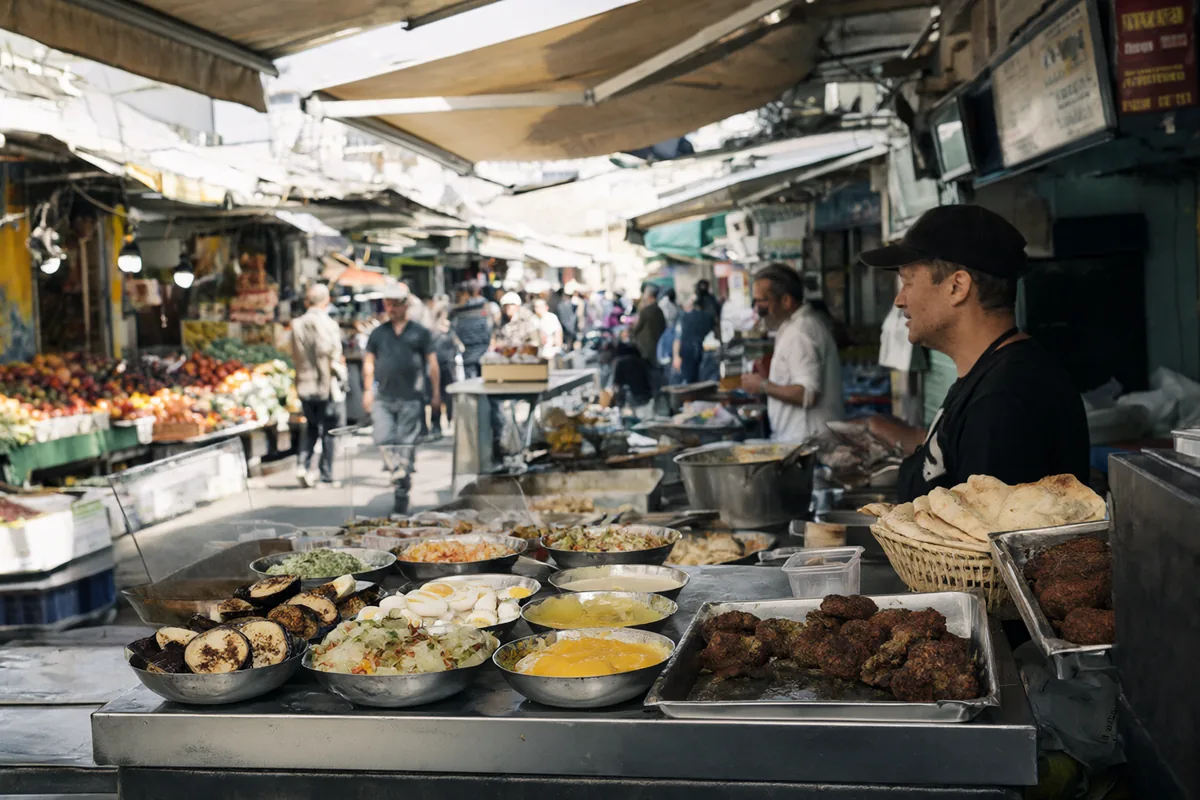
Tel Aviv is Israel's restaurant capital, with one of the highest concentrations of vegan and vegetarian restaurants in the world, a strong café culture and a busy nightlife. The Carmel Market (Shuk HaCarmel) is the place to start, with stalls selling produce, spices and pastries and small counters serving sabich, falafel, hummus and fresh juice. The streets of the Kerem HaTeimanim (Yemenite Quarter) next to it have long-established Yemenite restaurants. The Levinsky Market in south Tel Aviv is known for spice shops, Persian and Balkan delis, and dried fruit.
For sit-down meals in Tel Aviv, Rothschild Boulevard, Dizengoff Street and the old neighbourhood of Neve Tzedek have cafés and restaurants, while Florentin in the south is younger and cheaper, with bars and street food. The Sarona Market is a large indoor food hall, and the Tel Aviv Port has a farmers' market and waterfront restaurants. Most of Tel Aviv stays open on Shabbat, and Saturday brunch by the beach is a local ritual.
Where to eat in Jaffa
Jaffa, the ancient port at the southern end of Tel Aviv, has been inhabited for thousands of years and is home to both Arab and Jewish communities. It is one of the best places in Israel to eat hummus: Jaffa's well-known hummus restaurants serve it warm with ful, egg and raw onion, and many close in the afternoon. Arab bakeries in Jaffa sell sesame bread, sambusak (stuffed pastries) and za'atar flatbreads, some open around the clock.
The streets around the Jaffa Flea Market (Shuk HaPishpeshim) are full of restaurants, cafés and bars, busy at night, and the renovated Jaffa Port has fish restaurants by the water. The stone lanes of Old Jaffa, on the hill above, are worth a walk at sunset, with views back along the coast to Tel Aviv. Much of Jaffa is open on Saturday, which makes it a good choice when other places close for Shabbat.
Where to eat in Haifa
Haifa, the port city on the slopes of Mount Carmel, is known for its mixed Jewish and Arab population, and much of the city stays open on Shabbat. The Arab neighbourhood of Wadi Nisnas has a small market with falafel, shawarma, knafeh and spice shops, and its streets fill with food stalls during the winter festival season. The German Colony, at the foot of the Bahá'í Gardens on Ben Gurion Avenue, is lined with restaurants and cafés with views up the terraced gardens.
The Talpiot Market in the Hadar district is Haifa's historic covered market, and the area around it has small restaurants and bars. On Mount Carmel above the city, the Druze towns of Daliyat al-Karmel and Isfiya are known for Druze cooking: large, thin pitas cooked on a domed griddle and filled with labneh (strained yoghurt) and za'atar, stuffed vegetables, and generous mezze. Haifa makes a good base for exploring the north.
Where to eat in Akko
Akko, also called Acre, is a walled port city north of Haifa whose Old City is a UNESCO World Heritage Site, with Crusader halls, Ottoman caravanserais and a fishing harbour. Akko's hummus is famous across the country, and the small hummus restaurants in the Old City are busy from the morning until they run out. The old market in the Old City sells fish, spices, fruit and sweets, including knafeh and other Arab pastries.
Akko is also a good place for fish and seafood. Restaurants by the harbour and along the sea walls serve grilled fish, calamari and prawns, often with a spread of mezze, and the setting at sunset is hard to beat. Most of Akko's Old City is open on Saturday. Allow time to see the Knights' Halls and the Templar Tunnel before lunch.
Where to eat in Nazareth
Nazareth, in the Galilee, is the largest Arab city in Israel, with Christian and Muslim communities, and it is one of the best places in the country for Arab cooking. Around the Old Market and the Basilica of the Annunciation, restaurants serve mezze, grilled meats, stuffed vegetables, musakhan and other Galilean dishes, and sweet shops sell knafeh warm from the oven. Old spice and coffee shops roast and grind to order.
Nazareth is busy on Saturdays, when many Israelis come to eat, and some businesses close on Sundays. During Ramadan, some restaurants close in the daytime and the evenings are lively after sunset. From Nazareth, it is a short drive to the Sea of Galilee, where restaurants around Tiberias serve "St Peter's fish", a tilapia grilled or fried whole, and to Druze and Arab villages known for home cooking.
Where to eat in Eilat
Eilat, at the southern tip of Israel on the Red Sea, is a resort town for diving, snorkelling and winter sun. Most of its food is aimed at holidaymakers: large hotel breakfast buffets, seafood restaurants, grills and international chains along the promenade by the beach. Eilat is a VAT-free zone, so some prices can be slightly lower than in the rest of the country.
For more local food, look for the shawarma, falafel and hummus shops in the town centre, away from the seafront, and for restaurants serving Yemenite, Moroccan and Middle Eastern home cooking. Eilat is very hot in summer, so locals eat late and outdoors in the evening. It is also close to the Jordanian border, and some visitors cross for a day trip to Petra.
Vegetarian, vegan and allergy tips
Israel is one of the easiest countries in the world for vegetarians and vegans. Hummus, falafel, sabich and salads are meat-free, many restaurants label vegan dishes, and Tel Aviv has a large number of fully vegan restaurants. Kosher dairy (halavi) restaurants serve no meat, and kosher meat (bsari) restaurants serve no dairy, which helps people avoiding either. The words to look for are tzimhoni (vegetarian) and tivoni (vegan).
For allergies, the biggest risk is sesame, which is in tahini, hummus, halva and many breads and pastries. Nuts appear in sweets, malabi and some salads, and gluten in pita, laffa, bourekas and couscous. Gluten-free is lelo gluten (ללא גלוטן), and many restaurants understand it. A parve dessert in a meat restaurant may be made with non-dairy substitutes such as soya or coconut. Our guide to eating abroad with food allergies explains how to describe an allergy clearly.
Useful Hebrew phrases for ordering
English is widely spoken in Israel, but a few words of Hebrew are always welcome. Many phrases change with the gender of the speaker or listener, shown here as man / woman.
שלום Shalom: "Hello"
אפשר תפריט באנגלית? Efshar tafrit be-anglit?: "Could I have a menu in English?"
מה אתה ממליץ? Ma ata mamlitz?: "What do you recommend?" (to a woman: ma at mamlitza?)
אני רוצה את זה Ani rotze / rotza et ze: "I would like this" (man / woman)
אני צמחוני / צמחונית Ani tzimhoni / tzimhonit: "I am vegetarian" (man / woman)
יש לי אלרגיה ל... Yesh li alergya le...: "I have an allergy to..."
חשבון, בבקשה Heshbon, bevakasha: "The bill, please"
תודה, היה טעים מאוד Toda, haya ta'im me'od: "Thank you, it was delicious"
How swap.menu helps you eat in Israel
A market stall or bakery in Israel may have its menu board in Hebrew only, without vowels, and even English menus use names like sabich, jachnun, kubbeh and me'orav that mean nothing to most visitors. Photograph the menu with swap.menu and every dish appears in your language with a short description, so you know that amba is a mango pickle and that a halavi café will not have meat. Every price is converted from shekels to your home currency, so you can see whether that Tel Aviv brunch is as expensive as it looks.
Tap the dishes you want, add a note such as "no sesame" or "not spicy", typed or spoken, and swap.menu translates your order into Hebrew, or into Arabic in Nazareth or Akko. Show the waiter your phone, or let them scan the QR code and read your order on their own screen. You can try it now on a sample menu with the free demo, or see travel pass prices.
Off to Israel? Your first 3 menu scans are free, and a travel pass starts from $4.99 with nothing that renews.
Start free with 3 scansIsrael food FAQ
Do you tip in restaurants in Israel?
Yes. Service is not included, and 10 to 15 percent is expected in sit-down restaurants and cafés, with 12 percent a common choice. No tip is needed at counters or market stalls.
What food is Israel famous for?
Hummus, falafel, sabich, shakshuka and shawarma are the best known, along with the large Israeli breakfast. Dishes from Jewish communities around the world, such as jachnun, kubbeh and bourekas, are also part of everyday eating.
Are restaurants open on Shabbat in Israel?
Kosher restaurants close from Friday afternoon until Saturday night, and much of Jerusalem is quiet. In Tel Aviv, Jaffa, Haifa, Akko and Nazareth, many restaurants stay open, and Saturday brunch is popular in Tel Aviv.
What does kosher mean on a menu?
A kosher restaurant follows Jewish dietary law and displays a certificate called a hashgacha. Kosher places are either meat (bsari), serving no dairy, or dairy (halavi), serving no meat.
Is tap water safe to drink in Israel?
Yes, tap water in Israel is safe to drink. Some people prefer filtered or bottled water for the taste.
How can I read a Hebrew menu in Israel?
Most restaurant menus are in Hebrew and English, but market stalls and bakeries often use Hebrew only. Photograph the menu with swap.menu to have every dish explained in your language, prices converted from shekels and your order translated into Hebrew.
Travelling further in the region? Read our food guides for nearby countries:
Or browse every travel food guide.