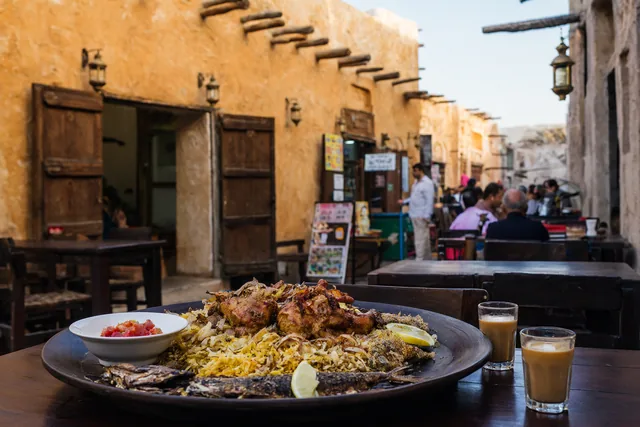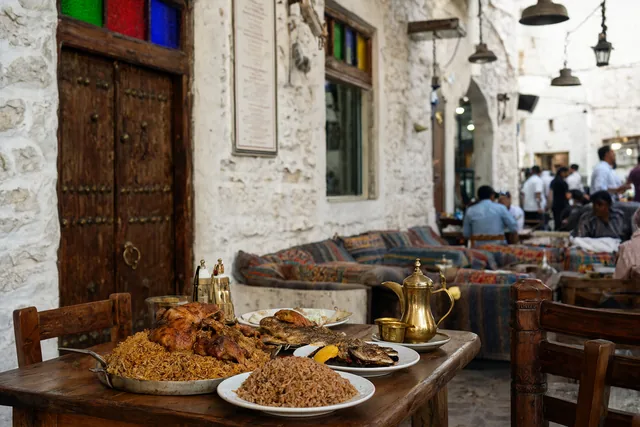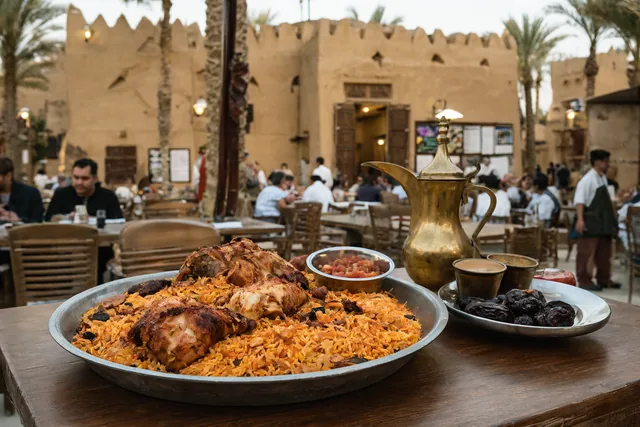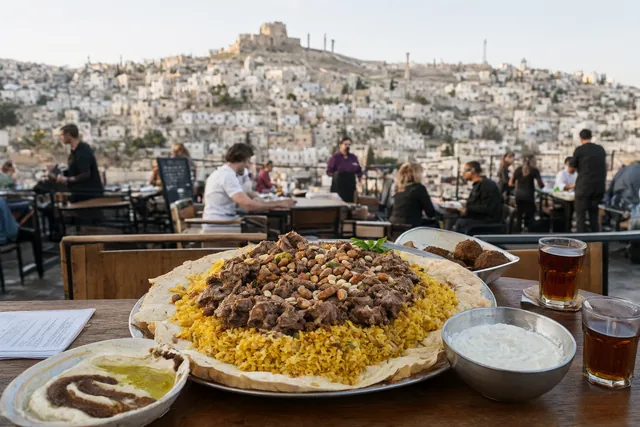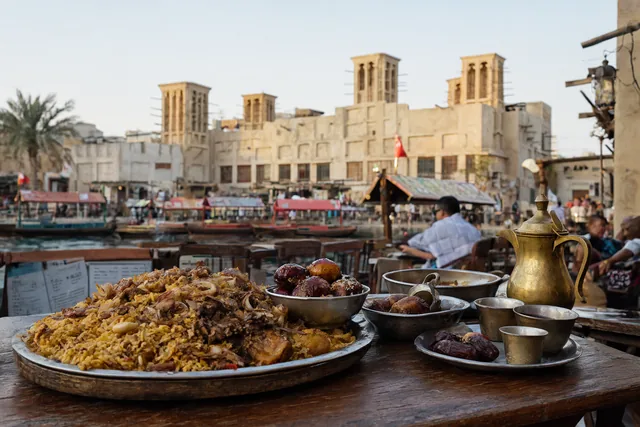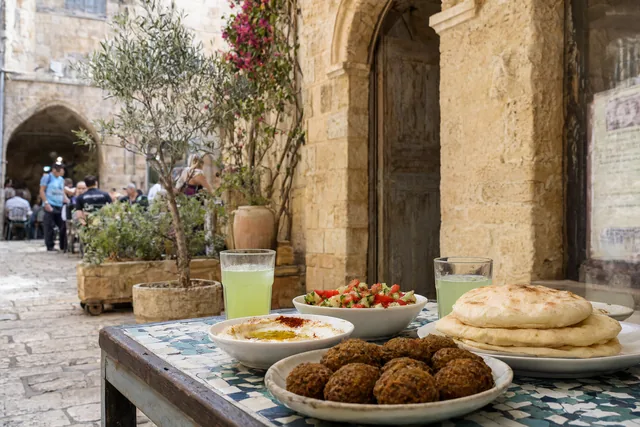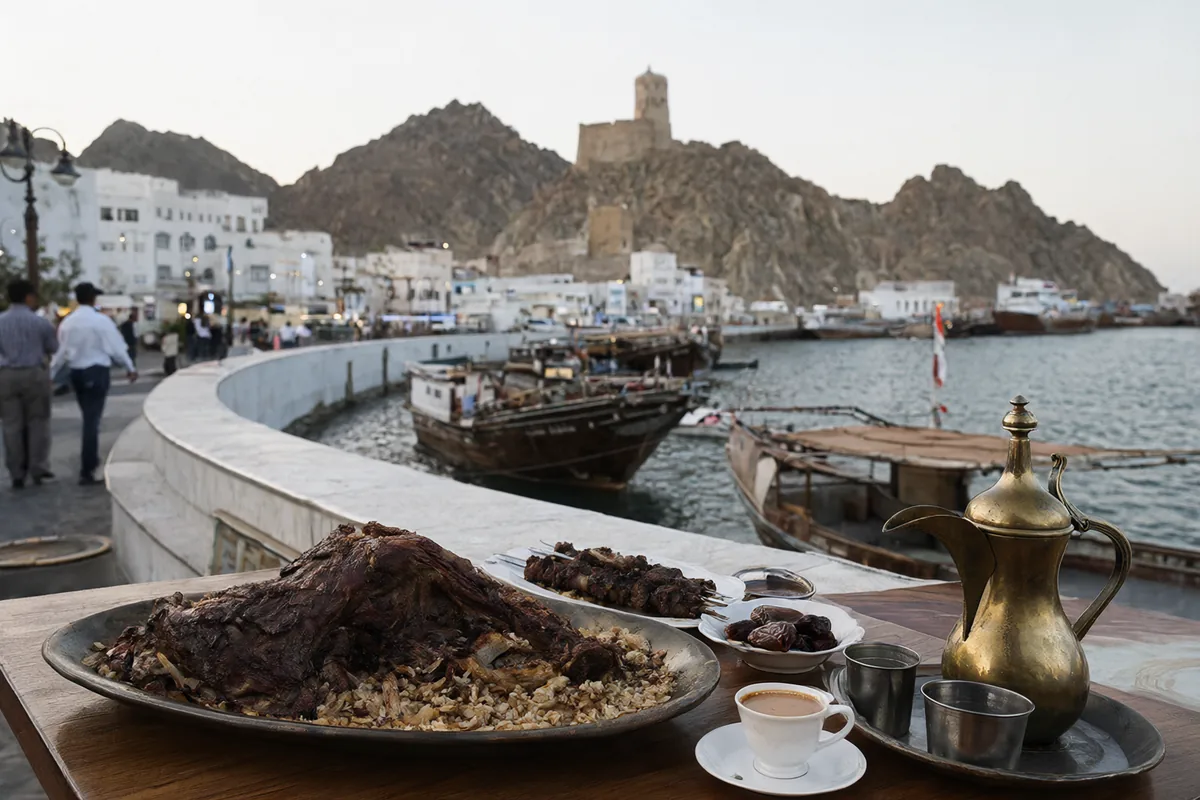
Oman is the Gulf country that feels most traditional, and its food matches: slow-roasted meat for festivals, fish straight from the boat, dates and coffee offered to every guest, and halwa sold from copper pots in the souq. This Oman food guide covers the dishes to know, the Arabic words on a menu, how to read prices in rials and baisa, tipping, alcohol and Ramadan rules, then goes destination by destination through where to eat in Muscat, Nizwa, Jebel Akhdar, Sur, Wahiba Sands and Salalah. Omani home cooking is not always easy to find in restaurants, so this guide also points you to the places that serve it.
What to eat in Oman: 11 dishes to know
Omani cooking uses many of the same ingredients as the rest of the Gulf, but with its own spice blends, more fish, and strong links to India, Iran and East Africa through centuries of sea trade. These are the dishes worth ordering.
- Shuwa: lamb or goat marinated in a paste of spices, wrapped in banana or palm leaves and slow-cooked in an underground pit for a day or more. The great festival dish, cooked at Eid and served on rice.
- Mishkak: skewers of marinated meat, usually beef, grilled over charcoal and served with a tamarind and chilli sauce. Oman's favourite street food in the evening.
- Qabuli: spiced rice cooked with chicken or lamb, onions, raisins and chickpeas, the everyday rice dish in Omani restaurants.
- Mashuai: a whole kingfish grilled or spit-roasted and served with lemon rice, a coastal speciality.
- Harees: wheat and meat cooked slowly until smooth, topped with ghee, served in Ramadan and at weddings.
- Arsia: rice and meat cooked and pounded together, a mild, creamy dish served at Eid and celebrations.
- Madrooba: rice or wheat cooked with chicken or salted fish and beaten smooth, a coastal comfort dish.
- Khubz rakhal: a very thin, crisp flatbread cooked on a hot iron plate, eaten at breakfast with honey, cheese or egg.
- Omani halwa: a dense, glossy sweet made from sugar, ghee, starch, rose water and saffron, often with nuts, cooked for hours in copper pots. It is served with coffee to guests.
- Kahwa and dates: Omani coffee is lightly roasted and flavoured with cardamom, sometimes rose water or saffron, poured into small cups and always served with dates. Accepting a cup is good manners.
- Lokhemat: small fried dough balls soaked in syrup or date syrup, the Omani version of the Gulf's luqaimat.
Omanis also love shawarma, and many cafeterias serve it in a roll with fries and garlic sauce. In the south, around Salalah, fresh coconut water, papaya and bananas from local plantations are a highlight.
How to read an Arabic menu
Restaurants in Muscat usually have menus in Arabic and English, but cafeterias, coffee shops and restaurants in the interior may write specials, prices or the whole board in Arabic only. Arabic is written from right to left. These are the words you will see most often.
| Arabic | Romanised | Meaning |
|---|---|---|
| شواء | shuwa | Slow-roasted, pit-cooked lamb or goat |
| مشاكيك | mishkak | Grilled meat skewers |
| لحم | lahm | Meat |
| دجاج | dajaj | Chicken |
| سمك | samak | Fish |
| كنعد | kanad | Kingfish, the favourite Omani fish |
| عيش | eish | Rice |
| خبز | khubz | Bread |
| مشوي | mashwi | Grilled |
| حلوى | halwa | Omani halwa (sweet) |
| قهوة | qahwa / kahwa | Coffee, Omani style |
| ريال | rial | Omani rial |
| بيسة | baisa | Baisa: there are 1,000 baisa in a rial |
| نباتي | nabati | Vegetarian |
The most common mistake visitors make in Oman is with prices. The rial is divided into 1,000 baisa, so prices are written with three decimal places: 1.500 means one and a half rials, not one rial and five baisa, and 0.300 is 300 baisa. A coffee shop board may show prices in baisa only, such as "300".
Because Omani prices have three decimal places, a menu reading "4.750" can look like a typo. swap.menu reads rials and baisa correctly and converts every price to your home currency, so you know a plate of mishkak is cheap and a hotel seafood platter is not.
Tipping, VAT and paying the bill
A 5 percent VAT applies to restaurant bills in Oman. Hotel restaurants and some upmarket venues also add a service charge and other government fees, often shown as "++" or "prices are subject to service charge and taxes". Local restaurants and coffee shops usually charge the menu price. Our guide to tax and service charges on menus explains how these lines work.
Tipping is not expected in Oman, but it is appreciated. Around 10 percent in sit-down restaurants where no service charge has been added is generous, and rounding up in cafés is normal. Guides and drivers on desert or mountain trips usually expect a tip.
The currency is the Omani rial (OMR, RO), one of the highest-value currencies in the world. Cards are accepted in hotels, malls and most restaurants in Muscat, but carry cash for souqs, coffee shops, fuel stations in the interior and small restaurants in towns. If a card machine offers to charge you in your home currency, decline and pay in rials: our guide to paying in local currency explains why.
Lunch is the main meal, eaten from about 1pm to 3pm, and dinner from 8pm onwards. The weekend is Friday and Saturday, and many restaurants and shops close around Friday midday prayers. Alcohol is available only in licensed hotel restaurants and bars and a few licensed restaurants, for people aged 21 and over, and it is not served at all during Ramadan. During Ramadan, most restaurants are closed in daylight hours, and eating, drinking or smoking in public during the day is not permitted. After sunset, families break the fast with dates, water and coffee, and restaurants open for iftar and stay busy late into the night.
Where to eat in Oman, destination by destination
Oman is a road-trip country, and the food changes from the coast to the mountains, the desert and the green south. Jump to a destination:
Where to eat in Muscat
Muscat stretches along the coast between mountains and sea, and its best eating area is Muttrah, the old port. In the morning, the Muttrah Fish Market, in a modern building on the waterfront, sells kingfish, tuna, prawns and lobster, and in the evening the Muttrah Corniche fills with families walking by the harbour and stalls grilling mishkak. The covered Muttrah Souq sells frankincense, dates, spices and Omani halwa, and its small cafés serve coffee and fresh juice.
For Omani food in Muscat, look for restaurants that offer traditional floor seating in private rooms, where you can order shuwa, qabuli, mashuai and harees. The beachfront at Shatti Al Qurum and the Qurum area have cafés and international restaurants, and Al Khuwair has a wide range of mid-priced options. Ruwi, the old commercial centre, is the place for inexpensive Indian, Pakistani and Kerala-style food. Muscat is spread out, so plan meals by area and take a taxi between them.
Where to eat in Nizwa
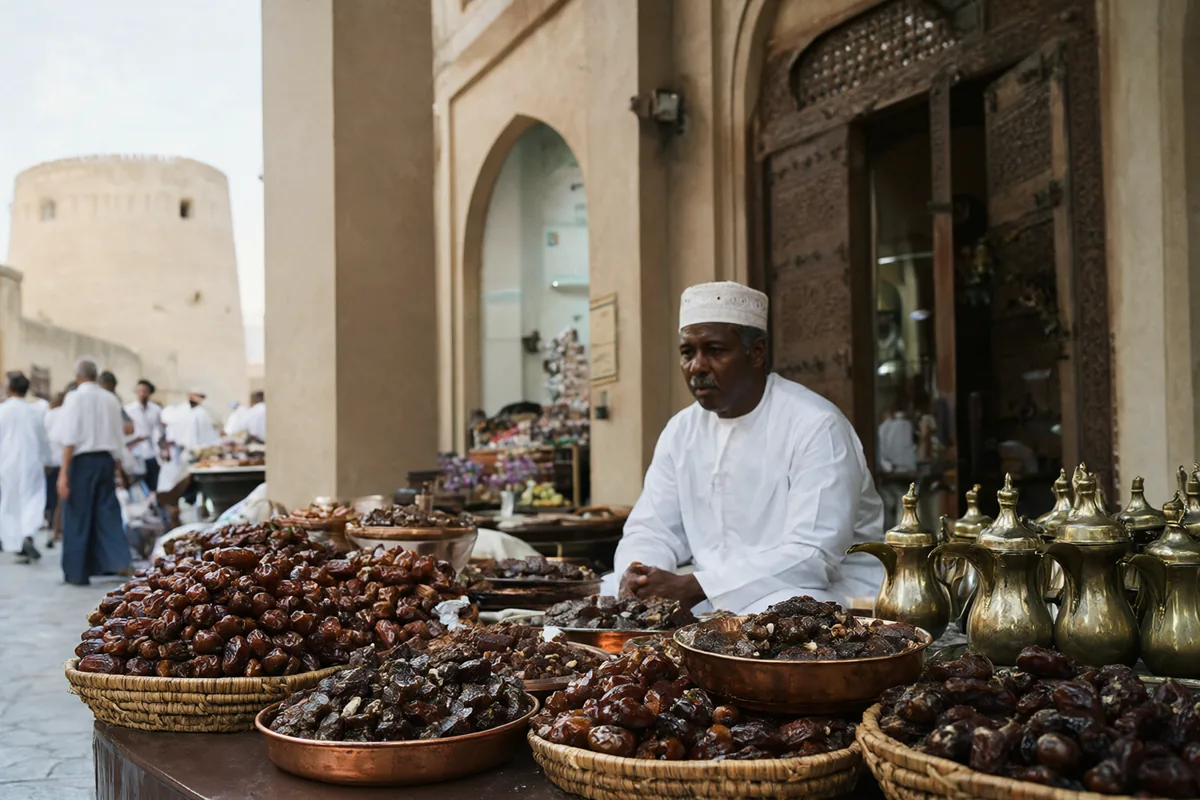
Nizwa, the old capital of the interior, is about two hours from Muscat, under the Hajar mountains, and it is one of the best places in Oman for traditional food culture. The restored Nizwa Souq, beside the round tower of Nizwa Fort, has separate halls for dates, fish, meat and vegetables, and its shops sell Omani halwa, coffee, honey and spices. Buy a box of dates and a little halwa, and you will often be offered a cup of kahwa to go with them.
On Friday mornings, from early until about 9am, the Nizwa livestock market takes place outside the souq, where goats and cattle are paraded in a circle and auctioned. It is a good time to visit, and the cafés nearby serve tea and breakfast. Restaurants in Nizwa are mostly simple and local, serving Omani rice dishes, grilled meats and curries. During Eid, families in the villages around Nizwa cook shuwa in communal pits, a tradition that continues across the interior.
Where to eat in Jebel Akhdar
Jebel Akhdar, the "Green Mountain", rises above Nizwa to around 2,000 metres, and its cool climate allows crops that cannot grow on the plains. Terraced villages on the edge of the Saiq Plateau grow pomegranates, which ripen in late summer, along with walnuts, apricots, peaches and roses. In spring, usually around April, the roses are harvested and distilled into rose water in small village workshops, which is used in Omani halwa and coffee.
Food on Jebel Akhdar is mostly at hotels and guesthouses, with a few small local restaurants and roadside stalls selling fruit and rose water in season. The road up is steep, and a four-wheel-drive vehicle is required at the police checkpoint at the bottom. Bring snacks and water for the walks between the terraced villages, and plan to eat dinner where you are staying.
Where to eat in Sur
Sur, on the east coast, is a historic port famous for building wooden dhows, and boatbuilders still work in the yard by the lagoon. It is a fishing town, and the food is seafood: kingfish, tuna, prawns and squid, grilled, fried or cooked in curry with rice. The fish market by the harbour is busy in the morning, and simple restaurants in Sur serve the day's catch with rice and salad at low prices.
Most visitors pass through Sur on the coast road between Muscat and the turtle beaches at Ras al Jinz, where green turtles nest, or on the way to Wadi Shab and Wadi Tiwi. Sur makes a good lunch or overnight stop, and the waterfront by the lighthouse and the old watchtowers is pleasant in the evening. Restaurant choice in Sur is limited compared with Muscat, so eat simply and enjoy the fish.
Where to eat in Wahiba Sands
The Wahiba Sands, also called the Sharqiya Sands, is a sea of red-orange dunes a few hours south of Muscat. Most visitors stay at desert camps, which include dinner and breakfast, usually a buffet of grilled meats, rice, curries, salads and bread, and sometimes a Bedouin-style dinner around a fire. On arrival, you will almost certainly be welcomed with kahwa and dates, an essential Bedouin tradition.
The towns on the edge of the sands, such as Bidiyah and Al Mintirib, have small restaurants and cafeterias serving rice, curry, grilled chicken and shawarma, and they are the last chance to buy snacks and water before heading into the dunes. Some tours include a visit to a Bedouin family's home for coffee. Nights in the Wahiba Sands are cold in winter, so the hot tea after dinner is welcome.
Where to eat in Salalah
Salalah, the capital of the southern Dhofar region, is very different from the rest of Oman. From late June to early September, the khareef monsoon brings mist and drizzle that turn the mountains green, and Gulf visitors arrive in large numbers to escape the heat. Salalah's plantations grow coconuts, bananas and papayas, and the roadside fruit stalls near the coast sell fresh coconut water, sugarcane and fruit all year round.
Dhofari food has strong links to Yemen and East Africa. Look for grilled meats, camel dishes, fresh fish and mishkak, and for the city's many South Asian and Yemeni restaurants. The Al Haffa Souq, near the sea, is the place to buy frankincense, which grows in the Dhofar hills, along with perfumes and local products. During the khareef, Salalah is crowded and prices rise, so book ahead, and expect festivals with food stalls in the evenings.
Vegetarian, vegan and allergy tips
Traditional Omani food centres on meat and fish, and rice dishes are often cooked in meat stock, so vegetarians do best in Indian restaurants, which are found in every town, and in Lebanese restaurants, which serve hummus, falafel, tabbouleh and other meat-free mezze. Breakfast of khubz rakhal with honey and cheese, dates and fruit is also easy. The Arabic word for vegetarian is nabati, and "without meat" is bidoon lahm.
For allergies, watch for nuts in Omani halwa, rice dishes and desserts, sesame in tahini and breads, dairy and ghee in harees and sweets, and gluten in harees and bread. In the interior, staff may not be used to allergy requests, so be clear and specific. Our guide to eating abroad with food allergies explains how to describe an allergy clearly.
Useful Arabic phrases for ordering
English is widely spoken in Muscat and tourist areas, but less so in the interior. Omanis are known for their politeness, and a few words of Arabic are warmly received.
السلام عليكم As-salaam alaikum: "Peace be upon you", the standard greeting
ممكن المنيو؟ Mumkin al-menu?: "Could I have the menu?"
أبغى هذا Abgha hadha: "I want this" (pointing)
بدون حار Bidoon harr: "Not spicy"
أنا نباتي / نباتية Ana nabati / nabatiya: "I am vegetarian" (man / woman)
عندي حساسية من المكسرات Indi hasasiya min al-mukassarat: "I am allergic to nuts"
الحساب لو سمحت Al-hisaab law samaht: "The bill, please"
شكراً، لذيذ جداً Shukran, ladheedh jiddan: "Thank you, very tasty"
How swap.menu helps you eat in Oman
An Omani coffee shop or rice restaurant may have a menu board in Arabic only, with dishes like arsia, qabuli and madrooba and prices in rials with three decimal places. Photograph it with swap.menu and every dish appears in your language with a short description, so you know that shuwa is pit-roasted lamb and mishkak are skewers before you order. Every price is converted from rials and baisa to your home currency, and we flag service charges and VAT on hotel menus.
Tap the dishes you want, add a note such as "no nuts" or "not spicy", typed or spoken, and swap.menu translates your order into Arabic. Show the waiter your phone, or let them scan the QR code and read your order on their own screen. You can try it now on a sample menu with the free demo, or see travel pass prices.
Off to Oman? Your first 3 menu scans are free, and a travel pass starts from $4.99 with nothing that renews.
Start free with 3 scansOman food FAQ
Do you tip in restaurants in Oman?
Tipping is not expected, but it is appreciated. Around 10 percent in sit-down restaurants without a service charge is generous, and rounding up in cafés is normal. Guides and drivers usually expect a tip.
What food is Oman famous for?
Shuwa, lamb slow-cooked in an underground pit, is the most famous Omani dish. Mishkak skewers, qabuli rice, mashuai kingfish, Omani halwa and kahwa coffee with dates are other classics.
Can you drink alcohol in Oman?
Alcohol is served only in licensed hotel restaurants, bars and a few licensed restaurants, to people aged 21 and over. It is not served during Ramadan, and it is not available in local restaurants.
How do prices work in Oman?
The Omani rial is divided into 1,000 baisa, so prices are written with three decimal places. A price of 2.500 means two and a half rials, and 0.500 means 500 baisa.
Is tap water safe to drink in Oman?
Tap water in Muscat is desalinated and treated, but most residents and visitors drink bottled water, which is cheap and sold everywhere. In rural areas, stick to bottled water.
How can I read an Arabic menu in Oman?
Learn a few words such as lahm, dajaj and samak, and remember that prices have three decimal places. Or photograph the menu with swap.menu, which explains every dish in your language, converts rials and baisa to your currency and translates your order into Arabic.
Travelling further in the Gulf? Read our food guides for nearby countries:
- United Arab Emirates food guide
- Qatar food guide
- Saudi Arabia food guide
- Bahrain food guide
- India food guide
Or browse every travel food guide.