Bahrain is a small island kingdom, joined to Saudi Arabia by a causeway, with a long history as a pearling and trading centre. Its food is the cooking of the Gulf coast, built on rice, fish, dates and spice, shaped by centuries of contact with Persia, India and Iraq, and it has some of the most relaxed dining rules in the region. This Bahrain food guide covers the dishes to know, the Arabic words on a menu, the VAT and service charge on your bill, alcohol and Ramadan customs, then goes area by area through where to eat in Manama, Muharraq, Adliya, Juffair and Budaiya. Bahrain is small enough to eat your way across in a weekend.
What to eat in Bahrain: 12 dishes to know
Bahraini food shares a lot with the rest of the Gulf, but it has its own specialities, especially its sweet rice, its fish and its famous halwa. These are the dishes worth seeking out.
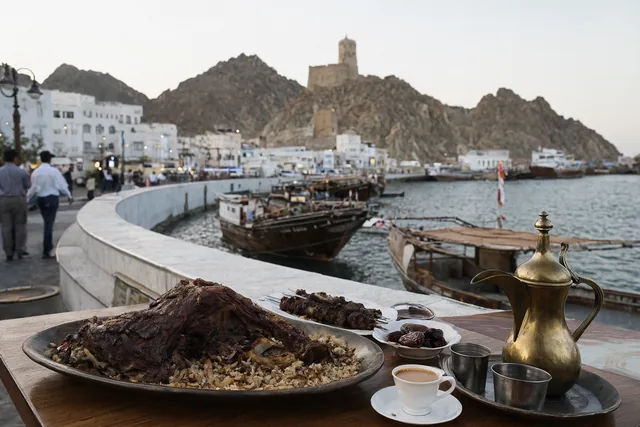
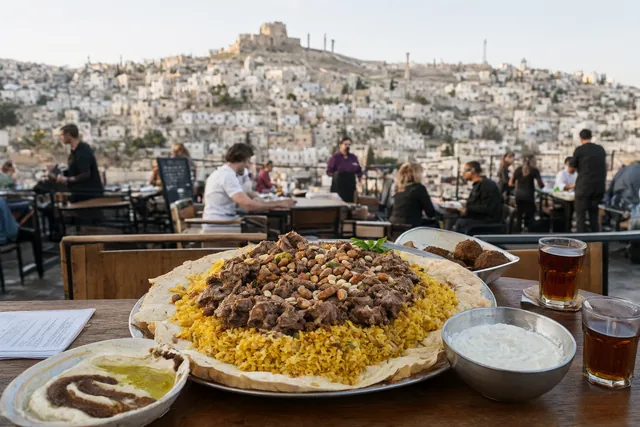
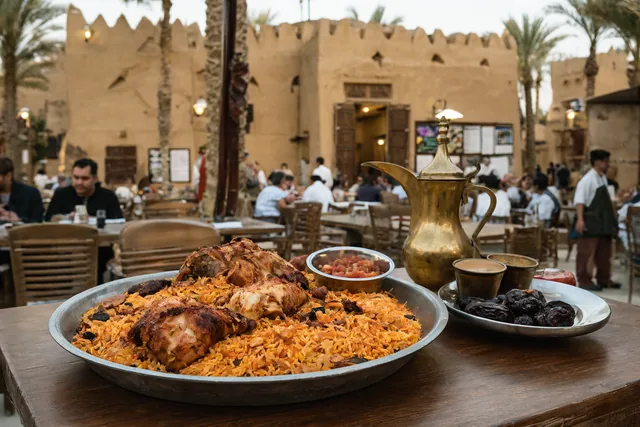
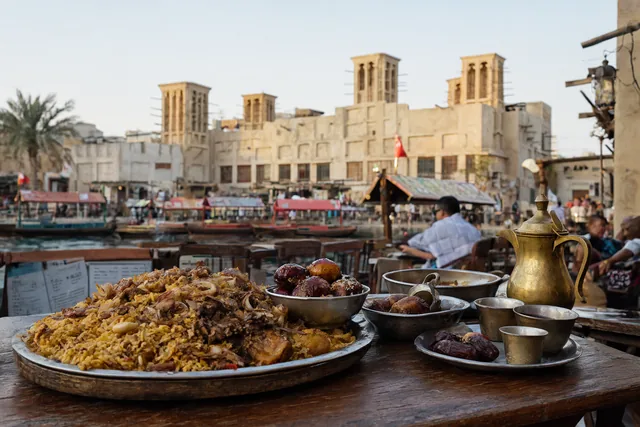
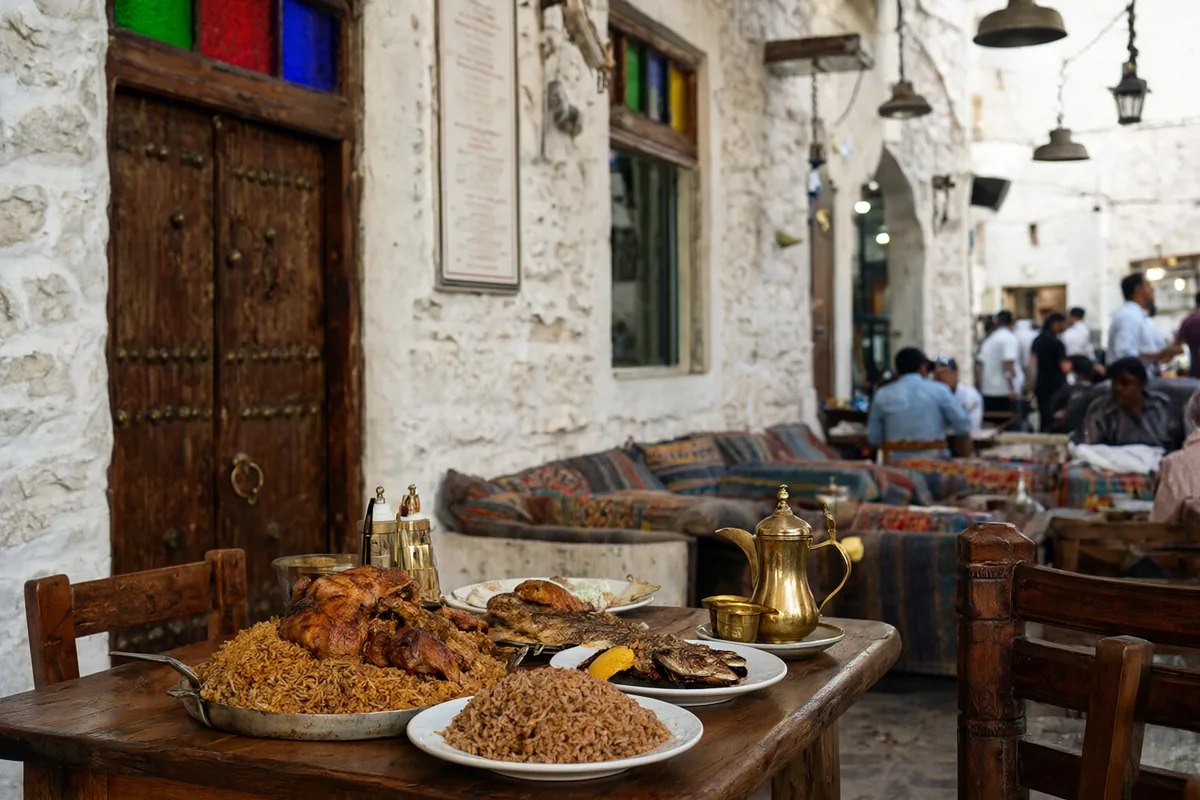
- Machboos: the national dish, rice cooked with spiced chicken, lamb or fish, dried black lime and a Bahraini spice blend, served on a large platter.
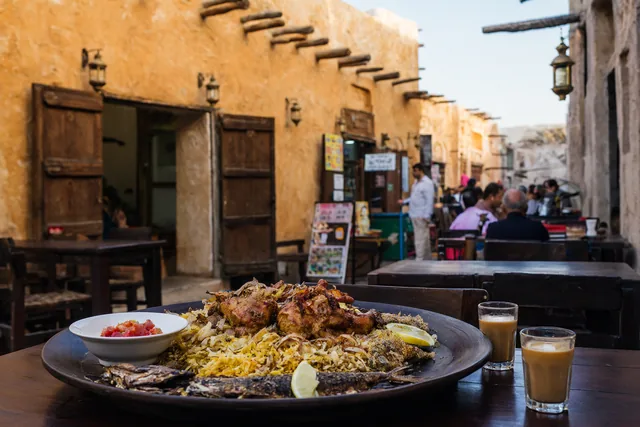
- Muhammar: rice sweetened with date syrup or sugar and flavoured with cardamom, saffron and rose water. It is traditionally served with grilled or fried fish.
- Safi: rabbitfish, the fish Bahrainis love most, fried or grilled whole and eaten with muhammar.
- Balaleet: sweet saffron vermicelli topped with an omelette, the classic Bahraini breakfast.
- Harees: wheat and meat cooked slowly until smooth, topped with ghee and sugar or cinnamon, especially in Ramadan.
- Qoozi: a whole lamb stuffed with rice, eggs, nuts and spices and slow-roasted, served at weddings and feasts.
- Jesheed: minced baby shark cooked with onion, garlic and spices, served with rice.
- Samboosa: small fried pastries filled with spiced meat, cheese or vegetables, a Ramadan essential.
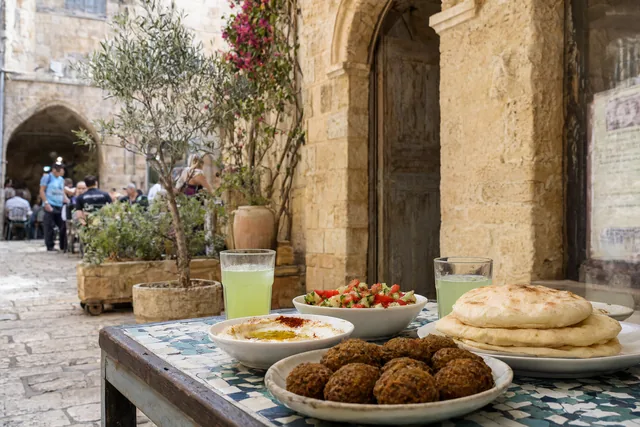
- Nakhi: boiled chickpeas with cumin, salt and lemon, a cheap snack sold in cups, especially in winter and during Ramadan.
- Khubz Bahraini: large, thin flatbread slapped onto the walls of a clay oven at small bakeries, eaten hot with cheese, egg or date syrup.
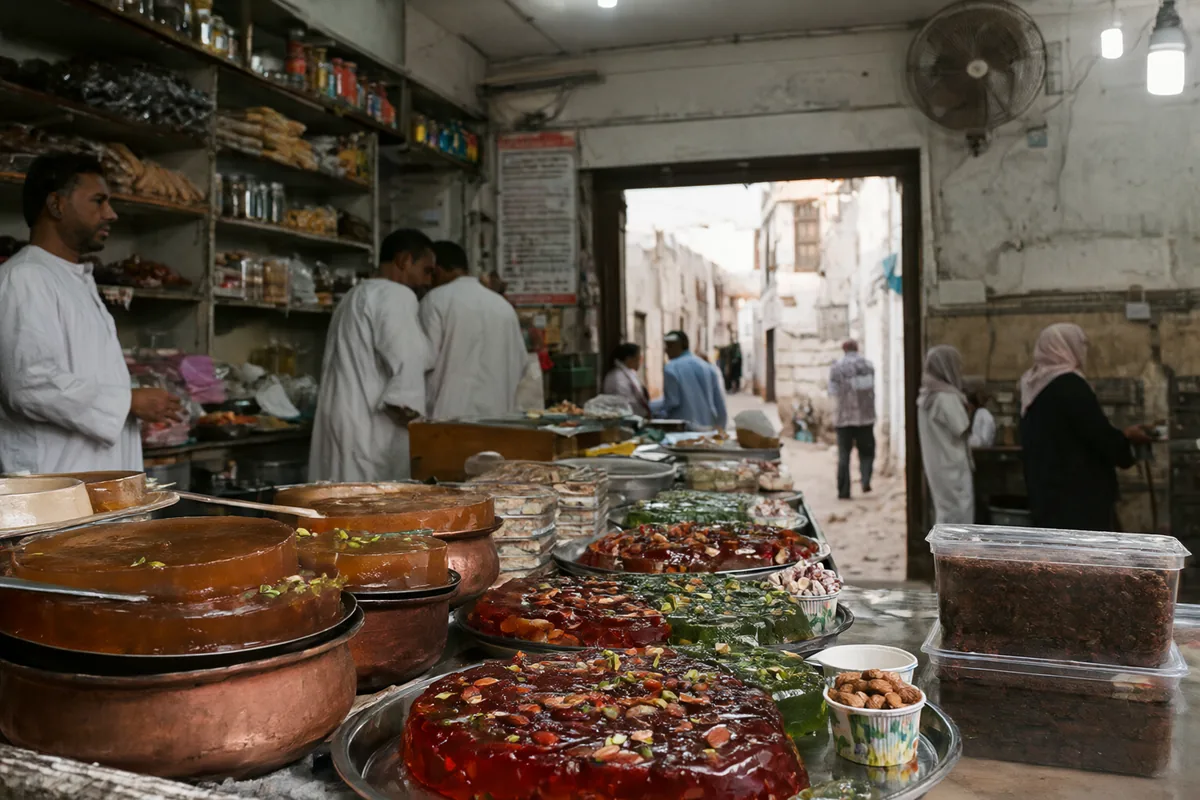
- Halwa Bahraini: a dense, jelly-like sweet made with starch, sugar, ghee, saffron, rose water and nuts, cooked for hours in copper pots. Bahrain's most famous food gift.
- Gers ogaily: a light sponge cake with saffron and cardamom, served with tea and coffee.
To drink, Bahrainis take gahwa, light Arabic coffee with cardamom, served with dates, and chai haleeb or karak, sweet milky tea, from cafés and roadside stalls.
How to read an Arabic menu
Most restaurant menus in Bahrain are in English and Arabic, and English is widely spoken. Small bakeries, traditional cafés and stalls in the souqs may still show prices or specials in Arabic only. Arabic is written from right to left. These are the words you will see most often.
| Arabic | Romanised | Meaning |
|---|---|---|
| مجبوس | machboos | Spiced rice with meat, chicken or fish |
| محمر | muhammar | Sweet rice, served with fish |
| صافي | safi | Rabbitfish |
| هامور | hamour | Grouper |
| روبيان | rubyan | Prawns |
| لحم | lahm | Meat |
| دجاج | dajaj | Chicken |
| عيش | eish | Rice in Gulf Arabic |
| خبز | khubz | Bread |
| مشاوي | mashawi | Grills |
| حلوى | halwa | Bahraini halwa (sweet) |
| دينار / فلس | dinar / fils | Bahraini dinar / fils (1,000 fils to the dinar) |
| حلال | halal | Prepared according to Islamic dietary law |
| نباتي | nabati | Vegetarian |
The Bahraini dinar is divided into 1,000 fils, so prices are written with three decimal places: BD 2.500 is two and a half dinars, and 0.300 is 300 fils. Some licensed restaurants serve pork, and it must be clearly marked on the menu.
The dinar is one of the highest-value currencies in the world, so a Bahraini price that looks small, such as 6.500, can be a lot in your own money. swap.menu reads dinars and fils correctly, converts every price to your home currency and flags any service charge and VAT lines.
VAT, service charge, tipping and paying
A 10 percent VAT applies to restaurant bills in Bahrain. Hotel restaurants and some upmarket venues also add a service charge and other fees, usually shown on the menu as "++" or in the small print. Casual cafés and local restaurants generally charge the price shown. Our guide to tax and service charges on menus explains how these lines work.
Tipping is not compulsory in Bahrain, but it is common. Where no service charge has been added, around 10 percent is normal in sit-down restaurants, and many people leave a little cash for the waiter even when it has. Rounding up is enough in cafés.
The currency is the Bahraini dinar (BHD, BD). Cards and contactless payments are accepted almost everywhere, but carry a little cash for the souqs, bakeries and small cafés. If a card machine offers to charge you in your home currency, decline and pay in dinars: our guide to paying in local currency explains why.
Lunch is from about 1pm to 3pm, and dinner starts around 8pm and runs late, especially on Thursday and Friday nights. The weekend is Friday and Saturday, and weekend brunches in hotels are popular with residents and with visitors from Saudi Arabia, who cross the causeway in large numbers.
Alcohol is more widely available in Bahrain than in most of the Gulf, served in licensed hotels, bars and many restaurants, especially in Adliya and Juffair. During Ramadan, most bars close and alcohol service is restricted, many restaurants outside hotels open only from sunset, and eating, drinking or smoking in public during daylight hours is disrespectful. After sunset, Ramadan tents, iftar buffets and late-night cafés make the evenings lively.
Where to eat in Bahrain, area by area
Bahrain is small, and most of its restaurants are in and around Manama and the neighbouring island of Muharraq. Jump to an area:
Where to eat in Manama
Manama, the capital, is where to start. Walk through Bab Al Bahrain, the old gateway, into the Manama Souq, a maze of lanes selling spices, textiles, gold and perfume, with small cafés and restaurants tucked between the shops. This is the place for cheap Bahraini breakfasts, samboosa, karak, fresh juice and Indian vegetarian food: Manama has one of the oldest Indian communities in the Gulf, and some of its small vegetarian restaurants have served the souq for generations.
The Manama Central Market sells fish, meat, dates and vegetables, and the fish hall is worth seeing in the morning, when the safi, hamour and prawns come in. For a sit-down meal, traditional Bahraini restaurants in Manama serve machboos, muhammar with fish and balaleet in rooms decorated with carved doors and old photographs. The modern districts of Seef and Bahrain Bay have malls, hotel restaurants and waterfront dining, and Gudaibiya has popular local eateries and cafés.
Where to eat in Muharraq
Muharraq, the island next to Manama and the old capital of Bahrain, is the best place to see and taste traditional Bahraini life. The Pearling Path, a UNESCO-listed trail through the old town, links the restored houses of pearl merchants, divers and boat captains, and several of them now have cafés serving Arabic coffee, tea and Bahraini sweets. The old Muharraq Souq is full of shops selling spices, sweets and household goods.
Muharraq is famous across the Gulf for its Bahraini halwa, made in long-established family shops that still cook it in large copper pots: try it warm, then buy a box to take home. The town also has traditional coffee houses where older men play dominoes, small bakeries making khubz Bahraini in clay ovens, and simple restaurants serving balaleet, beans and eggs for breakfast. Visit Arad Fort nearby, and stay in Muharraq for dinner, especially during Ramadan, when the old lanes are busy late into the night.
Where to eat in Adliya
Adliya, a neighbourhood in southern Manama, is Bahrain's best-known restaurant district. The area around Block 338 is full of restaurants, cafés, galleries and bars in low-rise buildings and converted villas, with outdoor seating, street art and a busy evening scene. Cuisines range from Bahraini and Lebanese to Japanese, Italian, Indian and modern international, and many places are licensed to serve alcohol.
Adliya is the place for a long dinner with friends, a coffee and dessert after a day of sightseeing, or a night out on Thursday or Friday, when the streets are crowded. Parking can be difficult at peak times, so take a taxi. In the cooler months, from about November to March, the terraces in Adliya are at their best.
Where to eat in Juffair
Juffair, on the east side of Manama, is a district of apartment towers and hotels with a large international population, partly because of the nearby naval base. It has the highest concentration of licensed bars, pubs and hotel restaurants in Bahrain, along with American diners, steakhouses, Filipino and Thai restaurants, and South Asian cafeterias. If you want a Western-style meal or a sports bar, Juffair is the place.
For something more local, the area near the Al Fateh Grand Mosque, one of the largest mosques in the region and open to visitors outside prayer times, has cafés and restaurants serving Gulf and Arab food. Juffair is busy late at night and on weekends, and prices range from cheap cafeterias to expensive hotel dining.
Where to eat in Budaiya
Budaiya, on the north-west coast, is greener and more rural than the rest of Bahrain, with date palm groves, farms and old villages. The Budaiya Highway is lined with cafés, bakeries and restaurants that are popular with families, and the area is a good place to find fresh dates, local vegetables and traditional bread. In the cooler months, a farmers' market at the Budaiya Botanical Garden brings local growers, honey, bread and home cooking together on weekend mornings.
Nearby are some of Bahrain's oldest sites, including the ancient Barbar Temple, so Budaiya works well as a half-day trip with lunch. Restaurants here are mostly casual and local, and many serve Bahraini breakfasts, grilled fish and machboos. Budaiya is about 20 to 30 minutes by car from central Manama.
Vegetarian, vegan and allergy tips
Bahrain is easier for vegetarians than its meat-heavy national dishes suggest. Manama has many Indian vegetarian restaurants, Lebanese places serve hummus, moutabal, tabbouleh, falafel and other meat-free mezze, and Adliya's restaurants usually have vegetarian and vegan options. Traditional rice dishes, though, are often cooked in meat stock. The Arabic word for vegetarian is nabati, and "without meat" is bidoon lahm.
For allergies, watch for nuts in halwa, rice dishes and sweets, sesame in tahini and breads, dairy and ghee in harees and desserts, gluten in harees, samboosa and bread, and shellfish in rice dishes and stews. Our guide to eating abroad with food allergies explains how to describe an allergy clearly when you do not share a language.
Useful Arabic phrases for ordering
English is spoken almost everywhere in Bahrain, but a few words of Arabic are always appreciated, especially in Muharraq and the souqs.
السلام عليكم As-salaam alaikum: "Peace be upon you", the standard greeting
ممكن المنيو؟ Mumkin al-menu?: "Could I have the menu?"
أبغى هذا Abgha hadha: "I want this" (pointing)
بدون حار Bidoon harr: "Not spicy"
أنا نباتي / نباتية Ana nabati / nabatiya: "I am vegetarian" (man / woman)
عندي حساسية من... Indi hasasiya min...: "I am allergic to..."
الحساب لو سمحت Al-hisaab law samaht: "The bill, please"
شكراً، لذيذ وايد Shukran, ladheedh wayed: "Thank you, very tasty"
How swap.menu helps you eat in Bahrain
A traditional Bahraini menu can list muhammar, qoozi, jesheed and nakhi without explanation, and prices in dinars with three decimal places are easy to misread. Photograph the menu with swap.menu and every dish appears in your language with a short description, so you know that muhammar is sweet rice before you order it with your fish. Every price is converted from dinars and fils to your home currency, and we flag VAT and service charge lines so the bill holds no surprises.
Tap the dishes you want, add a note such as "no nuts" or "not spicy", typed or spoken, and swap.menu translates your order into Arabic, or into the language your waiter prefers. Show them your phone, or let them scan the QR code and read your order on their own screen. You can try it now with the free demo, or see travel pass prices.
Off to Bahrain? Your first 3 menu scans are free, and a travel pass starts from $4.99 with nothing that renews.
Start free with 3 scansBahrain food FAQ
Do you tip in restaurants in Bahrain?
Tipping is not compulsory, but around 10 percent is normal in sit-down restaurants where no service charge has been added. Hotel restaurants usually add one, and a little extra cash for the waiter is still appreciated.
Can you drink alcohol in Bahrain?
Yes. Alcohol is served in licensed hotels, bars and many restaurants, especially in Adliya and Juffair. During Ramadan most bars close and alcohol service is restricted.
What is the national dish of Bahrain?
Machboos, spiced rice with chicken, lamb or fish, is the national dish. Muhammar sweet rice with grilled safi fish, balaleet for breakfast and Bahraini halwa are other classics.
Is it expensive to eat out in Bahrain?
Hotel restaurants and Adliya's smarter places are expensive, especially with VAT and service charges. Souq cafés, bakeries and South Asian restaurants are cheap, and a Bahraini breakfast costs very little.
Is tap water safe to drink in Bahrain?
Tap water in Bahrain is desalinated and treated, but most residents drink bottled or filtered water, and restaurants serve bottled water. Bottled water is cheap and sold everywhere.
How can I read an Arabic menu in Bahrain?
Most menus are in English and Arabic, but dish names are often not explained and prices have three decimal places. Photograph the menu with swap.menu to have every dish described in your language, prices converted from dinars and your order translated into Arabic.
Travelling further in the Gulf? Read our food guides for nearby countries:
- Saudi Arabia food guide
- Qatar food guide
- United Arab Emirates food guide
- Oman food guide
- Jordan food guide
Or browse every travel food guide.