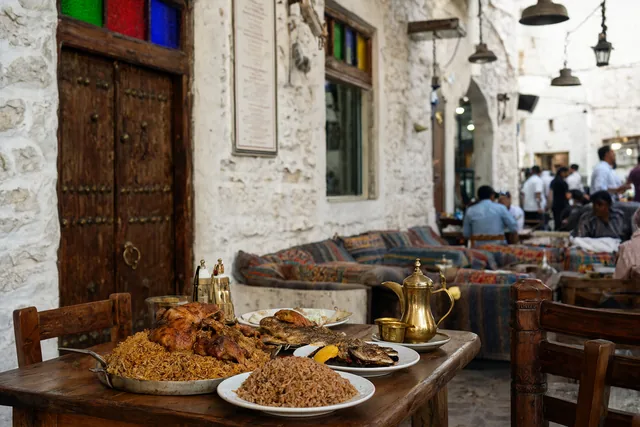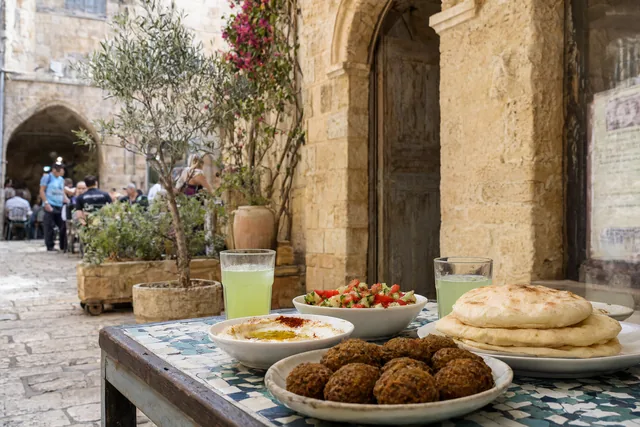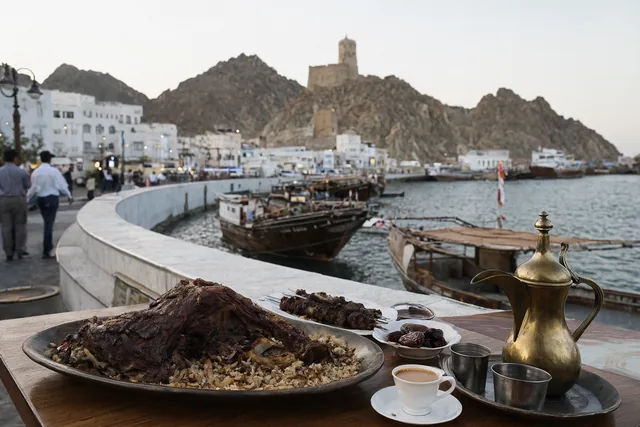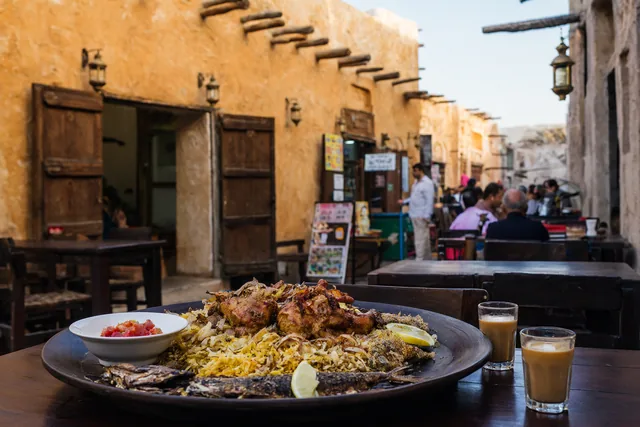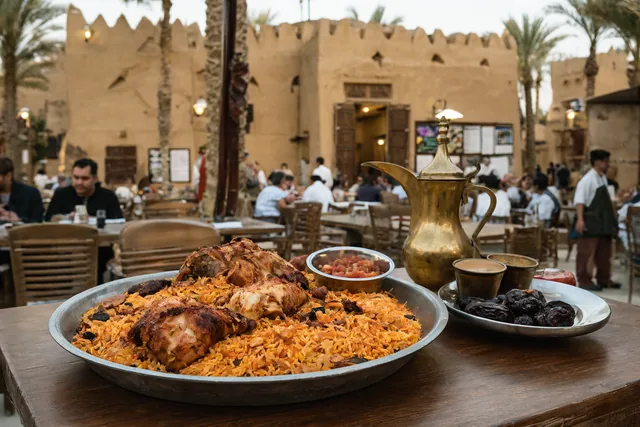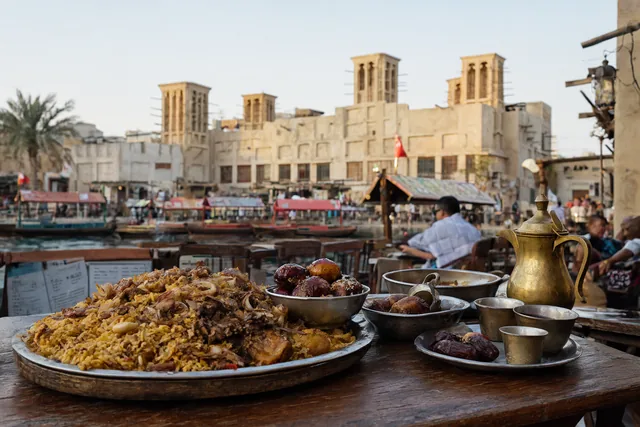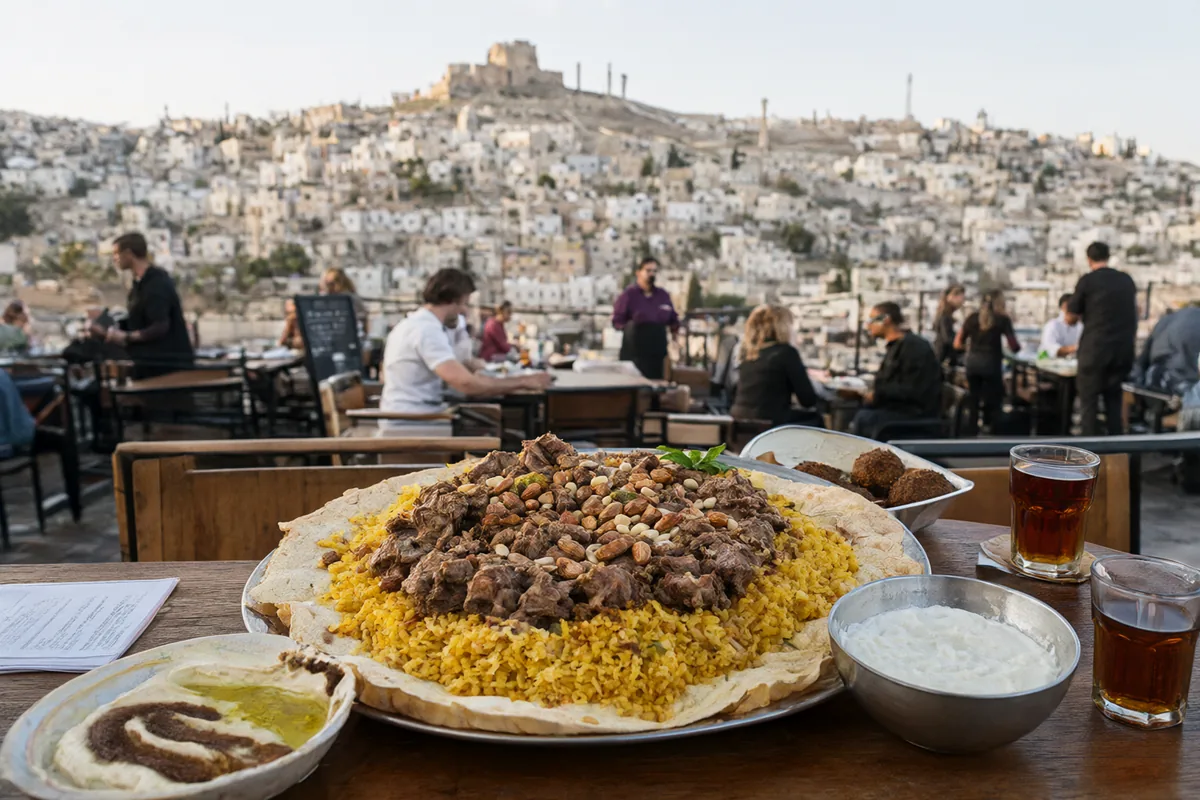
Jordan's food is the food of the Levant, shared with Syria, Lebanon and Palestine, with a Bedouin heart. Breakfast is hummus, falafel and warm bread, lunch can be a whole platter of lamb and rice, and every visit to a shop or a home comes with an offer of tea or coffee. This Jordan food guide covers the dishes to know, the Arabic words on a menu, the tax and service charge on your bill, Ramadan customs, then goes city by city through where to eat in Amman, Salt, Jerash, Madaba, Petra, Wadi Rum and Aqaba. Most visitors follow the same route from Amman down to the Red Sea, so this guide follows it too.
What to eat in Jordan: 12 dishes to know
Jordanian food is generous and made for sharing. These are the dishes worth ordering, from everyday street food to the national feast.
- Mansaf: the national dish, lamb cooked in a sauce of jameed, dried fermented yoghurt, served on rice over thin shrak bread and topped with toasted almonds and pine nuts. Traditionally eaten with the right hand from a shared platter at weddings and family gatherings.
- Maqluba: "upside down", a pot of rice layered with fried aubergine or cauliflower and chicken or lamb, turned out onto a platter at the table.
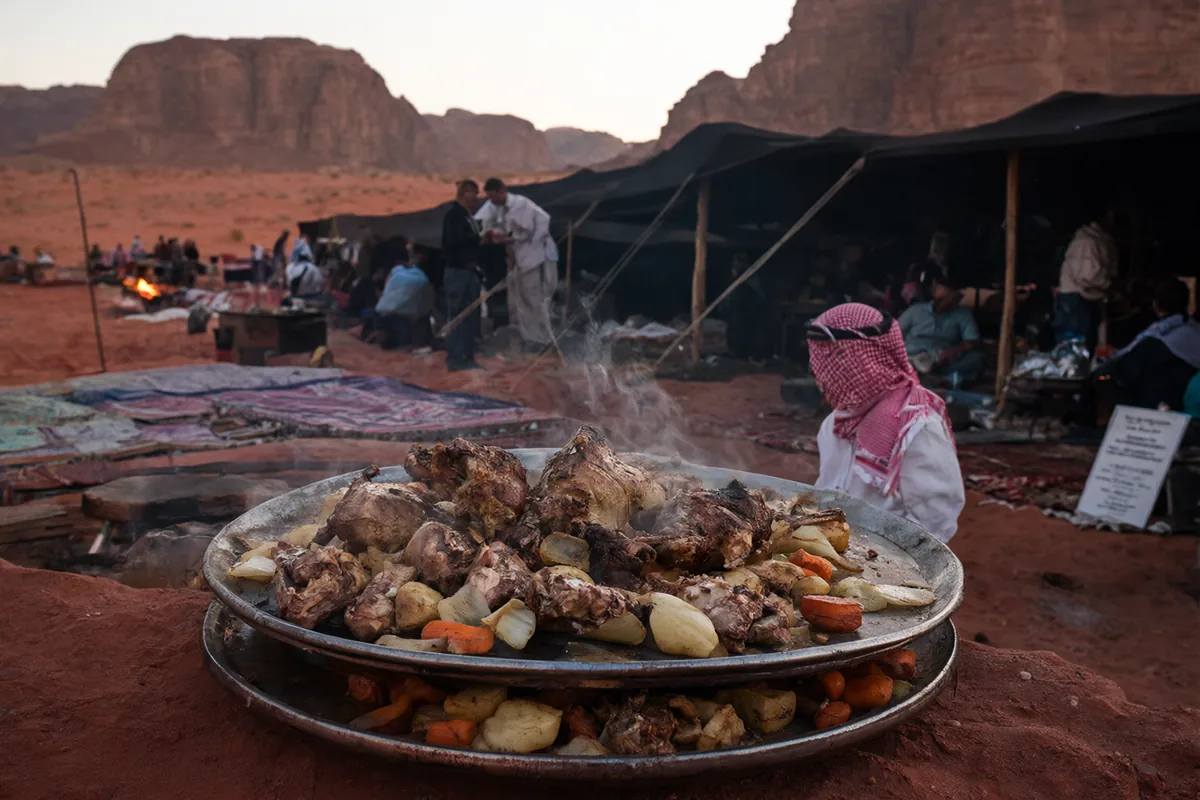
- Zarb: the Bedouin barbecue of Wadi Rum, where meat, chicken and vegetables are cooked on tiered trays in a pit buried in the sand.
- Musakhan: roast chicken on flatbread soaked in olive oil and covered with onions cooked with sumac. A Palestinian dish widely loved in Jordan.
- Hummus and falafel: the classic breakfast, with chickpea dip drizzled with olive oil and crisp fritters, eaten with warm bread, raw onion and pickles.
- Ful medames: stewed fava beans with olive oil, lemon, garlic and cumin, another breakfast favourite.
- Fatteh: layers of crisp bread, chickpeas and garlicky yoghurt, topped with pine nuts and ghee.
- Galayet bandora: tomatoes fried in olive oil with garlic and chilli, served in the pan with bread. Simple and very Jordanian.
- Mezze: small dishes to share before a grill, such as moutabal (smoky aubergine and tahini), tabbouleh, fattoush salad and stuffed vine leaves.
- Shawarma: chicken or lamb sliced from a vertical spit and wrapped in thin bread with garlic sauce and pickles.
- Manakish: flatbread baked with za'atar and olive oil, cheese or minced meat, sold hot from bakeries.
- Knafeh: soft white cheese baked under shredded or semolina pastry and soaked in syrup, eaten hot. Amman's downtown is the place for it.
To drink, try sweet black tea with sage (maramiyeh) or mint, bitter Bedouin coffee with cardamom served in tiny cups, and fresh lemon blended with mint, the most refreshing drink in the country.
How to read an Arabic menu
Tourist restaurants in Jordan have English menus, but falafel shops, bakeries, sweet shops and local restaurants often post their menus and prices in Arabic only. Arabic is written from right to left. These are the words you will see most often.
| Arabic | Romanised | Meaning |
|---|---|---|
| مقبلات | muqabbilat | Starters, mezze |
| مشاوي | mashawi | Grills |
| لحمة | lahmeh | Meat |
| خروف | kharouf | Lamb |
| دجاج | djaj | Chicken |
| سمك | samak | Fish |
| حمص | hummus | Chickpeas, chickpea dip |
| فول | ful | Fava beans |
| جميد | jameed | Dried fermented yoghurt, the base of mansaf |
| لبن | laban | Yoghurt |
| خبز | khubz | Bread |
| حلويات | halawiyat | Sweets, desserts |
| شاي / قهوة | shai / qahweh | Tea / coffee |
| نباتي | nabati | Vegetarian |
The Jordanian dinar is divided into 1,000 fils, so prices are often written with three decimal places: JD 3.500 is three and a half dinars. In shops and markets people also count in qirsh (piastres), 100 to the dinar, which can be confusing at first.
Many sit-down restaurants in Jordan show menu prices before tax and service, with a line such as "prices are subject to tax and service" at the bottom. swap.menu flags those lines, reads dinar prices with three decimals correctly and converts them to your home currency, so you know what the bill will be.
Tax, service charge, tipping and paying
Many sit-down restaurants, especially in hotels and tourist areas, add sales tax and a 10 percent service charge to the menu prices, so check the small print. Falafel shops, bakeries and cafés usually charge the price shown. Our guide to tax and service charges on menus explains how these lines work.
Tipping is customary in Jordan. Where no service charge has been added, around 10 percent is normal in restaurants, and even where it has, many diners leave a little extra for the waiter. Round up for taxis and café orders, and tip guides and drivers on tours, including at Petra and Wadi Rum.
The currency is the Jordanian dinar (JOD, JD). Cards are accepted in hotels, upmarket restaurants and supermarkets in Amman and Aqaba, but falafel shops, small restaurants, taxis and markets usually take cash only. If a card machine offers to charge you in your home currency, decline and pay in dinars: our guide to paying in local currency explains why.
Lunch is the main meal, from about 2pm to 4pm, and dinner starts around 8pm. The weekend is Friday and Saturday, and Friday is the day for a big family lunch, often mansaf. Many shops close around midday prayers on Friday.
Alcohol is legal in Jordan and served in hotels, bars and many restaurants in Amman, Madaba and Aqaba, and the country produces its own beer and wine. Many local restaurants do not serve it. During Ramadan, it is against the law to eat, drink or smoke in public during daylight hours, many restaurants close until sunset, and alcohol sales are restricted, though hotels and some tourist restaurants continue to serve visitors discreetly. After sunset, the iftar meal and the late-night sweets shops make Ramadan evenings a good time to be in Amman.
Where to eat in Jordan, city by city
Jordan is compact, and most visitors cover these places in a week or two. Jump to a destination:
Where to eat in Amman
Amman is built across a series of hills, or jabals, and the best place to eat cheaply and well is Downtown (Al Balad), in the valley at their foot. Around King Faisal Street and the streets near the Roman Theatre, falafel and hummus restaurants serve plates of hummus, ful, falafel and bread from early morning, often with shared tables and a fast turnover. Downtown Amman is also the place for knafeh: people queue at the sweet shops and eat it hot, standing in the street. The covered vegetable market (Souk Al Khodra) sells fruit, herbs, olives and spices.
Up the hill, Rainbow Street in Jabal Amman and the leafy neighbourhood of Jabal Al Weibdeh have cafés, bars and restaurants in old stone houses, many with rooftop terraces and views over the city. In summer, Souk Jara, a Friday street market in Jabal Amman, sells crafts and street food. The western districts, such as Abdoun and Sweifieh, have the more expensive restaurants and international food. For mansaf, look for traditional restaurants that serve it at lunchtime, especially on Fridays.
Where to eat in Salt
Salt, about 40 minutes from Amman, was the region's main town before Amman grew, and its old centre of honey-coloured limestone houses from the late Ottoman period is now a UNESCO World Heritage Site. The town is known for its welcome, and its main market street, Hammam Street, is lined with shops and stalls selling falafel, roasted nuts, sweets, fruit, olives and spices. It is a good place to snack your way through the morning.
Salt has a handful of restaurants serving Jordanian home cooking, such as maqluba, mansaf and grilled meats, along with simple cafés and bakeries. Combine a walk through the old staircases and lanes with a visit to the town's museums, then eat lunch in a local restaurant. Salt is much quieter than Amman and almost entirely local, so prices are low.
Where to eat in Jerash
Jerash, north of Amman, has some of the best-preserved Roman ruins in the Middle East, and most visitors come for the day. Restaurants near the archaeological site serve Jordanian buffets and grills with mezze, and some offer terraces with views of the ruins. The surrounding hills are olive country, and in the olive harvest season, in autumn, you will see families picking olives and fresh oil for sale.
Many visitors combine Jerash with Ajloun, a short drive west, where a medieval castle sits above pine and oak forests. The villages around Ajloun offer home-cooked meals and food experiences with local families, which are some of the best ways to taste Jordanian home cooking. In summer, the Jerash Festival brings concerts and food stalls to the ancient city.
Where to eat in Madaba
Madaba, south of Amman, is famous for its Byzantine mosaics, including the mosaic map of the Holy Land in St George's Church. It has long Christian and Muslim communities, a relaxed atmosphere and a good choice of family-run restaurants serving Jordanian dishes such as maqluba, mansaf, mezze and grills, often in old stone houses. Madaba is about 30 minutes from Queen Alia International Airport, so it is a popular first or last night base.
Madaba is also one of the easier places in Jordan to buy alcohol, with several shops selling Jordanian beer and wine, and some restaurants serve local wine with dinner. From Madaba, it is a short drive to Mount Nebo and down to the Dead Sea, where the hotels have restaurants and buffets but there are few independent places to eat, so eat in Madaba before or after.
Where to eat in Petra
The town next to Petra is Wadi Musa, and that is where you will eat. Its restaurants range from simple shawarma and falafel shops to hotel buffets with Jordanian dishes, grills and mezze. Several places in Wadi Musa offer cooking classes, where you learn to make mezze, maqluba or other dishes and then eat what you have cooked, a popular way to spend an evening after a day of walking.
Inside Petra, food options are limited and more expensive. There are Bedouin stalls selling sweet tea, juices and snacks along the main routes, and a restaurant area near the centre of the site, but it is a long walk, so bring water and snacks from Wadi Musa. Start early, carry plenty of water, and plan a proper meal back in town. Little Petra, a short drive north, is quieter and has Bedouin camps that serve meals.
Where to eat in Wadi Rum
In Wadi Rum, the desert of red sand and sandstone mountains in the south, you eat at your camp. Most camps include dinner and breakfast, and the dinner to hope for is zarb: lamb, chicken, potatoes, carrots and onions are spiced, stacked on metal trays in a pit, covered with sand and left to cook for a few hours, then dug up in front of the guests. It comes with rice, salads, hummus and bread.
During the day, jeep tours usually stop for lunch in the desert, often a simple spread of tomatoes, cheese, tinned tuna, hummus and bread cooked over a fire, and for many glasses of sweet Bedouin tea, sometimes flavoured with sage or cardamom. Breakfast at the camps in Wadi Rum is typically eggs, bread, cheese, olives, jam and tea. There are a few small shops and cafés in Rum village, but little else, so bring any snacks you need.
Where to eat in Aqaba
Aqaba, Jordan's only port, sits on the Red Sea, and its food is all about fish. The local speciality is sayadieh, fish cooked with spiced rice and caramelised onions, and the restaurants of downtown Aqaba serve grilled and fried fish, prawns and calamari, often with the fish chosen from a display and priced by weight. Ask the price per kilo before it goes on the grill.
Downtown Aqaba, around the old fort and the waterfront, is the place for cheap falafel, shawarma, juice and sweets in the evening, when families come out after the heat of the day. Aqaba is a special economic zone, so some prices, including alcohol in shops and hotels, can be lower than elsewhere in Jordan. The resorts along the south coast have hotel restaurants, but downtown is where to eat with locals.
Vegetarian, vegan and allergy tips
Jordan is a good country for vegetarians. Breakfast of hummus, falafel, ful and bread is meat-free, and mezze such as moutabal, tabbouleh, fattoush, stuffed vine leaves and fried cauliflower make a full meal. Many of these are also vegan, but check for yoghurt, butter or ghee. Watch for hidden meat in rice dishes, stuffed vegetables and some soups. The Arabic word for vegetarian is nabati, and "without meat" is bidoon lahmeh.
For allergies, the main risks are sesame, which is in tahini, hummus, moutabal, halva and many breads, nuts, especially pine nuts and almonds on mansaf, fatteh and rice dishes and pistachios in sweets, dairy in jameed, knafeh and many desserts, and gluten in bread and pastries. Our guide to eating abroad with food allergies explains how to describe an allergy clearly when you do not share a language.
Useful Arabic phrases for ordering
English is widely spoken in tourist areas, but Jordanians appreciate any effort in Arabic. These phrases use the local Levantine dialect.
مرحبا Marhaba: "Hello"
ممكن المنيو؟ Mumkin el-menu?: "Could I have the menu?"
شو بتنصحني؟ Shu btinsahni?: "What do you recommend?"
بدي هاد Biddi hada: "I want this" (pointing)
بدون لحمة Bidoon lahmeh: "Without meat"
عندي حساسية من... Indi hasasiyeh min...: "I am allergic to..."
الحساب لو سمحت El-hsab law samaht: "The bill, please"
يسلمو إيديك Yislamu idek: "Bless your hands", said to compliment the cook
How swap.menu helps you eat in Jordan
A falafel shop or bakery in Amman may have a menu board in Arabic only, and even English menus list maqluba, musakhan, fatteh and galayet bandora with little explanation. Photograph the menu with swap.menu and every dish appears in your language with a short description, so you know that mansaf is made with fermented yoghurt and that fatteh comes with pine nuts before you order. Every price is converted from dinars to your home currency, and we flag the tax and service lines so the bill holds no surprises.
Tap the dishes you want, add a note such as "no nuts" or "no meat, please", typed or spoken, and swap.menu translates your order into Arabic. Show the waiter your phone, or let them scan the QR code and read your order on their own screen. You can try it now on a sample menu with the free demo, or see travel pass prices.
Off to Jordan? Your first 3 menu scans are free, and a travel pass starts from $4.99 with nothing that renews.
Start free with 3 scansJordan food FAQ
Do you tip in restaurants in Jordan?
Yes, tipping is customary. Around 10 percent is normal where no service charge has been added, and many people leave a little extra even when it has. Guides, drivers and camp staff also expect tips.
What is the national dish of Jordan?
Mansaf, lamb cooked in a sauce of fermented dried yoghurt and served on rice with toasted nuts, is the national dish. Maqluba, zarb, hummus, falafel and knafeh are other favourites.
Can you drink alcohol in Jordan?
Yes. Alcohol is legal and served in hotels, bars and many restaurants, especially in Amman, Madaba and Aqaba. During Ramadan alcohol sales are restricted, and many local restaurants never serve it.
Is it expensive to eat out in Jordan?
Street food such as falafel, hummus and shawarma is cheap. Sit-down restaurants in Amman and hotels are more expensive, and tax and service can add a noticeable amount to the menu price.
Is tap water safe to drink in Jordan?
Visitors are advised to drink bottled or filtered water. Bottled water is cheap and sold everywhere, and many hotels provide filtered water.
How can I read an Arabic menu in Jordan?
Learn a few words such as djaj, lahmeh, hummus and ful, or photograph the menu with swap.menu. It explains every dish in your language, converts dinar prices to your currency and translates your order into Arabic for the staff.
Travelling further in the Middle East? Read our food guides for nearby countries:
- Israel food guide
- Egypt food guide
- Saudi Arabia food guide
- Turkey food guide
- Cyprus food guide
- United Arab Emirates food guide
Or browse every travel food guide.