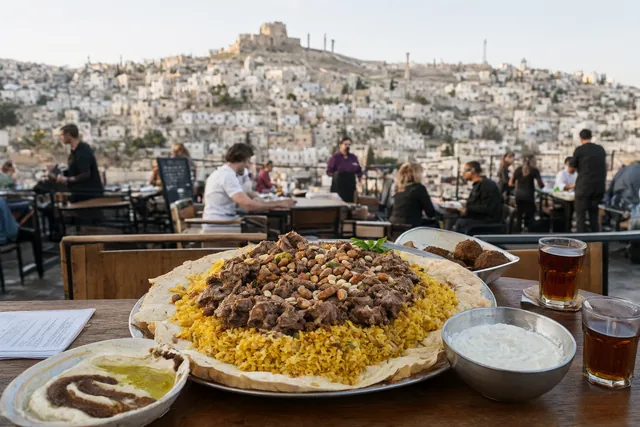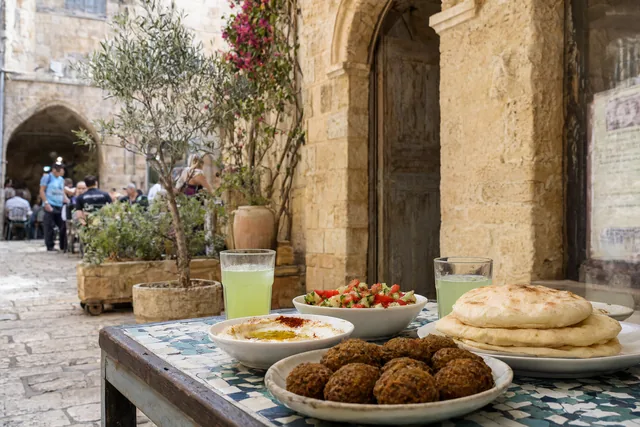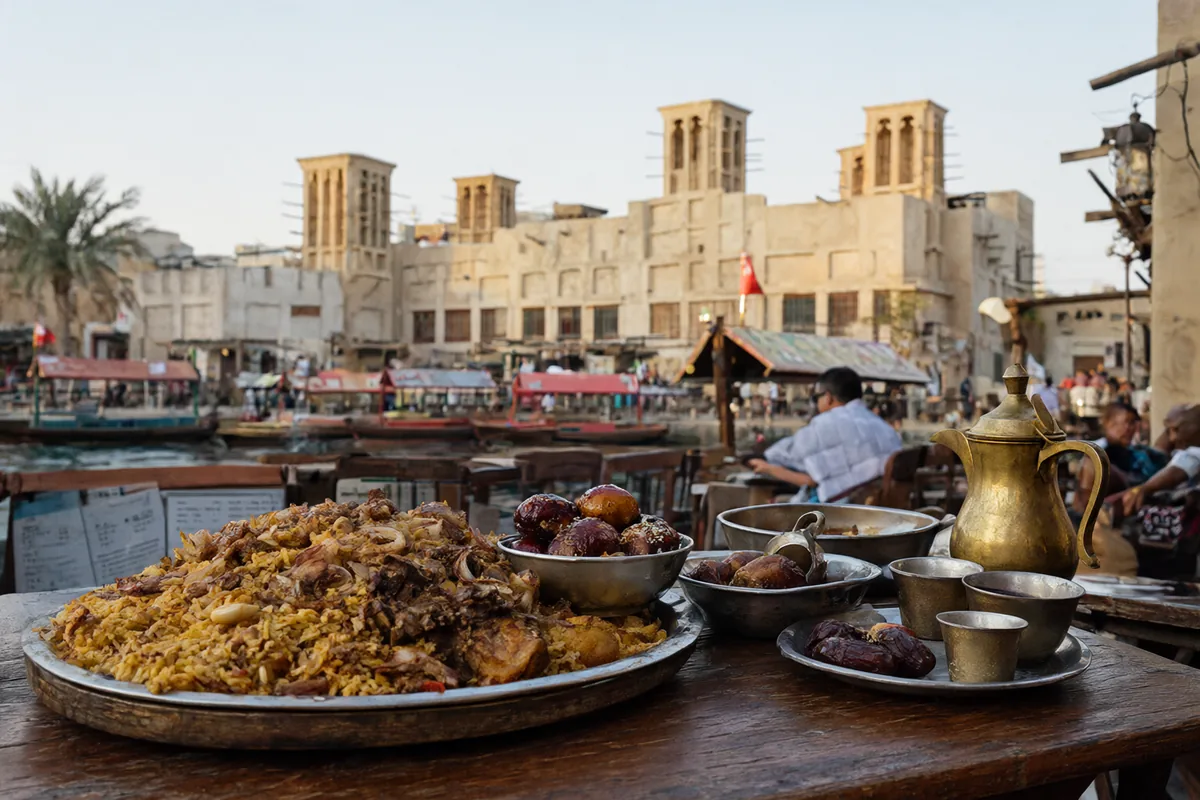
Most of the people living in the United Arab Emirates come from somewhere else, and that shapes how the country eats: you can find excellent Lebanese, Indian, Pakistani, Iranian and Filipino food on almost every street. Emirati cooking, the food of the Gulf coast and the desert, is harder to find but worth the effort. This UAE food guide covers the Emirati dishes to know, the Arabic words on a menu, the service charge, VAT and fees on your bill, the rules on alcohol and Ramadan, then goes city by city through where to eat in Dubai, Abu Dhabi, Sharjah, Al Ain, Ras Al Khaimah and Fujairah.
What to eat in the UAE: 12 dishes to know
Emirati food draws on Bedouin, Persian, Indian and East African cooking, with rice, spices, dates, fish and slow-cooked meat at its heart. These are the dishes to look for, plus the everyday favourites that every visitor ends up eating.
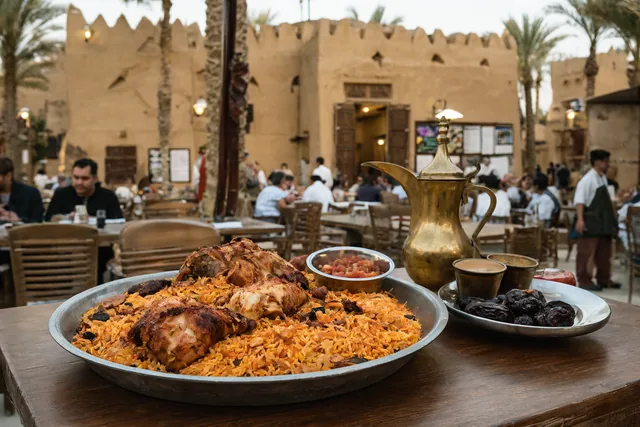
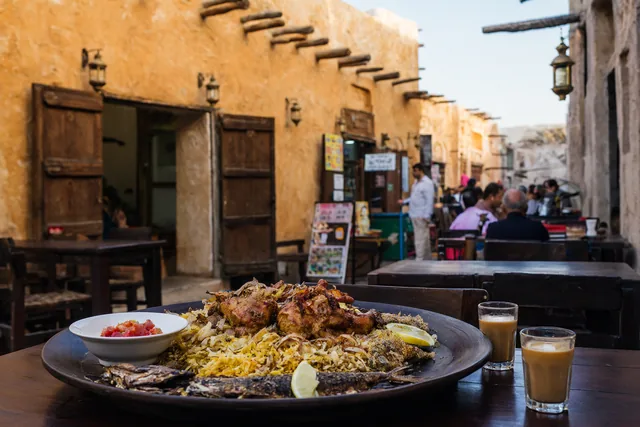
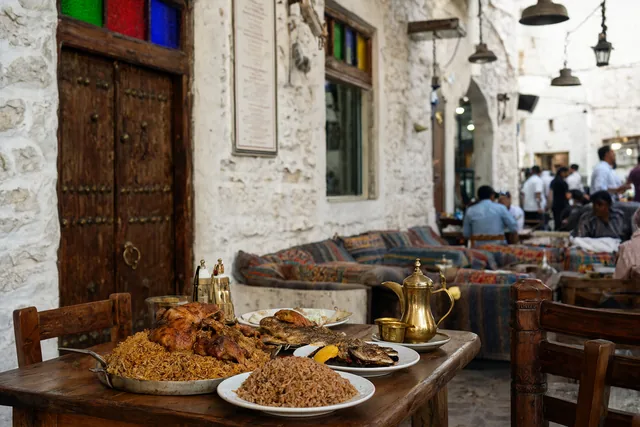
- Machboos: the national rice dish, rice cooked with spiced lamb, chicken or fish, dried black lime (loomi) and a spice mix called bezar.
- Harees: wheat and meat cooked slowly together until smooth, topped with ghee. Served especially during Ramadan, at Eid and at weddings.
- Thareed: thin bread layered with a meat and vegetable stew, a Ramadan staple.
- Saloona: an everyday stew of meat, fish or vegetables in a spiced tomato sauce, eaten with rice.
- Balaleet: sweet vermicelli with saffron, cardamom and rose water, topped with an omelette. A breakfast dish that sounds strange and works.
- Chebab: Emirati pancakes flavoured with cardamom and saffron, served with date syrup and cream cheese.
- Khameer: a soft, slightly sweet bread with dates or fennel, eaten at breakfast.
- Luqaimat: small crisp dumplings, fried and drizzled with date syrup (dibs) and sesame. The essential Emirati sweet.
- Jasheed: minced baby shark cooked with onion and spices, served with rice. A coastal dish.
- Shawarma: thinly sliced spit-roasted chicken or lamb wrapped in flatbread with garlic sauce and pickles, the UAE's favourite cheap meal.
- Manakish: Levantine flatbread baked with za'atar, cheese or minced meat, the standard breakfast in many cafeterias.
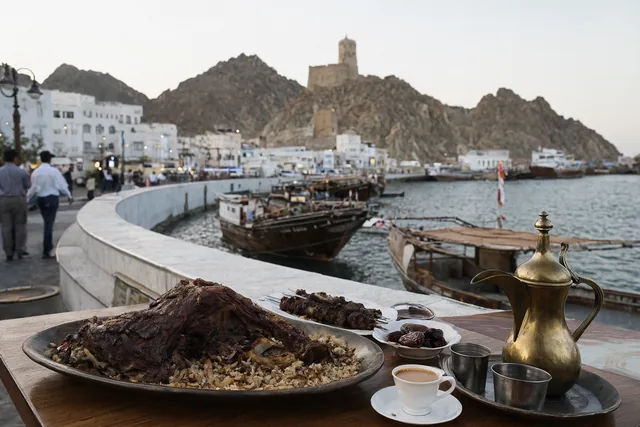
- Gahwa and dates: light Arabic coffee with cardamom and saffron, poured from a dallah into small cups and served with fresh dates as a sign of welcome.
The other national drink is karak chai, strong milky tea boiled with cardamom and sugar, sold from roadside cafeterias day and night. Camel milk, plain or in coffee and chocolate, is also worth trying.
How to read an Arabic menu
Most menus in the UAE are printed in English and Arabic side by side, but small cafeterias, Emirati restaurants and places outside Dubai and Abu Dhabi may show some specials, prices or dishes in Arabic only. Arabic is written from right to left. These are the words you will see most often.
| Arabic | Romanised | Meaning |
|---|---|---|
| مقبلات | muqabbilat | Starters, mezze |
| مشاوي | mashawi | Grills, mixed grilled meats |
| لحم | lahm | Meat |
| لحم غنم | lahm ghanam | Lamb or mutton |
| دجاج | dajaj | Chicken |
| سمك | samak | Fish |
| روبيان | rubyan | Prawns |
| عيش | eish | Rice in Gulf Arabic (bread in some other countries) |
| خبز | khubz | Bread |
| حلويات | halawiyat | Desserts, sweets |
| مشروبات | mashroobat | Drinks |
| حلال | halal | Prepared according to Islamic dietary law |
| نباتي | nabati | Vegetarian |
| حار | harr | Spicy hot |
All meat served in the UAE is halal unless clearly labelled otherwise. Restaurants licensed to serve pork must label it, and it is usually listed in its own section of the menu.
Hotel restaurant menus in the UAE often show prices followed by "++" or "+++", meaning several charges are added at the end. swap.menu flags those lines when it reads the menu and converts every price from dirhams to your home currency, so you know what dinner costs before you order.
Service charge, VAT, tipping and paying
A 5 percent VAT applies to restaurant bills in the UAE. In hotel restaurants and many upmarket venues, especially in Dubai and Abu Dhabi, a service charge (often 10 percent) and a municipality or tourism fee are added as well, which is what the "++" or "+++" on the menu means. In Dubai the municipality fee on hotel restaurant bills is 7 percent. Standalone cafés and casual restaurants usually show prices with VAT included. Our guide to tax and service charges on menus explains how these lines work.
Tipping is not compulsory. Where no service charge has been added, 10 to 15 percent is normal in sit-down restaurants, and even where it has, many diners leave a little extra in cash, since the service charge does not always reach the waiter. Delivery riders, valet attendants and cafeteria staff appreciate small change.
The currency is the UAE dirham (AED, Dhs). Cards and contactless payment are accepted almost everywhere, including small cafeterias, but cash is useful in old souqs and at markets. If a card machine offers to charge you in your home currency, decline and pay in dirhams: our guide to paying in local currency explains why.
Meal times run late. Lunch is from about 1pm to 3pm, and dinner rarely starts before 8pm, with many restaurants busy until midnight. Weekend brunch, a long buffet lunch on Friday or Saturday, often with a drinks package, is a Dubai institution. The UAE working week runs Monday to Friday, with the weekend on Saturday and Sunday.
Alcohol is served in licensed hotel restaurants, bars and some standalone venues in most emirates, to people aged 21 and over. Sharjah is a dry emirate where no alcohol is served at all. Being drunk in public is an offence everywhere in the country. During Ramadan, most restaurants in Dubai and Abu Dhabi now stay open in the daytime, but eating, drinking and smoking openly in public during daylight hours is disrespectful, so keep it discreet. After sunset, restaurants and hotels serve iftar (the meal that breaks the fast), often as large buffets, and stay open late for suhoor, the meal before dawn.
Where to eat in the UAE, city by city
Each of the seven emirates has its own character, and the food changes from the glitz of Dubai to the date palms of Al Ain and the fishing harbours of the east coast. Jump to a city:
Where to eat in Dubai
Dubai has restaurants of every kind and price, but the most interesting eating is in the older districts along the Creek. In Bur Dubai, the restored wind-tower houses of the Al Fahidi Historical Neighbourhood and the waterfront at Al Seef have cafés and restaurants serving Emirati dishes such as machboos, balaleet, chebab and luqaimat, a rare chance to try them outside a home. Take an abra, the wooden water taxi, across the Creek to Deira, where the Spice Souk sells saffron, dried limes and dates, and the Deira Waterfront Market has a large fish market.
For cheap and excellent food, Dubai's best neighbourhoods are Al Rigga and Al Muraqqabat in Deira for Lebanese and Syrian shawarma, grills and juice bars, Al Karama for Indian, Pakistani and Filipino restaurants, and Al Satwa for late-night cafeterias. Downtown, DIFC and Dubai Marina are where the expensive restaurants and hotel bars are. In the cooler months, from about October to April, Dubai's outdoor food markets and the seasonal stalls at Global Village are at their best, and terraces fill up in the evenings.
Where to eat in Abu Dhabi
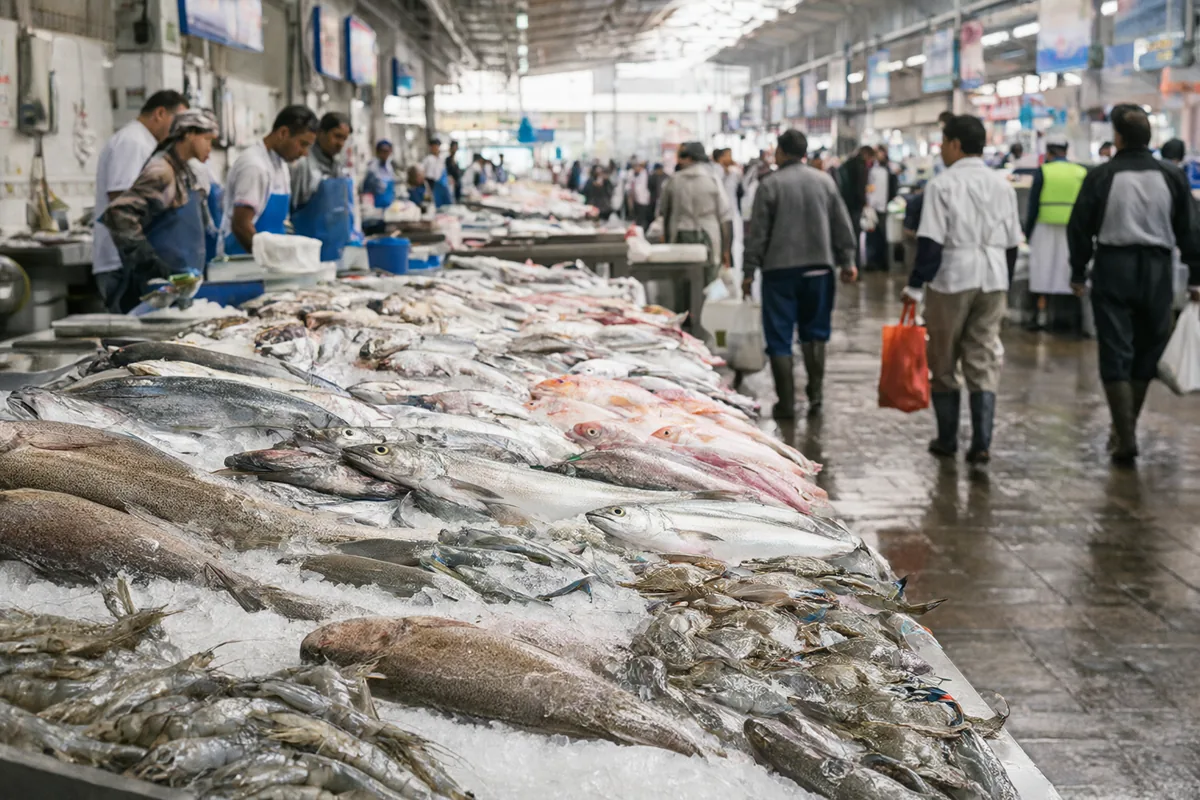
Abu Dhabi, the capital, is calmer than Dubai and a little more traditional. The best food experience in Abu Dhabi is the fish market at Mina Zayed, the port area, where you choose hammour, kingfish, prawns or crab from the stalls, have it cleaned, then take it to nearby cooks who grill or fry it with rice for a small fee. Next door, the dates market sells dozens of varieties, and the vegetable and fruit market is worth a walk.
The streets around Hamdan Street and the Tourist Club Area (Al Zahiyah) are full of affordable Lebanese, Indian, Pakistani and Iranian restaurants. The Corniche, the long seafront promenade, is good for an evening walk and a juice. For upmarket dining, the hotels on Saadiyat Island and Yas Island have Abu Dhabi's best-known restaurants. During Ramadan, the Sheikh Zayed Grand Mosque serves a free iftar to thousands of people every evening, and visitors are welcome to watch the city break its fast.
Where to eat in Sharjah
Sharjah, the neighbouring emirate to Dubai, is the cultural capital of the UAE and the most conservative. It is a dry emirate, so no restaurant, hotel or bar serves alcohol, and dress codes are stricter than in Dubai. In return, Sharjah offers good Emirati and Arab food at lower prices. The restored Heart of Sharjah heritage district has traditional cafés, and the waterfront areas of Al Qasba and Al Majaz are lined with Lebanese, Turkish and Iranian restaurants, busy with families in the evening.
The Souq Al Jubail, a large covered market on the waterfront, sells fish, meat, dates and vegetables and is a good place to see what Sharjah cooks at home. The Rolla area is known for inexpensive Indian, Pakistani and Bangladeshi restaurants. Sharjah's weekend runs from Friday to Sunday, and on Friday afternoons and evenings the waterfront in Sharjah is crowded with families eating out.
Where to eat in Al Ain
Al Ain, the inland garden city on the border with Oman, is the emirate of Abu Dhabi's second city and one of the oldest settlements in the country. Its great sight is the Al Ain Oasis, a UNESCO-listed date palm grove watered by ancient falaj irrigation channels, and dates are the local product: buy them fresh in season, in late summer, or packed at any time of year. Al Ain also has the UAE's best-known traditional camel market, where you can buy fresh camel milk.
Al Ain's restaurants are mostly local and family-run, serving Emirati rice dishes, grills, Levantine food and South Asian curries at lower prices than the coast. Drive up Jebel Hafeet, the mountain south of the city, for the view at sunset, then eat in the town. Al Ain is about 90 minutes by road from both Dubai and Abu Dhabi, so it works as a day trip, but staying a night lets you see the oasis at its quietest in the early morning.
Where to eat in Ras Al Khaimah
Ras Al Khaimah, the northernmost emirate, has mountains, beaches and a fishing tradition. In the old town, small restaurants and cafeterias serve fried and grilled fish, saloona and machboos, and the fish market by the creek is busy in the morning. Ras Al Khaimah is a good place to try jasheed and other coastal dishes. The abandoned pearling village of Al Jazirah Al Hamra is a reminder of how the coast lived before oil.
Most visitors to Ras Al Khaimah stay at the beach resorts on Al Marjan Island and along the coast, where hotel restaurants serve international buffets and alcohol is available. The big attraction inland is Jebel Jais, the highest mountain in the UAE, where cooler air and the view make a meal or a coffee at the top a popular outing. Ras Al Khaimah is about an hour's drive from Dubai.
Where to eat in Fujairah
Fujairah is the only emirate entirely on the Gulf of Oman, on the east coast, with the Hajar mountains behind it. The food here is about the sea: kingfish (kanaad), hammour, tuna and prawns, grilled or cooked in a spicy curry with rice. The fish markets in Fujairah and in Dibba to the north sell the morning catch, and the small restaurants nearby will cook it for you. Fujairah's coast is also known for diving and snorkelling, so many visitors eat at beach resorts.
On the road from Dubai to Fujairah, the town of Masafi has a long-running roadside market known as the Friday Market, open every day despite the name, where stalls sell fruit, honey, plants, pottery and carpets. Fujairah's old fort and its mosque are worth a stop, and the town's cafeterias serve karak chai and paratha at all hours. The drive across the mountains makes Fujairah a full day trip from Dubai or Sharjah.
Vegetarian, vegan and allergy tips
The UAE is easier for vegetarians than you might expect, thanks to its large Indian and Levantine communities. Indian restaurants offer whole vegetarian menus, and Lebanese places serve meat-free mezze such as hummus, moutabal (smoky aubergine dip), tabbouleh, falafel and fattoush salad. Emirati dishes, by contrast, are mostly built around meat or fish, and rice is often cooked in meat stock. The Arabic word for vegetarian is nabati, and "no meat" is bidoon lahm.
For allergies, the ingredients to watch are sesame, in tahini, hummus and many breads and sweets, nuts, especially pistachios, almonds and pine nuts in desserts and rice dishes, dairy and ghee in Emirati cooking and sweets, and gluten in harees and thareed. Large restaurants are used to allergy requests and many mark common allergens on the menu. Our guide to eating abroad with food allergies explains how to describe an allergy clearly.
Useful Arabic phrases for ordering
English is spoken almost everywhere in the UAE, and many restaurant staff speak Hindi, Urdu, Tagalog or Malayalam rather than Arabic. Still, a few words of Gulf Arabic are always appreciated.
السلام عليكم As-salaam alaikum: "Peace be upon you", the standard greeting
ممكن المنيو؟ Mumkin al-menu?: "Could I have the menu?"
أبغى هذا Abgha hadha: "I want this" (pointing)
بدون حار Bidoon harr: "Not spicy"
أنا نباتي / نباتية Ana nabati / nabatiya: "I am vegetarian" (man / woman)
عندي حساسية من... Indi hasasiya min...: "I am allergic to..."
الحساب لو سمحت Al-hisaab law samaht: "The bill, please"
شكراً، لذيذ وايد Shukran, ladheedh wayed: "Thank you, very tasty"
How swap.menu helps you eat in the UAE
Menus in the UAE are often bilingual, but that does not mean they are clear. An Emirati menu may list harees, thareed, madrooba and jasheed with no explanation, a Lebanese grill house may have 40 mezze, and the small print at the bottom adds service charge, municipality fees and VAT. Photograph the menu with swap.menu and each dish appears in your language with a short description, every price is converted from dirhams to your home currency, and we flag the "++" lines so you know the total before you order.
Tap the dishes you want, add a note such as "no nuts" or "no chilli, please", typed or spoken, and swap.menu translates your order into Arabic, or into the language of your waiter if they would rather read it in Hindi or Tagalog. Show them your phone, or let them scan the QR code and read your order on their own screen. You can try it now with the free demo, or see travel pass prices.
Off to the UAE? Your first 3 menu scans are free, and a travel pass starts from $4.99 with nothing that renews.
Start free with 3 scansUnited Arab Emirates food FAQ
Do you tip in restaurants in Dubai and the UAE?
Tipping is not compulsory. Where no service charge has been added, 10 to 15 percent is normal in sit-down restaurants. Many diners leave a little cash for the waiter even when a service charge is on the bill.
Can you drink alcohol in Dubai?
Yes. Alcohol is served in licensed hotel restaurants, bars and some standalone venues to people aged 21 and over. Sharjah is a dry emirate where alcohol is not served, and being drunk in public is an offence across the country.
What is traditional Emirati food?
Machboos (spiced rice with meat or fish), harees, thareed, balaleet, chebab pancakes and luqaimat with date syrup are the best-known Emirati dishes, served with Arabic coffee and dates. They are easiest to find in heritage districts and Emirati restaurants.
Is Dubai expensive to eat out?
It can be. Hotel restaurants and bars are expensive, especially with service charge, fees and VAT. But Dubai also has some of the best cheap food in the region, with shawarma, Indian and Pakistani meals in Deira, Karama and Satwa costing very little.
Can you eat in public during Ramadan in the UAE?
Most restaurants in Dubai and Abu Dhabi stay open during the day in Ramadan, but eating, drinking and smoking openly in public during daylight is considered disrespectful. Eat inside restaurants or in private, and join an iftar after sunset.
How can I read an Arabic menu in the UAE?
Most menus are bilingual, but dish names are often not explained. Photograph the menu with swap.menu to see every dish described in your language, prices converted from dirhams, the extra charges flagged, and your order translated into Arabic.
Travelling further in the Gulf? Read our food guides for nearby countries:
- Oman food guide
- Qatar food guide
- Saudi Arabia food guide
- Bahrain food guide
- Jordan food guide
- India food guide
Or browse every travel food guide.