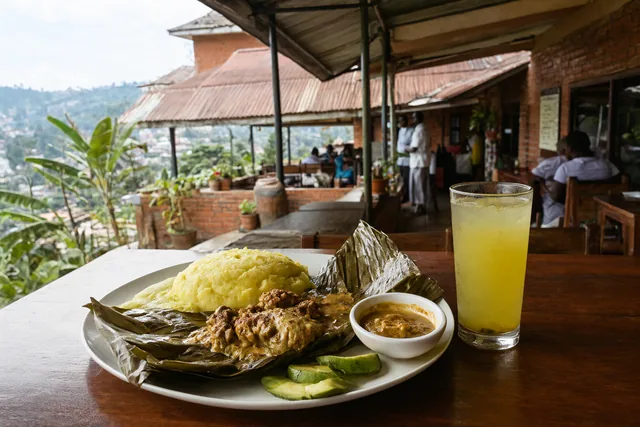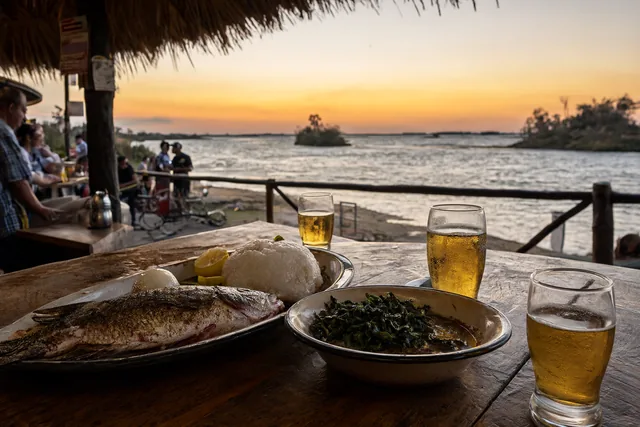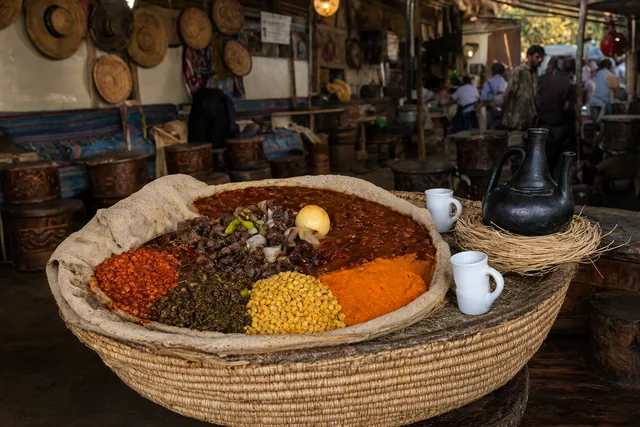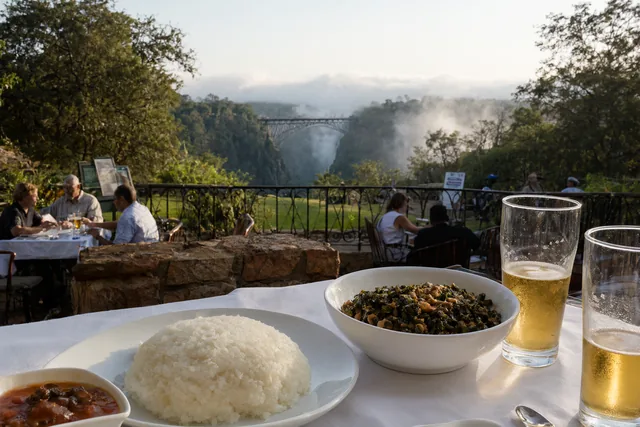
Burundi is a small, hilly, green country in the heart of Africa, with Lake Tanganyika along its western edge and coffee and tea growing on its highlands. Its food is simple and honest: beans with almost every meal, plantains, cassava and sweet potatoes, goat brochettes grilled over charcoal, and fish from the lake, including the prized mukeke and the tiny, crunchy ndagala. This Burundi food guide covers the dishes to know, how to read menus in Kirundi and French, cash and tipping, and then where to eat in Bujumbura, Gitega, Rumonge, Ngozi and Kayanza. Burundi sees few tourists and most restaurants are in Bujumbura, so outside the city this guide describes what is genuinely there.
What to eat in Burundi: 12 dishes to know
Most Burundians eat two meals a day built around beans and a starch, with meat or fish when they can. Restaurant menus add grills, fish and dishes with a Belgian and French accent from the colonial era.
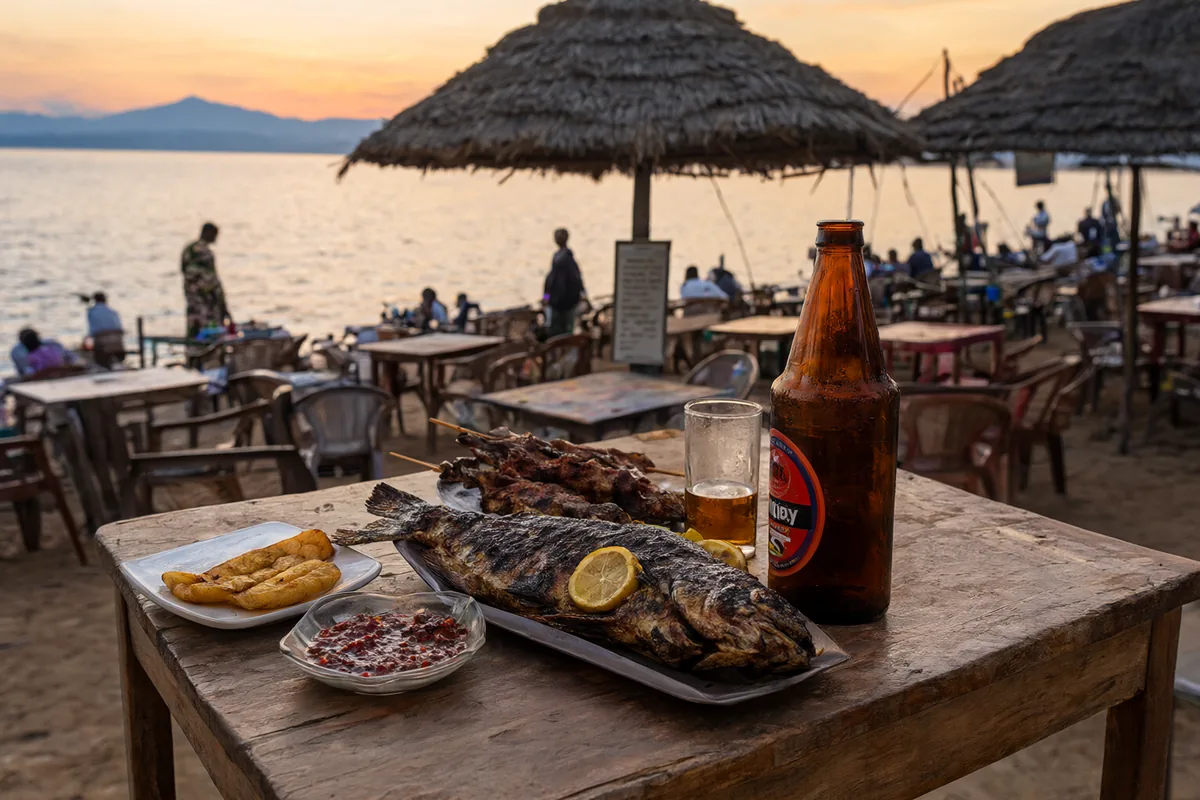
- Brochettes: the national restaurant dish, skewers of goat (chèvre), beef or liver grilled over charcoal, served with fried plantains or chips. Goat brochettes are the classic.
- Mukeke: a perch-like fish found only in Lake Tanganyika, grilled or fried whole and served with plantains, rice or chips. Burundi's most prized fish.
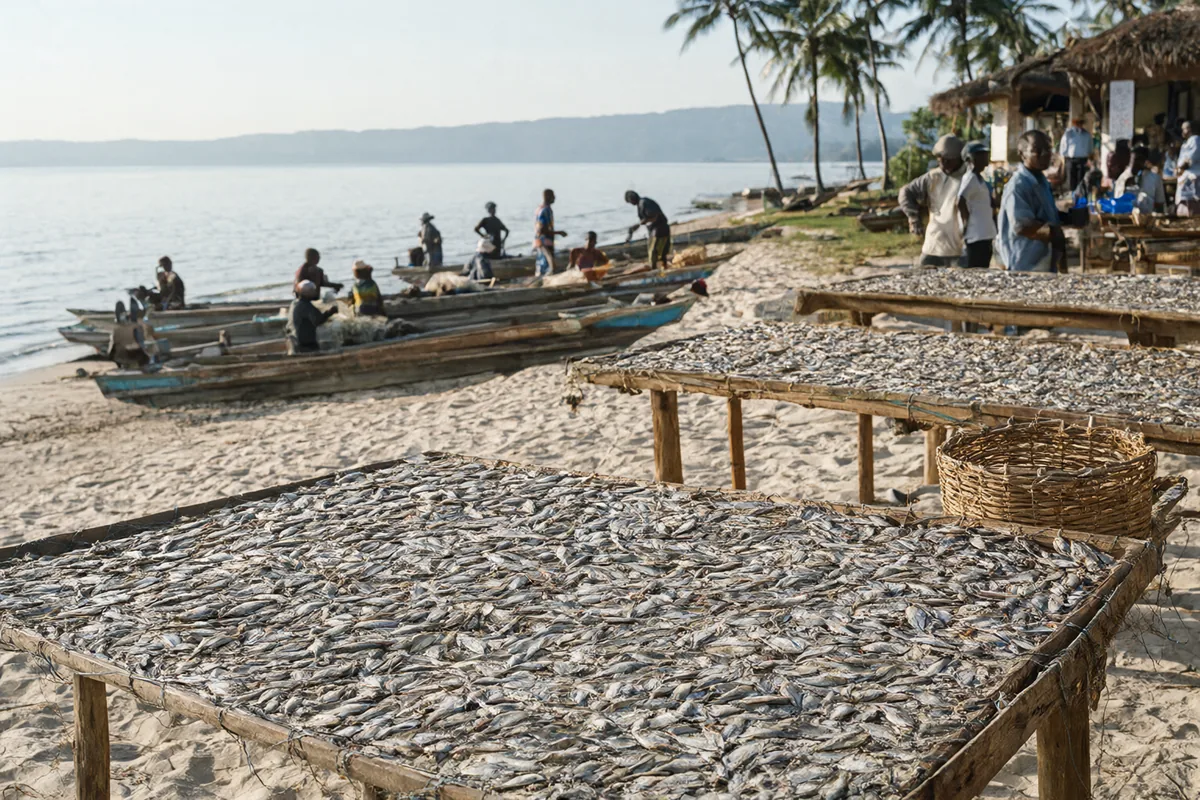
- Ndagala: tiny sardine-like fish from the lake, fried until crisp or sun-dried and cooked in a tomato and onion sauce.
- Sangala: a large lake fish related to the Nile perch, cut into steaks and grilled or fried.
- Ibiharage: beans, the everyday staple, cooked with onion, palm oil and sometimes tomato, eaten at almost every meal.
- Ibitoke: green cooking bananas and plantains, boiled, stewed with beans or meat, or fried as bananes frites.
- Ubugali: a stiff dough of cassava or maize flour, eaten with your fingers and dipped into sauces and stews.
- Isombe: pounded cassava leaves cooked slowly with onion, palm oil and sometimes peanuts or dried fish.
- Sweet potatoes and cassava: boiled, roasted or fried, sold as snacks on the roadside and served as sides.
- Pili-pili: a fiery chilli oil or sauce placed on every restaurant table. Use it carefully.
- Burundian coffee and tea: Burundi grows high-quality arabica coffee on its northern hills and tea on estates in the highlands, though coffee is drunk less at home than tea with milk.
- Banana and sorghum beer: urwarwa, beer brewed from bananas, and impeke, sorghum beer, are shared at celebrations, often drunk through straws from a communal pot.
Fruit is excellent and cheap: mangoes, avocados, pineapples, passion fruit and small sweet bananas. In Bujumbura you will also find Swahili dishes such as pilau rice and chapati, and Belgian-style chips are a fixture of the brochette bar.
How to read a menu in Burundi (Kirundi and French)
Burundi's languages are Kirundi, spoken by almost everyone, French and, increasingly, English, with Swahili widely used in Bujumbura. Restaurant menus are usually in French, while local dishes and market talk are in Kirundi. Both use the Latin alphabet.
| Word | Language | Meaning |
|---|---|---|
| Inyama | Kirundi | Meat |
| Inkoko | Kirundi | Chicken |
| Amafi | Kirundi | Fish |
| Mukeke / ndagala | Kirundi | Lake fish: large perch / tiny sardine-like fish |
| Ibiharage | Kirundi | Beans |
| Ibitoke | Kirundi | Plantains, cooking bananas |
| Umuceri | Kirundi | Rice |
| Ubugali | Kirundi | Stiff cassava or maize dough |
| Imboga | Kirundi | Vegetables, greens |
| Amazi | Kirundi | Water |
| Brochette (de chèvre) | French | Meat skewer (of goat) |
| Bananes frites / frites | French | Fried plantain / chips |
| Poisson grillé | French | Grilled fish |
| L'addition | French | The bill |
Many local restaurants and brochette bars have no printed menu, just a short list of what is cooking. Whole fish is often priced by size, so ask the price of a mukeke before it goes on the grill.
A Bujumbura menu might list "mukeke grillé", "ndagala" and "brochettes mixtes" in French and Kirundi, with prices in Burundian francs that run into thousands. swap.menu explains each dish, converts franc prices to your home currency and flags service lines, so you can order confidently and keep track of your cash.
Cash, tipping and paying the bill
Check your government's current travel advice before planning a trip. Burundi is a cash economy. A few large hotels accept cards, but restaurants, bars, markets and taxis take cash, and ATMs that accept foreign cards are rare and unreliable, so bring enough money for your trip, ideally US dollars or euros in clean, recent notes, and change it at banks or licensed exchange bureaus.
The currency is the Burundian franc (BIF, written FBu). Prices on menus can run into tens of thousands of francs, so count the zeros carefully. Some hotels and upmarket restaurants add tax or a service charge. Our guide to tax and service charges on menus explains how these lines work around the world, and if a hotel card machine offers to charge you in your home currency, decline: our guide to paying in local currency explains why.
Tipping is not expected at local eateries and brochette bars, though rounding up is appreciated. In sit-down restaurants in Bujumbura, around 5 to 10 percent is generous for good service, and guides and drivers are usually tipped at the end of a trip.
Lunch is from about 12pm to 2pm, and dinner from about 7pm to 9pm, with brochette bars busiest in the evening. Beer is central to social life in Burundi, and local lagers come in large bottles meant for sharing. Burundi is mostly Christian, with a Muslim minority concentrated in parts of Bujumbura, so Ramadan has little effect on restaurant hours outside those neighbourhoods. Most Burundian meals are eaten at home, which partly explains why the restaurant scene is small.
Where to eat in Burundi, town by town
Bujumbura has most of Burundi's restaurants. The other towns are small and their food is local and simple, but each has something worth trying. Jump to a town:
Where to eat in Bujumbura
Bujumbura, the largest city and economic capital, lies on the north-eastern shore of Lake Tanganyika with green hills rising behind it. The best way to eat in Bujumbura is by the lake. North of the city centre, the beaches along the lakeshore have bars and restaurants with tables on the sand, serving grilled mukeke, fried ndagala, goat brochettes, fried plantains and cold beer, and they are busiest at sunset and on weekends. Hippos are sometimes seen in the lake nearby, so stay out of the water at dusk.
In the city, the centre and the residential districts such as Rohero have restaurants serving Burundian, Belgian-influenced, Indian, Chinese and international dishes, and brochette bars are on almost every street. The district of Buyenzi, Bujumbura's historically Swahili and Muslim quarter, is the place for pilau, chapati and Swahili snacks. Markets sell beans, plantains, cassava, fruit and dried ndagala in heaps. Bujumbura tip: brochette bars cook to order over charcoal, so expect to wait, and order fried plantain and a salad while you do.
Where to eat in Gitega
Gitega, in the centre of the country, became Burundi's political capital in 2019 and was historically the seat of the Burundian kings. It is a small, quiet town in the highlands, and its food scene consists of local restaurants, brochette bars and a busy market. Expect beans, plantains, ubugali, goat and beef brochettes and fish brought up from the lake, served with pili-pili and cold beer.
Visitors come to Gitega for the National Museum and the nearby Gishora drum sanctuary, where Burundi's famous royal drummers perform, a UNESCO-recognised tradition. Combine a drumming performance with lunch at a local restaurant in Gitega, and try the market for fruit and roasted maize. Gitega is cooler than Bujumbura, and the highland produce is excellent.
Where to eat in Rumonge
Rumonge, on the shore of Lake Tanganyika about 75 kilometres south of Bujumbura, is a fishing and palm oil town. Early in the morning, fishermen bring in the night's catch, and on the beaches around Rumonge you can see ndagala spread out to dry on racks and mats in the sun, the way it has been preserved for generations. The local market sells fresh and dried fish, palm oil, cassava and fruit.
Rumonge has simple restaurants and bars serving fried ndagala, grilled fish, beans and plantains cooked in the red palm oil the area is known for. There are a few lakeside spots for a meal or a drink. Rumonge is a good place to try fish at its freshest, and a stop on the road along the lake towards the south.
Where to eat in Ngozi
Ngozi, in the north, is a university town surrounded by hills covered in coffee bushes, and it is one of the heartlands of Burundi's speciality coffee. During the harvest season, roughly from March to July, the coffee washing stations around Ngozi are busy with farmers bringing in red coffee cherries, and some offer visits by arrangement. A cup of Burundian coffee in Ngozi, close to where it is grown, is worth seeking out.
The food in Ngozi is local and inexpensive: brochettes, beans, rice, plantains, sweet potatoes and stews at small restaurants around the town centre and the market. The students give Ngozi a lively feel in term time, and there are bars where the brochettes and beer flow in the evening.
Where to eat in Kayanza
Kayanza, in the northern highlands near the Rwandan border, is another coffee town, and the hills around it produce some of Burundi's most celebrated coffee. Nearby is Kibira National Park, a mountain rainforest, and the tea estates on its edge. Kayanza's market is busy on market days with produce from the surrounding farms, including potatoes, beans, vegetables and fruit.
Kayanza has a handful of simple restaurants and bars serving the usual brochettes, beans, plantains and potatoes, and it is a convenient lunch stop on the road between Bujumbura and Rwanda. There is little in the way of dining for visitors, so treat Kayanza as a place to see coffee and tea country and eat whatever is fresh that day.
Vegetarian, vegan and allergy tips
Burundi's everyday food is largely plant-based, because meat is expensive for most people. Beans, plantains, cassava, sweet potatoes, rice, ubugali, isombe, greens and fruit are easy to find, and a plate of beans with plantain and rice is vegan and filling. Ask whether dishes are cooked with meat or dried fish, which are sometimes added for flavour. In Kirundi, sindya inyama means "I don't eat meat", and in French, "je suis végétarien" (or "végétarienne") is understood in restaurants.
Peanuts appear in some sauces and in isombe, and dried fish is used to flavour stews. Palm oil is common. Pili-pili is very hot, so taste it carefully. Our guide to eating abroad with food allergies explains how to communicate an allergy clearly when you do not speak the language.
Useful Kirundi phrases for ordering
French works in most restaurants, and "l'addition, s'il vous plaît" (the bill, please) is understood everywhere. These Kirundi phrases are always appreciated.
Amahoro "Hello", literally "peace"
Bwakeye "Good morning"
Amakuru? "How are you?" The reply is "Ni meza", "Fine"
Ndashaka iki "I would like this" (pointing)
Sindya inyama "I don't eat meat"
Ni angahe? "How much is it?"
Biraryoshe "It is tasty"
Murakoze "Thank you"
How swap.menu helps you eat in Burundi
Burundian menus are short and usually in French, but they mix in Kirundi names like ndagala, isombe and ibiharage, and many places just have a handwritten list. Photograph it with swap.menu and every dish appears in your language with the original name beside it and a short explanation, so you know that mukeke is a lake fish and that "brochettes de chèvre" are goat skewers. Prices in Burundian francs are converted to your home currency, which helps when you are paying in cash and counting zeros.
Tap the dishes you want, add a note such as "not spicy" or "no peanuts, please", typed or spoken, and swap.menu translates your order into French. Show the waiter your phone, or let them scan the QR code and read your order on their own screen. Try it now on a sample menu with the free demo, or see travel pass prices.
Off to Burundi? Your first 3 menu scans are free, and a travel pass starts from $4.99 with nothing that renews.
Start free with 3 scansBurundi food FAQ
What food is Burundi famous for?
Burundi is known for goat brochettes, beans (ibiharage), plantains and fish from Lake Tanganyika, especially mukeke and the tiny ndagala. It also grows high-quality arabica coffee and tea in its northern highlands.
Do you tip in Burundi?
Tipping is not expected at local eateries and brochette bars, though rounding up is appreciated. In sit-down restaurants in Bujumbura, around 5 to 10 percent is generous, and guides and drivers are usually tipped at the end of a trip.
Can I use a credit card in Burundi?
Only at a few large hotels. Burundi is a cash economy, and ATMs that accept foreign cards are rare, so bring US dollars or euros in clean, recent notes and change them at banks or licensed exchange bureaus.
Is it expensive to eat out in Burundi?
No, local food in Burundi is cheap, especially beans, plantains and brochettes at local restaurants. Hotel restaurants and international places in Bujumbura cost more.
Is tap water safe to drink in Burundi?
No, drink bottled water, which is sold in towns. Carry water on trips outside Bujumbura.
How can I read a menu in Burundi?
Most menus are in French, with some Kirundi dish names. Learn a few words such as inyama, amafi and ibiharage, or photograph the menu with swap.menu, which translates every dish, explains it, converts prices to your currency and translates your order for the waiter.
Travelling further in East and Central Africa? Read our food guides for neighbouring countries:
Or browse every travel food guide.