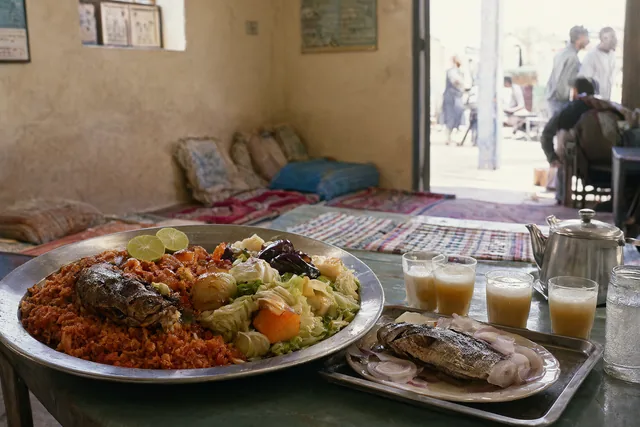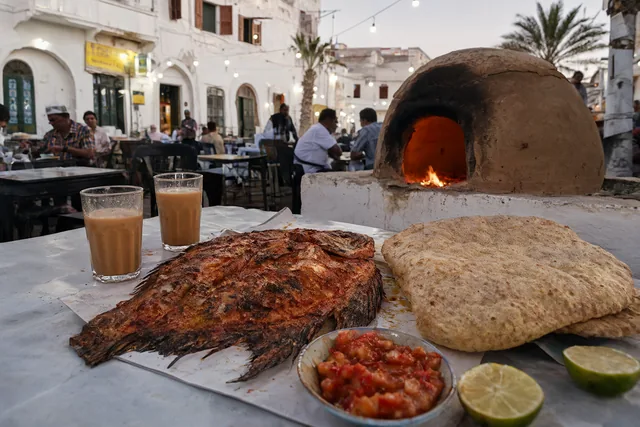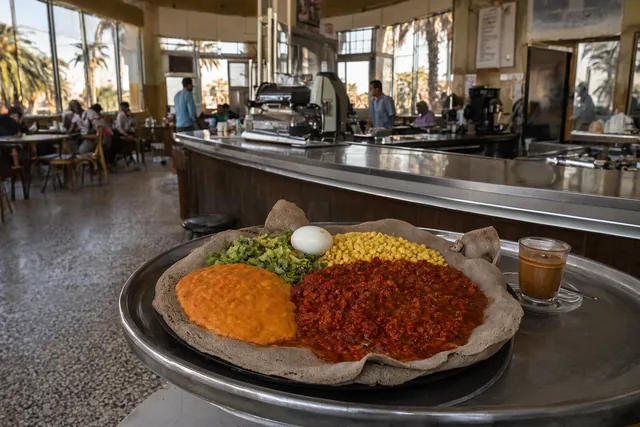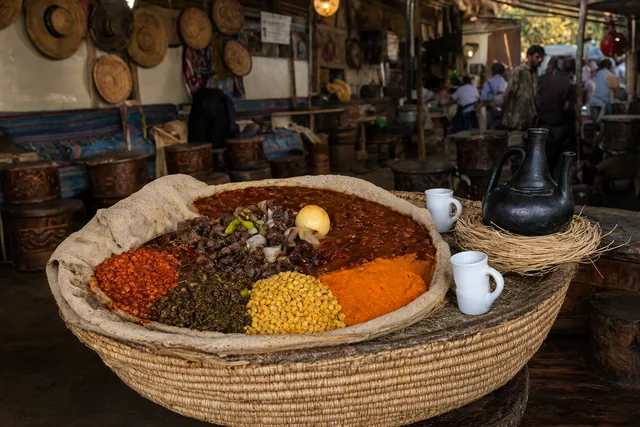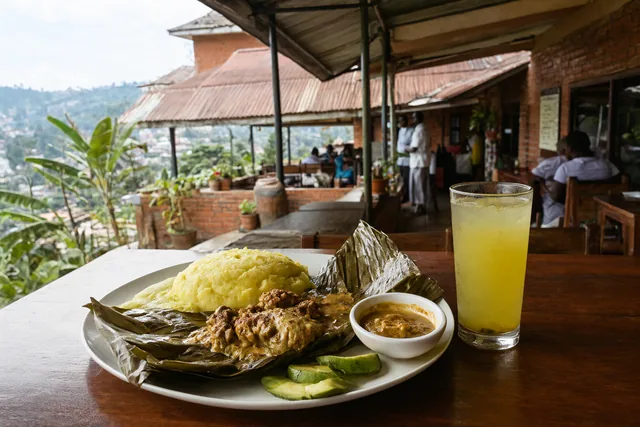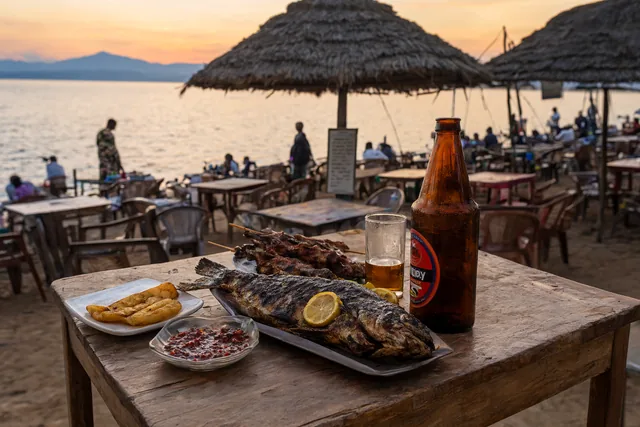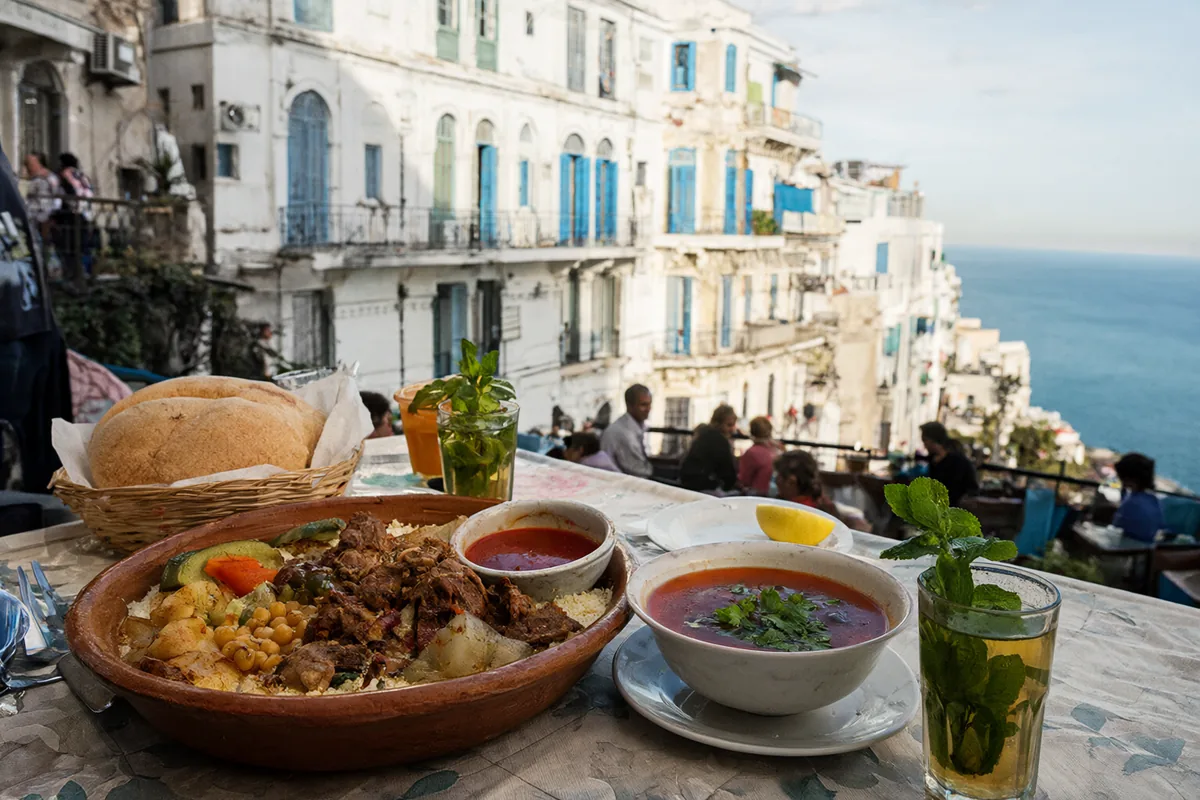
Algeria is Africa's largest country and one of the least visited, and its food is a discovery for most travellers. Algerian cooking shares couscous, slow-cooked stews and pastries with Morocco and Tunisia, but it has its own dishes and its own layers of history: Amazigh (Berber) cooking in the mountains, Andalusian and Ottoman influences in the old cities, Spanish traces in Oran and a French café and bakery culture everywhere. This Algeria food guide covers the dishes to know, how to read menus in Arabic and French, how cash and tipping work, the rules on alcohol and Ramadan, and then goes city by city through where to eat in Algiers, Oran, Tlemcen, Constantine, Annaba, Béjaïa and Ghardaïa.
What to eat in Algeria: 12 dishes to know
Algerian food is home cooking at heart, and many of the best dishes are eaten at family tables or during Ramadan. These are the names worth knowing, with the city or region where they are strongest.
- Couscous (everywhere): called kesksou or seksu, the national dish, steamed semolina grains served with lamb or chicken and vegetables in a red or white broth. Friday lunch is the traditional couscous day. Mesfouf is a lighter version with peas and broad beans, or a sweet one with raisins.
- Chorba frik: lamb soup with cracked green wheat, tomato and fresh coriander, the dish that breaks the fast every evening of Ramadan. In Constantine it is called jari.
- Rechta (Algiers): thin handmade noodles with chicken, chickpeas and turnips in a white cinnamon-scented sauce, made for Eid and family celebrations.
- Chakhchoukha (Constantine and the east): torn pieces of thin flatbread soaked in a spicy lamb and tomato stew with chickpeas.
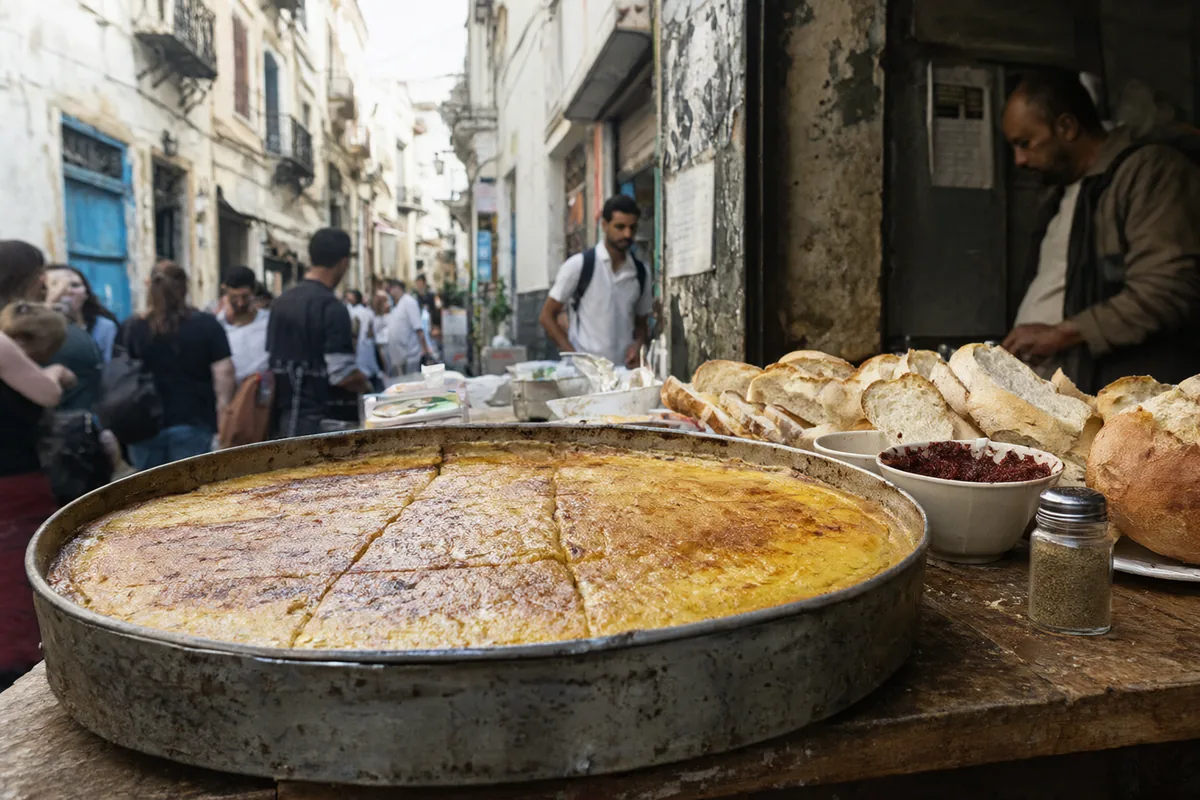
- Garantita (Oran and Algiers): a baked custard of chickpea flour and egg, sold in slices from trays, often stuffed into a baguette with harissa and cumin. In Oran it is called karantika.
- Mhajeb: thin square semolina flatbreads folded around a spicy tomato and onion filling and cooked on a griddle. Sold hot from street stalls.
- Bourek: thin pastry rolled around minced meat, egg or cheese and fried, essential on the Ramadan table. Bourek annabi from Annaba has a whole egg inside.
- Tajine zitoune: chicken cooked with green olives in a lemony sauce. In Algeria, "tajine" usually means a stew, whatever the pot.
- Lham lahlou: sweet lamb cooked with prunes, almonds, cinnamon and orange blossom water, served at the start of Ramadan.
- Makroud (Constantine): diamonds of semolina pastry filled with date paste, fried or baked and dipped in honey.
- Kalb el louz (Algiers): a dense semolina and almond cake soaked in orange blossom syrup, sold by the slice during Ramadan.
- Mint tea and coffee: green tea with fresh mint and plenty of sugar, and strong coffee from the many cafés, often taken with a croissant or a msemen, a square flaky pancake.
On grills and in cheap eateries you will also find merguez (spicy lamb sausage), brochettes (skewers), chakchouka (peppers and tomatoes cooked with egg), loubia (white bean stew) and dolma (stuffed courgettes and peppers). Bread comes as French baguette, as kesra, a semolina flatbread, and as matlou', a thicker leavened flatbread.
How to read a menu in Algeria (Arabic and French)
Most restaurant menus in Algeria are in French, Arabic or both, and spoken Algerian Arabic (Darja) mixes in many French words. In Kabylie, around Béjaïa, Kabyle (a Tamazight language) is widely spoken. Arabic is written from right to left. These words cover most menus.
| Arabic | Romanised | French | Meaning |
|---|---|---|---|
| مقبلات | muqabbilat | entrées | Starters |
| شربة | chorba | soupe | Soup |
| كسكسي | kesksou | couscous | Couscous |
| لحم | lham | viande | Meat |
| خروف | kharouf | agneau | Lamb |
| جاج | djaj | poulet | Chicken |
| حوت | hout | poisson | Fish |
| مشوي | mechoui | grillé, méchoui | Grilled, or whole roast lamb |
| خبز / كسرة | khobz / kesra | pain / galette | Bread / semolina flatbread |
| حلويات | halawiyat | gâteaux, pâtisseries | Sweets, pastries |
| شاي / قهوة | chay / qahwa | thé / café | Tea / coffee |
| طبق اليوم | tbaq el-youm | plat du jour | Dish of the day |
| نباتي | nabati | végétarien | Vegetarian |
| الحساب | el-hsab | l'addition | The bill |
One quirk catches out almost every visitor: many Algerians still count money aloud in old centimes, so a stallholder who says "mille" (a thousand) may mean ten dinars, not a thousand. Written prices on menus are in dinars. Fish restaurants on the coast often price fish by the kilo.
A menu in Algiers might list "chtitha djedj" in French spelling, "شطيطحة" in Arabic, or both, and a fish counter price is per kilo. swap.menu reads Arabic and French, explains each dish, converts dinar prices to your home currency and flags priced-by-weight items, so you are not left guessing.
Cash, tipping and paying the bill
Menu prices in Algeria include tax, and most restaurants do not add a service charge, though some hotel restaurants do. Our guide to tax and service charges on menus explains how these lines work around the world. Tipping is not obligatory. Rounding up the bill or leaving a few coins is normal in cafés and cheap eateries, and around 5 to 10 percent is appreciated in sit-down restaurants.
The currency is the Algerian dinar (DZD, written DA or دج). Algeria is very much a cash economy. International cards are accepted at large hotels and a few upmarket restaurants in Algiers and Oran, but most restaurants, cafés, markets and taxis take cash only, and ATMs that accept foreign cards are limited, so bring enough euros to change at banks or official exchange offices and carry dinars with you. If a card machine offers to charge you in your home currency, decline: our guide to paying in local currency explains why.
Lunch is usually from about 12pm to 2pm and dinner from about 7:30pm to 9pm, earlier than in Spain or the Gulf. The weekend is Friday and Saturday, and Friday is the day for couscous at home. Cafés open early and are mostly frequented by men, while families eat at restaurants, pizzerias and pastry shops.
Alcohol is legal in Algeria but not widely available. It is sold at licensed bars, some hotels and some restaurants, mostly in Algiers, Oran and Kabylie, and Algeria produces its own wine. Most ordinary restaurants do not serve it. During Ramadan, most restaurants and cafés close in the day, and eating, drinking or smoking in public during daylight is not acceptable. At sunset the streets empty for iftar, then come back to life late into the night, with pastry shops selling zlabia (fried syrup-soaked spirals) and kalb el louz, and cafés open until the early hours.
Where to eat in Algeria, city by city
These cities run along the Mediterranean coast from Tlemcen in the west to Annaba in the east, with Ghardaïa as a gateway to the Sahara. Jump to a city:
Where to eat in Algiers
Algiers climbs steeply up from its bay in tiers of white buildings, and its food follows the slope. Down at the waterfront, La Pêcherie, below the Casbah near the old port, is the traditional spot for fish restaurants serving grilled sardines, sea bream, prawns and fried calamari. In the city centre, Rue Didouche Mourad and the streets around it are lined with cafés, bakeries and pastry shops with French-era façades, and the covered Marché Clauzel is a good place to see fresh produce, olives, spices and cheese. The old Casbah, a UNESCO-listed maze of lanes, has small bakeries and sweet makers, and the popular district of Bab El Oued is the place for garantita and street food.
For a sit-down Algerian meal in Algiers, look for restaurants serving rechta, chorba, couscous and tajine zitoune at lunch, when the traditional dishes are freshest. The upmarket districts of Hydra and El Biar on the hills have more modern restaurants and cafés, and the marina at Sidi Fredj, west of the city, is a weekend favourite for seafood. Algiers tip: much of the city closes early in the evening outside Ramadan, so plan dinner for around 8pm rather than late.
Where to eat in Oran
Oran, Algeria's second city, faces Spain across the Mediterranean, and centuries of Spanish rule left their mark on its food. The city's emblem is karantika, the chickpea custard whose name comes from the Spanish calentita, "hot", sold in slices from carts and small shops all over Oran, with harissa and cumin, often in a baguette. Oran is also famous across Algeria as the birthplace of raï music, and it has a reputation as the country's liveliest city after dark.
The old quarter of Sidi El Houari, below the Santa Cruz fort, is the historic heart, and the Front de Mer, the long seafront boulevard, is lined with cafés, ice cream parlours and restaurants that fill up on summer evenings. West of Oran, the beach towns along the coast, such as Aïn El Turck, have seafood restaurants serving grilled fish and paella-style rice, a Spanish legacy. Western Algerian cooking also has its own dishes, including harira soup, which is more common here than in the east.
Where to eat in Tlemcen
Tlemcen, near the Moroccan border, was a great centre of Andalusian culture, and its old mosques, palace and music reflect it. The city's food is refined and home-based: couscous, slow-cooked tajines with fruit and nuts, harira and a long tradition of pastries and sweets made with almonds, honey and orange blossom. The pastry shops of Tlemcen are a good reason to visit, and a plate of local sweets with mint tea makes a good afternoon stop.
The old centre around the Grand Mosque and the Mechouar palace has simple restaurants, bakeries and cafés, and the plateau of Lalla Setti above Tlemcen has cafés with views over the city and the plain below, popular with families on weekends. Tlemcen is smaller and calmer than Oran, and its restaurant scene is modest, so treat lunch as the main meal and ask locals where the day's couscous is good.
Where to eat in Constantine
Constantine, the "city of bridges", is built on a dramatic rock above a deep gorge, and it has one of the strongest food identities in Algeria. This is the home of chakhchoukha, the torn flatbread in spicy lamb stew, of tlitli, small pasta like rice grains cooked in a rich chicken sauce, and of jari frik, the local name for chorba frik. Constantine is also famous for its pastries, especially makroud, and for its old tradition of sweet making.
The old medina, known as Souika, has narrow lanes with bakeries, sweet shops, spice sellers and small eateries, and the newer centre has cafés and restaurants on the streets near the main squares. Constantine is conservative, and alcohol is rarely served. The best food in Constantine is home cooking, and if you are invited to a family meal here, accept. Otherwise, look for restaurants with chakhchoukha on the menu at lunch.
Where to eat in Annaba
Annaba, in the far north-east near the Tunisian border, is a port city with long beaches and the ruins of Roman Hippo Regius, the city of St Augustine. Its signature dish is bourek annabi, a crisp pastry roll filled with minced meat, onion, cheese and a whole egg, found on every Ramadan table in Annaba and in local restaurants. Being close to Tunisia, Annaba's cooking can be a little spicier, with more harissa.
The main promenade, the Cours de la Révolution, is lined with cafés and pastry shops under the trees, and is busy in the evening. The corniche along the coast and the beaches outside Annaba have seafood restaurants serving grilled fish, prawns and calamari. Annaba's old town, the Place d'Armes area, has bakeries and small eateries for a cheap lunch of bread, grilled meat and salad.
Where to eat in Béjaïa
Béjaïa is a port city at the foot of Mount Gouraya and the main city of lower Kabylie, the mountainous Amazigh region east of Algiers. Kabyle cooking is simple and based on olive oil, wheat, vegetables, figs and honey. Order couscous with vegetables in the Kabyle style, berkoukes (large pearls of hand-rolled pasta in a vegetable and meat broth), aghroum (Kabyle flatbread) with local olive oil, and dried figs, which Kabylie is known for.
The old town of Béjaïa, around the port and the old city gates, has cafés and seafood restaurants, and the coastal road east and west of Béjaïa is lined with restaurants overlooking beaches and coves, very busy in summer. Kabylie is more relaxed about alcohol than most of Algeria, and some restaurants in Béjaïa serve beer and wine. Learn the Kabyle greeting azul (hello) and tanemmirt (thank you), which always gets a smile.
Where to eat in Ghardaïa
Ghardaïa, about 600 kilometres south of Algiers, is the main town of the M'zab valley, a UNESCO World Heritage Site of five fortified hilltop towns built by the Mozabite community. The food scene here is small and traditional, and the town is conservative and alcohol-free. What Ghardaïa offers is the market square in the old town, where traders sell dates, spices, carpets and produce, and simple restaurants serving couscous, grilled meat, bread and mint tea.
The palm groves around Ghardaïa produce dates, and Saharan Algeria is famous for them, especially the soft, translucent deglet nour. Many of the visitor guesthouses in the valley serve home-style meals, which is often the best way to eat local dishes. Visitors need a local guide to enter some of the old Mozabite towns, such as Beni Isguen, and dress should be modest. Treat Ghardaïa as a cultural visit with simple, good food rather than a dining destination.
Vegetarian, vegan and allergy tips
Algerian cooking leans heavily on meat, and soups, stews and couscous broths are usually made with lamb or chicken even when the vegetables are the star. Vegetarians can still eat reasonably well: mhajeb, garantita, chakchouka (ask for it without merguez), loubia if made without meat, salads, bread with olive oil, vegetable couscous in Kabylie, and pastries. The word for vegetarian is nabati in Arabic and végétarien in French, and saying "sans viande" (without meat) is widely understood. All meat is halal, and pork is not available.
Watch for smen, aged butter, in couscous and pastries, eggs in many fillings and in garantita, almonds and other nuts in sweets and sweet tajines, sesame on breads and pastries, and wheat in almost everything, which makes Algeria difficult for coeliacs. Our guide to eating abroad with food allergies explains how to communicate an allergy clearly when you do not speak the language.
Useful Arabic phrases for ordering
These phrases use Algerian Arabic (Darja). French is understood almost everywhere, so "bonjour", "merci" and "l'addition, s'il vous plaît" work too.
السلام عليكم Salam alikoum: "Peace be upon you", the standard greeting
واش كاين؟ Wach kayen?: "What is there?", the usual way to ask what is on today
نحب هادي Nhab hadi: "I would like this" (pointing)
بلا لحم Bla lham: "Without meat"
عندي حساسية من... Andi hassasiya men...: "I am allergic to..."
شحال؟ Chhal?: "How much?"
الحساب من فضلك El-hsab men fadlek: "The bill, please"
بنين بزاف Bnin bezzaf: "Very tasty"
How swap.menu helps you eat in Algeria
Algerian menus switch between Arabic and French, often on the same page, and the names of dishes do not always match those in Morocco or Tunisia. Photograph a menu with swap.menu and every dish appears in your language with the original name beside it and a short explanation, so you know that chakhchoukha is bread in a spicy stew, that tlitli is a pasta dish, and that hout means fish, not something hot. Prices in Algerian dinars are converted to your home currency, which helps you keep track of your cash.
Tap the dishes you want, add a note such as "no meat" or "no nuts, please", typed or spoken, and swap.menu translates your order into Arabic or French. Show the waiter your phone, or let them scan the QR code and read your order on their own screen. Try it now on a sample menu with the free demo, or see travel pass prices.
Off to Algeria? Your first 3 menu scans are free, and a travel pass starts from $4.99 with nothing that renews.
Start free with 3 scansAlgeria food FAQ
What is the national dish of Algeria?
Couscous, called kesksou or seksu, is Algeria's national dish, served with lamb or chicken and vegetables in broth. Chorba frik, rechta, chakhchoukha and bourek are the other dishes most Algerians would name.
Do you tip in restaurants in Algeria?
Tipping is not obligatory. Rounding up or leaving small change is normal in cafés, and 5 to 10 percent is appreciated in sit-down restaurants for good service.
Can I use a credit card in Algeria?
Only in large hotels and a few upmarket restaurants. Algeria is a cash economy and ATMs that accept foreign cards are limited, so bring euros to change and carry dinars for meals, taxis and markets.
Is it expensive to eat out in Algeria?
No, eating out in Algeria is inexpensive, especially at cafés, street stalls and simple restaurants. A garantita sandwich or a plate of mhajeb costs very little, and even a sit-down seafood meal is modest by European standards.
Is tap water safe to drink in Algeria?
It is best to drink bottled water, which is cheap and available everywhere. Restaurants usually serve bottled water.
How can I read a menu in Algeria?
Most menus are in French, Arabic or both. Learn a few words such as chorba, lham, djaj and hout, or photograph the menu with swap.menu, which translates every dish, explains it, converts prices to your currency and translates your order for the waiter.
Travelling further in North Africa? Read our food guides for neighbouring countries:
- Morocco food guide
- Tunisia food guide
- Mauritania food guide
- Egypt food guide
- France food guide
- Spain food guide
Or browse every travel food guide.