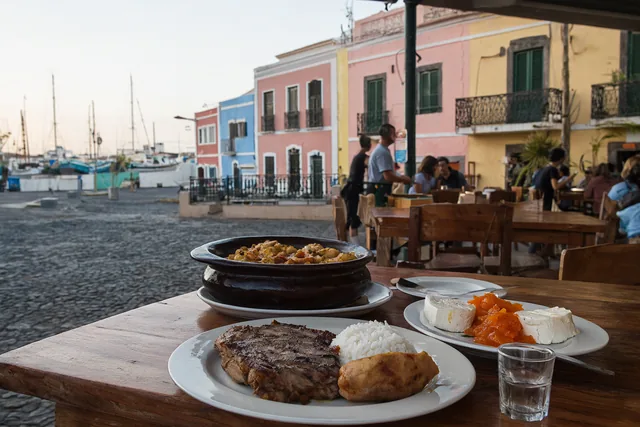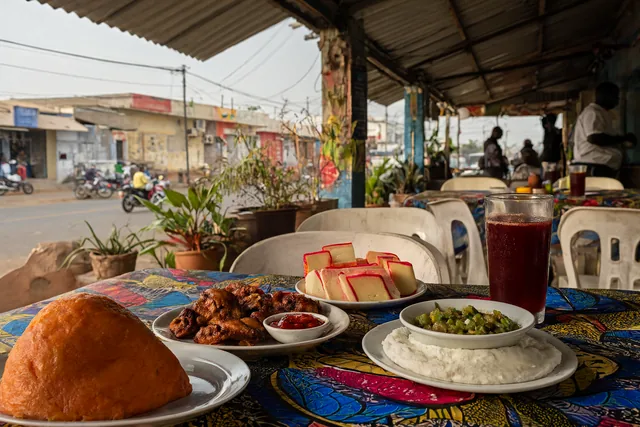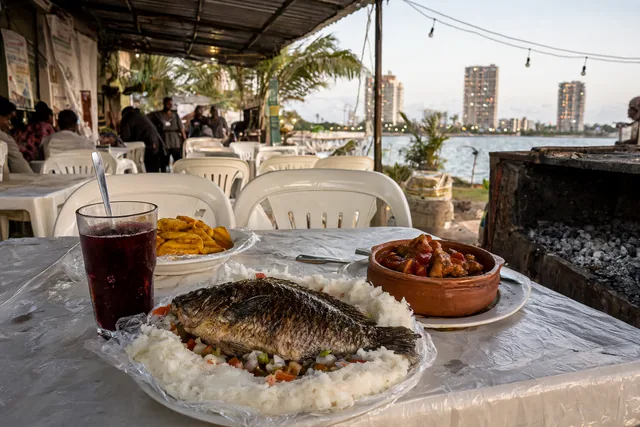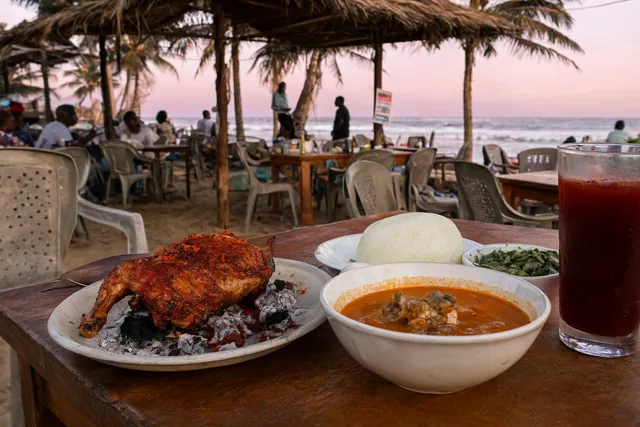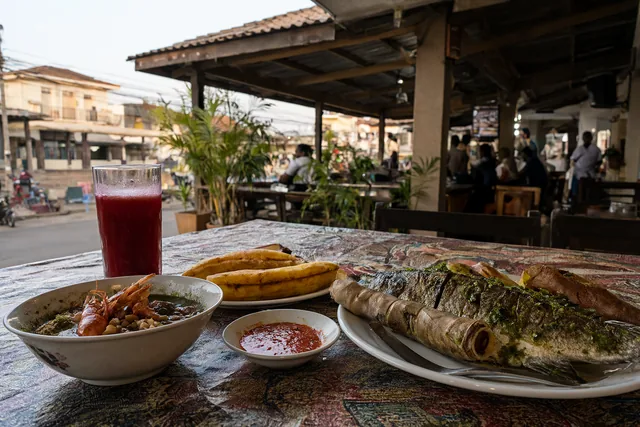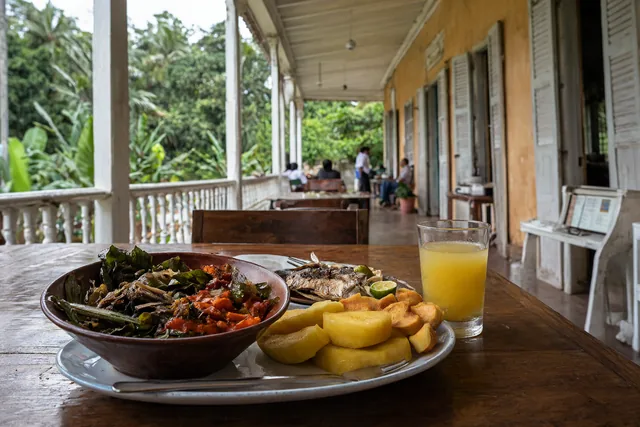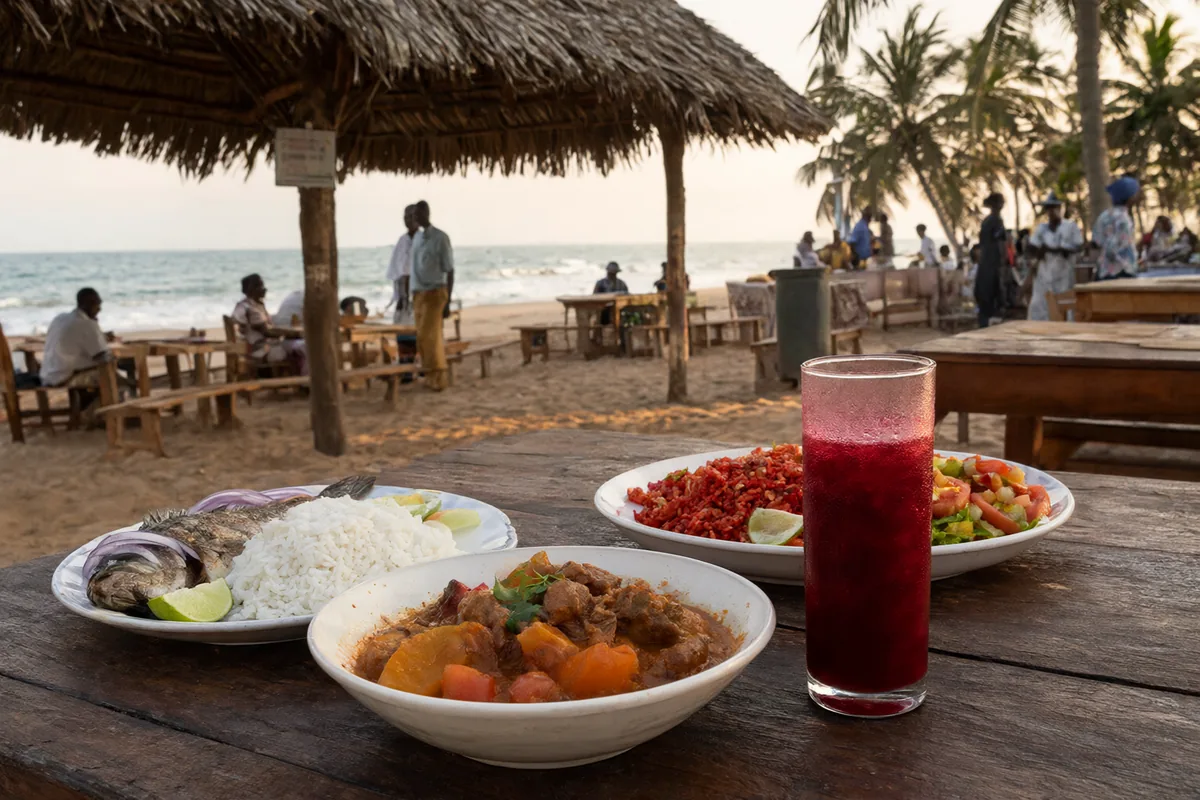
The Gambia is the smallest country on mainland Africa, a narrow strip of land along the Gambia River, and its food is rooted in rice, groundnuts, fish and the river's oysters. This Gambia food guide covers the dishes to order (domoda, benachin, superkanja and yassa), the local food words you will hear at a chop house or a fish market, how tipping and paying in dalasi works, and then goes through where to eat in Banjul, Serrekunda, Kololi and the Senegambia Strip, Bakau, Tanji, the south coast and Janjanbureh upriver. English is the official language and the language of menus, but Mandinka, Wolof, Fula and Jola are spoken at home, and many dish names come from them.
What to eat in the Gambia: 12 dishes to know
These are the dishes worth seeking out. Gambian food shares a great deal with neighbouring Senegal, and most meals are a sauce or stew served over a big plate of rice, often eaten from a shared bowl.
- Domoda: the national dish, a rich stew of groundnut (peanut) paste and tomato with beef, chicken or fish and vegetables such as pumpkin and sweet potato, served over rice.
- Benachin: "one pot" in Wolof, rice cooked in a tomato sauce with fish or meat and vegetables, the Gambian relative of jollof and of Senegal's thiéboudienne.
- Superkanja: a thick okra stew with fish, palm oil and sometimes smoked fish or meat, served over rice.
- Yassa: chicken or fish marinated in lemon or lime juice, mustard and a great deal of onion, then grilled and simmered in the onion sauce. Served with rice.
- Plasas: a stew of leafy greens such as cassava or potato leaves cooked with palm oil, meat and fish.
- Afra: grilled meat, usually lamb or beef, cooked over charcoal at roadside stalls and served with raw onion, mustard and chilli.
- Ebbeh: a thick, sour and spicy soup of cassava, fish or seafood, lime and palm oil, sold as street food, especially in the evening.
- Grilled fish (the coast): ladyfish, butterfish, barracuda, snapper and catfish grilled whole or as steaks, with rice, chips or salad.
- Oysters (the river mangroves): small mangrove oysters harvested by women from the creeks near Banjul, served grilled, stewed or in a spicy sauce.
- Chere: steamed millet couscous, eaten with a sauce or with sour milk and sugar.
- Akara: deep-fried black-eyed bean fritters, a breakfast and snack food, often eaten inside tapalapa bread.
- Chakery (also spelt chakeri): a dessert of millet couscous in sweetened yoghurt with nutmeg and raisins.
To drink, try wonjo (chilled hibiscus juice), bouyi or baobab juice (thick and creamy, made from baobab fruit), ginger juice and attaya, strong, sweet green tea brewed in three rounds over charcoal and poured from a height to make foam. Palm wine is tapped in Jola villages in the south. Tapalapa is the Gambia's bread, a dense, crusty loaf baked in wood-fired ovens and eaten at breakfast with beans, eggs or chocolate spread.
How to read a menu in the Gambia
Gambian menus are in English, and in tourist restaurants along the coast the dishes are explained. Local chop houses and street stalls, however, may have only a board or a list of the day's dishes, and the words on it come from Wolof and Mandinka. Many local eateries cook only one or two dishes for lunch and sell out by mid-afternoon. These are the terms worth knowing.
| Term | Origin | Meaning |
|---|---|---|
| Chop house | Gambian English | Simple local eatery serving rice dishes |
| Domoda | Mandinka | Groundnut and tomato stew |
| Benachin | Wolof | "One pot" rice cooked in tomato sauce |
| Superkanja | Mandinka, Wolof | Okra stew with fish and palm oil |
| Plasas | Krio | Leaf stew with palm oil |
| Afra | Gambian | Charcoal-grilled meat from a roadside grill |
| Ebbeh | Local name | Spicy, sour cassava and fish soup |
| Chere | Wolof | Steamed millet couscous |
| Tapalapa | Local name | Dense, crusty Gambian bread |
| Wonjo | Mandinka | Chilled hibiscus juice |
| Attaya | Wolof | Strong, sweet green tea |
| Bitik | Wolof, from French | A small corner shop selling drinks and basics |
| Pepper | Gambian English | Chilli; ask for "no pepper" or "small pepper" |
| Toubab | Wolof, Mandinka | A foreigner, usually a white visitor |
At beach bars and fish restaurants, grilled fish and lobster are often priced by the piece or by weight, and the price depends on the day's catch. Ask the price before it goes on the grill. swap.menu explains Gambian dish names and converts dalasi prices to your home currency, so you know what you are paying.
Tipping, tax and paying the bill in the Gambia
Tipping is not obligatory in the Gambia, but it is appreciated, and wages in restaurants are low. In tourist restaurants and beach bars, around 10 percent is a generous tip for good service if no service charge has been added. At chop houses and street stalls, rounding up is enough. Hotels and some restaurants add value added tax (VAT) or a service charge to the bill, sometimes on top of the menu prices, so check the bottom of the menu. Our guide to tax and service charges on menus explains how these lines work.
The currency is the Gambian dalasi (GMD), written D or GMD, as in D250. Cash is used for almost everything, and cards are accepted mainly in larger hotels, a few restaurants on the Senegambia Strip and supermarkets. ATMs are found in the coastal towns, but are rare upriver, so take enough dalasi with you before heading inland. Some tourist businesses quote prices in pounds or euros, but paying in dalasi is usually cheaper. When a card machine offers to charge you in your home currency, choose dalasi: our guide to paying in local currency explains why.
Breakfast is often tapalapa with beans, akara or eggs, or porridge. Lunch, the main meal, is eaten from about 1pm to 3pm, and dinner from about 7pm or 8pm. The Gambia is a mostly Muslim country, but alcohol is widely available in tourist areas, bars and hotels along the coast. During Ramadan, many local eateries close during the day and open after sunset. When eating from a shared bowl, eat with your right hand from the section in front of you.
Where to eat in the Gambia, town by town
Most visitors stay on the Atlantic coast between Banjul and the south coast villages, but the river is where the Gambia's name and history come from. Jump to a destination:
Where to eat in Banjul
Banjul, the capital, sits on an island at the mouth of the Gambia River and is surprisingly small and quiet for a capital. The place to start is Albert Market, Banjul's main market since colonial times, with stalls of fish, rice, groundnuts, spices, fruit and vegetables, and cooked food stalls selling benachin, domoda and akara. Around the market and the ferry terminal, small chop houses serve big plates of rice and sauce at lunchtime to traders and office workers.
Banjul has few sit-down restaurants and most visitors eat lunch here and return to the resort area for dinner. Across the bridge, the creeks around Lamin and the mangroves of the Tanbi Wetlands are where women harvest the Gambia's famous oysters, and some boat trips from the creeks include oysters grilled on the riverbank. Banjul gets busy around the ferry to Barra, the crossing to the north bank, and street food sellers work the queues.
Where to eat in Serrekunda
Serrekunda is the Gambia's largest urban area, a sprawling commercial town inland from the resorts, and it is where most Gambians live and shop. Serrekunda Market is the biggest and liveliest in the country, with stalls of fabric, produce, dried fish and spices, and food sellers cooking afra, ebbeh and fried fish. This is the place to try Gambian food at local prices, served from pots in small chop houses, or grilled at roadside afra stalls in the evening.
Serrekunda can be crowded and confusing for visitors, so going with a local guide or someone from your hotel helps you find the best food. Look for afra stalls, recognisable by the smoke and the crowd, in the evening, and try ebbeh from a street vendor. Westfield junction, one of the main crossroads, and the streets around the market are full of snack sellers and juice stalls. Bring small notes, as nobody will have change for large dalasi notes.
Where to eat in Kololi and the Senegambia Strip
Kololi is the heart of the Gambia's tourist coast, and the Senegambia Strip is its main street of hotels, restaurants, bars and clubs. This is where you will find the most choice: Gambian restaurants serving domoda, benachin, yassa and grilled fish alongside British, Lebanese, Indian and Italian restaurants. Many places along the Strip and on the beach serve a mixed menu with a "Gambian dishes" section, and it is a good place to try local food with English explanations.
The beaches of Kololi and neighbouring Kotu have beach bars serving grilled fish, chips, cold beer and fresh juice, with seating under thatched umbrellas. Prices on the Strip are higher than elsewhere, and service charges and VAT are more likely to be added. Walk a few streets back from the main road, or take a taxi to a local area, for cheaper Gambian food.
Where to eat in Bakau
Bakau, just north of Kotu, is an old fishing town with a long history and one of the most popular sights on the coast, the Kachikally crocodile pool. Bakau's fish market and beach, where colourful pirogues land their catch, are a good place to see the Gambia's fishing culture, and small restaurants nearby serve grilled fish, yassa and benachin. The cliff-top area above the beach has restaurants and bars with views over the Atlantic.
Bakau is more local and relaxed than Kololi, with a mix of Gambian chop houses, fruit sellers and a few restaurants aimed at visitors. The Bakau craft market is near the main road. Fish is the thing to order in Bakau: ask what was landed that day, and choose between grilled, fried or cooked in a yassa sauce.
Where to eat in Tanji
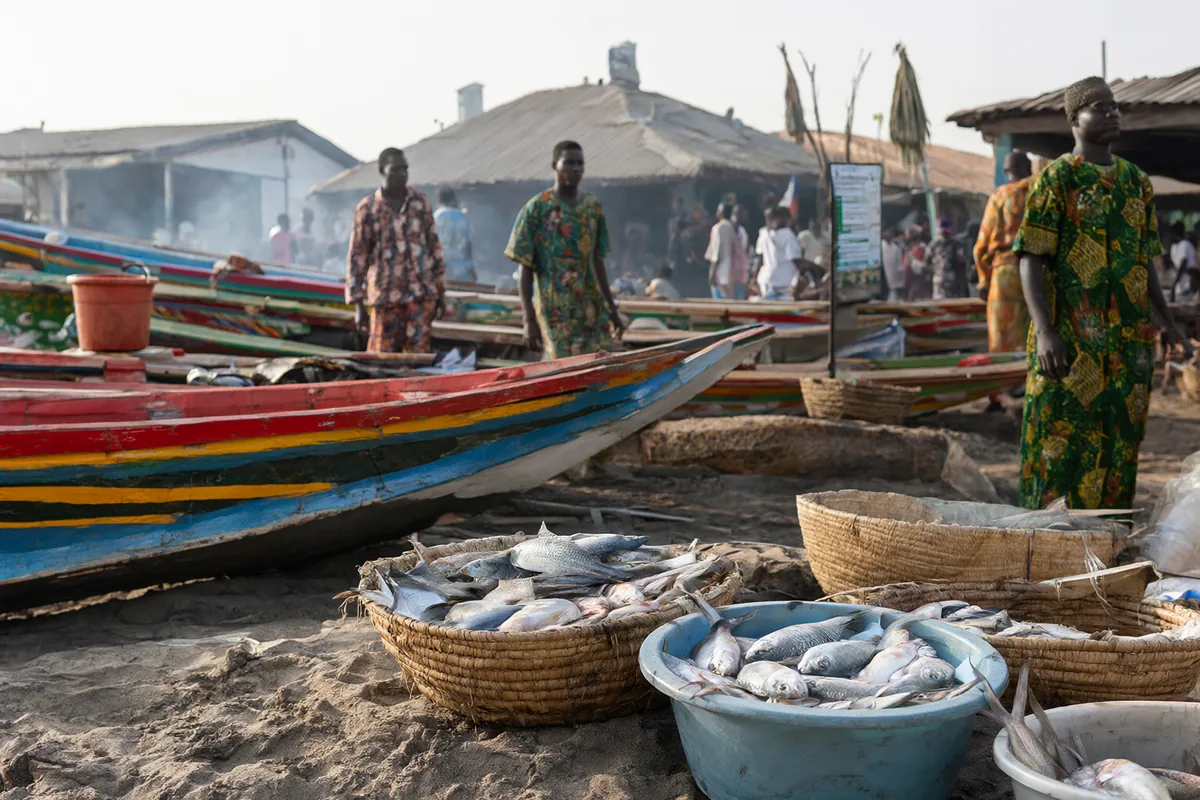
Tanji, about half an hour south of the resorts, is home to the Gambia's busiest fishing beach and the Tanji fish market, one of the most interesting sights in the country. In the afternoon, long painted pirogues come in through the surf, and the catch is carried up the beach in baskets to be sold, gutted and smoked in the smokehouses behind the beach. The smoked fish (bonga) ends up in stews across the region.
Tanji has a few simple restaurants and beach bars near the market and on the beach, where you can eat grilled fish caught that day. It is not a place for a long sit-down meal, but for seeing where the Gambia's fish comes from and eating it at its freshest. Go with a guide or someone from your hotel if you can, and be ready for the smell of the smokehouses.
Where to eat on the south coast
The Gambia's south coast, from Brufut and Sanyang to Gunjur and Kartong near the Senegal border, is quieter than the resort strip, with long beaches, fishing villages and eco-lodges. Sanyang beach has beach bars serving grilled fish and lobster, while Gunjur and Kartong are fishing villages with simple local food and a few lodges offering home-cooked Gambian dishes.
Many visitors to the south coast stay in eco-lodges, where meals are often included and based on local fish and vegetables. Beach bars may open only in the main tourist season, from about November to April, and menus are short: grilled fish, chips, salad and a rice dish. Bring cash, as cards are rarely accepted in the villages.
Where to eat in Janjanbureh
Janjanbureh, on an island in the Gambia River about 300 kilometres upriver, is the main town of the interior, a former colonial administrative centre and a base for river trips, birdwatching and visiting the chimpanzee project at the River Gambia National Park. Food upriver is simpler and more traditional than on the coast: domoda, benachin, rice with sauce, river fish and fresh vegetables from the surrounding farms.
Janjanbureh has a few camps and lodges along the river that serve meals to guests and visitors, and small chop houses in town serving rice and sauce. Fruit and groundnuts are sold at the market. There are no ATMs in many places upriver, so bring enough dalasi with you. Meals in camps are often set menus, so mention any dietary needs when you book.
Vegetarian, vegan and allergy tips
Vegetarians can eat well in the Gambia's tourist areas, where many restaurants have vegetarian options, but local food needs questions. Most sauces are cooked with fish, meat, smoked fish or stock cubes, and dried fish is common in vegetable stews. The easiest local dishes are akara, vegetable domoda made without meat (ask), yassa with vegetables or egg, fried plantain, chere with sour milk and fresh fruit. Say "I am vegetarian, no meat, no fish", as "vegetarian" alone may be taken to mean fish is fine.
Groundnuts are central to Gambian food, in domoda, snacks and many sauces, so people with peanut allergies need to ask about every dish, and should be aware that groundnut oil may be used for cooking. Fish, shellfish and smoked fish are in many dishes, and palm oil and chilli are common. Rice and millet are naturally gluten-free, but tapalapa and fritters are not. Our guide to eating abroad with food allergies explains how to communicate a serious allergy clearly.
Gambian food words and ordering phrases
Salaam aleikum "Peace be with you", the standard greeting (reply "Maleikum salaam")
I ning somo / I ning tilo "Good morning / Good afternoon" in Mandinka
Nanga def? "How are you?" in Wolof (reply "Mangi fi")
Small pepper, please "Not too spicy, please"; "no pepper" means no chilli at all
How much is it? Ask before ordering at stalls, beach bars and fish markets
Abaraka "Thank you" in Mandinka
Jërëjëf "Thank you" in Wolof
How swap.menu helps you eat in the Gambia
Gambian menus are in English, but they are full of words visitors do not know. A chop house board might list domoda, superkanja, plasas and ebbeh, and a beach bar might list ladyfish, butterfish and barracuda without saying which is which. Photograph the menu with swap.menu and every dish is explained in plain language, so you know that superkanja is okra stew and that plasas is a leaf stew with palm oil. Every price is converted from dalasi to your home currency, and VAT or service charge lines are flagged.
For visitors whose first language is not English, swap.menu translates the whole menu into any of 29 languages, keeping the Gambian dish name beside each translation. Tap the dishes you want, add a note such as "no groundnuts" or "small pepper", and show your order on screen. Saved menus let you look back at what you ate and order it again. Try it on a sample menu with the free demo, or see travel pass prices.
Off to the Gambia? Your first 3 menu scans are free, and a travel pass starts from $4.99 with nothing that renews.
Start free with 3 scansGambia food FAQ
Do you tip in restaurants in the Gambia?
Tipping is not required in the Gambia, but around 10 percent is appreciated in tourist restaurants and beach bars if no service charge has been added. At chop houses and street stalls, rounding up is enough.
What is the national dish of the Gambia?
Domoda, a stew of groundnut paste and tomato with meat or fish served over rice, is usually called the national dish. Benachin, rice cooked in a tomato sauce with fish or meat, is just as popular.
What food is the Gambia famous for?
The Gambia is famous for domoda, benachin, yassa, superkanja, grilled fish and mangrove oysters. Drinks such as wonjo, baobab juice and attaya green tea are also part of everyday life.
Is it expensive to eat out in the Gambia?
Chop houses and street food are cheap. Restaurants on the Senegambia Strip and in hotels cost much more, and some add VAT or a service charge on top of the menu prices.
Is tap water safe to drink in the Gambia?
Visitors should drink bottled water in the Gambia. Bottled water is sold everywhere, and it is wise to avoid ice and raw salads at simple places.
How can I understand Gambian menus and dish names?
Learn a few dish names such as domoda, benachin and superkanja, or photograph the menu with swap.menu. It explains Gambian dish names, converts dalasi prices to your currency and can translate the menu into 29 languages.
Travelling further in West Africa? Read our food guides for nearby countries:
Or browse every travel food guide.