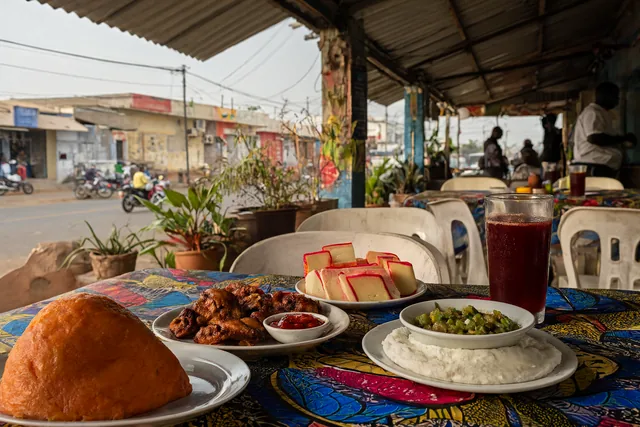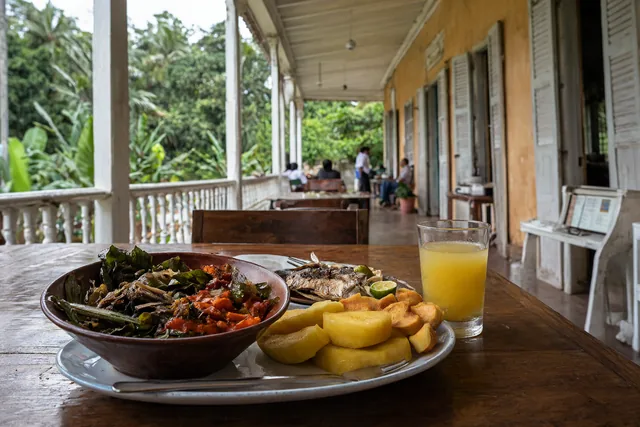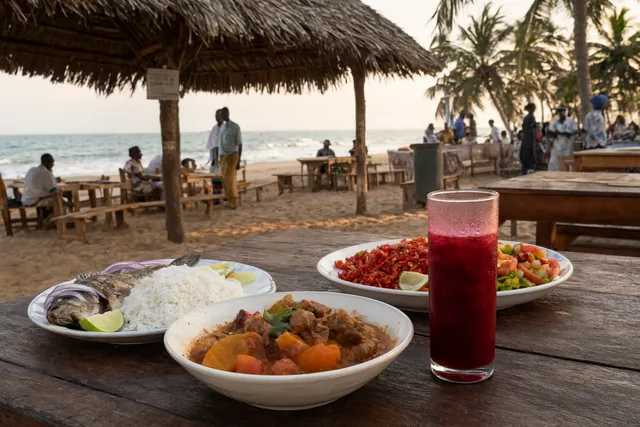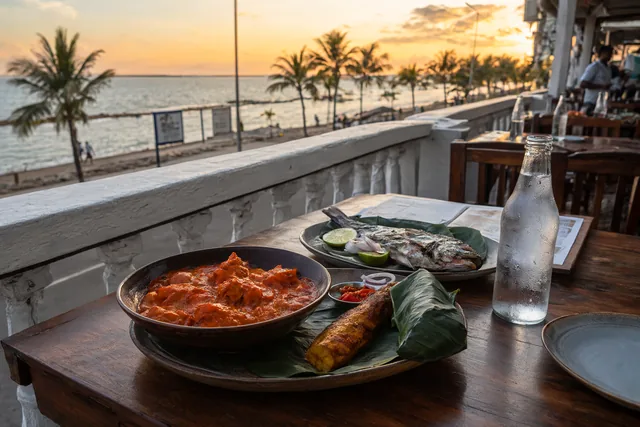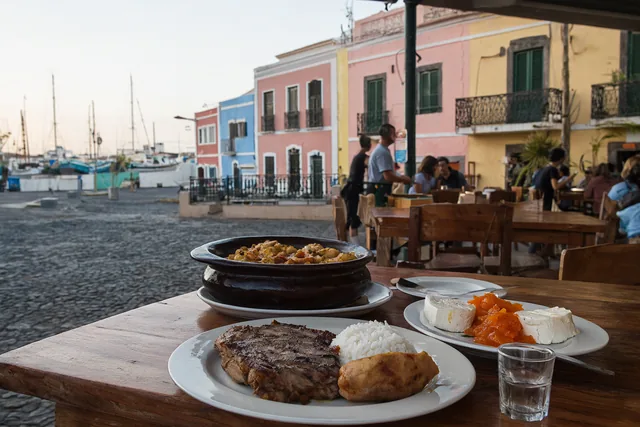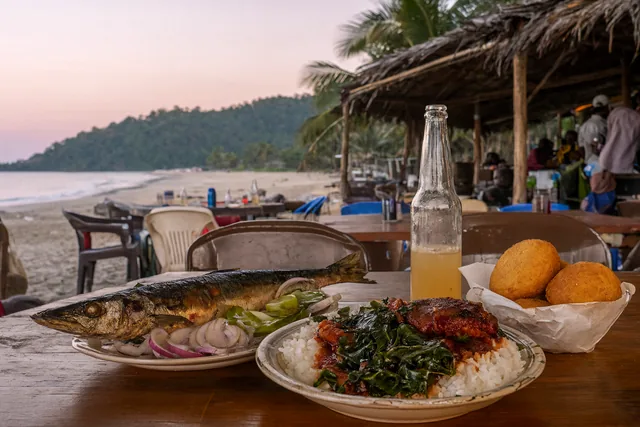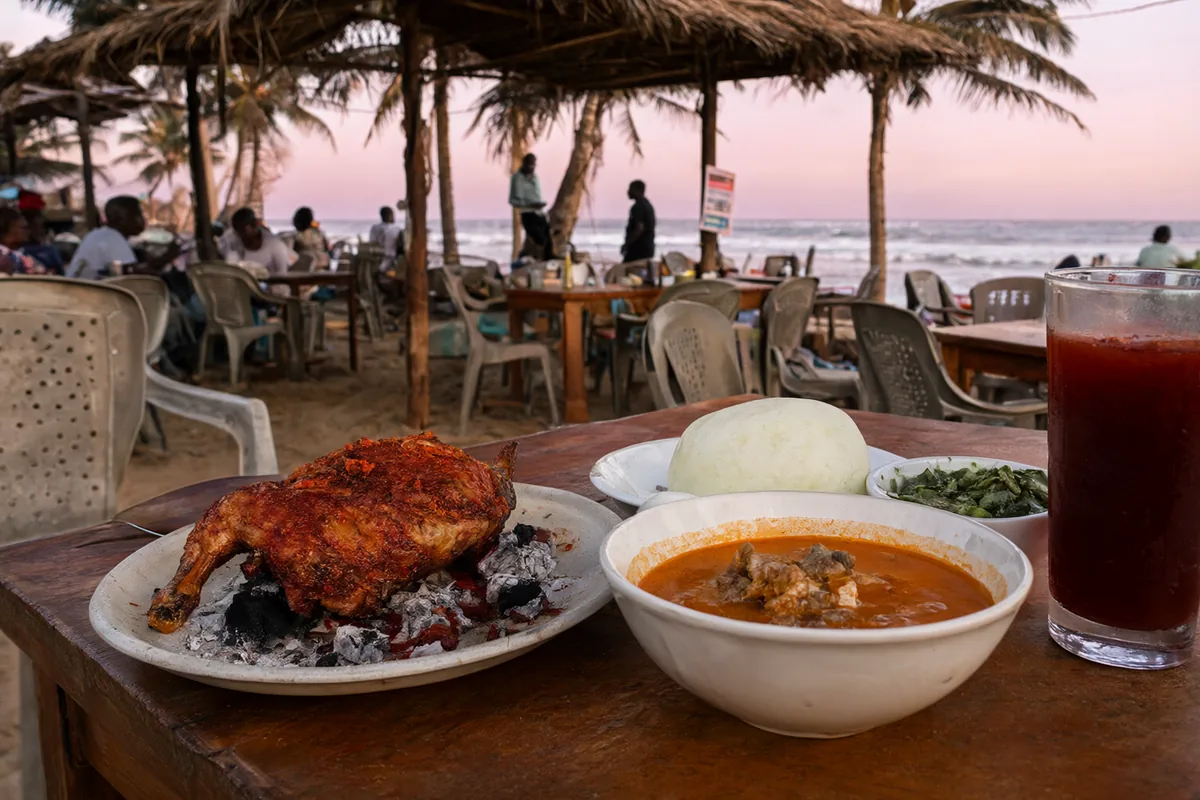
Togo is a narrow sliver of West Africa, barely 50 kilometres wide at the coast, but its food covers a lot of ground: fufu pounded fresh in Lomé's street kitchens, grilled chicken rubbed with chilli paste, maize dough with slippery leaf sauces, and coffee, cocoa and fruit from the green hills around Kpalimé. This Togo food guide covers the dishes to order, the French and Ewe words you will meet on menus and at market stalls, how tipping and paying in CFA francs works, and then goes town by town through where to eat in Lomé, Lake Togo, Aného, Kpalimé, Atakpamé, Sokodé and Kara. French is the official language, while Ewe and Kabiyè are the most widely spoken local languages, and Mina is the language of the Lomé markets.
What to eat in Togo: 12 dishes to know
These are the dishes worth seeking out. Togolese meals are built on a starch (maize, yam or cassava) with a sauce, and the word for sauce in Ewe and Mina, dessi, appears in many dish names.
- Fufu (everywhere, especially the south): boiled yam pounded in a big wooden mortar until smooth and stretchy, served with a light tomato soup, peanut soup or palm nut soup with meat or fish. Lomé's fufu bars pound it fresh all day.
- Akoumé (everywhere): a firm, smooth maize flour dough, the everyday Togolese staple, eaten with a sauce and fish or meat.
- Koklo meme (the south): chicken grilled over charcoal and basted with a spicy paste of chilli, tomato, onion and ginger. One of Togo's best-known dishes.
- Ademe (the south): a slippery sauce of jute leaves (also known as corete), cooked with palm oil, fish or meat, eaten with akoumé.
- Gboma dessi (the south): a stew of gboma greens (African aubergine leaves), tomato, palm oil and smoked fish or meat.
- Pinon (the south): gari (toasted cassava) cooked into a thick paste with tomato sauce, onions and sometimes fish, a quick and cheap lunch.
- Ablo (the coast): small, soft, slightly sweet steamed cakes of fermented maize or rice flour, eaten with fried fish, grilled meat or a hot pepper sauce.
- Kom (the coast): fermented maize dough wrapped in leaves and boiled, slightly sour, eaten with fried fish and chilli sauce, like Ghanaian kenkey.
- Djenkoumé (the south): maize dough cooked in a tomato and stock sauce until red, served with grilled chicken, similar to Benin's amiwo.
- Riz sauce (everywhere): rice with a peanut, tomato or leaf sauce, the most common lunch on any Togolese menu.
- Poisson braisé (the coast and Lake Togo): whole fish grilled over charcoal, with tomato and onion sauce and akoumé, ablo or chips.
- Brochettes and wagashi (the centre and north): skewers of grilled beef, mutton or goat, and the soft Fulani cheese called wagashi, fried, sold in Sokodé and Kara.
Street snacks include klui-klui (crunchy peanut sticks), koliko (fried yam chips with chilli), atchomon (crunchy fried dough sticks), and yovo doko (soft fried doughnuts). To drink, try bissap (chilled hibiscus), gnamankoudji or ginger juice, sodabi (a strong palm wine spirit), fresh palm wine and, in the north, tchoukoutou, a sour, cloudy sorghum beer brewed by women and drunk from calabashes. Kpalimé is famous for its coffee and cocoa.
How to read a Togolese menu in French and Ewe
Menus in Togo are in French, and local dishes are written in Ewe or Mina, often in French spelling. Most Togolese eat at small local places: maquis and open-air bars serving grilled food and beer, fufu bars where yam is pounded to order, and women selling akoumé, pinon or rice and sauce from big pots at lunchtime, often with no menu at all. These are the words worth knowing.
| French or Ewe | Meaning |
|---|---|
| Pâte / akoumé | Firm maize dough |
| Fufu / foufou | Pounded yam |
| Dessi | Sauce (in Ewe and Mina) |
| Sauce claire / sauce tomate | Light pepper soup / tomato sauce |
| Sauce arachide / sauce graine | Peanut sauce / palm nut sauce |
| Ademe / gboma | Jute leaf sauce / African aubergine leaf stew |
| Poisson braisé / frit | Grilled / fried fish |
| Poulet bicyclette | Free-range village chicken |
| Viande / boeuf / mouton / porc | Meat / beef / mutton / pork |
| Agouti | Grasscutter (cane rat), a prized meat |
| Piment | Chilli; "pimenté" means spicy |
| Plat du jour | Dish of the day |
| Tchoukoutou / sodabi | Sorghum beer / palm wine spirit |
At a fufu bar, you choose your soup and then your meat or fish piece by piece, and each piece is priced separately. Ask the price of each before it goes in the bowl. swap.menu reads French menus and handwritten boards, explains Ewe and Mina dish names and converts CFA franc prices to your home currency.
Tipping, tax and paying the bill in Togo
Tipping is not obligatory in Togo, but it is appreciated. In restaurants used to visitors, leaving around 5 to 10 percent for good service is normal, and at maquis, fufu bars and street stalls rounding up or leaving small change is enough. Value added tax (TVA) is included in menu prices in most places, though hotels and some upmarket restaurants show it separately or add a service charge. Our guide to tax and service charges on menus explains how these lines work.
The currency is the West African CFA franc (XOF), written FCFA or simply CFA on menus. Cash is used for almost everything, and small notes and coins are often short, so break large notes at supermarkets and petrol stations. Mobile money is widely used by locals. Cards are accepted at larger hotels, supermarkets and some restaurants in Lomé, but rarely elsewhere, and ATMs outside the main towns can be unreliable. When a card machine offers to charge you in your home currency, choose CFA francs: our guide to paying in local currency explains why.
Lunch is eaten from about noon to 2pm, and fufu bars are busiest then. Dinner is from about 7pm, and grilled chicken, brochettes and fish stalls are busy into the evening. Fufu and akoumé are eaten with the right hand, with a bowl of water brought for washing. Togo has a mix of Christian, Muslim and traditional religions, and alcohol is widely available, though less so in parts of the Muslim north. Parts of the far north near the borders have travel warnings, so check your government's advice before travelling beyond Kara.
Where to eat in Togo, town by town
Togo runs about 600 kilometres from the coast to the north, through the green hills of the Plateaux region and the savannah of the north. Jump to a destination:
Where to eat in Lomé
Lomé, the capital, sits right on the coast next to the Ghana border, and it is the best place in Togo to try everything. The Grand Marché in the city centre is the main market, a huge building and surrounding streets where the famous Nana Benz, the women cloth traders of Lomé, made their fortunes, and where food stalls serve akoumé, fufu, pinon and fried fish. Lomé's fufu bars, where yam is pounded to order in big wooden mortars, are an institution, and the thud of pounding is a constant sound in the city at lunchtime.
The Boulevard du Mono along the seafront has beach bars and restaurants serving grilled fish, koklo meme and cold drinks, busy in the evenings and at weekends. The districts of Bè and Tokoin are full of maquis and local food, while the area around the Boulevard du 13 Janvier and the city centre has more restaurants, French-style bakeries and international food. Lomé is also home to the Akodessewa fetish market, which sells traditional medicine and Vodun items rather than food.
Where to eat at Lake Togo
Lake Togo, a lagoon about half an hour east of Lomé, is a popular weekend escape, with the beach town of Agbodrafo on one side and the historic village of Togoville across the water. The food is simple and fresh: grilled fish and prawns from the lagoon and the sea, served at lakeside hotels and small restaurants, often with ablo, akoumé or chips. Pirogue crossings from Agbodrafo to Togoville are a common outing, and lunch by the lake follows.
Agbodrafo also has a small fishing beach and a historic slave house, the Maison des Esclaves. Togoville is where the treaty that gave Togo its name was signed in 1884, and it has a small market and a few local food sellers. Lake Togo is quiet during the week, busier at weekends, and most restaurants are small and cash only.
Where to eat in Aného
Aného, near the Benin border, was Togo's colonial capital before Lomé, and it sits on a strip of land between a lagoon and the sea. Aného is a fishing town, and fish is the thing to eat here: grilled, fried, or cooked in tomato sauce, with ablo, kom or akoumé. Aného is also the centre of the Guin and Mina peoples, and the Epé Ekpé festival, held each September, brings large gatherings and food to the town.
Aného's food scene is small, built around the market, fish sellers on the beach and a few maquis and simple restaurants. The market is the best place to eat, with women selling fried fish, ablo and akoumé with sauce. Aného is often visited on a day trip from Lomé, about an hour away, together with Lake Togo. Bring cash.
Where to eat in Kpalimé
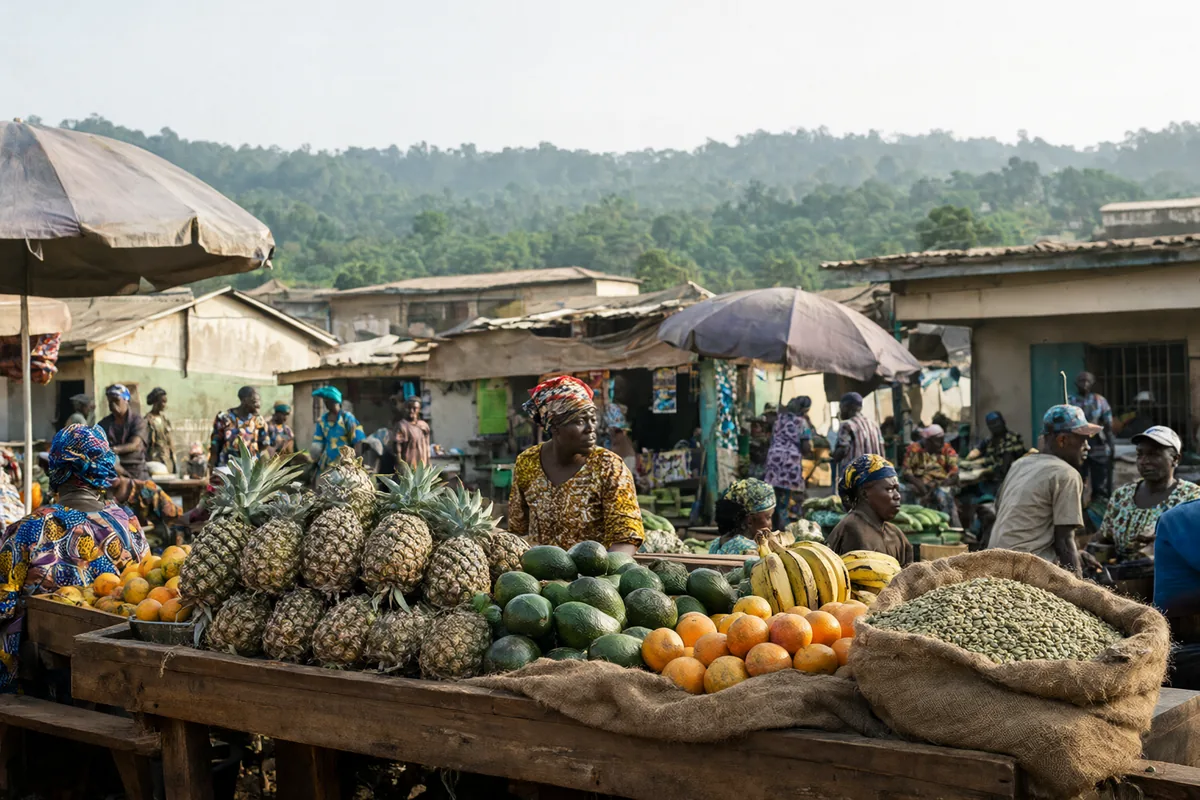
Kpalimé, about two hours northwest of Lomé, sits in the green hills of the Plateaux region near Mount Agou, Togo's highest mountain. The area grows coffee, cocoa, bananas, avocados, citrus and pineapples, and Kpalimé's market is full of fruit and vegetables. The town is a base for hiking, waterfalls and butterfly walks in the forest, and its food is fresher and more varied than in the dry north: fufu with palm nut or peanut soup, akoumé with gboma or ademe, grilled chicken and fish from nearby rivers.
Kpalimé's small restaurants and maquis are around the market and the main streets, and some guesthouses serve home-cooked meals. Try coffee and chocolate from local producers, sold in the town and at some plantations nearby that welcome visitors. Kpalimé is also known for its crafts, and the market day is the busiest and best time for food.
Where to eat in Atakpamé
Atakpamé, on the main road north from Lomé, is a hilly market town and the capital of the Plateaux region. Atakpamé is a stop for most travellers heading north rather than a destination, and its food is simple: fufu, akoumé with sauce, rice and sauce, and grilled meat at roadside stalls near the bus stations. The town's market is busy and well stocked with produce from the surrounding farms.
The best food in Atakpamé is found around the market and the main road, where buses stop and food sellers gather. Yam, the staple of central Togo, is plentiful here, and fresh fufu is cheap. Atakpamé has a few hotels with restaurants, and the evenings are cooler than on the coast.
Where to eat in Sokodé
Sokodé, in the centre of the country, is Togo's second city and the heart of the Tem people, with a large Muslim population. The food here moves towards that of the north: brochettes of grilled beef and mutton, wagashi cheese, pâte of maize or millet with okra or leaf sauce, and rice dishes. Sokodé's market is large, and in the evenings grills sell skewers of meat and fried cheese around the town.
Sokodé is known for the Adossa festival, also called the knife festival, held around the Prophet's birthday, which brings large crowds and food stalls to the town. The rest of the time, Sokodé's restaurants are simple maquis and street food. Alcohol is less common than in the south, and during Ramadan many eateries open only after sunset.
Where to eat in Kara
Kara, in the north, is the heartland of the Kabiyè people and a base for visiting the Koutammakou region, home of the Batammariba people and their fortress-like mud tower houses, a UNESCO World Heritage Site. The food of the north relies on millet, sorghum, maize, yams, beans and groundnuts, and Kara is the place to try tchoukoutou, the sorghum beer brewed by women and sold in calabashes at local bars. Pâte with okra or leaf sauce, grilled meat and roasted yam are everyday food.
Kara's market is the best place to see northern produce and to eat local food, and the town has a handful of hotels and restaurants. Kara also hosts the Evala wrestling festival of the Kabiyè each July, when the town fills up and food and drink are everywhere. Bring cash, as cards are rarely accepted in the north.
Vegetarian, vegan and allergy tips
Vegetarians need to ask questions in Togo. Most sauces are cooked with meat, smoked fish, dried shrimp or crab, and stock cubes are in almost everything. The easiest vegetarian dishes are wagashi (fried cheese) with akoumé, koliko (fried yam), fried plantain, bean fritters, ablo with a tomato sauce made without fish (ask), roasted maize and fruit. Vegans should avoid wagashi and check whether sauces contain fish. The word for vegetarian is végétarien (végétarienne for a woman), and "sans viande, sans poisson" means no meat, no fish.
Peanuts are in peanut soup, klui-klui and many snacks, so people with peanut allergies need to ask about every dish. Palm oil and chilli are in most sauces, and dried fish and shrimp are common hidden ingredients. Akoumé, fufu, kom and pinon are naturally gluten-free, but bread and fried dough snacks are not. Our guide to eating abroad with food allergies explains how to communicate a serious allergy clearly.
Useful French and Ewe phrases for ordering
Bonjour / Bonsoir "Good morning / Good evening" in French; always greet before ordering
Woézon "Welcome" in Ewe and Mina, which you will hear often
Je voudrais ça, s'il vous plaît "I would like this, please" (pointing)
C'est combien? "How much is it?"
Pas trop pimenté, s'il vous plaît "Not too spicy, please"
L'addition, s'il vous plaît "The bill, please"
Akpé "Thank you" in Ewe and Mina
How swap.menu helps you eat in Togo
Togolese menus are in French, but many dishes have Ewe or Mina names, and the board at a maquis might list only koklo meme, ademe, pinon and djenkoumé. Photograph it with swap.menu and every dish appears in your language with its original name beside it and a short explanation, so you know that koklo meme is grilled chicken with chilli paste, that ademe is a jute leaf sauce and that pinon is cooked gari with tomato. Prices are converted from CFA francs to your home currency, and any tax or service line is flagged.
Tap the dishes you want, add a note such as "no peanuts" or "pas trop pimenté", typed or spoken, and swap.menu translates your order into French. Show the waiter your phone, or let them scan the QR code and read your order on their own screen. Try it on a sample menu with the free demo, or see travel pass prices.
Off to Togo? Your first 3 menu scans are free, and a travel pass starts from $4.99 with nothing that renews.
Start free with 3 scansTogo food FAQ
Do you tip in restaurants in Togo?
Tipping is not required in Togo, but around 5 to 10 percent is appreciated in restaurants used to visitors. At maquis, fufu bars and street stalls, rounding up or leaving small change is enough.
What is the national dish of Togo?
Fufu, pounded yam served with a light, peanut or palm nut soup, is the dish most Togolese would name. Akoumé, maize dough with a sauce, is the everyday staple, and koklo meme grilled chicken is a favourite.
What food is Togo famous for?
Togo is famous for fufu, akoumé with ademe or gboma sauce, koklo meme, ablo, pinon and grilled fish. Kpalimé is known for coffee and cocoa, and the north for tchoukoutou sorghum beer.
Is it expensive to eat out in Togo?
Local food at maquis, fufu bars and street stalls is cheap. Hotel restaurants and international restaurants in Lomé cost much more, especially for imported food and wine.
Is tap water safe to drink in Togo?
Visitors should drink bottled water in Togo. Bottled water is sold everywhere, and it is wise to be careful with ice, raw salads and drinks made with tap water.
How can I read a Togolese menu if I do not speak French?
Learn a few words such as pâte, poisson, poulet, sauce and plat du jour, or photograph the menu with swap.menu. It translates French menus, explains Ewe and Mina dish names, converts CFA franc prices to your currency and translates your order back into French.
Travelling further in West Africa? Read our food guides for neighbouring countries:
Or browse every travel food guide.