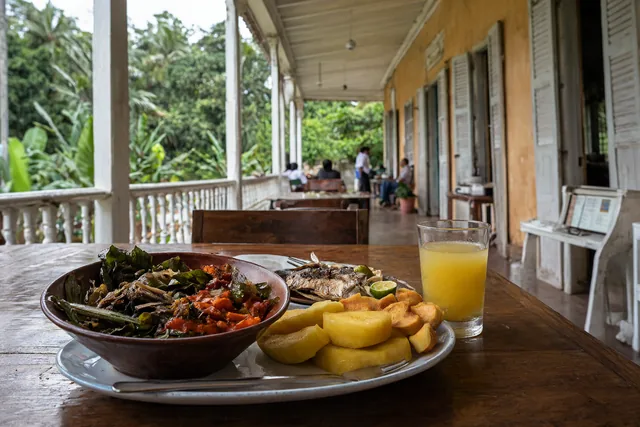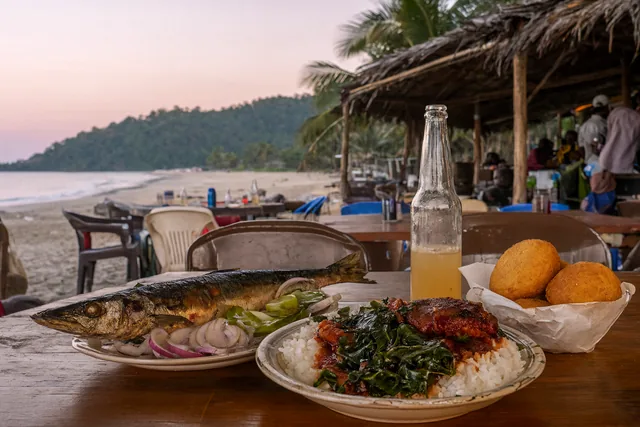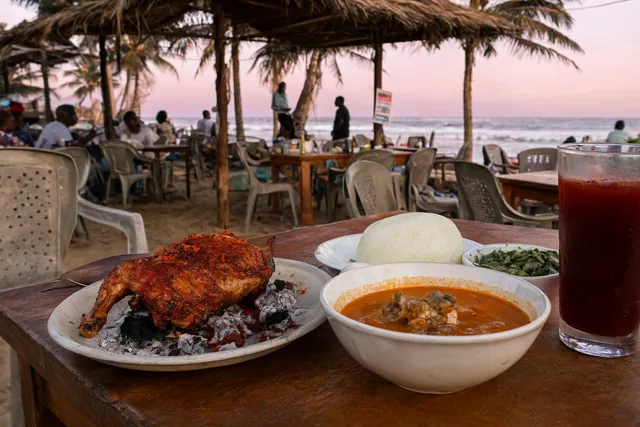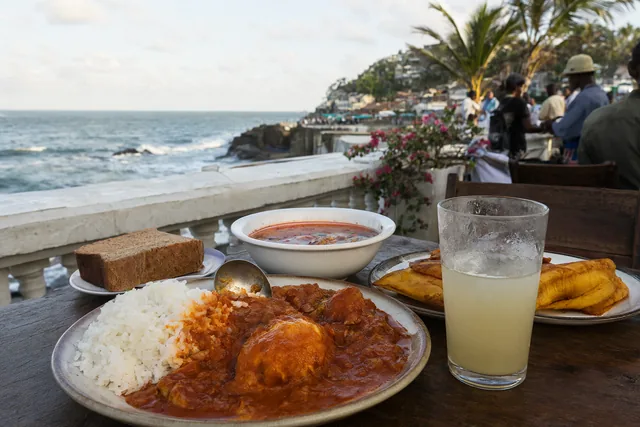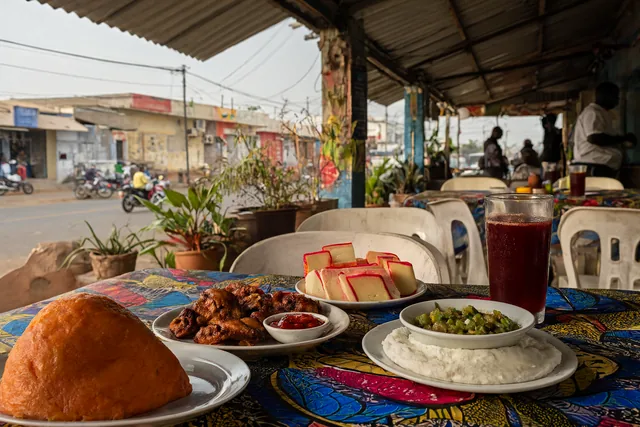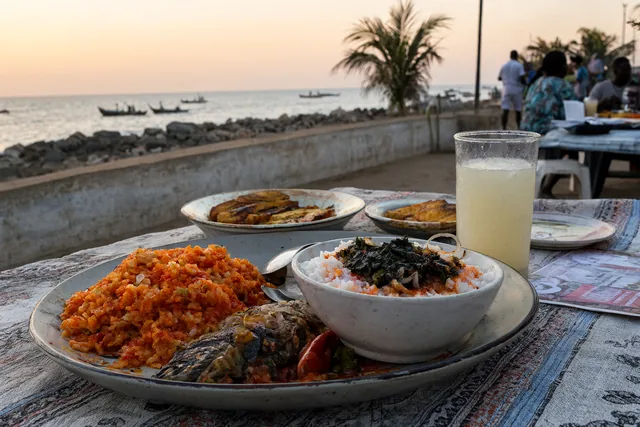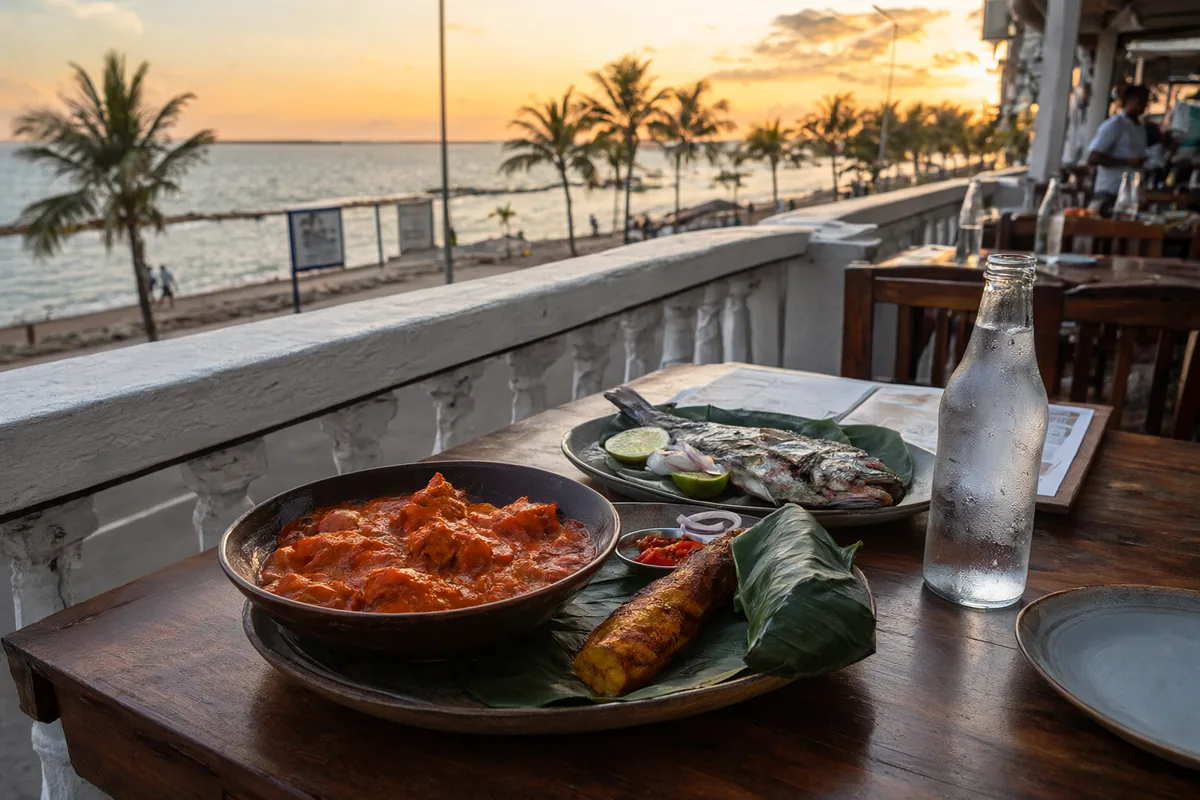
Gabon is a country of rainforest, rivers and Atlantic beaches, and its food comes from all three: chicken simmered in red palm nut sauce, river fish grilled over charcoal, pounded cassava leaves, and odika, a dark, smoky paste of wild mango seeds that Gabonese call their "chocolate". This Gabon food guide covers the dishes to order, the French words you will meet on menus and at roadside grills, how tipping and paying in CFA francs works, and then goes through where to eat in Libreville, Pointe Denis, Port-Gentil, Lambaréné, Lopé and Franceville. French is the official language and the language of every menu, while Fang, Myènè, Punu and dozens of other languages are spoken at home.
What to eat in Gabon: 11 dishes to know
These are the dishes worth seeking out. Gabonese meals pair a sauce of palm nut, leaves or odika with a starch, usually cassava or plantain, and fish, chicken or meat.
- Poulet nyembwe: the national dish, chicken simmered in a rich red sauce of palm nut pulp (nyembwe), often with garlic and chilli, served with rice, plantain or a cassava stick. Fish nyembwe is also common.
- Sauce odika: a paste made from the roasted, ground seeds of the wild mango (Irvingia), dark and smoky, cooked into a thick sauce with fish or meat. It is sold in blocks at markets and is very Gabonese.
- Feuilles de manioc: cassava leaves pounded and cooked for hours with palm oil, peanut paste and smoked fish or meat, served with rice or cassava.
- Nkoumou: finely shredded leaves of a forest vine (gnetum), cooked with peanuts, palm oil and smoked fish.
- Bâton de manioc: fermented cassava, pounded and wrapped in leaves before boiling into a dense, slightly sour stick, the everyday Gabonese staple.
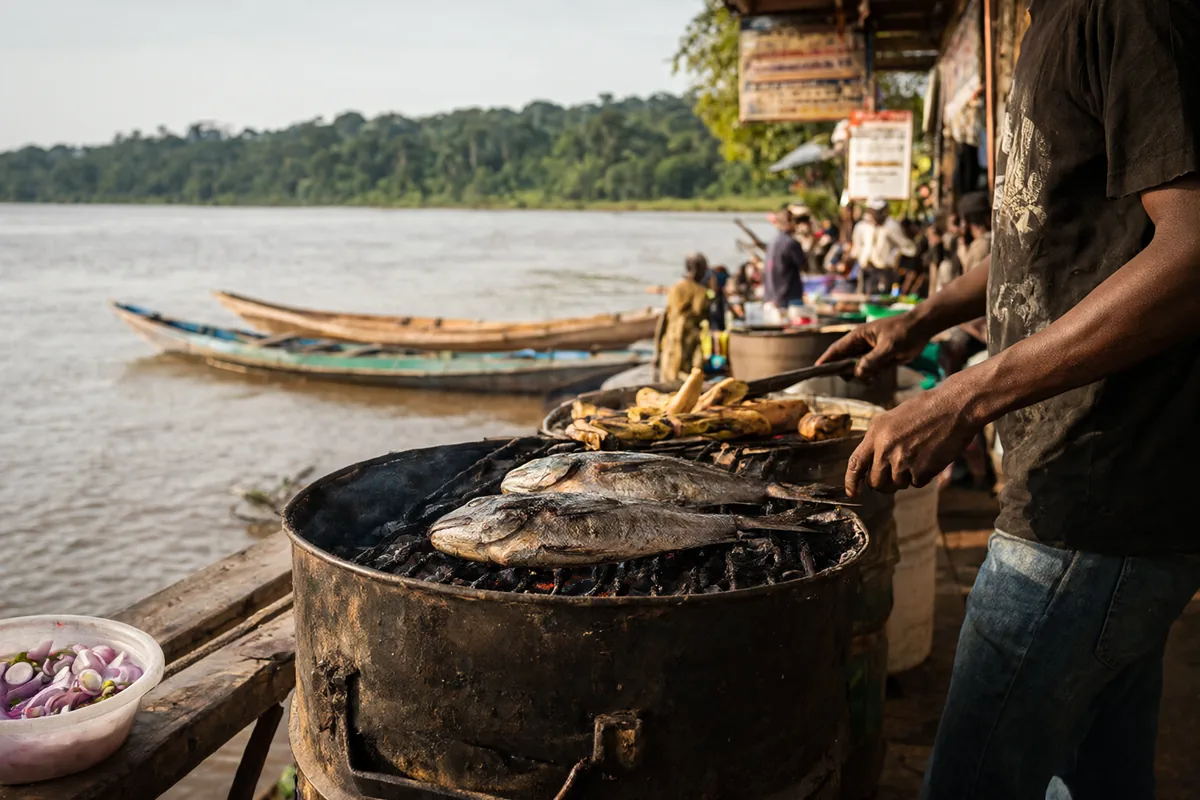
- Poisson braisé: whole fish, often capitaine (Nile perch), bar (sea bass) or carpe (tilapia), grilled over charcoal with chilli, onion and lime, eaten with plantain or a cassava stick.
- Coupé-coupé: street food of beef grilled or roasted over charcoal and chopped to order, sold with chilli and bread or cassava at roadside stalls.
- Banane plantain: plantain boiled, fried or roasted, served with nearly every meal.
- Crevettes and gambas: shrimps and prawns from the coast, grilled with garlic or cooked in sauce.
- Atanga: the African plum (safou), a purple fruit with buttery flesh, boiled or roasted and eaten with a cassava stick, sold by the roadside in season.
- Brochettes: skewers of beef, chicken or goat grilled at night along Libreville's streets.
Gabon also has a strong French food culture: baguettes, croissants and French bakeries are found in every town, and Libreville has French, Lebanese, Senegalese and Cameroonian restaurants. To drink, try vin de palme (palm wine), fresh ginger juice, foléré (hibiscus juice) and malamba, a fermented sugar cane drink. Some menus and roadside sellers offer bush meat (viande de brousse) such as porcupine or antelope. Many forest species are protected, and conservation groups ask visitors not to order it.
How to read a Gabonese menu in French
Menus in Gabon are in French, with local dish names in Fang, Myènè or other Gabonese languages. Local restaurants and roadside eateries, often called maquis or simply restaurants, may have a short board of dishes of the day, and grills selling fish, coupé-coupé and brochettes set up in the evening. Gabon is expensive, and prices on menus can be higher than visitors expect. These are the words worth knowing.
| French or local | Meaning |
|---|---|
| Plat du jour | Dish of the day |
| Nyembwe | Red palm nut sauce |
| Odika | Wild mango seed paste, the "Gabonese chocolate" |
| Feuilles de manioc | Pounded cassava leaves |
| Bâton de manioc | Fermented cassava stick |
| Banane plantain | Plantain |
| Poisson braisé / fumé / salé | Grilled / smoked / salted fish |
| Capitaine / bar / carpe | Nile perch / sea bass / tilapia |
| Poulet / boeuf / porc / chèvre | Chicken / beef / pork / goat |
| Coupé-coupé | Chopped grilled beef, a street food |
| Viande de brousse | Bush meat; many species are protected |
| Piment | Chilli; "pimenté" means spicy |
| Vin de palme | Palm wine |
Grilled fish and prawns are often priced by size or weight, and coupé-coupé by the portion you ask for. Agree the price before it is cut or grilled. swap.menu reads French menus and handwritten boards, explains Gabonese dish names and converts CFA franc prices to your home currency.
Tipping, tax and paying the bill in Gabon
Tipping is not obligatory in Gabon, but it is appreciated. In restaurants used to visitors, leaving around 5 to 10 percent for good service is normal, while at maquis and street stalls rounding up is enough. Value added tax (TVA) is usually included in menu prices, but hotels and upmarket restaurants may show it separately or add a service charge. Our guide to tax and service charges on menus explains how these lines work.
The currency is the Central African CFA franc (XAF), written FCFA or simply CFA on menus. Libreville is one of the more expensive cities in Africa, and imported food and wine cost a lot. Cards are accepted in larger hotels, supermarkets and many restaurants in Libreville and Port-Gentil, but cash is essential everywhere else, and in markets, maquis and smaller towns. ATMs are found in the main towns. When a card machine offers to charge you in your home currency, choose CFA francs: our guide to paying in local currency explains why.
Lunch is eaten from about noon to 2pm, and dinner from about 7:30pm. Grills and brochette sellers are busiest in the evening and late into the night at weekends. Local dishes with cassava sticks are often eaten with the hand, though cutlery is always available. Gabon is mostly Christian, and alcohol is widely available.
Where to eat in Gabon, destination by destination
Most of Gabon's restaurants are in Libreville and Port-Gentil, while the interior's national parks and river towns have a simpler, more local food scene. Jump to a destination:
Where to eat in Libreville
Libreville, the capital, sits on the Komo estuary facing the Atlantic, and it has by far the widest choice of food in Gabon. The Mont-Bouët market is the city's biggest and busiest, with stalls of cassava sticks, plantains, smoked fish, odika, palm nuts, chillies and leaves, and cheap food stalls serving nyembwe, feuilles de manioc and grilled fish to traders. In the evening, grills along the roads and in the popular districts sell coupé-coupé, brochettes and poisson braisé with cold drinks.
The Quartier Louis is Libreville's best-known area for restaurants, bars and nightlife, with Gabonese, French, Lebanese and other international restaurants. The seafront, the Bord de Mer, has restaurants and bars with views over the estuary, popular at sunset. Districts such as Nkembo and Akébé have more local maquis. Libreville is spread out and taxis are the way to get around; agree the fare before you get in. Expect Libreville restaurants aimed at visitors and expats to charge European prices.
Where to eat at Pointe Denis
Pointe Denis is a sandy peninsula across the Komo estuary from Libreville, reached by boat in under an hour, and the city's favourite weekend beach escape. It sits beside Pongara National Park, where leatherback turtles nest on the beaches from about November to March. Pointe Denis has a handful of lodges, beach hotels and weekend restaurants, and the food is all about grilled fish, prawns and lobster, with plantain, chips and cold drinks, served on terraces by the sand.
There is no town at Pointe Denis, so all eating is at lodges and beach restaurants, many of them busiest at weekends and quieter during the week. Lunch is often included in day-trip packages from Libreville. Bring cash and check what is open before you travel, as places close or change hours out of season.
Where to eat in Port-Gentil
Port-Gentil, Gabon's second city and oil capital, sits on an island at the mouth of the Ogooué River and is reached mainly by plane or boat from Libreville. Port-Gentil is a working town, with a good number of restaurants for the oil industry, and a strong seafood tradition: grilled bar, capitaine, prawns, crab and lobster, along with nyembwe and odika dishes. The city's Grand Marché is the place to see fresh fish and local produce.
The beach at Cap Lopez, at the northern tip of the island, is a weekend spot with simple grills and bars. Port-Gentil restaurants range from local maquis serving fish and plantain to French and international restaurants with expat prices. As in Libreville, the evening grills on street corners are the cheapest and most local way to eat.
Where to eat in Lambaréné
Lambaréné is a river town on the Ogooué, Gabon's great river, and famous as the home of the hospital founded by Albert Schweitzer, now with a museum. The food here comes from the river and the lakes around it: capitaine, carp and catfish, grilled or smoked, served with plantain and cassava sticks, and nyembwe and odika sauces. The town's market, by the river, sells smoked fish, cassava, plantain and fruit.
Lambaréné has a few hotels and simple restaurants, and riverside grills selling fish in the evening. Boat trips on the Ogooué and its lakes often stop at fishing villages, where smoked fish is prepared. Bring cash, as cards are rarely accepted, and expect menus to be short and based on the day's catch.
Where to eat at Lopé
Lopé National Park, in the centre of Gabon, is a UNESCO World Heritage Site of forest and savannah, home to forest elephants, buffalo and large groups of mandrills. It is reached on the Transgabonais railway or by road, and the small village of Lopé sits by the park entrance. The food scene is very small: a lodge near the park serves meals to guests, and a few local eateries in the village serve simple dishes such as chicken, fish, plantain and cassava.
Most visitors to Lopé eat at their lodge, where meals are usually included in the price. Mention any dietary needs when booking, as supplies come from far away. Stock up on snacks, water and cash in Libreville or another large town before travelling, and buy fruit from sellers at the railway station.
Where to eat in Franceville
Franceville, in the southeast of Gabon, is the main town of the Haut-Ogooué province and the end of the Transgabonais railway. It sits in a region of hills and savannah near the Batéké Plateau, and its food is based on cassava, plantain, peanuts, smoked fish and meat. Local restaurants serve nyembwe, feuilles de manioc, grilled chicken and fish, and the market sells produce from the surrounding farms.
Franceville has a handful of hotels with restaurants and local maquis around the market and the main roads. It is a base for visiting the Batéké Plateau National Park and the region's waterfalls. Evening grills sell brochettes and fish, and the town is quieter than Libreville. Bring cash, as cards are not widely accepted.
Vegetarian, vegan and allergy tips
Vegetarians need to ask questions in Gabon. Nyembwe, odika, feuilles de manioc and nkoumou are almost always cooked with smoked fish, meat or stock cubes, even when they look like vegetable dishes. The easiest vegetarian options are plantain, cassava sticks, atanga, rice, salads, omelettes and fruit, and Libreville has French and Lebanese restaurants with vegetarian dishes. The word for vegetarian is végétarien (végétarienne for a woman), and "sans viande, sans poisson" means no meat, no fish.
Peanuts are used in feuilles de manioc, nkoumou and some sauces, so people with peanut allergies need to ask about every dish. Smoked and dried fish are common hidden ingredients, and palm oil and chilli are in most sauces. Cassava, plantain and rice are naturally gluten-free, but bread and pastries are everywhere. Our guide to eating abroad with food allergies explains how to communicate a serious allergy clearly.
Useful French phrases for ordering
Bonjour / Bonsoir "Good morning / Good evening"; always greet before ordering
Qu'est-ce que vous avez aujourd'hui? "What do you have today?"
Je voudrais ça, s'il vous plaît "I would like this, please" (pointing)
C'est combien? "How much is it?"
Pas trop pimenté, s'il vous plaît "Not too spicy, please"
Je suis allergique aux arachides "I am allergic to peanuts"
L'addition, s'il vous plaît "The bill, please"
Merci, c'était très bon "Thank you, it was delicious"
How swap.menu helps you eat in Gabon
Gabonese menus are in French, but the dishes have local names that a French dictionary will not explain: nyembwe, odika, nkoumou, coupé-coupé. Photograph the menu with swap.menu and every dish appears in your language with its original name beside it and a short explanation, so you know that nyembwe is palm nut sauce, that odika is wild mango seed paste, and that viande de brousse means bush meat. Prices are converted from CFA francs to your home currency, which helps in a country where restaurant prices can be high, and any tax or service line is flagged.
Tap the dishes you want, add a note such as "no peanuts" or "pas trop pimenté", typed or spoken, and swap.menu translates your order into French. Show the waiter your phone, or let them scan the QR code and read your order on their own screen. Try it on a sample menu with the free demo, or see travel pass prices.
Off to Gabon? Your first 3 menu scans are free, and a travel pass starts from $4.99 with nothing that renews.
Start free with 3 scansGabon food FAQ
Do you tip in restaurants in Gabon?
Tipping is not required in Gabon, but around 5 to 10 percent is appreciated in restaurants used to visitors. At maquis and street grills, rounding up is enough.
What is the national dish of Gabon?
Poulet nyembwe, chicken cooked in a red palm nut sauce, is the national dish. It is served with rice, plantain or a fermented cassava stick.
What food is Gabon famous for?
Gabon is famous for poulet nyembwe, sauce odika made from wild mango seeds, pounded cassava leaves, grilled river and sea fish, coupé-coupé grilled beef and cassava sticks.
Is it expensive to eat out in Gabon?
Yes, Gabon is one of the more expensive countries in Africa for visitors, especially Libreville and Port-Gentil. Street grills, markets and local maquis are much cheaper than restaurants aimed at expats.
Is tap water safe to drink in Gabon?
Visitors should drink bottled water in Gabon. Bottled water is sold everywhere in the towns, and it is wise to carry some when travelling into the interior.
How can I read a Gabonese menu if I do not speak French?
Learn a few words such as poisson, poulet, plantain and plat du jour, or photograph the menu with swap.menu. It translates French menus, explains Gabonese dish names, converts CFA franc prices to your currency and translates your order back into French.
Travelling further in Central Africa? Read our food guides for neighbouring countries:
- Cameroon food guide
- Republic of the Congo food guide
- São Tomé and Príncipe food guide
- Angola food guide
- Nigeria food guide
Or browse every travel food guide.